
Judiciary hearing sets stage for Donald Trump impeachment charges
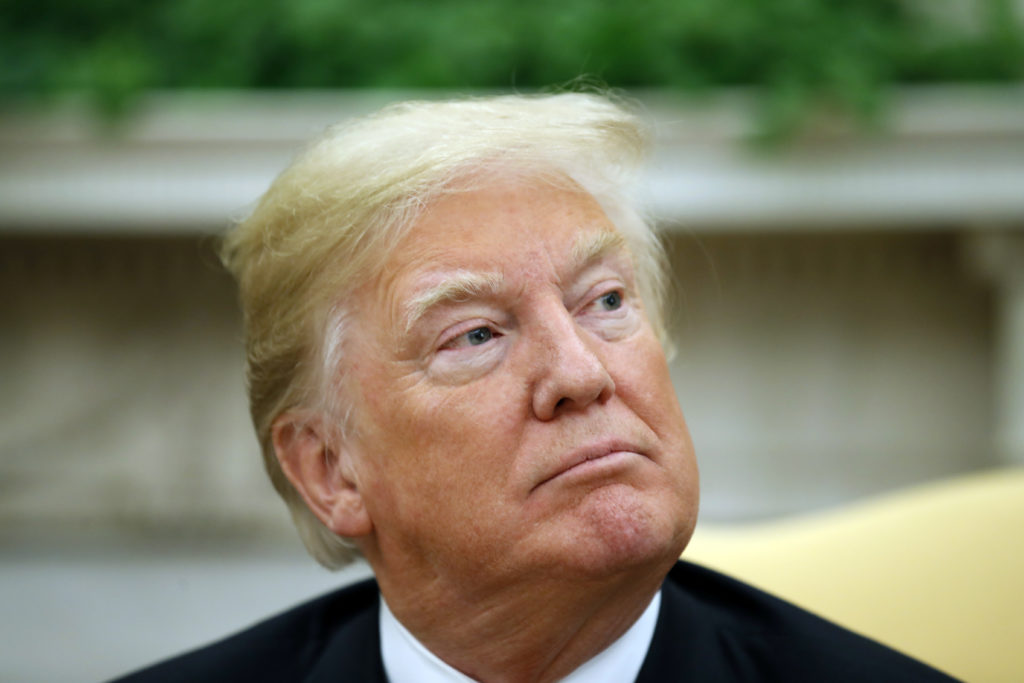
Pushing ahead with articles of impeachment, the House Judiciary Committee convenes Monday to formally receive the investigative findings against President Donald Trump as the White House and its allies launch an aggressive attack on Democrats and the proceedings. Chairman Jerrold Nadler expects the committee to vote soon, possibly this week, on at least two or more charges against the Republican president. Democrats say Trump’s push to have Ukraine investigate rival Joe Biden while at the same time withholding U.S. military aid ran counter to U.S. policy and benefited Russia. It could result in impeachment charges of abuse of power, bribery and obstruction. “The central allegation is that the president put himself above his country several times, that he sought foreign interference in our elections several times, both for 2016 and 2020, that he sought to cover it up,” Nadler said. “All this presents a pattern that poses a real and present danger to the integrity of the next election, which is one reason why we can’t just wait for the next election to settle matters,” he said. In advance of the hearing, Nadler sent a letter to the White House late Sunday officially forwarding the House Intelligence committee’s report, along with additional evidence supporting impeachment. It also invites White House officials to review sensitive materials in a classified setting. The hearing sets off a pivotal week as Democrats march toward a full House vote expected by Christmas. In drafting the articles of impeachment, Speaker Nancy Pelosi is facing a legal and political challenge of balancing the views of her majority while hitting the constitution’s bar of “treason, bribery or other high crimes and misdemeanors.” Trump and his allies acknowledge he likely will be impeached in the Democratic-controlled House, but they also expect acquittal next year in the Senate, where Republicans have the majority. Trump’s team is turning attention elsewhere, including Monday’s release of a long-awaited Justice Department report into the 2016 Russia investigation. “Impeachment Hearing Hoax,” Trump tweeted Sunday. The White House is refusing to participate in the process it calls a sham and the top Republican on the panel, Rep. Doug Collins of Georgia asked to postpone the hearing, criticizing Democrats for moving too swiftly. One legal scholar testified last week it would be the quickest impeachment in modern history. “This is just how desperately they are — desperately focused on impeaching this president,” said Collins who said against Democrats unleashed thousands of pages of documents his side has no time to review before the session. ”This is a show. This is a farce. This is whatever you want to call it. The American people are having their tax dollars wasted on this impeachment of this president.” Trump is heading out for campaign rallies shifting attention away from the House. Over the weekend, Trump was focused on a related matter, the Justice Department Inspector General’s findings into the FBI’s decisions to investigate Russian interference in the 2016 election. The president has long called special counsel Robert Mueller’s Russia probe a “witch hunt,” but the Inspector General’s report is expected to reject the president’s claim that it was illegitimate, according to people familiar with its findings. Trump tweeted Sunday, “I.G. report out tomorrow. That will be the big story!” Democrats say Trump abused his power in the July 25 phone call when he asked Ukrainian President Volodymyr Zelenskiy for a favor in investigating Democrats and engaged in bribery by withholding nearly $400 million in military aide that Ukraine depends on to counter Russian aggression. Trump and his aides have made clear that they now see his impeachment in the House as inevitable and have shifted their focus. A vote to convict requires a two-thirds vote of the Senate, where Republicans hold 53 of 100 seats. It is unlikely that any Republican senators would cross party lines and vote to remove Trump from office. As Democrats draft the articles, Pelosi’s challenge will be to go broad enough to appease her liberal flank, which prefers a more robust accounting of Trump’s actions reaching back to Mueller’s findings, while keeping the charges more tailored to Ukraine as centrist lawmakers prefer. Democratic leaders will meet later Monday evening. Rep. Adam Schiff, Democrats-California, the chairman of the Intelligence Committee, said Democrats should approach the question of what to include in the articles the way a prosecutor bringing forward “‘the strongest and most overwhelming evidence and not try to charge everything, even though you could charge other things.” Schiff said, “I think we should focus on those issues that provide the greatest threat to the country. And the president is engaged in a course of conduct that threatens the integrity of the next election, threatens our national security.” Monday’s hearing is to receive the Intelligence panel’s report on the inquiry, with lawyers from both parties testifying in what is expected to be a day long session that will lay the groundwork for the impeachment charges. Nadler, in two television interviews, declined to say ultimately how many articles of impeachment Democrats will present but said they will involve “certainly abuse of power” and likely “obstruction of Congress.” He said final decisions will come after Monday’s hearing following discussions with House leadership and the Democratic caucus. Nadler pointed to a “pattern” of conduct by Trump in seeking foreign interference in elections but would not commit to including the evidence of obstruction of justice in special counsel Robert Mueller’s Russia investigation as part of the articles of impeachment. In his report, Mueller said he could not determine that Trump’s campaign conspired or coordinated with Russia in the 2016 election. But Mueller said he could not exonerate Trump of obstructing justice in the probe and left it for Congress to determine. House Republican leader Kevin McCarthy criticized Democrats for their timeline, which he said was unfairly aimed at preventing the nation’s voters from making their own choices in the 2020 election. “If they do not impeach him, they cannot beat him at the polls,” McCarthy, Republican-California. Trump said over the weekend that his personal attorney Rudy Giuliani wants to take the information gathered from Giuliani’s investigations and
House panel to vote on Ukraine report as Donald Trump mulls defense
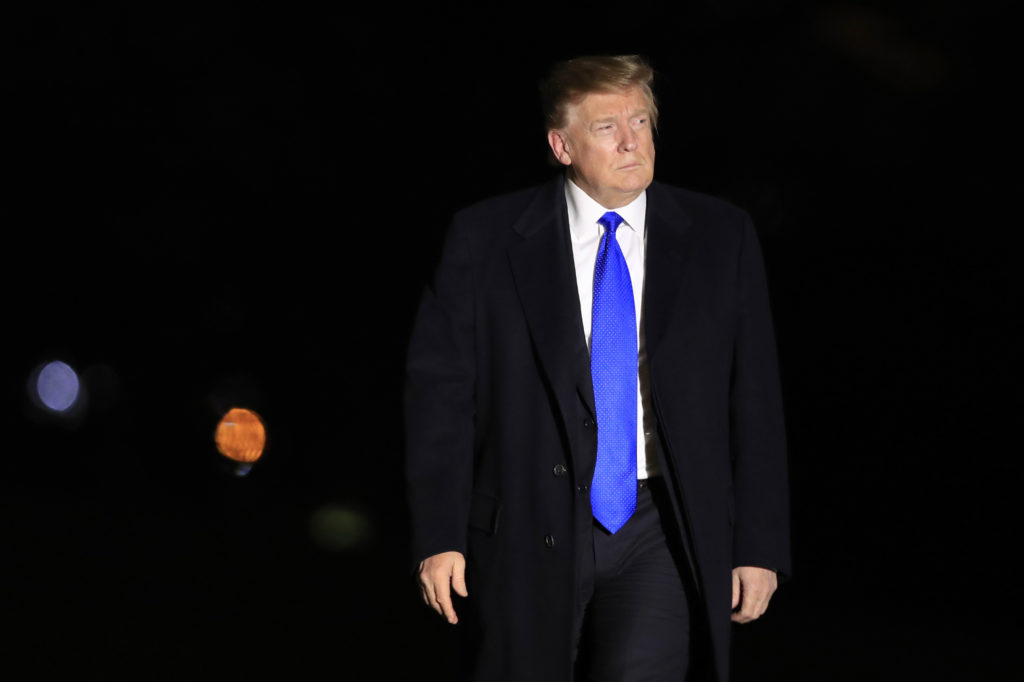
The House impeachment inquiry enters a pivotal stage this week, with investigators planning a vote Tuesday to approve their report making the case for President Donald Trump’s removal from office as he decides whether to mount a defense before a likely Senate trial. A draft report will be available for members of the House Intelligence Committee to view in a secure location before their planned vote on Tuesday, which would send their findings to the House Judiciary Committee to consider actual charges. Majority Democrats say the report will speak for itself in laying out possible charges of bribery or “high crimes and misdemeanors,” the constitutional standard for impeachment. Republicans want Democratic Rep. Adam Schiff, chairman of the Intelligence Committee, to testify, though they have no power to compel him to do so, as they try to cast the Democratic-led inquiry as skewed against the Republican president. “If he chooses not to (testify), then I really question his veracity in what he’s putting in his report,” said Rep. Doug Collins, the top Republican on the Judiciary Committee. “It’s easy to hide behind a report,” Collins added. “But it’s going to be another thing to actually get up and have to answer questions.” Schiff has said “there’s nothing for me to testify about,” that he isn’t a “fact” witness and that Republicans are only trying to “mollify the president, and that’s not a good reason to try to call a member of Congress as a witness.” Coming after two weeks of public testimony, the findings of the House Intelligence Committee report are not yet publicly known. But the report is expected to mostly focus on whether Trump abused his office by withholding military aid approved by Congress as he pressed Ukrainian President Volodymyr Zelenskiy to launch investigations into Trump’s political rivals. Democrats also are expected to include an article on obstruction of Congress that outlines Trump’s instructions to officials in his administration to defy subpoenas for documents or testimony. Democrats are aiming for a final House vote by Christmas, which would set the stage for a likely Senate trial in January. “I do believe that all evidence certainly will be included in that report so the Judiciary Committee can make the necessary decisions that they need to,” said Rep. Val Demings, Democrat – Florida, a member of both the Intelligence and Judiciary committees. She said Democrats had not yet finalized witnesses for the upcoming Judiciary hearings and were waiting to hear back from Trump on his plans to present a defense. “If he has not done anything wrong, we’re certainly anxious to hear his explanation of that,” Demings said. The Judiciary Committee’s first hearing is Wednesday. It’s expected to feature four legal experts who will examine questions of constitutional grounds as the committee decides whether to write articles of impeachment against Trump, and if so, what those articles will be. After weeks of deriding the process as a sham, Trump has yet to say whether he or his attorneys will participate in the Judiciary hearings. He’s previously suggested that he might be willing to offer written testimony under certain conditions. “The Democrats are holding the most ridiculous Impeachment hearings in history. Read the Transcripts, NOTHING was done or said wrong!” Trump tweeted Saturday, before falling silent on Twitter for much of Sunday. It’s unlikely that the president himself would attend on Wednesday, as Trump is scheduled to be at a summit with NATO allies outside London. The Judiciary Committee gave the White House until Sunday evening to decide whether Trump or his attorneys would attend. Trump must then decide by Friday whether he would take advantage of due process protections afforded to him under House rules adopted in October for follow-up hearings, including the right to request witness testimony and to cross-examine the witnesses called by the House. “Why would they want to participate in just another rerun?” asked Collins, noting that the Judiciary Committee previously heard from constitutional scholars on impeachable offenses during special counsel Robert Mueller’s Russia investigation. “This is a complete American waste of time of here,” Collins said, who is calling on the committee chairman, Rep. Jerrold Nadler, Democrat – New York, to expand the witness list to include those sought by Republicans. “This is why this is a problematic exercise and simply a made-for-TV event coming on Wednesday.” Still, Republican Rep. Tom McClintock of California, a Judiciary Committee member, said he believes Trump would benefit if he presents his own defense. “I think it would be to the president’s advantage to have his attorneys there. That’s his right,” he said. McClintock said he doesn’t believe Trump did anything wrong in the July 25 call with Zelenskiy that is at the heart of the investigation. “He didn’t use the delicate language of diplomacy in that conversation, that’s true. He also doesn’t use the smarmy talk of politicians,” McClintock said. To McClintock, Trump was using “the blunt talk of a Manhattan businessman” and “was entirely within his constitutional authority” in his dealings with Ukraine’s leader. Collins appeared on “Fox News Sunday” and Demings and McClintock were on ABC’s “This Week.” By Hope Yen Associated Press. Republished with the Permission of the Associated Press.
House committee’s report on impeachment could land next week
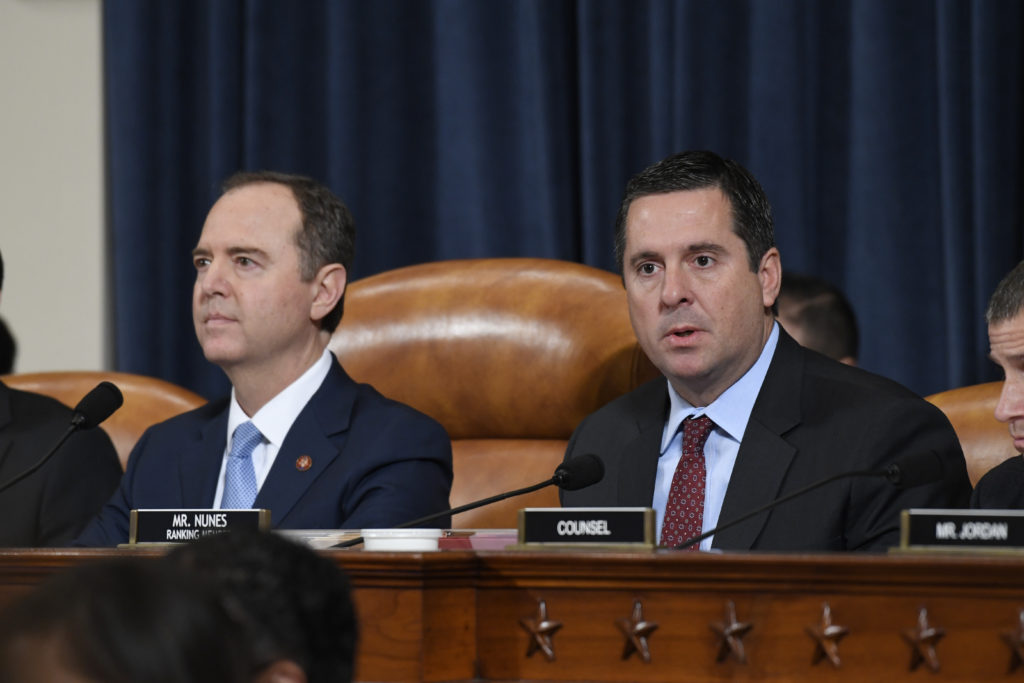
The witnesses have spoken, the politics are largely settled. Now impeachment investigators will make the case for public opinion. On Monday, hundreds of pages from Democratic Chairman Adam Schiff’s intelligence committee were being compiled into an exhaustive report that will begin to outline whether President Donald Trump engaged in “treason, bribery or high crimes and misdemeanors” by withholding $400 million in aid as he pushed Ukraine to investigate Democratic rival Joe Biden. The report may come as soon as next week. There are rising political stakes for all sides. Americans remain deeply split over the impeachment question, despite hours of sometimes riveting testimony, and the country’s polarization now seems to foreshadow an outcome: Democrats are poised to vote to impeach the president while Republicans stand firmly with him. Sending the case on to the Judiciary Committee, which is ready to start its own round of hearings in December, provides another chance to sway public opinion before a House vote expected by Christmas and a Senate trial in 2020. “The evidence of wrongdoing and misconduct by the President that we have gathered to date is clear and hardly in dispute,” Schiff told colleagues in a letter Monday. “What is left to us now is to decide whether this behavior is compatible with the office of the Presidency, and whether the Constitutional process of impeachment is warranted.” Republicans are not necessarily disputing the evidence but insist the president did nothing wrong. While Trump lawyer Rudy Giuliani pursued the political investigations with Ukraine in what witnesses described as an irregular foreign policy channel, Republicans argue it’s not clear the president directly intervened to withhold the money to Ukraine. Besides, they say, the military aid for the Eastern European ally countering Russian aggression was eventually released. Trump gave Giuliani a vote of confidence Monday. “Rudy is the best mayor in the history of New York. In my opinion, the strongest mayor, the best mayor,” Trump told reporters in the Oval Office. However, in a setback for the administration, a federal judge late Monday ordered former White House counsel Donald McGahn to appear before Congress. The president has tried to keep top aides from testifying, which Democrats say amounts to obstruction of Congress and potential grounds for impeachment. The administration will appeal the ruling. Some Republicans, led by Sen. Lindsey Graham, prefer to keep digging into unfounded claims that Ukraine was involved in 2016 election interference, a theory that contradicts the findings of U.S. intelligence. They also see reason to scrutinize the work of Biden’s son, Hunter Biden, for a gas company in Ukraine. “The whole Ukraine issue, particularly the way the House of Representatives is doing it, is a joke,” Graham tweeted Monday. “We’re less than a year away from the 2020 election. If you don’t like Trump — vote against him.” When Congress resumes next week, Schiff is expected to send the report, compiled from 17 closed-door depositions and five public sessions, to the House Judiciary Committee, where Chairman Jerrold Nadler will soon begin hearings that are expected to result in articles of impeachment against Trump. Rather than gather additional testimony, Nadler’s panel is likely to drill down into the questions surrounding impeachment and whether Trump’s actions toward Ukraine meet the bar. For many Democrats, Trump already proved the case when he released a rough transcript of a July call in which he asked Ukrainian President Volodymyr Zelenskiy for a “favor” — the investigations of Biden and the Democrats. “The unusual fact about this inquiry is that the most explosive evidence is the first evidence we got: It was the President’s transcript,” said Rep. Peter Welch, Democrat-Vermont. “All the other evidence is confirming it and showing how elaborate and sustained the effort was to put the squeeze on Ukraine to get the Biden investigations.” Republicans are just as insistent the end result will not remove Trump from office. “The only prediction I can make is that I can’t imagine a scenario under which 67 members of the Senate would remove the president from office in the middle of a presidential election,” Senate Majority Leader Mitch McConnell said during an event Monday in Kentucky. Even as investigators race to compile the report, Democrats aren’t ruling out more testimony. The Intelligence Committee still could hear from John Bolton, the president’s former national security adviser, who left the White House after saying he didn’t want to be involved in whatever “drug deal” Giuliani was cooking up, according to testimony from a top aide, Fiona Hill. Schiff said Sunday he’s also in discussions with counsel for Lev Parnas, the Giuliani associate who was arrested with business partner Igor Fruman on campaign finance charges. Bolton has so far declined an invitation to testify. The panel has issued a subpoena to Parnas for documents about the matter. “We are open to the possibility that further evidence will come to light,” Schiff said. If other witnesses agree to testify, he said, “We are prepared to hear from them.” One witness Schiff does not expect to hear from is the still anonymous government whistleblower whose complaint about Trump’s phone call with Ukraine sparked the impeachment probe. Schiff said over the weekend that the panel initially wanted to hear from the person, but Trump’s attacks have put the person’s life in danger. The committee is now trying to protect the whistleblower from retaliation. By Lisa Mascaro and Mary Clare Jalonick Associated Press Associated Press writers Mark Sherman and Jonathan Lemire in Washington and Bruce Schreiner in Manchester, Kentucky contributed to this report. Republished with the Permission of the Associated Press.
Nancy Pelosi invites Donald Trump to testify as new witnesses prepare

House Speaker Nancy Pelosi invited President Donald Trump to testify in front of investigators in the House impeachment inquiry ahead of a week that will see several key witnesses appear publicly. Pushing back against accusations from the Republican president that the process has been stacked against him, Pelosi said Trump is welcome to appear or answer questions in writing, if he chooses. “If he has information that is exculpatory, that means ex, taking away, culpable, blame, then we look forward to seeing it,” she said in an interview that aired Sunday on CBS’ “Face the Nation.” Trump “could come right before the committee and talk, speak all the truth that he wants if he wants,” she said. Senate Democratic leader Chuck Schumer echoed that suggestion. “If Donald Trump doesn’t agree with what he’s hearing, doesn’t like what he’s hearing, he shouldn’t tweet. He should come to the committee and testify under oath. And he should allow all those around him to come to the committee and testify under oath,” Schumer told reporters. He said the White House’s insistence on blocking witnesses from cooperating begs the question: “What is he hiding?” The comments come as the House Intelligence Committee prepares for a second week of public hearings as part of its inquiry, including with the man who is arguably the most important witness. Gordon Sondland, Trump’s ambassador to the European Union, is among the only people interviewed to date who had direct conversations with the president about the situation because the White House has blocked others from cooperating with what it dismisses as a sham investigation. And testimony suggests he was intimately involved in discussions that are at the heart of the investigation into whether Trump held up U.S. military aid to Ukraine to try to pressure the country’s president to announce an investigation into Democrats, including former Vice President Joe Biden, a leading 2020 candidate, and Biden’s son Hunter. Multiple witnesses overheard a phone call in which Trump and Sondland reportedly discussed efforts to push for the investigations. In private testimony to impeachment investigators made public Saturday, Tim Morrison, a former National Security Council aide and longtime Republican defense hawk, said Sondland told him he was discussing Ukraine matters directly with Trump. Morrison said Sondland and Trump had spoken approximately five times between July 15 and Sept. 11 — the weeks that $391 million in U.S. assistance was withheld from Ukraine before it was released. And he recounted that Sondland told a top Ukrainian official in a meeting that the vital U.S. military assistance might be freed up if the country’s top prosecutor “would go to the mike and announce that he was opening the Burisma investigation.” Burisma is the gas company that hired Hunter Biden. Morrison’s testimony contradicted much of what Sondland told congressional investigators during his own closed-door deposition, which the ambassador later amended. Trump has said he has no recollection of the overheard call and has suggested he barely knew Sondland, a wealthy donor to his 2016 campaign. But Democrats are hoping he sheds new light on the discussions. “I’m not going to try to prejudge his testimony,” Rep. Jim Himes, Democrat-Conneticut, said on “Fox News Sunday.” But he suggested, “it was not lost on Ambassador Sondland what happened to the president’s close associate Roger Stone for lying to Congress, to Michael Cohen for lying to Congress. My guess is that Ambassador Sondland is going to do his level best to tell the truth, because otherwise he may have a very unpleasant legal future in front of him.” The committee also will be interviewing a long list of others. On Tuesday, it’ll hear from Morrison along with Jennifer Williams, an aide to Vice President Mike Pence, Alexander Vindman, the director for European affairs at the National Security Council, and Kurt Volker, the former U.S. special envoy to Ukraine. On Wednesday the committee will hear from Sondland in addition to Laura Cooper, a deputy assistant secretary of defense, and David Hale, a State Department official. And on Thursday, Fiona Hill, a former top NSC staffer for Europe and Russia, will appear. Trump, meanwhile, continued to tweet and retweet a steady stream of commentary from supporters as he bashed “The Crazed, Do Nothing Democrats” for “turning Impeachment into a routine partisan weapon.” “That is very bad for our Country, and not what the Founders had in mind!!!!” he wrote. He also tweeted a doctored video exchange between Rep. Adam Schiff, the Democratic chairman of the Intelligence Committee, and Republican Rep. Jim Jordan, in which Schiff said he did not know the identity of the whistleblower whose complaint triggered the inquiry. The clip has been altered to show Schiff wearing a referee’s uniform and loudly blowing a whistle. In her CBS interview, Pelosi vowed to protect the whistleblower, whom Trump has said should be forced to come forward despite longstanding whistleblower protections. “I will make sure he does not intimidate the whistleblower,” Pelosi said. Trump has been under fire for his treatment of one of the witnesses, the former ambassador to Ukraine, Marie Yovanovitch, whom Trump criticized by tweet as she was testifying last week. That attack prompted accusations of witness intimidation from Democrats and even some criticism from Republicans, who have been largely united in their defense of Trump “I think, along with most people, I find the president’s tweet generally unfortunate,” said Ohio Republican Rep. Mike Turner on CNN’s “State of the Union.” Still, he insisted that tweets were “certainly not impeachable and it’s certainly not criminal. And it’s certainly not witness intimidation,” even if Yovanovitch said she felt intimidated by the attacks. Rep. Chris Stewart, Republican-Utah, said Trump “communicates in ways that sometimes I wouldn’t,” but dismissed the significance of the attacks. “If your basis for impeachment is going to include a tweet, that shows how weak the evidence for that impeachment is,” he said on ABC’s “This Week.” And the backlash didn’t stop Trump from lashing out at yet another witness, this time Pence aide Williams. He directed her in a Sunday tweet
GOP candidates divided over renewing USA Patriot Act
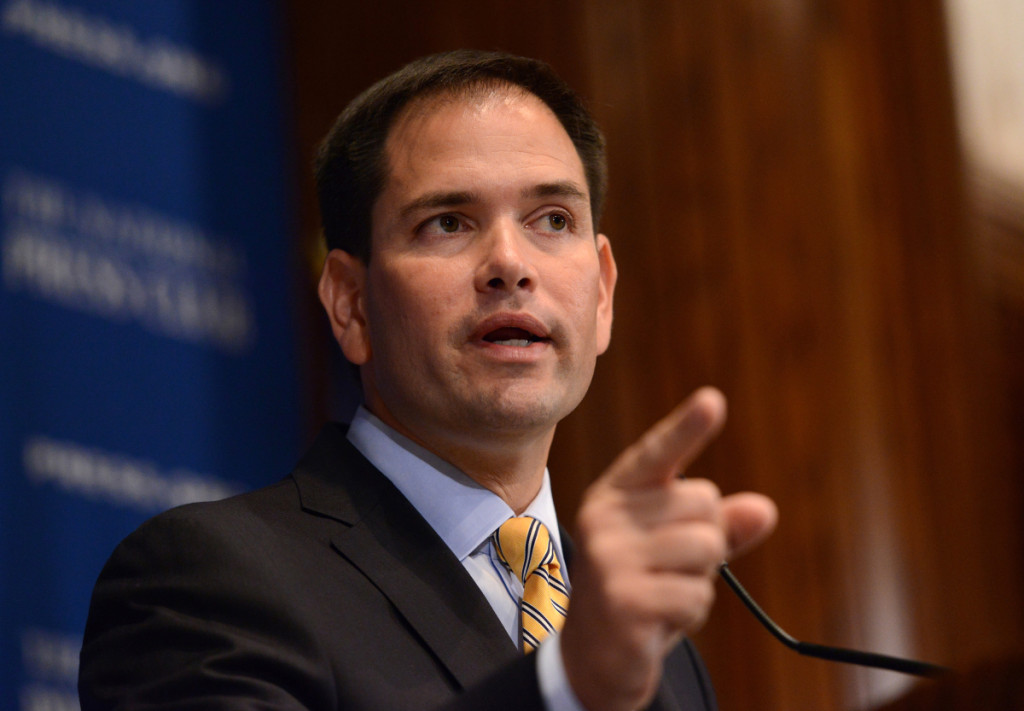
Republican senators eyeing the presidency split over the renewal of the USA Patriot Act surveillance law, with civil libertarians at odds with traditional defense hawks who back tough spying powers in the fight against terrorism. The political divide will be on stark display this month as Congress debates reauthorization of the post-Sept. 11 law ahead of a June 1 deadline. The broader question of privacy rights has gained attention since a former National Security Agency systems administrator, Edward Snowden, disclosed in 2013 that the NSA had been collecting and storing data on nearly every American’s phone calls for years. On one side, Sens. Marco Rubio of Florida and Lindsey Graham of South Carolina want Congress to permanently reauthorize parts of the law, giving the NSA much of its surveillance authority. If there were another attack, “the first question out of everyone’s mouth is going to be, `why didn’t we know about it?’” Rubio said this week in a speech on the Senate floor. “And the answer better not be, `because this Congress failed to authorize a program that might have helped us know about it.’” The rise of Islamic State militants, the continued threat from al-Qaida and the ongoing civil war in Syria have pushed national security to the forefront in the 2016 race for the GOP nomination, with some candidates determined to show their toughness. On NSA surveillance, however, Americans are wary of government intrusion. Sens. Ted Cruz of Texas and Rand Paul of Kentucky say the law infringes on citizens’ privacy. “They want nothing more than to keep the national security spy state growing until it tracks, traces and catalogues virtually every detail about every aspect of our lives,” Paul said in a campaign email to his supporters. “Once government bureaucrats know every aspect of our lives – what we watch, what we buy, what we eat, where we worship – it won’t be long until they try to run them `for our own good.’” Under the law, the NSA collects information on the number called and the date and time of the call, then stores it in a database that it queries using phone numbers associated with terrorists overseas. Officials say they don’t use the information for any other purpose, and that the legal powers that enable the program are essential to the hunt for terrorists. Opponents say the seizure and search of telephone company records violates Americans’ expectations of privacy under the Fourth Amendment. Adding a wrinkle to the debate was Thursday’s federal appeals court ruling that the bulk collection of Americans’ phone records is illegal. The court all but pleaded for Congress to sharpen the boundaries between security and privacy rights. The House is slated to vote next week on a bill to reauthorize the law while also ending the government’s dragnet collection of records, and Cruz has endorsed the measure, saying it “strikes the right balance between privacy rights and national security interests.” But Senate leaders, including Majority Leader Mitch McConnell, R-Ky., and Sen. Richard Burr, R-N.C., the chairman of the Intelligence Committee, have spoken forcefully for a competing measure to reauthorize the law as-is. Across Congress, the political divisions cut along complex lines. Libertarian-leaning Republicans like Cruz and Paul are aligned with many liberal Democrats, insisting that a secret intelligence agency should not be storing the records of every American phone call. But other Democrats and Republicans say the program is needed now more than ever given the Islamic State group’s determination to inspire terrorist attacks on American soil. Graham, the only one of the four who has not formally announced his candidacy, is siding with Rubio in favor of the NSA’s spy powers but competing with him for support among defense hawks. “I’m open-minded to doing reforms,” Graham told reporters Thursday. “I just don’t want to diminish the capacity of the program to prevent another 9/11. I believe if the program were in operation before 9/11, we probably would have prevented 9/11.” Sen. John McCain, the GOP’s 2008 presidential nominee, previewed one likely argument. He cited the incident in Texas last Sunday in which two gunmen were shot dead while trying to attack a provocative event that featured cartoon images of the Prophet Muhammad. In the aftermath, authorities described an alarming trend involving potential homegrown extremists with access to social media and possible exposure to Islamic State group propaganda. “We must do everything in our power to stop these attacks before they happen,” McCain, the Senate Armed Services Committee chairman, said. FBI Director James Comey said Thursday that although the bureau had opened a new investigation into one of the gunmen, Elton Simpson, agents had no reason to believe he was going to attack the event. Republished with permission of the Associated Press.
