
Improving world economy still needs help from low rates
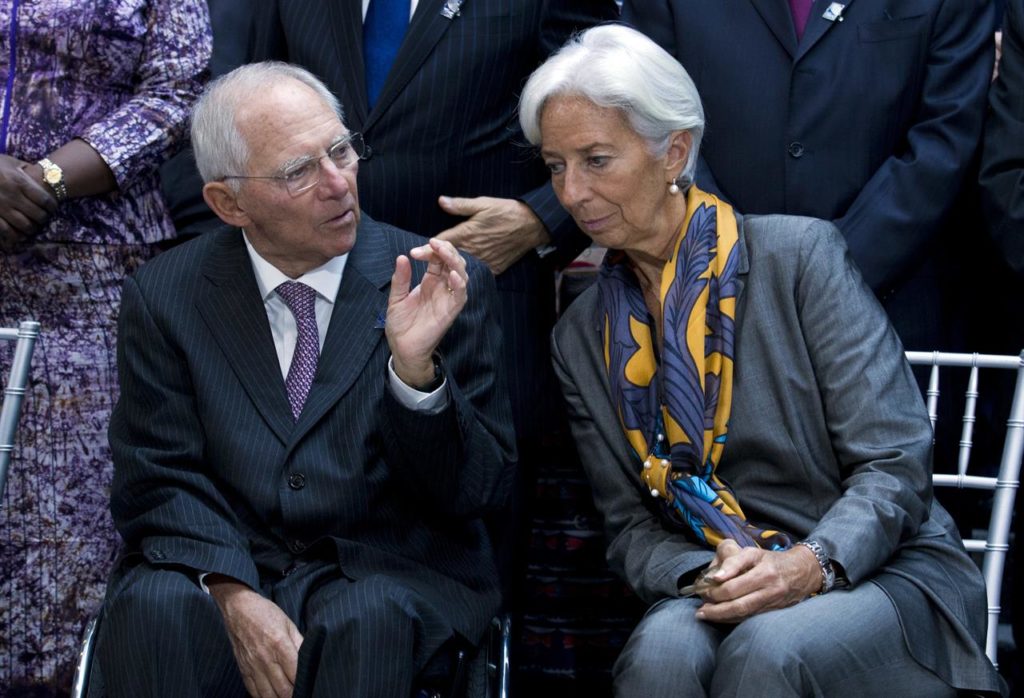
The world economy is the healthiest it’s been in years but could still use a little help from low-interest rates and higher government spending from countries that can afford it, the International Monetary Fund says. “There was a strong consensus that the global outlook is strengthening,” said Agustin Carstens, governor of the Bank of Mexico and outgoing chair of the IMF’s policy committee. “This does not mean we are declaring victory just yet.” The 189-member IMF and its sister agency, the World Bank, wrapped up three days of meetings Saturday. The IMF expects the global economy to grow 3.6 percent this year, up from 3.2 percent in 2016. And three-quarters of the global economy is growing, making this the broadest recovery in a decade. But IMF and World Bank officials pointed to risks that could derail global growth. Geopolitical risks are rising, including a confrontation between the United States and North Korea over Pyongyang’s nuclear weapons program. The income gap between rich and poor is growing, fueling political discontent with the free trade and global cooperation that the IMF and World Bank promote. So in a communique Saturday, the IMF’s policy committee called on world central banks to protect the fragile global recovery by keeping interest rates down in countries where inflation is too low and economies are performing below potential. IMF officials have also urged some countries with healthy finances – such as Germany and South Korea – to make investments that will spur growth. IMF Managing Director Christine Lagarde appealed to countries to enact reforms that will make their economies more efficient and spread prosperity to those who have been left behind. Specifically, Lagarde argued that countries could improve their economies and reduce inequality by putting more women to work, improving their access to credit and narrowing their pay gap with men. On Saturday, Ivanka Trump, the president’s daughter and a White House adviser, appeared with World Bank President Jim Yong Kim to launch a World Bank initiative to support women entrepreneurs. The World Bank fund has raised $350 million which is designed to allow the World Bank to deploy at least $1 billion in capital to finance women-owned businesses. Ivanka Trump told the audience that she wanted to “spend a lot of time offering any value that I can as a mentor.” The World Bank and IMF delegates are still adjusting to the Trump administration, which is skeptical of international organizations and contemptuous of free trade agreements. This week, the United States pulled out of UNESCO, the United Nations’ cultural agency. It is has balked at providing additional capital to the World Bank unless the anti-poverty agency rethinks the way it distributes loans. It has scrapped an Asia-Pacific trade deal and is threatening to pull out of the North American Free Trade Agreement with Canada and Mexico. Treasury Secretary Steven Mnuchin said he carried in his pocket a list of all the G-20 nations and the size of the trade balances the United States has with each of those nations. With most of the G-20 countries, the United States is running a trade deficit. In a speech Saturday to the IMF policy group, Mnuchin said he wanted to see the IMF be a more “forceful advocate” for strong global growth by taking a harder look at countries that abuse world trade rules. Republished with permission from the Associated Press.
Fed is likely to leave rates alone at a time of uncertainty
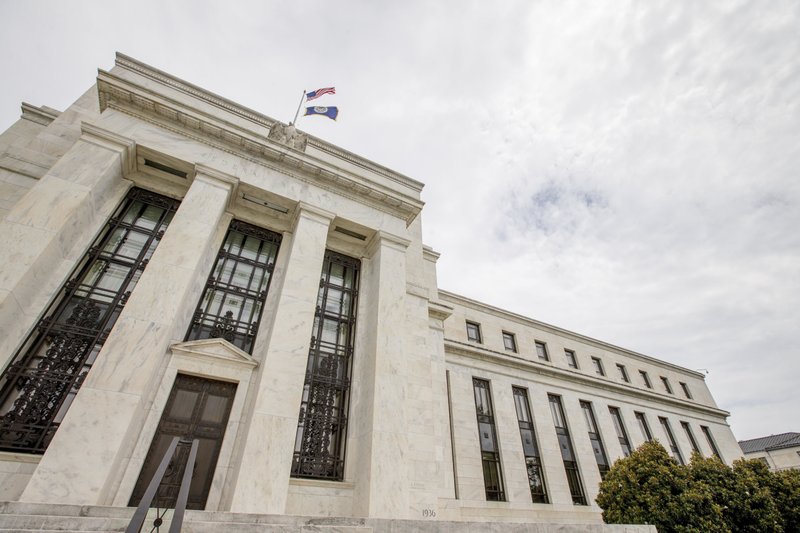
At some point in the coming months, the Federal Reserve is widely expected to resume raising interest rates. Just not quite yet. On Wednesday, the Fed will likely end its latest policy meeting with an announcement that it’s keeping its benchmark rate unchanged at a time of steady economic gains but also heightened uncertainty surrounding the new Trump administration. In its statement, the Fed will likely acknowledge that the economy has continued to move toward the central bank’s dual goals of full employment and annual inflation of roughly a moderate 2 percent. But the Fed is nevertheless expected to signal that it wants more time to monitor the economy’s performance and that it still expects those rate increases to occur gradually. “We are moving in the direction of more rate hikes this year, but the January meeting is not where that will start,” said David Jones, chief economist at DMJ Advisors. At the moment, most economists foresee no rate increase even at the Fed’s next meeting in March, especially given the unknowns about how President Donald Trump‘s ambitious agenda will fare or whether his drive to cancel or rewrite trade deals will slow the economy or unsettle investors. It’s always possible that the central bank could surprise Fed watchers Wednesday by sending a signal that a rate hike is coming soon. In Fed parlance, that signal could be as slight as changing language in its statement to say “near-term risks to the economic outlook appear in balance,” instead of “roughly in balance,” the phrase it has been using. The statement will not be accompanied by updates to the Fed’s economic forecasts or by a news conference with Chair Janet Yellen, both of which occur four times a year . Last month, the Fed modestly raised its benchmark short-term rate for the first time since December 2015, when it had raised it after keeping the rate at a record low near zero for seven years. The Fed had driven down its key rate to help rescue the banking system and energize the economy after the 2008 financial crisis and the Great Recession. When it raised rates last month, the Fed indicated that it expected to do so three more times in 2017. Yet confusion and a lack of details over what exactly Trump’s stimulus program will look like, whether he will succeed in getting it through Congress and what impact it might have on the economy have muddied the outlook. And while Trump’s tax and spending plans are raising hopes for faster growth, his proposals to impose tariffs on such countries as China and Mexico to correct trade imbalances could slow the economy if U.S. trading partners retaliate and collectively impede the flow of imports and exports. “The Fed is unlikely to signal intentions to raise rates as early as March given the heightened uncertainty about the timing and scope of fiscal and protectionist policies,” said Sal Guatieri, senior economist at BMO Capital Markets. Nariman Behravesh, chief economist at IHS Markit, predicts that the economy will grow a modest 2 percent to 2.5 percent this year, before accelerating next year to 2.6 percent to 2.7 percent on the assumption that Trump’s policy proposals will have begun to take full effect by then. The outlook for both years would mark an improvement over the economy’s lackluster growth of 1.6 percent in 2016, its weakest performance since 2011. Even though economic growth, as measured by the gross domestic product, was underwhelming last year, the job market appears close to full health. Hiring was consistently solid in 2016, and the unemployment rate ended the year at 4.7 percent, just below the 4.8 percent level the Fed has identified as representing full employment. And inflation, by the Fed’s preferred measure, rose 1.6 percent in the 12 months that ended in December, moving closer to the Fed’s 2 percent goal. Republished with permission of The Associated Press.
Janet Yellen says she expects Fed to raise rates by year’s end
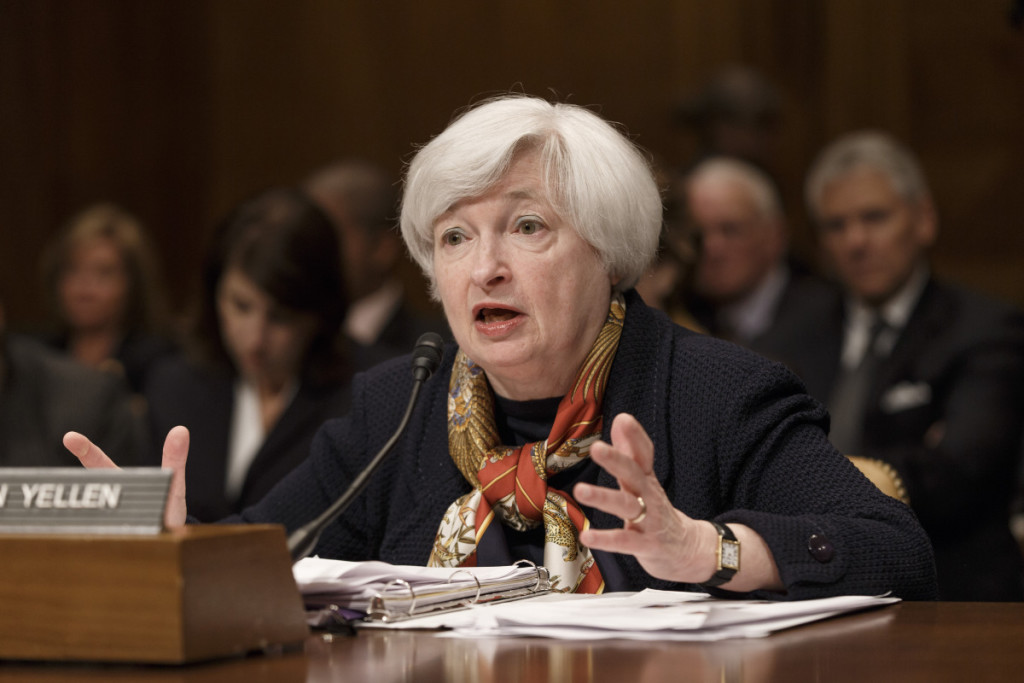
Chair Janet Yellen said Thursday that she expects the Federal Reserve to begin raising interest rates from record lows by the end of the year. In a lecture at the University of Massachusetts at Amherst, Yellen said she thought inflation would gradually move up to the Fed’s target rate of 2 percent as unusually low oil prices and other factors prove temporary. And she suggested that global economic weakness won’t likely be significant enough to dissuade the Fed from raising its key short-term rate from zero by December. Yellen’s comments may help clarify doubts about the Fed’s intentions that deepened last week after its latest policy meeting ended. The Fed chose not to raise rates, citing global economic pressures and concern about excessively low inflation. That decision raised worries that the Fed had greater concerns about economic problems in China and falling stock markets than investors had previously thought. In her speech Thursday, Yellen said Fed officials continue to monitor economic troubles abroad. But she said officials don’t think those challenges will significantly influence the central bank’s interest-rate decisions. Toward the end of the speech, Yellen, 69, paused twice for several seconds, appearing to have lost her place in the text. The Fed said in a statement later that Yellen “felt dehydrated at the end of a long speech under bright lights.” The Fed statement said she was seen by emergency medical personnel and “felt fine afterward and has continued her schedule Thursday evening.” At a news conference last week, Yellen had avoided saying whether she herself still thought a rate hike would be justified this year. She said she preferred to convey the collective view of the Fed’s policymaking committee, which establishes the central bank’s rate decisions. But on Thursday, Yellen included herself, saying, “Most of my colleagues and I anticipate that it will likely be appropriate to raise the target range for the federal funds rate sometime later this year.” The Fed has two remaining meetings for this year, Oct. 27-28 and Dec. 15-16. Many economists say they doubt the Fed would have enough new information to be confident about hiking rates in October but say they do expect a move in December as long as nothing unexpected happens to threaten the economy. “Our base-case scenario is still that the Fed will begin to hike rates in December,” said Paul Ashworth, chief U.S. economist at Capital Economics. He cautioned, though, that any government shutdown caused by battles over the federal budget or a failure to raise the government’s borrowing limit in a timely way could cause the Fed to further delay a rate increase. As she has before, Yellen stressed that when the Fed does begin raising rates, it expects the increases to be extremely gradual. The central bank has left its benchmark rate at a record low since 2008. It last raised rates in 2006. She also emphasized that the Fed has made no final decision about a rate hike. The decision still depends on further progress toward the Fed’s dual mandates: Maximizing employment and maintaining price stability, which the Fed defines as inflation rising at a modest annual pace of 2 percent. In August, the U.S. unemployment rate reached a seven-year low of 5.1 percent, essentially achieving the Fed’s job goal. But inflation has been running below the Fed’s target for more than three years and recently has fallen even farther from the 2 percent goal. Ultra-low inflation has resulted in part from a plunge in energy prices over the past year and a higher-valued dollar, which has made imports cheaper. Yellen said Fed officials still think the depressive effects of the dollar and energy prices will fade, allowing inflation to return to the 2 percent level. She noted that the Fed expects low unemployment to eventually accelerate wage gains. Republished with permission of the Associated Press.
