
Rick Perry dials back Christian appeal in Iowa, cites job record
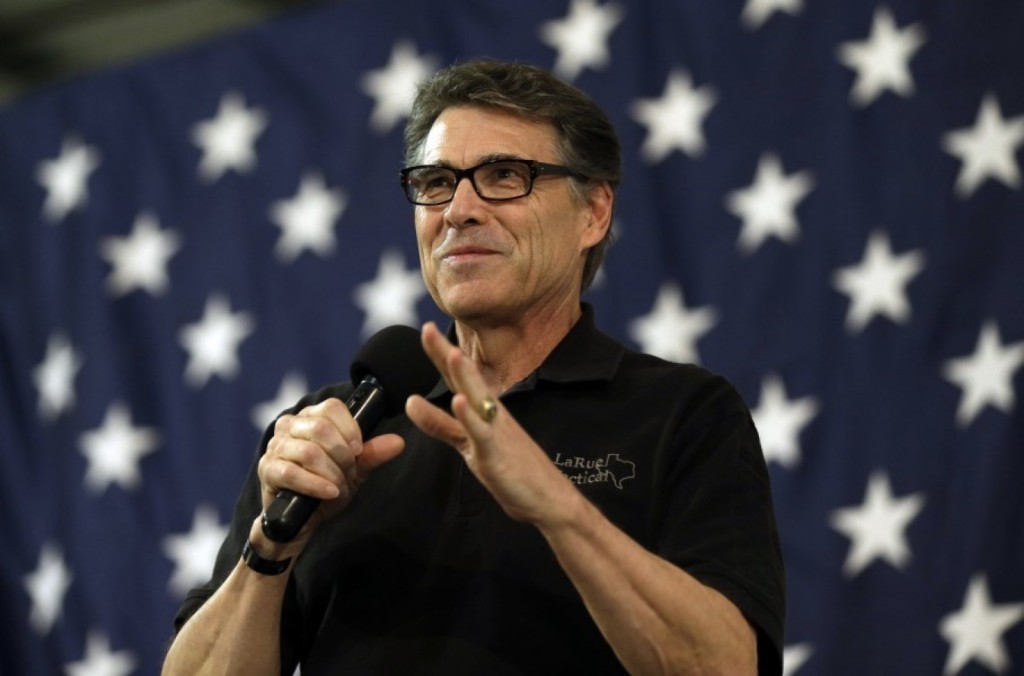
Rick Perry bragged to an Iowa barbecue crowd about the strong economy in Texas, drew laughs comparing President Barack Obama to Jimmy Carter and won applause vowing to secure the U.S.-Mexico border. But in a state where evangelicals wield political influence, he didn’t mention religion until 25 minutes into his address, and only then when asked about it. “Nothing against golf, but on Sunday morning, you’re not going to see me at the golf course,” Perry quipped about his unwavering church attendance. The former Texas governor’s devout Christian beliefs were a centerpiece of his short-lived 2012 White House bid but are an afterthought in his second-chance campaign across Iowa. While Republican rivals Mike Huckabee, Rick Santorum and Ted Cruz are pushing hard to mobilize the conservative evangelical vote, Perry prefers to trumpet his 14 years of executive experience leading the second most populous state. In a field with few military veterans, he also speaks about his five years in the Air Force. Evangelicals helped catapult Santorum to a 2012 Iowa caucus win and had spurred Huckabee to an Iowa victory four years earlier. Perry’s super PACs, though, are broadcasting TV commercials in Iowa focused on security at the far-away border and Perry’s cotton farm upbringing — not on God. Perry said his faith is as important as ever; he just doesn’t need to talk about it as much while campaigning. “Nothing’s changed between me and the Lord,” he said between campaign stops. “I’m still planning on going to heaven.” He added: “I’m a different candidate, but I’m still the same person at my core.” Perry was active in both the Methodist and Baptist churches growing up but since 2011 has attended a nondenominational evangelical megachurch in Austin. Last year, he was baptized anew by a pastor from that church in the same rural creek where Texas icon Sam Houston was baptized. Perry’s religious beliefs were on much broader display four years ago, when he briefly became a presidential front-runner before his campaign flamed out. A week before entering the 2012 race, Perry headlined “The Response,” a seven-hour prayer meeting at a Houston football stadium where he declared before 30,000 believers: “Father, our heart breaks for America. We have forgotten who made us, who protects us, who blesses us.” Another signature moment of his first presidential bid was a television ad played heavily in Iowa in which Perry proclaimed, “I’m not ashamed to admit I’m a Christian.” But that all-out appeal to evangelicals fizzled. This time, Perry barely mentions Christianity in his stump speech. Although he’s frequently asked about his faith, his responses are usually limited to saying he opposes the Supreme Court’s decision legalizing gay marriage and that, as president, he’d protect religious freedom. That wasn’t enough for Sharon Elling, who was among those who filled nearly every seat when Perry visited a brew pub and cafe in Hampton, population about 4,000. She asked Perry whether he would defend businesses’ right to refuse serving gay couples for religious reasons. He responded by panning the high court’s gay marriage ruling, which struck her as tepid. “I wish he’d spoken more about that,” said Elling, a 71-year-old retiree. “I know that would be politically a little bit dicey. But we need some people who aren’t afraid and will voice that position.” Steve Scheffler, president of the Iowa Faith and Freedom Coalition, said Perry’s Christian beliefs can still be present in the campaign even if they aren’t as visible. “I don’t think it’s one or the other,” Scheffler said. “Even if you’re campaigning on your executive experience and policies, your faith drives the decisions in your life.” Cruz, another Texan, is focusing much more on evangelical support, though his advisers won’t say whether he’s trying to fill a void in the courtship of religious conservatives opened by Perry. The senator kicked off his campaign at Liberty University, founded by the late Rev. Jerry Falwell, and publicly embraces his Southern Baptist faith. “I would say Ted Cruz is trying to out-Huckabee Huckabee, and I think he’s actually doing a good job,” said David Lane, a California-based evangelical who has organized pastors across the country to be more politically active. A former Arkansas governor, Huckabee is also an ordained Southern Baptist minister. Perry’s playing down of his faith may widen his appeal with Iowa voters who think there is too much talk about religion in politics. “I remember him speaking about his faith before and he didn’t do well,” said Wynn Touney, a 75-year-old retiree who met Perry in 2011 and then again at a recent event in Fort Dodge, about 90 miles southwest of Clear Lake. “It’s nice to hear what else is on his mind.” Republished with permission of The Associated Press.
GOP 2016 hopefuls talk social issues in Iowa
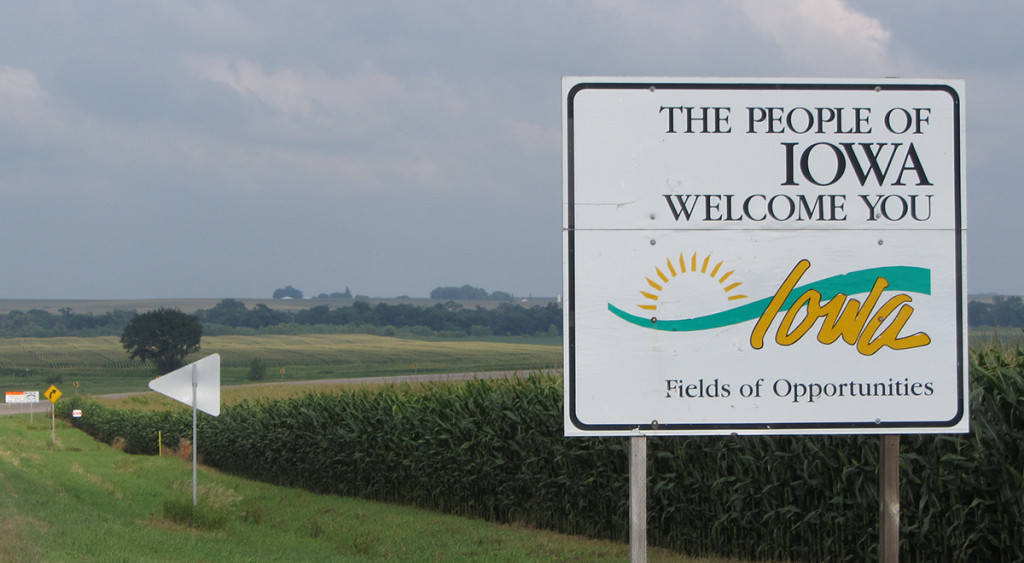
Republican presidential hopefuls emphasized their staunch opposition to gay marriage and abortion rights this weekend before a crowd of social conservatives who hold significant sway in the state’s leadoff presidential caucuses. Nine declared and prospective 2016 candidates appeared in a church in Waukee for a forum Saturday sponsored by the conservative Iowa Faith and Freedom Coalition and attended by more than 1,000 people. The forum gave candidates an opportunity to show off their conservative bona fides, with speeches on religious freedom and social issues that repeatedly brought the crowd to its feet. Texas Sen. Ted Cruz noted that the U.S. Supreme Court will hear oral arguments in four states’ same-sex marriage cases on Tuesday and said that between now and then, conservatives must “fall to our knees and pray.” “We need leaders who will stand unapologetically in defense of marriage and life,” Cruz said in remarks that drew huge applause. On abortion, Kentucky Sen. Rand Paul encouraged conservatives to be more aggressive in their opposition, saying: “I’m tired of us retreating on this issue and I’m going to push back.” He also argued that most Americans were uncomfortable with late-term procedures. Abortion has been a tricky issue for the senator. He has supported restrictions on the procedure in legislation yet said the issue is too divisive to expect changes in federal abortion law, a stance that raised earlier concerns among some religious conservatives about his commitment to their cause. The gathering offered a platform for Republican contenders to cater to social conservatives with a message that did not always address the full range of their views on social issues. Both Florida Sen. Marco Rubio and Paul, for example, have stopped short of calling for a federal ban on same-sex marriage sought by some religious conservatives. The senators have said that question should be left to the states. Many candidates spoke about their personal faith beliefs. Louisiana Gov. Bobby Jindal spoke about his conversion to Christianity and said he would seek to protect religious freedom. “The United States of America did not create religious liberty,” Jindal said. “Religious liberty created the United States of America.” Also on the program were former Texas Gov. Rick Perry, Wisconsin Gov. Scott Walker, former Arkansas Gov. Mike Huckabee, former Pennsylvania Sen. Rick Santorum and businesswoman Carly Fiorina. Most candidates focused on religious and social issues, but several took shots at Democratic front-runner Hillary Rodham Clinton. Fiorina, the only woman among the 2016 Republican contenders, said Republicans need to choose someone who can throw “punches all day long” at the potential Democratic presidential nominee. Gary Chidester, 65, of Lakesburg, said he had talked to most candidates even before the event, but remained undecided. He was most interested in hearing support for traditional marriage and opposition to abortion rights, adding: “As a Christian, when I’m holding my Bible and the words change in it, I’ll change.”
