
Donald Trump Doubles Down on Potential Strike Sites in Iran
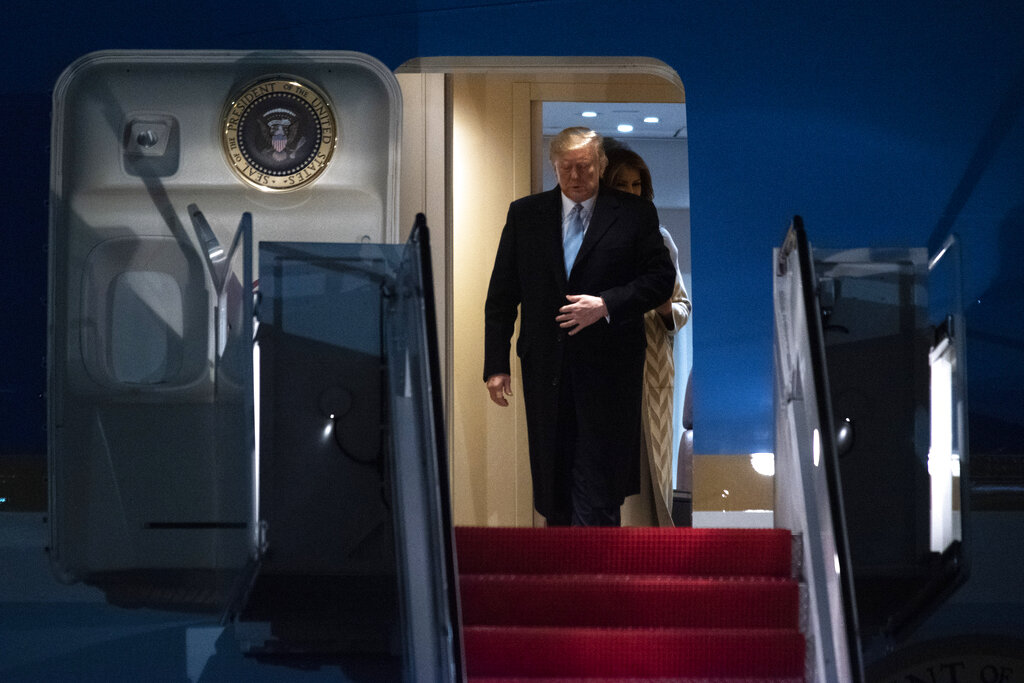
Donald Trump Says Iranian Cultural Sites are Fair Game.
Trump Returns to Washington to Face a Pair of Challenges
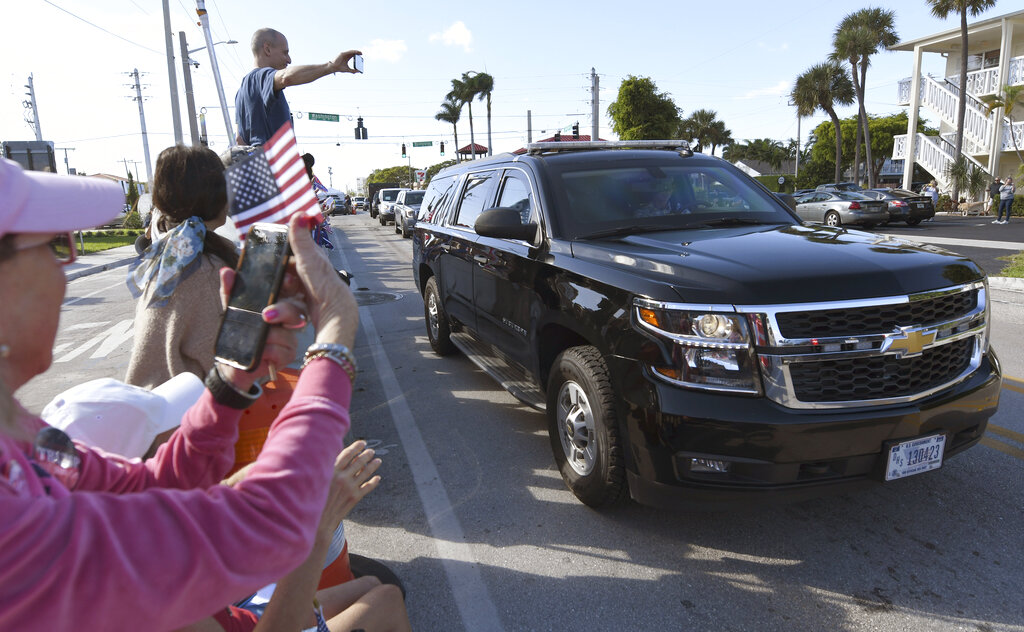
Donald Trump faces a new crisis in the Middle East and an upcoming Impeachment Trial.
Vice President Mike Pence works to reassure Kurdish allies in surprise Iraq visit

Vice President Mike Pence worked to reassure the United States’ Kurdish allies in an unannounced trip to Iraq on Saturday, the highest-level American trip since President Donald Trump ordered a pullback of U.S. forces in Syria two months ago. Flying in a C-17 military cargo aircraft, Pence landed in Irbil, capital of Iraq’s semi-autonomous Kurdish region, to meet with Iraqi Kurdistan President Nechirvan Barzani. The visit was meant to hearten the United States’ regional partners in the fight against the Islamic State group after the U.S. pulled troops from northern Syria, leaving America’s Kurdish allies there to face a bloody cross-border Turkish assault last month. Asked by reporters if the United States was facing a sense of betrayal from Iraqi and Syrian Kurdish allies over Trump’s actions in Syria, Pence said both groups, including Syrian Kurdish forces “who fought alongside us,” had no doubts about the U.S. commitment to them. “It’s unchanging,” Pence said. Earlier, Pence received a classified briefing at Iraq’s Al-Asad Air Base, from which U.S. forces are believed to have launched the operation in Syria last month that resulted in the death of Islamic State leader Abu Bakr al-Baghdadi. Pence also spoke by phone with Iraqi Prime Minister Adel Abdul-Mahdi. Underscoring Pence’s message that American military partnership with Syrian Kurdish forces is ongoing, the U.S.-led coalition said Saturday that its forces, along with hundreds of Syrian Kurdish commandos, had jointly carried out the largest operation against the Islamic State in eastern Syria since the U.S. pullback began in early October. Friday’s operation in southeastern Syria’s Deir el-Zour province captured dozens of Islamic State militants, cleared enemy compounds and seized weapons and explosives, the U.S.-led coalition said. Operations against Islamic State militants in Syria had been disrupted, but not totally halted, because of the U.S. troop pullback and Turkey’s invasion. Pence’s trip Saturday was his second to the region in five weeks. Trump deployed him on a whirlwind journey to Ankara, Turkey, last month to negotiate a cease-fire after President Recep Tayyip Erdogan seized on the U.S. withdrawal to launch the offensive on U.S.-allied Kurdish fighters in northern Syria. Trump’s move had sparked some of the most unified criticism of his administration to date, as lawmakers in both parties accused Trump of forsaking longtime Kurdish allies and inviting Russia and Iran to hold even greater sway in the volatile region. When the U.S. forces withdrew, Syria’s Kurds — seeking protection from their No. 1 enemy, Turkey — invited Syrian government and Russian forces into parts of northeastern Syria where they had not set foot in years. More are now deploying along large parts of the border region under a Russian-Turkish deal, including to at least one former U.S. garrison in northern Syria. The Ankara agreement required Syrian Kurds to vacate a swath of territory in Syria along the Turkish border in an arrangement that largely solidified Turkey’s position and aims. Pence hailed the cease-fire as the way to end the bloodshed caused by Turkey’s invasion. But Syrian-led Kurdish forces say the cease-fire is persistently violated. Fighting raged Saturday between them and Turkey-backed forces outside the Syrian town of Ein Issa, once home to U.S. bases and the Kurdish administration. A senior Syrian Kurdish official was critical Saturday of Washington’s lack of response to Turkey’s violations of the cease-fire. Limiting the U.S. partnership to military cooperation over a limited area with the Syrian Kurdish fighters, “while condoning the killing of civilians, is not a very honest relationship and cooperation,” the official, Ilham Ahmed, said. On Nov. 13, Trump feted Erdogan with a White House visit over the objection of a bipartisan group of lawmakers who argued Erdogan should be denied the honor of a West Wing visit in the aftermath of the invasion and because of his decision to purchase Russian-made surface-to-air missiles over the objection of NATO allies. In neighboring Syria, after declaring the near-complete withdrawal of U.S. forces from Syria, Trump decided that roughly 800 would stay to keep eastern Syria’s oil fields from falling back into the hands of the Islamic State. Trump also agreed to keep about 150 U.S. troops at a base in southern Syria as a check on Iranian influence in the region. While Trump has claimed that the U.S. was now “keeping” the oil in Syria, Pentagon officials indicated the U.S. presence is not intended to improve the oil infrastructure but to keep it in the hands of the Kurdish-led Syrian Democratic Forces. Pence, joined on the trip by his wife, Karen Pence, also greeted U.S. troops ahead of the Thanksgiving holiday, serving turkey and accompaniments to hundreds of troops at the two locations. “While you come from the rest of us, you’re the best of us,” Pence told service members in a dusty hangar at Al-Asad. He said the Trump administration is working to secure another pay increase for the armed services and suggested the ongoing impeachment inquiry in Washington was slowing the way. “Partisan politics and endless investigations have slowed things down in D.C.,” Pence said. Pence’s visit to Iraq comes as the country has been plagued by widespread anti-corruption protests. At least 320 protesters have been killed and thousands have been wounded since the unrest began on Oct. 1. Pence spoke by phone with Abdul-Mahdi after the Iraqi leader declined an invitation to meet with Pence at the air base when security concerns prevented Pence from traveling into Baghdad. Pence encouraged the Iraqi government to show restraint with the protesters. By Zeke Miller Associated Press Associated Press writers Samya Kullab in Baghdad and Sarah El Deeb in Beirut contributed. Republished with the permission of the Associated Press.
Donald Trump’s options for restoring travel ban
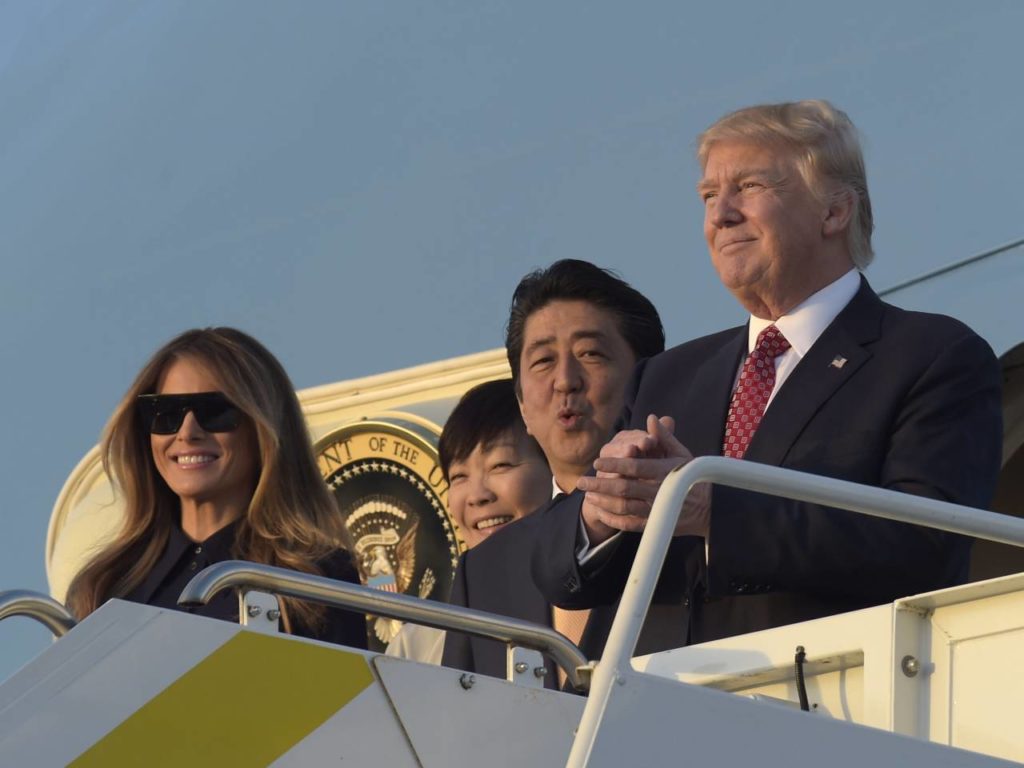
President Donald Trump has promised more legal action after a federal appeals court refused to reinstate his ban on travelers from seven predominantly Muslim nations. Trump tweeted “SEE YOU IN COURT” after the decision came out Thursday, but what he has in mind remains to be seen. Trump said Friday that he has “no doubt” he will win the case in court and told reporters he’s considering signing a “brand-new order” on immigration. The 3-0 ruling means that refugees and people from the seven nations — Iran, Iraq, Libya, Somalia, Sudan, Syria and Yemen — can continue entering the United States for now. The administration has several options on how to proceed. A look at where the legal fight goes from here. REHEARING AT THE APPEALS COURT The Trump administration could decide to ask the 9th U.S. Circuit Court of Appeals to reconsider the three-judge panel’s ruling. But the odds of success seem low, said Margo Schlanger, a law professor at the University of Michigan. She noted that the three-judge panel was unanimous and included a judge chosen by a Republican president. SUPREME COURT APPEAL The government could file an emergency appeal to the Supreme Court and ask the justices to restore the ban. But it would take at least five justices to overturn the ruling from the 9th U.S. Circuit Court of Appeals, and that may be a long shot. The high court still has only eight members since the death of Justice Antonin Scalia — four conservative and four liberal justices. “There are almost surely four votes to deny an emergency request to reinstate the order,” said Peter Spiro, a law professor at Temple University. The last immigration case to reach the justices ended in a 4-4 deadlock last year. That suggests a similar split over Trump’s order, which would let the 9th Circuit ruling stand and keep the freeze in place. WAITING FOR GORSUCH If the Supreme Court declines to intervene right away, the case would remain in the 9th Circuit and ultimately be considered on its legal merits. It also could return to U.S. District Judge James Robart in Seattle, who temporarily blocked the ban after Washington state and Minnesota urged a nationwide hold on the Jan. 27 order. The lower court action so far is temporary and hasn’t resolved broader questions about the legality of Trump’s order. It simply halts deportations or other actions until judges can more fully consider whether the order violates legal or constitutional rights. Allowing the case to play out longer at the appeals court has one advantage: By the time a ruling on the merits comes down, the Senate may have confirmed Judge Neil Gorsuch to the Supreme Court. That may improve Trump’s chances to prevail on appeal. But just how the issue might reach the Supreme Court isn’t clear. Several other challenges have been launched in courts around the country, and the court could opt to wait before stepping in. REVISING THE EXECUTIVE ORDER The White House could amend the executive order to expressly carve out existing green card holders and other people that already have some ties to the United States. Up to 60,000 visas were initially canceled in the wake of the ban, affecting the lives of students, professors and workers. White House counsel Donald McGahn had issued guidance days after the executive order saying it didn’t apply to legal permanent residents of the U.S., but the appeals court said that was not enough. “The government has offered no authority establishing that the White House counsel is empowered to issue an amended order superseding the executive order signed by the president,” the opinion said. Revising the order “shifts the legal boundaries so that it becomes a tougher constitutional target,” Spiro said. The appeals court issued a sharp rebuke to the Justice Department’s argument that the president has the constitutional power to restrict entry to the United States to prevent terrorism, and that courts cannot second-guess that authority. “There is no precedent to support this claimed unreviewability, which runs contrary to the fundamental structure of our constitutional democracy,” the opinion said. Washington state, Minnesota and other states say Trump showed his intent in the presidential campaign when he called for a ban on Muslims entering the country. They also say his order discriminates against Muslims because it provides exceptions for refugees who practice a religion that makes them a minority in their home country. That would favor Christians in the countries affected. The appeals court said the administration failed to show that the order satisfied constitutional requirements to provide notice or a hearing before restricting travel. But it did not rule on whether the order violated religious protections under the First Amendment. Justice Department lawyer Erez Reuveni told a Virginia judge hearing arguments in a similar case on Friday that the administration hasn’t decided what to do. Republished with permission of The Associated Press.
U.S.-led coalition doubles number of advisers in Iraq to 450
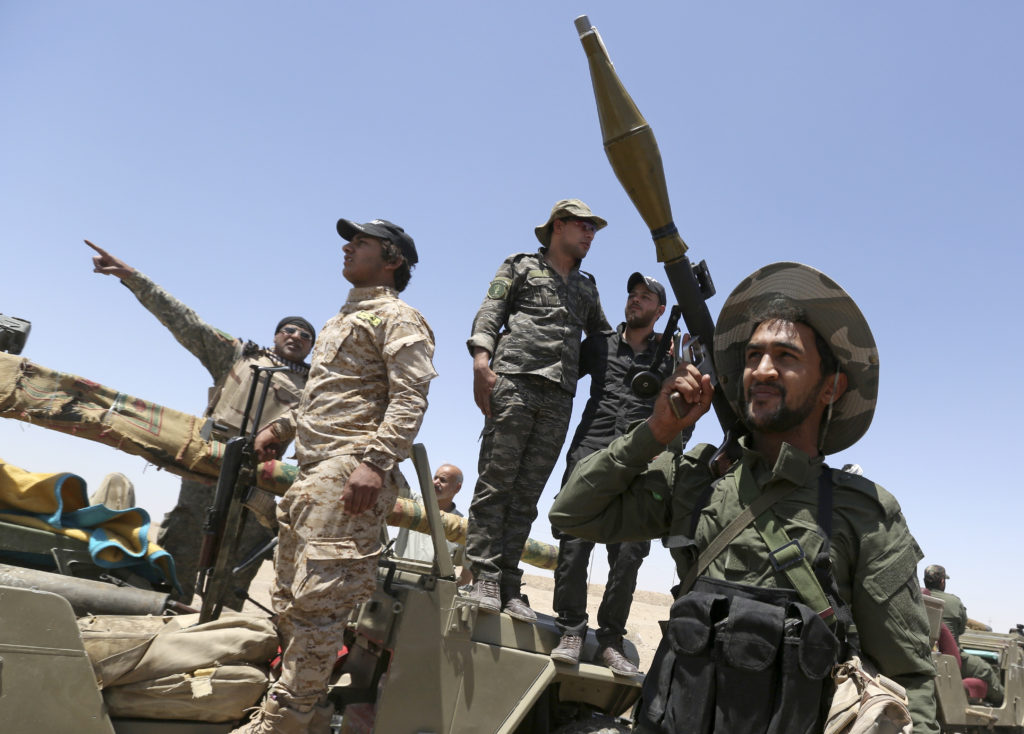
A U.S. military spokesman says the number of American and coalition advisers in Iraq has doubled in the past couple of weeks as Iraq pushes to recapture the Islamic State stronghold of Mosul. U.S. Air Force Col. John Dorrian says there are now about 450 coalition advisers in Iraq. Dorrian says an unspecified number of those advisers have been inside Mosul occasionally as part of the expanding effort to support Iraqi security forces as they fight dug-in militants. The advisers aren’t involved in direct combat, but are meant to provide specialized support such as analysis of intelligence. The Pentagon says there are 4,935 U.S. troops in Iraq, including trainers and other support forces. Dorrian spoke to Pentagon reporters Wednesday from his headquarters in Baghdad. Republished with permission of the Associated Press.
Updates from the 1st presidential debate

The Latest on the first of three presidential debates between Democrat Hillary Clinton and Republican Donald Trump (all times EDT): 10:45 p.m. Both candidates concluded the first presidential debate by saying they will accept the outcome if the other wins. Hillary Clinton spoke directly to viewers and said, “It’s not about us, it’s about you.” Donald Trump initially dodged the same question, saying he would make a “seriously troubled” America “great again.” He added: “I’m going to be able to do it. I don’t believe Hillary Clinton will.” But Trump finished his answer by saying that if Clinton wins, “I will absolutely support her.” ___ 10:43 p.m. Hillary Clinton is punching back at Donald Trump’s assertions that she doesn’t have the “stamina” to be president. Trump has questioned whether Clinton has the physical fitness to be president and he repeated the criticism to her directly during the debate. Clinton’s response? Trump shouldn’t talk about stamina until he’s tried out the busy schedule she kept up as secretary of state. Trump didn’t answer moderator Lester Holt’s original question about his past comments that Clinton doesn’t have the “presidential look.” Clinton suggested the remarks were about gender, and she reminded the crowd of Trump’s past comments calling women “pigs” and other derogatory names. ___ 10:42 p.m. Donald Trump says NATO needs to “go into the Middle East with us” to combat the Islamic State group. And he is taking credit for NATO focusing resources on combating terrorism. In fact, the alliance agreed in July to contribute aircraft and conduct training in Iraq and has increased intelligence coordination there. And NATO set up an anti-terrorism program in 2004 — years before Trump criticized them as a presidential candidate. Earlier this year, Trump criticized NATO for not focusing on terrorism. He said that afterward, he saw an article reporting that NATO was opening a new, major anti-terrorism division. He said Tuesday that NATO’s action was “largely because of what I was saying, and my criticism of NATO.” ___ 10:40 p.m. Donald Trump is avoiding a specific declaration on how he would use nuclear weapons if he’s elected president. The Republican nominee said during the first presidential debate that he “would not do first strike” because “once the nuclear alternative happens, it’s over.” That statement suggests he would not authorize a nuclear attack unless the U.S. was struck first. But in the same answer Trump said he “can’t take anything off the table.” He mentioned adversary nations such as North Korea and Iran. President Barack Obama has considered changing existing policy to state clearly that the United States would not deploy nuclear weapons without first being attacked by nuclear weapons. But he met resistance and has elected not to make such a shift. ___ 10:38 p.m. Hillary Clinton is accusing Donald Trump of being too easily provoked to keep the United States from going to war — perhaps even one involving nuclear weapons. Trump says: “I have much better judgment than she does. I have much better temperament.” That drew laughs from some in the debate crowd, and prompted Clinton to exclaim: “Woo! OK!” Clinton then pivoted to policy, defending the U.S.-led war in Afghanistan. Clinton said Iran was “weeks away” from a nuclear bomb when she became secretary of state — and says the Obama administration thwarted that progress. She continued that Trump didn’t have “good judgment or the right temperament” because he could take the country to war over small issues, like being mocked on Twitter. ___ 10:35 p.m. Donald Trump is continuing to insist he opposed the Iraq War before the U.S. invasion despite evidence to the contrary. Trump says during the debate that he “did not support the war in Iraq,” calling that charge “mainstream media nonsense.” But there is no evidence Trump expressed public opposition to the war before the U.S. invaded. Trump was asked in September 2002 whether he supported a potential Iraq invasion in an interview with Howard Stern. Trump briefly hesitated, then responded: “Yeah, I guess so.” Presented with the comment during the debate, Trump responds: “I said very lightly, I don’t know, maybe, who knows.” He’s also telling reporters to call Fox News host Sean Hannity to confirm private conversations he said they had about the war. Hannity is a top Trump supporter. Clinton voted in favor of the invasion in 2002 while she was a New York senator. She has since said it was a mistake. ___ 10:27 p.m. Donald Trump is interrupting the moderator of the first presidential debate to insist he has the best temperament for the office. Trump repeatedly made the assertion after clashing with moderator Lester Holt over his early support for the Iraq War. Then he segued to his temperament. “I think my strongest asset by far is my temperament,” Trump said. “I know how to win.” Clinton and her allies have repeatedly hit Trump over his temper and inability to take criticism. ___ 10:23 p.m. Hillary Clinton says one key to fighting terrorism in the United States is working closely with Muslims living here. Clinton says Donald Trump has “consistently insulted Muslims abroad, Muslims at home.” She says Muslim people can provide information that law enforcement may not be able to obtain anyplace else. Both candidates were asked to explain how they would combat terrorism in the U.S. Clinton says her plan includes an intelligence surge to obtain “every scrap of information” and to “do everything we can to vacuum up intelligence from Europe, from the Middle East.” ___ 10:20 p.m. Hillary Clinton says defeating the Islamic State group and taking out its leaders would be a top priority as president. Clinton says she’s hopeful the Islamic State group would be pushed out of Iraq by the end of the year. She says the U.S. could then help its allies “squeeze” the terrorist group in Syria. Clinton says she would do everything possible to take out the group’s leaders, and make that one of her administration’s organizing principles
Diane Roberts: Stop the French-bashing; we owe them

For reasons that do us no credit, Americans find it easy to insult the French. Perhaps we hate their freedoms – their freedom to live for something other than money, their freedom to enjoy food and sex minus 400 years of Protestant guilt. We call the French “cheese-eating surrender monkeys;” we sneer at John Kerry and Mitt Romney because they speak French. At the Oct. 28th debate, Jeb Bush tried to get clever about Congress’ laziness, accusing them of adhering to a “French work week.” When the French refused to participate in our perfectly stupid invasion of Iraq, we boycotted their wine and some particularly silly congressmen demanded that the House cafeterias serve “Freedom Fries,” and “Freedom Toast.” Now that Paris has suffered terrorist attacks that killed at least 132, some Americans are expressing sympathy and solidarity with France. President Obama called it an “attack on the civilized world.” Buildings from 1 World Trade Center in New York to a bridge in Nashville lit themselves up with the blue, white and red of the French tricoleur. Nous sommes tous Parisiens. Then there’s the Republican Party. Donald Trump castigated the French for their “tough gun control laws.” If only everyone in the concert hall and the restaurant and the stadium had been toting AK-47s like the terrorists, things would have been very different. Newt Gingrich and Anne Coulter piled on, blaming France for not being armed. The politicizing got so bad that Red State’s Erick Erickson, a big gun-hugger himself, tweeted: “I gotta say, it does feel a little icky to turn this attack in Paris into a debate on how France should adopt our 2nd amendment.” Naturally, it’s all Barack Obama’s fault. He didn’t keep U.S. troops in Iraq; he didn’t deal with Syria; he hurt Israel’s feelings; he refuses to utter the words “radical Islam.” We all know that those are magic words, words that would solve the problem. Criticizing Obama’s Syria policy is fair enough: It’s been disastrous. But blaming him for ISIL absolves the neocons of the Bush-Cheney administration whose trigger-happy invasion of Iraq and cavalier treatment of the country, especially the Rummy-Wolfie-Cheney de-Baathification program, poured gasoline on the flame of extremism. Trump would probably describe France as a “loser” country, with its paid maternity leave, fast trains, humane employment laws, and excellent healthcare system. The French, in turn, reject “Anglo-Saxon capitalism” as rapacious and destructive. Nevertheless, the United States could learn from France – as we have always learned from France. French philosophers inspired our Founding Fathers with the idea that government should serve its citizens and that freedom was a human right. Rousseau argued for the state’s “social contract” with the individual; Voltaire championed civil rights and religious freedom; Montesquieu advocated for the separation of powers in government. What, you thought we came up with that all by ourselves? The French tradition of reason, of rational thought, of respect for knowledge, might help Republican presidential candidates get past their hysterical responses. Ted Cruz says ISIL is “coming to America.” Jeb Bush says the U.S. should focus on “Christian refugees”: They’re welcome in the U.S. as long as we make sure they’re the real deal, you know, give them a catechism exam, ask them to eat a bacon sandwich, and see whether they say “Merry Christmas!” instead of “Happy Holidays.” Ben Carson wants to ban any and all refugees from the Middle East. That’ll learn ’em. Because Obama’s going to let in 200,000 Syrians who are almost certainly psychopathic jihadis. Carson would bomb an oil field to make ISIL “look like losers.” Trump wants to bomb, too: all the oil fields. Then Exxon can come in and make everything, as he said, “beautiful.” And, according to him, it’s 250,000 Syrian refugees. The real number proposed by Obama is 10,000. But why let the facts get in the way of a good piece of political insanity? And under no circumstances should we remember that terrorists are often homegrown: Timothy McVeigh, the London suicide bombers in 2005, Anders Behring Breivik, and Dylan Roof were native to the nation they tried to attack. If nothing else, perhaps the Republicans will stop with the French-bashing and remember that if it were not for France, the United States would not exist. The French government sent guns, soldiers and money during the American Revolution, and the Marquis de Lafayette spent millions of his own fortune on American independence. The French deserve better than to be told they should be just like us. Diane Roberts teaches at Florida State University. Her latest book is “TRIBAL: College football and the Secret Heart of America.”
Martin Dyckman: The road to Middle East stability isn’t through war

Remember “freedom fries?” That was how some Americans expressed their spite toward France when that nation, with vastly more experience than ours in the Middle East, wisely declined the opportunity to participate in George W. Bush‘s ego-driven war on Iraq. There was a congresswoman from Florida who called for exhuming our military graves and bringing the remains home. She was ignorant of the fact that a grateful France had ceded those sites to the United States forever. The heartbreakingly beautiful cemetery atop the Normandy beachhead is as much American soil as Arlington itself. But in Paris on Friday, France paid a terrible price for the chaos we created when we invaded Iraq and destroyed its government with no thought of history or of the consequences beyond the premature boast, “Mission accomplished.” The evil we didn’t know proved to be worse than the evil we did. Saddam Hussein, for all his crimes, was a stabilizing influence on Iraq and an effective counterweight to Iran – which, unlike Iraq, had declared its enmity of the U.S. and remains an essential ally of the Syrian dictatorship that provides the so-called Islamic State with a plausible raison d’etre. When Bush’s civilian viceroy sacked the entire Iraqi army, he created legions of recruits for al-Qaida and its successor, the Islamic State of Iraq and Syria – aka ISIS. Our failure in nation-building created a corrupt prime minister, Nouri Kamal al- Maliki, whose refusal to renew the status of forces agreement gave President Obama no choice, whatever other he might have chosen, but to bring all our troops home. No president of either party could have left them there exposed to Iraqi laws, arrests and prosecutions. To understand this history is to be warned against repeating it. But America doesn’t learn that lesson very well. Vietnam should have taught us the difficulty of imposing our values on a different culture and to be leery of war where our national interest is not at stake. But the only lesson the politicians took to heart from that unpopular lost war was to abandon the draft and fight the next one with a volunteer force, a force that has been cruelly abused with too many successive combat deployments. In the aftermath of the Paris massacres, we will be hearing again, from the usual suspects, that it’s time to unleash American military might to whatever extent it takes to exterminate ISIS. But even if we could do that – and we can’t – something else would take its place, just as the burgeoning ISIS supplanted a decapitated al-Qaida. The Democratic presidential candidates were right as they agreed, in their separate ways Friday night, that the fight against ISIS must be led by the Muslim states that are the radical movement’s primary intended victims. The United States can help, and should. We are helping already, as are the French, and there is surely more that we can do, short of sending sophisticated weapons to dubious allies who might surrender them to ISIS. But it cannot be seen as an American war, or as French or British. The more important point is that the ultimate solution can not be military. That can only prolong the strife and suffering. By coincidence, the Imam of Asheville’s Muslim community, Egyptian-born Mohamed Taha, was the scheduled speaker Sunday at a brunch sponsored by the Brotherhood of my Reform Jewish congregation. It was well-attended. He talked mainly about the beliefs of Islam and its many similarities to Judaism, and its devotion to peace. But the slaughter at Paris hovered over the morning. “These people,” he said, speaking of ISIS and its ilk, “they are extremists. The majority of Muslims don’t consider these people as Muslims. Mohamed warned against such people … they take some verse of the Koran and they twist its meaning. “They don’t,” he added, “consider us as Muslims.” To defeat the jihadists, he said, requires overcoming the conditions they exploit. “They live in poverty,” he said of the populations where the jihadists enlist most of their support. “They have nothing. We have to help them to establish good countries, good communities. They have nothing in this life, so the extremists promise them everything in the next life.” The solution is not military. The wiser of our American experts on the Middle East, notably including The New York Times columnist Thomas Friedman, have been saying that for years. After World War II, the United States deployed a non-military solution, the Marshall Plan, to help a ravaged Europe rise to its feet in democracy rather than communism. We surely could use a Marshall plan for the Middle East. But how to help the people there to their feet without having the assistance stolen by the corruption that is endemic among the rulers there? I asked that question. Taha acknowledged the difficulty. It begins, he said, with affording an American education, steeped in American traditions and values, to Middle Eastern students who want to study here. Inevitably, perhaps, some few of those students will have other values in mind, like those who prepared here for 9/11. And in the aftermath of Paris, there are politicians who would slam the door, to students as well as refugees, for fear of the few who would exploit our hospitality. But that would be a mistake. It would betray that our values are not, in truth, what we would wish them to be. It would postpone the redemption of the Middle East and perpetuate a war that cannot be won by arms alone. Martin Dyckman is a retired associate editor of the newspaper formerly known as the St. Petersburg Times. He lives in Asheville, North Carolina.
Tom O’Hara: Don’t thank me for my service, just send my disability check
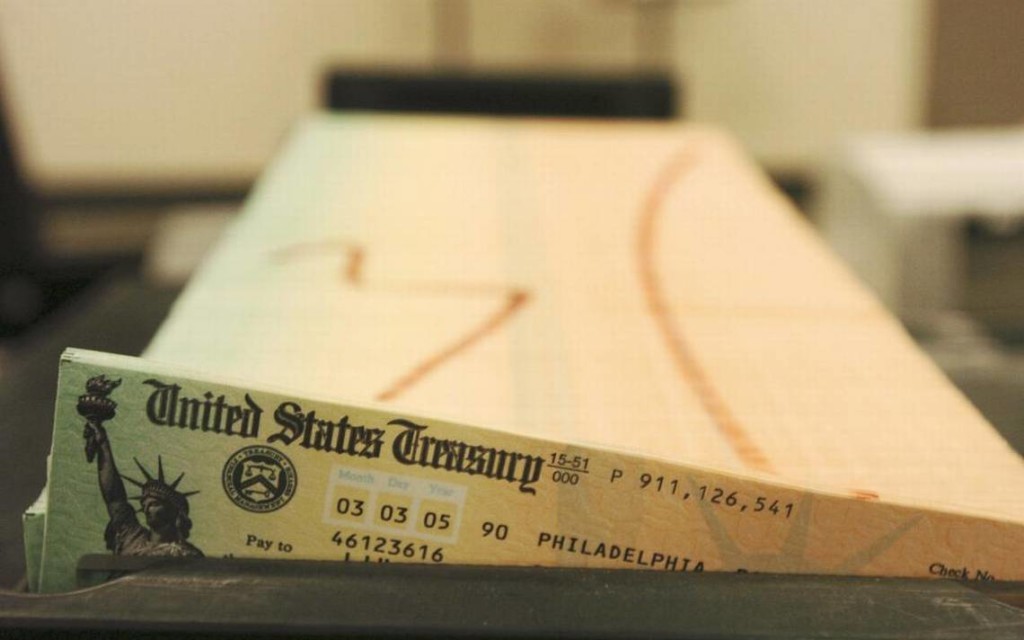
It’s Veterans Day on Wednesday and I’m even more excited than usual. In researching this column, I learned that as a Vietnam veteran I may be eligible to collect VA disability benefits because I have diabetes – even though I’m sure my tedious year at Phu Cat Air Force Base has nothing to do with my blood-sugar levels today. It’s a great time to be a veteran. Gov. Rick Scott and his team are doing everything they can to lure more veterans to Florida. We already have 1.6 million of them here and I doubt they need much coaxing to flee Ohio and New Jersey. Nonetheless, the state has waived out-of-state college fees for vets and offered a buffet of other perks. The college fee waiver is a nifty ruse because few current vets have any interest in getting a college degree. The state has a Department of Veterans Affairs that spends $111 million each year to help more and more vets feed at the government trough. This is very good politics because veterans are overwhelmingly old, white and male. In other words, they vote Republican. And they vote in droves. About 70 percent of America’s 22 million veterans voted in the 2012 presidential election, compared with 56.5 percent of all Americans. Among the vets 65 and older, more than 75 percent cast a ballot. In the 2014 midterm elections, vets voted for Republicans by a 20-percentage-point margin over Democrats in House races, according to The Washington Post. But politicians of every stripe pander to veterans. Even if they don’t vote for you, you sound patriotic and sensitive if you praise them and approve billions of dollars in benefits for them. Veterans account for only 9 percent of the adult population. (I wonder how many people even know a veteran.) Nonetheless, they have extraordinary sway with politicians. Even as the percent of congressmen who served in the military plummets (less than 20 percent today compared with 73 percent in 1971), their urge to throw money at vets escalates. “More than 1.3 million veterans of the Vietnam era received $21 billion in disability pay last year. From Afghanistan and Iraq, the cost was $9.3 billion – but it is growing fast,” the Los Angles Times reported last year. In 1991, the total cost for VA disability payments was $16.6 billion; it’s $50 billion today, the Times reported. Even the Heritage Foundation – a very conservative think tank – is amazed at the exploding veterans largesse. “Nearly 60,000 disabled veterans received cash benefits from three different federal programs simultaneously. More than 2,300 veterans received $100,000 or more in annual benefits each, and the highest annual benefit amounted to more than $200,000,” according to a 2014 foundation article. OK. Where do I sign up? Some guy is getting more than $200,000 by triple dipping into VA disability, military retirement and Social Security disability. And my guess is that he’s a white guy who votes Republican because he’s so disgusted by government waste. I assume this veteran was unperturbed if he had to exaggerate a bit for his benefits. It’s not hard to game the system, however, because it appears VA staff are encouraging the fraud. “A 2014 paper in Psychological Injury and Law identified ‘collusive lying’ between disability-benefits applicants and VA staff as one possible problem” for the soaring costs, according to the Heritage Foundation. Frankly, I’m just jealous. I have not been paying attention. I only recently discovered that you could get a “V” for veteran put on your driver license and get discounts at Home Depot and movie theaters. However, I’m going for the big time now: the diabetes claim. In 2001, the VA added Type 2 diabetes to the list of disabilities. The disease has not been definitely linked to Agent Orange, but veterans groups lobbied to include it, according to the LA Times. “Through 2013, the number of veterans receiving compensation for diabetes climbed from 46,395 to 398,480,” the Times reported. So if you see me on Veterans Day, don’t thank me for my service. Just give me directions to the Veterans Affairs disability claims office so I can get started on my paperwork. Tom O’Hara is a veteran newspaperman. He is the former managing editor of The Palm Beach Post and the Plain Dealer in Ohio.
Terri Sewell visit Alabama troops in Iraq
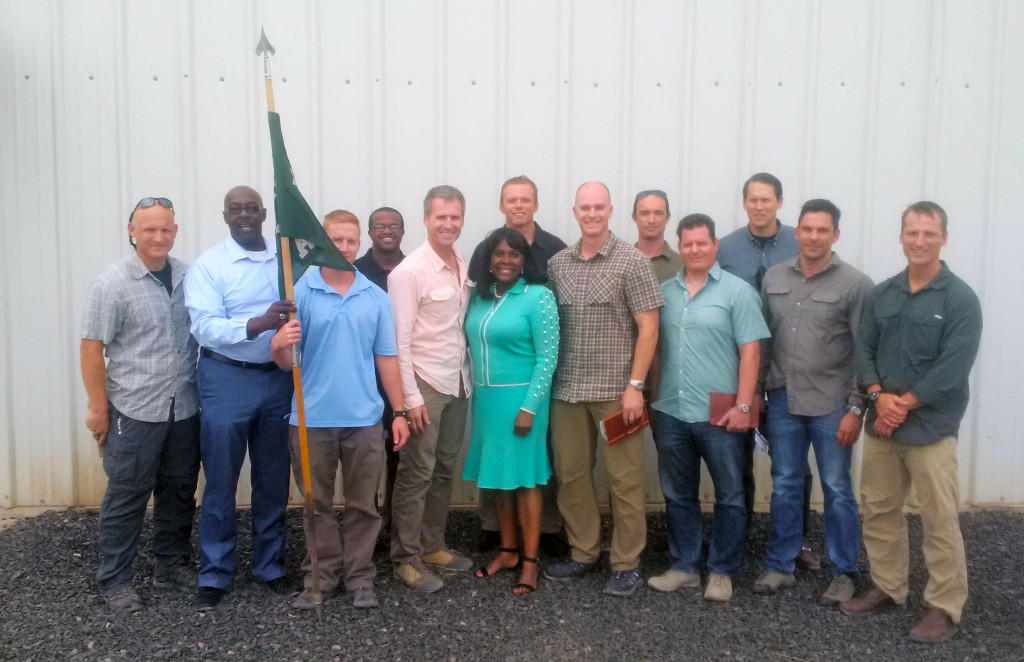
Next week she heads back to Capitol Hill, this week Congresswoman Terri Sewell (AL-07), a second-term member of the House Permanent Select Committee on Intelligence, took time to meet with members of the Alabama National Guard’s 20th Special Forces unit, part of U.S. Special Operations Command that is currently deployed in the Kurdish Region of Northern Iraq, during a four-day trip to the country. There, Sewell received oversight briefings on the current U.S. Department of Defense training mission with Syrian fighters and the Iraqi Army. “Our brave men and women in uniform play an integral role in Iraq, and my visit to Ebril and Baghdad deepened my appreciation for the sacrifices they have made to protect our country,” Sewell said of the men and women she met on her trip. “I was especially honored to meet with members of the Alabama National Guard’s 20th Special Forces division, and to learn more about their vital mission in Iraq. I want to thank these remarkable Alabama National Guardsmen for their exemplary service to our nation during their deployment in Iraq. I am especially proud to acknowledge the critical role that Alabama troops are playing in the fight against global terrorism.” Sewell continued, “As a member of the House Intelligence Committee, one of my most sacred duties is to ensure that every vote I make supports and advances our national security. Freedom is not free, and members of the armed forces deserve special recognition for their service and sacrifice. We in Alabama are doing our part.” Congresswoman Terri Sewell with American leadership in Iraq, including General Mark Odom who is the Combined Joint Operations Center Commander in Northern Iraq.
Martha Roby: Time to walk away?
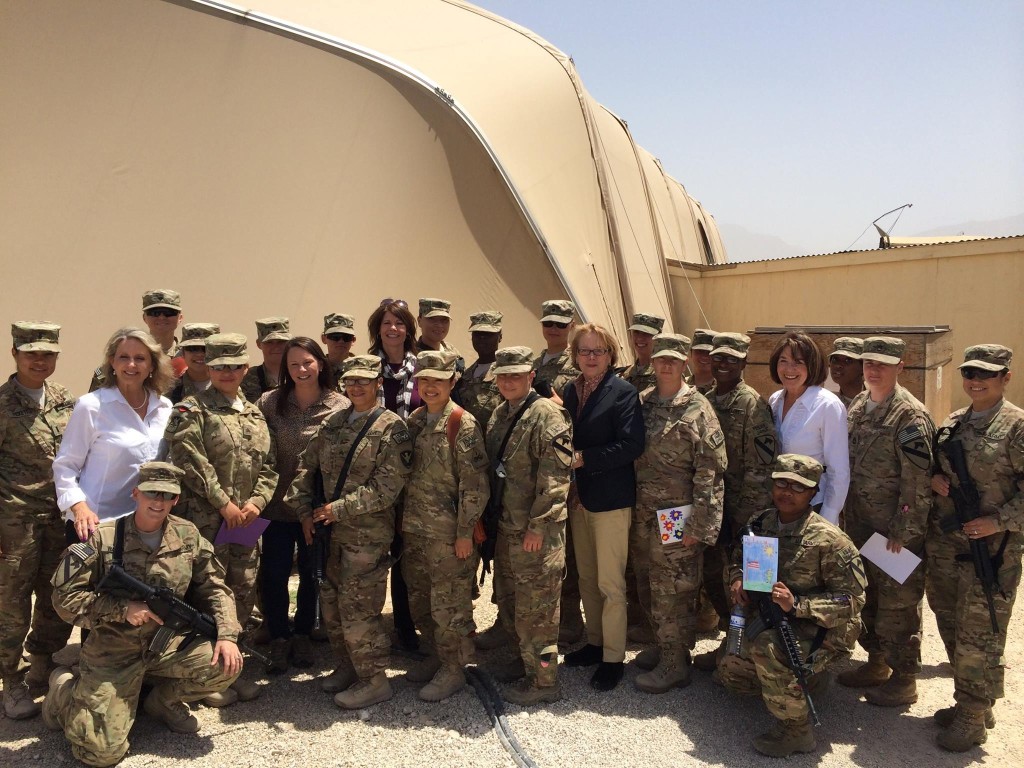
With all that’s been going on lately, attention has turned from what I believe to be one of the most important issues facing our country right now: the Iran nuclear talks. This past week, the Obama Administration quietly announced yet another deadline extension to the multilateral negotiations over Iran’s nuclear capability. Of course, the goal for the United States and our allies is to prevent Iran from obtaining a nuclear weapon. However, recent reports out of Switzerland have raised concerns that our negotiators have already conceded too much on major points such as uranium enrichment, economic sanctions relief and inspection access. The very fact that we keep extending the deadline tells you all you need to know about the priorities at play for the Administration. It seems that President Obama and Secretary Kerry are so concerned with settling on a deal, any deal, that they are not willing to walk away from a bad one as deadlines keep passing. We have had extension after extension and concession after concession – to the point that I’m not sure a good deal is even possible. As you know, a few months ago I traveled to the Middle East and visited the countries that would be directly dealing with a nuclear Iran: Israel, Jordan, Iraq and Saudi Arabia. These are our allies and they are rightly concerned that what is being brokered isn’t good at all. We cannot forget how high the stakes are here. If a bad deal is ratified, we aren’t just talking about a nuclear-armed Iran; we are talking about setting in motion a chain of events that could lead to multiple countries in this very volatile region wanting to become nuclear as well. And, after seeing the international community reward Iran’s hostility and obstinance with a nuclear deal, who would blame them? Republican U.S. Sen. Bob Corker of Tennesee, chairman of the Senate Foreign Relations Committee, has been outspoken in his concerns and recently wrote a letter to President Barack Obama saying in part, “Walking away from a bad deal at this point would take courage, but it would be the best thing for the United States, the region and the world.” I agree with Senator Corker that walking away from a bad deal would be the better option. No matter the outcome, I’m glad that Congress will have the final say over whether or not to lift sanctions on Iran. We cannot allow President Obama and Secretary Kerry to put their desire for a “legacy” achievement above the best interests of our nation and our allies. Martha Roby represents Alabama’s 2nd Congressional District. She is in her third term.
