
Jeb Bush makes stops in Upstate South Carolina

Republican presidential hopeful Jeb Bush is coming back for South Carolina for a series of events in the Upstate. The former Florida governor is starting his swing Tuesday with a Salvation Army event in Greenville at 1 p.m. At 3 p.m., he stops by Spartanburg’s Beacon Drive-In, a restaurant that has become a must-see for presidential campaigns as they visit South Carolina’s northwestern areas. At the end of his day, Bush is stopping in Rock Hill for a town-hall meeting at The Magnolia Room. Bush was in South Carolina last week, making stops in several cities and giving a speech at The Citadel in which he called for the U.S. to send more troops to the Middle East to fight the Islamic State group. Republished with permission of The Associated Press.
Bradley Byrne: We must address Syrian refugee crisis
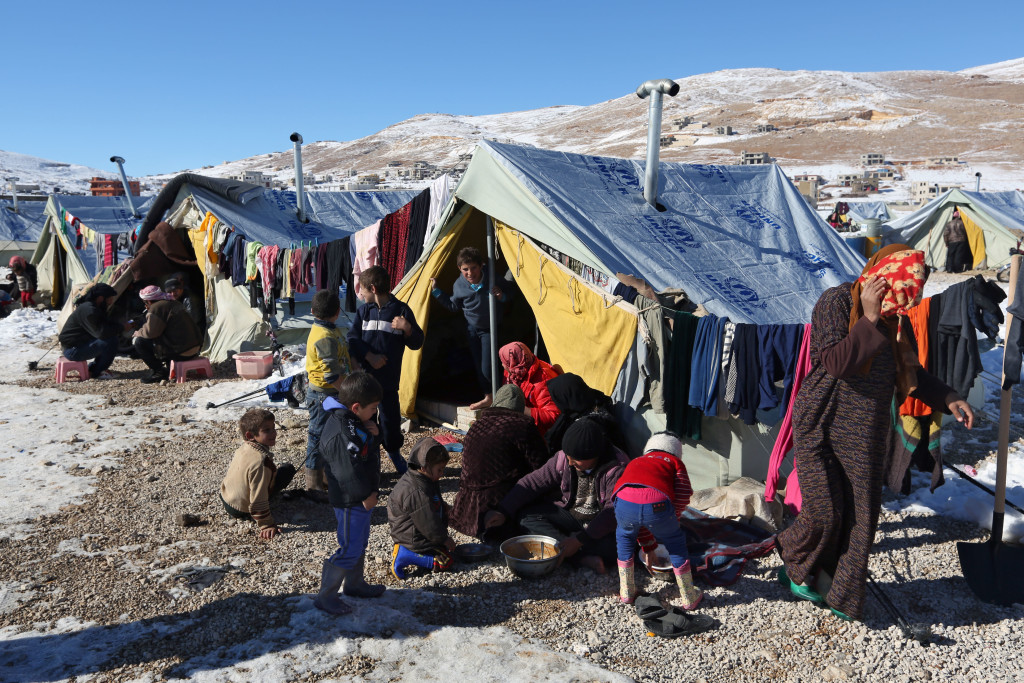
On November 13, humanity paused as we learned of a string of terror attacks in Paris, France. The Islamic State claimed responsibility for the attacks, which killed over 125 innocent people. These men and women were simply heading to a sporting event, enjoying dinner at an outdoor café, or watching a concert. Common activities we all take part in. One of the most alarming facts from the Paris terror attacks was the fact that one of the attackers entered Europe through the refugee process. This follows up on the Islamic State’s stated goal of embedding terrorists in the refugee process. This is especially concerning because President Barack Obama recently announced that the United States would be taking in over 10,000 Syrian refugees. As soon as I heard the President’s announcement earlier this year, I immediately sought more information about the screening process Syrian refugees must undergo before entering the United States. I sent a letter to the Department of State requesting additional information. I also took part in a classified briefing to learn more about the vetting process and what sources our intelligence agencies use to make determinations about allowing refugees into the United States. After receiving this information, it became clear that we lack the ability to properly screen Syrian refugees. The issue is not that the screening process is not thorough enough, but instead we simply lack the information needed to screen these individuals. The screening system depends on the United States having certain information that we can only get from people and assets on the ground in the home country. We do not have those resources in Syria. FBI Director James Comey testified last month about the difficulty with screening Syrian refugees. He noted that “if we don’t know much about somebody, there won’t be anything in our data.” He ultimately concluded that he could not give “an absolute assurance that there’s no risk associated” with allowing Syrian refugees into the United States. I want to be very clear: I support the decades-old refugee program and believe it has always been an important part of our nation. The reality is that this particular population has such a heightened threat associated with it that we must block Syrian refugees at this point in time. Last Monday, I sent a letter to President Obama demanding he stop the Syrian refugee resettlement program. Despite my letter and an outpouring of opposition from the American people, the President made clear that he would move forward with allowing Syrian refugees into our country. That’s why I introduced a bill last week that would defund the Syrian refugee resettlement program altogether. I believe using the “power of the purse” gives us the best chance to stop Syrian refugees from entering the United States. Late last week, the House voted on a bill that would essentially halt the Syrian refugee program for at least two years. President Obama threatened to veto the bill, but the House responded by approving the bill by a veto proof margin. This bill is just the first of many actions by the House of Representatives to respond to the Syrian refugee crisis. I am committed to doing everything in my power to stop Syrian refugees from entering the United States. Ultimately, the United States is at war, whether President Obama wants to acknowledge it or not. We are at war with the Islamic State and their radical Islamic ideology. In times of war, difficult decisions have to be made and serious precautions must be taken. That is the case when it comes to allowing Syrian refugees to enter the United States. Bradley Byrne is a member of the U.S. Congress representing Alabama’s 1st Congressional District.
Jeb Bush and Hillary Clinton seek to grab leadership mantle after Paris

In a presidential campaign that has suddenly shifted in focus to terrorism and security, Democrat Hillary Rodham Clinton and Republican Jeb Bush both see opportunities to cast themselves as best prepared to be commander in chief in tumultuous times. In back-to-back foreign policy speeches this week, Clinton and Bush outlined blueprints for defeating the Islamic State, the extremist group blamed for last week’s attacks in Paris that killed 129 and left hundreds more wounded. While some of the details differed, most notably on the role of U.S. ground forces, the plans of both candidates are grounded in a belief the next president must be more aggressive than the current one in order to defeat the Islamic State group. “It is time for American leadership again,” Bush said Wednesday in remarks from The Citadel. Clinton echoed that sentiment one day later, declaring: “This is a time for American leadership.” Bush and Clinton’s dueling speeches were a reminder of a time when the 2016 general election seemed destined to be a contest between members of two prominent American political families seeking a return to the White House. Clinton’s campaign has so far proceeded largely according to plan. After spending the summer struggling with questions about her use of a private email account and server while secretary of state, she has steadied her campaign and appears to be in strong position to fend off a challenge from Vermont Sen. Bernie Sanders, an independent seeking the Democratic nomination. Bush’s bid for the Republican nomination, however, has so far been a stunning disappointment to many of his supporters. While the former Florida governor raised eye-popping sums of money for his super PAC, he’s struggled to connect with voters and gain traction in a crowded GOP field dominated to date by political novices Donald Trump and Ben Carson. Bush backers have long predicted — and more recently, nervously hoped — that as voting draws closer, Republican voters would begin evaluating candidates less on their visceral appeal and more on competency and policy expertise. Bush’s speech at The Citadel had been planned for weeks, but the Paris attacks gave him an opportunity to remind voters that the next president will quickly confront vexing problems. “If these attacks remind us of anything, it is that we are living in serious times that require serious leadership and that the free world needs to act,” Bush said. He advocated bolstering the U.S. military’s presence on the ground in Syria and Iraq, but didn’t say how many troops he envisioned sending into the chaotic region, nor did he outline what functions they would carry out. Bush’s remarks were generally well-received by Republicans, though there was little sense that they marked a turning point for his struggling candidacy. “What he said was fine,” said former Sen. Jim Talent, a Republican from Missouri who has advised GOP presidential candidates on foreign policy. “I don’t know that it breaks him out of the pack through.” Clinton’s remarks Thursday served as a reminder of her fluency on international issues, cultivated in part during her four years as President Barack Obama‘s secretary of state. Her biggest risk comes from being associated with Obama’s foreign policy, given that polls show the public is increasingly pessimistic about the president’s handling of world affairs. While Clinton has been careful to avoid criticizing Obama’s approach to the Middle East, she emphasized in her remarks the ways she would tackle the situation differently, including setting up a no-fly zone over Syria. Bush, too, supports a no-fly zone, as well as the creation of “safe zones” to offer protection to Syrians. Bush and Clinton were also in agreement in their calls for arming the Kurds, one of the most effective fighting forces in the region, and bolstering the involvement of Arab partners. “They’re both part of a broader political consensus that seems to have developed over the course of the campaign that the U.S. needs to do more,” said Nick Heras, a Middle East researcher at the Center for New American Security, a Washington-based think tank. The candidates’ starkest difference came on the issue of sending American ground troops into Iraq and Syria to directly fight the extremists. While Bush said that step was imperative, Clinton said she would resist deploying ground forces even if the U.S. were directly attacked. Asked whether it would really be possible to resist calls for such action in the wake of a terror attack on U.S. soil, Clinton conceded there would be enormous pressure. But, she added, “I think it would be a mistake.” Republished with permission of the Associated Press.
Jeb Bush calls for U.S. ground forces to fight Islamic State
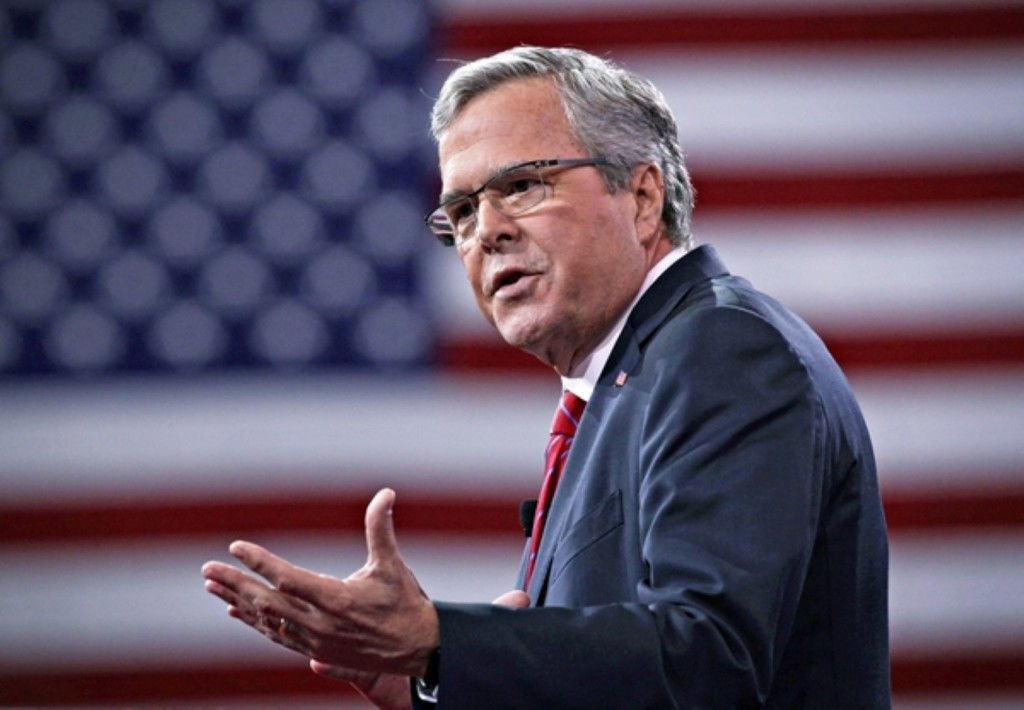
Republican presidential candidate Jeb Bush on Wednesday called for the U.S. to send more troops to the Middle East to fight the Islamic State. “This is the war of our time,” the former Florida governor said at the Citadel five days after Islamic State militants attacked Paris and killed 129 people. “Radical Islamic terrorists have declared war on the western world. Their aim is our total destruction. We can’t withdraw from this threat, or negotiate with it. We have but once choice: to defeat it.” Bush had planned for weeks to deliver a speech about Pentagon and military purchasing reform at the prestigious South Carolina military college. But the horrific events in France Friday moved Bush, who has supported the potential deployment of troops in Iraq and Syria, to call for ground troops. “The United States, in conjunction with our NATO allies and more Arab partners, will need to increase our presence on the ground,” he added, calling air power insufficient. He offered no specifics, but said the number of Americans sent to the region should be “in line with what our military generals recommend, not politicians.” The speech came as European nations hunted for conspirators in the attack and amid a fierce political debate within the U.S. over whether to limit or halt the resettlement of refugees fleeing war-ravaged Syria. One of the Paris bombers was thought to have arrived in a wave of migrants surging toward the West, but a top German official later said the Syrian passport found at a Paris attack scene was likely a fake. Bush, the brother and son of presidents, has projected himself as a potential commander in chief able to handle such challenges. But his focus on national security has increased as his own campaign for the presidential nomination has struggled to gain traction and especially since the Paris attacks. “The brutal savagery is a reminder of what is at stake in this election,” Bush said. “We are choosing the leader of the free world. And if these attacks remind us of anything, it’s that we are living in serious times that require serious leadership.” It’s no mystery why Bush made the speech in South Carolina. Many of the Republican primary voters in the early-voting Southern primary state are retired and active-duty military. Bush is not the only Republican presidential candidate who supports sending ground troops to fight the Islamic State. South Carolina’s own senior Sen. Lindsey Graham has been an aggressive advocate. Ohio Gov. John Kasich has also suggested sending U.S. troops. Florida Sen. Marco Rubio was generally supportive of President Obama‘s decision to put 50 special operations troops in Syria, and has suggested the number ought to grow. However, he hasn’t called for a larger scale mobilization. Bush has long faulted President Barack Obama’s administration, and former Secretary of State Hillary Clinton — the leading Democratic presidential candidate — for allowing wholesale federal spending cuts prompted by the 2013 budget reconciliation after Congress and the president were unable to craft more strategic cuts. The cuts affected military and non-military spending alike, at a time when conflicts in Syria and Iraq “spiraled out of control as President Obama and Hillary Clinton failed to act,” Bush said. And while Bush has often referred to the Islamic State as an unconventional threat, his prescription for the military includes heavier spending on its conventional elements. He called for doubling the U.S. Marine Corps’ battle-ready strength to 186,000, and updating the U.S. nuclear weapons capacity. He also called for increasing production of next-generation stealth bombers. Such aircraft, such as the F-35 joint strike fighter, carry a price tag of roughly $150 million apiece. Bush did not specifically propose a way to pay for the buildup. Bush, a year ago viewed as the likely front-runner, has failed to move to the top tier of GOP White House hopefuls in a field where political outsiders Donald Trump and Ben Carson and charismatic young lawmakers Marco Rubio and Ted Cruz have eclipsed him. While Bush projected himself as a potential wartime commander in South Carolina, he also appeared on Tuesday to be anticipating criticism that he would wage war in the Middle East, as his father and brother did when they were president. Bush’s brother, George W. Bush, left office with low approval in part due to his handling of the 2003 invasion of the war in Iraq, and its aftermath. “I think it’s important for the next president, whoever he or she may be, to learn from the lessons of the past and use those lessons to focus on the future,” Bush told an audience of more than 300 at Coastal Carolina University in Conway Tuesday. On Thursday in New York, Clinton will deliver an address outlining her strategy for defeating ISIS as well as her overall plan for fighting radical jihadism. Republished with permission of the Associated Press.
Josh Earnest gives props to Obama administration for Paris attacks response
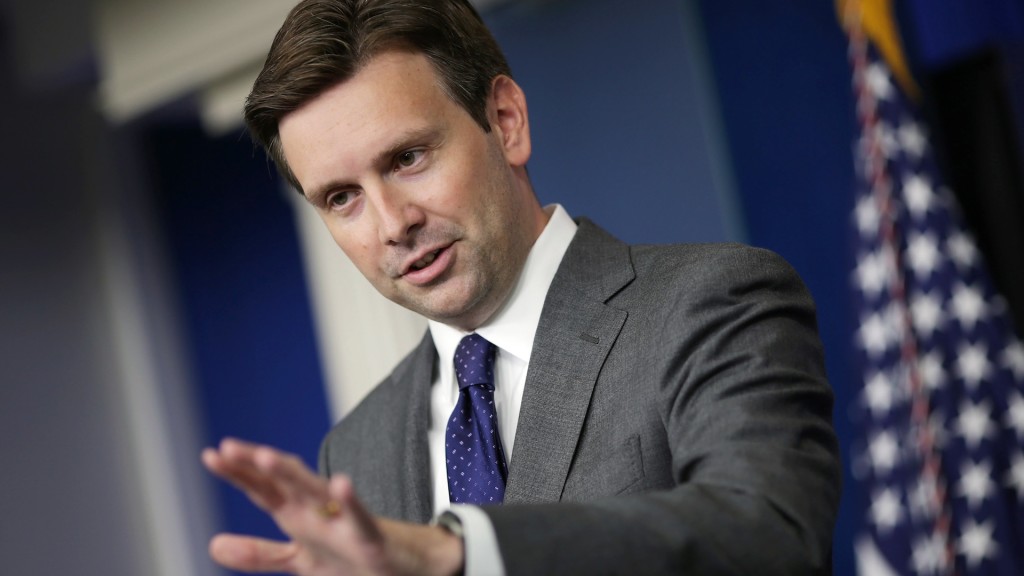
White House Press Secretary Josh Earnest credited President Obama‘s “early investment in our military and our intelligence” that put the French “in a position to carry out this kind of response” to last week’s Paris attacks. Earnest spoke Wednesday on MSNBC’s “Morning Joe” program. “The United States and France has been for some time working to deepen our military and intelligence cooperation when it comes to Syria,” Earnest said. “And we have done that and we followed through on that. “And it is because of that cooperation and because of the kind of logistical support that only the United States can provide, that France is actually even in a position to ramp up the strikes that they took,” he added. “So we’re seeing the fruits of (President Obama’s) early investment based on the France carrying out these actions.” For example, also Wednesday, police raided a suburban Paris apartment where they believed the suspected mastermind of last week’s attacks was holed up. The Islamic State group has claimed responsibility. Wednesday’s operation ended with two deaths and seven arrests but no clear information on the fugitive’s fate. The dead included a woman who blew herself up with an explosive vest and a man hit by projectiles and grenades at the end of a seven-hour siege in the Paris suburb of Saint-Denis. “I think what is also true, what you’ve also seen, is the United States use all of our law enforcement and intelligence resources to assist the French as they carry out their investigation and even conduct some of the law enforcement activities that they’ve been engaged in,” Earnest said. “So we are committed to being sure that we are standing shoulder to shoulder with our oldest ally as they confront this threat on their own soil,” he said. “There should be no denying the fact that the only reason that the French are in a position to carry out this kind of response is because of the early investment in our military and our intelligence that the President ordered more than a year ago.” But former FBI special agent Clint van Zandt told U.S. News & World Report on Tuesday that France’s heavy response doesn’t necessarily mean Islamic State won’t try to attack within the United States. ” … I think it’s a logical escalation for them to do,” van Zandt told the magazine. “If one wants to expand their base of recruits, one of the ways you do it is showing success.” The video can be watched here: https://on.msnbc.com/1PzKOFr The Associated Press contributed to this report.
Despite risks, Ben Carson not backing off Nazi, slavery examples
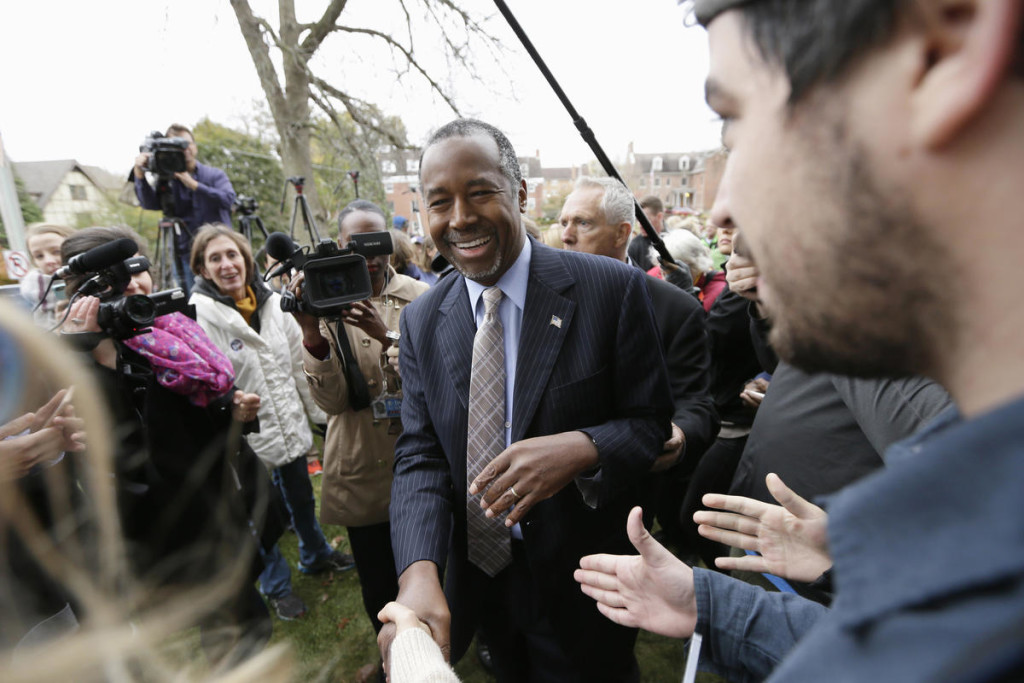
The Republican candidates for president will gather Wednesday for their third debate amid fresh volatility in an already chaotic race, with Ben Carson surging past Donald Trump in Iowa and one-time front-runner Jeb Bush under pressure to prove he’s still a viable candidate for the GOP nomination. The soft-spoken Carson has been a low-key presence in the first two GOP debates, but the retired neurosurgeon is likely to get more attention from moderators — as well as his fellow candidates — after a series of preference polls show him atop the field in Iowa. Trump has already shown he’s eager to take on Carson, jabbing him for his speaking style and raising questions about his Seventh Day Adventist faith. “We’ll see how Ben holds up to the scrutiny,” Trump said Tuesday on MSNBC. Meanwhile, Bush will be grasping for momentum after one of the most trying stretches of his White House campaign. Slower-than-expected fundraising has led Bush to slash spending and overhaul his campaign structure, and he’s voiced frustration with the way the unusual race has progressed. If the election is going to be about fighting to get nothing done, he says, “I don’t want any part of it.” There will be 10 candidates on stage in the prime-time debate in Boulder, Colorado, all seeking a share of a smaller spotlight: This debate on CNBC will run for only two hours after the last affair went on for more than three. Among the participants are two senators: Florida’s Marco Rubio and Ted Cruz of Texas. Rubio has sought to capitalize on Bush’s stumbles, but faces his own financial concerns. Cruz is positioning himself to inherit Trump’s supporters if the real estate mogul’s campaign collapses. Taken together, it’s a Republican field that remains crowded and unwieldy three months before the lead-off Iowa caucuses and New Hampshire primary. The political rookies appealing to voter anger with Washington have ceded no ground and establishment politicians are still waiting for the race to turn their way — and increasingly wondering if it ever will. Trump remains the dominant force, commanding media attention, drawing large crowds and leading in most early voting states. But his dip in Iowa has prompted some speculation among Republicans that the tide could be turning against the bombastic billionaire. “His only hope of staying competitive is to entertain voters with his provocateur-in-chief routine right up until Election Day,” said Josh Holmes, a former adviser to Senate Majority Leader Mitch McConnell. “He’s the one candidate where ‘acting presidential’ actually has a detrimental effect on his campaign.” While Carson is unknown to many Americans, he’s built a loyal following with Tea Party-aligned voters and religious conservatives. His campaign has started running new television advertisements in early voting states that center on his experience as a doctor and highlight his status as a political outsider. Carson has raised eyebrows with his incendiary comments about Muslims and references to Nazis and slavery on the campaign trail, rhetoric he’s made no apologies for. His standing in early states has only appeared to strengthen with each controversial comment. Carson’s biggest weakness may be his glaring lack of specific policy proposals. The issues listed on his campaign website are vague, including a tax plan that calls for a “fairer, simpler, and more equitable” system. On foreign policy, he’s said, “all options should remain on the table when dealing with international bullies,” such as Russian President Vladimir Putin. Carson could be pushed Wednesday on domestic policy, with debate host CNBC promising to focus on economic issues, including taxes and job growth. Policy discussions are usually a welcome refuge for Bush, the wonky former Florida governor. But his challenge Wednesday is less about highlighting his mastery of the issues and more about showing his supporters he has the temperament to fight through a long and grueling primary. “You’ve got a guy here speaking from experience, speaking with knowledge about issues, speaking with a reasonable approach to matters,” said Pat Hickey, a Bush supporter from Nevada. “The problem, though, is: Do those things seem to matter to the electorate?” With a well-funded super PAC standing by, Bush doesn’t appear to be on the brink of a campaign collapse, even if he performs poorly in the debate. But a stronger performance could help soothe supporter anxiety. Also on stage event Wednesday will be Ohio Gov. John Kasich, New Jersey Gov. Chris Christie, former Arkansas Gov. Mike Huckabee, Kentucky Sen. Rand Paul and former technology executive Carly Fiorina. Each will be eager for the kind of standout moment that Fiorina had in the second debate to jumpstart their campaigns. The four lowest-polling candidates will participate in an earlier undercard event: South Carolina Sen. Lindsay Graham, former Pennsylvania Sen. Rick Santorum, Louisiana Gov. Bobby Jindal and former New York Gov. George Pataki. None has gotten close to breaking into the upper tier of candidates.
Lindsey Graham on MSNBC: ‘How am I losing to these people?’
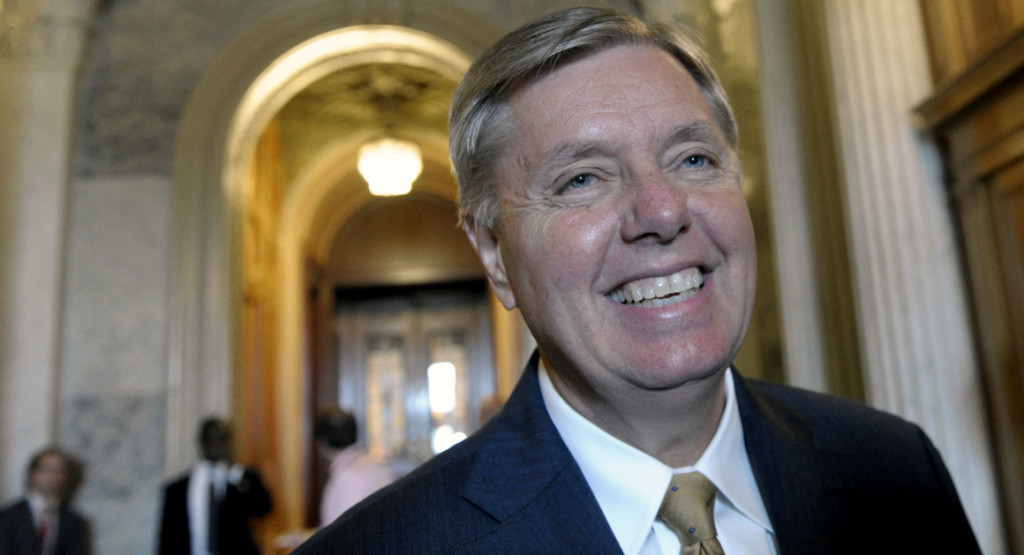
Republican presidential candidate Lindsey Graham boggled at his competition Monday, wondering how he was trailing at 11th place in the polls. “How am I losing to these people?” he said, during an appearance on MSNBC’s “Morning Joe” program, during which he also called former Florida Gov. Jeb Bush “whiny.” “Just look at Donald Trump‘s foreign policy. What is it?” Graham said. “What is he going to do about (Islamic State)? What is it? What is it? What is his game plan to destroy ISIL? Does anybody know? “…(T)o substitute Trump for Obama, what’s the difference?” he added. “When it comes to Syria, what’s the difference between any of our own candidates and Barack Obama?” Graham, a U.S. senator from South Carolina since 2003, stands at 0.8 percent, according to Huffington Post’s average of polls for the 2016 national Republican primary. Panelist John Heilemann of Bloomberg Politics referred to Trump and pediatric neurosurgeon Ben Carson, who also has never held elective office, and asked what it said about the GOP “that those two guys are the consistent top tier at this point, in this late point, in the Republican nominating contest?” “This outsider phenomenon is so bad that we have to get somebody new and different, not tainted by the process,” Graham said. “But here is what I think. I think experience will begin to matter the closer we get to the election. “Does it matter if you have any experience to be commander in chief?” he said. “Like, Ben Carson said he would have declared energy independence as the reactions of 9/11. That’s kind of different. You know, ‘I hereby declare,’ you know, bullhorn out here at the World Trade Center, ‘I hereby declare energy independence’ is not what I would be looking for. “Dr. Carson is a fine man, but his foreign policy is hard for me to follow,” Graham said. Graham later was asked about Bush’s “tone (and) presence on the campaign trail.” “It did come across as a bit whiny,” Graham said. “At the end of the day, I think Jeb is a very viable candidate; he is reengineering his campaign.” Last week, Bush decided to significantly cut his campaign spending, including staff pay decreases. He is currently at fourth in the polls among GOP contenders, trailing behind Trump, Carson and U.S. Sen. Marco Rubio of Florida. “For all of us if we don’t step up our game on the establishment side, whatever you want to call it, and start challenging these guys more effectively, I think we’re letting the cause down because Donald Trump will get killed in a general election … Hillary Clinton will mop up the floor with this guy.” The video can be watched here.
Jeb Bush leaves door open for use of torture by government
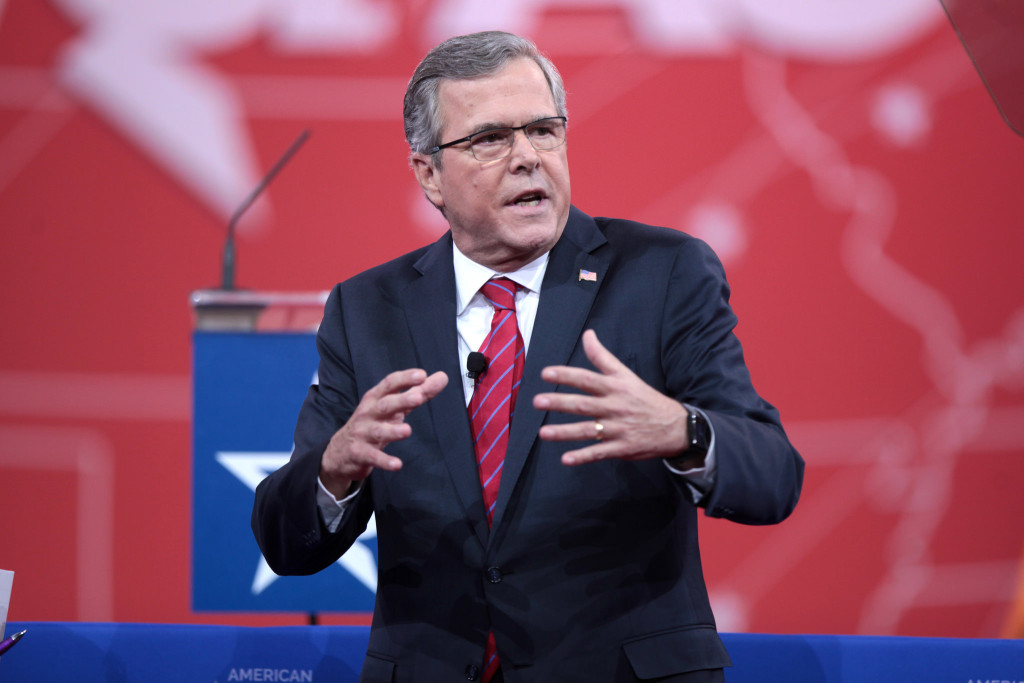
Republican presidential candidate Jeb Bush on Thursday declined to rule out resuming the use of torture under some circumstances by the U.S. government. “I don’t want to make a definitive, blanket kind of statement,” Bush told an audience of Iowa Republicans, when asked whether he would keep in place or repeal President Barack Obama‘s executive order banning so-called enhanced interrogation techniques by the CIA. “This is something that I’m actually struggling with because I’m running for president … and when you are president your words matter,” he said. The former Florida governor said that in general, he believes torture is inappropriate, and that he was glad his brother, former President George W. Bush, largely ended the CIA’s use of the techniques before he left office. The CIA used waterboarding, slapping, nudity, sleep deprivation, humiliation and other methods to coerce al-Qaida detainees – methods the military would be prohibited from using on prisoners of war. A Senate report released last year cited CIA records in concluding that the techniques were more brutal than previously disclosed, that the CIA lied about them, and that they failed to produce unique, life-saving intelligence. The CIA and its defenders take issue with the report. Jeb Bush said he believed that the techniques were effective in producing intelligence, but that “now we’re in a different environment.” He suggested there may be occasions when brutal interrogations were called for to keep the country safe. “That’s why I’m not saying in every condition, under every possible scenario,” Bush said. Bush has been walking a careful path, seeking to disassociate himself from some of the unpopular aspects of his brother’s legacy while praising him. In discussing the Iraq war, for example, Bush, who previously acknowledged that the intelligence didn’t support the decision to invade, on Thursday said he had learned from some of the mistakes made during the occupation, including what he said was a wrong decision to disband the Iraqi military. He said his brother also now believes that was a mistake. Bush blames the rise of the Islamic State group on what he said was Obama’s failure to negotiate an agreement to leave U.S. troops there in 2011. Asked if it was true that there would be no IS absent a U.S. invasion of Iraq, he said there was no way to know. He repeated his call for a more aggressive posture toward the Islamic State group but, like the Obama administration, he opposes sending in regular U.S. ground forces. He does favor putting special operations troops on the battlefield. Bush spoke at a foreign policy forum sponsored by Americans for Peace, Prosperity and Security, a group chaired by Mike Rogers, a former Republican congressman from Michigan who chaired the House Intelligence Committee. Republished with permission of the Associated Press.
Jeb Bush links Hillary Clinton to rise of Islamic State
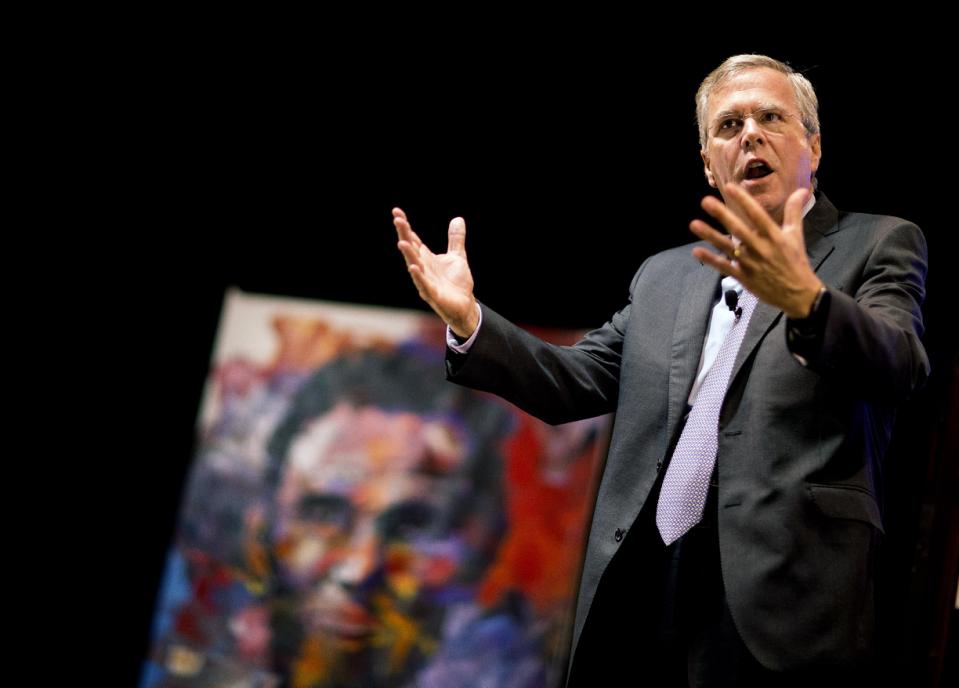
Republican presidential candidate Jeb Bush will step up his criticism of Hillary Rodham Clinton and her tenure as secretary of state on Tuesday, arguing in a speech on foreign policy the Democratic front-runner shares in the mistakes that he says led to the rise of the Islamic State. The former Florida governor will also call for a renewed sense of U.S. leadership in the Middle East, which he says is needed to defeat the militant group and an ideology that “is, to borrow a phrase, the focus of evil in the modern world.” “The threat of global jihad, and of the Islamic State in particular, requires all the strength, unity and confidence that only American leadership can provide,” Bush will say, according to excerpts of his remarks as prepared for delivery. In a speech at the Ronald Reagan Presidential Library in Simi Valley, California, Bush plans to tie the rise of the militant Sunni group to the departure of U.S. forces from Iraq in 2011. IS occupies a large swath of Iraq and Syria, and has a presence elsewhere in the Mideast. “ISIS grew while the United States disengaged from the Middle East and ignored the threat,” Bush will say. “And where was Secretary of State Clinton in all of this? Clinton, he says, “stood by as that hard-won victory by American and allied forces was thrown away. In all her record-setting travels, she stopped by Iraq exactly once.” American troops left Iraq in December 2011 as required under a 2008 security agreement worked out by former President George W. Bush. Both countries tried to negotiate plans to keep at least several thousand U.S. forces in Iraq beyond the deadline to help keep a lid on simmering tensions among Islamic sects. The Iraqi government refused to let U.S. forces remain in their country with the legal immunity President Barack Obama’s administration insisted was necessary to protect them. Obama, who campaigned for president on ending the war in Iraq, took the opportunity to remove U.S. forces from the country. “It was a case of blind haste to get out and to call the tragic consequences somebody else’s problem,” Bush will say. “Rushing away from danger can be every bit as unwise as rushing into danger, and the costs have been grievous.” Since last year, after the Islamic State gained a foothold in Iraq and Syria, Obama has ordered the deployment of about 3,500 American military trainers and advisers who are helping Iraqi forces fight the Islamic State. But despite 6,000 airstrikes flown by U.S. and allied forces on Islamic State positions over the past year, American intelligence agencies recently concluded that the group remains a well-funded extremist army able to replenish its ranks with foreign fighters as quickly as the U.S.-led coalition can eliminate them. Meanwhile, the group has expanded to other countries including Libya, Egypt and Afghanistan. Bush has yet, either on the campaign trail or in the preview of his Tuesday speech released by his campaign, to say exactly what a U.S.-led campaign against the Islamic State would look like if he is elected president. That includes saying how many U.S. forces he would potentially seek to return to Iraq, although he has said he supports allowing U.S. military personnel to join Iraqi fighters in guiding airstrikes, which they are barred from doing now. Bush has said he supports a no-fly zone in Syria, but has not suggested U.S. advisers or fighters deploy to Syria. Bush is addressing what polls show to be Republicans’ top concern, national security and terrorism. But while 60 percent of Americans said the effort to stop the Islamic State was going badly in a CBS News poll taken the first week in August, they were split on whether U.S. ground troops were the answer: 46 percent for, 45 percent against. “American voters are worried about getting back in,” said Elliott Abrams, a deputy national security adviser under George W. Bush who is now advising Jeb Bush, among other Republicans. “But Gov. Bush is certainly making no effort to avoid the issue. And he doesn’t seem to think he ought to shy away from it because his name is Bush.” Several other GOP candidates have criticized Obama’s actions and call generally for a more aggressive U.S. posture. South Carolina Sen. Lindsey Graham has been the most specific, calling for up to 20,000 U.S. ground troops in Iraq and Syria and a U.S.-led force to maintain stability afterward. “If you don’t do what I’m talking about, you’re not serious about destroying ISIL,” Graham told The Associated Press Saturday, using one of the Islamic State’s several acronyms. Republished with permission of The Associated Press.
Chris Christie calls for new government surveillance powers
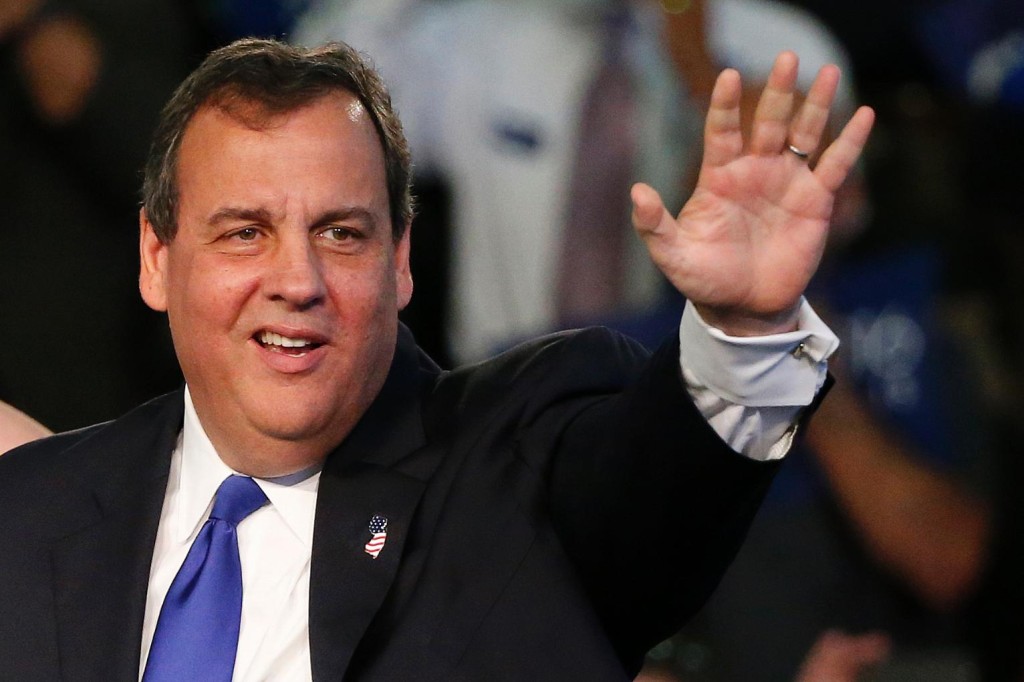
New Jersey Gov. Chris Christie offered a vigorous defense of post-Sept. 11 surveillance tactics on Monday, backing existing programs and calling for an expansion of intelligence-gathering capabilities even as Congress seeks ways to rein in the programs. Christie, who spent seven years as the U.S. attorney in New Jersey before he was elected governor, said that he had used provisions of the Patriot Act in pursuing terrorists after the Sept. 11 attacks and argued that the country must not weaken its anti-terror and surveillance laws. “We need to toughen our anti-terror and surveillance laws to give our services the legal mechanisms to do their job,” he said in a foreign policy-themed speech. A likely candidate for the Republican GOP presidential nomination, Christie took specific aim at former National Security Agency contractor Edward Snowden, who in 2013 leaked thousands of documents to journalists. Among Snowden’s revelations: NSA had for years been secretly collecting data about millions of Americans’ landline telephone calls. “When Edward Snowden revealed our intelligence secrets to the world in 2013, civil liberties extremists seized that moment to advance their very own narrow agenda,” he said. “They want you to think that there’s a government agent listening in every time you pick up the phone or Skype with your grandkids. They want you to think our intelligence community are the bad guys — straight out of the ‘Bourne Identity’ or some other Hollywood thriller. They want you to think that if we weakened our capabilities, the rest of the world would somehow love us more. “Let’s be clear, all these fears are exaggerated and ridiculous. When it comes to fighting terrorism, our government is not the enemy,” he said. Last week more than 300 House members voted to end the NSA’s bulk telephone records collection program, replace it with a system to leave the data with telephone companies, and allow the NSA to search the data on a case-by-case basis. The supporters of ending the program include Democrats and Republicans, and even the NSA doesn’t object to having private companies store the data. Independent reviews have found that the bulk collection program did not foil a single terrorist attack. Christie, however, slammed those pushing reforms as “intellectual purists” and insisted law-abiding citizens had nothing to fear from the surveillance efforts. “The vast majority of Americans are not worried about the government listening in on them, because it hasn’t happened. They are worried about what happens if we don’t catch the bad people who want to harm our country,” he said. Christie, who has said he will announce his White House plans by the end of June, spoke on the bank of the Piscataqua River, with the Portsmouth Naval Shipyard in the distance behind him. Throughout his speech, he painted himself as an antidote to what he described as President Barack Obama‘s weak leadership abroad. He argued the case for a more active U.S. presence overseas, bolstered by a larger military and increased defense spending. He also criticized president’s approach to the Islamic State militants and the emerging nuclear deal with Iran, as well as Russia’s backing of separatists in Ukraine and China’s encroachment in the South China Sea. “All these things are happening because American power is in retreat and we’ve backed away from the principles that made us a source of strength and stability,” Christie said. “No one understands any longer whom America stands with or whom we stand against. No one understands exactly what we stand for and what we’re willing to sacrifice to stand up for it. The speech is the third Christie has delivered in recent weeks in the early-voting state as he lays the groundwork for an expected campaign. His previous speeches focused on overhauling Social Security and reducing taxes on individuals and corporations. Christie has been working to re-establish his place in the top tier of likely candidates after the fallout from the George Washington Bridge scandal. He’ll hold his fifth town hall event in the state Monday evening. Republished with permission of The Associated Press.
GOP presidential prospects in Iowa agree to get tough with terrorists
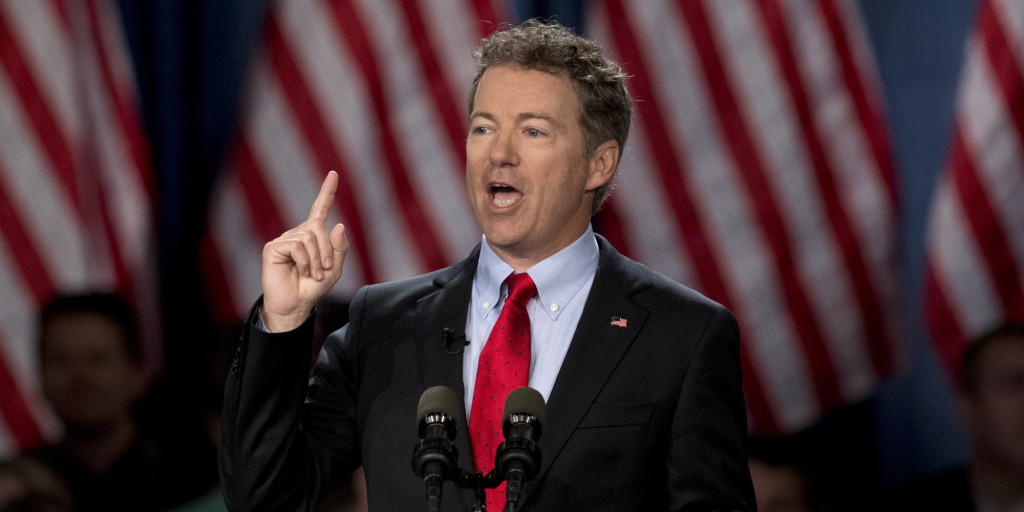
Republicans wooing Iowa’s most active party members called Saturday for a stronger presence in the world but ran the gamut in tone and just how tough to get with America’s enemies. On Armed Services Day — and a day the Obama administration reported killing a senior Islamic State leader in Syria — most of the nearly dozen GOP presidential prospects at a state party dinner called for a more confrontational stance toward Iran. Former Sen. Rick Santorum‘s answer for handling Iran, one of four countries on the U.S. list of nations accused of repeatedly supporting global terrorism, was to “load up our bombers and bomb them back to the 7th century.” Earlier in the day, former Florida Gov. Jeb Bush praised U.S. commandos who had reportedly killed the ISIS leader, described as the head of oil operations for ISIS. Bush gave no credit to Obama, whom Bush accused of allowing the rise of ISIS by pulling back U.S. forces from Iraq. “It’s a great day, but it’s not a strategy,” Bush told reporters in eastern Iowa. Although Bush joked lightly about the confused statements he made in recent days about whether he would have ordered the attack in Iraq in 2003, Kentucky Sen. Rand Paul told the GOP gathering Saturday night that it was a “valid question” to ask presidential candidates whether they would have invaded Iraq and toppled Saddam Hussein. “We have to question: Is Iraq more stable or less stable since Hussein is gone?” said Paul, who espouses some of the hands-off foreign policy of his father, former Texas Rep. Ron Paul. South Carolina Sen. Lindsey Graham tried to reject any assertion that the existing problems in Iraq were the result of the Republican president who ordered the invasion, Bush’s brother George W. Bush. “The person I blame is Barack Obama, not George W. Bush,” said Graham, who criticized Obama for keeping a campaign promise to withdraw combat troops from Iraq. Of George W. Bush, Graham said, “He made the best decision he could.” Former Texas Gov. Rick Perry, as did others, accused Obama of not taking the threat of Islamic State militants seriously. Perry pointed to claims by the militant group, disputed by terrorism experts, that it was behind the assault on a Texas cartoon contest that featured images of the Prophet Muhammad. “You see ISIS showing up in Garland, Texas,” Perry said. “You realize this is a challenging world we live in.” Aside from the nuances on Republican policy toward Iran and ISIS militants in Iraq, the GOP presidential prospects were united in taking jabs at Democratic candidate Hillary Rodham Clinton. They linked Clinton to Obama and mocked her for not fielding more questions during her campaign events. Former business executive Carly Fiorina said that if Clinton is going to run for president, “she is going to have to answer some questions.” Paul joked about whether Clinton “ever takes any questions.” Earlier in the day Bush said he had taken between 800 and 900 questions, compared to a handful by Clinton. In one of the more specific broadsides against Clinton, Fiorina said the former first lady must not be president because “she is not trustworthy, she lacks a track record of leadership and her policies will crush the potential of this nation.” Others who spoke at the Des Moines event, which about 1,300 Iowa Republicans attended, were former surgeon Ben Carson, Louisiana Gov. Bobby Jindal, former New York Gov. George Pataki, businessman Donald Trump and Wisconsin Gov. Scott Walker. Walker, who appeared at an afternoon fundraiser for a Des Moines area county official, called for a stepped-up fight against terrorism. Having recently visited Israel and met with Prime Minister Benjamin Netanyahu, Walker called the Obama administration’s foreign policy to “draw a red line in the sand and allow people to cross it.” Instead, he suggested that the United States “take the fight to them.” Republished with permission of The Associated Press.
GOP candidates divided over renewing USA Patriot Act
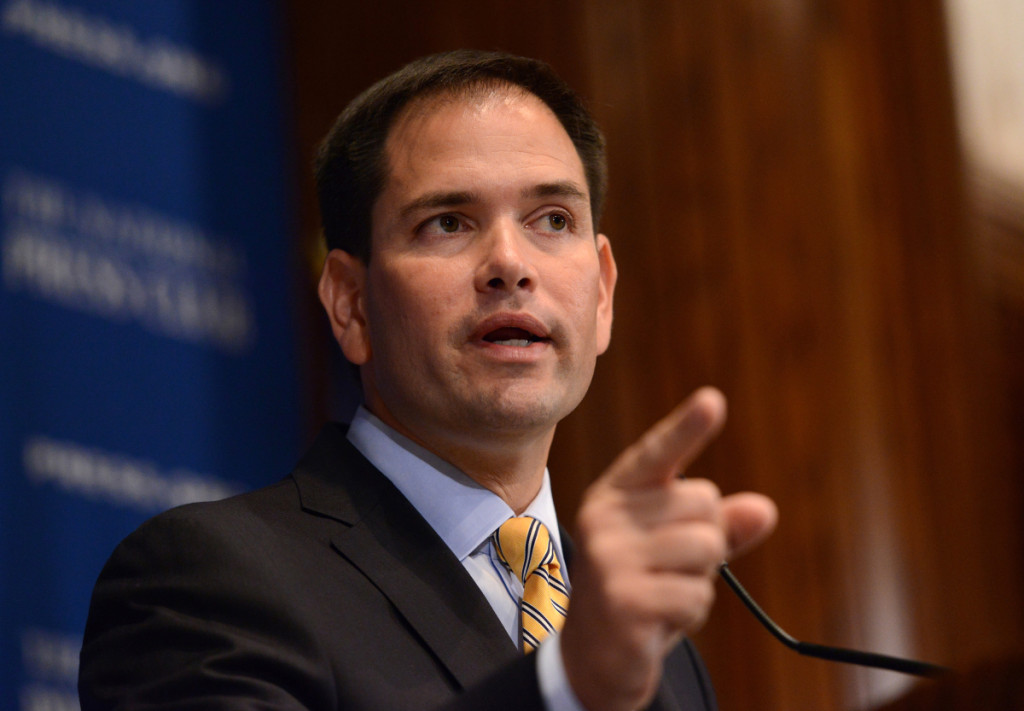
Republican senators eyeing the presidency split over the renewal of the USA Patriot Act surveillance law, with civil libertarians at odds with traditional defense hawks who back tough spying powers in the fight against terrorism. The political divide will be on stark display this month as Congress debates reauthorization of the post-Sept. 11 law ahead of a June 1 deadline. The broader question of privacy rights has gained attention since a former National Security Agency systems administrator, Edward Snowden, disclosed in 2013 that the NSA had been collecting and storing data on nearly every American’s phone calls for years. On one side, Sens. Marco Rubio of Florida and Lindsey Graham of South Carolina want Congress to permanently reauthorize parts of the law, giving the NSA much of its surveillance authority. If there were another attack, “the first question out of everyone’s mouth is going to be, `why didn’t we know about it?’” Rubio said this week in a speech on the Senate floor. “And the answer better not be, `because this Congress failed to authorize a program that might have helped us know about it.’” The rise of Islamic State militants, the continued threat from al-Qaida and the ongoing civil war in Syria have pushed national security to the forefront in the 2016 race for the GOP nomination, with some candidates determined to show their toughness. On NSA surveillance, however, Americans are wary of government intrusion. Sens. Ted Cruz of Texas and Rand Paul of Kentucky say the law infringes on citizens’ privacy. “They want nothing more than to keep the national security spy state growing until it tracks, traces and catalogues virtually every detail about every aspect of our lives,” Paul said in a campaign email to his supporters. “Once government bureaucrats know every aspect of our lives – what we watch, what we buy, what we eat, where we worship – it won’t be long until they try to run them `for our own good.’” Under the law, the NSA collects information on the number called and the date and time of the call, then stores it in a database that it queries using phone numbers associated with terrorists overseas. Officials say they don’t use the information for any other purpose, and that the legal powers that enable the program are essential to the hunt for terrorists. Opponents say the seizure and search of telephone company records violates Americans’ expectations of privacy under the Fourth Amendment. Adding a wrinkle to the debate was Thursday’s federal appeals court ruling that the bulk collection of Americans’ phone records is illegal. The court all but pleaded for Congress to sharpen the boundaries between security and privacy rights. The House is slated to vote next week on a bill to reauthorize the law while also ending the government’s dragnet collection of records, and Cruz has endorsed the measure, saying it “strikes the right balance between privacy rights and national security interests.” But Senate leaders, including Majority Leader Mitch McConnell, R-Ky., and Sen. Richard Burr, R-N.C., the chairman of the Intelligence Committee, have spoken forcefully for a competing measure to reauthorize the law as-is. Across Congress, the political divisions cut along complex lines. Libertarian-leaning Republicans like Cruz and Paul are aligned with many liberal Democrats, insisting that a secret intelligence agency should not be storing the records of every American phone call. But other Democrats and Republicans say the program is needed now more than ever given the Islamic State group’s determination to inspire terrorist attacks on American soil. Graham, the only one of the four who has not formally announced his candidacy, is siding with Rubio in favor of the NSA’s spy powers but competing with him for support among defense hawks. “I’m open-minded to doing reforms,” Graham told reporters Thursday. “I just don’t want to diminish the capacity of the program to prevent another 9/11. I believe if the program were in operation before 9/11, we probably would have prevented 9/11.” Sen. John McCain, the GOP’s 2008 presidential nominee, previewed one likely argument. He cited the incident in Texas last Sunday in which two gunmen were shot dead while trying to attack a provocative event that featured cartoon images of the Prophet Muhammad. In the aftermath, authorities described an alarming trend involving potential homegrown extremists with access to social media and possible exposure to Islamic State group propaganda. “We must do everything in our power to stop these attacks before they happen,” McCain, the Senate Armed Services Committee chairman, said. FBI Director James Comey said Thursday that although the bureau had opened a new investigation into one of the gunmen, Elton Simpson, agents had no reason to believe he was going to attack the event. Republished with permission of the Associated Press.
