
J. Pepper Bryars: Inflation rate hits 12.5% (the real one, anyway)
Now that it’s the end of April, the federal government will soon release the latest numbers from the Consumer Price Index to officially tell us exactly how much inflation has risen in the past year. Some people will probably call “BS” on whatever number is generated by the CPI, though, because they believe it’s either inadvertently flawed, purposefully manipulative, or so dense and detached that it’s become practically useless as a means of measurement. And there’s just no amount of political spin or economic theorizing that can explain those concerns away. Like so many other aspects of our institutions, many people have simply lost trust in the CPI. That’s why I created my own index — a “No BS” one, or NBS-CPI as I like to call it — to measure precisely how much more I’m personally spending on my family’s primary non-fixed expenses — groceries and gas. And since we mostly shop through the Walmart Grocery App, I have detailed receipts to base the calculations upon. So, when a literal apples-to-apples price comparison is made between what I paid for something at Walmart in April 2021 and what it cost now in April 2022, plus the price of regular unleaded down the road, my own NBS-CPI shot up to slightly more than 12.5%. That number is probably much closer to measuring the true level of inflation being felt by our nation’s families, and it hasn’t been that high since President Ronald Reagan took office in January 1980. Here are the numbers: So, what’s up with the CPI? Some think the measurement was fundamentally broken after the Bureau of Labor Statistics, which comes up with the number, moved away from tracking a fixed list of products to one where items are removed or added based on price or quality fluctuations. Critics of the CPI, like stock trader and financial commentator Peter Schiff, have explained that until a couple of decades ago, government economists would track the price of the same basket of products, and the resulting changes would be averaged together to create the inflation rate. If broccoli was in the basket, it stayed in the basket. But some economists began arguing that a fixed basket isn’t how people actually shop. They said that if a product becomes too expensive, a shopper would scratch it off their grocery list and replace it with something else less expensive. So, if broccoli suddenly costs too much, economists assume shoppers will replace the broccoli with, say, Brussel sprouts. And then, the CPI starts tracking the less expensive product. It’s clear to see what they’re trying to do — base their measurement on dynamic, human behavior rather than a static list — but the flaw in their model is the many assumptions they have to make, and some are probably wrong. (I wouldn’t swap broccoli for Brussel sprouts in my house, for instance. It’d be a total waste. I’m sure you have limitations like that, too). The Bureau of Labor Statistics conducts surveys and market research to inform those assumptions and make those changes, it says, so they’re not done on a whim. But still, when you dig into what changes they’ve made and then look at your own behavior (and your own grocery receipts!), it just doesn’t seem right. Then there’s the argument that the bureaucrat-economists at the Bureau of Labor Statistics have simply made all this far too complicated. For instance, one would think that coming up with the rate of inflation for a product is a simple calculation: Increase in Price ÷ Original Price x 100 = % Increase. Do that for the entire basket of products you’re tracking, get the average percentage of them all, and voilà — the inflation rate. That’s how I calculated my NBS-CPI. Nope Here’s just one of the formulas they use at the Bureau of Labor Statistics to calculate the CPI: U.S. Bureau of Labor Statistics Decades of problem solving, generations of added processes, and the natural tendency of bureaucracies to construct Byzantine-like labyrinths rather than draw straight lines from problems to solutions has created a Rube Goldberg Machine to calculate what could originally be worked out by a fourth-grader. Professor Butts and the Self-Operating Napkin (Rube Goldberg, Collier’s,1931) This is one reason people distrust these numbers: people aren’t capable of checking the government’s homework, and when they take a look, they see a myriad of perplexing systems and confusing jargon. This causes some to believe it’s all a scam and that these measurements are systemically manipulated for the benefit of those with wealth and power. Maybe. After what happened in the subprime mortgage crisis a few years ago, I wouldn’t put anything past Wall Street and their lackeys in Congress. Much of how the world works can be explained by incentives — what reason does a person have to do one thing and not the other? That, and repeating the question the great orator Cicero asked when evaluating legal claims: “Cui bono?”, which is a Latin phrase meaning “who benefits?” Find out what the incentives are for an action, and who benefits from it, and you’re probably going to be in the ballpark. The keyword in the title “government economist” is, alas, government. And with the CPI, we’re essentially trusting the government to not only grade its performance in managing the economy, but to create the test, and then change the questions when it doesn’t like the answers. The incentive, however underlying it may be, is to produce the lowest number for inflation possible. And who benefits? Consider what’s hitched to inflation — automatic cost-of-living increases for government employees, some large private employers, and retirees. While not automatic, higher inflation certainly gives employees across the board more of a justification to demand increased wages. And while I’m uncertain, I suspect that Wall Street has managed to make money from all of this. Maybe someday we’ll learn exactly how. Going Forward We’ll see how close the real CPI is to my own NBS-CPI in just
J. Pepper Bryars: I earn a six-figure income, so why did the government just give me $750 in food stamps?
Two of my children recently received something in the mail called a Pandemic Electronic Benefit Transfer debit card, known as a P-EBT, each loaded with $375. The accompanying letter explained that the money was for school children in grades K-12 who were enrolled in the National School Lunch Program — free and reduced lunch — during the 2020-2021 school year but who missed those meals while schools were closed due to COVID-19. But here’s the problem: my income exceeds the eligibility ceiling for such a thing, and even so, my children weren’t actually enrolled in the program during the 2020-2021 academic year… because they weren’t even enrolled in public schools at all! They attended a private school, and we packed or paid for their lunches ourselves. I smelled the stench of government waste, followed it back to its source, and this is what I found: In early May of 2020, P-EBT cards began being mailed to thousands of eligible students in Alabama, according to a news release from the Alabama Department of Human Resources, which oversees the distribution of the cards with assistance from the Alabama Department of Education. The state announced last April that a second round of benefits would be issued, and advisories posted in June, August, and December stated additional funds would be distributed across the state. A spokesman for the Alabama Department of Human Resources told me that 460,958 students received more than $144,279,786 in benefits for the 2019-2020 school year. For the following school year, 2020-2021, he said that 477,172 students were issued $326,682,316 in benefits, and when the summer months were added, the total for the year increased to 503,040 students and $507,913,066 in funds. That’s a little more than $652 million in benefits distributed across 19 months. So how did $750 of that end up in my mailbox? Records provided by the Department of Human Resources show that Conduent State & Local Services of Washington, D.C., was issued a contract to manage distribution of the cards. While records show various costs for the contract, past, and potential, the department’s spokesman told me that it cost approximately $11 million to distribute the cards. But the data — the actual names of those who are eligible and the amount of the financial benefit they should receive — came from the Alabama Department of Education. Now, remember back to the spring and summer of 2020. We didn’t know how bad the pandemic was, how long it would last, and what we needed to prepare for. People were hoarding toilet paper. It was crazy out there. And against that backdrop, school officials were trying to not only get meals to those who had already signed up for the free and reduced lunch program but the thousands more who signed up since the pandemic began. I spoke with the director of the Alabama Department of Education’s Child Nutrition Program and the department’s spokesman. They both described a chaotic and confusing process of collecting and sorting through those existing and incoming accounts while at the same time navigating the process of moving to a new student data management system. Records show that during the 2020-2021 school year, 347,663 students in Alabama’s public schools were enrolled in the free and reduced lunch program. But as the Department of Human Resources spokesman stated, 477,172 students were provided with P-EBT benefits for that year, and a total of 503,040 when you count the summer. That’s a pretty big difference, somewhere between 129,509 and 155,337 students. And if each of those received the $375 that my children did (which all depends on how long each student’s school was closed), that’d be anywhere between $48 million and $58 million. Officials said that some of the difference can be explained by counting the private schools that are enrolled in the free and reduced priced lunch program, residential childcare institutions, and those who were added to the program during the effort to provide meals to families during the pandemic, though all were still required to meet eligibility requirements. It’s just not clear what those numbers are, precisely. It was a “pretty messy situation” the Alabama Department of Education’s spokesman said, while the department’s Child Nutrition Program director said some of the numbers required “finagling.” To be charitable, that was a sign of the times in 2020. People did their best with the challenges they faced and the resources and information they had. Elaine Waxman, a senior fellow at the Urban Institute, studied the national program and explained in a Washington Post story that states were faced with a massive knowledge management problem. “Centralized databases for this kind of information were very uncommon, and departments of education were not set up to collect and monitor these types of data,” Waxman said. I cut through my P-EBT cards with a pair of scissors and mailed them back to the distributor with a note explaining that my children weren’t eligible. The spokesman for the Alabama Department of Education said he hoped others in my shoes would do the same. While I share his hope, I’m not very confident about that, especially since the total at the grocery store check-out has increased 7.5% due to inflation in the last year alone. One of the arguments conservatives make against big government programs is that they’re simply too big for anyone to manage properly — regardless of their experience, resources, or intent. You can add the P-EBT program to the long line of evidence for that argument. Still, the federal government has extended the program, and state officials told me that they’re currently exploring the option, though no decision has been made. First, the program should be paused, if not stopped altogether. The list of eligible students from 2020-2021 cannot be trusted as the basis to distribute so much money. Secondly, the solution to feeding students who are enrolled in the free and reduced lunch program is to KEEP SCHOOLS OPEN. We can forgive the mistakes of the past, especially since it was a crisis. But education is supposed to be about learning. And we can start by learning
J. Pepper Bryars: School system’s diversity programs created by group that believes only whites can be racists
Socrates is believed to have once said, “The beginning of wisdom is the definition of terms.” Most people, including the editors of the Merriam-Webster, Oxford, and American Heritage dictionaries, would generally define racism as the belief that one race is superior to another and anything that oppresses or elevates people based on their race. But not the organization that has provided diversity training and programs to teachers and students in the Huntsville City Schools system. The Anti-Defamation League, a once noble organization that has since fallen into partisan decay, had a contract with Huntsville City Schools to deliver anti-bias training to its teachers last year after having already provided its “No Place for Hate” program to the system’s students for more than a decade, according to records. Visit adl.org/racism, and you’ll see the extreme way the organization defines the term: “Racism: The marginalization and/or oppression of people of color based on a socially constructed racial hierarchy that privileges white people.” Ironically, that definition is itself a good example of racism — assigning to one group of people exclusive ownership of a vile trait based solely on the color of their skin. But if that’s too complicated for your second grader to understand, the Anti-Defamation League has an “elementary school version” of the definition: “The disrespect, harm, and mistreatment of people of color based on made-up ideas that white people deserve to be in charge and treated better.” Records of the Huntsville City Schools Board of Education meeting on December 17, 2020, show a contract with the Anti-Defamation League to provide three training sessions in early 2021 from its “World of Difference Institute” program, as part of the system’s overall cultural diversity training effort. “We do have a long-standing relationship with the Anti-Defamation League. This is the organization that sponsors our ‘No Place for Hate’ activities,” a system official said when describing the organization to the board. She added that it’s “a very important partnership that we want to maintain.” Officials later told me that the system has been using the “No Place For Hate” program free-of-charge for more than a decade, though it “is not a curriculum.” “Schools use it as a way to promote a bullying-free environment in the school,” the official explained. Diversity training is a good thing, in principle. We could all learn to treat one another better, with dignity and courtesy, regardless of how we may look or speak or where we came from or how we worship. But how can an organization that defines racism as a characteristic exclusively held by one group of people be the right provider of that training, or programs and content of any kind covering diversity, cultural awareness, or anti-bias to teachers and students? Clearly, they cannot. The specific problem here remains quite clear to me: schools feel a need to provide diversity training to teachers and students, yet the groups who have affordable, off-the-shelf solutions tend to be very political in nature, deeply invested in identity politics, and locked into a far-left view of the issue. It’s reasonable to suspect that their personal political perspectives will seep into whatever training and programs they provide. Part of the lasting solution should clearly be to avoid partnering with organizations that have overt political agendas. School systems, especially those the size of Huntsville City Schools, should create and implement their own, home-grown diversity training programs, created by the experienced educators they have in-house, and reflective of the community in which they serve. History needs to be taught, unvarnished. Current events should be discussed, openly. People should learn to treat one another with the courtesy and dignity everyone deserves. But starting from the definition that one group of Americans, today, is in the right and the other in the wrong is remarkably counterproductive. And it should stop. J. Pepper Bryars is a conservative opinion writer from Mobile who lives in Hunstville. Readers can find him at https://jpepper.substack.com.
J. Pepper Bryars: Alabama’s problem with violent suspects killing people while out on bail
Americans have recently begun waking up to the disastrous consequences of bail reform efforts that are being led by progressive district attorneys across the nation. The case of Darrel E. Brooks in Wisconsin is just the latest, if not most tragic, example. He ran over his girlfriend with a car in early November, but despite the seriousness of the charge and his long wrap sheet, Brooks was let out on a mere $1,000 bail. Two weeks later, he drove through the Christmas parade in Waukesha, seriously injuring dozens of people and killing six, including four grandmothers and an 8-year-old boy. While the enormity of the Waukesha tragedy is unusual, the process that contributed to it isn’t. Courts often let suspects charged with violent crimes out with little to no bail while their cases work through the slow gears of the criminal justice system, sometimes releasing known predators like Brooks to prey upon our communities for months, maybe even years before they face justice. But are things like this happening in Alabama? A quick search of the internet just turned up the following: Mobile: Christin Brionna Edwards was charged with four counts of attempted murder last month while being out on bail on a 2019 murder charge. The district attorney said the process is a “revolving door.” Montgomery: Jeremie Rashad Wright was charged with murder last month while he was already out on bail after being charged with another murder committed in 2018. Tuscaloosa: Deramus Devalle Harris was charged with murder last month while out on $75,000 bail from another murder charge in 2020. Birmingham: Anthony Needham shot his girlfriend in the head in 2018 and was charged with murder. He was let out of jail two days later on $100,000 bail, and several months later he shot and killed a man during a robbery. Huntsville: Charles Price Preston was charged with murder last year after having already been arrested 17 times for various other crimes, including assault, rape, and robbery. And the list goes on and on and on and on … So, yes, it is happening here in Alabama. And often. Some may recall the kidnapping and murder of 19-year-old Aniah Blanchard of Homewood in October 2019. Her alleged killer, 29-year old Ibraheem Yazeed of Montgomery, was well-known to police. He was out on bail after being charged earlier in the year with robbery, kidnapping, and attempted murder. Yazeed and three others allegedly robbed and beat two men in a Montgomery hotel, including a 77-year-old man who was left near death. Yazeed was also accused in 2012 with attempting to kill two police officers with his car, and he was arrested in 2017 for aggravated battery on another police officer. Prosecutors say Yazeed — still walking free after all of that — kidnapped Blanchard from an Auburn gas station, shot her in the head, and dumped her body in a wooded area of Macon County. Prosecutors and victim advocates say that current Alabama law prevented the courts from holding Yazeed without bail for his earlier charges because none of them were capital crimes or met others standards and that Aniah’s killing was a wake-up call. The governor signed a bill named “Aniah’s Law” earlier this year that would change that, adding murder, kidnapping, rape, assault, and other violent crimes to the list of charges that could lead to a defendant being denied bail. Voters will decide if Aniah’s Law becomes part of the state’s constitution in November 2022. Aside from Aniah’s Law, prosecutors are seeking to increase the maximum amount of bail for murder, which is currently set by the State Supreme Court along the following lines: Capital felony: $50,000-no bail allowed Murder: $15,000-$150,000 Drug manufacturing and trafficking: $5,000-$1.5 million. So, as you can see, someone charged with dealing drugs can be held for 15-times the amount of bail than someone charged with killing another human being. A rules committee of the Alabama State Supreme Court recently approved a motion from Montgomery County District Attorney Daryl Bailey to increase bail for murder to $1.5 million, after having already increased the maximum from $75,000 to $150,000 in 2014. We mustn’t simply give the state a blank check, however. It’s a safe bet that the government will abuse whatever additional power the people grant, without vigilant oversight. As Benjamin Franklin warned, “Those who would give up essential liberty, to purchase a little temporary safety, deserve neither liberty nor safety.” We deserve both. Aniah and all of the other victims deserved both. And with the enactment of Aniah’s Law, the increase of bail for murder, and the strength and will to ensure the state doesn’t abuse its authority, we just might be able to have it. (J. Pepper Bryars is a conservative opinion writer from Mobile who lives in Hunstville. Readers can find him at https://jpepper.substack.com).
J. Pepper Bryars: Cancel culture comes to conservative country
The true crime of a censor isn’t muzzling someone’s mouth. It’s muffling everyone else’s ears. That lesson and many others on the importance of free expression and the exchange of ideas were lost recently when Samford University in Birmingham relented to the joint demands of an online petition and its Student Government Association to disinvite historian Jon Meacham from speaking about American history during inauguration ceremonies for the school’s new president. Meacham is well-known for his presidential biographies, and he won the Pulitzer Prize in 2009 for writing American Lion: Andrew Jackson in the White House. But the crime that got him canceled in conservative country? From the petition: “Jon Meacham is significantly involved with the Planned Parenthood organization. He has spoken at their fundraising events, his book is used for the Planned Parenthood fundraiser, and overall his beliefs and core values do not align with those of Samford University, as it is a Southern Baptist institution.” It’s no surprise that Meacham is liberal and pro-choice. Anyone who has ever seen him on cable news mixing his historical perspectives with his personal political preferences knows that. But it’s disheartening to see a conservative campus community adopt the Marxist tactics of the left (and of the Pharisees, by the way) by insisting that unless you share all of their beliefs, you’re unwelcome in their midst, even if only to share your views on an unrelated issue, even if only as a guest, even if only to break bread for an evening. Have we really reached the point in America, and in academia most alarmingly, where in order to gather to discuss a topic, everyone present must already agree on everything? Can we not see that this is a blueprint for ignorance? Meacham wasn’t coming to one of the most conservative campuses in the Bible Belt to advocate for abortion rights. While he is indeed pro-choice, and while he did speak at a Planned Parenthood event, abortion policy isn’t his stock-and-trade. He’s a historian, and as the university noted, his lecture was going to flow from his latest book, The Soul of America: The Battle for our Better Angels, which is, rather ironically, about how our nation has overcome periods of deep, sometimes violent, political and cultural division. But since Meacham’s also pro-choice (along with half of our country, sadly), the petitioners and SGA representatives presumably think he’s not worth hearing from, and also by extension, half of our country isn’t worth hearing from, or talking to, or treating with the same courtesy we’d want from people who hold different beliefs from our own. To place the petitioner’s argument in its best and strongest light, they’re concerned that by giving someone a platform to speak on their campus about American history, who has also been involved with events elsewhere promoting abortion rights, it significantly tarnishes the strong, Christian reputation of Samford and weakens its ability to fulfill its mission. Maybe so, in the minds of some. But if you’re okay with that logic, then you’d also have to be okay with someone who happens to be pro-life being canceled from speaking where their values “do not align” with whatever progressive institution to which they may be invited to speak on an unrelated topic. You’d also have to be okay with Brandeis University disinviting Ayaan Hirsi Ali from its campus because, as a survivor of female genital mutilation and the target of Muslim terrorists, she’s a critic of Islam. You’d also have to be okay with the City of Atlanta sacking its fire chief, Kelvin Cochran, after he wrote about his traditional beliefs on marriage and sexuality in a book for his church’s Bible study class. And you’d also have to be okay with Massachusetts Institute of Technology canceling a lecture from Dorian Abbot, a professor of geophysics at the University of Chicago, simply because he supports merit-based college admissions rather than race-based standards. Canceling someone because they don’t “align” with your tribe is exactly what the far left is doing all across America — in schools, universities, workplaces, clubs, even on sports teams — and their quest for purification and uniformity is making everybody angrier, meaner, and in the end, dumber. And it has to stop. J. Pepper Bryars is a conservative opinion writer from Mobile who lives in Hunstville. Readers can find him at https://jpepper.substack.com.
J. Pepper Bryars: Alabama must build more prisons but taxpayers don’t have to foot the bill
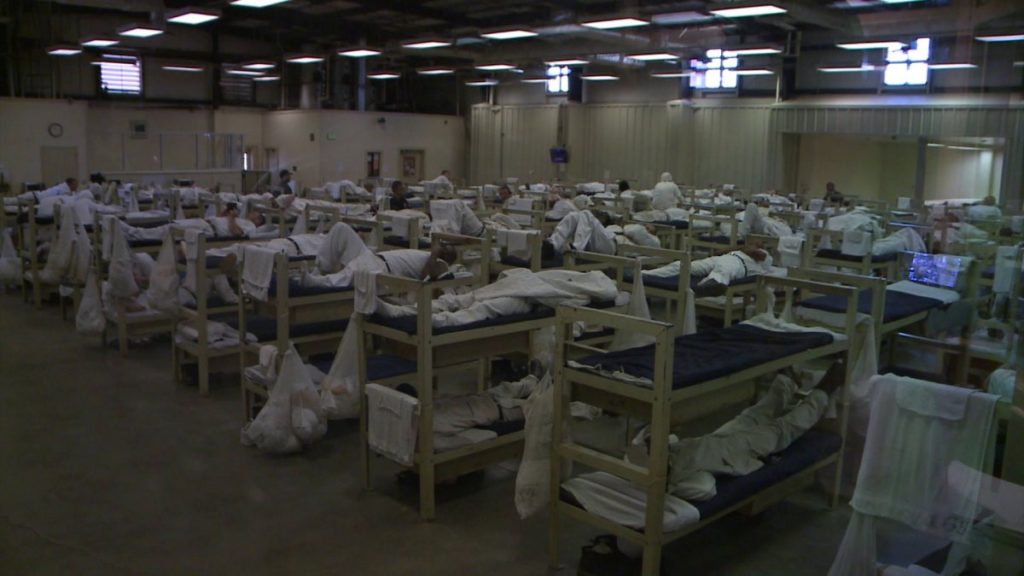
Vicious assault. Brutal rape. Cold-blooded murder. These are some of the crimes that will get you thrown into prison, but what if they’re also what could happen to you once you get there? Sadly, a federal investigation found this is happening in Alabama’s prison system, and part of the problem is we’ve simply run out of room. “Our investigation revealed that an excessive amount of violence, sexual abuse, and prisoner deaths occur within Alabama’s prisons on a regular basis,” wrote the authors of the report from the U.S. Department of Justice, adding that that one of the major factors is “severe overcrowding” and that the state doesn’t “provide adequate humane conditions of confinement.” “These are human beings,” said one mother of an inmate who was repeatedly threatened with violence at the state prison near Atmore. “I feel like our society is getting too numb when it comes to human lives.” Alabama’s prison system was designed for about 9,900 inmates but it’s currently holding more than 16,000 – an occupancy rate of more than 165 percent, according to data published by the Alabama Department of Corrections. It gets worse in some places. The investigation found that the medium-security prison in Elmore County was at 272 percent occupancy, holding nearly 1,400 inmates in a facility designed to hold about 500. And Kilby Correctional Facility outside Montgomery was designed to hold 440 but currently has more than three times that amount. While some were shocked by the details shared in the federal report and the graphic pictures from inside our prisons that were leaked to the press, others remain unconcerned. Alabama is a law-and-order state whose people believe in the adage that “if you do the crime, you do the time.” And a recent survey from the Public Affairs Research Council of Alabama found that a slight majority of us disagree with plans to build more prisons. But here’s the problem: if Alabama doesn’t get its act together than a federal court has said it may find us in violation of the Eighth Amendment and will force us to release thousands of these inmates before their sentences are complete. Do we really want that to happen? Of course not, and that’s why the Alabama Policy Institute has begun organizing with a coalition of concerned individuals and organizations who seek to promote, among other reforms, the construction of three new state-of-the-art prisons. The Ivey Administration released plans earlier this year calling for one facility to be a centralized location for medical and mental health care, housing for older inmates, and where prisoners first enter the system. It could house nearly 4,000 inmates. The other two would hold a little more than 3,000 prisoners each. Here’s the best part: Under the plan as currently proposed we wouldn’t have to raise taxes. Estimates show it’d cost $900 million, but through a creative public-private partnership, developers would fund construction up-front and then the state would lease the facilities for up to $78 million annually. That money would come from savings realized by consolidating services and closing old facilities that are expensive to maintain. “Alabama truly does have a major problem with our overcrowding of our prisons,” Gov. Kay Ivey said. “And it’s a challenge we Alabamians must solve, not the federal courts.” This plan would go a long way in meeting not only our constitutional responsibilities but our moral obligations, as well. The vast majority of Alabamians profess to be Christians, and as written in the thirteenth chapter of Hebrews, we’re called to be “as mindful of prisoners as if you were sharing their imprisonment.” When our State Legislature convenes early next year for what’s expected to be a special session to address prison reform, Alabamians should ask ourselves if we are honestly living up to that standard. And if we aren’t, it’s time to do something about it. J. Pepper Bryars is a senior fellow at the Alabama Policy Institute and host of the 1819 podcast. Follow him on Twitter at @jpepperbryars.
J. Pepper Bryars: Like Chilton County’s peach trees, Alabama’s occupational license laws need regular pruning
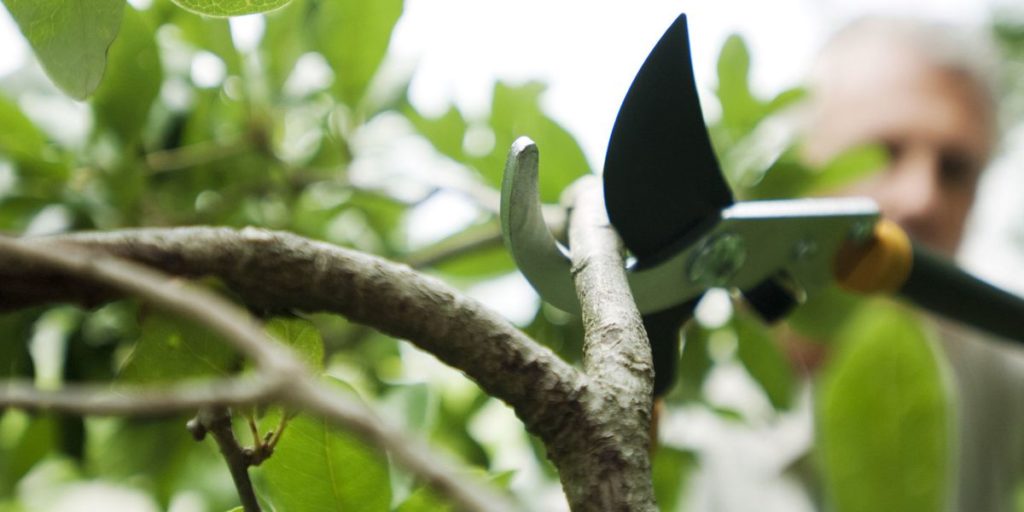
Motorists who travel I-65 between Birmingham and Montgomery during summertime often enjoy the tradition of stopping in Clanton for a freshly-picked basket of Chilton County’s famous peaches. There’s something special about that part of Alabama, a Goldilocks zone that produces those thick, juicy, tasty treats. Not too cold. Not too hot. Just right. Well, that and an awful lot of pruning. Thing is, peach trees need to be cut back annually so that they can continually produce the best and most fruit. A snip here. A lop there. Just planting them and walking away isn’t enough. Kind of like laws, and there’s no better example of such a thing than those governing occupational licensing in Alabama. When we first began planting them decades ago, occupational licensing laws were meant to ensure that those who were practicing potentially dangerous professions were doing so safely. Those early measures covered around 5 percent of the U.S. labor force, according to a recent policy memo from the Cato Institute. But like an untended peach tree, they’ve been left to grow wild. “Alabama licenses a total of 151 occupations, covering over 432,000 Alabama workers, which represents over 21 percent of the state’s labor force,” wrote the authors of The Costs of Occupational Licensing in Alabama, a special report commissioned by the Alabama Policy Institute. The report found that the initial costs of occupational licensing are $122 million, with another $45 million for renewals plus $243 million in annual continuing education costs. Those costs are eventually passed along to consumers. Clearly, these laws are due for pruning, but Alabama’s lawmakers have taken an uneven approach to the orchard lately. Near the end of the last legislative session they passed a bill that doubled the license application for landscape architects to $150 and increased the maximum fine that could be imposed on them for violations from $250 to $2,500 per instance. But they allowed a bill to die that would have reformed the Alabama Sunset Committee, the body responsible for periodically reviewing state professional licensing boards, agencies, and commissions to ensure they’re operating effectively and ethically. The bill would have added a “sunrise” provision to the process so that when a new licensing requirement is proposed, lawmakers would have an objective set of thorough standards to judge its merits, like if licensing would create an unreasonable effect on job creation or place unreasonable access or restrictions on those seeking to enter the profession. Proponents would have also needed to demonstrate how the public would be harmed without the licensing measure, and how we couldn’t be protected by other means. In other words, it would have to be more about protecting the people than protecting the profession, used only as a last resort, and even then, it would be applied to the least degree possible, but the bill failed to even get a public hearing. Lawmakers did manage to do a little pruning, though, by providing a path to occupational licensing once denied to former convicted felons. “For people who have served their full sentence … they should be able to get a job to feed their family, contribute to society, and lessen the chance that they fall back into crime,” wrote State Sen. Cam Ward, Republican-Alabaster, who sponsored the reform. Former convicts can now petition a judge for an order of limited relief, which prohibits an occupational licensing board from automatically denying their application. “The board or commission must give the case a fair hearing,” Ward said, adding that the new law “recognizes the dignity of work.” Some of Alabama’s occupational licensing laws are good. Some are bad. But most are just in need of some regular pruning. Let’s hope our lawmakers bring a good pair of garden shears to next year’s legislative session so that Alabama’s laws, like Chilton County’s peach trees, can produce the best fruit. Pepper Bryars is a senior fellow at the Alabama Policy Institute and host of the 1819 podcast. Follow him on Twitter at @jpepperbryars. API is an independent, nonpartisan, nonprofit research and educational organization dedicated to strengthening free enterprise, defending limited government, and championing strong families. If you would like to speak with the author, please e-mail communications@alabamapolicy.org or call (205) 870-9900. Permission is hereby granted to display, distribute, and quote from this publication, provided that it is properly attributed to the Alabama Policy Institute and the author. For editorial questions, please contact communications@alabamapolicy.org.
J. Pepper Bryars: Time to stop daydreaming about a lottery
Lottery supporters were left saying “so close …” last week after the latest attempt to establish the game in Alabama collapsed under the weight of competing interests and power plays. It was reminiscent of the failed lotto player, successfully matching his numbers one-by-one until his hopes are dashed when that final digit proves ever elusive. But that’s what happens when you play a losing game. We’ve already heard the arguments against a lottery, from the financial risk of budgeting on a game of chance to the moral risk of a government enticing its citizens to play a game 99.9 percent of them will lose. I’ve written about it before, and the Alabama Policy Institute has a long history of opposing the lottery. But this time, the corrosive nature of gambling conspired to defeat itself.Here’s what happened. Vegas-style Casinos The lottery debate in recent years hasn’t centered on an actual lottery. That is, walking into a gas station and buying a paper ticket with a few numbers.No. There’s a strong pro-gambling lobby in Alabama that seeks to take advantage of any momentum behind a lottery proposal to include measures legalizing what’s known as Class III gaming – card tables, roulette wheels and slot machines. By including some specific language in a lottery bill, they could later artfully argue that expansion of gaming into Class III has already become law, thus giving them a green light to open casinos. And then there are those who have stakes in existing gaming facilities such as dog tracks and electronic bingo halls. They push hard to ensure that no legislation passes that could create competition. Point is, those who profit from the forms of gambling we have now, and who could profit from expanded forms in the future, see a simple lottery as a threat. They want to protect what they have, and then expand their offerings to keep existing customers and lure even more. Horse Trading Several lawmakers who favored a lottery in the past found themselves holding out for assurances that Alabama would adopt a key provision of Obamacare by expanding Medicaid, the insurance program for the poor and disabled. The issue here is that while the federal government pays for the first few years of the expansion, Alabama would eventually cough-up an increasingly higher percentage of an ever-growing expense. As the bill moved through the Legislature, it was reported that lawmakers were considering paying that additional cost with lottery revenue in a bid to collect more votes. Here’s the problem: the Legislative Service Agency estimated that the lottery would generate about $167 million a year in revenue after expenses and prizes were handed out, but estimates on the state’s share of expanding Medicaid range from $168 million to $250 million annually. So, we’d end up passing a lottery whose revenues could be swallowed up by Obamacare. How many politicians in Alabama want that etched into their electoral tombstone? Money Money Money Then there’s the question of how we’d spend whatever little is left. Some lawmakers wanted to send it all to the general fund. Others wanted some, if not most, to go toward education. And the teacher’s union, which remains a powerful force in Montgomery, wouldn’t budge. In the end, those who wanted more gambling, those who sought Medicaid expansion, and those aligned with the teacher’s union felt the status quo was preferable. Add them to traditional opponents of the lottery, and the bill died by a handful of votes. Let’s hope it stays that way. Alabama needs its leaders to focus their time on attainable solutions for problems that aren’t going away, and on opportunities that might if we refuse to focus. It’s about time they quit daydreaming about hitting the lottery. J. Pepper Bryars is a senior fellow at the Alabama Policy Institute and host of the 1819 podcast. Follow him on Twitter at @jpepperbryars.
J. Pepper Bryars: Alabama moves to protect free speech on campus
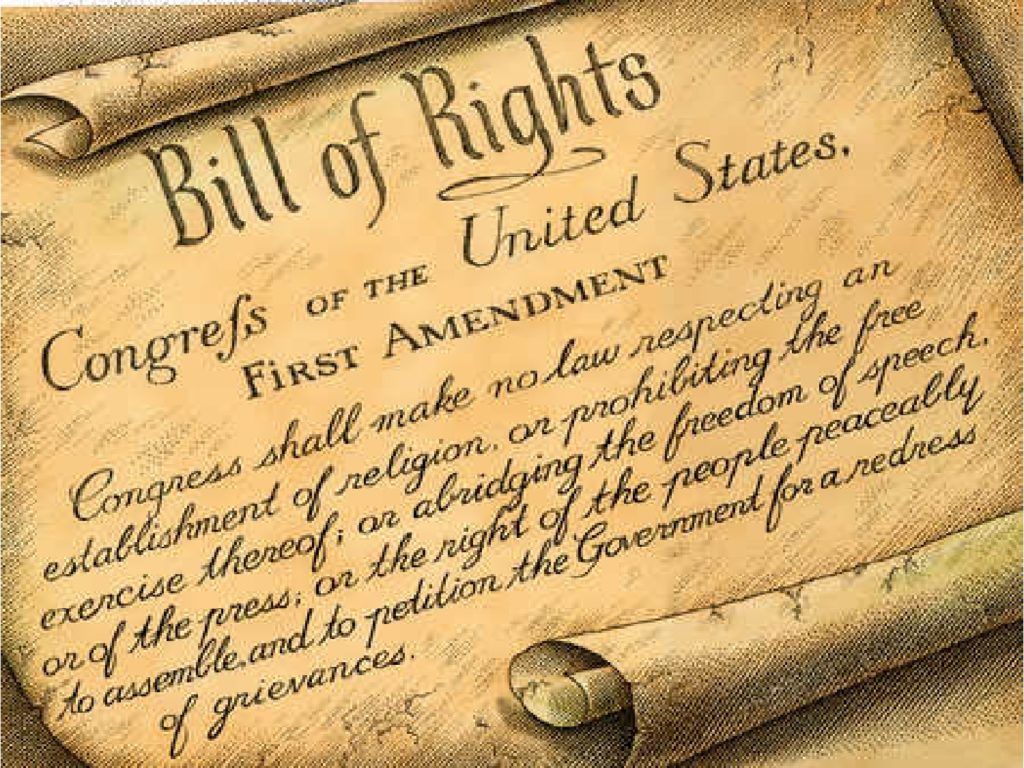
Free speech zones, meant to move certain discussions away from where they could offend listeners, or be heard at all. Speech codes, meant to limit acceptable topics to an ever-shrinking list of progressive-leaning beliefs. And heckler’s vetoes, meant to give the power of censorship to a loud minority. These tactics and others are part of a trend on college campuses that is chilling the free speech rights of faculty, students and visiting speakers who dare mention controversial or unorthodox ideas. Thankfully, lawmakers in Alabama have an opportunity to ensure the trend doesn’t take hold here by passing what is being called “one of the most comprehensive and effective campus free-speech laws in the country.” State Rep. Matt Fridy, Republican -Montevallo, has introduced House Bill 498 that would require the state’s public colleges and universities to adopt policies and procedures to protect free speech on campus. The bill was recently approved in committee and now awaits further action. “Freedom of expression is critically important during the education experience of students, and each public institution of higher education should ensure free, robust, and uninhibited debate and deliberation by students,” the bill states. It goes on to declare that it is not the proper role of these schools to “shield individuals from speech that is protected by the First Amendment to the United States Constitution, including ideas and opinions the individuals may find unwelcome, disagreeable, or offensive.” But is campus free speech really a problem in Alabama? Yes, at least according to one expert who has helped draft similar campus free speech laws in other states. “Although it’s sometimes argued that the campus free speech crisis only affects deep-dyed blue states like California and Massachusetts, the problem is national,” wrote Stanley Kurtz, a senior fellow at the Ethics and Public Policy Center. Kurtz noted how Alabama A&M near Huntsville recently made it on the “10 Worst Colleges for Free Speech” list maintained by the individual-rights advocacy group FIRE for having the most “red light” rated policies that, in their view, restrict free speech. The Washington Examiner published an article last year accusing the University of West Alabama in Livingston of having a “free speech zone” by limiting any demonstrations to a spot near its student union building. And at the University of South Alabama in Mobile, a pro-life student club founded by Katherine Sweet was told in 2013 that they had to set up their display on an arguably low-traffic portion of the campus that’s designated for free speech. “I went to South thinking it would be a place where I could debate freely with other students, engage in discourse, and ultimately learn from not only our professors, but each other,” Sweet wrote in an AL.com guest opinion article. “Aren’t universities supposed to be atmospheres that promote just that?” Yes, and Fridy’s bill seeks to ensure they do through various measures, including: • Ensuring that faculty and students are free to take political positions, to express themselves in outdoor areas of the campus, and to assemble, speak and pass out literature,• Prohibiting the establishment of any “free speech zones,”• Keeping the campus open to anyone invited by student groups to speak,• Forbidding the imposition of excessive security fees that discourage some speakers,• And potentially suspending those who disrupt the free speech of others.Voltaire’s beliefs in freedom of expression were once famously summarized with the phrase, “I disapprove of what you say, but I will defend to the death your right to say it.” But unless our lawmakers act now, what you may hear on your local college campus could someday be, “I disapprove of what yousay, so I will restrict your right to say it.” J. Pepper Bryars is a senior fellow at the Alabama Policy Institute. Follow him on Twitter at @jpepperbryars.
J. Pepper Bryars: It’s time to reform occupational licensing in Alabama

Did you know that it’s against the law to braid hair, wash hair, or even plant flowers professionally in Alabama without a license? That’s because occupational licensing, originally meant to protect consumers, has gotten way out of hand. A video recently produced by the Alabama Policy Institute illustrates just how ridiculous it has become. Sure, licensing certain occupations is a good thing. We need to know our builders, physicians, attorneys, and those practicing many other specialized and potentially dangerous professions are being well regulated. But the process has evolved beyond its original intent. Sometimes, it seems to be more about controlling the market and restricting access to competition rather than public safety. “Alabama licenses a total of 151 occupations, covering over 432,000 Alabama workers, which represents over 21 percent of the state’s labor force,” wrote the authors of The Costs of Occupational Licensing in Alabama, a special report commissioned by API. The report found that the initial costs of occupational licensing are $122 million, with another $45 million for renewals plus $243 million in annual continuing education costs. Those costs are eventually passed along to the consumers. Thankfully, we have an opportunity to at least slow further growth of occupational licensing in Alabama. State Rep. Randall Shedd, Republican-Fairview, has introduced House Bill 88, known as the Alabama Sunrise Act. Under existing law, the Alabama Sunset Committee is responsible for periodically reviewing state professional licensing boards, agencies, and commissions to ensure they’re operating effectively and ethically. Shedd’s bill would reform the committee’s processes by adding a “sunrise” provision so that when a new licensing requirement is proposed, lawmakers would have an objective set of thorough standards to judge its merits. The bill states that “no profession or occupation be subject to regulation by the state unless the regulation is necessary to protect the public health, safety, or welfare from significant and discernible harm or damage and that the police power of the state (is exercised only to the extent necessary for that purpose.” In other words, it would have to be more about protecting the people than protecting the profession, used only as a last resort, and even then it would be applied to the least degree possible. The bill sets down several requirements that a proposal must satisfy before a new license is created, including: Demonstrate that it wouldn’t have an unreasonable effect on job creation or job retention, or place unreasonable access or restrictions on the ability of individuals whoare practicing the profession. Explain why the public cannot be effectively protected by other means. And provide documentation of the nature and extent of the harm to the public caused by the unregulated practice of the profession or occupation. Unless we do something now, we should expect the trend to continue. “In the past six decades, instances of occupational licensing in the United States have increased from a coverage of around 5 percent of the U.S. labor force to a present-day coverage of close to 25 percent of the U.S. labor force,” wrote Peter Q. Blair and Bobby W. Chung in a recent policy memo from the Cato Institute. Those pushing for additional occupational licensing may have the best of intentions, but we should remind them of the simple phrase uttered by a Frenchmen more than 200 years ago. His words captured the essence of the free market and became the slogan for an emerging economic doctrine that formed the bedrock of America’s prosperity. When a meddling advisor to King Louis XIV asked a group of struggling businessmen in Paris how the government could help them increase profits, a frustrated factory owner named Legendre bravely shouted, “Laissez-nousfaire!” Translation: “Leave us alone!” Contact your state lawmaker today and tell them you want some of the boards to simply leave us alone and that the Alabama Sunrise Act should receive a public hearing before the House Boards Agencies and Commissions Committee, and soon. J. Pepper Bryars is a senior fellow at the Alabama Policy Institute. Follow him on Twitter at @jpepperbryars.
J. Pepper Bryars: Why we should avoid an immediate special session for the gas tax
Many Alabamians, including the conservative-leaning Alabama Policy Institute, agree our state needs to increase funding for roads and bridges. And Governor Kay Ivey hasn’t yet ruled out calling the state legislature into a special session to raise the gas tax when lawmakers convene Tuesday in Montgomery. But is fast-tracking a $300 million tax increase a good idea? Probably not. True, calling lawmakers into a special session would free them from having to multitask the dozens of other issues they’d normally be dealing with. State senators, state representatives, and their staffs could focus intently on the legislation, and committees could schedule hearings and votes without worrying about competing events. But maybe we need to respect the normal process instead. Putting aside everything else and concentrating solely on something this big might normally make sense, but moving immediately into a special session this week may cause more problems than it’d solve. First, a third of the members of the legislature are brand new and this puts them in a very tight spot. They lack the benefit of having studied and debated this issue in recent years. Asking them to immediately cut their legislative teeth on a problem this monumental, this controversial, and this complicated may not be entirely fair. Besides, I can hear their opponent’s radio ad playing already: “We sent ol’ Billy Bob to Montgomery and the very first thing he did was vote to raise our taxes.” Ouch. They might not hear that ad until three years from now, but when they do, it sure will sting. Second, a special session may create the unintended appearance of ramming a tax increase through because of the shorter period of time needed and the lower hurdles required for passage. Spending only a handful of days on the issue — between introduction, debate, passage, and enactment — could look bad. It seems rushed, and begs the question: what’s the hurry? And needing fewer votes than normal for passage could also send the wrong message. That’s because in a normal legislative session, a 3/5th vote is needed in each chamber to advance a bill before the state budgets are done. In a special session that vote doesn’t happen. Removing that rather high bar — a safeguard that exists for a reason — begs another question: why not go through the normal process? And third, while a special session may afford lawmakers plenty of time since it’ll be what they’re working on all day long, such a rapid process wouldn’t give regular folks enough time to learn about the details, discuss the pros and cons of the bill in their communities, and let their state senators and state representatives know what they think. A special session could circumvent the normal feedback loop between elected officials and their constituents. That loop is especially important when it comes to tax increases. Lawmakers should also take note of what happened when tax increases were perceived to be rammed through the process recently in other states. Last week, Wyoming’s state legislature adjourned having failed to pass a tax increase that was strongly supported by its leadership in both chambers along with the state’s Republican governor. Why? Aside from the particulars, many voters felt things were moving way too fast. The bill was introduced in the House of Representatives on a Tuesday and passed out on a Friday. It then went to the upper chamber, where it was initially supported by a majority of senators seeking a quick vote until they began feeling the heat from angry constituents. Things fell apart, and their effort failed. And then there’s what happened to the chairman of the transportation committee in the Tennessee House of Representatives, State Rep. Barry “Boss” Doss. He was accused by some of breaking the chamber’s rules in 2017 so he could speed up the process and “ram” through the gas tax increase. Doss ended up drawing a challenger in the Republican Primary and ultimately lost his seat, one of only two GOP incumbents to lose that year. Some believe his parliamentary maneuvers were partly to blame. Alabama stands on the threshold of something big. We have the opportunity to bring real reform to our tax code — ending the practice of siphoning gas tax revenue to fund things unrelated to transportation, increasing the resources needed to improve our state’s roads and bridges, and lowering taxes that could help our poorest neighbors or increase economic activity. And as proposed by the Alabama Policy Institute and others, we can, and should, do all of that without increasing the overall tax burden. But we need to be patient, take our time, listen to others, and build a plan we all can support. Haste makes waste, and considering our state leaders are seeking to raise the gas tax by $300 million every year, waste is the last thing Alabama needs. J. Pepper Bryars is a native of Mobile who lives in Huntsville, is a senior fellow at the Alabama Policy Institute. Follow him on Twitter at @jpepperbryars.
Americans for Tax Reform targets Alabama’s gas tax increase
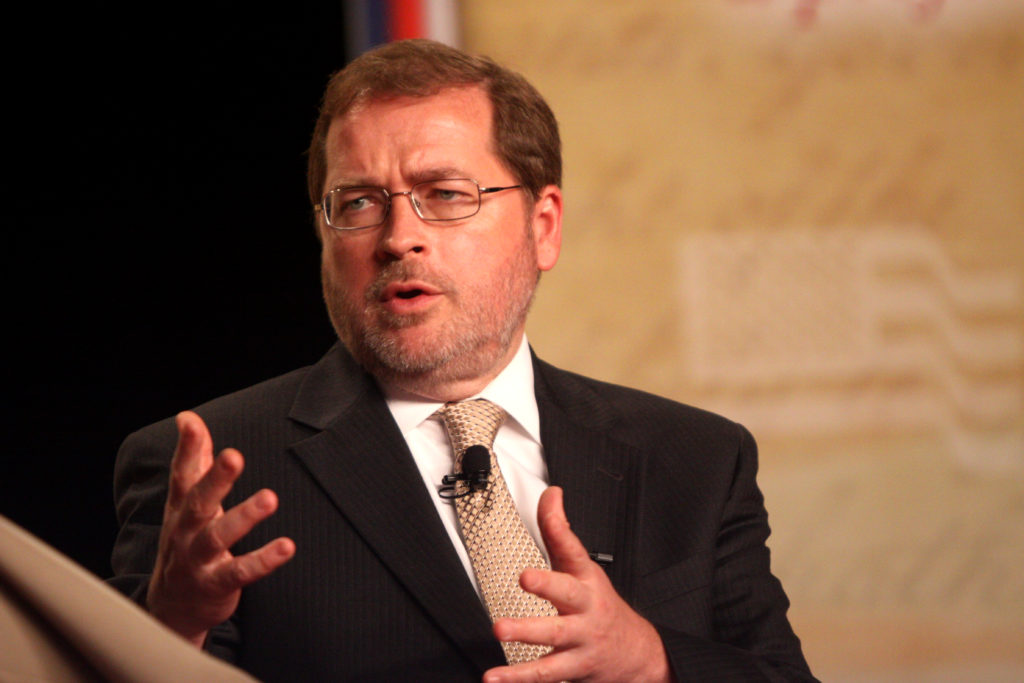
One of the nation’s most aggressive anti-tax groups has taken aim at Gov. Kay Ivey‘s proposed $300 million gas tax increase. Patrick Gleason, vice president of Americans for Tax Reform (ATR), called on state lawmakers this week to reject a stand-alone tax increase in favor of pairing it with “pro-growth” tax cuts elsewhere in the budget. “If it’s a stand-alone gas tax, we’ll be urging them to oppose it,” Gleason recently said on the Present Crisis Podcast, hosted by conservative Alabama writer J. Pepper Bryars. ATR has a history of fighting against tax increase. According to its website, it has launched major advertising campaigns against tax increases in the past. Gleason explained on the podcast it would be better for Alabama to first reform how its gas taxes are already spent, ending the practice of having them fund things that aren’t associated with transportation. Then, he said, pair a gas tax increase with reductions in taxes that stifle economic growth, like business taxes and personal income taxes, so that the overall tax burden doesn’t increase. “You could see a package taking shape that would not only be something that Americans for Tax Reform (would) not oppose, but could be something that we supported,” Gleason explained. Gleason looks at Alabama as an outlier right now — a a Republican governor following the footsteps of Democratic governors in states like Illinois, Connecticut, and California introducing a gas tax hike. “One of the exceptions to that is Alabama where we’re seeing a Republican governor push for a gas tax increase,” Gleason said. “That’s really made the state an outlier.” Gleason believes being the only state raising taxes in the southeast could harm the state’s efforts to attract businesses. “You’re competing with states that have been very aggressive in improving their codes and enacting pro-growth tax reforms,” Gleason said, pointing to recent tax cuts and major reforms in Mississippi, Tennessee, Florida and other nearby states. “You’re surrounded by a lot of very competitive states that are already competitive in terms of what their tax and regulatory climates look like, but they’re still aggressively looking for ways to improve.” ART plans to study Alabama’s gas tax bill more in depth once it’s introduced. “We will be vigilant,” he said. You can listen to the interview on the Present Crisis Podcast below:
