
Plan for I-10 bridge across Mobile River resurrected
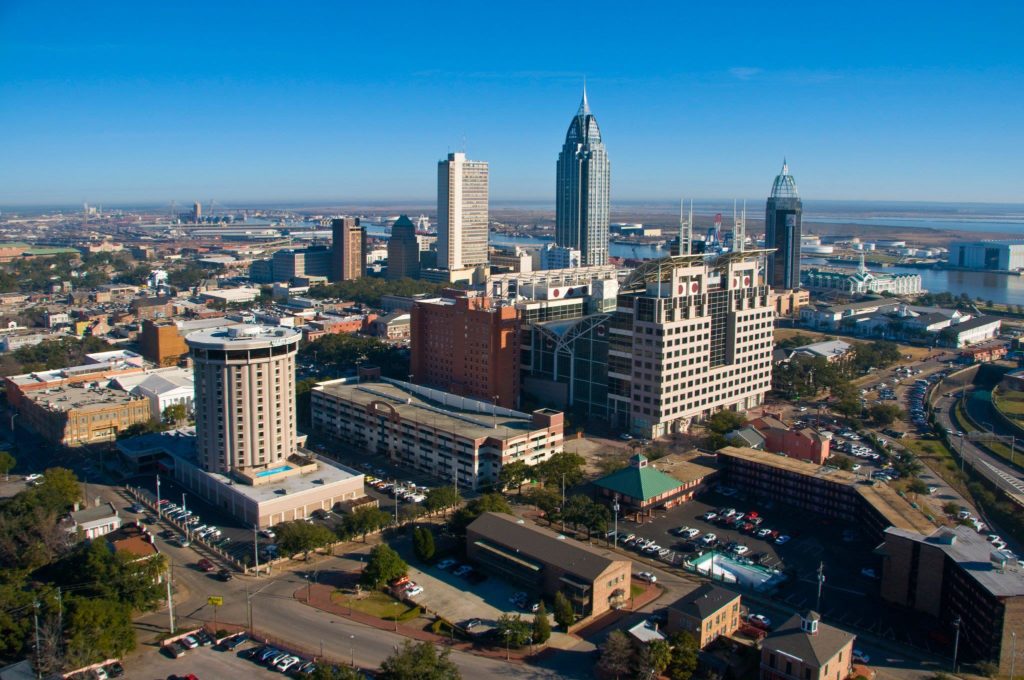
Officials on the Alabama coast have resurrected a plan to build a massive Interstate 10 bridge across the Mobile River and expand the highway across Mobile Bay, voting Wednesday to push the project ahead without the large tolls that doomed the plan two years ago. Toll prices would be limited to $2.50, down from as much as $6 under the previous plan, and a free route across the heavily traveled northern end of Mobile Bay would still be available through Wallace Tunnel and existing roads, news outlets reported. Officials in both Mobile and Baldwin County approved a framework for the project, which they said is vital to easing congestion and improving safety along the heavily traveled east-west route linking Jacksonville, Florida, with Los Angeles. “It is truly a historic and happy day not only for the region but the nation,” said Jack Burrell, a member of the regional planning organizations, told a news conference. Instead of work lasting 25 years or longer, the new plan would reduce the construction period to about five years. Mobile Mayor Sandy Stimpson said there was a sense of urgency because the state risks losing a $125 million federal grant that is set to expire in September if the project is not in the pipeline. In addition to that money, the state has pledged $250 million. A $300 million federal loan would be repaid with toll revenues. Toll opponents who killed the project in 2019 said they remain opposed to any told, even a reduced one, but state officials have said that tolls were the only way to fund the project. Under the plan, tolls would be charged only on the new bridge over the Mobile River and a newly constructed and elevated Bayway that would extend 7.5 miles (12.07 kilometers) from Mobile to U.S. 98 in Daphne. Republished with the permission of the Associated Press.
Will toll opposition continue to make a difference in mayoral elections Fairhope and beyond?
In the summer of 2019, the opposition to the toll bridge on I-10 in Alabama reached a fever pitch. The project included a new 2.5-mile-long, six-lane cable-stay bridge and involved a complete replacement of the existing I-10 Bayway. The project would cost a considerable amount of money, with the price tag rising exponentially as the plans were finalized. John Cooper, the director of the Alabama Department of Transportation and Governor Kay Ivey insisted the only way to fund the project would be to toll drivers. While they expected opposition, those in Montgomery thought that they’d steamroll the opposition. State Auditor Jim Zeigler explained what opponents were up against, telling AL.Com on the night project died, “When we first started, several people told me that ‘you’re wasting your time. It’s a done deal, and there isn’t a thing you can do. It’s a done deal. But now, it’s a dead deal.” It’s easy to look back at the fight, especially the end of the battle when politicians started tripping over themselves to rush to the side of the overwhelming majority of residents opposed to the plan and see its death coming by 1,000 cuts, but it’s essential when we look to the future that we look at the history and what happened. There’s no better place to look than Zeigler’s book, Blocking the 1-10 Toll Scheme: A Successful Citizen Movement. In the book, he describes in detail the timeline from start to finish of the grassroots efforts to stop the bridge. In an interview with Alabama Today, he noted, “The book doesn’t favor any one person or seek to endorse anyone. It simply gives a timeline of what progressed.” A free copy of the book is available at: https://tinyurl.com/BlockingTheToll In it, he describes the Fairhope City meeting, which was planned to be at the Fairhope Civic Center, in the large city council meeting room. There were 33 people who opposed the toll scheduled to testify. Only two people were slated to testify in favor of the toll. Neither of those people ended up speaking. The meeting lasted four hours. In the end, the ESMPO members voted 8 to 1 in favor of the motion to remove the toll project from the TIP. Zeigler stated in his book that the community effort to kill the toll was partly due to the skilled organization of several people, including Karin Wilson. Fairhope’s mayor, Karin Wilson, played a vital role in stopping the toll plan. Mayor Wilson was the first member of the Eastern Shore Metropolitan Planning Organization to oppose the toll plan. She made the argument that the state should have invested the BP settlement money to fund the project instead of using the money as part of their operating budget. Wilson took to her Facebook page to express her opposition. “I’m 100% against a toll to build this bridge whatever the fee.” Wilson continued, “The critical need for a new bridge has been discussed for over a decade. To react as though building it now is an overnight emergency is absurd. It’s the perfect example of government getting away with zero accountability. A household or business cannot operate with the idea that if we cannot balance our budget we can force someone else to pay for it. We must budget within our means or fail and suffer the consequences. It’s a pretty good incentive having to be accountable.”Zeigler himself rallied opponents on his own Facebook page, gathering 55,000 people to fight the project. Other officials on the ESMPO who voted against the toll were Daphne mayor Dane Haygood, Spanish Fort mayor Mike McMillon, Loxley mayor Richard Teal, Fairhope city council president Jack Burrell, Daphne city councilman Ron Scott, Baldwin county commissioner Billie Jo Underwood, and Baldwin county commissioner Joe Davis.Zeigler’s citizen group named Block the Tolls. Support Accountability is still active with 52,000 members. Will the toll issue and toll fighters make a difference in the upcoming municipal elections on August 25? Because the toll proposal could resurface at any time, it is likely that citizens will remain engaged. Since the toll plan was blocked on August 28 of last year, the group succeeded in defeating Amendment One on the March 3rd ballot. It would have taken away the right to vote for or against members of the State School Board and make them all appointed by the governor. The proposal was demolished, 75% no to 25% yes. It was another victory for the ‘No Tolls’ group. Mobile County Commissioner Jerry Carl, who drafted the resolution to remove the toll from the Transportation Improvement Plan won the Republican nomination for Congress on July 14 by a vote of 52% to 48%. Will the 52,000 toll-fighting activists make a difference in the August 25 municipal elections? Will they remember those officials who helped block the toll? Over 2,000 of the toll fighters live in the City of Fairhope, where there is a contested Mayor’s race. Fairhope is considered a bellwether of the continuing influence of Zeigler’s citizen group.
Fairhope’s hiring of new police sergeant making waves in local government

Fairhope Mayor Karin Wilson is under fire regarding an appointment she made in late February. Wilson announced the hiring of Tony Goubil, the city’s new police sergeant and public safety director, at a council meeting on February 26. The council and Fairhope Police Chief Joseph Petties, who were not informed of Goubil’s hiring prior to her announcing the decision, were both astonished at the announcement. Wilson shared her reasonings and excitement for the announcement in a Facebook post: “The hiring of Tony Goubil is a point of pride for me and for this City. His passion for safety is going to help catapult our incredible police department to far greater heights. When you have an opportunity to hire someone with this amount of experience to meet a great and growing city need, you take it. Some are casting the filling of this need in a negative light. I can assure you it is not. When a position opens up in any department, under my administration, we will make it available to all deserving and qualified individuals.” However, questions have arisen about Goubil’s hiring after baldwin county local paper, The Courier, discovered that he met with multiple sources in Fairhope concerning ethics claims filed with the Alabama Ethics Commission commission against Wilson. According to The Courier, the Alabama Ethics Commission sent Goubil to investigate a complaint filed against Wilson, and although the complaint was dismissed, “those who filed the claims questioned how Goubil’s investigations into those claims could be trusted in the light of his hiring by Wilson.” The Alabama Ethics Commission has policies in place to prevent this kind of ethical delimma. A memo released in 2017 from the commission’s Executive Director Thomas Albritton said, “once you leave your public employer, for two years you may not go to work for a private business or an individual you audited or investigated while you were a public employee.” The Courier, obtained an e-mail sent to Wilson from Petties. The e-mail, dated March 6, Petties expressed his apprehensions and thoughts about Goubil: I wanted to inform you of the conditions of my department. My Department has been in an uproar ever since Monday, February 26, the night you announced the hiring of Tony Goubil. I was inundated with phone calls that night about something that I had no knowledge of. I am not understanding how someone can be hired under my Department without my knowledge and without any input from me. This has been handled totally different than any hires in the past. I have been a police officer with Fairhope for 27 years and a Sergeant has never been brought in from outside. My officers feel as though they weren’t given an opportunity to apply for the promotion and those that have gone through the process for promotion feel slighted. They feel that it’s not what you do, but who you know. Where’s their motivation to work hard knowing that they do not have an opportunity for promotion. This has caused not one, but all 35 officers to be upset, not to mention my non-sworn employees. The chain-of-command has been completely undermined, thus making it nonexistent. We’ve had two officer involved shootings within the last 6 months. My officers need to be focused on their safety and training and not concerned about which channel their command comes from. I need my employees to stand behind me and support me and in return, I support them. This can’t happen if I am being undermined. I understand that you are authorized to hire and fire, but these decisions need to be carefully considered. The morale and motivation within my Department is the lowest I’ve ever seen at a time when they need to be galvanized behind their leader. I do not need their focus misplaced with worry as to the state of our Department. We’ve got officers that have been off probation for over a year and a half and have not received the standard increase. I am in danger of losing these officers. Due to the lack of qualified applications being received it would be hard to replace these officers. We used to be able to attract officers from surrounding agencies, but with the perceived turmoil within the City, we are no longer attracting those applicants. I’m not sure how we have the money in the budget to award such a position that has been given to Mr. Goubil. Petties isn’t the only Fairhope official in an “uproar” over the unexpected hiring. “This stinks to high heaven,” Councilman Kevin Boone told The Courier. “To me, this seems almost the same as Gov. Bentley offering Luther Strange the Senate seat to end the investigation into him. This just seems incredibly wrong.” “This doesn’t pass the smell test, It’s highly disheartening that our city is once again in the news for missteps taken by the mayor,” Council President Jack Burrell said in the same report. Wilson said in a statement to The Lagniappe; “He (Burrell) was involved in some of the complaints, investigations and complaints are two totally different things. People file frivolous complaints all day long, I can assure you. I’m sure that by upsetting the apple cart there’s a lot of tit for tat and there’s a lot of complaints against me.” Councilman Robert Brown and Boone are questioning Wilson’s authority to create what they feel is a new position. “There is no such position nor is one budgeted,” Brown told The Courier. “Mr. Goubil could fill Officer Bishop’s position; however, that is another issue. There is no full time SRO position, much less two. There was no communication with council, who is the funding authority. A position is not funded or created until council has approved the position.” “There was nothing done inappropriately, if anything, it’s the best hire we’ve made as far as doing proper procedures in that department than has been made. This is an all-encompassing person that’s going to really help plan for Fairhope’s future. Citizens should applaud,” Wilson told The Lagniappe.
