
Beyond D.C. partisanship, Raphael Warnock makes broad pitch in Georgia
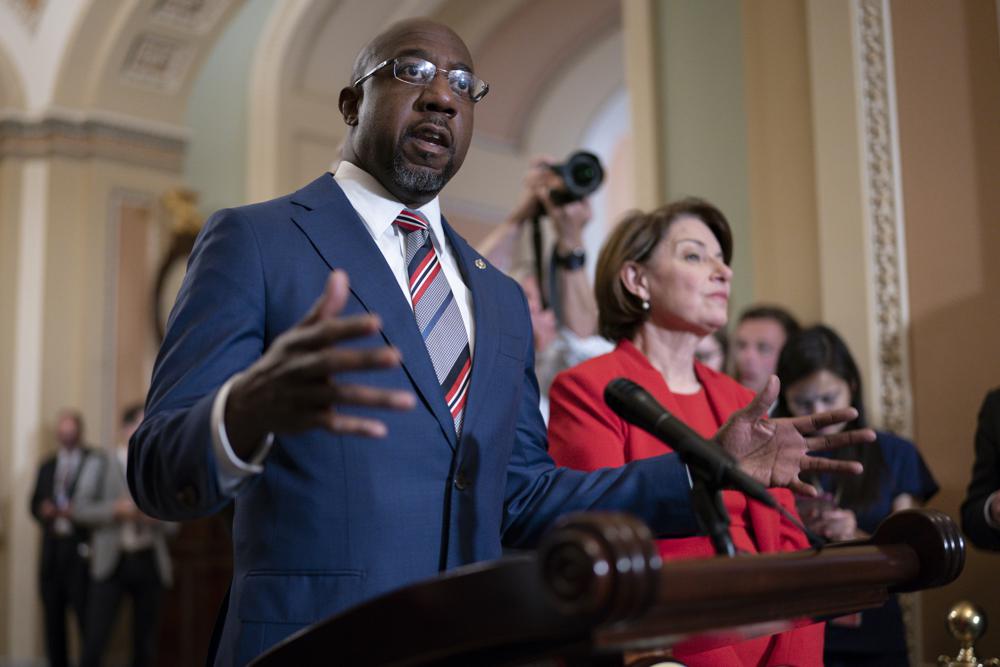
On Capitol Hill, Sen. Raphael Warnock assails Republicans’ push for tighter voting rules as “Jim Crow in new clothes,” while his campaign operation blasts emails bemoaning dire risks to democracy. Back home, Georgia’s first Black senator is more subtle, pitching a “comprehensive view of infrastructure” and avoiding talk of his reelection fight already looming just months after he won a January special election runoff with Senate control at stake. “I’m busy being Georgia’s United States senator,” Warnock said, smiling, as he brushed aside a question recently about famed football hero Herschel Walker potentially running for his seat as a Republican. Indeed, the preacher-turned-politician spent the Independence Day recess hopscotching from an inland port in the conservative Appalachian foothills to liberal Atlanta’s urban microbreweries and sprawling public hospital, then the suburban defense contractors in between. At each stop, he highlighted the federal money he’s routed — or is trying to route — to his state for health care, national security research, rural broadband and urban walking paths, among other projects. “We as Georgians should be proud of all that happens in the state,” Warnock said at the Georgia Tech Research Institute, cheerleading ongoing projects and arguing for more federal spending. “I had some sense of it before becoming a senator. But what I have been able to see firsthand is impressive.” The high-wire act will test whether Warnock, who will seek his first full Senate term next year, can again stitch together a diverse, philosophically splintered coalition that tilted Georgia to Democrats in 2020. He’s still the high-profile freshman whose election gave Democrats unified control in Washington, but now he’s angling to be seen as a “senator for all Georgians” delivering for the state with nuts-and-bolts legislative work. The approach is part necessity given Georgia’s toss-up status: Warnock and Sen. Jon Ossoff, also a freshman, each won their seats by less than 100,000 votes out of 4.5 million runoff ballots; Democrat Joe Biden topped Republican Donald Trump in the presidential contest by less than 13,000 votes out of 5 million last November. Warnock’s gambling that he can be an unapologetic advocate for Democrats’ agenda, including on voting laws, yet still prove to Georgians beyond the left’s base that he is a net-benefit for them. Come November 2022, that would mean maintaining enthusiasm among the diverse Democratic base in metro areas and Black voters in rural and small-town pockets, while again attracting enough suburban white voters, especially women, who’ve drifted away from Republicans in the Trump era. The senator doesn’t disclose such bald-faced election strategy. His office declined a one-on-one interview for Warnock to discuss his tenure and his argument for a full six-year term. Still, his public maneuvering illuminates a preferred reelection path. “Georgia is such an asset to our national security infrastructure,” Warnock said at the Georgia Tech outpost adjacent to Dobbins Air Reserve Base. He praised public and private sector researchers who develop technology for the Pentagon, U.S. intelligence and other agencies, saying they “keep our national defense strong and protect our service members.” He held up the installation as a beneficiary of the U.S. Innovation and Competition Act, a $250 billion package that cleared the Senate on a rare bipartisan vote, 68-32, eight more than the 60-vote filibuster threshold that’s held up Democrats’ plans on election law and infrastructure. As Warnock visited the Appalachian Regional Port, an inland container port in north Georgia, he highlighted the proposed RURAL Act, which he’s co-sponsoring with Republican Sen. Mike Braun of Indiana. It would speed upgrades of rural railway crossings. Afterward, Warnock’s office announced a $47 million grant for port expansion. The surrounding Murray County delivered 84% of its presidential vote to Trump last November. Warnock won just 18% there on Jan. 5. In Atlanta, where Warnock resides and still serves as senior pastor of Ebenezer Baptist Church, which Martin Luther King Jr. once led, the senator lined up more squarely with Democrats’ priorities. Yet even then, Warnock was deliberate when discussing Republicans. “It’s ridiculous that we haven’t expanded Medicaid,” he declared outside Grady Memorial Hospital, a vast public complex in downtown Atlanta. He noted that Georgia, still run by Republicans at the state level, remains one of a dozen states not to expand eligibility under Congress’ 2010 health insurance overhaul. Warnock accused state politicians of “playing games,” though he never mentioned Gov. Brian Kemp by name. Warnock said he’d soon introduce a measure allowing citizens in non-expansion states to be covered. That aligns with one of Biden’s key presidential campaign pledges. The senator later stood along the Atlanta Beltline, an old railroad path redeveloped into a pedestrian and cycling thoroughfare around the city’s perimeter. He touted a $5 million federal investment, billing it as an example of Democrats’ wide interpretation of infrastructure, and alluding to the GOP’s narrower “hard infrastructure” definition. “America needs a home improvement plan,” Warnock said. He endorsed a pending bipartisan infrastructure deal negotiated at the Biden White House but said Democrats should use Senate rules to pass an even larger package over Republican objections in the 50-50 chamber. To be sure, even with his emphasis on infrastructure, Warnock didn’t shy away from the voting rights debate when asked. As on infrastructure, Warnock said Democrats should use Senate rules — or rewrite them, in the case of the filibuster — to counter the spate of Republican state laws tightening access to absentee and early voting. Yet in all those arguments, Warnock tried to frame his case as something beyond party. “I’m making a jobs-and-economic viability argument,” he said on Medicaid expansion. “Once you have basic health care, you can pursue employment, and with a kind of freedom that you can work knowing that you’re covered.” He added that “rural hospitals are closing” under the financial strain of treating the uninsured and underinsured. Warnock extended that analysis to rural broadband and the urban Beltline. Both, he said, connect individuals to economic opportunities around them. Housing and child care, he argued, are “basic infrastructure” for the same reasons. As for voting rights, Warnock stood beside his
Donald Trump headed to Georgia as turnout driver, but also a threat
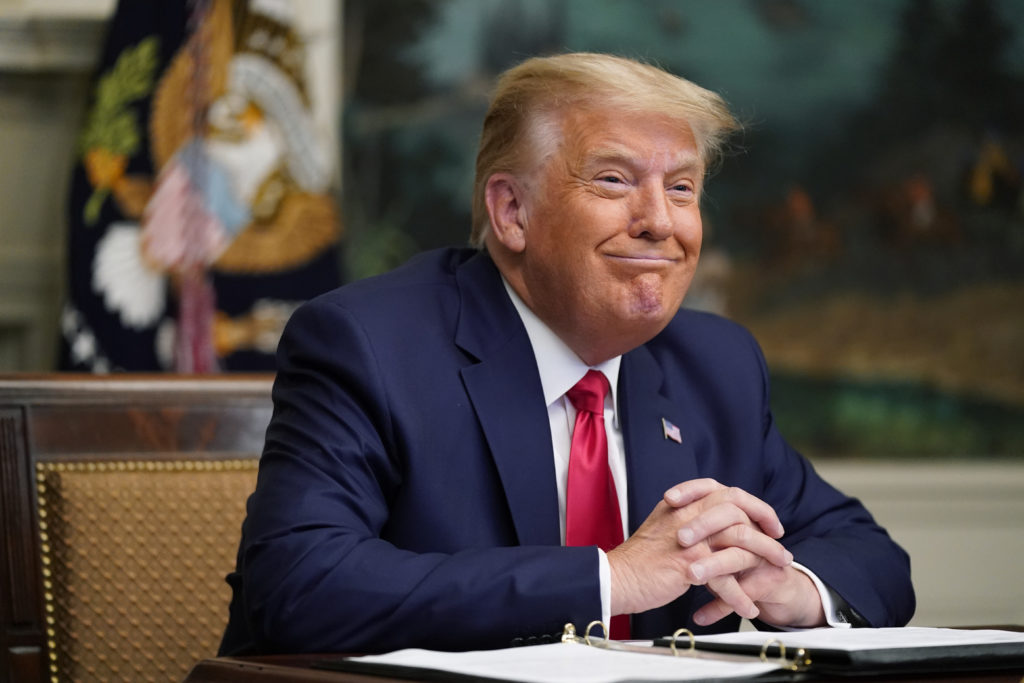
Some establishment Republicans are sounding alarms that President Donald Trump’s conspiratorial denials of his own defeat could threaten the party’s ability to win a Senate majority and counter President-elect Joe Biden’s administration. The concerns come ahead of Trump’s planned Saturday visit to Georgia to campaign alongside Sens. David Perdue and Kelly Loeffler, who face strong Democratic challengers in Jan. 5 runoffs that will determine which party controls the Senate at the outset of Biden’s presidency. Republicans acknowledge Trump as the GOP’s biggest turnout driver, including in Georgia, where Biden won by fewer than 13,000 votes out of about 5 million cast. That means every bit of enthusiasm from one of Trump’s signature rallies could matter. But some Republicans worry Trump will use the platform to amplify his baseless allegations of widespread voter fraud — arguments roundly rejected in state and federal courts across the country. That could make it harder for Perdue and Loeffler to keep a clear focus on the stakes in January and could even discourage Republicans from voting. “The president has basically taken hostage this race,” said Brendan Buck, once a top adviser to former House Speaker Paul Ryan. Especially fraught are Trump’s continued attacks on Georgia’s Republican state officials and the state’s election system, potentially taking away from his public praise of Loeffler and Perdue. “Trump’s comments are damaging the Republican brand,” argued Republican donor Dan Eberhart, who added that the president is “acting in bad sportsmanship and bad faith” instead of emphasizing Republicans’ need to maintain Senate control. The GOP needs one more seat for a majority. Democrats need Jon Ossoff to defeat Perdue and Raphael Warnock to defeat Loeffler to force a 50-50 Senate, positioning Vice President-elect Kamala Harris as the tie-breaking majority vote. Trump on Monday blasted Gov. Brian Kemp as “hapless” for not intervening to “overrule” Secretary of State Brad Raffensperger’s certification of Biden’s win. A day earlier, Trump told Fox News he was “ashamed” he’d endorsed Kemp in his 2018 GOP primary for governor. Kemp’s office noted in response that state law gives Kemp no authority to overturn election results, despite Trump’s contention that Kemp could “easily” invoke “emergency powers.” Meanwhile, Raffensperger, a Trump supporter like Kemp, has accused the president of throwing him “under the bus” for doing his job. Perdue and Loeffler have attempted to stay above the fray. They’ve long aligned themselves with Trump and even echoed some of his general criticisms of the fall elections, jointly demanding Raffensperger’s resignation. But the crux of their runoff argument — that Republicans must prevent Democrats from controlling Capitol Hill and the White House — is itself a tacit admission that Biden, not Trump, will be inaugurated Jan. 20. And at one recent campaign stop, Perdue heard from vocal Trump supporters who demanded that he do more to help Trump somehow claim Georgia’s 16 electoral votes. Republicans see three potential negative outcomes to Trump fanning the flames. Some GOP voters could be dissuaded from voting again if they accept Trump’s claims that the system is hopelessly corrupted. Among Republicans more loyal to Trump than to the party, some could skip the runoff altogether out of anger at a party establishment the president continues to assail. Lastly, at the other end of the GOP spectrum are the moderate Republicans who already crossed over to help Biden win Georgia and could be further alienated if the runoff becomes another referendum on Trump. Josh Holmes, a top adviser to Senate Majority Leader Mitch McConnell, said Republicans “haven’t seen any evidence of lack of enthusiasm in the Senate races.” But none of those potential bad effects would have to be sweeping to tilt the runoffs if they end up as close as the presidential contest in Georgia. “We’ll see how it plays out. It changes day by day and week by week. But so far, so good,” Holmes said. In Georgia, any Republican concerns are more circumspect. Brian Robinson, a former adviser to Kemp’s Republican predecessor as governor, said Trump should “drive a strong, forward-looking message” about what’s at stake for a Republican base that “is fervently devoted to him.” “The best thing he can do for the party,” Robinson said, “is to talk about the importance of having a Republican Senate majority to project his policy legacy and to make sure the Democrats can’t reverse a lot of what he has put in place that Republicans support.” Asked what Trump should avoid, Robinson circled back to what he believes the president should say. Former U.S. Rep. Jack Kingston, a Trump ally, downplayed the potential for GOP splintering, framing an “inner-family squabble” as a sideshow to the “incredible” consequences that define the runoffs. “Followers of Trump will follow Trump, but they’re not blind to the huge stakes. And neither is he,” Kingston said. “He knows to keep his legacy. He’s got to get these people reelected.” Trump, Kingston argued, is “keeping the base interested,” a necessary component of any successful runoff campaign since second rounds of elections often see a drop-off in voter participation. Robinson added that Democrats face their own challenge in replicating record turnout for Biden. “What’s the best motivator? Fear,” he said. Before November, Democrats dreaded a second Trump term more than Republicans feared Trump losing, Robinson reasoned. “Republicans have reason to be scared now,” he said, because of the prospect that Democrats could control both ends of Pennsylvania Avenue. “That could make a difference in turnout” beyond anything Trump says, Robinson concluded. For their part, the senators continue their public embrace of all things Trump ahead of the visit. “I couldn’t be more excited to welcome” the president “back to Georgia,” Loeffler wrote on Twitter after Trump confirmed his plans. Perdue’s campaign quickly retweeted the comment, which Loeffler punctuated with a reminder that the runoffs are “an all-hands-on-deck moment.” It’s not clear, though, if all Republicans will be on hand at all. Kemp, the governor who appointed Loeffler upon Sen. Johnny Isakson’s retirement last year, has on previous Trump visits
