
The Supreme Court rules for a designer who doesn’t want to make wedding websites for gay couples
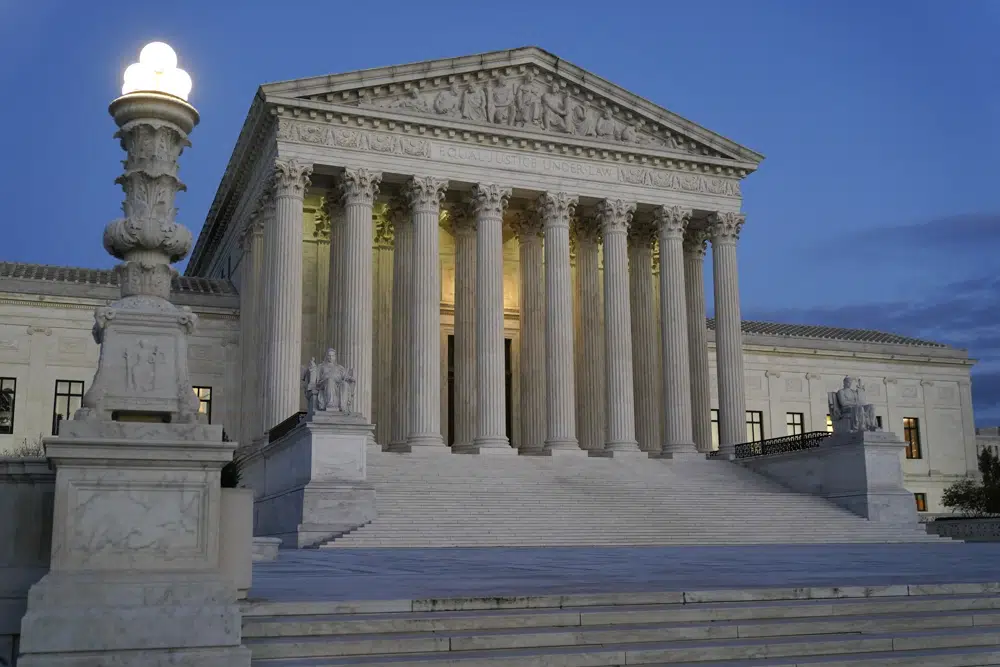
In a defeat for gay rights, the Supreme Court’s conservative majority ruled Friday that a Christian graphic artist who wants to design wedding websites can refuse to work with same-sex couples. The court ruled 6-3 for designer Lorie Smith despite a Colorado law that bars discrimination based on sexual orientation, race, gender, and other characteristics. Smith had argued that the law violates her free speech rights. Smith’s opponents warned that a win for her would allow a range of businesses to discriminate, refusing to serve Black, Jewish, or Muslim customers, interracial or interfaith couples, or immigrants. But Smith and her supporters had said that a ruling against her would force artists — from painters and photographers to writers and musicians — to do work that is against their beliefs. “The First Amendment envisions the United States as a rich and complex place where all persons are free to think and speak as they wish, not as the government demands,” Justice Neil Gorsuch wrote for the court’s six conservative justices. Justice Sonia Sotomayor wrote a dissent that was joined by the court’s other liberals. “Today, the Court, for the first time in its history, grants a business open to the public a constitutional right to refuse to serve members of a protected class,” Sotomayor wrote. The decision is a win for religious rights and one in a series of cases in recent years in which the justices have sided with religious plaintiffs. Last year, for example, the court ruled along ideological lines for a football coach who prayed on the field at his public high school after games. The decision is also a retreat on gay rights for the court. For two decades, the court has expanded the rights of LGBTQ people, most notably giving same-sex couples the right to marry in 2015 and announcing five years later that a landmark civil rights law also protects gay, lesbian, and transgender people from employment discrimination. That civil rights law decision was also written by Gorsuch. Even as it has expanded gay rights, however, the court has been careful to say those with differing religious views needed to be respected. The belief that marriage can only be between one man and one woman is an idea that “long has been held — and continues to be held — in good faith by reasonable and sincere people here and throughout the world,” Justice Anthony Kennedy wrote in the court’s gay marriage decision. The court returned to that idea five years ago when it was confronted with the case of a Christian baker who objected to designing a cake for a same-sex wedding. The court issued a limited ruling in favor of the baker, Jack Phillips, saying there had been impermissible hostility toward his religious views in the consideration of his case. Phillips’ lawyer, Kristen Waggoner, of the Alliance Defending Freedom, also brought the most recent case to the court. Smith, who owns a Colorado design business called 303 Creative, does not currently create wedding websites. She has said that she wants to but that her Christian faith would prevent her from creating websites celebrating same-sex marriages. And that’s where she runs into conflict with state law. Colorado, like most other states, has a law forbidding businesses open to the public from discriminating against customers. Colorado said that under its so-called public accommodations law, if Smith offers wedding websites to the public, she must provide them to all customers, regardless of sexual orientation. Businesses that violate the law can be fined, among other things. Smith argued that applying the law to her violates her First Amendment rights. The state disagreed. The case is 303 Creative LLC v. Elenis, 21-476. Republished with the permission of The Associated Press.
Judge rules for California baker over same-sex wedding cake
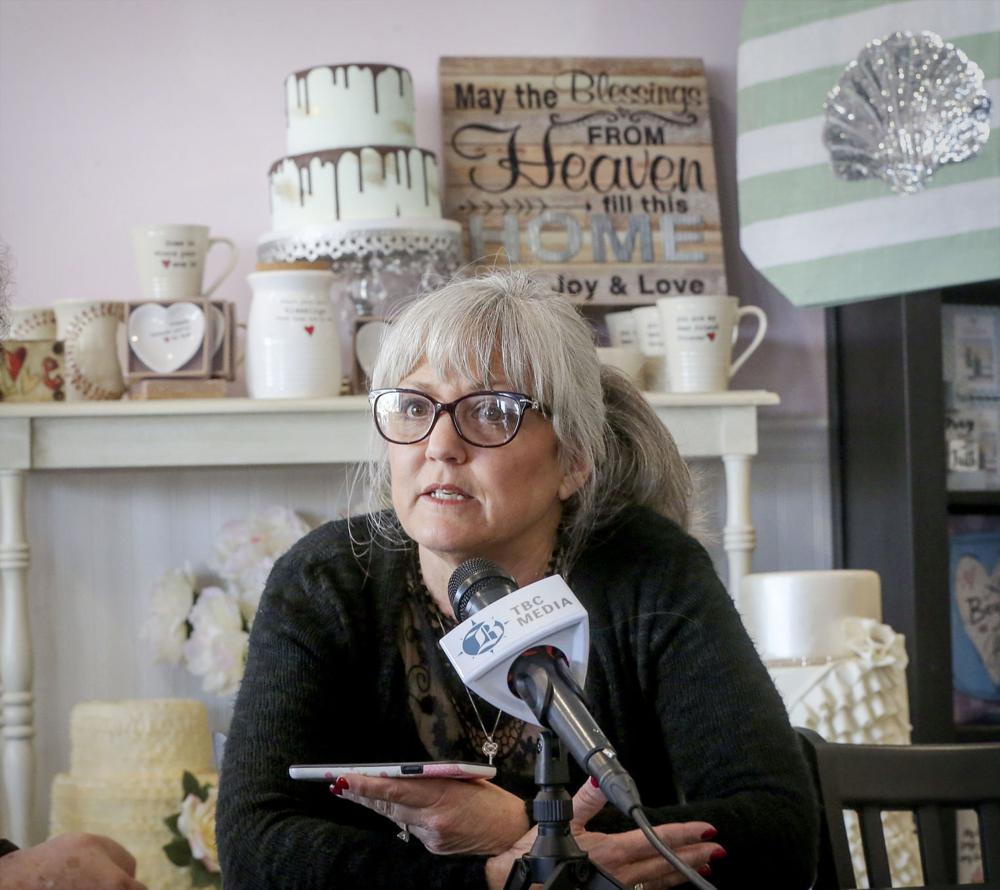
A California judge has ruled in favor of a bakery owner who refused to make wedding cakes for a same-sex couple because it violated her Christian beliefs. The state Department of Fair Housing and Employment had sued Tastries Bakery in Bakersfield, arguing owner Cathy Miller intentionally discriminated against the couple in violation of California’s Unruh Civil Rights Act. Miller’s attorneys argued her right to free speech and free expression of religion trumped the argument that she violated the anti-discrimination law. Kern County Superior Court Judge Eric Bradshaw ruled Friday that Miller acted lawfully while upholding her beliefs about what the Bible teaches regarding marriage. The decision was welcomed as a First Amendment victory by Miller and her pro-bono attorneys with the conservative Thomas More Society. “I’m hoping that in our community, we can grow together,” Miller told the Bakersfield Californian after the ruling. “And we should understand that we shouldn’t push any agenda against anyone else.” A spokesperson said the fair housing department was aware of the ruling but had not determined what to do next. The couple, Eileen and Mireya Rodriguez-Del Rio, said they expect an appeal. “Of course, we’re disappointed, but not surprised,” Eileen told the newspaper. “We anticipate that our appeal will have a different result.” An earlier decision in Kern County Superior Court also went Miller’s way, but it was later vacated by the 5th District Court of Appeal, which sent the lawsuit back to the county. The decision comes as a Colorado baker is challenging a ruling he violated that state’s anti-discrimination law by refusing to make a cake celebrating a gender transition. That baker, Jack Phillips, separately won a partial U.S. Supreme Court victory after refusing on religious grounds to make a gay couple’s wedding cake a decade ago. Republished with the permission of The Associated Press.
Matt Clark: Montgomery’s non-discrimination ordinance is bad for religious freedom, free speech, and public safety

On June 24, 2021, the Montgomery Advertiser reported that Montgomery Mayor Steven Reed would be submitting an ordinance to the city council that would punish discrimination on the basis of sexual orientation or gender identity. This city council will likely vote on this ordinance during its next meeting. The Alabama Center for Law and Liberty obtained a copy of the proposed ordinance and posted it on its website. While claiming to protect the civil rights of all, Mayor Reed actually deprives religious adherents of their civil rights and the most vulnerable among us of their right to safety. Let’s start with the implications for churches. One would think that churches would be completely off-limits to the government, but think again. The ordinance forbids anyone from abridging “the right to full enjoyment of any of the accommodations, advantages, facilities, or privileges of any place of … assemblage … without discrimination.” A church, by definition, is an assembly. Therefore, it appears this ordinance will force churches to let transgender people use the restroom of their choice or face fines if they don’t. This ordinance also has implications for public safety. Because it defines gender identity as “the actual or perceived gender-related identity, expression, appearance, or mannerisms, or other gender-related characteristics of an individual,” an establishment cannot question whether an individual is actually transgender if that person merely expresses, appears, or acts that way. Consequently, to gain access to women’s restrooms, locker rooms, or showers, a sexual predator will merely have to act like he is transgender. For all its claims about wanting to protect the weak, liberalism is alarmingly willing to subject women and children to severe trauma. This ordinance will also hurt Christians who want to run their businesses in accordance with their faith. You may have heard of Jack Phillips, the Christian cake baker in Colorado who was sued after politely declining to create a custom cake for a same-sex wedding. You may have also heard of Catholic Social Services, a Catholic adoption agency to whom the City of Philadelphia issued an ultimatum after they refused to place children in homes with same-sex couples. The Supreme Court ruled in favor of both Mr. Phillips and Catholic Social Services on narrow grounds, but the issue of whether Christians can run their businesses in accordance with their faith is far from settled. Thus, Christians in Montgomery may be facing similar suits. Homeowners will face similar problems. The ordinance applies to “obtaining housing for rental or sale.” This seems innocuous at first glance since gay and transgender people obviously need housing in order to live. However, this ordinance appears to cover not only basic housing needs but also transactions like reserving a room in a bed and breakfast or a trip on Airbnb and the like. In Hawaii, for instance, a Catholic woman who ran a bed and breakfast out of her house was fined for refusing to rent a room to a same-sex couple. She insisted that everyone, gay or straight, comply with Christian teachings about sex in her house. Undoubtedly, she should have had the right to do that, but Hawaii didn’t care. Apparently, neither does Mayor Reed. Finally, this ordinance is bad for free speech. LGBT advocates like the Human Rights Campaign argue that people should not face discrimination for who they are, and therefore people like Jack Phillips should have to praise a same-sex marriage even if they disagree with it. However, if we turn the tables, we should ask whether a gay bakery should be forced to bake a cake for a religious person with the words, “You shall not lie with a male as one lies with a female; it is an abomination.” (Leviticus 18:22.) By the same logic, the religious person should not have to face discrimination since his religion is as essential to his identity as the gay person’s sexuality is to his. Mayor Reed and his allies would probably believe that the gay cake baker should not be forced to say that—and they would be right. But neither should the Christian be forced to say something contrary to his beliefs. “Speech for me, but not for thee” is incompatible with the First Amendment. Finally, forcing this ordinance on one of the most religious cities in the United States is political suicide. If the city council passes it, then the voters will remember how the city put most of them in the crosshairs. Matt Clark serves as the Alabama Center for Law & Liberty’s Executive Director. ACLL is the non-profit litigation arm of the Alabama Policy Institute.
Jeff Sessions: Religious freedom and the promise of Easter
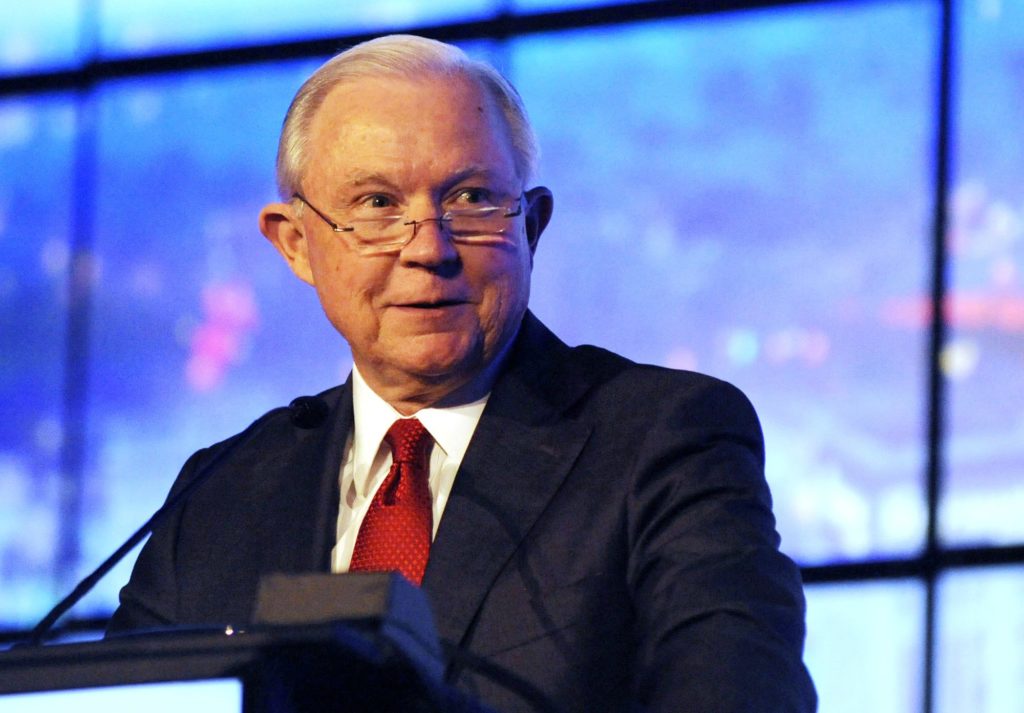
Jeff Sessions discusses the religious liberties we enjoy and the importance of celebrating Easter.
More LGBT issues loom as justices near wedding cake decision

A flood of lawsuits over LGBT rights is making its way through courts and will continue, no matter the outcome in the Supreme Court’s highly anticipated decision in the case of a Colorado baker who would not create a wedding cake for a same-sex couple. Courts are engaged in two broad types of cases on this issue, weighing whether sex discrimination laws apply to LGBT people and also whether businesses can assert religious objections to avoid complying with anti-discrimination measures in serving customers, hiring and firing employees, providing health care and placing children with foster or adoptive parents. The outcome of baker Jack Phillips’ fight at the Supreme Court could indicate how willing the justices are to carve out exceptions to anti-discrimination laws; that’s something the court has refused to do in the areas of race and sex. The result was hard to predict based on arguments in December. But however the justices rule, it won’t be their last word on the topic. Religious conservatives have gotten a big boost from the Trump administration, which has taken a more restrictive view of LGBT rights and intervened on their side in several cases, including Phillips’. “There is a constellation of hugely significant cases that are likely to be heard by the court in the near future and those are going to significantly shape the legal landscape going forward,” said Shannon Minter, legal director of the National Center for Lesbian Rights. Several legal disputes are pending over wedding services, similar to the Phillips case. Video producers, graphic artists and florists are among business owners who say they oppose same-sex marriage on religious grounds and don’t want to participate in same-sex weddings. They live in the 21 states that have anti-discrimination laws that specifically include gay and lesbian people. In California and Texas, courts are dealing with lawsuits over the refusal of hospitals, citing religious beliefs, to perform hysterectomies on people transitioning from female to male. In Michigan, the American Civil Liberties Union filed suit against the state’s practice of allowing faith-based child placement agencies to reject same-sex couples. Advocates of both sides see the essence of these cases in starkly different terms. “What the religious right is asking for is a new rule specific to same-sex couples that would not only affect same-sex couples but also carve a hole in nondiscrimination laws that could affect all communities,” said Camilla Taylor, director of constitutional litigation at Lambda Legal, which supports civil rights for LGBT people. Jim Campbell of the Christian public interest law firm Alliance Defending Freedom said the cases will determine whether “people like Jack Phillips who believe marriage is the union of a man and a woman, that they too have a legitimate place in public life. Or does he have to hide or ignore those beliefs when he’s participating in the public square?” ADF represents Phillips at the Supreme Court. The other category of cases concerns protections for LGBT people under civil rights law. One case expected to reach the court this summer involves a Michigan funeral home that fired an employee who disclosed that she was transitioning from male to female and dressed as a woman. The 6th U.S. Circuit Court of Appeals ruled that the firing constituted sex discrimination under federal civil rights law. That court is one of several that have applied anti-sex discrimination provisions to transgender people, but the Supreme Court has yet to take up a case. The funeral home argues in part that Congress was not thinking about transgender people when it included sex discrimination in Title VII of the 1964 Civil Rights Act. A trial judge had ruled for the funeral home, saying it was entitled to a religious exemption from the civil rights law. “Congress has not weighed in to say sex includes gender identity. We should certainly make sure that’s a conscious choice of Congress and not just the overexpansion of the law by courts,” Campbell said. ADF also represents the funeral home. In just the past week, two federal courts ruled in favor of transgender students who want to use school facilities that correspond to their sexual identity. Those cases turn on whether the prohibition on sex discrimination in education applies to transgender people. Appeals in both cases are possible. In the past 13 months, federal appeals courts in Chicago and New York also have ruled that gay and lesbian employees are entitled to protection from discrimination under Title VII. Those courts overruled earlier decisions. Title VII does not specifically mention sexual orientation, but the courts said it was covered under the ban on sex bias. The Obama administration had supported treating LGBT discrimination claims as sex discrimination, but the Trump administration has changed course. In the New York case, for instance, the Trump administration filed a legal brief arguing that Title VII was not intended to provide protections to gay workers. It also withdrew Obama-era guidance to educators to treat claims of transgender students as sex discrimination. There is no appeal pending or expected on the sexual orientation issue, and there is no guarantee that the court will take up the funeral home’s appeal over transgender discrimination. The trend in the lower courts has been in favor of extending civil rights protections to LGBT employees and students. Their prospects at the Supreme Court may be harder to discern, not least because it’s unclear whether the court’s composition will change soon. Justice Anthony Kennedy, 81, has been the subject of retirement speculation, though he has not indicated he is planning to retire. When Justice Stephen Breyer turns 80 in August, he will join Kennedy and Justice Ruth Bader Ginsburg, 85, as octogenarians on the bench. If President Donald Trump were to replace any of those justices, the court probably would be much less receptive to LGBT rights. Even the landmark gay marriage ruling in 2015 that Kennedy wrote was a 5-4 decision. “We’re very concerned about the composition of the federal bench. Under the Trump administration, we’ve seen a
