
Women of Influence: Dr. Cynthia McCarty, Alabama Board of Education Vice-President
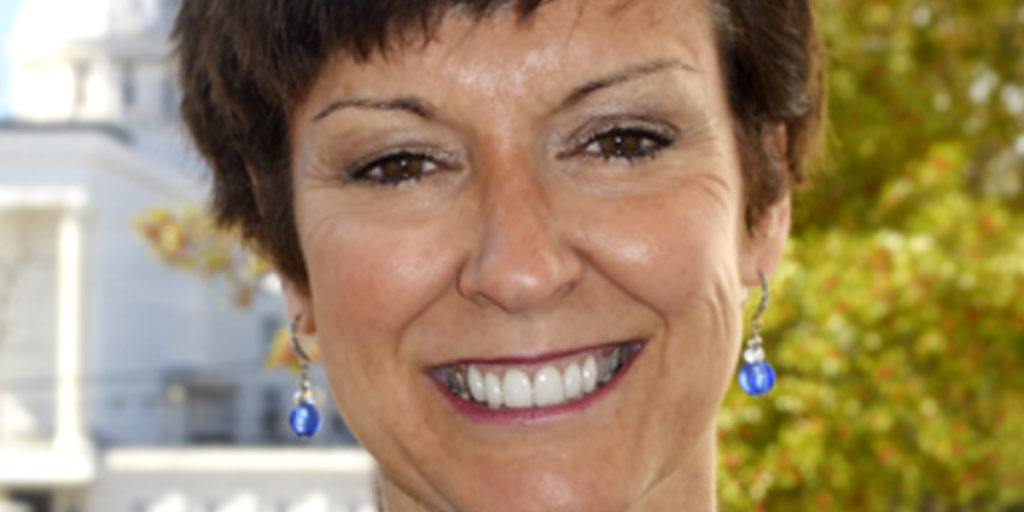
Vice-President of the Alabama Board of Education, Alabama Educator Hall of Famer, and a career spanning over two decades; Dr. Cynthia McCarty has a love for her calling that few can match. Born in Auburn, Ala. McCarty attended city schools until her graduation from Auburn University with a Bachelor’s degree in International Trade. From there, she moved to Birmingham, Ala. pursuing an MBA at Samford University then moving to North Carolina to earn a Ph.D. in Economics from the University of North Carolina, Chapel Hill. Moving back to the Yellowhammer State, McCarty began her career in education at Jacksonville State University (JSU) in 1990, where she still works as a Professor of Economics in the College of Commerce and Business Administration. For the past 20 years McCarty has also served as the Director of JSU’s Center for Business and Free Enterprise Education and Entrepreneurship, providing professional development for K-12 teachers and education students, in the areas of economics, social studies, and personal finance. Throughout her already impressive career, McCarty has been involved with several organizations outside of her “job.” McCarty currently serves as president of 3E, an organization that strives to enhance the connections between the business community and area schools; is a member of the Alabama Council for Social Studies and previously served as a Board member of the Alabama Council on Economic Education. She is also a member of the National Business Educators Association and the American Economics Association, according to her website. She’s a graduate of Leadership Calhoun County, and has taught several sessions of Youth Leadership Calhoun County. In 2013, McCarty was inducted into the Alabama Educator’s Hall of Fame for her contributions to the field of economics. According to her website, she has authored or co-authored “14 published academic articles and has presented numerous times on the state of Alabama’s economy and economic education in K-12 schools.” In 2014, McCarty ran unopposed in the November general election as the representative for district six on the Alabama State Board of Education. She held her position until last month when the board elected her as Vice-President. McCarty runs again this year for her seat; unopposed. McCarty is a woman of true dedication and service to the State of Alabama, and was kind enough to answer some of Alabama Today’s questions about her life, work, and influences. How have other women influenced your success? My mother, who has consistently supported and encouraged me to strive for excellence, certainly motivated me to always do my best. Although there are too many to name individually, I would say that colleagues at JSU, educators in District VI, and fellow board members have all taught me a tremendous amount about service and leadership. I continue striving to improve by observing their accomplished leadership skills. What shaped your desire to work in education? My desire to work in education comes from a belief that relevant, accessible, and quality education will allow our children to reach their potential and prosper. If I can help improve the quality, relevance, and accessibility of education in Alabama, then I certainly want to do this. What has been your favorite area of service, and what is your favorite thing about that position? My favorite work in education is visiting classrooms and observing innovative, effective teachers introduce a new concept to students in such a way that they all “get it.” That moment is both miraculous and inspirational. Thus, my favorite area of service occurs when I can improve policies that allow teachers to provide more quality instruction in the classroom. Have you read any books that have shaped your perspective on life? Oh, the list of books I read! Well, I try to read a Biblical passage each morning. I’m also reading a book (for the second time, so that maybe it will stick better) on Christian Leadership, given to me by my predecessor, Dr. Charles Elliott. And I read many books on education, such as Ron Clark’s “Move Your Bus” and Robert Putnam’s “Our Kids: The American Dream in Crisis.” In addition, I have a love of biographies and am currently reading the biographies of the US presidents (I just finished Rutherford B. Hayes) and novels such as “The Guernsey and Potato Peel Pie Society,” which I read when I needed a break from Rutherford. Books inspire and relax me. What advice would you give to young women who want to work in education? I would say that educators are the key to the success of our future. Nothing is so important as a caring, effective teacher. That said, education is the most important profession. If we don’t have quality, caring educators, where will our engineers, writers, doctors, inventors, electricians, machinists be in 20 years? How will they learn to read, write, compute, problem-solve? We must nurture and encourage intelligent, caring adults to continue to pursue education as a vital career path. Yes, teaching can be difficult. However, although teaching is sometimes challenging, the opportunities to improve the lives of students are enormous and will benefit generations to come. How do you spend your (rare) free time? I spend any free time I can grab by reading books, watching Auburn football and the NCAA basketball tournament, and visiting family and friends. For her dedication to the education of students within the Yellowhammer Sate and her desire to lead publicly on the State Board of Education, Dr. Cynthia McCarty is undeniably an Alabama woman of Influence
Five things you need to know about Cara McClure
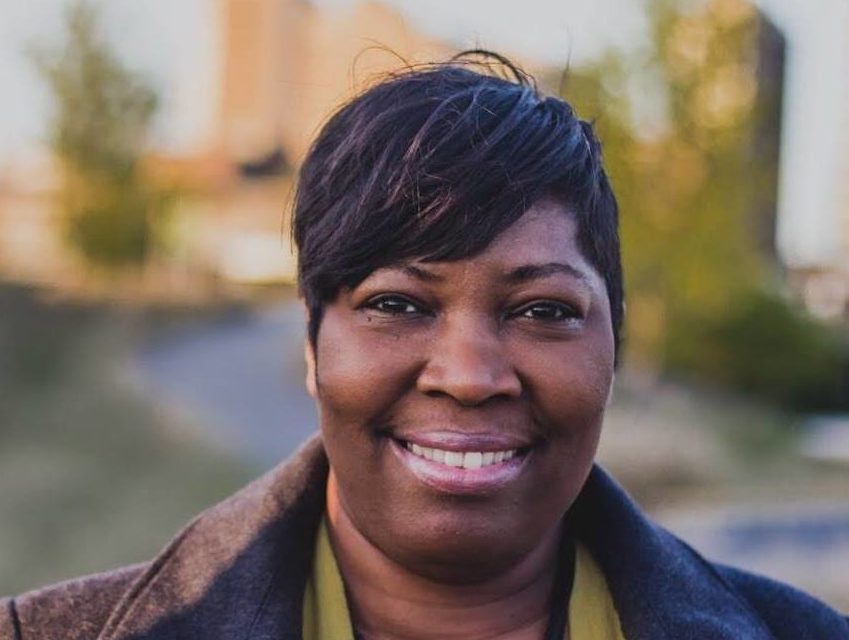
Cara McClure, the Democratic candidate for Public Service Commission Place 1 ran unopposed in the June 5 primary. But now that the primaries are over, the real battle has begun. McClure now faces incumbent Republican Commissioner Jeremy Oden in the November 6 general election for the PSC seat. With that in mind, here are the five things you need to know about Cara McClure: 1. She’s an entrepreneur by nature Nurturing her entrepreneurial spirit, McClure’s parents allowed her to work for their family’s cleaning service while she was in elementary school. There she made cold calls to apartment complexes and small businesses, she also sold candy door-to-door she says in her campaign bio. 2. She is a co-founder of the Magic City Chapter of Black Lives Matter group. After a dispute between group members on whether or not to join with the national Black Lives Matter group, the Black Lives Matter in Birmingham group split into two separate entities from which the Magic City Chapter of Black Lives Matter was formed. McClure was a co-founder of the second group, which voted to join the national coalition of BLM groups. “I’ve been with that group [Black Lives Matter in Birmingham] since Day One,” McClure told AL.com. “I didn’t like how the women were treated. I said we really need to join the national group, and they voted no. We’ve put together an awesome group. We’re not just out there screaming. We want real change.” 3. She’s a dedicated activist. Beyond her work with the BLM movement, McClure also helped launch Showing Up for Racial Justice Birmingham — a group that works to undermine white supremacy and to work toward racial justice through community organizing, mobilizing, and education. She also spearheaded “Black Mama’s Bail Out Day” in Birmingham, which raised money to help bail out incarcerated black mothers to help reunite with their children and families ahead of Mother’s Day. As a recent Glamour Magazine article that featured McClure pointed out, “if elected, she would become the first African American—male or female—to serve on the commission in Alabama. Her hope is to represent the people she’s been fighting for throughout her life: ‘the marginalized and poor black and brown communities that are underrepresented on the commission,’ she says. ‘Those who don’t have a voice or seat at the table.’” 4. She was briefly homeless. Following a marital separation McClure and her son were left homeless. Rebounding quickly and using her personal struggle as a tool, McClure founded her own apartment locator service, ASAP Apartment Locators in January of 2013 to help individuals and families find their ideal homes, which she continues to operate today. 5. She and Kari Powell are leading a double-team effort for PSC Places 1 and 2. In addition to creating McClures branding, Kari Powell and McClure are leading a double-team effort for PSC Places 1 and 2 traveling, campaigning and speaking together at events. Both running as Democrats, they seek to bring fair and affordable utility rates to Alabama.
Women of Influence: fair pay champion, Lilly Ledbetter
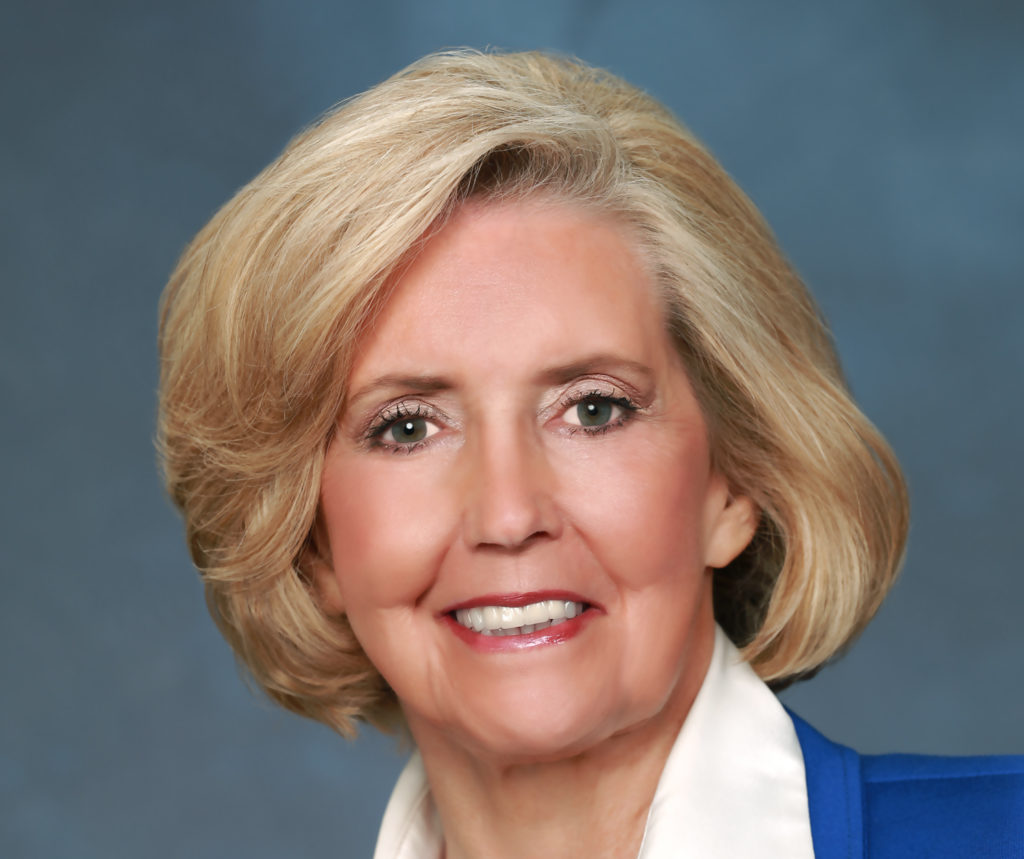
One of the most inspiring stories in Alabama women’s history is Lilly Ledbetter — a fair pay champion since the late 90’s. From her humble beginnings — in a house with no running water or electricity in the small town of Possum Trot, Ala. — Ledbetter became nationally recognized as one of the many faces of gender prejudice and sexual harassment in the workplace by the mid 2000’s. A graduate of Jacksonville High School in Jacksonville, Ala., Ledbetter started working as a district manger for H&R Block in 1969 where she oversaw 14 locations in Jacksonville and the surrounding area. By the time she left the company, she was overseeing 16 locations. While she was working with H&R Block, she also spent three years working at Jacksonville State University as an Assistant Financial aid director. “I would go in to teach classes, and do tax prep at night and on the weekend,” Ledbetter said. In 1979, Ledbetter applied and accepted her dream position as a manager at the Goodyear Tire plant in Gadsden, Ala. where she became one of the first women hired on for a management position. She said she could go toe-to-toe with any man, doing any job at the factory, nevertheless she still experienced sexual harassment and gender prejudice. After 19 years of working with the company, Ledbetter received an anonymous tip that she was receiving thousands less than her male peers in wages. Heartbroken, Ledbetter filed a sexual discrimination complaint with the Equal Employment Opportunity Commission (EEOC) in 1999. Her case went to trial, and the jury awarded her $3.3 million in compensatory and punitive damages for the pay discrimination she had been subjected to. In November of 2006, the Court of Appeals for the Eleventh Circuit Court reversed the jury’s verdict, saying that because the company’s original decision on her pay had been made years earlier, Ledbetter’s case was filed too late, even though she continued to receive discriminatory pay. In a 5-4 decision, the Supreme Court upheld the Eleventh Circuit decision and ruled employees cannot challenge ongoing pay discrimination if the employer’s original discriminatory pay decision occurred more than 180 days earlier, even when the employee continues to receive paychecks that have been discriminatorily reduced. “It was not fair, it wasn’t even close to being fair. We must go to congress, the house and the senate to prevent this from happening in the future to other females and minorities,” Ledbetter said in an interview. And she did. After realizing that the Supreme Court’s decision could undermined the Congressional goal of eliminating discrimination in the workplace, and after being called upon by Supreme Court Justice Ruth Bader Ginsberg. Congress and President Barack Obama‘s Administration acted quickly Less than two years after the Supreme Court’s decision, both the House and Senate passed the Lilly Ledbetter Fair Pay Act of 2009. A crucial piece of legislation, restoring the longstanding laws that ensure individuals who are subjected to unlawful pay discrimination are able to effectively assert their rights under the federal anti-discrimination laws. Ledbetter is still an activist today, spending her time traveling the country and educating women on fair and equal pay. “There’s still so much work to be done for women and their family’s,” Ledbetter said. “In 2020 women will have only been able to vote for 100 years! We haven’t even been able to even vote for 100 years and we still have so few rights that politicians want to do away with.” “We have to pay attention, especially with things like equal pay, where there are laws in place, but no one is enforcing them. Women have to make sure they’re being enforced so they can take care of themselves and their families.” Ledbetter is still fighting for women and equal pay across the nation, but was kind enough to answer some of Alabama Today’s questions about her life, work, and influences: How have other women influenced your success? Marcia D. Greenberger from the National Women’s Law Center, was absolutely instrumental in helping me navigate the legislative and political events I attended. She jokingly told me that she was my “bag carrier” at the Democratic National Convention in 2008. I had never been in a large group of politicians like that, as I’m not from a political background, I had no idea what I was doing and she guided me like a professional. She has inspired me tremendously, and many other women have succeeded because of her. Today Justice Ruth Bader Gingsburg is my hero! She has made a tremendous progress for women/minorities! She was the one who challenged Congress to change the Law after ruling in Ledbetter v Goodyear verdict. Did you know when you began fighting for equal pay that it would gain as much attention as it did? When I began fighting for Equal Pay, it was for myself and then it became a battle for everyone!! I had no idea the fight would gain so much attention, but everyone “got it”— Unequal Pay breaks the Law! Equal Pay is a Family affair— Unequal Pay will affect a person’s retirements also. What has been your favorite area of service, and what is your favorite thing about that position? My favorite area of service are the groups that had never thought about how Equal Pay affects your life while working and retirements! Young college groups also think we have Equal Pay and it will not be a problem when they start work. They know have Equal Pay Law, but do not understand it was enforced. Have you read any books that have shaped your perspective on life? Books on Elenor Roosevelt helped me understand the difference one person could make. First Lady E.R. made much progress and was ahead of her time. What advice would you give to young women who lack the courage to stand up for themselves? Young women need to make sure they get the Pay their work, experience, etc. because what they are short changed will affect their lives forever!! When it is lost—no way to ever get it corrected. How do you spend your free time? I try to stay very involved with my grandchildren and I love to visit them
Women of Influence: Alabama Democratic Party Chair Nancy Worley

Nancy Worley has been an influencer in the state of Alabama for over forty years. Worley, a lifelong resident of the Yellowhammer State, grew up in New Hope, Ala. on a family farm. She attended the University of Montevallo receiving her Bachelors degree in 1973; then continued her education at Jacksonville State University, obtaining a Master’s degree in 1975. After graduation Worley taught in the public school system in Decatur for 25 years. In addition to teaching English and Latin she was very active in the school, sponsoring and leading numerous professional and civic organizations, student clubs, as well as coaching the cheerleaders. Worley also fundraised for the Cystic Fibrosis Foundation and American Heart Association. All the while also teaching part-time for Northeast State Community College and John C. Calhoun Community College. Her work within the Decatur school system earned her the Teacher of the Year award. Twice. She was also nominated to the Teacher Hall of Fame. The Alabama Jaycees, a Junior Chamber civic organization, recognized Worley as Alabama’s Outstanding Young Educator, and Good Housekeeping magazine honored her as one of the “100 Young Women of Promise.” Worley received several more honors and awards including being named by The Decatur Daily as one of the “Twenty Leaders of Decatur,” the Alumnus of the Year honor at the University of Montevallo, and the Education Award by the Alabama Senior Citizens Hall of Fame. Worley’s career in leadership began in 1983 when she was elected statewide to serve as President of the Alabama Education Association, she later won this election again and served from 1995-1997. She held many leadership positions since then, serving four terms on the Alabama Democratic Executive Committee; State President of the Association of Classroom Teachers, twice, and twice as State President of the American Association of University Women (AAUW). She was also the President of the Decatur Education Association, the Alabama Foreign Language Teachers Association, Alabama Classical Association and the Opportunity Toastmistress Club. Career of public service From 2002-2007 Worley served as the Alabama Secretary of State implementing substantial reforms to voting practices including longer and uniform polling hours, voter identification, and automatic recounts in close races. Worley previously served on the Welfare Reform task force, the Education Reform task force, the Lt. Governor’s Legislative Council, and the Tuition Eligibility Board. She spent time lobbying with the AARP Capital City Task Force on Senior Citizen issues, and worked with retired educators from The Alabama Retired Teachers’ Association, and was one of only seven super delegates to the 2016 Democratic National Convention from Alabama. In 2007, Worley became vice-chair of the Alabama Democratic Party until 2013 when she was elected to serve as the party’s chairman; a position she has continued to hold. Worley is a woman who is absolutely dedicated to serving others, and her many years of experience in education and politics speak for themselves; but just in case you needed to hear directly from her, she was kind enough to answer some of Alabama Today’s questions about her life, work and influences: How have other women influenced your success? Several women in my family, along with numerous female teachers, church, community, civic and political leaders taught me the value of hard work, the importance of education, the need for involvement in community and causes, and respect for the dignity of all persons. Looking back over my life, these women “took me under their wing,” and nourished, protected, promoted, and pushed me to set goals, and work to achieve those goals. What shaped your desire to work with education and government? Several family members were educators, and a few were involved in government; therefore, I grew up knowing that both professions made a difference in many lives. I began my professional career as an educator with a strong desire to make a difference, to enhance young minds, to move students forward and to see them succeed. Although my career as an educator was quite fulfilling, I realized that government also played a large role, perhaps a larger role, in making a difference. After all, government controls our economic well being, our basic health needs, our access to public education, the quality of air we breathe, the cleanliness of the water we drink, the affordability of housing, etc..; therefore, I became involved in government to make a difference. What has been your favorite area of service, and what is your favorite thing about that position? I have enjoyed all my positions of service; however, every job has its good days and its bad days. I loved the classroom (most days), and I will always be an educator “at heart,” but I am equally inspired by how much government can do to help others. Have you read any books that have shaped your perspective on life? I grew up with a Mother who took me to church “every time the door was open”; therefore, at an early age, the Bible and its teachings certainly shaped my perspective on life. I studied and taught English and Latin; therefore, classical to modern authors/books also shaped my perspective on life. What advice would you give to young women who want to work in education or politics? My best advice to young women who want to work in education or politics is listen and study at home, in school and beyond, learn as much as possible about a variety of subjects, get involved in the community in which one lives, work hard with the “perfection ethic” as a guide to complete any job, no matter how menial, and always try to do what is right, to the best of one’s ability. How do you spend your (rare) free time? My free time is rare; however, I enjoy reading a magazine or book, attending the theatre, a concert, etc., going to a place I’ve never been, from a “tourist trap” to an isolated location, sitting and talking with a friend in a restaurant, or hearing an excellent speaker, panel, etc
Alabama Small Business Development Center has big impact

The Alabama Small Business Development Center (SBDC) Network was recognized recently for its role in helping thousands of small businesses in Alabama, as part of national “SBDC Day” to share the impact SBDCs have in communities across the country. The Alabama program is an accredited member of America’s SBDC, the largest and most comprehensive business assistance network in the U.S. “Alabama fosters an environment that allows small business enterprises to put down roots and thrive,” said Greg Canfield, secretary of the Alabama Department of Commerce. “The Alabama SBDC Network leverages resources from Alabama’s higher education institutions and is a vital part of the state of Alabama’s support system to help small firms succeed. “Their programs for capital access, government contracting and international trade are important for small business growth and help sustain the state’s entrepreneurial culture.” Small business is a vital component of the Alabama economy. Approximately 97 percent of the state’s businesses are considered small, with fewer than 500 employees. More than 300,000 small businesses provide more than 765,000 jobs, representing almost half of the state’s workforce. Fostering growth Growing and sustaining the small business sector is a key component of the Alabama Department of Commerce’s Accelerate Alabama 2.0 strategic plan. Working in partnership with Commerce, the Alabama SBDC Network plays an important role in accomplishing the plan’s goal for fostering entrepreneurship and innovation. The Alabama SBDC provides confidential, no-cost technical assistance and is a proven resource for aspiring and emerging small business owners. Over the last five years, the SBDC assisted 10,710 small firms in Alabama and helped 987 new business startups. It facilitated access to $379.6 million in capital for small business expansion projects. Among the Alabama companies the SBDC has assisted are Creative Concepts, a candy maker; Motus Motorcycles, whose handcrafted bikes have smashed speed records; and Sun Charge Systems, which produces solar-powered benches that act as charging stations. In addition, clients of the SBDC’s Procurement Technical Assistance Center (PTAC) program reported winning $1.45 billion in government contracts during the five-year period. These efforts created and retained 4,359 jobs. Figures are supported by client attribution and are not projections or estimates. SBDC customers have experienced 12.9 percent sales growth vs. the national average of 3.4 percent and employment growth of 8.5 percent vs. the national average of 1.9 percent. The program also helps new business spinoffs from university and industry research. A majority of the participants in Alabama Launchpad and other pitch competitions receive help from the SBDC. As economic developers look at ways to help local existing industry, the Alabama SBDC Network is a viable resource with 10 offices and 25 professional business advisers. Many advisers are co-located with incubators and local economic development organizations and travel to meet business owners in all 67 counties. The program is hosted by the University of Alabama and participating institutions include Alabama State University, Auburn University, Jacksonville State University, Troy University, University of Alabama in Huntsville, University of North Alabama, University of South Alabama and the University of West Alabama. The SBDC is a partnership program with the Small Business Administration, the state of Alabama and higher education institutions. For more information on small business assistance, please contact Eddie Postell in the Small Business Division of the Alabama Department of Commerce and visit the SBDC website. This story originally appeared on the Alabama Department of Commerce’s Made in Alabama website. Republished with permission of Alabama NewsCenter.
