
Katie Britt and colleagues call for increased funding for Nonprofit Security Grant Program
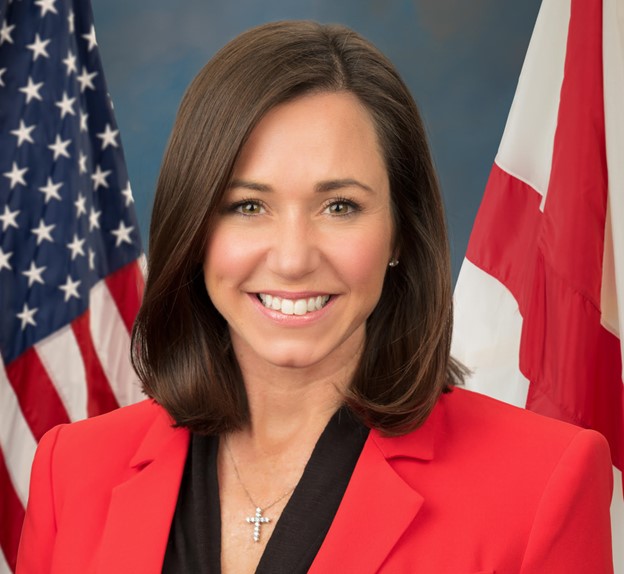
On Wednesday, U.S. Senator Katie Britt (R-Alabama) announced that she has recently joined Senators Chris Murphy (D-Connecticut), Chairman of the U.S. Senate Appropriations Subcommittee on Homeland Security, Cory Booker (D-New Jersey), Jacky Rosen (D-Nevada), and Shelley Moore Capito (R-West Virginia.) in calling for additional funding for FEMA’s Nonprofit Security Grant Program (NSGP) to be included in any supplemental funding package Congress may consider amid heightened concerns about the safety and security of the American Jewish community following this weekend’s attacks on Israel by Hamas and Hezbollah. The NSGP, which is funded through the U.S. Department of Homeland Security, provides funding support for target hardening and other physical security enhancements to nonprofit organizations, including synagogues and other places of worship, that are at high risk of terrorist attack. “The barbaric attacks on innocent children, women, and men in Israel are heartbreaking and stomach-turning,” said Senator Britt in a statement. “Now more than ever, we must be unequivocally strong in our response and unreservedly clear in our purpose. As I work with colleagues on both sides of the aisle in the days, weeks, and months ahead to ensure Israel has everything it needs to defend itself with overwhelming force, we must also vigilantly guard against terrorism and the forces of hate here at home. I support robust funding for the Nonprofit Security Grant Program to help secure our homeland and keep our families, places of worship, and communities safe.” “The horrific images and videos we are seeing out of Israel are unspeakable, and I am doing everything in my power to ensure Israel gets the support it needs to defend itself. As Chairman of the Senate Appropriations Subcommittee on Homeland Security,” said Sen. Murphy. “I am also focused on making sure our Jewish community at home is protected from a potential rise in anti-Semitic threats. As Congress considers emergency supplemental legislation in the coming weeks, we must include increased funding for DHS’s Nonprofit Security Grant Program to help safeguard the Jewish Community here at home.” Booker was in Israel at the time of the attack and experienced the rockets up in the sky raining down while jogging before he was whisked away to a shelter by his staff. “The harrowing images coming out of Israel and the rising toll of confirmed deaths and number of civilians being held hostage by Hamas — including American citizens — are devastating and remind us that we cannot ignore the rise in antisemitism around the world or here at home,” said Sen. Booker. “It’s crucial that we take every precaution to keep all of our religious communities safe. In addition to providing security assistance to Israel, Congress should increase funding for the Department of Homeland Security’s Nonprofit Security Grant Program, which provides important resources to safeguard nonprofits that are at an increased risk of violence, including Jewish houses of worship and other religious-affiliated groups across the country.” “The hearts of all Americans are shattered after seeing Hamas’s deadly terrorist attacks on Israel,” said Sen. Rosen. “As we witness a surge in antisemitic activity worldwide, we must make sure that Jewish Americans are protected from the threat of antisemitism. As co-chair of the bipartisan Senate Task Force for Combating Antisemitism, I’m working with my colleagues on both sides of the aisle to increase funding for the life-saving Nonprofit Security Grant Program. This critical funding ensures that synagogues, community centers, and other nonprofits have the resources needed to protect themselves from targeted violence.” “Throughout my time on the Homeland Security Appropriations Subcommittee, I have seen and learned about the need so many have for funds through this program,” said Sen. Capito. “Ensuring its inclusion in a supplemental further confirms our commitment to the safety and security for communities of faith, particularly synagogues across the nation that are too often the target of threats.” While Gaza is halfway around the world, Hamas has many supporters worldwide, including in the U.S., as evidenced by the protests that popped up in cities across the U.S. celebrating the Hamas attacks while they were ongoing. The Hamas attacks on Jewish civilians in Israel and the likely Israeli counteroffensive against Hamas and the Gaza Strip may only embolden antisemitism in the U.S. and abroad. In 2019, five men were stabbed at a Hanukkah service in New York. In 2022, an armed man took hostages at a synagogue in Texas. Sen. Britt was elected to the Senate in 2022. She has already visited Israel in her Senate duties. To connect with the author of this story or to comment, email brandonmreporter@gmail.com.
Katie Britt backs bipartisan legislation to solidify American sanctions on Iran
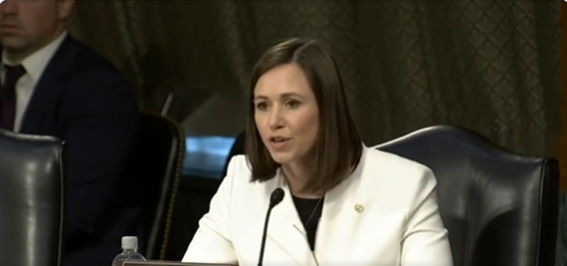
U.S. Senator Katie Britt recently joined Presidential candidate U.S. Senator Tim Scott (R-South Carolina) and Senators Maggie Hassan (D-New Hampshire), Bill Hagerty (R-Tennessee), and Jacky Rosen (D-Nevada) in cosponsoring the Solidify Iran Sanctions Act (SISA) to make permanent the Iran Sanctions Act of 1996. “This legislation sends an important bipartisan message to Iran that the United States will not tolerate continued threats to American national security,” said Sen. Britt. “Peace is achieved through strength. We must stand firm against bad actors and ensure that, first and foremost, our homeland is protected against aggression. I will always fight for America’s safety, and this act is a strong step to safeguard our nation’s future.” “As evidenced by the recent Iranian-backed drone strike in Syria that tragically killed South Carolinian Scott Dubis and the recent seizure of a U.S.-bound oil tanker, it is clear that Iran continues to engage in destabilizing activities that threaten the safety of America, Israel, and our other partners in the region,” Sen. Scott said. “Cementing these sanctions will apply pressure on Iran and help restrain this regime from developing weapons that threaten safety and security around the world.” “We must do everything that we can to prevent Iran from building a nuclear weapon and stop its support of terrorism,” said Sen. Hassan. Cementing these sanctions would advance national security by restraining Iran from engaging in malign activities that threaten the United States and its allies. SISA would also ensure that America’s sanctions regime continues to apply pressure on Iran amid its continuing dangerous nuclear escalation. In 1996, Congress passed the Iran Sanctions Act (ISA), which allowed the president to impose secondary sanctions on Iran’s energy sector. Throughout the years, ISA provisions were expanded to include other Iranian industries. ISA consists of “triggers” that place sanctions on firms or entities that violate U.S. sanctions under this law. As Iran continues its nuclear enrichment towards a weapons-grade level, it is essential that the United States solidifies its pivotal sanctions to apply pressure toward the rogue regime. The Solidify Iran Sanctions Act removes the sunset provision in the ISA and signals that the U.S. remains firmly committed to sanctioning the regime until it changes its malign behavior. A companion bill was introduced in the House of Representatives by Rep. Michelle Steel (R-California), Rep. Michael McCaul (R-Texas), the Chairman of the House Committee on Foreign Affairs, and Rep. Susie Lee (D-Nevada). There were international sanctions on Iran, but those went away in the Iran nuclear deal negotiated during the Obama administration. President Donald Trump reimposed U.S. sanctions, but the rest of the international community did not follow America’s lead. President Joe Biden has made some overtures towards negotiating a new deal with Iran, but Iran has not been receptive. U.S. Secretary of State Antony Blinken said on Wednesday that there was no nuclear deal with Iran on the table. “There is no agreement in the offing, even as we continue to be willing to explore diplomatic paths,” Blinken said at the Council on Foreign Relations in New York. “We’ll see by their actions.” Blinken called on Iran to “not take actions that further escalate the tensions” with the United States and the Middle East. Katie Britt was elected to the U.S. Senate in 2022 To connect with the author of this story or to comment, email brandonmreporter@gmail.com.
Democrats kept the Senate this year, but 2024 may be harder
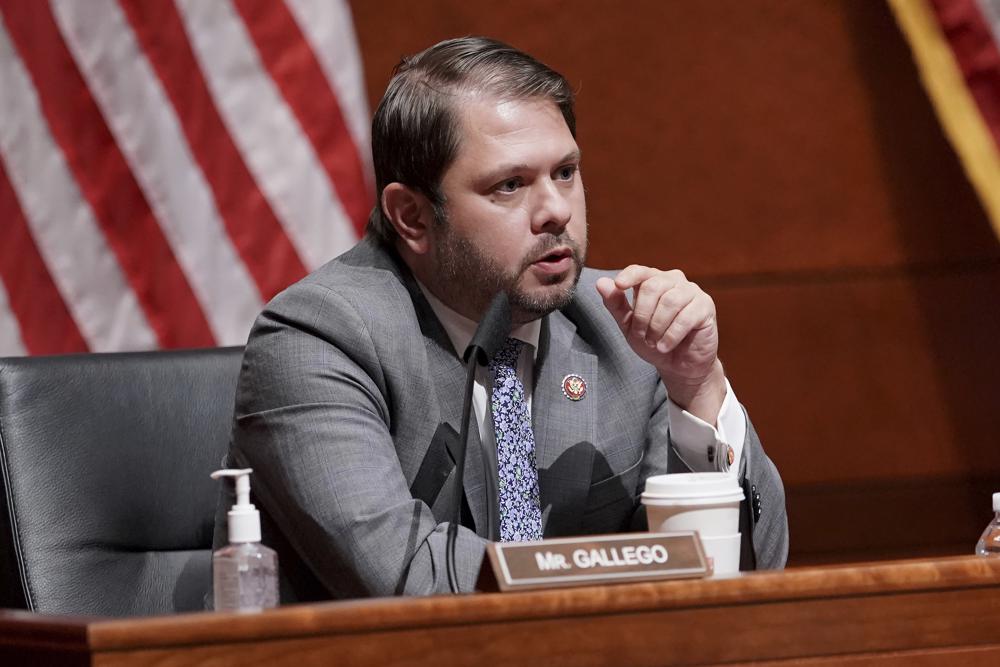
Democrats celebrating a successful effort to keep control of the U.S. Senate this year will soon confront a 2024 campaign that could prove more challenging. The party enters the next cycle defending 23 seats, including two held by independents who caucus with Democrats. That’s compared with just 10 seats that Republicans hope to keep in their column. Adding to the potential hurdles is that some 2024 contests are in states that have become increasingly hostile to Democrats, including Montana, Ohio, and West Virginia. Other Democratic-held seats are in some of the same hotly contested states that were at the center of this year’s midterms, such as Pennsylvania, Arizona, and Nevada. And while Democrats carried each of those races, they did so at great cost and with sometimes narrow margins. In Nevada, for instance, Democratic incumbent Sen. Catherine Cortez Masto won by less than 1 percentage point, or about 9,000 votes. For now, both parties insist they’re laser-focused on coming out on top in the December 6 Senate runoff in Georgia. But Democrats who are on the ballot in 2024 know that they could face fierce headwinds and are studying the results of this year’s election when the party outperformed expectations. For Nevada Sen. Jacky Rosen, a Democrat facing her first reelection campaign, that means staying focused on kitchen table issues and touting legislation like the infrastructure law and gun violence legislation signed by President Joe Biden. “We know that races are always close,” Rosen said in an interview. “We never take anything for granted.” The dynamics of the next Senate campaign could be influenced by a variety of outside factors, particularly the presidential election and the attention it generates. Biden, who turned 80 this month, has said his “intention” is to run for reelection and that he will make a final decision early next year. Former President Donald Trump has already announced a third White House bid, and multiple other Republicans are lining up to launch campaigns. The eventual nominee in each party could have a profound impact on down-ballot races, including those for Senate. But perhaps the biggest question for Senate Democrats seeking reelection will be who Republicans nominate as their opponents. The GOP lost several Senate elections this year, including those in Arizona, Pennsylvania, and Nevada, after Trump-backed candidates struggled to raise money and connect with a broader, more moderate range of voters during the general election. In Nevada, the Republican field to challenge Rosen has not begun to shape up but is expected to attract several contenders. One name receiving attention is Sam Brown, a former U.S. Army captain who was awarded a Purple Heart after being severely wounded in Afghanistan. Brown ran for Senate this year and put up a strong challenge in the Republican primary before losing to Adam Laxalt, who lost in the general election to Cortez Masto. Richard Hernandez, who was Brown’s campaign adviser, said, “He has committed to his supporters that he will never stop fighting for their issues, but he has not made any decisions as to whether that involves a future run for office.” Also in the southwest, Arizona Sen. Kyrsten Sinema, a centrist Democrat, will be up for reelection. The race, like other recent statewide contests in Arizona, is expected to be very competitive. But Sinema is likely to first face a well-funded primary challenger after angering much of the Democratic base by blocking or watering down progressive priorities like a minimum wage increase or Biden’s big social spending initiatives. She has not said whether she plans to run for reelection. Sinema’s most prominent potential primary challenger is U.S. Rep. Ruben Gallego, who has a long history of feuding with Sinema. Gallego has not announced his plans for 2024 but has made it no secret that he’s thinking about challenging Sinema. He even raised money on the prospect he might oppose Sinema. An independent expenditure group is also raising money, saying it will support grassroots organizations committed to defeating Sinema in a Democratic primary. Republicans hope a bruising Democratic primary might give them an opening to win the seat after losing Senate races in Arizona in three consecutive elections. Sinema is among a trio of moderate Senate Democrats who have sometimes used their leverage in an evenly divided chamber to block or blunt some of Biden’s plans and nominees. They will also be among the party’s most vulnerable incumbents in 2024. The other two senators, Joe Manchin of West Virginia and Jon Tester of Montana, will be running as Democrats in states that Trump handily carried in 2020. Manchin has already drawn a GOP challenger in U.S. Rep. Alex Mooney, who declared a week after winning reelection that he was setting his sights on higher office. Manchin has not yet said whether he’ll run for reelection. Republicans see Tester, a three-term senator, as vulnerable, and the opportunity to run for the seat could draw a fierce primary contest between former Interior Secretary Ryan Zinke and Rep. Matt Rosendale. Zinke, who won a House seat in this year’s midterm elections, said he will decide whether to run next year, and Rosendale declined to answer. Tester has not announced if he will seek another term but has said he anticipates 2024 will be just as tough as his last race in 2018, when he beat Rosendale in a close contest. In Pennsylvania, Democratic U.S. Sen. Bob Casey has not said whether he intends to run for a fourth term. Casey easily won reelection in 2018, but Pennsylvania has been competitive for Republicans, including in this year’s Senate race won by Democrat John Fetterman. One potential Republican challenger whose name has been floated in Pennsylvania is former hedge fund CEO David McCormick, who narrowly lost the Republican primary in this year’s race to celebrity heart surgeon Dr. Mehmet Oz. McCormick advisers declined to comment on that prospect. Conservative activist Kathy Barnette, who finished a close third in the Republican primary, didn’t respond to messages about whether she’s considering a 2024 campaign. Wisconsin, which saw Republican Sen. Ron Johnson narrowly win reelection this year, is also expected to have
Barack Obama endorses Joe Biden as the best leader for ‘darkest times’

The endorsement marked Obama’s return to presidential politics more than three years after leaving the White House.
A year after ‘Obamacare’ vote, Democrats see election cudgel
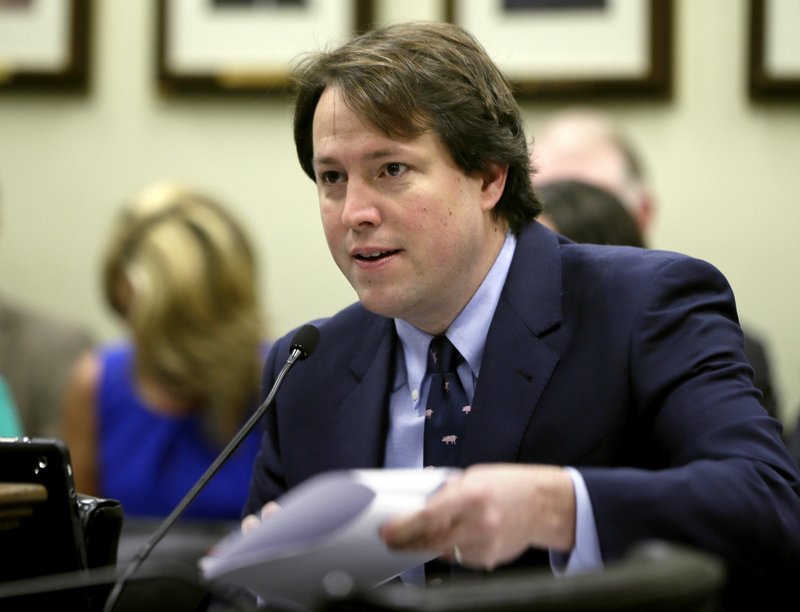
When Republicans muscled legislation scuttling the Obamacare health care law through the House a year ago Friday, Democrats waved sarcastically and giddily serenaded them with chants of, “Nah nah nah nah, hey hey, goodbye.” Now, Democrats are trying to make good on their taunts. They’re trying to use the vote as campaign weapon, hammering Republicans for voting to replace a popular statute with a bill Congress’ own budget experts said would have driven up premiums and the ranks of the uninsured. They’re already using it in ads from Georgia to Arizona and planning others in their drive to win House control in this November’s elections — often coupling it with December’s tax cuts, which disproportionately benefited businesses and wealthy Americans. “They walked the plank on a disastrous economic agenda,” said Charlie Kelly, executive director of the House Majority PAC, which backs Democratic candidates. He said the votes underscore a narrative of: “Wait a minute, these guys are absolutely not standing with working families. They’re trying to screw me on my health care.” Republican strategists offer mixed views on the issue’s impact, with the most optimistic hoping to damage Democrats by accusing them of favoring government-financed health care. About a third of Senate Democrats and two-thirds of House Democrats have backed such legislation, a favorite with the party’s most liberal voters, which Republicans say will prompt government decision-making about care and tax increases to finance the proposal’s huge costs. “A bigger government is not something they want to run on,” GOP pollster Jon McHenry said of Democrats. That’s not stopping Democrats from featuring health care in the campaign’s earliest ads. Georgia Democratic hopeful Bobby Kaple, seeking the nomination for an Atlanta-area district, says “Thank God for Obamacare” in his spot showing his two young children, born premature but healthy after expensive medical bills. In Arkansas, cancer survivor Clarke Tucker says he’ll “stand up to anyone who tries to take your health insurance” as he competes for the Democratic nomination for a seat surrounding Little Rock. “Health care is on their mind every day, and I understand that,” Tucker said of area voters in an interview. Democrats are also using the issue in their battle for the Senate, where Republican proposals to scrap Obama’s law flopped last summer, dooming the effort. Rep. Jacky Rosen, D-Nev., seeking to oust GOP Sen. Dean Heller, has run an ad saying, “Repeal and replace Sen. Dean Heller” that highlights his support for repeal legislation after initially opposing it. In Arizona, Democratic Senate hopeful Rep. Kyrsten Sinema is highlighting her family’s loss of health insurance when she was a child, saying, “I know what it’s like for a family to struggle to make ends meet.” The Democratic charge on health care represents a turnaround from recent elections. In 2010, just months after passage of the Affordable Care Act, Democrats lost control of the House as Republicans tapped into fears about the government’s growing role in health care. Four years later, Republicans grabbed Senate control following the botched rollout of the health law’s online insurance markets and some people’s loss of policies that fell short of the statute’s coverage requirements. The failed GOP repeal effort helped turn the tables. A Wall Street Journal-NBC News poll last month showed people trust Democrats over Republicans for handling health care by 18 percentage points. A Kaiser Health Tracking Poll in February showed Obama’s law with a favorable rating from 54 percent of Americans, its highest score in more than 80 Kaiser surveys since the statute’s enactment. “Voters are very upset with the actions Republicans took” trying to repeal Obama’s law, said Sen. Chris Van Hollen, D-Md., who heads Senate Democrats’ campaign committee. “This is an issue that we’re seeing at the top of voters’ minds, and this is across all states.” Even some Republicans concede the issue will be a tough one. Pennsylvania Rep. Charlie Dent, among only 20 Republicans who voted against the House repeal bill, said GOP candidates will be vulnerable because of the bill’s impact and because President Donald Trump privately labeled the GOP measure “mean” a month after it passed. “That ad more or less writes itself,” Dent said of the inevitable Democratic campaign spots. Former Rep. Tom Davis, R-Va., who once headed the House GOP’s campaign organization, said Republicans “would have owned” health care and steadily growing insurance premiums had they successfully enacted legislation. Instead, he says, “They may or may not own the outcomes,” adding, “I don’t think it’s a silver bullet for Democrats.” Democrats say they’ve gotten further ammunition from subsequent GOP actions. These include Trump’s halt of federal subsidies that helped insurers contain some costs and his easing of restrictions on short-term insurance plans with low costs but skimpy coverage. Last May, the nonpartisan Congressional Budget Office estimated that the House-passed bill would have left 23 million additional people uninsured by 2026 and boosted premiums an average 20 percent this year. Marking the vote’s anniversary, progressive groups planned more than a dozen rallies Friday from California to Virginia. The liberal Save My Care was airing a 30-second television ad in Washington, D.C., showing top Republicans celebrating the House vote with Trump in the White House Rose Garden. “We won’t forget” appears on a black screen after newscasters intone the bill’s impact, including letting insurers charge higher prices for people with pre-existing medical conditions. Republished with the permission of the Associated Press.
