
Former Alabama House Speaker Mike Hubbard will not have radio station licenses revoked

The Federal Communications Commission (FCC) has declined to revoke broadcast licenses held by former Alabama House Speaker Mike Hubbard, the Montgomery Advertiser reported. The ruling stated that the commission’s Enforcement Bureau had not proven an intent to deceive on Hubbard’s part or that the convictions disqualified him from holding the licenses. In 2016 a jury convicted Hubbard of 12 counts of violating the state ethics law, but six were overturned on appeal. Prosecutors accused Hubbard of leveraging his public office to obtain clients and investments for his businesses. His defense lawyers maintained the transactions were all legal. He had remained free while appealing and reported to jail in September 2020. In September 2021, Hubbard filed a request for early release after serving one year of a 28-month sentence, apologizing for his ethics conviction and stating he had hurt the state and his family due to his actions. “My conviction has severely damaged and embarrassed me and my family, friends, former constituents, community, church, the legislature, and the state of Alabama. For this, I am severely sorry and respectfully ask forgiveness from everyone affected,” Hubbard wrote. Hubbard founded the Auburn Network in 1994 and is the sole stockholder. The Auburn Network holds licenses for WANI, an AM station in Opelika, and WGZZ, an FM station in Waverly in Lee and Chambers counties. The network also holds licenses for three FM stations that rebroadcast WGZZ and a construction permit for WHBD-LD in Auburn, a low-power television station. The Enforcement Bureau argued that Hubbard used the Auburn Network to hide his consulting work from the Alabama Ethics Commission. Judge Jane Hinckley Halprin disagreed, stating, “It is difficult to say that Mr. Hubbard has made remedial efforts or that he has been ‘rehabilitated’ given the progress of the criminal case and the fact that he is currently incarcerated. On the other hand, while the stations’ management technically participated in the felonies because Mr. Hubbard is the sole shareholder of licensee Auburn Network, there is no evidence that the stations themselves were involved.” In the 21-page ruling, Halprin wrote that the convictions showed Hubbard “betrayed the trust of the public he was elected to serve.” However, she also stated that the Enforcement Bureau had not shown that Hubbard’s convictions meant he would act “dishonestly” with the FCC. “The misdeeds of a public servant may indeed be relevant in gauging that person’s ability to serve the public interest as an FCC licensee, but in this particular case and under these particular circumstances, the evidence presented does not satisfy the burden of proof,” Halprin wrote. Last December, Hubbard requested an evidentiary hearing on the letter of apology. However, Lee County Circuit Judge Jacob Walker has not ruled on the motion. The earliest Hubbard can be released is January 8, 2023.
Mike Hubbard defense reiterates apology by former Alabama speaker

A former Alabama House speaker imprisoned for felony ethics convictions really is sorry for what he did and is not a danger to society, defense lawyers said in urging a judge to disregard prosecutors’ objections to an early release. Attorneys for one-time Republican leader Mike Hubbard told a court in legal arguments filed Wednesday that the state attorney general’s office was wrong to discount a letter Hubbard wrote last month apologizing for his actions and asking a judge for leniency. Prosecutors’ “veiled portrayal of (Hubbard’s) apology as crocodile tears or anything other than completely honest is conclusory, speculative, and simply erroneous,” the defense told Lee County Circuit Judge Jacob Walker. While the state compared Hubbard to an arsonist seeking forgiveness after a fire, they said, an arsonist is a danger to society and the 59-year-old Hubbard is not, they argued. Hubbard has served more than a year of a 28-month prison sentence after losing appeals that challenged his 2016 conviction for violating the state ethics law, including using his public office for personal financial gain. Prosecutors accused Hubbard of leveraging the Speaker’s office to obtain clients and investments for his businesses. Hubbard argued that contracts were legitimate work and unrelated to his position as House speaker, a post he held for nearly six years. Hubbard’s time in prison “has obviously given him the opportunity to reflect not only on his actions, but also on the broader implications that his convictions have had on his former constituents and the entire political system,” the defense said. Hubbard, who represented an east Alabama district in the Legislature, was automatically removed from office because of the conviction. He played a key role in engineering the Republican Party’s takeover of the Alabama Legislature in 2010. Barring an early release, Hubbard is scheduled to be released from prison in January 2023, records show. Republished with the permission of the Associated Press.
State opposes Mike Hubbard request for early release from prison

State prosecutors are urging a judge to deny former Alabama House Speaker Mike Hubbard’s request for early release from prison, arguing his “belated apology” for his ethics conviction is not enough. In a Wednesday court filing, the state attorney general’s office opposed Hubbard’s request for release from prison after serving a year of his 28-month sentence. In seeking early release, Hubbard wrote a letter to the judge apologizing for his conviction. Several community figures, including Heisman Trophy winner Bo Jackson, wrote letters supporting his release. The state wrote that Hubbard’s apology is a good thing, “but it is not a basis for early release.” “It is a positive step that Hubbard recognizes that his crimes harmed society as a whole. But he is wrong to think the best way to repair that harm is for the Court to release the very man who caused it after he has served less than half his sentence. By Hubbard’s logic, a remorseful arsonist should be released early if he expresses the desire to rebuild the home he burned down,” state lawyers wrote. Several community figures wrote letters to the judge supporting Hubbard’s release, including Jackson and Opelika Mayor Gary Fuller. Hubbard worked on the 1985 Heisman campaign for Jackson, and Jackson called Hubbard “one of my closest and most loyal friends.” “There is absolutely no benefit to the citizens of Alabama for Mike to be incarcerated and forced to be non-productive,” Jackson wrote. Hubbard’s attorney argued his sentence of over two years behind bars is out of line with punishments handed down to other officials convicted of violating the state ethics law. “My conviction has severely damaged and embarrassed me and my family, friends, former constituents, community, church, the legislature, and the state of Alabama. For this, I am severely sorry and respectfully ask forgiveness from everyone affected,” Hubbard wrote to Lee County Circuit Judge Jacob Walker. The Republican was one of the state’s most powerful politicians until the ethics conviction in a corruption case ended his political career. Hubbard, the architect of the GOP’s takeover of the Alabama Legislature in 2010, was a legislator from Auburn and former chairman of the Alabama Republican Party. He was elected House speaker soon after Republicans won control of both legislative chambers. A jury in 2016 convicted Hubbard of violating the state ethics law, including using his public office for personal financial gain. Prosecutors accused Hubbard of leveraging his powerful public office to obtain clients and investments for his businesses, violating the prohibition against giving a “thing of value” to an elected official. During the trial, his defense maintained the contracts were legitimate work and unrelated to his position as House speaker. Republished with the permission of the Associated Press.
Hubbard apologizes, seeks early release from prison
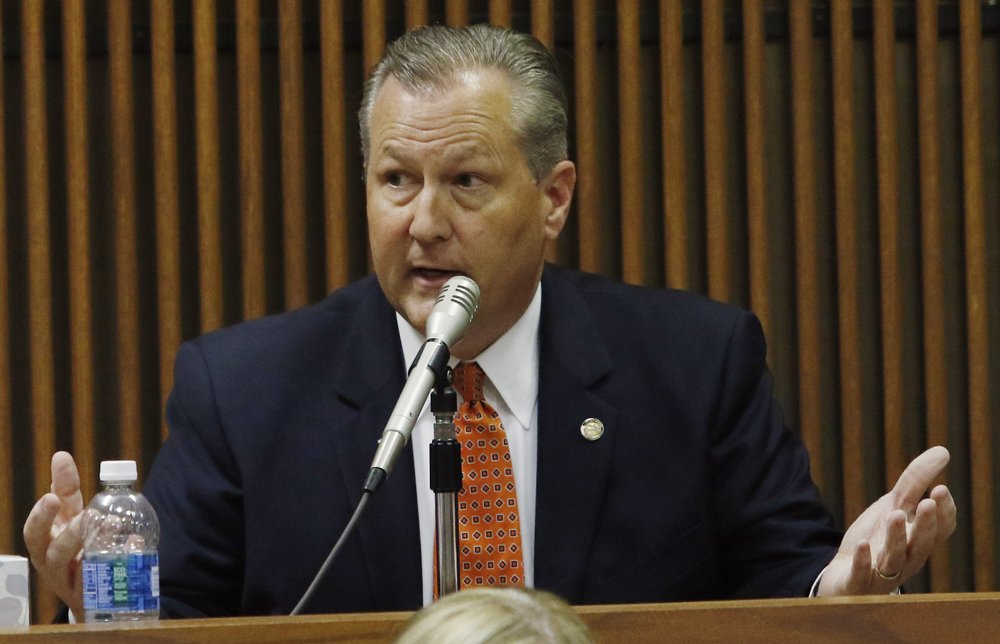
Former House Speaker Mike Hubbard in a Friday court filing apologized for his ethics conviction that he said hurt the state and his family as his attorney filed a request for his early release after serving one year of a 28-month sentence. Hubbard’s attorney argued his sentence of over two years behind bars is out of line with punishments handed down to other officials convicted of violating the state ethics law. In a letter to the judge, Hubbard wrote that “I recognize and admit my errors” and apologized to the people of the state and others. “My conviction has severely damaged and embarrassed me and my family, friends, former constituents, community, church, the legislature, and the state of Alabama. For this, I am severely sorry and respectfully ask forgiveness from everyone affected,” Hubbard wrote in the letter to Lee County Circuit Judge Jacob Walker. He wrote that it was embarrassing to be convicted of violating an ethics law he oversaw being drafted and approved by lawmakers. Whether a criminal defendant has accepted responsibility and expressed remorse is often a factor when a judge weighs a request for leniency. A jury in 2016 convicted Hubbard of violating the state ethics law, including using his public office for personal financial gain. Prosecutors accused Hubbard of leveraging his powerful public office to obtain clients and investments for his businesses, violating the prohibition against giving a “thing of value” to an elected official. His defense maintained the contracts were legitimate work and unrelated to his position as House speaker. In upholding the conviction this spring, justices noted that when contacting a company for one client, Hubbard “identified himself as a state legislator and as Speaker of the House of Representatives.” They also noted how one company executive wrote in an email that Hubbard could get the company, “in front of any speaker in the country regardless of party.” The Republican was one of the state’s most powerful politicians until the ethics conviction in a corruption case ended his political career. Hubbard, the architect of the GOP’s takeover of the Alabama Legislature in 2010, was a legislator from Auburn and former chairman of the Alabama Republican Party. He was elected House speaker soon after Republicans won control of both legislative chambers. Hubbard was automatically removed from office after his 2016 felony conviction. Hubbard was originally sentenced to 48 months behind bars, but that was reduced after some counts against him were overturned on appeal. His attorney argued the 28-month sentence is well “outside the overwhelming majority of the similarly-situated individuals” that have been convicted in state court of state ethics violations, and listed sentences of other elected officials convicted in state court. However, former Gov. Don Siegelman served six years in federal prison after being convicted in 2006 on charges that he sold a seat on a state regulatory board to HealthSouth founder Richard Scrushy in exchange for $500,000 in donations to Siegelman’s signature political issue — his 1999 campaign to establish a state lottery. Siegelman was convicted on a separate obstruction of justice charge that he tried to hide money he received from a lobbyist. Siegelman was released in 2017. He has regained his law license and says he plans to focus on criminal justice issues. Republished with the permission of the Associated Press.
Steve Marshall slams Lee County Judge Jacob Walker for reducing Mike Hubbard sentence
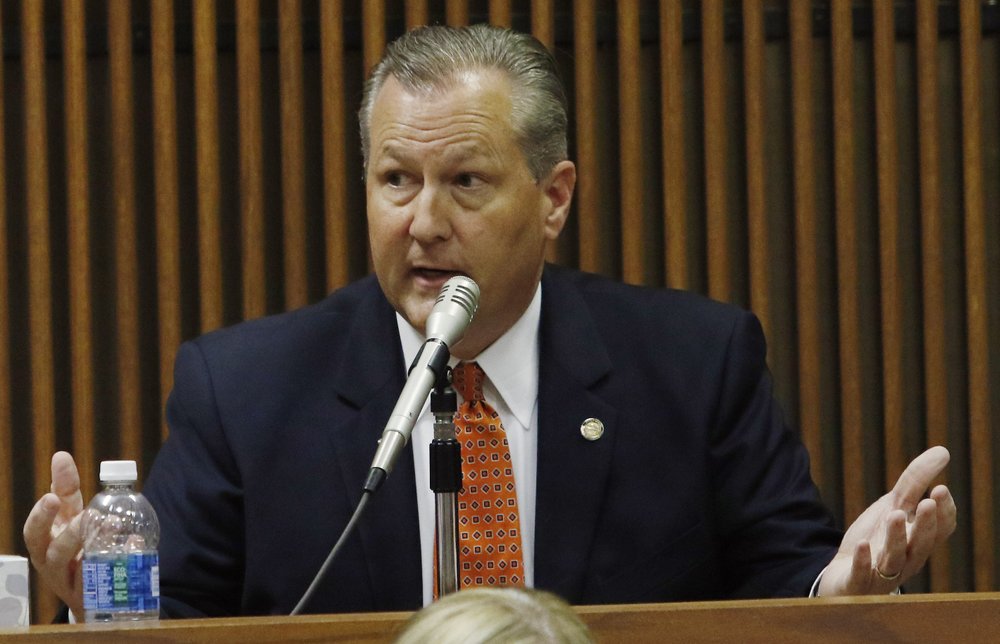
A judge on Wednesday slashed former House Speaker Mike Hubbard’s prison sentence from four years to 28 months, significantly reducing the time the once-powerful Republican will spend behind bars for an ethics conviction. Lee County Circuit Judge Jacob Walker reduced Hubbard’s sentence at the request of defense attorneys after part of his conviction was overturned earlier this year. In his order, Walker noted that Hubbard was convicted of 12 felonies when he handed down the four-year sentence, but that six counts were reversed on appeal. The action was met with swift criticism from Alabama’s attorney general and praise from Hubbard’s attorney who had argued a four-year sentence was too harsh for the reduced conviction. “While we were hoping for a more substantial reduction of sentence, we welcome this decision. We are grateful for Judge Walker’s recognition of the issues that prompted his action today,” attorney Lance Bell said in a statement. Attorney General Steve Marshall expressed disappointment in the sentence reduction. “Mr. Hubbard was convicted of the intentional violation of Alabama’s ethics laws, the same laws he championed in the legislature only later to brazenly disregard for his personal enrichment,” Marshall said in a statement. “Even as he sits in state prison as a six-time felon, Mike Hubbard continues to deny any guilt or offer any remorse for his actions in violation of the law. Reducing his original four-year sentence sends precisely the wrong message to would-be violators of Alabama’s ethics laws.” A jury in 2016 convicted Hubbard of violating the state ethics law, including using his public office for personal financial gain. Prosecutors accused Hubbard of leveraging his powerful public office to obtain clients and investments for his businesses, violating the prohibition against giving a “thing of value” to an elected official. His defense maintained the contracts were legitimate work and unrelated to his position as House speaker. In upholding the conviction this spring, justices noted that when contacting a company for one client, Hubbard “identified himself as a state legislator and as Speaker of the House of Representatives.” They also noted how one company executive wrote in an email that Hubbard could get the company, “in front of any speaker in the country regardless of party.” The Republican was one of the state’s most powerful politicians until the ethics conviction in a corruption case ended his political career. Hubbard, the architect of the GOP’s takeover of the Alabama Legislature in 2010, was a legislator from Auburn and former chairman of the Alabama Republican Party. He was elected House speaker soon after Republicans won control of both legislative chambers. Hubbard was automatically removed from office after his 2016 felony conviction. Hubbard reported to jail in September and was later moved into the state prison system. He is currently incarcerated at Limestone Correctional Facility. Republished with the permission of the Associated Press.
Judge denies new trial for former House Speaker Mike Hubbard
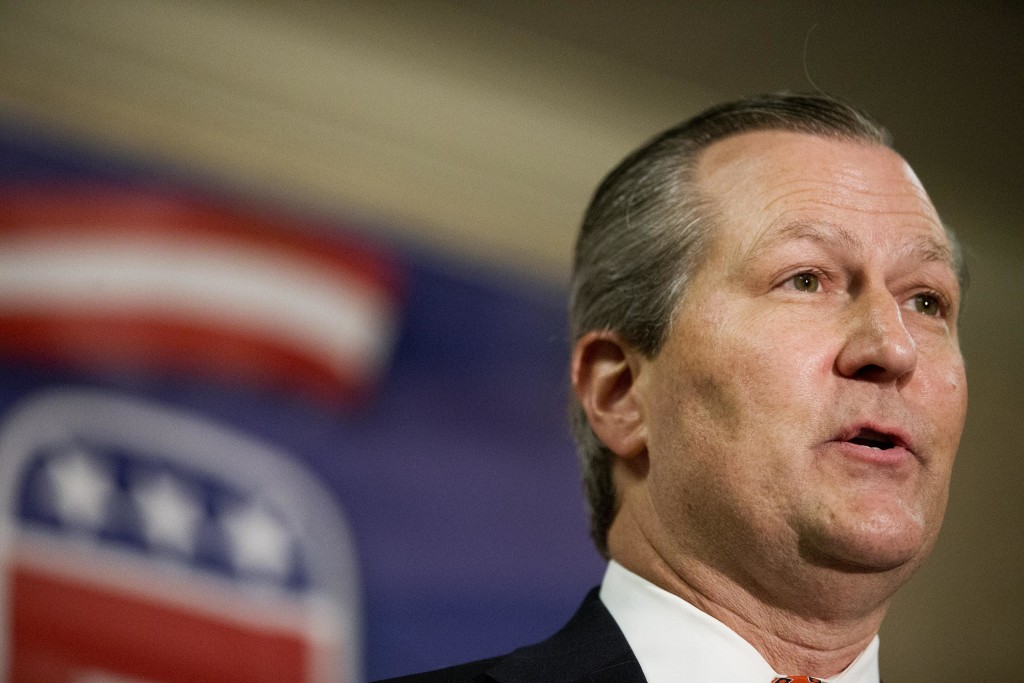
Things aren’t looking any better for ousted House Speaker Mike Hubbard these days. A judge denied him a new trial on the grounds of jury misconduct. Lee County Circuit Judge Jacob Walker on Tuesday said Hubbard failed to prove jurors were prejudiced against him when they convicted him on ethics charges back in June. In his decision, he noted Hubbard was not convicted on all counts brought before the court, suggesting the jurors were, in fact, not prejudiced and they systematically made their decisions count-by-count. “Because the defendant failed to make a showing that he was actually prejudiced, this court would not disturb the verdict of the trial jury,” Walker wrote in his decision. On June 10, Hubbard was convicted on 12 of 23 counts of corruption, which automatically removed the powerful Republican from both the Legislature and the speaker’s office, ending the upward trajectory of the one-time GOP star whose career previously appeared to have no limits. He was later sentenced to a total of four years in prison and eight years on probation, and ordered to pay a $210,000 fine. Hubbard is free on bond while he appeals to the Alabama Court of Criminal Appeals. He continues to maintain his innocence.
Judge refuses investigation of Mike Hubbard’s ethics trial
A judge is refusing a request by former Alabama House Speaker Mike Hubbard to have a sheriff investigate whether there was juror misconduct at his ethics trial. But Judge Jacob Walker said Friday he is open to taking testimony from a juror who says another juror made biased remarks. Hubbard is seeking a new trial after being convicted on 12 felony ethics charges and removed from office. His lawyers submitted an affidavit from a juror who says another made biased remarks. During a hearing, the court administrator testified that one juror complained early in the trial that another was saying things like “now the truth is coming out.” She says the juror was asked to be quiet. Prosecutors say there was no evidence of misconduct or an unfair trial. Republished with permission of The Associated Press.
Mike Hubbard trying to overturn ethics conviction, judge to hear request
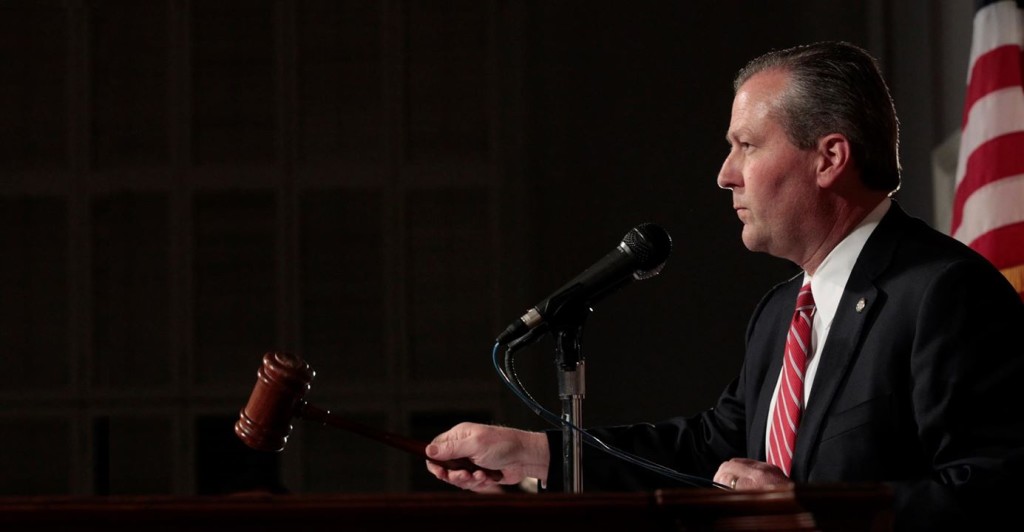
A judge has yet again agreed to consider a request for a new trial for convicted former Alabama House Speaker Mike Hubbard, among other motions. Lee County Circuit Judge Jacob Walker will hold a hearing Friday to consider motions filed by the defense post-conviction. Hubbard’s attorneys filed the request last month asking a judge to reverse the conviction, or allow a new trial, contending Hubbard did not receive a fair and impartial trial. On June 10, Hubbard was convicted on 12 of 23 counts of corruption, which automatically removed the powerful Republican from both the Legislature and the speaker’s office, ending the upward trajectory of the one-time GOP star whose career previously appeared to have no limits. On July 8, he was sentenced to a total of four years in prison, eight years on probation and ordered to pay a $210,000 fine. Hubbard is currently out on bond.
A count by count breakdown of Mike Hubbard’s sentencing
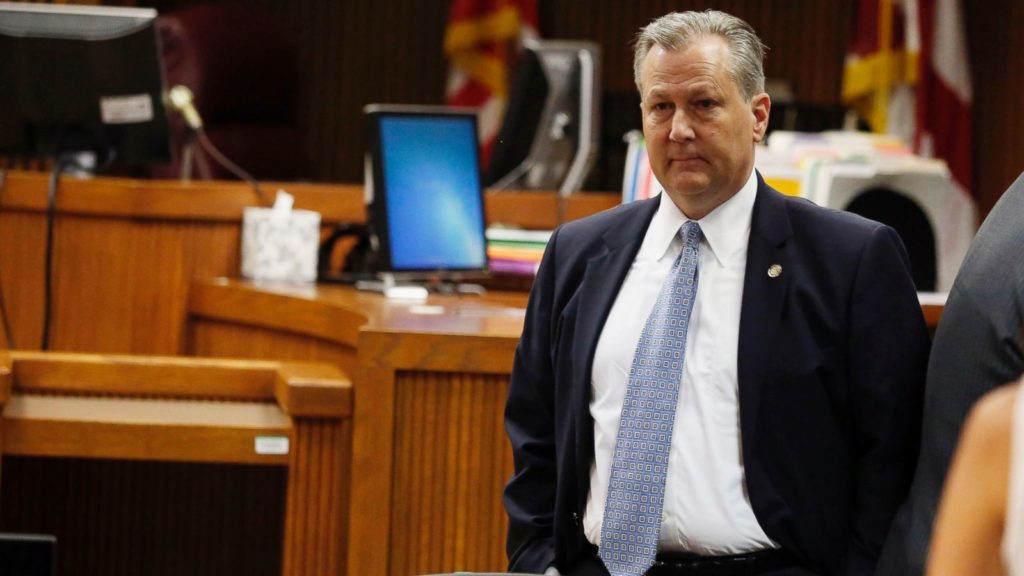
Former Alabama House Speaker Mike Hubbard was sentenced to serve 4 years in jail and 8 years probation by Lee County Circuit Judge Jacob Walker. He also is fined approximately $210,000. Hubbard was convicted on 12 of 23 felony ethics charges on June 10 after being indicted in October 2014. Each count carried a maximum two- to 20-year sentence and a $30,000 fine. Here is a full breakdown of his sentencing: Count 5: 10 years. Split to serve two years and the remaining eight on probation. $30k fine. Count 6: 10 years. Split to serve two concurrently and the remaining eight on probation. $30k fine. Count 10: 6 years. Split to serve 18 months running concurrently with the other charges. $20k fine. Count 11: 10 years. Split to serve two years consecutive. Count 12: 10 years. Split to serve two running concurrently with the other charges. $20k fine. Count 13: 10 years. Serve two running concurrently with the other charges.$30k fine. Count 14: 10 years. Split to serve two running concurrently with the other charges. $30k fine. Count 16: 5 years. 18 months running concurrently with the other charges. No fine. Count 17: 10 years. Split to serve two running concurrently with the other charges. No fine. Count 18: 5 years. Split to serve 18 months running concurrently with the other charges. No fine. Count 19: 5 years. Split to serve 18 months running concurrently with the other charges. No fine. Count 23: 5 years. Serve 18 months running concurrently with the other charges. No fine. Prosecutors had asked that Hubbard be required to pay more than $1.1 million in restitution, the maximum fine of $360,000, the maximum amount to the Crime Victims Compensation fund of $120,000 and other court fees. Hubbard continues to maintain his innocence and he will attempt to appeal his convictions, his attorney Bill Baxley said. As set by Judge Walker, Hubbard has 42 days to file a notice to appeal.
Former Alabama House Speaker Mike Hubbard sentenced to 4 years in prison
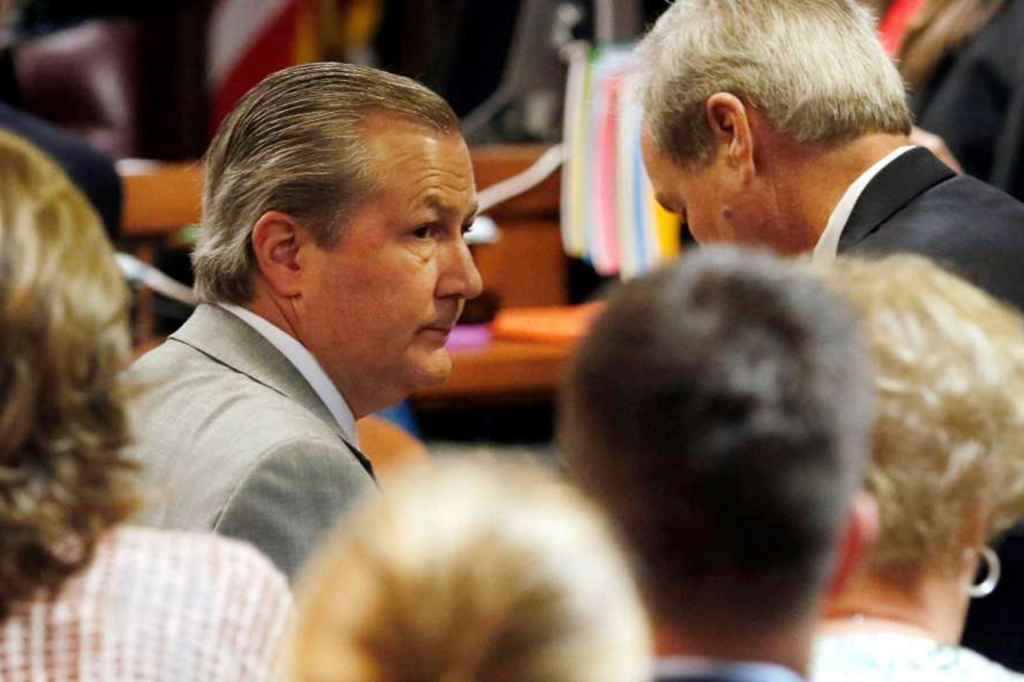
Former Alabama House Speaker Mike Hubbard has been handed his sentence — a total of four years in prison, eight years on probation and ordered to pay a $210,000 fine — for 12 felony ethics violations for abusing his position by using the influence and prestige of his political offices to benefit his companies and clients. Flanked by family and friends who arrived at the courthouse in support, Hubbard received his sentence Friday morning from Lee County Circuit Judge Jacob Walker in the same Opelika courtroom where his long-awaited ethics’ trial took place last month. On June 10, Hubbard was convicted on 12 of 23 counts of corruption, which automatically removed the powerful Republican from both the Legislature and the speaker’s office, ending the upward trajectory of the one-time GOP star whose career previously appeared to have no limits. Throughout Friday’s sentencing Hubbard kept silent, even after the Judge offered him a chance to speak. However, his Defense attorney Bill Baxley declared after the sentencing was handed down, “I’ve seen very few people convicted by a jury that I felt were innocent… I can count on one hand. I believe with all my being, after everything we’ve gone though, Mike Hubbard is absolutely innocent of every charge.” Outside the courtroom Baxley proceeded to call the case a “witch hunt” and vowed to “appeal the case all the way.” Despite his sentence, Hubbard will not immediately be taken to prison, as Judge Walker is allowing an appeal, which Hubbard has 42 days to make.
Mike Hubbard trial day 10: State rests case, Hubbard takes the stand
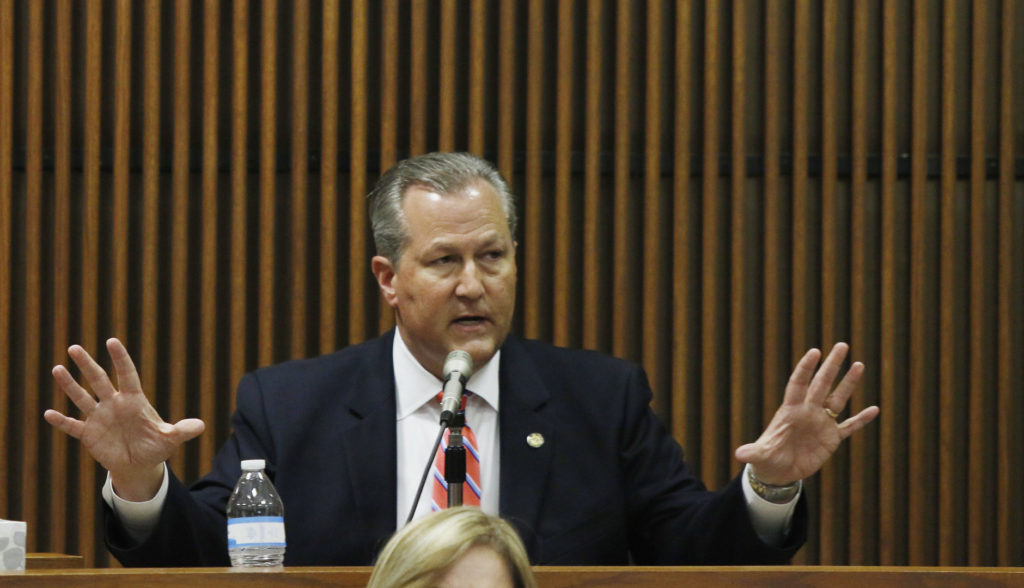
The prosecution rested its case Tuesday after two witnesses took the stand, following 10 days of testimony in the ethics trial of embattled Alabama Speaker of the House Mike Hubbard. The first witness to take the stand was former Gov. Bob Riley. Riley, Hubbard’s longtime mentor and friend, returned to the witness stand for his third day of testimony where he endeavored to paint Hubbard as a talented, rule-abiding man. Riley had been on the stand since Friday afternoon. The first thing Riley did when he took the stand was to ask Judge Walker if he could make a statement to prosecutor Matt Hart. His request was met with an immediate objection from Hart and the judge denied Riley. This interaction was the first of many tense moments between Riley and Hart throughout Tuesday’s testimony. In his hour-long testimony, Riley told the jury “Mike is also one of the most creative and innovative people I’ve ever been around.” “I have never seen anyone put as much effort to making sure everything he did had been blessed, had been reviewed,” Riley said Tuesday during cross examination by Baxley. The state’s final witness was Greg Fee, a special investigator with the Alabama Attorney General’s Office. According to Fee’s testimony, the activities for which Hubbard is charged generated a total of $2.38 million revenue for his businesses, Craftmaster Printers and Auburn Network, from March 2012 to July 2014. After Fee’s cross-examination, the state rested and the defense offered a motion to have some or all of the charges against Hubbard dropped. Judge Walker denied the motion and excused the jury until 2 p.m. When the trial resumed, the defense made a shocking move and called Hubbard to the stand as its first witness. There, in approximately 90 minutes, Hubbard testified he took precautions to obey state law with contracts his companies received and made “not a cent” from campaign work steered to his printing company. Hubbard’s testimony will resume Wednesday at 1:15 p.m. Hubbard was indicted in October 2013 on 23 felony ethics charges of using his political office for personal gain. If convicted, he faces a maximum penalty of two to 20 years imprisonment and fines of up to $30,000 for each count. He would be removed from office if convicted of any of the 23 charges. Hubbard has since maintained his innocence and continued to serve as Speaker of the Alabama House during the 2016 legislative session.
Mike Hubbard set to go to trial in May
Embattled House Speaker Mike Hubbard had earlier called for his ethics case to be dismissed due to prosecutorial misconduct, but Lee County Circuit Court Judge Jacob Walker flatly denied the request Tuesday and told Hubbard to be ready for trial May 9. Hubbard’s case was basing its argument on recent revelations that Matt Hart, a lawyer in the Attorney General’s office, had provided a Hubbard opponent with “confidential grand jury information” in an effort to sully the Speaker’s name. In his decision, Walker concluded that those allegations did not constitute “prosecutorial misconduct.” Further, Walker dismissed arguments that Hart had leaked grand jury information to the media and motions to dismiss based on “vindictive prosecution.” Walker also dismissed motions requesting that Hart testify. Despite the leak allegations not being enough for a dismissal, the judge did say that those allegations could be discussed in the upcoming trial. Hubbard currently faces 23 felony charges of using his office for personal gain. He has been accused of using his position as Speaker of the House, and formerly as chairman of the Alabama Republican Party, to solicit jobs and investments in businesses with which he was involved. Further, Hubbard is accused of lobbying members of the executive branch for consulting clients and aiding in the inclusion of General Fund language to benefit a client. Hubbard has maintained his innocence and was reelected despite the felony allegations.
