
Prisoner advocacy group demands coronavirus precautions for Alabama’s incarcerated

With the coronavirus spreading quickly across the country, Alabamians for Fair Justice — a broad coalition of advocates supporting reform in Alabama’s criminal justice system — is demanding that state officials ensure the health and safety of people in jails and prisons, and release those people most at risk of suffering serious complications or death from contracting coronavirus (COVID-19). The coalition sent a letter to Alabama Department of Corrections Commissioner Jeff Dunn calling on him to develop evidence-based protocols and proactively plan the prevention and management of a COVID-19 outbreak. According to the letter, “imprisoned and detained people are highly vulnerable to outbreaks of contagious illnesses such as COVID-19. People incarcerated in jails and prisons are housed in close quarters and are often in poor health.” Coupled with the fact state facilities have been deemed overcrowded, incarcerated persons are at an increased risk during a viral outbreak. “Without the active engagement of those who administer these facilities, they have little ability to learn about ongoing public health crises or to take necessary preventative measures if they do manage to learn of them.” The coalition asks the state to: Educate both staff and the people detained in local, state, and federal facilities on the dangers of the virus and how to avoid contracting it; Keep infected staff out of facilities and isolate individuals who have tested positive; avoid lockdowns; Regularly screen and test all individuals in the facility and those who work there; ensure free and accessible phone communication with family members and confidential access to legal counsel; Release elderly and medically fragile people before they contract the disease; release people in pretrial detention who are charged with nonviolent offenses; Limit future pretrial detention by issuing citations rather than arresting and booking people into jail; And approve early release of people who are within six months of their end of sentence date. A full list of Alabamians for Fair Justice coalition members may be viewed here.
Judge: Alabama has been ‘indifferent’ to isolated inmates
A federal judge said Monday that Alabama has been “deliberately indifferent” about monitoring the mental health of state inmates placed in the isolation of segregation cells. U.S. District Judge Myron Thompson issued the ruling days after attorneys for inmates said the suicide rate in state prisons has reached a crisis level. “The court finds that the (Alabama prison system’s) failure to provide adequate periodic mental-health assessments of prisoners in segregation creates a substantial risk of serious harm for those prisoners,” Thompson wrote in the 66-page order. Thompson wrote that prison officials have been “deliberately indifferent with regard to their failure to provide adequate periodic evaluations of mental health to prisoners in segregation.” Alabama Department of Corrections spokesman Bob Horton said the department is reviewing the decision. Thompson in 2017 wrote that mental health care in state prisons was “horrendously inadequate” and violated the Eighth Amendment’s prohibition on cruel and unusual punishment. In his Monday order, Thompson said the failure to adequately monitor inmates in segregation contributes to the unconstitutional conditions. Thompson directed the prison system and attorneys for inmates to confer on how to proceed. The Southern Poverty Law Center, which is representing inmates in the ongoing class-action lawsuit over prison mental health care, praised the decision. “It has been evident for years that ADOC has failed to identify, monitor, and properly care for people who have serious mental illnesses and who develop them in ADOC custody. That systematic failure has led to needless suffering, especially for people in segregation,” said Maria Morris, senior supervising attorney at the SPLC. The advocacy organization said Friday that there have been 13 suicides in 14 months. “People are killing themselves in our prisons because conditions are horrendous,” Southern Poverty Law Center President Richard Cohen said at a news conference with the families of inmates. The prison system said in a response Friday that it was working to address the issue, and said the suicide spike “calls into question the long-term effectiveness of the suicide prevention measures proposed by the SPLC” during the litigation. Republished with permission from the Associated Press
Judge rules Cullman County’s bail system illegally discriminates against the poor
People who fall victim to what many deem a “two-tiered” system of justice that’s based on wealth, won a significant victory in Cullman County, Ala. on Thursday when a federal court judge ruled that the practice of jailing those who cannot afford cash bail is unconstitutional. U.S. District Court Judge Madeline Haikala entered a preliminary injunction order that prohibits Cullman County from continuing to discriminate against the poor through its bail system, which many deem a “two-tiered” system of justice that’s based on wealth. Her decision follows a memorandum opinion entered last week explaining why the county’s practices were illegal. As the Court explained, “Cullman County’s discriminatory bail practices deprive indigent criminal defendants in Cullman County of equal protection of the law” and its justifications for using a bail schedule are “illusory and conspicuously arbitrary.” This preliminary injunction will remain in effect while the lawsuit challenging the practice is fully resolved and permanent relief is ordered. The suit was brought by the Southern Poverty Law Center(SPLC), Civil Rights Corps, the American Civil Liberties Union (ACLU) and the American Civil Liberties Union of Alabama on behalf of Bradley Hester, who was held on a $1,000 bond he could not afford. “Today was a big win for all Cullman County residents because no longer will the county be allowed to treat residents with means differently than those without in our criminal justice system,” said Sam Brooke, deputy legal director, the Southern Poverty Law Center. “Jails are not meant to warehouse people who have not been convicted of a crime, particularly where, as here, the rich are able to buy their freedom and impoverished people are left to languish in jail. This form of wealth-based discrimination that keeps people in jail just because they cannot afford their freedom is unconstitutional. We will continue to fight to eliminate wealth-based justice.” Katherine Hubbard, attorney, Civil Rights Corps, says most municipal courts have already moved away from cash. bail. “Today’s decision affirms that progress, and encourages more, recognizing that our district and circuit courts still have a long way to go,” she said. “We look forward to working with the county officials to ensure their new practices comply with the preliminary injunction order, and we will continue our litigation against Cullman County until permanent relief is implemented.” “The federal court’s decision today acknowledges what policy makers, advocates, and state courts across the country are recognizing: that locking people up simply based on poverty is unacceptable, and that a just bail system must provide robust protections to ensure that those presumed innocent are released pretrial, while only the most severe cases will require detention,” added Brock Boone, staff attorney, ACLU of Alabama. Brock continued, “Cullman County is in many ways typical of courts across Alabama. Far too often, its bail system results in people being locked away pretrial simply because they could not pay. Courts throughout Alabama, and the country, are setting bail above what people can pay, without any protections to ensure that this draconian penalty is used only when absolutely necessary.” Others moving away from cash bail Last month, California became the first state to fully abolish cash bail, a step backers said would create a more equitable criminal justice system, that’s not as dependent on a person’s wealth. “Several U.S. cities and states have in recent years reduced their reliance on bail, arguing the system unfairly confines poor people, creating overcrowded jails and extra costs for taxpayers,” the Wall Street Journal reported. Those who have been accused of crimes will instead be assessed, released on their own recognizance, given conditions for their release (GPS trackers, placed on house arrest) or held in jail.
ACLU of Alabama outlines how to cut the state’s prison population in half
Out of the 2+ million people who are behind bars in this country, about 90 percent are held in local jails and state prisons, which is why the American Civil Liberties Union (ACLU) of Alabama has released a new report outlining how Alabama in particular can cut incarceration rates in half. Currently, 28,296 people are locked up in Alabama prisons, says the ACLU of Alabama. According to the Alabama Department of Corrections (ADOC), state facilities are are at 160 percent of their intended occupancy — the most overcrowded system in the country — as they’re collectively designed to hold only only 13,000 prisoners. The ACLU of Alabama says prosecutors, judges, the state’s parole board and state lawmakers have the ability to change these stats if they pursue reforms like changing drug sentencing laws and sentencing enhancement laws, reducing sentencing ranges, and addressing its juvenile justice system. The new report is a part of the ACLU’s Smart Justice 50-State Blueprints project, a comprehensive, state-by-state analysis of how states can transform their criminal justice system and cut incarceration in half. In the coming weeks, the ACLU of Alabama will convene briefings with advocates and policymakers to share the findings of the Blueprint and discuss strategies on how to move the criminal justice reform agenda further forward. “If Alabama were to follow these and other reforms in this Smart Justice 50-State Blueprint, 12,511 fewer people would be in prison in Alabama by 2025, saving nearly $470 million that could be invested in schools, services, and other resources that would strengthen communities,” reads the report’s website. According to the report, Alabama can dramatically reduce its prison population by implementing just a few sensible reforms: Reducing the amount of time people spend in prison by reforming harsh drug laws by amending the criminal code Doing away with direct and discretionary transfers of juveniles to adult court. Increasing the value threshold that defines whether a property offense is a misdemeanor or a felony. Eliminating or significantly scaling back mandatory minimum sentences. Repealing Alabama’s Habitual Felony Offender Act, which is one of the most punitive habitual offender laws in the country. Releasing aging people in prison who pose no threat to public safety. Looking back 2015, more than 70 percent of people in Alabama county jails had not been convicted of a crime and were still awaiting trial. According to the ACLU of Alabama, “practices like this that are funneling more people into prison and having them stay there for longer and longer periods of time is creating a strain on Alabama’s budget.” In fact, in 2016, Alabama spent nearly half a billion dollars of its general fund on corrections, which represents an increase of 126 percent since 1985, a figure that far outpaces growth in spending on higher education. “Alabama voters, advocates, policymakers, and prosecutors have a crucial choice to make: continue our over-reliance on incarceration that is stifling our state and hurting our communities, or move forward by building a new, more compassionate, more humane systems of accountability that puts people before prisons,” said Randall Marshall, executive director of the ACLU of Alabama.
Kay Ivey acts to stop sheriffs from pocketing state jail food money
In two memos sent last Month, Alabama Gov. Kay Ivey announced Alabama sheriffs may no longer personally profit from a very small portion of jail food funds: those state funds allocated for services in preparing and serving food to people in their jails. “Public funds should be used for public purposes – it’s that simple,” Ivey had said in a statement. Yet, some advocacy groups pointed out the fact that contrary to what many believe, the memos did not yet fully fix the problem of sheriffs personally pocketing these public funds. Which is why on Friday Ivey took additional steps to end the controversial practice. Effective Sept. 1, Alabama county sheriffs must sign an affidavit to receive state funds that will now include and “oath” and stipulate the funds will only be spent on “food for prisoners in the county jail” and “preparing food, serving food and other service incident to the feeding of prisoners.” The previous version of the affidavit failed to include such specific details. “Public funds should be used for public purposes. I issued the memo to the State Comptroller in July to ensure that the public funds available for inmate food and food service are used for only that,” Ivey said Friday in a statement. She continued, “The new affidavit issued by the State Comptroller’s office is the implementation of that memo and makes it clear that sheriffs are to use the funds only in their official capacity.” “Thank you @GovernorKayIvey for telling the sheriffs that public $ is for public services, not personal profit!” tweeted Alabama Appleseed — a non-profit, non-partisan organization whose mission is to work to achieve justice and equity for all Alabamians — who previously pointed out Ivey’s original memo would not correct the issue at hand.
Anne Marie Bonds: Juvenile justice – a broken system with harmful effects on Alabama’s youth

A fourteen year old shoplifts cologne from a local Macy’s with hopes to impress his crush. Lacking the skills of an experienced criminal, he gets caught easily. Although perhaps warranting a fine and community service, he is instead processed as a criminal defendant and placed in a juvenile detention center. Here, he crosses paths daily with violent youth offenders. While this specific situation is hypothetical, under Alabama’s current juvenile justice laws the situation is possible and likely. Any minor charged with a misdemeanor can be sent to the same centers as major juvenile offenders. Will that minor come out of the system as an upstanding member of the community or will he or she be likely to commit more violent crimes? Multiple studies find that placing non-violent youth offenders in detention centers actually increases their chances of committing a violent crime later on in life. As one Alabama youth currently in detention stated, “Basically, when you get locked up you learn how to be a better criminal.” Obviously, non-violent youth should not be grouped with violent youth offenders, but under Alabama’s current juvenile justice laws, wayward minors are prosecuted and punished with long detention sentences—away from their families for months and even years—when realistically supervision and probation may be a better option. This only creates more crime in our state, along with more state spending to house these youth offenders; one placement of a youth offender can cost the state up to $160,000 per year. If we want to decrease crime and state spending in Alabama, then we must make juvenile justice reform a priority. In 2017, the Alabama Juvenile Justice Task Force met to determine where the system needs improvement and to make recommendations. What they found was shocking. Over the past five years, there has been a 27% drop in juvenile crime. Even though juvenile crime rates have fallen, the number of youth in detention facilities has risen 6%. This means that the juvenile justice system is becoming more involved in detaining youth, even though there is no correlation between detention and lower crime rates. Not only is the juvenile system becoming more involved in youth correction, but over two thirds of youth offenders in custody are detained for low-level misdemeanors—crimes like shoplifting, fighting in school, and truancy. Instead of detaining non-violent youth, the state should implement more prevention programs and use supervision and probation more often as a punishment, instead of detention, especially for first time offenders. There is currently a bill, the Juvenile Justice Act, in the Alabama Legislature that implements many of these reforms. It acts on the problems within Alabama’s juvenile justice system, working to help wayward youth instead of treating them as if they were violent adult criminals. Fortunately, Alabama can follow the lead of other states who have successfully pursued meaningful juvenile justice reforms. For example, Texas reformed its juvenile system throughout 2007-2011 and disallowed detaining youth in detention facilities for misdemeanors. Texas’s detention rate has, in response, declined by 66%, with no increase in crime. Coincidentally, the state has saved over $179 million over 6 years. Most youth will make mistakes, which is a critical part of growing up and learning how to be an adult. With the current state of Alabama’s juvenile justice system, however, a non-violent crime by a minor offender can turn into a life-ruining mistake. Alabama legislators must support juvenile justice reforms not only because it is in the best interest of our state’s youth, but because Alabama’s future is depending on it. ••• Anne Marie Bonds is Policy Fellow at the Alabama Policy Institute (API). API is an independent, nonpartisan, nonprofit research and educational organization dedicated to strengthening free enterprise, defending limited government, and championing strong families. If you would like to speak with the author, please e-mail communications@ alabamapolicy.org or call (205) 870-9900.
Kay Ivey awards grant to help former inmates get back to work
Felons find themselves in a tough position when they’re finally released prison: they need a job to get back on their feet, but with their criminal record and lack of experience, they’re usually not on the top of the list for a call-back from a potential employer. Which is exactly what Alabama Gov. Kay Ivey hopes to change. On Wednesday, Ivey awarded a $130,870 grant to help former inmates obtain work skills necessary to help them transition back into society and become productive citizens. The grant will provide funds for the Cut Above the Rest program to continue training ex-offenders and other hard-to-place workers for skills in the construction industry. Funds are being directed to the city of Montgomery which administers the program. “Alabama inmates who have completed their sentences or have been paroled should have the opportunity to merge back into society as law-abiding individuals who want to earn an honest living,” Ivey said. “I commend the city of Montgomery and the Cut Above the Rest training program for recognizing this need and providing this service.” The funds will enable the Montgomery-based program to offer live-stream training to locations in Birmingham and Mobile and provide additional resources for more students. During the six-week training, students are given instruction in job safety, construction tools, construction math, operation of heavy equipment and basic employee skills. The co-educational program also helps to place students with employers once they have completed the program. Since its beginning in 2014, more than 100 students have completed the course and 93 went on to take construction jobs. The Alabama Department of Economic and Community Affairs (ADECA) is administering the grant from funds made available by the U.S. Department of Justice. “This program meets Gov. Ivey’s goals of reducing the prison population and helping Alabamians obtain jobs,” ADECA Director Kenneth Boswell said. “ADECA is pleased to be a partner in this cooperative process.”
Alabama has 5th highest incarceration rate in the world
If the United States were divided up into 50 independent nations, Alabama’s rate of incarceration would be the fifth-highest of any country across the globe. That’s according to the Prison Policy Initiative‘s (PPI) newly released The States of Incarceration report, which looks at states as if they were independent countries by per-capita rate of incarceration. According to the PPI, “the U.S. incarcerates 693 people for every 100,000 residents, more than any other country. In fact, [the U.S.] rate of incarceration is more than five times higher than most of the countries in the world. Although [the U.S.] level of crime is comparable to that of other stable, internally secure, industrialized nations, the U.S. has an incarceration rate that far exceeds every other country.” Here’s a look at the top 22 states with the highest incarceration rates, which all rank above the U.S. as a whole. No other countries are listed, because when it comes to incarceration rates per 100,000 people, more than half of these United States rank above all nations with at least a half million people in total population. The findings show states from the Deep South lock up more of their residents than the rest of the country. Louisiana incarcerates 1,143 people per 100,000 state residents, Georgia’s imprisonment rate is 1,004 per 100,000 state residents, and Alabama’s rate of incarceration of 987 people locked up for every 100,000 inhabitants. With a prison system designed only to house 14,000, Alabama’s prisons are severely overcrowded — over 190 percent over capacity — despite the fact the state’s incarceration rate continues to climb. On May 23, 2011, the United States Supreme Court in Brown v. Plata upheld a court order requiring California to release up to 46,000 prisoners to relieve serious overcrowding in the state’s prisons and remedy grossly inadequate medical and mental health care. Alabama is hoping to avoid a similar fate. That is why Gov. Robert Bentley has made it one of his missions to reform and improve the Alabama prison system with a plan that would “reduce overcrowding and improve safety conditions for inmates and corrections officers, allow for additional inmate re-entry programs and to improve operational practices and procedures for the Alabama Department of Corrections (ADOC).”
DOJ announces investigation of Jefferson County Jail
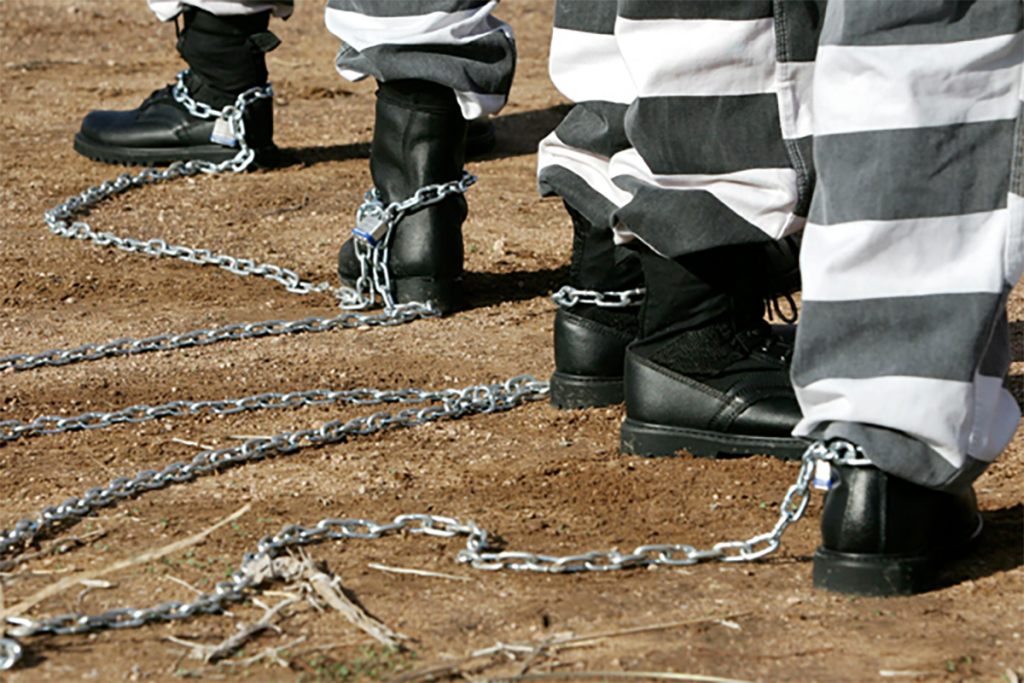
The U.S. Justice Department on Wednesday announced an investigation into the treatment of adolescent inmates at the Jefferson County Jail in Birmingham, including if they were targets for physical and sexual assaults while being housed with adult inmates or kept in isolation for extended periods. The Department of Justice said investigators will assess whether juveniles are detained at the jail in conditions that pose a serious risk of harm to their physical and psychological well-being. Federal authorities said they received complaints alleging that juveniles were regularly housed with adult inmates where they were physically abused and propositioned for sex and that juveniles were improperly kept in solitary confinement or lockdown, sometimes for months at a time. “Isolation_particularly the prolonged and restrictive lockdown alleged in Jefferson County_can lead to paranoia, anxiety, depression and suicide, and exacerbate pre-existing psychological harms,” said Principal Deputy Assistant Attorney General Vanita Gupta, head of the Civil Rights Division. Jefferson County Chief Deputy Sheriff Randy Christian disputed the accusations. “The only juvenile inmates we house have committed crimes so violent or heinous that the laws of the state of Alabama require they be charged as adults. If they would rob, rape or murder you, I would likely assume they would also lie to try and make it out of adult jail. It isn’t a place for the faint of heart but it is a place they are treated fairly. We certainly have no heartburn over proving that in court should we need to.” Inmates must be at least 16 to be placed in the county jail, Christian said. The Alabama-based Southern Poverty Law Center in May of 2014 sent a letter urging DOJ to investigate conditions for juvenile detainees at the jail and praised the decision to open an investigation. “They were placed in situations where they were accused of crimes, have not been found guilty, but are housed in situations where they are constantly in fear of their physical safety as well as their sanity,” said Ebony Howard, SPLC senior staff attorney. “When they were offered support by the jail, it was in the form of being placed by themselves in a cell,” Howard said. The SPLC letter requesting an investigation said a 17 year-old had his throat cut by adult inmates at the jail. It also the second time in recent months that an Alabama correctional facility has come under federal scrutiny. The Department of Justice last week announced a settlement agreement with the state over conditions at Alabama’s only prison for women. Federal investigators last year accused the state of subjecting inmates at Julia Tutwiler Prison for Women to an environment of sexual abuse and harassment. State and federal officials agreed to changes to the prison and filed a settlement agreement in federal court. “Our commitment to finding solutions to problems in Alabama’s troubled jails and prisons is ongoing,” U.S. Attorney Joyce White Vance for the Northern District of Alabama said in a statement. Vance said, “the best solution is always a collaborative approach that encourages the state and counties to correct conditions that are constitutionally inadequate.” However, she said they will file legal action if necessary. The Special Litigation Section of the Civil Rights Division is conducting the investigation. Republished with permission of the Associated Press.
