
Alabama to carry out first lethal injection after review of execution procedures
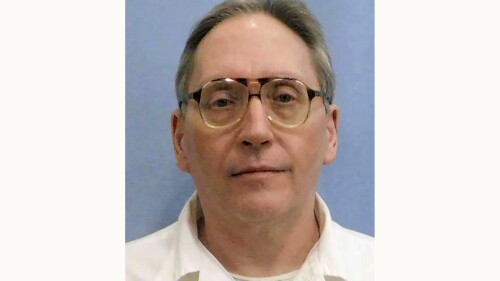
Alabama plans to execute an inmate on Thursday for the 2001 beating death of a woman as the state seeks to carry out its first lethal injection after a pause in executions following a string of problems with inserting the IVs. James Barber, 64, is scheduled to be put to death Thursday evening at a South Alabama prison. It is the first execution scheduled in the state since Alabama Gov. Kay Ivey paused executions in November to conduct an internal review. Ivey ordered the review after two lethal injections were called off because of difficulties inserting IVs into the condemned men’s veins. Attorneys for inmate Alan Miller said prison staff poked him with needles for over an hour as they unsuccessfully tried to connect an IV line to him and, at one point, left him hanging vertically on a gurney during his aborted execution in September. State officials called off the November execution of Kenneth Eugene Smith after they said they were unsuccessful in connecting the second of two required lines. Advocacy groups claimed a third execution, carried out in July after a delay because of IV problems, was botched because of multiple attempts to connect the line, a claim the state has disputed. “Given Alabama’s recent history of botched executions, it is staggering that James Barber’s lethal injection is set to take place,” Maya Foa, director of the anti-death penalty group Reprieve, said. “Three executions in a row went horribly wrong in Alabama last year, yet officials have asserted that ‘no deficiencies’ were found in their execution process.” Barber was convicted in the 2001 beating death of 75-year-old Dorothy Epps in Harvest, Ala. Prosecutors said Barber, a handyman who knew Epps’ daughter, confessed to killing Epps with a claw hammer and fleeing with her purse. Jurors voted 11-1 to recommend a death sentence, which a judge imposed. Barber’s execution was scheduled for the same day that Oklahoma executed Jemaine Cannon for stabbing a Tulsa woman to death with a butcher knife in 1995 after his escape from a prison work center. Attorneys for Barber have asked federal courts to block the lethal injection, citing the state’s past problems. The 11th U.S. Circuit Court of Appeals refused to halt the execution on Wednesday. Judges noted the state had conducted a review of procedures and wrote that “Barber’s claim that the same pattern would continue to occur” is “purely speculative.” The court noted that the Alabama Department of Corrections had changed medical personnel and lengthened the timeframe for executions. “ADOC conducted a full review of its execution processes and procedures, determined that no deficiencies existed with the protocol itself, and instituted certain changes to help ensure successful constitutional executions,” the court wrote. Barber appealed to the U.S. Supreme Court on Thursday, asking justices to stay the execution. His lawyers wrote that the “fourth lethal injection execution that will likely be botched in the same manner as the prior three.” “Alabama’s past three execution proceedings imposed needless physical and emotional suffering on inmates to such an extent that Alabama paused its lethal injection executions and undertook an internal review of its procedures,” Barber’s lawyers wrote in the Supreme Court filing. “Shockingly, however, that review resulted in no substantive changes to Alabama’s procedures or to the qualifications of those carrying out lethal injection executions.” The Alabama attorney general’s office has urged the Supreme Court to let the execution proceed. The state wrote that the previous executions were called off because of a “confluence of events—including health issues specific to the individual inmates and last-minute litigation brought by the inmates that dramatically shortened the window for ADOC officials to conduct the executions.” “Dorothy Epps, Smith’s victim, has survivors who have already waited overlong to see justice done,” the office added. The state conducted an internal review of procedures. Ivey rebuffed requests from several groups, including a group of faith leaders, to follow the example of Tennessee Gov. Bill Lee and authorize an independent review of the state’s execution procedures. One of the changes Alabama made following the internal review was to give the state more time to carry out the execution. The Alabama Supreme Court did away with its customary midnight deadline to get an execution underway in order to give the state more time to establish an IV line and battle last-minute legal appeals. The state will have until 6 a.m. Friday to start Barber’s execution. Republished with the permission of The Associated Press.
Gov. Kay Ivey announces plan to execute James Barber
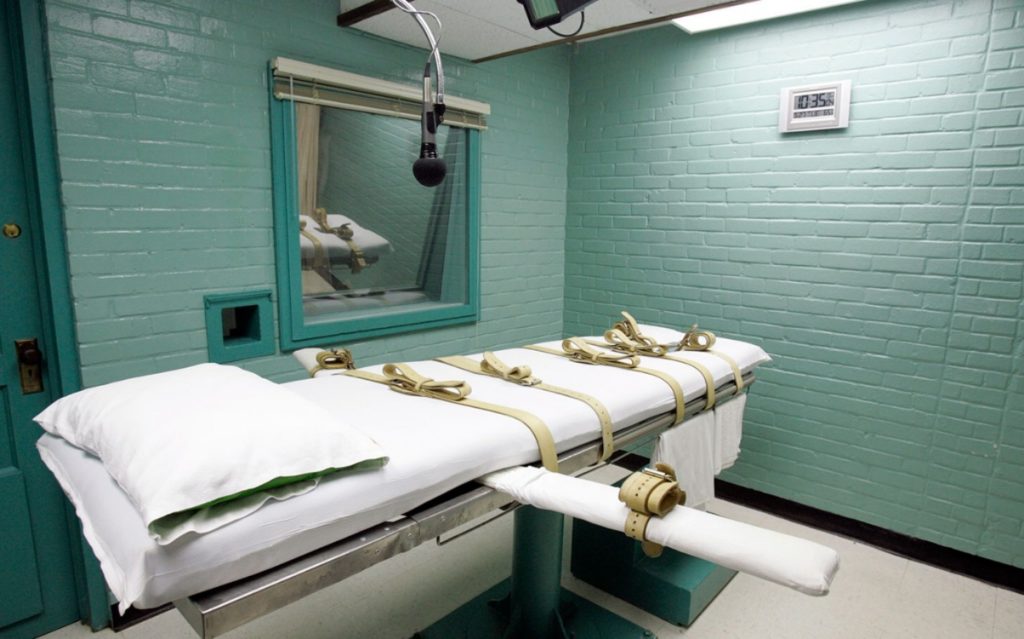
Governor Kay Ivey on Tuesday announced she has set the time frame for the execution of James Barber to occur beginning at midnight on Thursday, July 20 and expiring at 6:00 a.m. on Friday, July 21, 2023. The Alabama Supreme Court’s order authorizing Ivey to set an execution order was shared with the press. “On February 24, 2023, the State of Alabama filed a motion requesting that this Court, pursuant to Rule 8(d)(1), Ala. R. App. P., enter an order authorizing the Commissioner of the Department of Corrections to carry out James Barber’s sentence of death within a time frame set by the governor. Upon due consideration of such motion, IT IS ORDERED that the Motion is GRANTED. IT IS FURTHER ORDERED that the Commissioner of the Department of Corrections is authorized to carry out James Barber’s sentence of death within a time frame set by the Governor of the State of Alabama IT IS FURTHER ORDERED that the Governor shall set a time frame, which shall not begin less than 30 days from the date of this order, within which the Commissioner of the Department of Corrections shall carry out James Barber’s sentence of death IT IS FURTHER ORDERED that the Clerk of this Court shall transmit forthwith a certified copy of this Order electronically or by mailing a copy thereof by United States mail, postage prepaid, to the following · the attorney of record for James Edward Barber; · the Governor of Alabama; · the Attorney General of Alabama; · the Commissioner of the Department of Corrections; · the Clerk of the Alabama Court of Criminal Appeals; and · the Clerk of the Alabama Supreme Court · the Clerk of the Madison Circuit Court This Order authorizing the Commissioner to carry out James Barber’s sentence of death constitutes the execution warrant for James Barber.” Ivey followed that authorization with her order on Tuesday to Commissioner John Hamm. James Barber is being executed by lethal injection for his 2001 murder of Dorothy Epps. Barber, a handyman, robbed and killed his elderly neighbor, Epps – age 75, in Harvest in Madison County in 2001. The execution was delayed last year when Ivey asked for a moratorium to review what went wrong in the attempted execution of Kenneth Eugene Smith. After a short review of the state’s death penalty protocols, Ivey has authorized AG Steve Marshall to pursue new executions. If this process is like previous execution attempts, anti-death penalty activists will file motions at the Alabama Supreme Court and U.S. Supreme Court in the hours before the schedule seeking a stay in carrying out the death penalty. This is a legal tactic used to stall for time as the execution window winds down. Some previously condemned men have resisted efforts to allow the technician to find and tap a vein to carry out the execution. If those delay tactics successfully run out the clock past 6:00 a.m. on July 21, then Ivey would have to seek another court order to carry out the execution, and the whole process of executing Barber for his crimes could be delayed months. To connect with the author of this story or to comment, email brandonmreporter@gmail.com.
Gov. Kay Ivey authorizes the state to resume executions
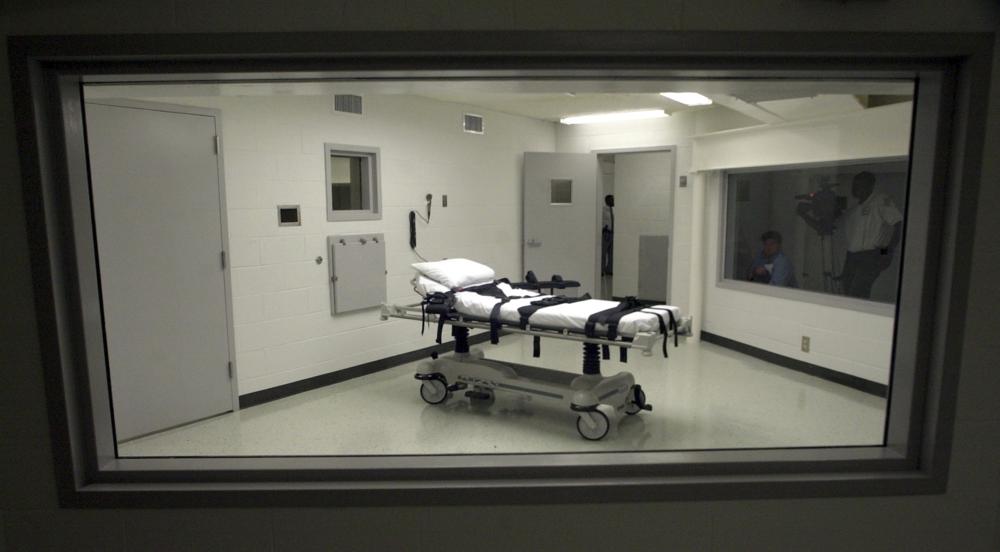
On Friday, Alabama Governor Kay Ivey informed Alabama Attorney General Steve Marshall that he could resume the process of executing inmates awaiting their fates on death row. Ivey made Friday’s decision after Alabama Department of Corrections (ADOC) Commissioner John Hamm informed the Governor that the “top-to-bottom” review of the state’s execution process that she had ordered was complete. Upon receiving the word from Commissioner Hamm, Ivey sent a letter to notify Marshall that he may ask the Alabama Supreme Court to issue an execution warrant for an eligible death row inmate whenever he deems appropriate. Ivey had ordered the review of the process on Nov. 21 after two recent attempts to execute convicted murderers failed. Alabama is currently using lethal injection as its only means of execution. If problems persist with lethal injections, the state could revert to using the electric chair. The Legislature has authorized ADOC to also use nitrogen hypoxia as a method of execution. ADOC has established procedures for using nitrogen to kill by hypoxia. “I am pleased that Governor Ivey and the Department of Corrections have completed their review of their execution processes and feel confident that the travesty of justice that occurred in November of last year will not be repeated,” Marshall said. “As I have made clear, I and my office have remained fully committed to and capable of carrying out capital punishment in Alabama.” Marshall had already expressed his dissatisfaction with the delay and said that, as far as he was concerned, there was no moratorium on executions in Alabama. Marshall said that James Barber will be the first person his office will seek to execute following the governor’s decision to resume executions. “Accordingly, my office immediately filed a motion today with the Alabama Supreme Court to set an execution date for death-row inmate James Barber, and we will be seeking death warrants for other murderers in short order,” Marshall said. “In Alabama, we recognize that there are crimes so heinous, atrocious, and cruel, so exceptionally deprave, that the only just punishment is death,” said Marshall. “Those on death row -as well as their victims- can be certain that I and my office will always do our part to ensure that they receive that just punishment.” Barber was sentenced to death for the murder of Dorothy Epps. To connect with the author of this story or to comment, email brandonmreporter@gmail.com.
Gov. Kay Ivey says state will resume executions
Alabama Gov. Kay Ivey said Friday that the state is ready to resume executions and “obtain justice” for victims’ families after lethal injections were paused for three months for an internal review of the state’s death penalty procedures. The governor in November directed the state prison system to undertake a “top-to-bottom” review of death penalty procedures after the state was forced to cancel three lethal injections because of problems with intravenous lines. Alabama Corrections Commissioner John Hamm told Ivey in a letter shared with news outlets that his staff is ready to resume executions after making internal changes related to staffing and equipment. However, critics argued that the review should have been conducted by an outside group instead of the state agency “responsible for botching multiple executions.” The governor’s office did not release a detailed report on the review’s findings but shared the letter from the head of the prison system. Hamm said the prison system is adding to its pool of medical professionals, ordered new equipment, and has conducted rehearsals. He also noted changes that will give the execution team more time to complete its duties. The Alabama Supreme Court, at Ivey’s request, last month issued a ruling that gives the state more time to carry out a death sentence by allowing the warrants that authorize executions to last for longer than 24 hours. In a Friday letter to Alabama Attorney General Steve Marshall, Ivey wrote that it is “time to resume our duty in carrying out lawful death sentences.” Ivey had asked Marshall to stop seeking execution dates until the review was complete. “Far too many Alabama families have waited for far too long — often for decades — to obtain justice for the loss of a loved one and to obtain closure for themselves,” Ivey said in the letter, which was also released publicly. “This brief pause in executions was necessary to make sure that we can successfully deliver that justice and that closure.” Marshall on Friday filed a motion with the Alabama Supreme Court seeking an execution date for James Barber, who was sentenced to death for the 2001 beating death of 75-year-old Dorothy Epps. Marshall said his office would be “seeking death warrants for other murderers in short order.” “In Alabama, we recognize that there are crimes so heinous, atrocious, and cruel … that the only just punishment is death,” Marshall said. Ivey rebuffed requests from a group of faith leaders and advocates to follow the example of Tennessee Gov. Bill Lee and authorize an independent review of the state’s execution procedures. Dozens of attorneys sent a letter to Ivey this week seeking an independent review instead of the internal one she authorized. “Throughout this process, we have argued that it is unreasonable to believe that the agency responsible for botching multiple executions can thoroughly investigate itself and suggest remedies to correct its own behavior,” JaTaune Bosby Gilchrist, executive director of the ACLU of Alabama, said in a statement. Christine Freeman, executive director of the Middle District of Alabama Federal Defender Program, a nonprofit that represents people on death row, said the result of Ivey’s review is “disappointing, but sadly not surprising.” “Instead of acting in the measured manner of the governor of Tennessee, by operating in the open with an independent commission, Alabama has once again chosen to pretend that there are no problems and not disclose what ‘review’ actually occurred,” Freeman wrote in an emailed statement. Ivey announced a pause on executions in November after a third lethal injection failed. Executioners were unable to get an intravenous line connected to death row inmate Kenneth Eugene Smith within the 100-minute window between the time courts cleared the way and midnight when the death warrant expired. It was the third such instance of the state calling off an execution because of IV line difficulties. The state completed an execution in July after problems establishing an IV line, but an anti-death penalty group has claimed the execution was botched. Hamm said the Department of Corrections reviewed its training for staff and medical workers involved in executions and its legal strategy in litigation; and increased the number of medical personnel utilized by the department for executions and the equipment available to assist them. He said the department also conducted rehearsals and reviewed procedures in other states. Hamm said the vetting process for the new medical personnel will begin immediately. His letter did not elaborate on what duties those workers will perform or what additional equipment was ordered. “I am confident that the Department is prepared as possible to resume carrying out executions consistent with the mandates of the Constitution,” Hamm wrote. “This is true in spite of the fact that death row inmates will continue seeking to evade their lawfully imposed death sentences.” The Alabama Department of Corrections did not immediately respond to an email requesting more information. The independent Tennessee review found the state had not complied with its own lethal injection process ever since it was revised in 2018, resulting in several executions that were conducted without proper testing of the drugs used. A review was also conducted in Oklahoma after the 2014 execution of Clayton Lockett where Lockett struggled on a gurney for 43 minutes before he was declared dead. The review was conducted by a separate state agency from the prison system. Republished with the permission of The Associated Press.
