
Nancy Pelosi to step aside from Dem leadership, remain in Congress

House Speaker Nancy Pelosi said Thursday that she will not seek a leadership position in the new Congress, making way for a new generation to steer the party after Democrats lost control of the House to Republicans in the midterm elections. Pelosi announced in a spirited speech on the House floor that she will step aside after leading Democrats for nearly 20 years and in the aftermath of the brutal attack on her husband, Paul, last month in their San Francisco home. The California Democrat, who rose to become the nation’s only woman to wield the speaker’s gavel, said she would remain in Congress as the representative from San Francisco, a position she has held for 35 years when the new Congress convenes in January. “I will not seek reelection to Democratic leadership in the next Congress,” she said. “For me, the hour has come for a new generation to lead the Democratic caucus that I so deeply respect.” Now, she said, “we must move boldly into the future.” Pelosi received a standing ovation after her remarks, and lawmakers and guests, one by one, went up to offer her hugs, many taking selfies of a moment in history. President Joe Biden spoke with Pelosi in the morning and congratulated her on her historic tenure as speaker of the House. “History will note she is the most consequential Speaker of the House of Representatives in our history,” Biden said in a statement, noting her ability to win unity from her caucus and her “absolute dignity.” It’s an unusual choice for a party leader to stay on after withdrawing from congressional leadership, but Pelosi has long defied convention in pursuing power in Washington. In an interview with reporters after her announcement, Pelosi said she won’t endorse anyone in the race to succeed her, and she won’t sit on any committees as a rank-and-file lawmaker. She said the attack on her husband “made me think again about staying.” But in the end, after the election, she decided to step down. “I quite frankly, personally, have been ready to leave for a while,” she said. “Because there are things I want to do. I like to dance, I like to sing. There’s a life out there, right?” During her remarks on the House floor, Pelosi recapped her career, from seeing the Capitol the first time as a young girl with her father — a former congressman and mayor — to serving as speaker alongside U.S. presidents and doing “the people’s work.” “Every day, I am in awe of the majestic miracle that is American democracy,” she said. Democrats cheered Pelosi as she arrived in the chamber at noon. On short notice, lawmakers filled the House, at least on the Democratic side, and Senate Majority Leader Chuck Schumer joined. He later joined a throng of lawmakers and hugged and kissed Pelosi on the cheek. The Speaker’s Gallery filled with Pelosi staff and guests. Some Republicans, including some newly elected members, also attended, though House Republican Leader Kevin McCarthy, who’s seeking the speakership in the new Congress, did not, telling reporters afterward that he was “busy, unfortunately.” Earlier, Pelosi noted in a statement after The Associated Press called control of the chamber that, in the next Congress, House Democrats will have “strong leverage over a scant Republican majority.” Pelosi was twice elected to the speakership and has led Democrats through consequential moments, including the passage of the Affordable Care Act with President Barack Obama and the impeachments of President Donald Trump. Her decision Thursday paves the way for House Democratic leadership elections next month when Democrats reorganize as the minority party for the new Congress. Pelosi’s leadership team, with Majority Leader Steny Hoyer of Maryland and Democratic Whip James Clyburn of South Carolina, has long moved as a triumvirate. All now in their 80s, the three House Democratic leaders have faced restless colleagues eager for them to step aside and allow a new generation to take charge. Hoyer said after Pelosi’s remarks that “it is the time for a new generation of leaders” and that he will also step down from leadership but stay in Congress. Clyburn, the highest-ranking Black American in Congress, has said he expects to stay in Congress next year and hopes to remain at the leadership table. Democratic Reps. Hakeem Jeffries of New York, Katherine Clark of Massachusetts, and Pete Aguilar of California have similarly moved as a trio, all working toward becoming the next generation of leaders. Jeffries could make history if he enters the race to become the nation’s first Black speaker of the House. After Pelosi spoke, Clyburn released a statement saying he looks forward “to doing whatever I can to assist our new generation of Democratic Leaders, which I hope to be Hakeem Jeffries, Katherine Clark, and Pete Aguilar.” One idea circulating on Capitol Hill was that Pelosi and the others could emerge as emeritus leaders as they pass the baton to new Democrats. First elected in 1987, Pelosi has been a pivotal figure in American politics, long ridiculed by Republicans as a San Francisco liberal while steadily rising as a skilled legislator and fundraising powerhouse. Her own Democratic colleagues have intermittently appreciated but also feared her powerful brand of leadership. Pelosi first became speaker in 2007, saying she had cracked the “marble ceiling” after Democrats swept to power in the 2006 midterm elections in a backlash to then-President George W. Bush and the wars in Iraq and Afghanistan. When she was poised in 2018 to return as speaker in the Trump era, she vowed: “to show the power of the gavel.” Pelosi has repeatedly withstood leadership challenges over the years and had suggested in 2018 she would serve four more years as leader. But she had not discussed those plans more recently. Typically unsentimental, Pelosi let show a rare moment of emotion on the eve of the midterm elections as she held back tears discussing the grave assault on her husband of nearly 60 years. Paul Pelosi suffered a fractured skull after an intruder broke into their home
Steve Flowers: How will Alabama fare in Washington after Richard Shelby

Some of you have inquired how Alabama will fare in Washington after Senator Richard Shelby retires at the end of 2022. The answer is that it will be nothing less than devastating for the Heart of Dixie. The amount of federal dollars that Senator Shelby has individually brought home is incalculable and irreplaceable. Alabama is going to be in the proverbial boat without a paddle in 20 short months. We will have negligible power in Washington and for a state that depends on federal dollars, that is not going to be a good position to be in for Alabama. Whoever wins the 2022 race for Shelby’s seat will have no real power for at least 18 years. The senate is a venerable institution where power is based on seniority. You have to wait your turn and patiently await the day when you can be a committee chairman or player in the senate. Even if we elect someone with the acumen, ability, and temperament to be an effective senator, they will be in waiting two decades before they are modestly important. Tommy Tuberville has only been in the Senate for four months. He is 66 and will be irrelevant in probably one term in the Senate. In short, we are dead in the water in the U.S. Senate for this generation. There is hope for future generations of Alabamians if someone under 55 with ability takes Shelby’s seat. There is a glimmer of hope for Alabama to sustain and preserve some of the mountains of largesse that Shelby has bestowed on our beloved state. However, that power rests in the U.S. House of Representatives. Congresswoman Terri Sewell and Congressman Robert Aderholt could be our hope for salvation for the upcoming decade. Congresswoman Terri Sewell is in her sixth two-year term representing Alabama’s seventh Congressional district. She is one of the first women elected to congress from Alabama in her own right and is the first black woman to ever serve in the Alabama Congressional delegation. She is the only Democrat in the entire Alabama delegation. Therefore, she is our only conduit to the Democratic Presidential throne. She is highly respected by the Joe Biden Administration, as well as the U.S. House leadership. She is on a fast track too within the House Democratic Party. In her short time in Congress, Sewell has held several leadership positions including freshman class president, and currently serves as Chief Deputy Whip under the tutelage of Democratic Whip James Clyburn. Sewell has made her mark within the Democratic Caucus. The Democrats not only occupy the White House, but they are also in the majority in the U.S. House of Representatives. The majority party controls all the committee chairmanships and all of the power in Congress. The most important aspect of Congresswoman Sewell’s ability to help Alabama is that she sits on the exclusive House Ways and Means Committee, which writes the federal budget. By far the brightest Republican star in our Washington delegation is Congressman Robert Aderholt. This clean-cut, conservative was first elected to Congress in 1996 at the age of 31. He is now in his 25th year in Congress and is a member of the powerful House Committee on Appropriations. His sprawling north Alabama 4th District extends in a band across north Alabama from Mississippi to Georgia. Huntsville’s hope is that when the new Congressional districts are drawn this year for the 2022 elections, that Aderholt can be brought into Madison County to help protect the Redstone Arsenal, which is truly dependent on federal dollars from Washington. Congressman Aderholt was born and raised in Haleyville where he and his wife, Caroline, reside when not in Washington. His father is a revered and respected, retired circuit judge. Caroline has deep political roots in the Huntsville/Madison area. Her father, Albert McDonald, was a prominent farmer who was a state senator from the Tennessee Valley and was Alabama’s Agriculture Commissioner. A third member of the House delegation, Mike Rogers of Anniston, could give us a triumvirate of power in the U.S. House. Congressman Rogers is the ranking Republican on the House Armed Services Committee. Congresswoman Sewell, Congressman Aderholt, and possibly Congressman Rogers, can be a hope for salvation in the post-Richard Shelby era for the State of Alabama. See you next week. Steve Flowers is Alabama’s leading political columnist. His weekly column appears in over 60 Alabama newspapers. He served 16 years in the state legislature. Steve may be reached at www.steveflowers.us.
In historic pick, Joe Biden taps Deb Haaland as interior secretary
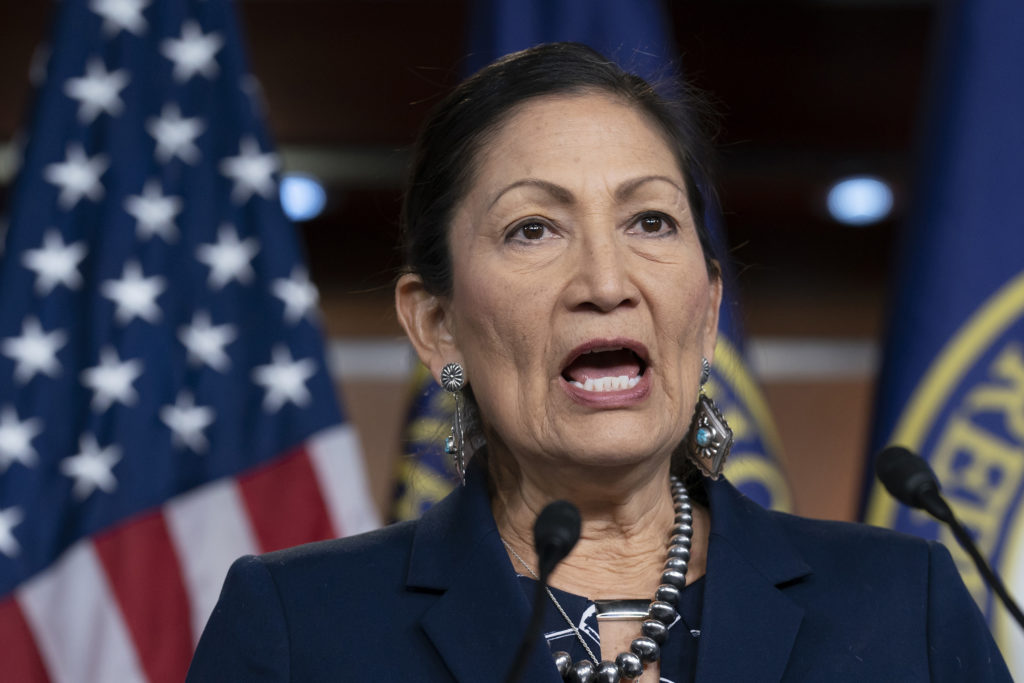
President-elect Joe Biden selected New Mexico Rep. Deb Haaland as his nominee for interior secretary on Thursday, a historic pick that would make her the first Native American to lead the powerful federal agency that has wielded influence over the nation’s tribes for generations. Tribal leaders and activists around the country, along with many Democratic figures, cheered Haaland’s selection after urging Biden for weeks to choose her to lead the Department of Interior. They stood behind her candidacy even when concerns that Democrats might risk their majority in the House if Haaland yielded her seat in Congress appeared to threaten her nomination. With Haaland’s nomination, Indigenous people will for the first time in their lifetimes see a Native American at the table where the highest decisions are made — and so will everyone else, said OJ Semans, a Rosebud Sioux vote activist who was in Georgia on Thursday helping get out the Native vote for two Senate runoffs. “It’s made people aware that Indians still exist,” he said. Haaland, 60, is a member of the Pueblo of Laguna and, as she likes to say, a 35th-generation resident of New Mexico. The role of interior secretary would put her in charge of an agency that has tremendous sway not only over the nearly 600 federally recognized tribes, but also over much of the nation’s vast public lands, waterways, wildlife, national parks, and mineral wealth. Haaland tweeted after the news was made public that “growing up in my mother’s Pueblo household made me fierce. “I’ll be fierce for all of us, our planet, and all of our protected land,” she pledged. Biden plans to introduce Haaland — and other picks for his Cabinet — at an event Saturday in Wilmington, Delaware. Her selection breaks a 245-year record of non-Native officials, mostly male, serving as the top federal official over American Indian affairs. The federal government often worked to dispossess Native Americans of their land and, until recently, to assimilate them into white culture. “You’ve got to understand — you’re taking Interior full circle,” said Arizona Rep. Raul Grijalva, chair of the House Natural Resources Committee and a champion of Haaland for the job. “For years, its legacy was the disenfranchisement of the Native people of this country, of displacement, of cultural genocide.” With Haaland’s nomination, “that in itself is a huge message,” Grijalva said. Navajo Nation President Jonathan Nez called it “truly a historic and unprecedented day for all Indigenous people.” “I am SO ELATED,” the head of progressive Democrats’ Sunrise Movement, Varshini Prakash, tweeted. “This will be the first time an Indigenous person – and a badass climate champion woman at that – will hold any presidential cabinet position. Congratulations to @JoeBiden for making history.″ Get-out-the-vote activists believe their efforts, and the Native vote, helped flip Arizona in particular for Biden and secure the presidency. “There’s a feeling something is changing,” said Ashley Nicole McCray, a member of the Absentee Kiowa tribe of Oklahoma and of an indigenous environmental coalition. “Finally, we’ve come to this point where Indigenous sentiment is no longer being silenced.” But Biden’s pick could further deplete, at least temporarily, the narrow majority Democrats maintain in the House. Biden has already selected several lawmakers from the chamber, including Louisiana Rep. Cedric Richmond and Ohio Rep. Marcia Fudge, to serve in his administration. Some on Biden’s transition team had expressed concerns about dipping further into the already thinned Democratic House majority for another senior administration posting. But Biden decided that the barrier-breaking aspect of her nomination and her experience as vice chair of the House Committee on Natural Resources made her the right pick for the moment. The president-elect has been methodically filling the posts in his Cabinet, adding North Carolina environmental official Michael Regan as his nominee to lead the Environmental Protection Agency. Biden introduced former South Bend, Indiana, mayor Pete Buttigieg earlier this week as his transportation secretary and announced Thursday that former Michigan Gov. Jennifer Granholm was his nominee for energy secretary. In a statement Thursday night, Biden said he had assembled a “brilliant, tested, trailblazing team” that “will be ready on day one to confront the existential threat of climate change.” “They share my belief that we have no time to waste to confront the climate crisis, protect our air and drinking water, and deliver justice to communities that have long shouldered the burdens of environmental harms,” the president-elect said. House Speaker Nancy Pelosi made it clear Wednesday that Biden had her blessing to choose Haaland, saying she would make an “excellent choice” as interior secretary. South Carolina Rep. James Clyburn, the No. 3 Democrat in the House and a close Biden ally, also supported Haaland for the job. Haaland is one of the first two Native American women in the House. She told The Associated Press before her nomination that see the difference her position in Congress made for ordinary Native Americans who came to her with business before the federal government. “They felt comfortable just launching into the issues they wanted,” Haaland told the AP in an interview before her appointment. They would say, for example, “Oh, we don’t have to explain tribal sovereignty to you,” meaning tribes’ constitutionally guaranteed status as independent nations. Haaland previously worked as head of New Mexico’s Democratic Party, as tribal administrator, and as an administrator for an organization providing services for adults with developmental disabilities. Born to a Marine veteran father and a Navy veteran mother, Haaland describes herself as a single mother who sometimes had to rely on food stamps. She says she is still paying off student loans after college and law school for herself and college for her daughter. New Mexico Sen. Tom Udall, who is retiring after 22 years in Congress and was initially considered the front-runner for interior secretary, congratulated Haaland on her selection, calling it “momentous and well-earned.’’ Previously, the highest-ranking administration official known to have Native American heritage was Charles Curtis, who served as Herbert Hoover’s vice president and whose mother was one-quarter Kaw tribe.
Renaming Alabama bridge for John Lewis opposed in Selma

Some say renaming the Edmund Pettus Bridge for John Lewis, who died Friday, would dishonor local activists who spent years advocating for civil rights before Lewis arrived in town in the 1960s.
Bradley Byrne: Keeping our heads

Bradley Byrne urges us to think through solutions to criminal justice reform in the wake of the George Floyd demonstrations.
In time of crisis, Donald Trump – Nancy Pelosi relationship remains broken
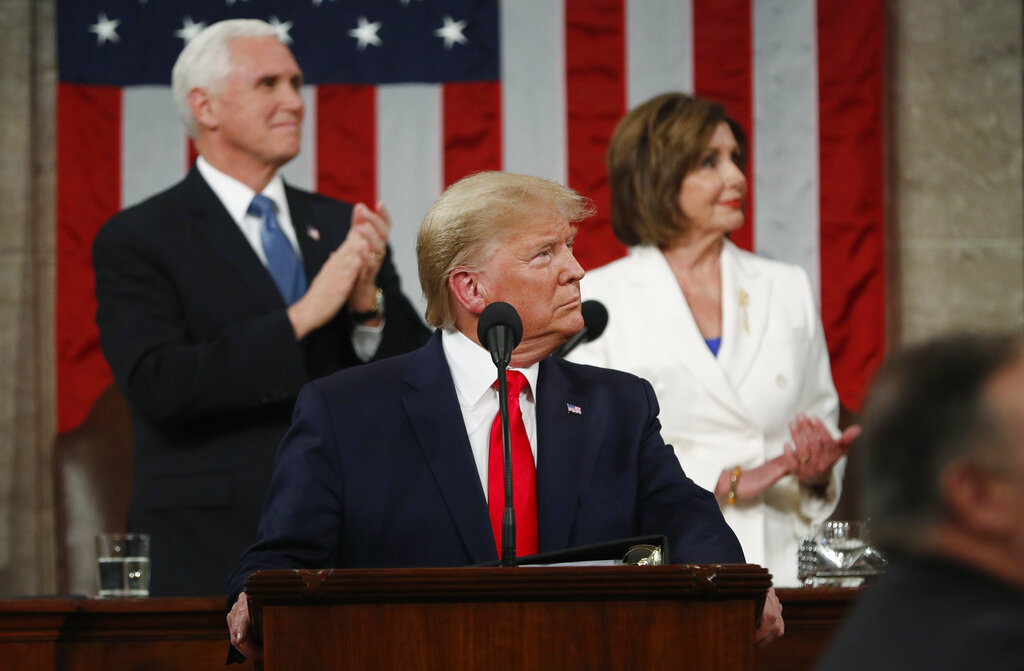
It has been five months since the two leaders last spoke.
Pete Buttigieg’s next test: Winning over minority voters
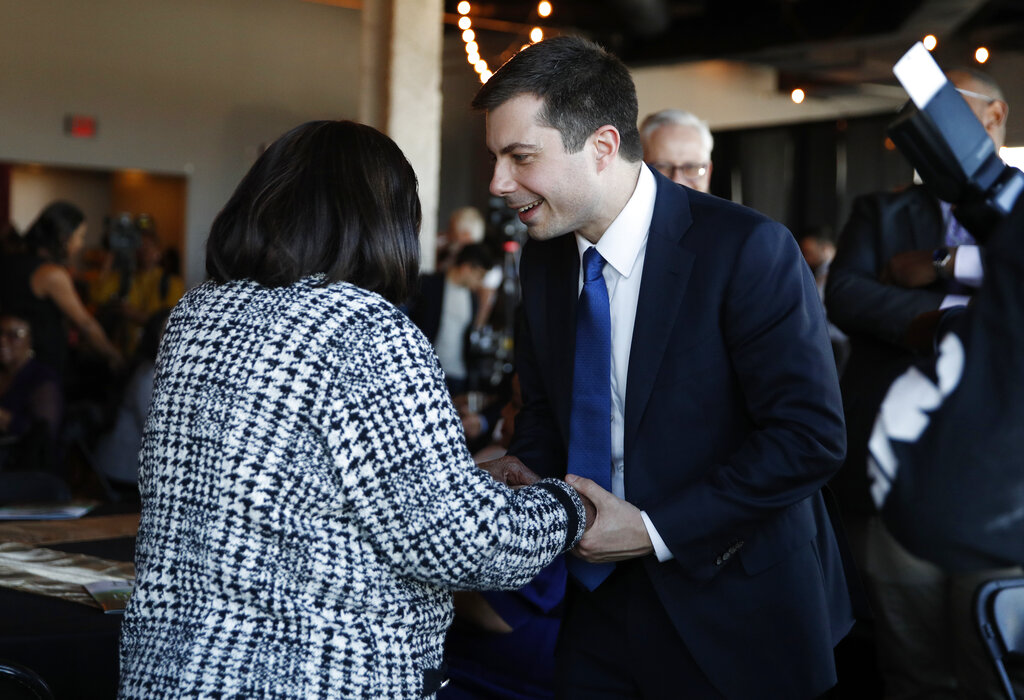
Buttigieg hasn’t yet proven that he can win among minority voters.
Donald Trump likens House impeachment inquiry to ‘a lynching’

President Donald Trump enraged Democrats on Tuesday by comparing their impeachment inquiry to a lynching, assigning the horrors of a deadly and racist chapter in U.S. history to a process laid out in the Constitution. “That is one word no president ought to apply to himself,” said Democratic Rep. James Clyburn of South Carolina, the highest-ranking African American in Congress. “That is a word that we ought to be very, very careful about using” he said. Rep. Bobby Rush, Democrat-Illinois, called on Trump to delete the tweet. “Do you know how many people who look like me have been lynched, since the inception of this country, by people who look like you. Delete this tweet,” wrote Rush, who is also black. Sen. Doug Jones, Democrat-Alabama, tweeted to Trump: “No sir! No, @realDonaldTrump: this is NOT a lynching, and shame on you for invoking such a horrific act that was used as a weapon to terrorize and murder African Americans.” Republicans legislators largely tried to put the focus on what they said was the unfair way in which Democrats are conducting the impeachment inquirySen. Lindsey Graham, Republican-South Carolina, said Trump’s description was “pretty well accurate.” He called the impeachment effort a “sham” and a “joke” because the president does not know the identity of his accuser, and the process is playing out in private. Lynchings, or hangings, were used mostly by whites against black men in the South, beginning in the late 19th century amid rising racial tensions. By comparing his possible impeachment to a lynching, Trump also likened Democrats to a lynch mob. Under pressure over impeachment, blowback over his Syria policy and other issues, the Republican president tweeted Tuesday: “So some day, if a Democrat becomes President and the Republicans win the House, even by a tiny margin, they can impeach the President, without due process or fairness or any legal rights. “All Republicans must remember what they are witnessing here — a lynching. But we will WIN!” Trump has a habit of trying to portray himself as the victim. His tweet came a day after he lashed out at critics of his decision — since rescinded — to schedule a major international economic summit for 2020 at one of his Florida golf properties. During remarks Monday, he lamented people who invoke the “phony emoluments clause.” The clause is in the Constitution and bans presidents from receiving gifts or payments from foreign governments, without the consent of Congress. Impeachment and its process are also in the Constitution. A whistleblower’s complaint that Trump was attempting to use his office for personal political gain during a July 25 phone conversation with Ukraine’s president led House Speaker Nancy Pelosi to open the impeachment inquiry. Trump insists he did nothing wrong. He has characterized the conversation with Ukrainian President Volodymyr Zelenskiy as “perfect” and argues that sore-loser Democrats are still trying to overturn the 2016 election that put him in the White House and keep him from winning a second term next year. Lynchings were fueled by anger toward blacks across the South, where many whites blamed their financial problems on newly freed slaves living around them, the NAACP n By Darlene Superville Associated Press Notes. Follow Darlene Superville on Twitter: https://www.twitter.com/dsupervilleap Republished with the permission of the Associated Press.
Doug Jones hosts HBCU event: NFL great John Stallworth says attendance a ‘life-changing event’
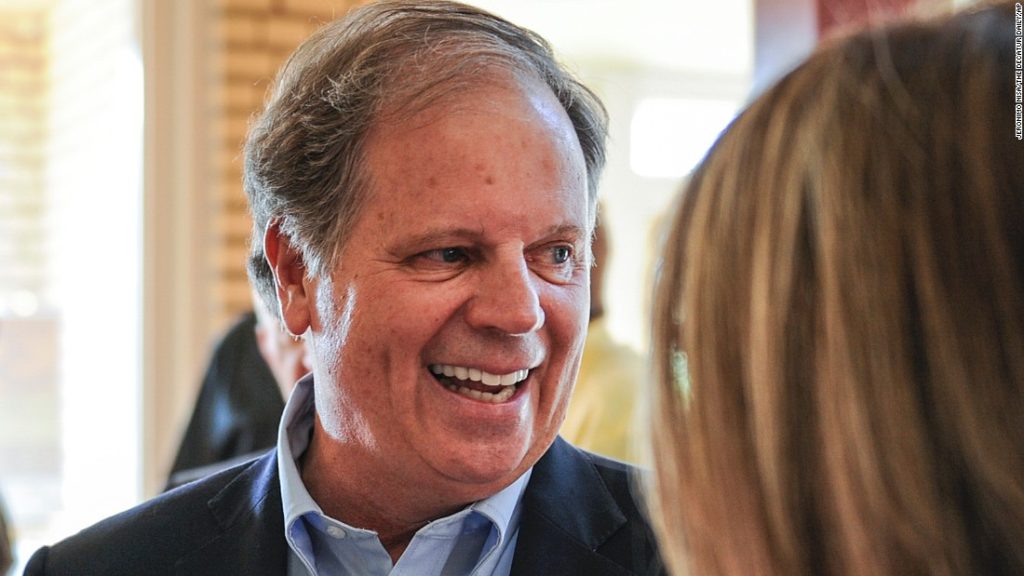
At the inaugural Historically Black Colleges and Universities (HBCU) Summit in Birmingham, students and leaders from these schools gathered and discussed ways to meet the demands of Alabama’s changing workforce, Alabama Newscenter Reports. NFL’s John Stallworth, a graduate of Alabama A&M, said in his keynote speech that going to an HBCU was a “life-changing event.” The event was organized by Sen. Doug Jones-Democrat, who also moderated a panel on how HBCUs can partner with other schools and businesses across Alabama to ensure that their students are ready for tomorrow’s jobs. “We’ve got some of the leading businesses in the state of Alabama that came to Birmingham today because they recognize the quality of education these students are getting at these HBCUs,” Jones said, according to the outlet. “I want people to see that. Alabama has more HBCUs than any other state in the country. They provide well over $1 billion in economic engine for the state. One of the purposes of the event today was (to) highlight the phenomenal job that these colleges and universities do for these graduates. They’re forward thinking.” U.S. House Majority Whip James E. Clyburn– Democrat, reintroduced legislation just days ago that would reauthorize the Historically Black Colleges and Universities Historic Preservation Program, which would support the preservation of historic sites at these schools. In 1998, the Government Accountability Office found that 712 structures on 103 HBCU campuses were in need of historic preservation, according to The T&D, and the estimated cost of that preservation was $755 million. To date, more than 60 of those buildings in 20 states have been renovated through Clyburn’s program, which is managed by the National Parks Service. Clyburn is seeking $10 million per year for the next seven years. “We have made significant progress towards the restoration and preservation of historic buildings and sites on the campuses of HBCUs, but there is still much more that needs to be done,” he said. “I am proud of the continued bi-partisan support of this effort. Senators Kamala Harris and Lindsey Graham reintroduced their companion bill today in the Senate, and I will continue to work with them to restore and preserve these critical pieces of American history.” This is not the first bipartisan effort in support of HBCUs. Clyburn continued. “These federal investments have transformational impacts on the communities that surround our HBCU campuses, and bring new life to historic buildings, many of which were built more than a century ago by student labor and designed by unsung Black architects. By continuing these efforts, we are extending a tremendous legacy.” That legacy is one that Stallworth was proud to have been a part of. “I’ve had a blessed life and, yes, I would not change a thing,” he concluded his speech. “I am John Stallworth, a proud graduate of an HBCU.” This article published with permission including content from Alabama Newcenter
Darryl Paulson: Obama’s electoral legacy: After 8 years, we get a Donald Trump

(Part 2 of the Obama legacy) With the inauguration of Donald Trump, it is a good time to review the electoral impact of eight years of the Obama White House. One of the impacts is the election of Trump which surprised the entire political universe. Whatever Obama may have achieved in public policy, it is that policy which is in great part responsible for setting “the post-World War II record for losses by the White House party,” according to Larry Sabato. Democrats lost over 1,000 seats at the state and national level. However important the Obama policies may have been, it is fair to argue that those policies contained the seeds of Democratic losses. The Wall Street and big bank bailouts led to the creation of the Tea Party. The Tea Party became a primary vehicle to organize disaffected Republicans against bailouts for Wall Street and not Main Street. Combined with opposition to the Affordable Care Act (ACA), mobilized Republicans took over control of both the House and Senate, and effectively denying Obama the needed votes to carry out the rest of his agenda. After the 2016 election, Democrats held 11 fewer Senate seats than they did Jan. 20, 2009, a 16 percent decrease. Democrats hold 62 fewer House seats than in 2009, a drop of 24 percent. They also lost control of the White House giving Republicans complete control of the national government. At the state level, the number of Democrat governors fell from 28 to 16, a 43 percent decline. In 2009, Democrats controlled both houses in 27 states; after 2016, the number dropped to dual control of only 14 states, a 48 percent drop. On top of this, Democrats lost 959 seats in the state legislatures, weakening them for years to come. These losses mean that Democrats will have a difficult time in passing their agenda at the state and national level. It also means that the Democratic bench of future leaders has been wiped out, making it difficult for them to find and finance competitive candidates. Finally, since Democrats foolishly changed the filibuster rules in 2013, cabinet nominees and most court appointees will need only 51 votes to be confirmed. This creates the possibility for more extreme nominees to win confirmation. One of the few positive thing for Democrats is that it is difficult to imagine them losing many more seats. The out-party normally makes gains in midterm elections. Unfortunately for Democrats, they must defend 25 of the 33 Senate seats up for election in 2018, and Trump won 10 of the 25 states that Democrats must defend. If the Democrats could pick up only two Senate seats in 2016 when Republicans had to defend 24 of the 34 seats, it is hard to imagine them doing better in 2018 when they must defend two out of every three Senate seats up for election. Without Obama on the ballot in 2016 and 2018, fewer young and minority voters will turn out at the polls. Although Democrats have dominated among young voters, few of them turn out, especially in off-year elections. Democrats have complicated their problem with young voters by having an array of senior citizen leaders. Nancy Pelosi has been the ranking Democratic leader for 6 terms, as has second-ranking Democrat Steny Hoyer. Third-ranking Democrat James Clyburn has served five terms as leader. Pelosi is 76, and Hoyer and Clyburn are 77. Although Democrats have been devastated during Obama’s tenure, he is not solely responsible. Obama is only the third Democratic president to twice win a popular vote majority, along with Andrew Jackson and Franklin Roosevelt. Democratic National Party Chair Debbie Wasserman Schultz, a Congresswomen from Florida, was widely viewed as an ineffective spokesperson for the party and was eventually ousted for what many Democrats viewed as her favoritism for Hillary Clinton over Bernie Sanders during the Democratic primaries. Obama appointed Wasserman Schultz to become chair of the Democratic Party and, critics contend, for standing by her for far too long. Politics is a strange beast. Six months ago, almost everyone believed the Republican Party was on its last legs, and the Trump nomination would doom them forever. Today the Republicans control all three branches of the federal government, and it appears that the Democrats are on life support. Who knows what tomorrow will bring? ••• Darryl Paulson is Emeritus Professor of Government at the University of South Florida St. Petersburg.
