
Katie Britt, Tommy Tuberville and colleagues urge Biden administration to enforce sanctions on Iranian steel
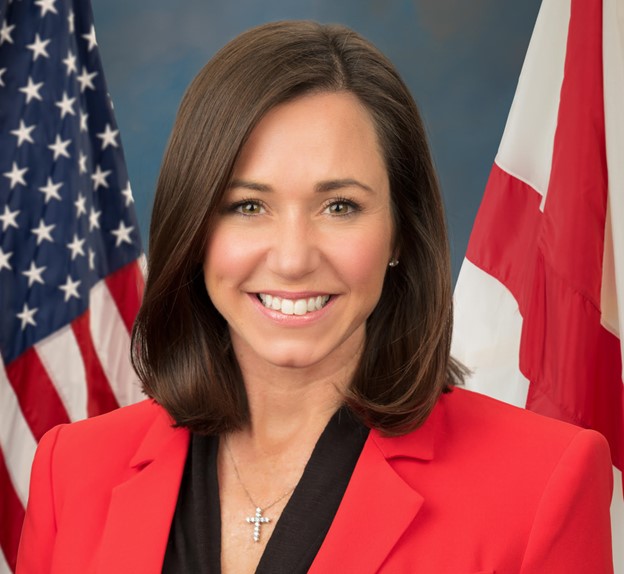
On Tuesday, U.S. Senator Katie Britt (R-Alabama) announced that last week she and Tommy Tuberville (R-Alabama) had joined 29 of their Senate Republican colleagues in a letter to President Joe Biden, Secretary of State Antony Blinken, and Treasury Secretary Janet Yellen urging the Treasury Department to enforce existing sanctions on Iranian steel. “The Biden Administration must reimpose a comprehensive, bone-crushing sanctions enforcement regime on Iran and its terror proxies,” stated Senator Britt. “As this Administration continues down a dangerous, misguided path of appeasement, it only endangers our national security and emboldens our adversaries across the globe. It is past time to achieve peace through unrelenting strength.” In the letter, the Senators express the importance of “proactively and continuously” enforcing sanctions and the detrimental consequences of ineffective – or willfully negligent – enforcement. Iran is one of the largest steel-producing countries in the world, with the industry generating significant funds via exports. “In 2020, the United States sanctioned Iran’s metals industries and steel producers, massively impacting their exports in 2021,” the Sens. wrote. “The enforcement of these sanctions decreased Iranian steel exports from 9 million metric tons in 2020 to 4.2 million tons in 2021,” wrote the Senators. “However, Iranian steel exports rebounded to 10 million tons in 2022. This correlates to the United States reengaging with Iran to revive the Joint Comprehensive Plan of Action (JCPOA), along with a decrease in enforcement of existing sanctions by the Treasury Department.” “We write to you just weeks after our nation’s great ally was suddenly and barbarically attacked by Hamas terrorists—proxies funded, trained, and equipped by the Islamic Republic of Iran,” the Sens wrote. “The pure evil inflicted on the Israeli people on October 7, 2023, will live in infamy as one of the deadliest terrorist attacks in world history.” “Iran is the largest state sponsor of terrorism across the globe, and its stated objective is to wipe Israel off the face of the planet,” the Sens. continued. “It is estimated that Iran provides $700 million dollars annually to Hezbollah and $350 million annually to Hamas. Additionally, Iranian-backed terrorist proxies in Syria and Iraq have received substantial new financial support, including double-digit percentage increases to the salaries paid to affiliated individuals this year alone.” “Steel is one of Iran’s most lucrative export markets,” the Sens. explained. “The World Steel Association announced in September 2023 that Iran is the 10th largest steel producer in the world. In 2020, the United States sanctioned Iran’s metals industries and steel producers, massively impacting their exports in 2021. The enforcement of these sanctions decreased Iranian steel exports from 9 million metric tons in 2020 to 4.2 million tons in 2021. However, Iranian steel exports rebounded to 10 million tons in 2022. This correlates to the United States reengaging with Iran to revive the Joint Comprehensive Plan of Action (JCPOA), along with a decrease in enforcement of existing sanctions by the Treasury Department.” We urge your Administration to enforce all Iran-related sanctions at your disposal, to include secondary sanctions on other countries who seek economic engagement with Iran. We owe it to the innocent children, women, and men who were savagely beaten, raped, tortured, and killed on October 7, 2023.” Iran funds terror groups in Iraq, Syria, Lebanon, Gaza, Yemen, and other places. Those Iranian-backed militia groups have, in recent weeks, attacked American armed forces as well as the Israelis. The U.S. Navy destroyer Carney was recently attacked in the Red Sea by drones launched by the Iranian-backed Houthi terrorists in Yemen. While the Ayatollah has consistently used the harshest rhetoric possible about war with the United States and Israel, the Biden administration has avoided taking sterner stances with the country. Republican critics argue that the Biden Administration’s payment of six billion dollars to Iran in exchange for prisoners only emboldened the regime by showing weakness. Katie Britt was elected to the Senate in 2022. To connect with the author of this story or to comment, email brandonmreporter@gmail.com.
Treasury Department launches strike force to counter illicit fentanyl
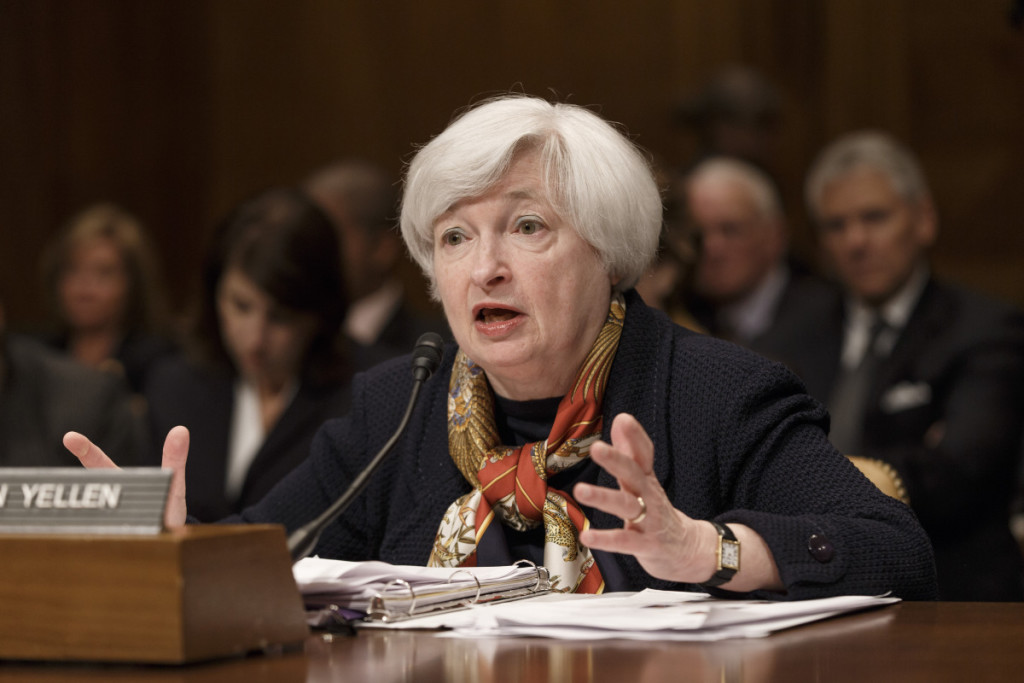
By Brett Rowland | The Center Square The Treasury Department announced Monday that it is launching a Counter-Fentanyl Strike Force ahead of Treasury Secretary Janet Yellen’s trip to Mexico. The strike force will use Treasury’s “resources and expertise in a coordinated and streamlined operation to combat the trafficking of illicit fentanyl.” The strike force brings together people and resources across key Treasury offices and is jointly led by the Office of Terrorism and Financial Intelligence and IRS Criminal Investigation. “The Treasury Department’s Counter-Fentanyl Strike Force will allow us to bring the Department’s unrivaled expertise in fighting financial crime to bear against this deadly epidemic,” Yellen said in a statement. “Treasury will use every tool at its disposal to disrupt the ability of drug traffickers to peddle this poison in our country.” Under Secretary of the Treasury for Terrorism and Financial Intelligence, Brian Nelson and IRS Criminal Investigation Chief James Lee will lead the strike force. “On visits to the U.S. Southwest border this year, I saw firsthand how Treasury tools make a difference in disrupting the flow of illicit narcotics into the United States,” Nelson said in a statement. “The Strike Force will act quickly and decisively with the top specialists from across the Department to nimbly respond to the newest threats.” The Treasury Department has put sanctions on cartel members and associated businesses in an effort to cut them off from the U.S. financial system, which plays a key role in global financial transactions. In the past two years, the department was sanctioned almost 250 targets for involvement in drug trafficking activities. “Partnerships are key to the work we do at IRS Criminal Investigation, and we welcome the opportunity to partner with our Treasury counterparts to combat fentanyl – one of the deadliest narcotics plaguing our country,” Lee said in a statement. “To date, our team has played a key role in sanctioning and bringing criminal charges against individuals and entities involved in fentanyl trafficking, and we look forward to using our financial expertise to further disrupt the flow of fentanyl into the United States.” Yellen plans to travel to Mexico City from Dec. 5-7 to meet with government and private sector leaders about ways “to strengthen U.S.-Mexico collaboration on countering fentanyl and illicit finance,” among other issues, according to the Treasury Department. Republished with the permission of The Center Square.
Katie Britt leads legislation to limit federal oversight into state-regulated insurance industry
On Tuesday, U.S. Senator Katie Britt (R-Alabama) led 16 of her Senate colleagues in introducing the Insurance Data Protection Act. This legislation would overrule a recent effort by the Federal Insurance Office (FIO) to step into the state-regulated insurance industry, including its proposed “Climate-Related Financial Risk Data Collection.” Britt said that the bill would eliminate the FIO Director’s subpoena authority. For over a century, the insurance industry was regulated by the states. That changed somewhat when the FIO was created in the Dodd-Frank Wall Street Reform and Consumer Protection Act. That Obama-era legislation does include an explicit provision stating that the Office does not have general supervisory or regulatory authority over the insurance business, which is supervised and regulated on a state-by-state basis across the United States. Senator Britt’s legislation clarifies that FIO does not need subpoena power since it is intended to function as an informational body. The bill would also require that the FIO coordinate any data collection efforts with state insurance regulators and assess all publicly available data and sources regarding the data being sought. These provisions would limit unnecessary data inquiries and prevent duplicative efforts across the state and federal landscapes. The bill would also set forth confidentiality procedures and requirements governing how data can be used by financial regulators if collected from insurers. This would ensure consumers’ information remains secure. “Our state insurance regulators have more than proven their ability to effectively and responsibly supervise the American insurance industry for over a century,” said Senator Britt. “FIO should work with, not around, state insurance officials. Not only is FIO overstepping its lawful authority and trampling on Congressional intent, but the office is also utilizing private insurance data to advance the Biden Administration’s leftwing Green New Deal agenda. This commonsense legislation would ensure the state-regulated insurance market remains strong, prevent redundant and unnecessary data reporting that would needlessly cost millions of dollars, and protect consumers’ sensitive information.” This legislation has been cosponsored by Senate Banking Committee Ranking Member Tim Scott (R-South Carolina). “As a former insurance agent, I know firsthand the importance of our state-based insurance regulation regime that has resulted in highly competitive and fair markets across the country – addressing local issues with local solutions,” said Sen. Scott. “That’s why I’ve been alarmed by the Federal Insurance Office’s (FIO) efforts to overstep its authority and push the Biden administration’s radical climate agenda. This important bill will reign in the administration’s climate activists, ensure greater coordination between FIO and state insurance regulators, and protect both consumers’ and insurers’ data.” Senators Marsha Blackburn (R-Tennessee), John Boozman (R-Arkansas), Ted Budd (R-North Carolina), Tom Cotton (R-Arkansas), Kevin Cramer (R-North Dakota), Mike Crapo (R-Idaho), Steve Daines (R-Montana), Bill Hagerty (R-Tennessee), John Kennedy (R-Louisiana), Cynthia Lummis (R-Wyoming), Pete Ricketts (R-Nebraska), Mike Rounds (R-South Dakota), John Thune (R-South Dakota), Thom Tillis (R-North Carolina), and J.D. Vance (R-Ohio) have all signed on to cosponsor the legislation. The National Association of Mutual Insurance Companies (NAMIC), American Property Casualty Insurance Association (APCIA), Association for Independent Agents (Big I), and Professional Insurance Agents (PIA) have endorsed this legislation. FIO is an office within the Treasury Department created by Dodd-Frank to monitor the insurance sector and help provide information to policymakers and state regulators, as needed, without regulatory authority. The climate risk assessments the FIO is collecting were requested in the President’s climate executive order and would require over 200 private insurance companies (over 70% of the homeowners’ insurance market) to provide to FIO highly-detailed data (broken down by zip code) regarding the effect of climate-related catastrophes on insurance availability and affordability for Americans. On November 1st, the Treasury announced its intention to move ahead with this data call. “Americans are facing growing challenges from extreme weather events caused by climate change,” Treasury Secretary Janet Yellen said in a statement about the FIO collection project. “The resulting data and analyses will help policymakers inform potential approaches to improving insurance availability and affordability for consumers.” While federal officials continue pushing for more detailed climate data from insurers, the National Association of Insurance Commissioners (NAIC) emphasizes climate concerns during its annual fall meeting. The Climate and Resiliency Task Force is expected to adopt a National Climate Resilience Strategy for Insurance to stabilize the insurance market. “It’s part of our overarching mission to manage risks, ensure the availability and reliability of insurance products, promote insurer solvency, and close protection gaps,” the strategy reads. “Our work to identify, assess, and communicate risk and risk reduction solutions, as well as to improve oversight of the insurance sector, has positioned state insurance regulators to implement a climate resilience strategy.” Katie Britt is a member of the Senate Committee on Banking, Housing, and Urban Affairs. To connect with the author of this story or to comment, email brandonmreporter@gmail.com.
Katie Britt and colleagues demand answers after Biden Administration hands over $6 billion to Iran
On Monday, U.S. Senator Katie Britt (R-Alabama) joined a letter by Sen. Tim Scott (R-South Carolina), the ranking member of the Senate Committee on Banking, Housing, and Urban Affairs, and 24 of her Republican colleagues in demanding answers from the Biden Administration about the approximately $6 billion reportedly paid to Iran in exchange for Americans wrongfully being held as political hostages by the Iranian regime. “Handing $6 billion to the world’s largest state sponsor of terrorism is a reckless and disastrous decision that threatens the lives of Americans and our allies across the globe,” said Senator Britt. “Once again, the Biden Administration has chosen to appease our adversaries and set a dangerous precedent. President [Joe] Biden’s weakness will only embolden hostile actors to engage in further aggression around the world. We must achieve peace through strength, and I will always fight to hold this Administration accountable for putting American families at risk.” In a letter to Secretaries Antony Blinken and Janet Yellen, the senators wrote, “When the Obama administration released $400 million in liquidated assets to Iran in 2016, we warned that this dangerous precedent would put a price on American lives. Seven years later, the current administration is providing a ransom payment worth at least fifteen times that amount to the world’s largest state sponsor of terror, in yet another violation of the United States’ long-standing ‘no concessions’ policy. In the release of Executive Order 14078 on July 19, 2022, the White House admitted that ‘terrorist organizations, criminal groups, and other malicious actors who take hostages for financial, political, or other gain—as well as foreign states that engage in the practice of wrongful detention, including for political leverage or to seek concessions from the United States—threaten the integrity of the international political system and the safety of United States nationals and other persons abroad.’ The release of such a significant sum to the Iranian regime runs entirely counter to that claim and will only serve to encourage additional hostage-taking for financial or political gain.” Joining Senators Britt and Scott on the letter were Senators Jim Risch (R-Wisconsin), Roger Wicker (R-Mississippi), Tom Cotton (R-Arkansas), Bill Hagerty (R-Tennessee), Bill Cassidy (R-Louisiana), Chuck Grassley (R-Iowa), Lindsey Graham (R-South Carolina), Steve Daines (R-Montana), Marsha Blackburn (R-Tennessee), Kevin Cramer (R-North Dakota), Ted Budd (R-North Carolina), J.D. Vance (R-Ohio), John Cornyn (R-Texas), Joni Ernst (R-Iowa), Pete Ricketts (R-Nebraska), John Hoeven (R-North Dakota), Todd Young (R-Indiana), Mike Crapo (R-Idaho), Roger Marshall (R-Kansas), James Lankford (R-Oklahoma), Thom Tillis (R-North Carolina), John Kennedy (R-Louisiana), John Barrasso (R-Wyoming), and Shelley Moore Capito (R-West Virginia) After more than two years of quiet negotiations, Iran has released five Iranian American dual citizens into house arrest, according to original reporting by the New York Times – quoting officials at the State Department and the National Security Council. “This is just the beginning of a process that I hope and expect will lead to their return home to the United States,” Secretary of State Antony Blinken said on Thursday. “There’s more work to be done to actually bring them home. My belief is that this is the beginning of the end of their nightmare.” The prisoners are Siamak Namazi, Emad Sharghi, and Morad Tahbaz, who had all been jailed on unsubstantiated charges of spying, as well as two others whose families have withheld their names. One of the unnamed Americans is a scientist, and the other is a businessman, according to sources. In addition to releasing the $6 billion in seized oil funds, the U.S. has agreed to hand over imprisoned Iranians as part of the prisoner swap. Britt and her colleagues had objected to paying the ransom before the deal had been finalized. Britt was elected to the Senate in 2022. To connect with the author of this story or to comment, email brandonmreporter@gmail.com.
Fitch Ratings has downgraded U.S. credit rating

Fitch Ratings has downgraded the U.S. credit rating from AAA to AA+, the Wall Street Journal reported. This is the first downgrade of America’s creditworthiness by a major credit rating service in over a decade. Fitch said on Tuesday that the downgrade reflects an “erosion of governance” in the U.S. relative to other top-tier economies over the last two decades. “The repeated debt-limit political standoffs and last-minute resolutions have eroded confidence in fiscal management,” Fitch said. Fitch expects the general government deficit to rise to 6.3% of gross domestic product in 2023 from 3.7% last year. The predicted deficit growth reflects cyclically weaker federal revenues, new spending initiatives, and a higher interest burden. The firm expects the U.S. economy to slip into a recession later this year. Moody’s has not yet lowered the U.S.A.’s credit rating. The White House responded strongly to the decision by Fitch. Press Secretary Karine Jean-Pierre said that the Administration strongly disagrees with the decision by Fitch. “We strongly disagree with this decision,” Jean-Pierre said. “The ratings model used by Fitch declined under President [Donald]Trump and then improved under President [Joe] Biden, and it defies reality to downgrade the United States at a moment when President Biden has delivered the strongest recovery of any major economy in the world. And it’s clear that extremism by Republican officials—from cheerleading default to undermining governance and democracy, to seeking to extend deficit-busting tax giveaways for the wealthy and corporations—is a continued threat to our economy.” “The change by Fitch Ratings announced today is arbitrary and based on outdated data,” Treasury Secretary Janet Yellen said in a statement. “Fitch’s quantitative ratings model declined markedly between 2018 and 2020 – and yet Fitch is announcing its change now, despite the progress that we see in many of the indicators that Fitch relies on for its decision. Many of these measures, including those related to governance, have shown improvement over the course of this Administration, with the passage of bipartisan legislation to address the debt limit, invest in infrastructure, and make other investments in America’s competitiveness.” Congressman Barry Moore (R-AL02) retweeted a response from the House Freedom Caucus. “A rundown of Fitch’s downgrade of the United States credit rating: The Biden Administration played politics with a possible government default. The @HouseGOP did our job in April by passing Limit Save Grow, but Biden waited till the last minute to negotiate.” The U.S. is spending $1.57 trillion a year more than it is taking in revenues. The total debt has topped $32.7 trillion, and the Administration has refused to present a framework for a balanced budget within five years even though the nation is at full employment, and the U.S. is not currently at war. The cost of servicing the debt is $652 million a year and climbing. To connect with the author of this story or to comment, email brandonmreporter@gmail.com.
Barry Moore votes against debt ceiling deal
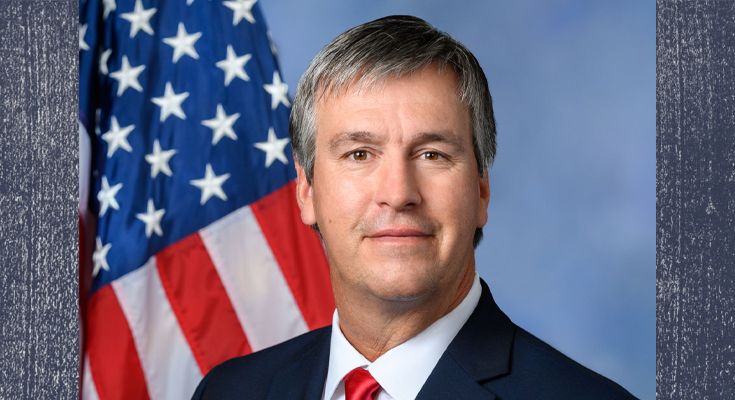
On Wednesday, Congressman Barry Moore voted against the Fiscal Responsibility Act. The legislation was negotiated between Republican leadership led by Speaker of the House Kevin McCarthy, President Joe Biden, and the Congressional Democrats. The deal will raise the debt ceiling by $4 trillion. This is double the amount that was in the Republican plan that passed out of the House of Representatives, the Limit, Save, Grow Act. “The so-called ‘Fiscal Responsibility Act’ promises to saddle Americans with $4 trillion in new debt and kick the can down the road for two more years,” said Moore. “This is a massive disappointment and a far cry from what Republicans passed in the Limit, Save, Grow Act. We must stand up to the Biden Administration and make stronger reforms if we want to protect our children and grandchildren from generations of burdensome debt.” The Fiscal Responsibility Act of 2023 avoids a financially crippling default on the national debt, but it does so by adding $4 trillion to the national debt. Moore expressed his concerns that the deal offers, at best, a 2-year spending freeze and provides only minor reforms to Federally-funded social welfare programs. Moore also cited that the deal includes only minor permitting reform that fast tracks IRA-subsidized unreliable energy and batteries. Moore also expressed concern that the deal includes an administrative pay-go that can be waived and provides no Congressional oversight role. It upholds Biden’s student loan bailout, provides no funding for border security, keeps 98% of IRS expansion spending, and only reclaims $28 billion in COVID funds. Moore was one of just 71 Republicans who voted against the legislation. 46 Democrats also voted in opposition to the bipartisan bill. The House on Wednesday night passed a bipartisan bill to suspend the debt ceiling, overcoming vocal opposition from conservative and liberal lawmakers and bringing the country one step closer to avoiding an economy-rattling default ahead of next week’s deadline. The legislation passed on a bipartisan 314 to 117 vote. The legislation now goes to the Senate for its consideration. The legislation is expected to receive swift passage as the default deadline looms. U.S. Treasury Secretary Janet Yellen warned that the U.S. could run out of cash to pay its bills by June 5, risking the nation’s first-ever default. “Passing the Fiscal Responsibility Act is a crucial first step for putting America back on track,” McCarthy said on the House floor Wednesday. “It does what is responsible for our children, what is possible in divided government, and what is required by our principles and promises.” The bipartisan deal suspends the debt limit through Jan. 1, 2025, so the next debt ceiling increase will be after the 2024 election, but likely before the next presidential inauguration. Barry Moore is serving his second term representing Alabama’s Second Congressional District. To connect with the author of this story or to comment, email brandonmreporter@gmail.com.
Debt ceiling talks grind on, but Republicans say there’s a ‘lack of urgency’ from White House
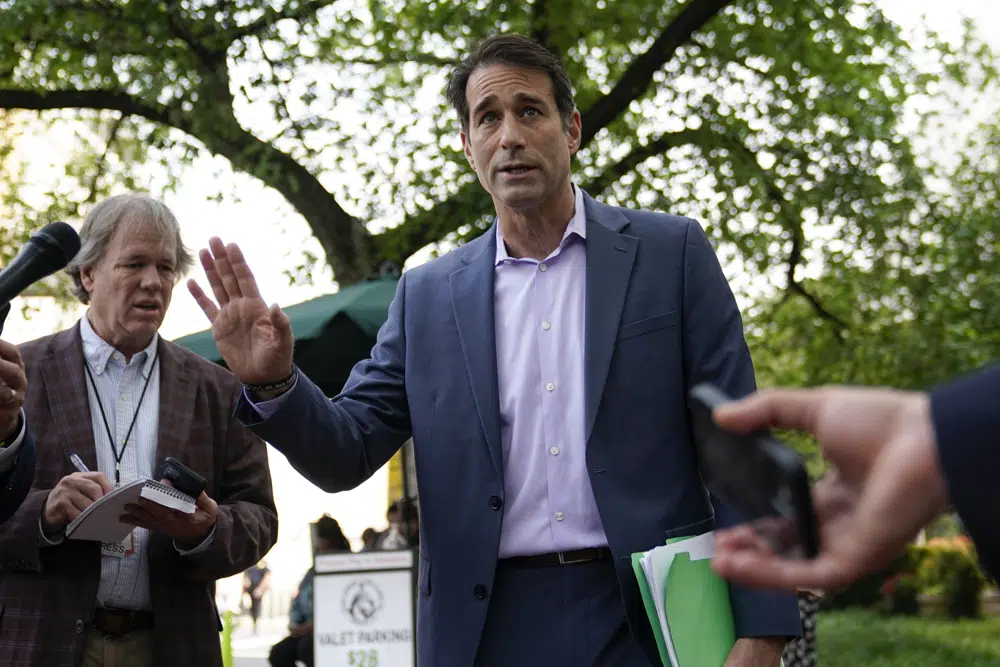
Debt ceiling negotiators for President Joe Biden and House Speaker Kevin McCarthy traded more budget-cutting ideas at the Capitol Tuesday, but Republicans warned of a “lack of urgency” at the White House to resolve the standoff in time to avert a potentially chaotic federal default. With barely a week to go before a deadline as soon as June 1, the Democratic president and the Republican speaker were staring down a financial crisis. Failure to strike a deal would be unprecedented, and certain to throw U.S. financial markets into turmoil, inflicting economic pain at home and abroad. Markets lowered Tuesday with no deal in sight. “We’re not there yet,” McCarthy said at the Capitol, reiterating he won’t bring any bill forward “that doesn’t spend less than we spent this year.” Behind closed doors, McCarthy urged his slim House Republican majority to “just stick together” despite their own factions as he negotiates the strongest deal possible for conservatives, said lawmakers exiting the private session. He told reporters the teams are eyeing “creative” ways of rolling back spending that all sides can accept. “I believe we can still get there — and get there before June 1,” McCarthy, R-Calif., said at midday. Dragging into a third week, the negotiations over raising the nation’s debt limit, now at $31 trillion, were never supposed to arrive at this point — a crisis in the making. From the White House, press secretary Karine Jean-Pierre said it was “ridiculous” to suggest Biden wasn’t acting with urgency. “He wants to see this done as soon as possible,” she said. The White House insisted early on it was unwilling to barter over the need to pay the nation’s bills, demanding that Congress simply lift the ceiling as it has done many times before with no strings attached. But the newly elected speaker urged the president at an Oval Office meeting in February to come to the negotiating table on a budget package that would reduce spending to reduce ballooning deficits in the post-COVID era in exchange for the vote to allow future debt. Both men said after a crucial meeting late Monday at the White House — after the president returned from the Group of Seven summit in Japan — that talks were productive. But with time short to strike a deal, they are laboring to come up with a compromise that could be approved quickly by the Republican House and the Democratic Senate and be signed into law. Negotiations are focused on finding agreement over a 2024 budget year limit. Republicans have set aside their demand to roll back spending to 2022 levels, but say that next year’s government spending must be less than it is now. But the White House instead is offering to freeze spending at current 2023 numbers. Agreement on that topline spending level is vital. It would enable McCarthy to deliver spending restraint for conservatives while not being so severe that it would chase off the Democratic votes that would be needed in the divided Congress to pass any bill. “We are holding firm to the speaker’s red line,” said a top Republican negotiator, Rep. Garret Graves of Louisiana. “Which is that we will not do a deal unless it spends less money than we’re spending this year.” The White House continues to argue that deficits can be reduced by ending tax breaks for wealthier households and some corporations, but McCarthy said he told the president at their February meeting that raising revenue from tax hikes is off the table. The negotiators are now also debating the duration of a 1% cap on annual spending growth going forward, with Republicans dropping their demand for a 10-year cap to six years, but the White House offering only one year, for 2025. Typically, the debt ceiling has been lifted for the duration of a budget deal, and in this negotiation, the White House is angling for a two-year agreement that would push past the presidential elections. Another main Republican negotiator, Rep. Patrick McHenry of North Carolina, who joined the speaker at the Oval Office Monday evening, said, “What I sense from the White House is a lack of urgency.” But on the Senate side, Republican leader Mitch McConnell said, “Look, I think everybody needs to relax.” Traveling in his home state of Kentucky, McConnell said of the back and forth, “This is not that unusual.” However, time is growing short. The House speaker promised lawmakers he will abide by the rule to post any bill for 72 hours before voting, making any action doubtful until the weekend — just days before the potential deadline. The Senate would also have to pass the package before it could go to Biden’s desk to be signed. McCarthy faces a hard-right flank in his own party that is likely to reject any deal, and that has led some Democrats to encourage Biden to resist any compromise with the Republicans and simply invoke the 14th Amendment to raise the debt ceiling on his own, an unprecedented and legally fraught action the president has resisted for now. On Tuesday, the leader of the conservative House Freedom Caucus, Rep. Scott Perry, said: “We all want to stick together. But again, it’s sticking together around the right thing.” He and others are skeptical of the June 1 deadline that Treasury Secretary Janet Yellen said is when “it is highly likely” the government will be unable to pay all the nation’s bills. Treasury said Tuesday it is keeping in close contact with federal agencies on their planned spending as it monitors cashflows. As the negotiators focus on the $100 billion-plus difference between the 2022 and 2023 spending plans as a place to cut, other priorities Republicans are pushing as part of the deal remain on the table. Republicans also want to beef up work requirements for government aid to recipients in the Medicaid healthcare program, though the Biden administration has countered that millions of people could lose coverage. The GOP additionally wants new cuts to food aid by restricting states’ ability to waive work requirements in places
Debt ceiling: Joe Biden, Kevin McCarthy to meet Monday as negotiators ‘keep working’ to resolve standoff
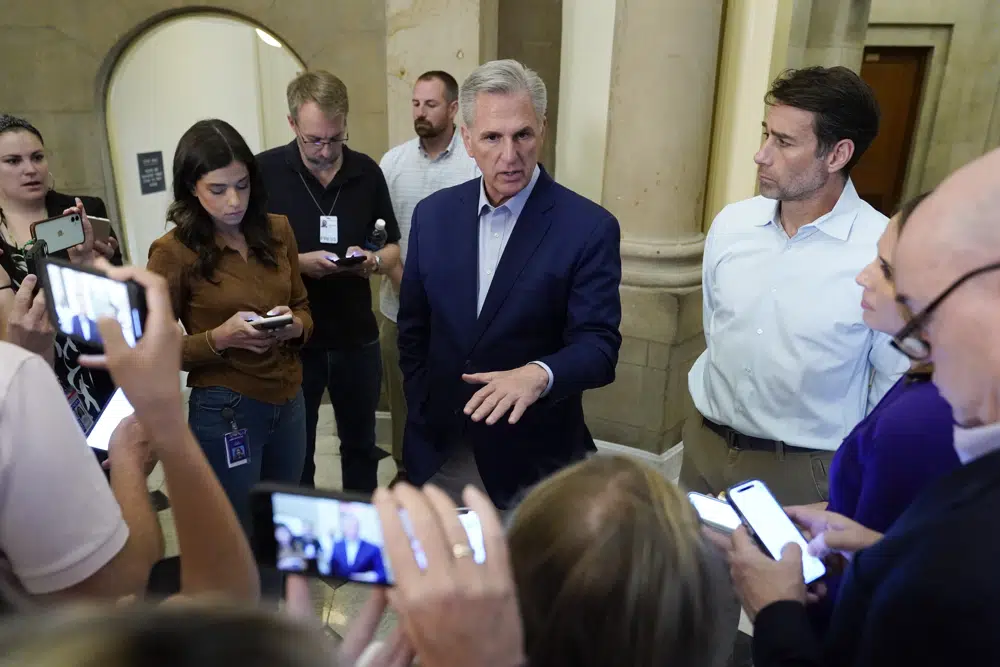
The White House and House Republicans wrapped up another round of debt ceiling talks Sunday as Washington races to strike a budget compromise along with a deal to raise the nation’s borrowing limit and avert an economy-wrecking federal default. President Joe Biden and House Speaker Kevin McCarthy spoke by phone Sunday while the president was returning home on Air Force One after the Group of Seven summit in Japan. Upbeat, McCarthy, R-Calif., told reporters at the Capitol that the call was “productive” and that the on-again, off-again negotiations between his staff and White House representatives are focused on spending cuts. Biden and McCarthy are set to meet for a pivotal meeting Monday at the White House. Negotiators for the Democratic president and Republican speaker met for 2 1/2 hours at the Capitol as talks appear to be narrowing on a 2024 budget year cap that would be key to resolving the standoff. “We’ll keep working,” said Steve Ricchetti, counselor to the president, as the White House team exited. The Republicans were not seen leaving the speaker’s office and offered no immediate comment after the talks. They all face a deadline, as soon as June 1, when the government could run out of cash to pay its bills. Treasury Secretary Janet Yellen said Sunday that June 1 is a “hard deadline.” McCarthy said after his call with Biden that “I think we can solve some of these problems if he understands what we’re looking at.” The speaker added, “But I’ve been very clear to him from the very beginning. We have to spend less money than we spent last year.” McCarthy emerged from that conversation sounding optimistic and was careful not to criticize Biden’s trip, as he had before. He did caution, “There’s no agreement on anything.” “We’re looking at, how do we have a victory for this country?” McCarthy said. He said he did not think the final legislation would remake the federal budget and the country’s debt, but at least “put us on a path to change the behavior of this runaway spending.” The White House confirmed the Monday meeting and late Sunday talks but did not elaborate on the leaders’ call. Earlier, Biden used his concluding news conference in Hiroshima, Japan, to warn House Republicans that they must move off their “extreme positions” over raising the debt limit and that there would be no agreement to avoid a catastrophic default only on their terms. Biden said “it’s time for Republicans to accept that there is no deal to be made solely, solely, on their partisan terms.” He said he had done his part in attempting to raise the borrowing limit so the government can keep paying its bills, by agreeing to significant cuts in spending. “Now it’s time for the other side to move from their extreme position.” Biden had been scheduled to travel from Hiroshima to Papua New Guinea and Australia but cut short his trip in light of the strained negotiations with Capitol Hill. Even with a new wave of tax revenue expected soon, perhaps giving both sides more time to negotiate, Yellen said on NBC’s “Meet the Press” that “the odds of reaching June 15, while being able to pay all of our bills, is quite low.” GOP lawmakers are holding tight to demands for sharp spending cuts with caps on future spending, rejecting the alternatives proposed by the White House for reducing deficits in part with revenue from taxes. Republicans want to roll back next year’s spending to 2022 levels, but the White House has proposed keeping 2024 the same as it is now, in the 2023 budget year. Republicans initially sought to impose spending caps for 10 years, though the latest proposal narrowed that to about six. The White House wants a two-year budget deal. A compromise on those topline spending levels would enable McCarthy to deliver for conservatives, while not being so severe that it would chase off the Democratic votes that would be needed in the divided Congress to pass any bill. Top Republican negotiator Rep. Garret Graves of Louisiana, speaking alongside McCarthy at the Capitol, said the numbers “are the foundation” of any agreement. Republicans also want work requirements on the Medicaid health care program, though the Biden administration has countered that millions of people could lose coverage. The GOP additionally introduced new cuts to food aid by restricting states’ ability to waive work requirements in places with high joblessness. That idea, when floated under President Donald Trump, was estimated to cause 700,000 people to lose their food benefits. GOP lawmakers are also seeking cuts in IRS money and, by sparing Defense and Veterans accounts from reductions, would shift the bulk of spending reductions to other federal programs. The White House has countered by keeping defense and nondefense spending flat next year, which would save $90 billion in the 2024 budget year and $1 trillion over 10 years. All sides have been eyeing the potential for the package to include a framework that would speed energy project developments. And despite a push by Republicans for the White House to accept parts of their proposed immigration overhaul, McCarthy indicated the focus was on the House’s previously approved debt and budget package. “I think that we can reach an agreement,” Biden said, though he added this about Republicans: “I can’t guarantee that they wouldn’t force a default by doing something outrageous.” Republicans had also rejected various White House revenue proposals. Among the proposals the GOP objects to are policies that would enable Medicare to pay less for prescription drugs. Republicans also have refused to roll back Trump-era tax breaks on corporations and wealthy households as Biden’s own budget has proposed. For months, Biden had refused to engage in talks over the debt limit, contending that Republicans in Congress were trying to use the borrowing limit vote as leverage to extract administration concessions on other policy priorities. But with the June 1 potential deadline looming and Republicans putting their own legislation on the table, the White House launched talks on
No progress on debt ceiling as deadline approaches
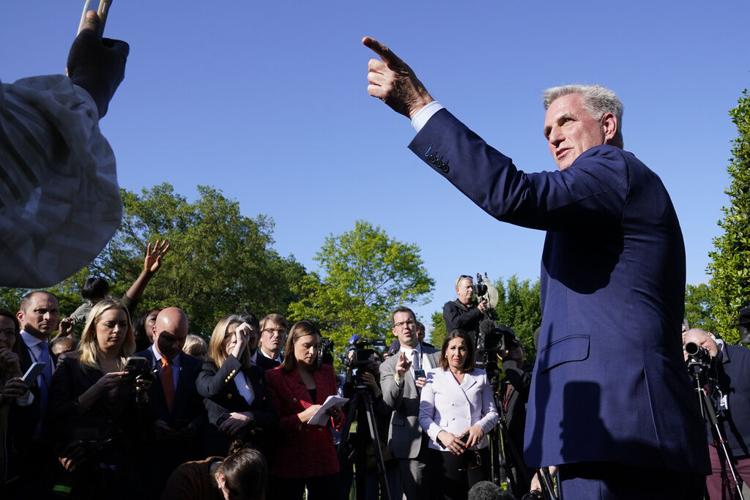
President Joe Biden met with legislative leaders on Tuesday, but neither side gave any indication of progress on the debt ceiling ahead of a potential June 1 default deadline. President Joe Biden met with House Speaker Kevin McCarthy, House Minority Leader Hakeem Jeffries, Senate Majority Leader Chuck Schumer, and Senate Minority Leader Mitch McConnell at the White House. Both sides accused each other of holding the economy hostage in the debt ceiling talks. McCarthy said he didn’t see any progress. Schumer said McCarthy refused to take default off the table and argued that a bipartisan solution was needed. Jeffries said additional meetings were planned. A short-term extension also appeared out of reach. “I don’t think a short-term extension does anything,” McCarthy said after the meeting. McCarthy put the ball in Schumer’s court. “My position is clear and reasonable,” the House Speaker posted on Twitter. “House Republicans have done their job to avoid a default and responsibly raise the debt limit. Democrats must now do the same.” Schumer said any path forward would need bipartisan support. House Republicans recently passed a bill to cut spending by nearly $5 trillion and raise the debt limit by about $1.5 trillion, or until March 31, 2024, whichever comes first. Republicans have said they won’t agree to raise the debt limit without spending cuts. Biden and Democrats have said Congress must raise the debt limit before discussing changes to spending or other budget changes. U.S. Treasury Secretary Janet Yellen said lawmakers must raise the debt ceiling by June 1 or risk a default on U.S. debt obligations. Republished with the permission of The Center Square.
U.S. could hit the debt ceiling as early as June 1, Treasury Secretary Janet Yellen says

Treasury Secretary Janet Yellen notified Congress on Monday that the U.S. could default on its debt as early as June 1, if legislators do not raise or suspend the nation’s statutory borrowing authority before then. In a letter to House and Senate leaders, Yellen urged congressional leaders “to protect the full faith and credit of the United States by acting as soon as possible” to address the $31.4 trillion limit on its legal borrowing authority. She added that it is impossible to predict with certainty the exact date of when the U.S. will run out of cash. “We have learned from past debt limit impasses that waiting until the last minute to suspend or increase the debt limit can cause serious harm to business and consumer confidence, raise short-term borrowing costs for taxpayers, and negatively impact the credit rating of the United States,” Yellen said in the letter. Also Monday, the Congressional Budget Office reported that it saw a greater risk of the U.S. running out of funds in early June. CBO Director Phillip L. Swagel said because of less-than-expected tax receipts this filing season and a faster IRS having processed already received returns, “Treasury’s extraordinary measures will be exhausted sooner than we previously projected.” In January, Yellen sent a letter to congressional leaders, stating that her department had begun resorting to “extraordinary measures” to avoid a federal government default. The Treasury said Monday it plans to increase its borrowing during the April to June quarter of this year, even as the federal government is close to breaching the debt limit. The U.S. plans to borrow $726 billion during the quarter. That’s $449 billion more than projected in January, due to a lower beginning-of-quarter cash balance and projections of lower-than-expected income tax receipts and higher spending. While Russia’s invasion of Ukraine remains a burden on U.S. economic growth, Treasury officials say the debate over the debt ceiling poses the greatest risk to the U.S. financial position. Eric Van Nostrand, acting assistant secretary for economy policy, said in a statement that “even if Congress ultimately raises the debt limit before a default occurs, the ensuing uncertainty could raise borrowing costs and induce other financial stress that would weaken our labor market and our standing in the world.” “There is no time to waste,” said Shai Akabas, director of economic policy at the Bipartisan Policy Center, which forecasts the so-called X-date when the government exhausts its extraordinary measures. His organization will also provide an updated X-date projection in the coming days, he says. “The U.S. government is again within mere months or even weeks of failing to make good on all its obligations. That is not a position befitting of a country considered the bedrock of the financial system, and only adds uncertainty to an already shaky economy.” Democrats and the White House are pushing for Congress to increase the federal debt limit. President Joe Biden wants the cap raised without negotiation. The House Republican majority has most recently passed a bill to secure spending cuts in exchange for a debt limit increase. Yellen said last week, at the Cap-to-Cap policy conference in Washington that “Congress must vote to raise or suspend the debt limit, and it should do so without conditions and it should not wait until the last minute. I believe that is a basic responsibility of our nation’s leaders to get this done.” Republished with the permission of The Associate Press.
New IRS leader Danny Werfel promises faster, easier tax filing process
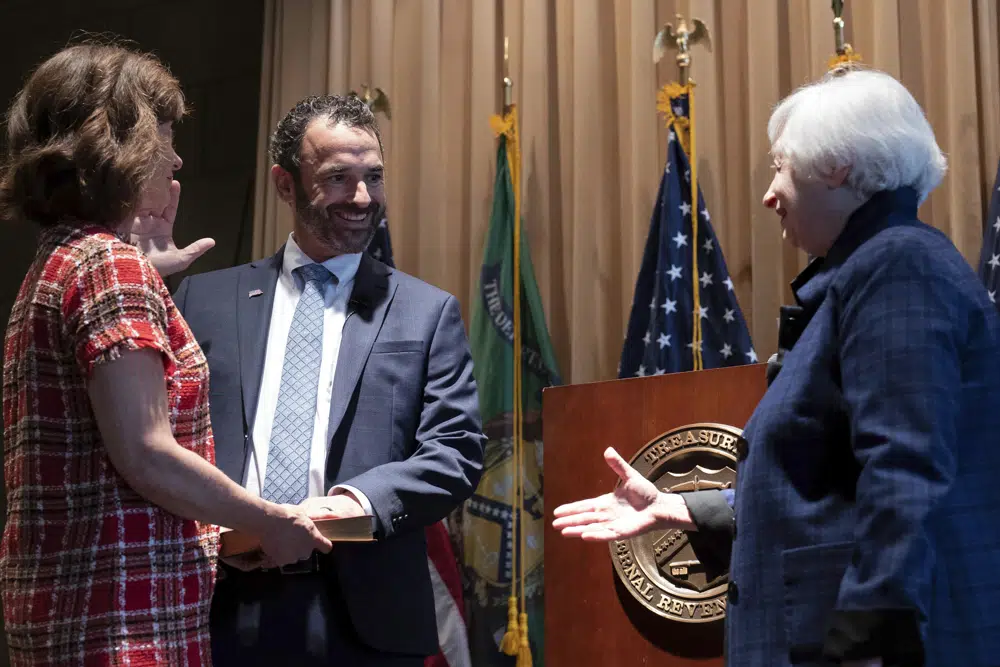
New IRS Commissioner Danny Werfel delivered a tax-season pledge Tuesday that the agency will use an $80 billion infusion of cash to become faster, more tech-savvy, and provide “real-world improvements” to taxpayers. Werfel, as he was ceremonially sworn in on Tuesday, said he would release a Strategic Operating Plan later this week laying out how the agency will use the money approved in last year’s Inflation Reduction Act “This is our moment in history to transform the IRS,” said Werfel, who began working at the agency in mid-March. “We have a great deal of work ahead of us to ensure a more modern and high-performing IRS that provides world-class services to taxpayers,” he said. Some of the planned improvements include hiring more people to end long call wait times, additional locations for IRS staff to provide in-person service, and expanded online accounts, so taxpayers and professionals will be able to address tax issues through electronic means, instead of paper mail. President Joe Biden nominated Werfel to steer the IRS as it receives the new funding, which has come with much political consternation. Republicans have suggested without evidence that the agency would use the new money to hire an army of tax agents with weapons. They also say the IRS would increase audits on middle-class taxpayers. Werfel navigated some of that controversy during his February confirmation hearing. He pledged before senators not to expand tax audits on businesses and households making less than $400,000 per year, as he faced rounds of questions before the Senate Finance Committee on how he would spend the agency’s big new infusion of money. He drew praise for being willing to leave a private consulting job to take on the top job at the troubled agency. Werfel formerly led Boston Consulting Group’s global public sector practice and has previously served as an acting IRS commissioner. Treasury Secretary Janet Yellen, who presided over Werfel’s swearing-in, said in a speech to IRS and Treasury employees that he will be tasked with “dramatically improving taxpayer service and ensuring that large corporations and the wealthy pay the taxes they owe.” “The IRS will invest in data and analytics to help the agency audit large corporations, high earners, and complex partnerships that have not paid their full bill,” Yellen said. “The technology will be complemented by hiring more top talent – including accountants and attorneys.” While the administration has showcased the boosting employee ranks with 5,000 new workers and investments in new technology, a March Treasury Inspector General for Tax Administration report on the 2022 tax season states that the “ongoing backlogs of tax returns and other account work continued to challenge the IRS during the 2022 Filing Season.” In a March 13 letter to employees, Werfel said, “I returned to government to work with you and focus on this tremendous opportunity we have with the resources available under the Inflation Reduction Act.” Republished with the permission of The Associated Press.
Rep. Mike Rogers and colleagues warn that Russians are helping China obtain plutonium
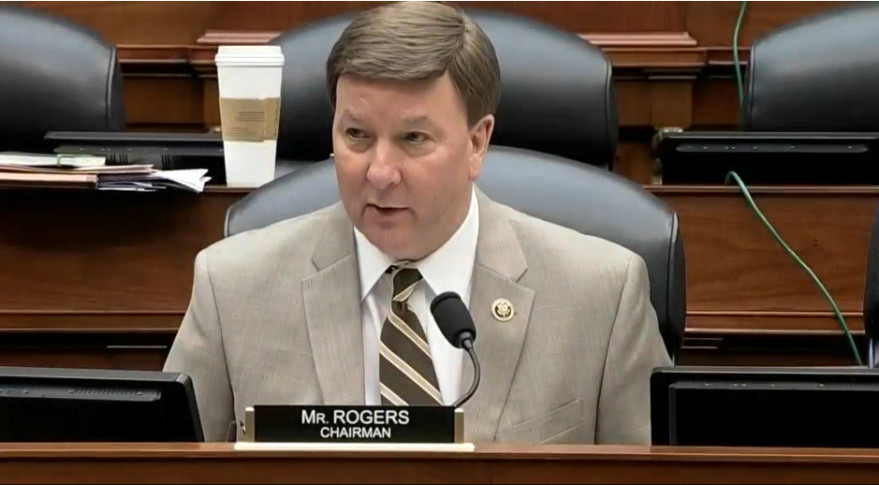
On Thursday, House Armed Services Committee Chairman Mike Rogers, House Foreign Affairs Committee Chairman Michael McCaul, and House Permanent Select Committee on Intelligence Chairman Mike Turner urged National Security Advisor Jake Sullivan, Secretary of State Antony Blinken, Secretary of Defense Lloyd Austin, Secretary of the Treasury Janet Yellen, Secretary of Energy Jennifer Granholm, Secretary of Commerce Gina Raimondo, and Director of National Intelligence Avril Haines, to utilize the full application of sanctions, export controls, and diplomacy, to hinder the nuclear cooperation between Russia’s Rosatom and China. In the letter, Rogers and the other Chairmen wrote, “Russia’s state-owned nuclear energy corporation, Rosatom, is helping the People’s Republic of China (PRC) acquire enough weapons-grade plutonium to fuel its strategic nuclear breakout. Beyond fueling the PRC’s strategic nuclear breakout, then-U.S. Strategic Command commander Admiral Charles Richard called “breathtaking,” Rosatom helps fuel Putin’s war efforts in Ukraine. We call on the Administration to view this cooperation for what it is, a direct threat to U.S. security and more evidence that Russia and China are working in tandem against the United States. The Administration should use all tools at its disposal to stop Rosatom and the PRC’s dangerous cooperation.” “Despite these malign activities, Rosatom’s position in the global market is only getting stronger,” Rogers et al. wrote. “The longer we wait to act, the more difficult it will be to address Rosatom’s nefarious and malign dealings. Putin uses these funds to fund his war machine and keep his favorite weapons programs on schedule. In short, every dollar and euro that Rosatom brings in directly finances the death and destruction we see in Ukraine, China’s nuclear weapon expansion, and is a direct threat to the American way of life.” The chairmen say in the letter is based on “Our classified correspondence from earlier this year.” “Russia’s role in China’s nuclear energy program is well documented,” the Chairmen wrote. “Rosatom opened an office in Beijing in 2016 and partnered extensively with the PRC’s China National Nuclear Corporation (CNNC) on major projects worth billions. On May 19, 2021, Xi Jinping and Vladimir Putin tuned in via video link to witness the commencement ceremony of two of the countries’ major nuclear energy cooperation projects, the Tianwan Nuclear Power Plant and Xudabao Nuclear Power Plant.” “Rosatom now appears to be supplying equipment and highly enriched uranium (HEU) for the PRC’ CFR-600 sodium-cooled fast breeder nuclear reactors, which will produce plutonium, fissile material critical to the PRC’s nuclear breakout,” the Chairmen wrote. “Russian deliveries of HEU to the PRC are slated to begin this year. The Department of Defense’s 2022 report to Congress on the Military and Security Developments Involving the People’s Republic of China noted the key role that increased weapons-grade plutonium production is key to the PRC nuclear program, stating: “The PRC is also supporting this expansion by increasing its capacity to produce and separate plutonium by constructing fast breeder reactors and reprocessing facilities.” The DoD report also cites the CFR-600 reactors and notes that each will be capable of producing “enough plutonium for dozens of nuclear warheads annually.” This buildup puts the PRC in violation of Article VI of the NPT, requiring states to make good-faith efforts to cease an arms race and to engage in good-faith arms control negotiations. Make no mistake, the PRC and Russia’s actions constitute an acceleration of their ongoing arms race.” According to the U.S. Intelligence National Threat Assessment, “China is building hundreds of new ICBM silos.” “Moscow continues to develop long-range nuclear-capable missile and underwater delivery systems meant to penetrate or bypass U.S. missile defenses,” said the report. “Russia is expanding and modernizing its large, diverse, and modern set of nonstrategic systems, which are capable of delivering nuclear or conventional warheads because Moscow believes such systems offer options to deter adversaries, control the escalation of potential hostilities, and counter U.S. and allied conventional forces.” In response to China and Russia’s modernization of their strategic forces, including the development of hypersonics, the U.S. is rushing to deploy hypersonics. The U.S. Air Force is expected to deploy Air-launched Rapid Response Weapon, a boost-glide vehicle, as soon as this fall. Russia has begun deploying its conventionally armed Kinzhal hypersonic missiles in Ukraine. Kyiv says that it is unable to defend itself against the strikes. Rogers is in his eleventh term representing Alabama’s Third Congressional District. To connect with the author of this story or to comment, email brandonmreporter@gmail.com.
