
Mo Brooks agrees to appear before January 6 Committee, if terms met

On Thursday, Congressman Mo Brooks sent a letter to members of the committee investigating the January 6th attack on the U.S. Capitol. Congressman Brooks said even though he has reservations about the Committee, he will voluntarily submit to a Committee deposition if certain requirements are met. According to the press release, Brooks is asking for the following terms: 1. Public Hearing. The deposition must be in public in a Capitol or House Office Building room of sufficient size and with sufficient resources to allow any interested media to attend and broadcast the event live, or otherwise transcribe and reveal (or play recordings of) the deposition. The Committee claims it is doing the public’s business. As such, the deposition should be in public. 2. January 6 Scope. The scope of deposition questions must be relevant to, and limited to, events surrounding the January 6, 2021, attack on the U.S. Capitol. 3. Questions by Congressmen. Questions may only be asked by Congressmen who serve on the Committee (no questions by staffers or other non-Congressmen). If a deposition is important enough to demand the time of a Congressman who is deposed, then it is similarly important enough to also demand the time of Committee Congressmen. 4. Document Disclosure. The Committee’s subject matter occurred 17 to 19 months ago. Everyone’s memory fades, little by little, with the passage of time. If the Committee is going to ask questions about content of any prior statements, electronic communications, written communications, or the like, for which there is electronic or written documentation, that documentation must be submitted to Congressman Brooks’ office in the Rayburn House Office building a minimum of seven days before the deposition, so that Congressman Brooks can refresh his memory of its contents. 5. Deposition Date Options. Congressman Brooks’ deposition must be conducted on a day when recorded votes are taken on the floor of the U.S. House of Representatives, i.e., a day when Congressman Brooks is already in Washington, DC for votes. The January 6 committee held its fifth meeting today and focused on Donald Trump’s sweeping pressure campaign that targeted not only statewide election officials but also his own executive branch agencies. “I understand the Committee wishes to depose me concerning January 6 events and have heard rumor the Committee “issued” a subpoena for my appearance. I have on countless occasions been in public venues in Alabama, in my Congressional office, on the House Floor, and numerous places in between, yet no Committee subpoena has been served. That is puzzling,” Brooks stated. “Quite frankly, I don’t believe I have knowledge of January 6 events that are not already known or that add to what the Committee already knows. As the Committee knows, I have already made multiple, lengthy sworn statements in the Eric Swalwell lawsuit in federal court and made multiple, lengthy written and oral statements elsewhere. Presumably, the Committee has already obtained and reviewed these statements,” Brooks continued. Brooks concluded, “I will voluntarily appear before the Committee to give sworn testimony providing the five requirements mentioned above are met. However, if the Committee rejects these basic requirements, then I hereby incorporate by reference all objections of each Congressman who has objected to and contested Committee subpoenas and, by this letter, hereby assert those objections to this Committee should this Committee properly serve a subpoena on me.”
Oath Keepers leader talks to January 6 panel from federal jail
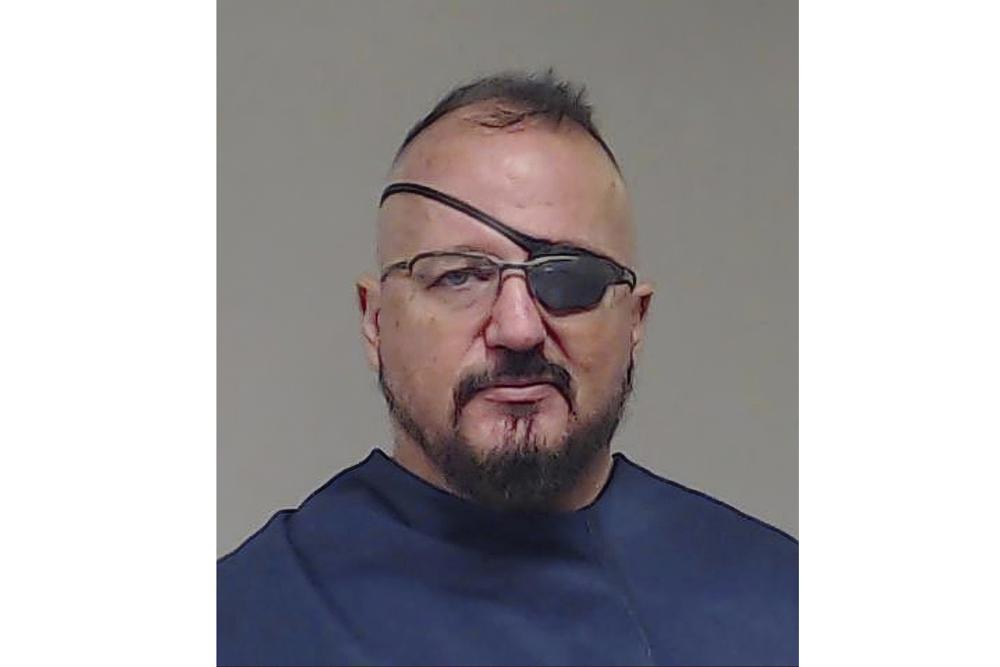
Stewart Rhodes, the founder and leader of the far-right Oath Keepers militia group, appeared remotely before the House committee investigating the January 6 Capitol insurrection on Wednesday from a federal jail where he is awaiting trial on sedition charges. The panel sought out Rhodes’ testimony even after he was arrested last month on charges that he plotted with others to attack the U.S. Capitol on January 6, 2021, to stop Congress from certifying President Joe Biden’s 2020 election victory. He and ten others were the first to be charged with seditious conspiracy for their roles in the violent insurrection. Rhodes has entered a not guilty plea. Rhodes’ appearance was confirmed by two of his lawyers, Jonathan Moseley and James Lee Bright. A spokesman for the January 6 committee declined to comment on the interview. “He is both answering some questions and not answering others under the Fifth Amendment and preserving his due process rights to a fair trial,” Moseley said in an email as the interview was ongoing. Rhodes’ testimony came as the panel also interviewed Jeffrey Clark, a former Justice Department official who aligned with former President Donald Trump ahead of the violent attack. The committee of seven Democrats and two Republicans has interviewed nearly 500 people, casting a wide net as they try to create the most comprehensive account yet of the worst attack on the U.S. Capitol in two centuries. It is unusual for Congress to interview federal inmates awaiting trial and for defendants to speak about their case since they could incriminate themselves. The indictment against Rhodes alleges that the Oath Keepers for weeks discussed trying to overturn the election results and prepared for a siege by purchasing weapons and setting up battle plans. The indictment alleges Oath Keepers formed two teams, or “stacks,” that entered the Capitol. The first stack split up inside the building to separately go after the House and Senate. The second stack confronted officers inside the Capitol Rotunda, the indictment said. Outside Washington, the indictment alleges, the Oath Keepers had stationed two “quick reaction forces” that had guns “in support of their plot to stop the lawful transfer of power.” Rhodes’ lawyers sought to keep him jailed in Texas if he isn’t going to be freed on bond, but a federal judge refused on Wednesday to block his transfer to Washington, D.C., where dozens of other Capitol riot defendants remain detained pending trial. The House panel was also interviewing the former Justice Department official, Clark, on Wednesday. Clark appeared for the interview in person after months of delays that the committee said was due to illness. The panel voted to recommend contempt charges against Clark in December after he appeared for a November 5 deposition but refused to be interviewed, citing Trump’s legal efforts to block the committee’s investigation. A vote of the full House on contempt charges was postponed after Clark’s lawyer said he would appear a second time. Clark met with Trump ahead of the insurrection and unsuccessfully pushed his then-supervisors to publicly announce that the department was investigating election fraud and direct certain state legislatures to appoint new electors, according to a Senate Judiciary Committee report released earlier this year. The report said that Trump’s pressure on the Justice Department culminated in a dramatic White House meeting at which the president ruminated about elevating Clark to attorney general. Trump did not do so after several aides threatened to resign, but he continued to push the baseless claims of fraud that were repeated by the violent mob of his supporters as they broke into the Capitol and interrupted Biden’s certification. State election officials, courts across the country, and even Trump’s own attorney general rejected the former president’s claims of widespread fraud. Clark’s lawyer said in December that his client would invoke his Fifth Amendment right against self-incrimination in the second interview. The chairman of the January 6 panel, Democratic Rep. Bennie Thompson of Mississippi, said then that Clark had offered “no specific basis” for asserting the 5th Amendment and that he viewed it as a “last-ditch attempt to delay the Select Committee’s proceedings.” But he said members would hear Clark out. Republished with the permission of the Associated Press.
Supreme Court allows January 6 committee to get Donald Trump documents
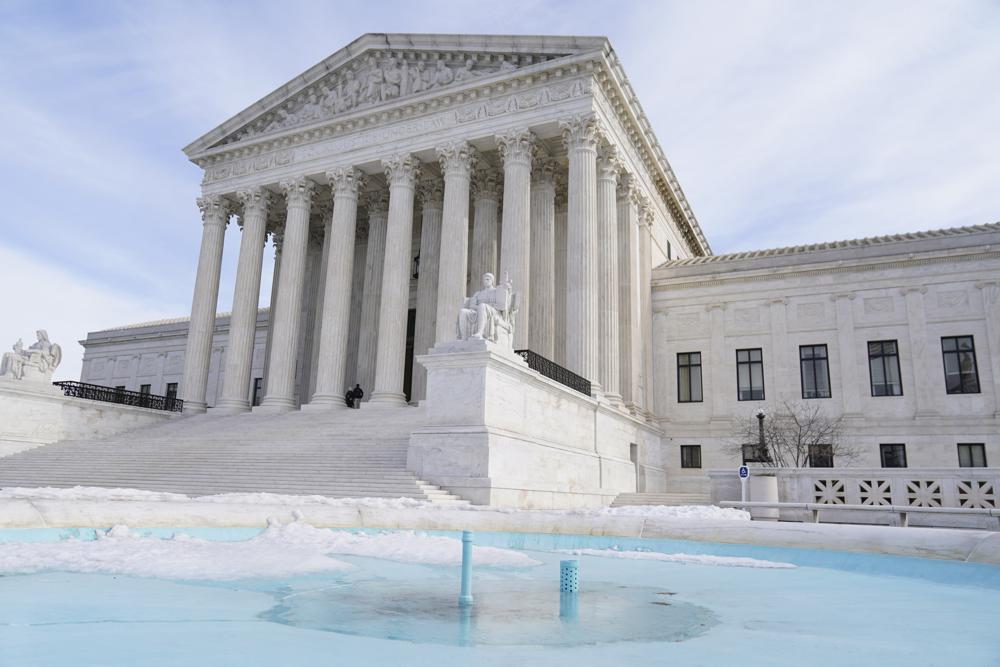
In a rebuff to former President Donald Trump, the Supreme Court is allowing the release of presidential documents sought by the congressional committee investigating the January 6 insurrection. The justices on Wednesday rejected a bid by Trump to withhold the documents from the committee until the issue is finally resolved by the courts. Trump’s lawyers had hoped to prolong the court fight and keep the documents on hold. Following the high court’s action, there is no legal impediment to turning over the documents, which are held by the National Archives and Records Administration. They include presidential diaries, visitor logs, speech drafts, and handwritten notes dealing with Jan. 6 from the files of former chief of staff Mark Meadows. The House committee agreed to defer its attempt to get some documents at the request of the Biden White House. The current administration was concerned that releasing all of the Trump administration documents sought by the committee could compromise national security and executive privilege. Alone among the justices, Clarence Thomas said he would have granted Trump’s request to keep the documents on hold. Trump’s attorneys had asked the high court to reverse rulings by the federal appeals court in Washington and block the release of the records even after President Joe Biden waived executive privilege over them. In an unsigned opinion, the court acknowledged there are “serious and substantial concerns” over whether a former president can win a court order to prevent disclosure of certain records from his time in office in a situation like this one. But the court noted that the appeals court determined that Trump’s assertion of privilege over the documents would fail under any circumstances, “even if he were the incumbent.” It said the issue of a former president’s ability to claim executive privilege would have to wait for another day. The court took issue with the conclusion of the appeals court that downplayed a former president’s interests, suggesting that the current president could, in essence, ignore his predecessor’s claims. Justice Brett Kavanaugh, who worked in the White House under President George W. Bush, wrote separately to argue that “a former President must be able to successfully invoke the Presidential communications privilege for communications that occurred during his Presidency, even if the current President does not support the privilege claim.” But Kavanaugh, a Trump appointee, did not object to the outcome Wednesday. Before and after the riot, Trump promoted false theories about election fraud and suggested the “real insurrection” was on Election Day, when he lost to Biden. Repeating arguments they made before lower courts, Trump’s attorneys had urged the justices to step in, arguing that the case concerned all future occupants of the White House. Former presidents had “a clear right to protect their confidential records from premature dissemination,” Trump’s lawyers said. “Congress cannot engage in meandering fishing expeditions in the hopes of embarrassing President Trump or exposing the President’s and his staff’s sensitive and privileged communications ‘for the sake of exposure,’” they added. But the House committee responded in its high court brief that although the facts of the case are “unprecedented,” the decision was “not a difficult one.” There was no explanation for the timing of the court’s action. But the National Archives told the appeals court and Trump’s lawyers that it would turn over some documents it asserted were not part of the court case on Wednesday absent a new court order. Also on Wednesday, the House committee investigating the Capitol insurrection issued subpoenas to leaders of an alt-right group who appeared at events promoting baseless claims of voter fraud after the 2020 election. The committee demanded records and testimony from Nick Fuentes and Patrick Casey — internet personalities who have promoted white supremacist beliefs — regarding what lawmakers say is their promotion of unsupported claims about the election and their presence on Capitol grounds on January 6, 2021. Since its creation last summer, the committee has interviewed almost 350 people as it seeks to create a comprehensive record of the attack and the events leading up to it. Republished with the permission of the Associated Press.
