
States adding to financial pressure on Russia over war
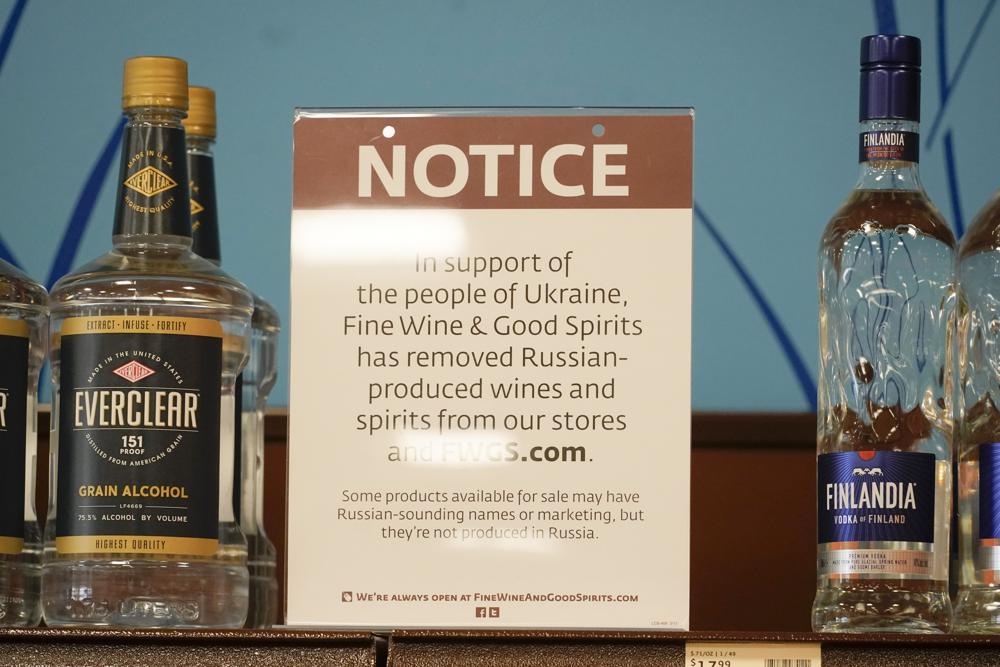
Seeking to tighten the financial squeeze on Russia over its war against Ukraine, governors, and lawmakers in numerous U.S. states were taking actions Monday to pull state investments from Russian companies while encouraging private entities to do the same. The effect of sanctions by U.S. states often pales in comparison to national ones, but state officials said they wanted to show solidarity with Ukraine and do what they could to build upon the penalties imposed on Russia by the U.S. government and other Western nations. Georgia House Speaker David Ralston, a Republican, got a bipartisan standing ovation Monday when he told representatives he would seek to have the state’s retirement funds quickly divested from any Russian assets. “I don’t know about y’all, but I don’t want one penny of Georgians’ money going to subsidize Vladimir Putin,” Ralston said. “While our role in international affairs is limited, we make clear we stand with those who want to live in peace.” Some actions have been largely symbolic. The governors of Arizona, Pennsylvania, and Tennessee ordered their capitols lit with the blue and yellow colors of Ukraine’s flag. Minnesota Gov. Tim Walz, a Democrat, and Ohio Gov. Mike DeWine, a Republican, issued a joint statement condemning Russia’s invasion of Ukraine as co-chairs of the presidentially appointed Council of Governors. Other state actions have potential teeth. On Monday, the Indiana House passed legislation that would block Russian-controlled businesses and nonprofits from acquiring property in Indiana for one year. It now goes to the Senate. “Indiana will not be a safe haven for ill-gotten Russian funds, nor for its oligarchs trying to find financial shelter in the wake of Putin’s unconscionable invasion of Ukraine,” Democratic state Rep. Ryan Dvorak said while proposing the amendment last week. New York Gov. Kathy Hochul signed an executive order Sunday forbidding her state from doing business with Russia. She ordered state agencies to divest money and assets from companies or institutions aiding Russia in its war against Ukraine. The Democratic governor also said New York would welcome Ukrainian refugees, noting that New York already is home to the largest Ukrainian population in the U.S. Pennsylvania lawmakers said Monday they will file legislation requiring state pension funds to pull investments connected to the Russian government and its critical supporters. The state Treasury Department also has begun divesting its minimal holdings in Russian-based companies. In a memo to fellow senators, Democratic state Sen. Sharif Street said Pennsylvania “must wield our economic power to ensure that Russia faces grave consequences for their flagrant violations of international law and human cooperation.” Pennsylvania House Majority Leader Kerry Benninghoff, a Republican seeking co-sponsors for the legislation, said state lawmakers “have a moral obligation to ensure that our public fund investments are not inadvertently supporting those who are engaging in an unprovoked invasion of their democratically elected neighbors.” Arkansas lawmakers have filed proposals authorizing banks in the state to freeze the assets of Russian oligarchs and to require a boycott of Russian-made goods. A bipartisan group of California lawmakers said Monday they also will introduce legislation to divest public money from Russian state entities. Colorado Gov. Jared Polis, a Democrat, has banned state agencies from doing business with Russian state-owned firms and their subcontractors. Colorado’s $61 billion state pension fund is pulling $8 million from a Russian state-owned bank identified in federal sanctions. Governors in Connecticut, New Jersey, Virginia, and Washington also have ordered a review of whether any state money is going to Russian companies or investments supporting the Russian government. A North Dakota investment board was due to meet later this week to discuss its investments in Russia. “If our state can put one brick in the wall around Putin, it will be a good thing, and we intend to do all that we can in this regard,” said Washington Gov. Jay Inslee, a Democrat. Two prominent Republican governors, Florida’s Ron DeSantis and South Dakota’s Kristi Noem, who are widely seen as angling for a White House bid, mostly took aim at President Joe Biden rather than issue executive orders targeting Russia. They criticized his energy policies and said that had made it difficult to slap sanctions on Russia’s exports of oil and gas. Other governors are seeking to sever good-will relationships between their home states and those in Russia. Republican Gov. Larry Hogan announced Monday that he’s dissolving Maryland’s decades-old sister-state relationship with Russia’s Leningrad region after the invasion of Ukraine. Virginia Gov. Glenn Youngkin, a Republican, asked the cities of Norfolk and Roanoke to end their sister city partnerships with Russian cities. Iowa Gov. Kim Reynolds, a Republican, called for an end to its sister-state relationship with Stavrapol Krai, Russia, and a strengthening of its sister-state relationship with Cherkasy Oblast, Ukraine. Several states have expressed a willingness to provide housing to Ukrainian refugees. The Washington state House and Senate each have added amendments to their budget proposals setting aside $19 million to provide services and temporary housing to refugees who come from Ukraine. Texas Gov. Greg Abbott, a Republican, posted on Twitter over the weekend that he has asked restaurants and retailers “ to voluntarily remove all Russian products from their shelves.” Officials in Alabama, Iowa, New Hampshire, Ohio, Pennsylvania, Utah, Vermont, Virginia, and West Virginia — all states that control the sale of alcohol — have directed Russian-sourced alcohol to be removed from store shelves. “Utah stands in solidarity with Ukraine and will not support Russian enterprises, no matter how small the exchange,” Republican Utah Gov. Spencer Cox said. Republished with the permission of the Associated Press.
U.S. has enough COVID-19 vaccines for boosters, kids’ shots
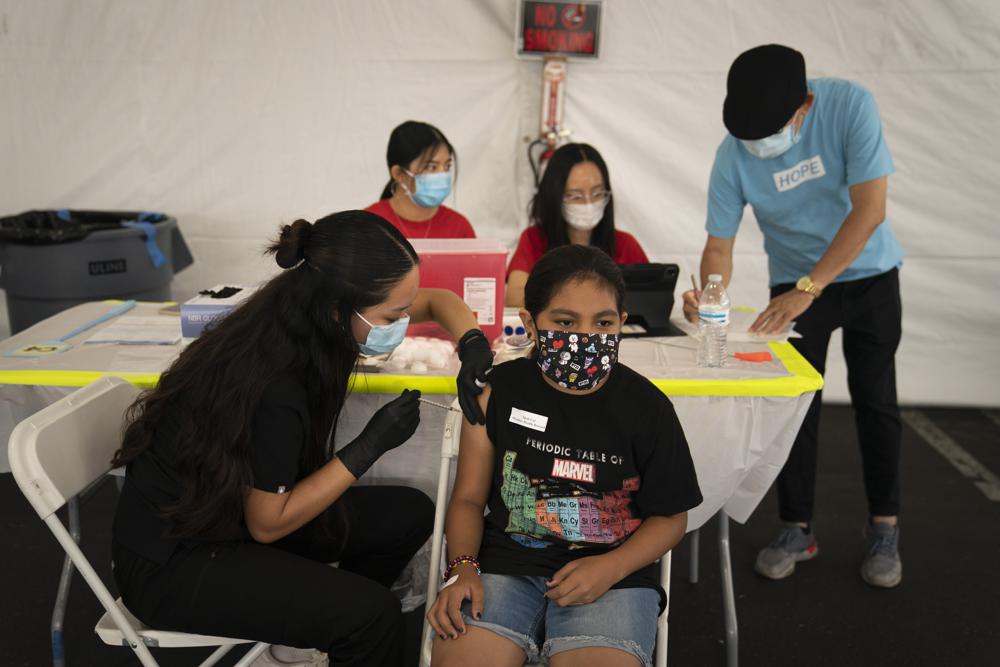
With more than 40 million doses of coronavirus vaccines available, U.S. health authorities said they’re confident there will be enough for both qualified older Americans seeking booster shots and the young children for whom initial vaccines are expected to be approved in the not-too-distant future. The spike in demand — expected following last week’s federal recommendation on booster shots — would be the first significant jump in months. More than 70 million Americans remain unvaccinated despite the enticement of lottery prizes, free food or gifts, and pleas from exhausted health care workers as the average number of deaths per day climbed to more than 1,900 in recent weeks. Federal and state health authorities said the current supply and steady production of more doses can easily accommodate those seeking boosters or initial vaccination, avoiding a repeat of the frustratingly slow rollout of COVID-19 vaccines across the country early this year. “I hope that we have the level of interest in the booster … that we need more vaccines,” Colorado Gov. Jared Polis said Tuesday. “That’s simply not where we are today. We have plenty of vaccines.” Robust supply in the U.S enabled President Joe Biden this week to promise an additional 500 million of Pfizer’s COVID-19 shots to share with the world, doubling the United States’ global contribution. Aid groups and health organizations have pushed the U.S. and other countries to improve vaccine access in countries where even the most vulnerable people haven’t had a shot. Among the challenges states face is not ordering too many doses and letting them go to waste. Several states with low vaccination rates, including Idaho and Kansas, have reported throwing away thousands of expired doses or are struggling to use vaccines nearing expiration this fall. While most vaccines can stay on the shelf unopened for months, once a vial is opened the clock starts ticking. Vaccines are only usable for six to 12 hours, depending on the manufacturer, according to the U.S. Food and Drug Administration. Moderna vaccines come in vials containing 11 to 15 doses. Pfizer vials contain up to six doses and Johnson & Johnson vials five doses. “We are going to see more doses that go unused over time,” said Wisconsin’s health secretary, Karen Timberlake. “They come in multidose files. They don’t come in nice, tidy individual single-serving packages.” State health officials said they have tried to request only what health care providers and pharmacies expect to need from the federal supply. Those numbers have dwindled since the vaccines became widely available in early spring. But U.S. officials — holding out hope that some of the unvaccinated will change their minds — are trying to keep enough vaccines in stock so all Americans can get them. That balancing act is tricky and can lead to consternation around the globe as the U.S. sits on unused vaccines while many countries in places such as Africa can’t get enough vaccines. “Somebody sitting in a country with few resources to access vaccines, seeing people in the U.S. able to walk into a pharmacy and get that vaccine and choosing not to, I’m sure that’s causing heartache,” said Jen Kates, senior vice president and director of global health and HIV policy for the Kaiser Family Foundation. Dr. Marcus Plescia, chief medical officer of the Association of State and Territorial Health Officials, which represents the public health agencies of all 50 U.S. states, the District of Columbia, and U.S. territories, said officials anticipate that on-hand doses of COVID-19 vaccines and manufacturers’ ability to supply more will meet needs across the country. “I think states have tried to plan as if everybody’s going to be offered a booster,” he said, suggesting they will be overprepared for the more narrow recommendations issued by the FDA and the Centers for Disease Control and Prevention. California, for example, estimated earlier this month that it would need to administer an extra 63 million doses by the end of 2022 — if initial shots for children under 12 were approved and boosters were open to everyone. U.S. health officials late Thursday endorsed booster shots of the Pfizer vaccine for all Americans 65 and older — along with tens of millions of younger people who are at higher risk from the coronavirus because of health conditions or their jobs. California, with nearly 40 million residents, has the lowest transmission rate of any state and nearly 70% of eligible residents are fully vaccinated. That leaves nearly 12 million people not vaccinated or not fully vaccinated. Dr. Mark Ghaly, California’s health secretary, said the state will rely largely on pharmacies and primary care providers to give boosters to seniors while some large counties and health care groups will use mass vaccination sites. In Pennsylvania, more than 67% of residents older than 18 are fully vaccinated. Alison Beam, acting secretary of health, said health authorities now have “two missions”: Continuing to persuade people to get vaccinated and serving those eager to receive a booster or initial shots. “Pennsylvania is going to be prepared,” Beam said. “And we’re going to have the right level of vaccine and vaccinators to be able to meet that demand.” Republished with the permission of the Associated Press.
Colorado governor argues Space Command, U.S. lands agency must stay
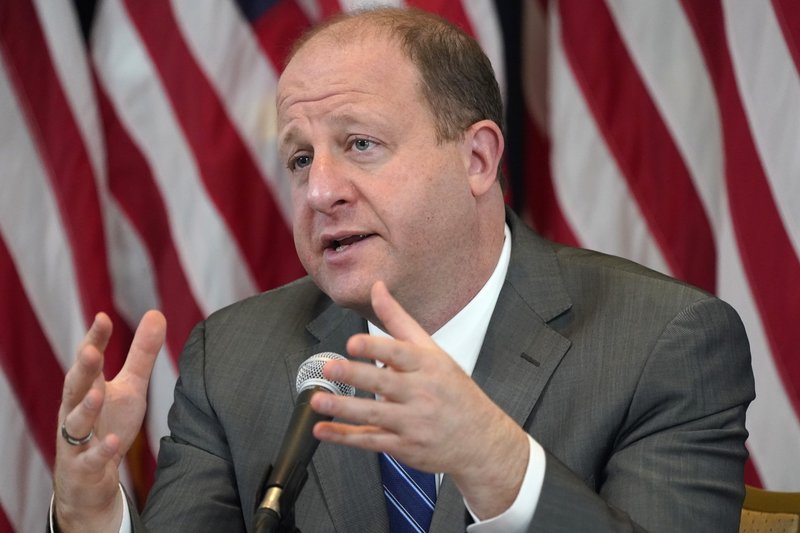
Gov. Jared Polis is urging the Biden administration to keep the headquarters of two key U.S. government agencies in Colorado, arguing the U.S. Space Command and the Bureau of Land Management (BLM) serve the nation’s interests better if they stay where they are. Polis’ office released a letter Thursday urging Defense Secretary Lloyd Austin to review the Donald Trump administration’s Jan. 13 announcement that the new U.S. Space Command headquarters will be in Huntsville, Alabama, home to the Army’s Redstone Arsenal. The command provisionally is located at Peterson Air Force Base in Colorado Springs. The Air Force announcement stunned Colorado leaders, who insisted U.S. military officials had urged then-President Trump to keep the command at Peterson. Polis also urged President Joe Biden in a letter to keep the BLM headquarters in Grand Junction. The Trump administration insisted that moving the BLM’s headquarters from Washington to Colorado would better serve the agency’s oversight of nearly 388,000 square miles (1 million square kilometers) of federal public land — 99% of it in the West. “I implore you to think of this as an opportunity for better communication, better policy, and better government, rather than just associating this with the many other misguided legacies of your predecessor,” the Democratic governor wrote. Republished with the permission of the Associated Press.
US Space Command site to be located in Huntsville, Alabama
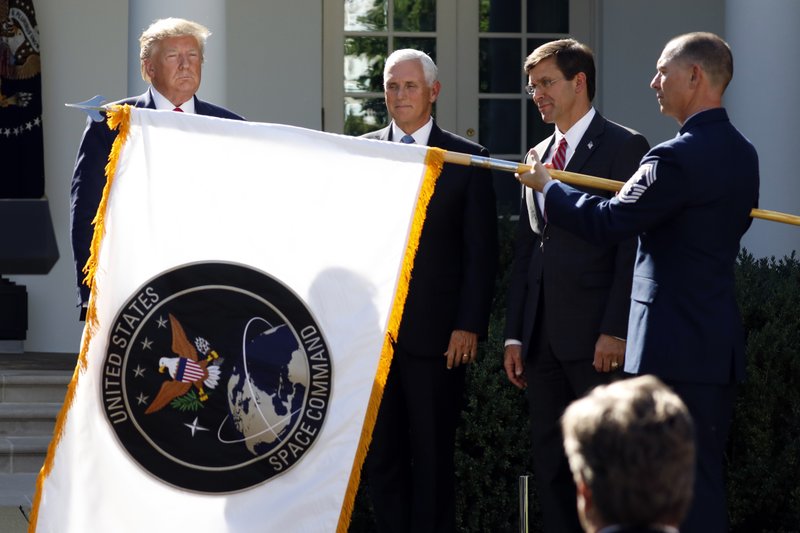
The U.S. Air Force announced Wednesday that the new U.S. Space Command headquarters will be in Huntsville, Alabama, after the state was selected over five others competing for the project, including Colorado, where Space Command is provisionally located. The role of Space Command is to conduct operations such as enabling satellite-based navigation and troop communication and providing warning of missile launches. That is different from the Space Force, which is a distinct military service like the Army, Navy, Air Force, Marine Corps, and Coast Guard. “I couldn’t be more pleased to learn that Alabama will be the new home to the United States Space Command,” Alabama Republican Gov. Kay Ivey said in a statement. “Our state has long provided exceptional support for our military and their families as well as a rich and storied history when it comes to space exploration,” she said. Huntsville’s nickname, Rocket City, is thanks largely to Wernher von Braun and his team of fellow German-born rocketeers who settled there in the 1950s. The city has long been home to the Army’s Redstone Arsenal and NASA’s Marshall Space Flight Center. Air Force Secretary Barbara Barrett, an appointee of President Donald Trump, announced the decision days before leaving office. Colorado officials lambasted the move, saying military officials had recommended to Trump that Space Command remain at the Peterson Air Force Base in Colorado Springs, but they were “overruled for politically motivated reasons.” They did not say what those alleged political reasons were. Trump won Alabama in the November election and President-elect Joe Biden won Colorado. “This move threatens jobs, could cause serious economic damage, and upend the lives of hundreds of military and civilian families that were counting on U.S Space Command staying at home in Colorado Springs as well as harm military readiness,” Democratic Colorado Gov. Jared Polis and Lt. Gov. Dianne Primavera said in a statement. In a letter, U.S. Rep. Doug Lamborn of Colorado urged Biden to reverse the decision upon taking office, saying moving Space Command from Colorado would “damage America’s national security” at a time when Russia and China are actively competing with the U.S.’s space capabilities. U.S. Rep. Mo Brooks of Alabama said Barrett told him the decision was based “solely on merit and the interests of national security.” Brooks suggested politics will be at play if the site gets moved back to Colorado under the new administration. “Partisan politics should not play a role in national security. Time will tell what happens in a red state when the federal government is totally dominated by Democrats,” the Republican congressman said. The Secretary of the Air Force said Redstone Arsenal in Huntsville had been selected for the new headquarters. The city was chosen after site visits to six states that compared factors such as infrastructure capacity, community support, and costs to the Department of Defense. Redstone Arsenal offered a facility to support the headquarters, at no cost, while the permanent facility is being constructed. The Department of the Air Force said the decision to move to Huntsville will become final pending the results from the required environmental impact analysis. That is expected in the spring of 2023. The headquarters will remain in Colorado until then. Other finalists for the site were Kirtland Air Force Base in New Mexico, Offutt Air Force Base in Nebraska, Peterson Air Force Base in Colorado, Port San Antonio in Texas, and Patrick Air Force Base in Brevard County, Florida. Those sites will remain alternative locations until the final announcement. Trump in 2019 authorized the creation of the U.S. Space Command to preserve American dominance on what he called “the ultimate high ground.” Huntsville Mayor Tommy Battle said the city is honored to have been selected. Ivey in a tweet thanked U.S. Sen. Richard Shelby, former U.S. Sen. Doug Jones, and local officials for advocating for the site to be in Alabama. Republished with the permission of the Associated Press.
1st reported US case of COVID-19 variant found in Colorado
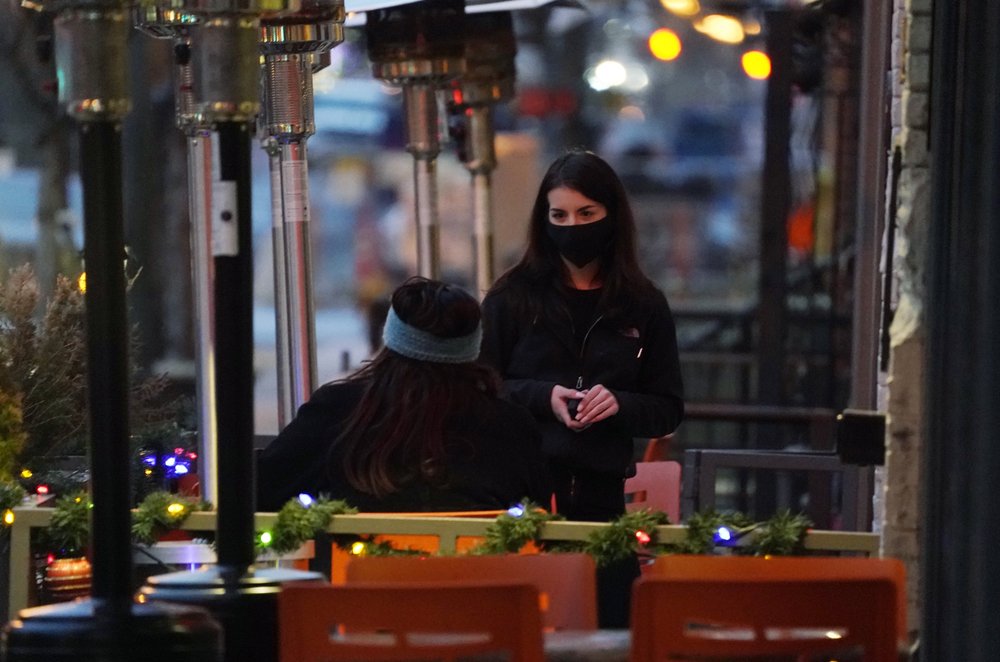
The first reported U.S. case of the COVID-19 variant that’s been seen in the United Kingdom has been discovered in Colorado, Gov. Jared Polis announced Tuesday. The variant was found in a man in his 20s who is in isolation southeast of Denver in Elbert County and has no travel history, state health officials said. Elbert County is a mainly rural area of rolling plains at the far edge of the Denver metro area that includes a portion of Interstate 70, the state’s main east-west highway. Colorado Politics reported there is a second suspected case of the variant in the state according to Dwayne Smith, director of public health for Elbert County. Both of the people were working in the Elbert County community of Simla. Neither of them are residents of that county — expanding the possibility of the variant’s spread throughout the state. The Colorado State Laboratory confirmed the virus variant, and the Centers for Disease Control and Prevention was notified. Scientists in the U.K. believe the variant is more contagious than previously identified strains. The vaccines being given now are thought to be effective against the variant, Colorado health officials said in a news release. Public health officials are investigating other potential cases and performing contact tracing to determine the spread of the variant throughout the state. “There is a lot we don’t know about this new COVID-19 variant, but scientists in the United Kingdom are warning the world that it is significantly more contagious. The health and safety of Coloradans is our top priority, and we will closely monitor this case, as well as all COVID-19 indicators, very closely,” Polis said. Polis and state health officials are expected to hold a news conference Wednesday. The discovery of the new variant led the CDC to issue new rules on Christmas Day for travelers arriving to the U.S. from the U.K., requiring they show proof of a negative COVID-19 test. Worry has been growing about the variant since the weekend before Christmas when Britain’s prime minister said a new strain of the coronavirus seemed to spread more easily than earlier ones and was moving rapidly through England. The nation’s first variant case was identified in southeast England. Dozens of countries barred flights from the U.K., and southern England was placed under strict lockdown measures. Scientists say there is reason for concern but the new strains should not cause alarm. Japan announced Monday it would bar entry of all nonresident foreign nationals as a precaution against the new strain. New variants of the coronavirus have been seen almost since the virus was first detected in China nearly a year ago. It is common for viruses to undergo minor changes as they reproduce and move through a population. The slight modifications are how scientists track the spread of a virus from one place to another. But if the virus has significant mutations, one concern is that current vaccines might no longer offer the same protections. Although that’s a possibility to watch for over time with the coronavirus, experts say they don’t believe it will be the case with the latest variant. The U.K. variant, known as B.1.1.7, has also been found in Canada, Italy, India and the United Arab Emirates. South Africa has also discovered a highly contagious COVID-19 variant that is driving the country’s latest spike of confirmed cases, hospitalizations and deaths. The variant, known as 501.V2, is dominant among the newly confirmed infections in South Africa, according to health officials and scientists leading the country’s virus strategy. ___ This story has been corrected to refer to the announcement of the new variant by the British Prime Minister taking place the weekend before Christmas. Republished with the permission of the Associated Press.
