
New legislation would revoke tax-exempt status of nonprofits funding Hamas, other terrorists

Proposed new legislation would revoke the tax-exempt status of any nonprofit organization that is providing material support for terrorist groups. The bipartisan bill, introduced by U.S. Rep. David Kustoff, R-Tenn., and U.S. Rep. Brad Schneider, D-Ill., comes out of the House Ways and Means Committee, which unanimously approved the legislation last week. “The abuse of the charitable system for support for terrorist organizations is sickening,” Cliff Smith, Washington Project Director at the Middle East Forum, said in a statement. “Unsuspecting donors deserve better, and the leaders of these charities who take advantage of them certainly don’t deserve to keep their charitable status.” The issue has been thrust to the forefront after the Oct. 7 attack by the terrorist group, Hamas, on Israel that left more than 1,400 dead and hundreds captured, including Americans. Since that attack, pro-Hamas and anti-semitic demonstrations have broken out around the country and the world. Several top U.S. universities came under fire for refusing to condemn the worst elements of those protests, and now lawmakers are considering taking a closer look at just who receives federal funds and if those funds make their way to terrorist-supporting groups. The committee pointed to one instance where the tax-exempt charity, the Holy Land Foundation, funneled $12.4 million to Hamas before being shut down about 20 years ago. “The Committee learned of other groups, currently operating in plain sight in America, led by many of the same individuals as the Holy Land Foundation,” the committee said in a statement. Federal foreign aid efforts have wrestled with this issue as well, making clear it is difficult to send financial aid to Gaza without it falling into the hands of Hamas. In fact, the Office of Inspector General for the USAID, the federal foreign aid agency, released a “situational alert” earlier this year saying it has “identified this area as high-risk for potential diversion and misuse of U.S.-funded assistance.” “It is USAID OIG’s investigative priority to ensure that assistance does not fall into the hands of foreign terrorist organizations (FTOs) including, but not limited to, Hamas,” the federal watchdog said. Currently, efforts to block funding to Hamas and other terror groups have focused on overseas work. Under the new legislation, U.S. nonprofits making that same mistake could lose their tax-exempt status. “It is unconscionable that American taxpayers are forced to provide indirect support for terrorist groups, giving allied organizations and their donors generous tax breaks intended for charitable activities,” Rabbi Yoel Schonfeld, Coalition for Jewish Values president, said in a statement. “There is nothing charitable about supporting atrocities, and there should be no tax exemptions for terror.” It remains unclear if and when the new bill will get a vote on the House floor. “Our tax code should not be used to support or finance violent terrorism around the world,” House Ways and Means Chair Rep. Jason Smith, R-Mo., said at the committee meeting on the bill last week. “This bill revokes tax-exempt status for ‘terrorist supporting organizations,’ defined as groups that have provided material support or resources to a listed terrorist organization within the past three years.” Republished with the permission of The Center Square.
New speaker lays out legislative agenda, receives broad support from party
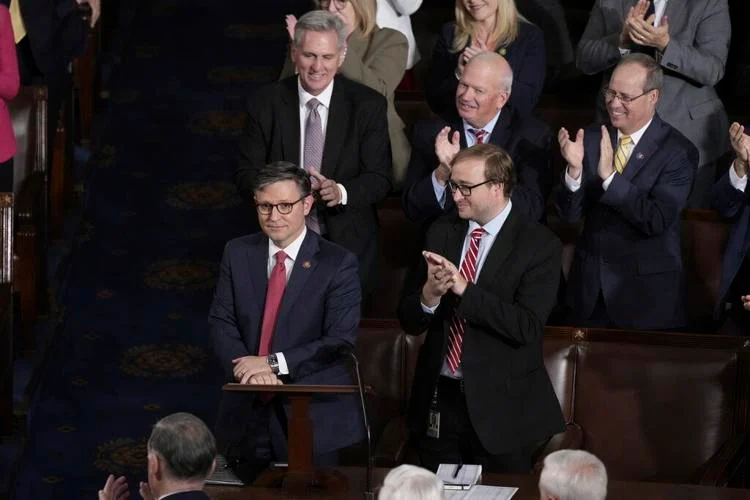
By Casey Harper | The Center Square U.S. House Speaker Mike Johnson, R-La., has laid out his vision for the House and legislative goals, but he faces the daunting task of reuniting a divided party in a slim majority and funding the government before the partial shutdown deadline in the middle of November. Before the vote to elect Johnson as speaker on Wednesday, Johnson sent a memo to his fellow Republicans asking for their support and promising an “ambitious” legislative agenda. “In the interest of time, I would propose that we seek consensus to discharge the last two appropriations bills-Labor, HHS, and Education and Commerce, Justice, and Science-from the Appropriations Committee,” Johnson said. “We should also create a new working group to address Member concerns with the Agriculture, Rural Development, and Food and Drug Administration appropriations bill. As all of this is being completed, if another stopgap measure is needed to extend government funding beyond the November 17 deadline, I would propose a measure that expires on January 15 or April 15 (based on what can obtain Conference consensus), to ensure the Senate cannot jam the House with a Christmas omnibus.” Johnson went on to suggest an immediate schedule for the House floor: Week of October 23: Energy and Water Week of October 30: Legislative Branch, Interior and Environment, THUD Week of November 6: FSGG, CIS Week of November 13: Labor/HHS, Ag In his acceptance speech, Johnson said support for Israel would be a top priority. Johnson, though, has been skeptical of more funding for Ukraine, which could complicate President Joe Biden’s latest request for about $60 billion for the embattled nation. “Our nation’s greatest ally in the Middle East is under attack,” Johnson said in his acceptance speech. “The first bill that I’ll bring to this floor in just a little while will be in support of our dear friend, Israel. And we’re overdue in getting that done.” At the same time, Johnson must deal with a controversial item almost immediately: a motion filed by Rep. Marjorie Taylor Greene, R-Ga., to censure Rep. Rashida Tlaib, D-Minn., for Tlaib’s “antisemitic activity, sympathizing with terrorist organizations” like Hamas and leading an insurrection at the U.S. Capitol, an apparent reference to an Oct. 18 protest where anti-Israel protestors took over a House office building. Because of House rules, Johnson must take the motion up for a vote, which is politically charged because of its direct comparison to the Jan. 6 storming of the Capitol and the attacks Democrats have levied against Republicans to this day over the incident. Notably, former President Donald Trump faces an indictment and criminal charges for his role in protesting the results of the 2020 election, which critics say led to the Jan. 6 protests. A vote on that censure resolution is expected next week. “Tlaib led a pro-Hamas insurrection into the Capitol complex, has repeatedly displayed her anti-Semitic beliefs, and shown her hatred for Israel,” Green wrote on X. “She must be held accountable and censured.” After his election as speaker, Republicans were quick to praise Johnson, who received unanimous Republican support, after he received the speakership. “House Speaker Mike Johnson is a proven conservative who is honorable, smart, and will do a great job leading the House Republican Conference,” Ways and Means Committee Chairman Jason Smith, R-Mo., said in a statement. “I’m excited to work hand-in-hand with Speaker Johnson to advance the policies we need to secure our southern border, increase support for Israel, and bring relief to working-class Americans who are struggling to get by in President Joe Biden’s economy.” Rep. Nancy Mace, R-S.C., was one of the handful of Republicans who voted to oust former House Speaker Kevin McCarthy, R-Calif., which kicked off more than three weeks of scrambling to find a new speaker. She released a statement after Johnson’s vote saying that while the process was difficult, it was “well worth it.” “Eight of us had the audacity to listen to the American people and vote to vacate the former Speaker,” she said.“We told the American people they deserved someone who would be honest and represent their interests, not Washington’s. “While we fully understand we don’t always see eye-to-eye with Mike Johnson, today the American people can finally be proud of their speaker,” she added. Johnson thanked his supporters this week and called for leadership with “bold, decisive action.” “It has been an arduous few weeks and a reminder that the House is as complicated and diverse as the people we represent,” Johnson wrote on X. “The urgency of this moment demands bold, decisive action to restore trust, advance our legislative priorities, and demonstrate good governance. Our House Republican Conference is united, and eager to work. As Speaker, I will ensure the House delivers results and inspires change for the American people. We will restore trust in this body.” Trump, who was actively campaigning for and against different speaker nominees, congratulated Johnson when talking to reporters, saying, “he will be a great speaker of the House.” Johnson promised an array of accomplishments upon taking the speakership, but whether he can succeed in the divided House remains to be seen. “We will advance a comprehensive conservative policy agenda, combat the harmful policies of the Biden Administration, and support our allies abroad,” Johnson said in a statement after winning the speakership. “And we will restore sanity to a government desperately in need of it. Let’s get back to work.” Republished with the permission of The Center Square.
Republicans investigate alleged political interference in Hunter Biden case

Two key House Committees issued subpoenas for Biden administration officials as part of an investigation into allegations of political interference on behalf of Hunter Biden, who faces an array of legal issues. Republican leadership on the House Committee on Ways and Means and House Committee on the Judiciary issued the subpoenas for IRS employees and two FBI agents. Whistleblower testimony about U.S. Attorney for the District of Delaware David Weiss, who is now special counsel in the Hunter Biden case, is what sparked the lawmakers’ inquiry. In particular, whistleblowers say Weiss told personnel from the IRS and DOJ that he had tried to bring charges against Hunter Biden multiple times and in multiple jurisdictions but was denied. House Ways and Means Chairman Jason Smith, R-Mo., and Judiciary Chairman Jim Jordan, R-Ohio, said in a joint statement that the whistleblower allegations point to “political interference in the investigation into Hunter Biden’s foreign influence peddling and tax evasion.” “Unfortunately, the Biden Administration has consistently stonewalled Congress,” the lawmakers said. “Our duty is to follow the facts wherever they may lead, and our subpoenas compelling testimony from Biden Administration officials are crucial to understanding how the President’s son received special treatment from federal prosecutors and who was the ultimate decision maker in the case.” The whistleblower testimony contradicts both Weiss and Attorney General Merrick Garland, who recently led Congress to believe that Weiss was the final decision-maker in the case. Hunter Biden is currently expected to face trial after his plea deal over tax and gun-related charges fell apart over questions of whether he would be immune to future prosecution for other alleged crimes. The subpoenas come after two IRS whistleblowers testified before the House Oversight Committee in July, saying that the DOJ acted improperly in the Hunter Biden investigation. As The Center Square previously reported, the testimony came from Supervisory Special Agent Gary Shapley and Criminal Investigator Joseph Ziegler, both IRS employees with a total 27 years of experience at the agency. They said that Hunter Biden’s preferential treatment was unlike than other cases in their decades of experience. Notably, they testified that Assistant U.S. Attorney Lesley Wolf helped prevent investigators from conducting an interview with President Joe Biden along with a search warrant of the Biden residence in Delaware. The pair also testified that they tried to report the alleged abuse of power using the standard channels but ultimately felt compelled to blow the whistle. Ziegler said in his testimony that there was abuse of authority, ethical violations and “gross mismanagement” in the Hunter Biden case and called for a special counsel to investigate. Shapley testified that in the Hunter Biden case, evidence was kept hidden from investigators and that decisions were repeatedly made that benefited Hunter Biden and the president. Shapley called it an “undeniable pattern of preferential treatment and obstruction of the normal investigative process.” Smith and Jordan said they tried normal interview requests with the IRS and FBI employees but were denied. How the federal employees will respond to the subpoenas remains to be seen. In the past, Trump administration officials ignored Congressional subpoenas. “Americans deserve to know the truth, especially now that Attorney General Garland has appointed as special counsel the same U.S. Attorney who oversaw Hunter Biden’s sweetheart plea deal and botched the investigation into his alleged tax crimes,” Smith and Jordan said. Republished with the permission of The Center Square.
Local governments are spending billions of pandemic relief funds, but some report few specifics
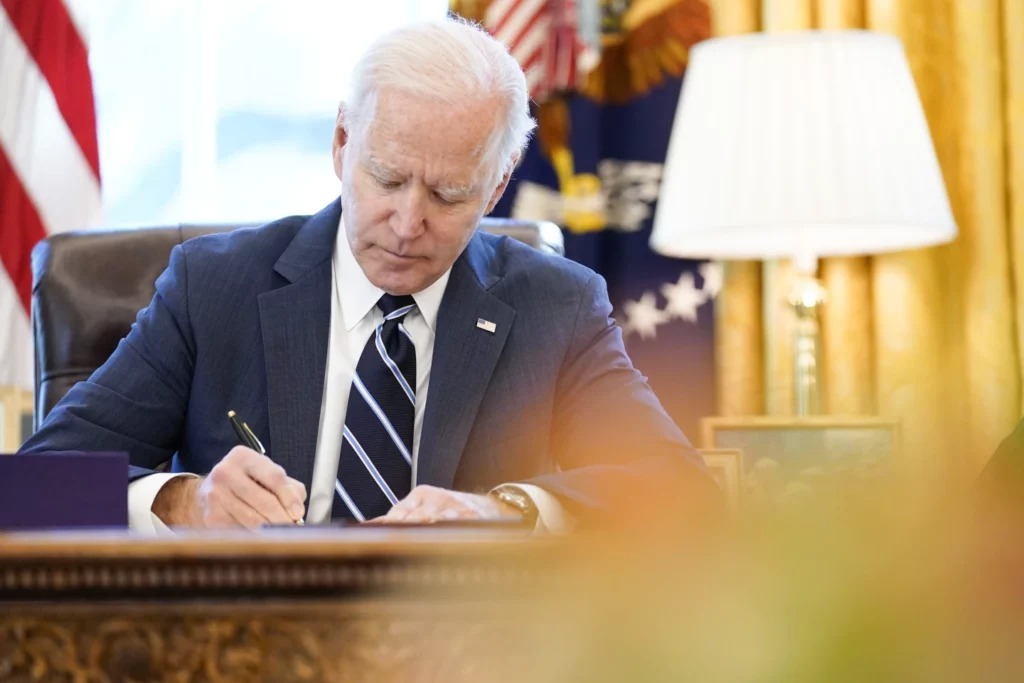
Joplin officials say they have big plans for $13.8 million of pandemic relief funds the tornado-ravaged southwestern Missouri city received under a two-year-old federal law. Yet the latest federal records show none of the money has been spent — or even budgeted. In fact, about 6,300 cities and counties — nearly 1 in 4 nationwide — reported no expenditures as of this spring, according to an Associated Press analysis of data released by the U.S. Treasury Department. About 5,100 of those listed have no projects — either planned or underway. So what gives? Is the money not needed? Are cities just sitting on it? Local and federal officials told the AP in interviews that the publicly available data is misleading — pockmarked by differing interpretations over exactly what must be reported, lagging in timeliness, and failing to account for some preliminary planning. Critics contend it’s an indication of a flawed pandemic response. Federal officials estimate that governments have spending commitments for more than 80% of the funds, even if that’s hard to tell from their reporting requirements. Joplin, for example, plans to spend its pandemic aid on housing projects, high-speed internet, streets, a bicycle park, public safety equipment, and more. The City Council approved the plan last month. But it won’t show up on federal reports until October. The city, which was devastated in 2011 by one of deadliest tornadoes in U.S. history, took a deliberate approach with its pandemic aid to develop “really transformational projects,” said Leslie Haase, the city’s finance director. Over the past couple of years, it leveraged the pandemic aid to win millions of additional dollars of state grants. With the combined funds, it plans to relaunch an expired post-tornado program that helps people make down payments on homes. The city also plans to spend millions of dollars to repair or demolish old houses. “I think by the time 2026 rolls around, Joplin will be a better community,” Haase said. The $1.9 trillion American Rescue Plan — passed in 2021 by a Democratic-led Congress and signed by President Joe Biden — contained $350 billion of flexible aid to states, territories, tribes, counties, cities, and towns. The Biden administration says the money was intended to provide both immediate aid amid a health crisis and a longer-term boost for communities. Governments must obligate that money for projects by the end of next year and spend it by the close of 2026. As of their April reports, more than 26,500 governments collectively had spent 43% of their funds and approved plans for spending 77% of the money, according to the AP’s analysis. The actual amount of spending commitments likely is well over 80% when accounting for lag times and different reporting approaches taken by local governments, said Gene Sperling, the White House American Rescue Plan coordinator “What you see across the country is that counties, cities, states overwhelmingly have committed these funds, are using them, are on track to meet their legal deadlines to have all the funds obligated by the end of 2024,” Sperling said. But Republicans and fiscal conservatives have questioned whether the spending is necessary, noting that most states rebounded quickly from an initial tax plunge during the pandemic to post large budget surpluses. “Although the Left claimed their $2 trillion bill was designed to fight COVID, they wasted hundreds of billions of Americans’ hard-earned tax dollars on ridiculous things,” Republican U.S. Rep. Jason Smith, chairman of the House Ways and Means Committee, said in a statement to the AP. Among other things, the money helped finance an upscale hotel in Florida, a minor league baseball stadium in New York, and prisons in Alabama — drawing outrage from some members of Congress. Some governments waited to do anything with the money until the Treasury Department finalized its rules in April 2022. Details are lacking on how some governments are using their funds because the Treasury relaxed reporting requirements for any money categorized by state or local officials as a replacement for lost revenues. According to the AP’s analysis, more than 6,000 local governments categorized their entire federal allotment as “revenue replacement” — often taking advantage of a Treasury rule that allows up to $10 million of assumed revenue loss without having to prove it. Though they can provide more details if they choose, governments categorizing all their federal aid as replacement revenue only have to report it as one project, the Treasury told the AP. But some didn’t even do that. The Denver suburb of Lakewood, Colorado, claimed its entire $21.6 million allotment as a revenue replacement since it had dipped into reserves to pay police during the pandemic. It reported no projects. Yet the federal aid helped the city to construct sidewalks, replace computer software, upgrade the police radio system, and make fire and safety improvements to a civic center, among other things, said Lakewood Chief Financial Officer Holly Bjorklund. Those were “essential things that really needed to be done and would cost more if we waited longer to address them,” she said. Maryland’s capital city of Annapolis also described no projects in its April report. But Annapolis already has used $1.2 million of its $7.6 million allotment as a revenue replacement for its depleted public transit funds, said city spokesperson Mitchelle Stephenson. It expects to tap more of the federal aid for city operations in the 2024 budget. The Treasury’s guidance about how to report revenue replacement funds used for government services wasn’t very clear, said Katie Buckley, federal funding assistance program director for the Vermont League of Cities and Towns. But Buckley said she advised local officials to report it all as one project for government services, and then list what that included. Counting the federal money as replacement funding for government services shouldn’t relieve local officials of describing what they did with it — even if it just went toward salaries or office supplies, said Sean Moulton, senior policy analyst at the nonprofit Project on Government Oversight. “This is taxpayer money and a lot of it,” said Moulton,
Republicans expand their Hunter Biden investigation by seeking an interview with the lead prosecutor

House Republicans on Thursday requested voluntary testimony from nearly a dozen Justice Department officials involved in the investigation of President Joe Biden’s son Hunter Biden as GOP lawmakers widen their scrutiny into what they claim is improper interference by the agency. Leaders of the Republican-controlled House Judiciary, Oversight and Accountability, and Ways and Means committees asked in a letter to Attorney General Merrick Garland for nine officials from the Justice Department and two from the FBI to appear for the interviews to address recent allegations made by two IRS employees who worked on the federal investigation into Hunter Biden’s taxes and foreign business dealings. “Recent startling testimony from Internal Revenue Services whistleblowers raises serious questions about the Department’s commitment to evenhanded justice and the veracity of assertions made to the Committee on the Judiciary,” Reps. Jim Jordan of Ohio, James Comer of Kentucky, and Jason Smith of Missouri wrote in the letter obtained by The Associated Press. The individuals named in the letter include David Weiss, the U.S. attorney in Delaware in charge of the investigation, as well Assistant U.S. Attorney Lesley Wolf of Delaware and the top federal prosecutor for the District of Columbia Matthew Graves. Garland said last week that the Justice Department will not object to Weiss testifying to Congress. A department spokesperson confirmed receipt of the letter but declined further comment. The request comes about a week after Biden, 53, reached an agreement with the government to plead guilty to misdemeanor tax offenses. The plea deal would also avert prosecution on a felony charge of illegally possessing a firearm as a drug user, as long as Biden adheres to conditions agreed to in court. Days later, the House Ways and Means Committee, led by Smith, voted to publicly disclose congressional testimony from the IRS employees. The testimony from Greg Shapley and an unidentified agent detailed what they called a pattern of “slow-walking investigative steps” and delaying enforcement actions in the months before the 2020 election won by Joe Biden. It is unclear whether the conflict they describe amounts to internal disagreement about how to pursue the investigation or a pattern of interference and preferential treatment. Department policy has long warned prosecutors to take care in charging cases with potential political overtones around the time of an election, to avoid influencing the outcome. The Justice Department has denied the claims and said Weiss, appointed to his job when Donald Trump was president, had full authority over the case. The letter provided a deadline of July 13 for the department to begin scheduling the individuals for transcribed interviews. It said that if the deadline is not met, the committee chairmen will resort to using a congressional subpoena to force cooperation. Beyond Hunter Biden, the House Oversight and Accountability Committee led by Comer has undertaken a broader review of the Biden family’s finances and foreign dealings, issuing dozens of subpoenas to business associates and financial institutions. Republicans have focused much attention on an unverified tip to the FBI that alleged a bribery scheme involving Joe Biden when he was vice president. The unsubstantiated claim, which first emerged in 2019, was that Biden pressured Ukraine to fire its top prosecutor in order to stop an investigation into Burisma, an oil-and-gas company where Hunter Biden was on the board. Democrats said in a letter Thursday to Comer that the Justice Department investigated the claim when Trump was president and closed the matter after eight months, finding “insufficient evidence” that it was true. Democrats highlighted the transcript of an interview with Mykola Zlochevsky, Burisma’s co-founder, in which he denied having any contact with Joe Biden while Hunter Biden worked for the company. “Mr. Zlochevsky’s statements are just one of the many that have debunked the corruption allegations,” said the committee’s top Democrat, Maryland Rep. Jamie Raskin. Republished with the permission of The Associated Press.
Barry Moore supports legislation to recover billions in stolen unemployment benefits
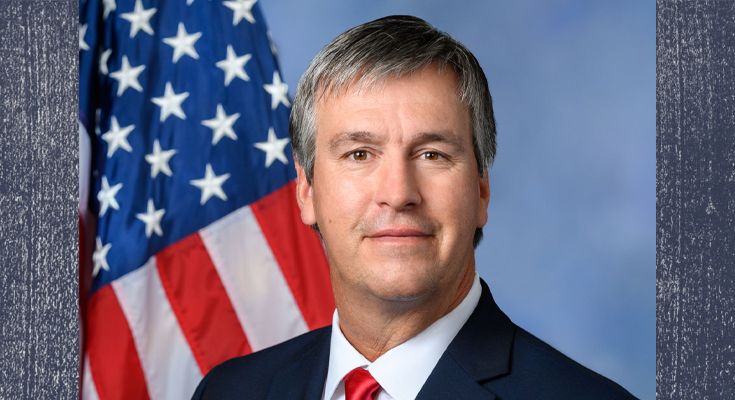
On Friday, Congressman Barry Moore voted in support of H.R. 1163, the Protecting Taxpayers and Victims of Unemployment Fraud Act. This legislation, sponsored by House Ways and Means Committee Chairman Jason Smith, would potentially recover billions in stolen unemployment benefits by providing states with incentives to investigate and recover lost funds. “Pandemic unemployment fraud might be the largest theft of tax dollars in history,” Rep. Moore said. “Almost half of the $878 billion in unemployment benefits provided by the government during the COVID-19 pandemic may have been lost to fraud. House Republicans say that they are working to recover every dollar stolen from American families. Rep. Michelle Steel issued a statement applauding the House passage of H.R. 1163. The bill seeks to recoup the estimated $400 billion in fraudulent unemployment payments by incentivizing states to pursue investigations and prosecutions to recover the stolen funds and enables them to invest in system improvements to prevent future fraud. “As we all now know, pandemic unemployment assistance funds became the source of the greatest theft of taxpayer dollars in American history,” said Rep. Steel. “Estimates put the total amount of assistance lost to fraud as high as $400 billion. California alone lost around $60 billion under the leadership of President [Joe] Biden’s Secretary of Labor nominee, Julie Su. As Californians in particular continue struggling under spiking prices and high taxes, it is absurd to force them to foot the bill for fraud committed while their elected leaders were asleep at the wheel. That is why I proudly supported the passage of the Protecting Taxpayers and Victims of Unemployment Fraud Act, which will address this unprecedented theft by incentivizing states, including California, to recover these stolen funds and providing tools to prevent future fraud. Government caused this problem, and it owes the American taxpayers a solution.” H.R.1163, the Protecting Taxpayers and Victims of Unemployment Fraud Act will protect taxpayers by: 1)Allowing states to keep 25 percent of recovered fraudulent overpayments of federal funds. 2) Allowing states to use recovered funds to improve program integrity and fraud prevention. 3) Allowing states to keep 5 percent of state UI overpayments, conditioned on meeting data matching integrity conditions and dedicating those funds to preventing future fraud. 4) Extending the statute of limitations for criminal charges or civil actions from 5 to 10 years. H.R. 1163 now goes to the U.S. Senate for their consideration. Barry Moore is in his second term representing Alabama’s Second Congressional District. He is a small businessman who previously served two terms in the Alabama House of Representatives from 2010 to 2018. To connect with the author of this story or to comment, email brandonmreporter@gmail.com.
New push on U.S.-run free electronic tax-filing system for all

It’s that time of year when throngs of taxpayers are buckling down to file their income tax returns before Tuesday’s filing deadline. Many often pay to use software from private companies such as Intuit and H&R Block. Almost one-quarter of Americans wait until the last minute to file their taxes. There could be a new, free option in future years. The IRS has been tasked with looking into how to create a government-operated electronic free-file tax return system for all. But that doesn’t sit well with the big tax-prep companies. The idea has been batted around and hotly debated for a long time. Congress now has directed the IRS to report in on how such a system might work. The order came as part of the $80 billion infusion of money for the tax agency over the next ten years under the Democrats’ flagship climate and health care measure, known as the Inflation Reduction Act, that President Joe Biden signed last summer. It gave the IRS nine months and $15 million to report in on how it might implement such a program and how much it would cost. Next month, the IRS will release the first in a series of reports looking into how it might be done. The possibility of an electronic free-file system operated by Washington is being celebrated by some taxpayer advocates who, for years, have said that would reflect good governance and well-serve taxpayers. Critics voice skepticism about the IRS taking on the dual roles of both tax collector and tax preparer, arguing that the new service could create a power imbalance between taxpayers and the government. Robert Marvin, an IRS spokesperson, said in an email that a key goal of the study is to “look for ways to make filing taxes as easy as possible.” “It’s important that Americans have choices that work best for them when preparing their taxes, whether it’s by using a tax professional, tax software, or free options,” he said. But big tax preparation companies have millions of dollars to lose if the program comes to fruition. Last year, more than 60 million taxpayers were serviced between Intuit, the parent company of TurboTax, and H&R Block. Tens of millions of dollars have been spent trying to influence policymakers on the issue, and lobbying data shows that the big tax companies, in particular, have spent heavily. An analysis shows that Intuit, H&R Block, and other private companies and advocacy groups for large tax preparation businesses, as well as proponents in favor of electronic free file, have reported spending $39.3 million since 2006 to lobby on “free-file” and other matters. Federal law doesn’t require domestic lobbyists to itemize expenses by specific issue, so the sums are not limited to free-file. Intuit has spent $25.6 million since 2006 on lobbying, H&R Block about $9.6 million, and the conservative Americans for Tax Reform roughly $3 million. Derrick Plummer, a spokesman for Intuit, said taxpayers can already file their taxes for free, and there are online free-file programs available to some people. Individuals of all income levels can submit their returns for free via the mail. A “direct-to-IRS e-file system is a solution in search of a problem, and that solution will unnecessarily cost taxpayers billions of dollars,” he said. “We will continue unapologetically advocating for American taxpayers and against a direct-to-IRS e-file system because it’s a bad idea.” Starting in 2006, an agreement between the IRS and some commercial tax preparation companies, known as the Free File Alliance, prevented the IRS from creating its own free tax return filing system. In exchange, tax preparation companies agreed to provide free services to taxpayers making $73,000 or less. The provision that barred the IRS from exploring a free-file system expired in 2019, but the Free File Alliance agreement to provide free services for low-income taxpayers remains in effect. Ariel Jurow-Kleiman, a tax law professor at Loyola Law School, and the New America think tank have been selected by the IRS to conduct the congressionally mandated study for the agency. Jurow-Kleiman said their mandate is “evaluating the feasibility, approach, schedule, cost, organizational design, and IRS capacity to deliver a possible direct e-file system.” But she has faced pushback from Republicans who say she does not fit the law’s requirement that an independent third party assess what it would take to deliver a direct file program. Rep. Jason Smith, chairman of the House Ways and Means Committee, sent a letter to the IRS in March questioning Jurow-Kleiman’s ability to be an independent reviewer, saying her work indicates “a clear preference for an expansive government-run system.” Smith, R-Mo., said the selection of Jurow-Kleiman and New America shows that “the Administration has already predetermined that a government-directed e-file system should exist regardless of what might be found in a truly nonpartisan, independent, third-party review.” Jurow-Kleiman said the GOP pushback to her selection was based on an unpublished draft of an article about tax compliance costs and that none of her writings have “addressed the questions that we are assessing in the feasibility study.” Molly Martin, director of strategy at New America, referred requests for comment to the IRS, saying the organization “is still working on its report.” David Williams, at the right-leaning, nonprofit Taxpayers Protection Alliance, says the “government preparing taxes is problematic.” “The taxpayer is looking for the biggest refund possible, but for the IRS, that’s not their job to look for the biggest refund for filers,” he said. “We’re concerned about that conflict of interest, but also really the ability of the IRS to do this.” To Gabriel Zucker, who helped create the tool to help families access the Advance Child Tax Credit during the pandemic, successfully setting up a free-file program is possible. “It is a really great way for government to better serve people,″ said Zucker, associate policy director for tax benefits at Code for America. Republished with the permission of The Associated Press.
Barry Moore votes in favor of legislation forcing Biden Administration to examine inflationary policies
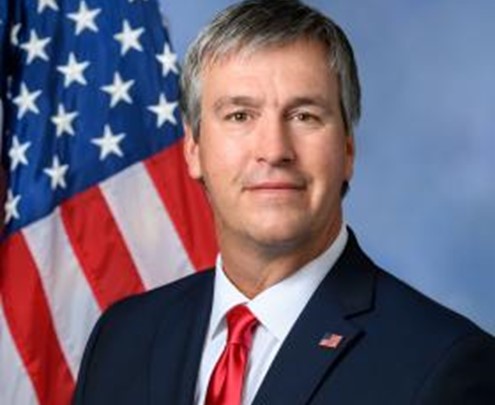
On Wednesday, Congressman Barry Moore voted in favor of H.R. 347, the Reduce Exacerbated Inflation Negatively Impacting the Nation (REIN IN) Act sponsored by Congresswoman Elise Stefanik. This legislation would force President Joe Biden, through the Office of Management and Budget and the Chair of the Council of Economic Advisors, to produce statements examining the inflationary impacts of the President’s major executive orders that exceed more than $1 billion in annual budgetary effects before they are enacted. “President Biden’s failed economic policies continue to fuel massive inflation that hurts American families,” said Rep. Moore. “These families deserve to know how much Biden’s policies, such as the student loan bailout or Green New Deal regulations, will truly cost them at the grocery store and the gas pump. House Republicans said we will hold Biden accountable in this new Congress, and this legislation will help us fulfill that promise.” “Every hardworking family is forced to pay more for almost everything due to Joe Biden’s failed economic policies. Instead of reversing course, Joe Biden and his administration have doubled down on their Far-Left tax and spend agenda that has continued to exacerbate this inflation crisis,” said Rep. Stefanik. As hardworking families in New York’s 21st District and across the nation are forced to pay the price for Democrats’ out-of-control spending, I am working to hold this administration accountable and rein in the policies that fuel devastating inflation, which is a tax on every family. Already, the new Republican majority is working to fulfill our commitment to America and create an economy that is strong, which begins with this critical check to rein in the Biden Administration’s reckless policies fueling inflation.” Congresswoman Stefanik is the House Republican Conference Chair. Stefanik, House Ways and Means Chairman Jason Smith, House Financial Services Committee Chairman Patrick McHenry, and House Committee on Oversight and Accountability Chairman James Comer introduced the REIN IN Act. “The new Republican House majority is committed to honoring the promise we made to the American people to stop the reckless spending that ignited and continues to fuel inflation, which has risen 14.3 percent since President Biden took office,” said Rep. Smith. “That’s exactly why we’re fighting to hold President Biden accountable for his radical executive actions that will cost taxpayers over one trillion dollars and counting and has thrown more fuel on the inflation fire. I’m proud to join Republican Conference Chair Elise Stefanik and Financial Services Chairman Patrick McHenry in introducing this legislation to require some much-needed transparency on the hidden costs being passed on to working families because of Joe Biden’s executive actions.” “From energy to groceries, Democrat-induced inflation is making everyday life unaffordable for families across western North Carolina and the country,” said Rep. McHenry. “President Biden’s inflationary executive actions have fueled the economic pain facing all Americans. The REIN IN Inflation Act will deliver on House Republicans’ commitment to rebuilding an economy that’s strong by adding much-needed transparency and reining in the inflationary actions of the Biden Administration. I’m proud to reintroduce this critical legislation with Chairwoman Stefanik and Chairman Smith.” “Americans need relief from historic inflation that’s harming their pocketbooks and livelihoods,” said Comer. “House Republicans are holding the Biden Administration accountable for their reckless inflation-inducing government spending and providing solutions for the American people. The REIN IN Inflation Act provides transparency about the Biden Administration’s unilateral executive actions that are fueling inflation. I thank Conference Chairwoman Stefanik for leading this effort to deliver results for the American people.” President Biden has defended his handling of the economy. “Today, we’ve got some good news — good news about the economy,” President Biden said in January. “For the sixth month in a row, inflation has come down. Measured over the last 12 months, it has fallen 6.5 — to 6.5 percent. That’s down from 7.1 percent the month before. It’s down from 9.1 percent this summer. Inflation is now at its lowest level since October of 2021. When we look at the — at the — just the last three months, we see that inflation fell to 1.8 percent on an annualized basis. It’s down from more than 11 percent in the first three months of last year.” “So, the data is clear: Even though inflation is high in major economies around the world, it is coming down in America month after month, giving families some real breathing room,” Biden continued. “And the big reason is falling gas prices. My administration took action to get more oil onto the market and bring down prices. Now, gas is down more than $1.70 from its peak. And that adds up to a family with — a typical family with two vehicles to a savings of $180 a month, every single month, that stays in their pockets instead of being spent at the pump. Food inflation is slowing as well. Last month, we saw the smallest increase in food prices in almost two years. And much of that increase was due to the avian flu outbreak, which has driven up the egg prices around — in the United States.” Barry Moore is in his second term representing Alabama’s Second Congressional District. Moore is a small businessman, a veteran, and an Auburn University graduate. He served in the Alabama House of Representatives from 2010 to 2018. He and his family live in Enterprise. To connect with the author of this story or to comment, email brandonmreporter@gmail.com.
