
GOP states press voter photo ID rules, with unclear effects
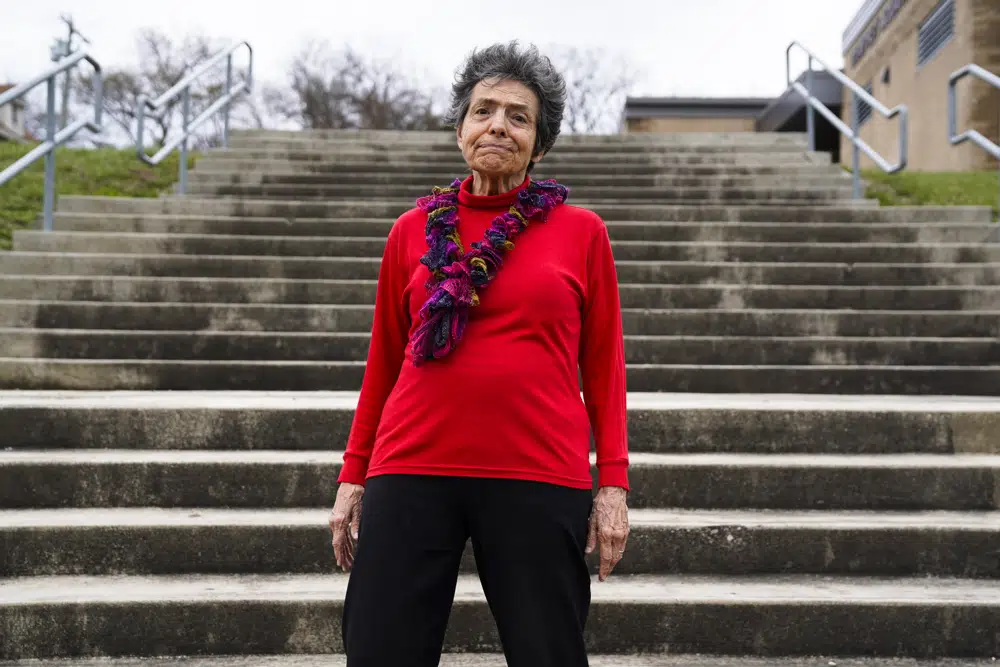
As Ohio’s primary approaches, a strict new photo ID requirement is stirring concerns for military veterans and out-of-state college students, in Amish communities, and among older voters. Other Republican-led states are moving in the same direction as they respond to conservative voters unsettled by unfounded claims of widespread fraud and persistent conspiracy theories over the accuracy of U.S. elections. Critics characterize such requirements as an overreaction that could end up disenfranchising eligible voters. Ruth Kohake is among those caught up in the confusion over Ohio’s law, which is going into effect this year. The retired nurse from Cincinnati gave up her driver’s license and her car in 2019. Now 82, she thought she might never have to step foot in another state license agency. But Ohio now requires an unexpired photo ID in order for someone to vote, and she’ll have to get that at the Bureau of Motor Vehicles. The law adds passports as valid ID but eliminates nonphoto documentation such as a bank statement, government check, or utility bill for registration and in-person voting. Military IDs also are no longer acceptable when registering to vote. “I’m very, very, very concerned that people are not going to know. They’re going to come to vote, and they’re not going to be able to, or they’re going to have to vote provisional,” she said. “It’s just a very upsetting time. Us old people, we have other things to worry about.” Of 35 states that request or require a photo ID to vote, Ohio is now the ninth Republican-controlled state to move to a strict law allowing few to no alternatives, according to the National Conference of State Legislatures. Fifteen states allow other ways voters can verify their identity, such as an electric bill, bank statement, or signature match. The number of states where voters face strict photo ID requirements is poised to rise in the coming months. Nebraska lawmakers are in the process of establishing a new photo ID program after voters approved a requirement in November. In North Carolina, a photo ID requirement declared unconstitutional just three months ago could be revived by the state Supreme Court that has a new Republican majority. Meanwhile, a new Idaho law, which prohibits students from using college IDs at the polls, drew a recent legal challenge. Wendy Weiser, vice president for democracy at the Brennan Center for Justice, said the new Ohio law undercuts the Republican narrative about the state having a record of clean and well-run elections. “Ohio election officials have long been adamant that this wasn’t needed, that Ohio had a good system for vetting and rooting out any fraud, and the proof was in the pudding,” she said. Republican state Sen. Theresa Gavarone, a supporter of the law, said the change will make it harder to cheat. It already has led to frustration and confusion, in part because of the fast-approaching state primary on May 2. Republican Secretary of State Frank LaRose ordered counties to begin implementing the fast-tracked law so it would be in effect for the primary, though its start date falls within the early voting period. Waiting until fall, LaRose said, “would result in a clear violation of Ohio law.” That decision is not without complications. The free state photo IDs the law provides won’t be available until April 7, the law’s effective date, despite military and overseas voting already having begun and early, in-person voting set to start April 4. At the same time, a legal challenge to the law by a Democratic law firm remains unresolved. The lawsuit alleges the law creates “needless discriminatory burdens,” including by requiring photo IDs, making it harder to correct minor mistakes on ballots, and restricting mail balloting. Veterans’ organizations and county recorders, particularly in the populous, Democratic-leaning counties that include Columbus, Cleveland, and Cincinnati, have been vocal about the law excluding county-issued veteran photo IDs, though it does allow military IDs, to vote. They cost less and are valid longer — 10 years — than a driver’s license. “People find reasons to fix something that doesn’t need to be fixed,” said Larry Anderson, 85, a veteran from Columbus who has found the veteran ID card a convenience. “Veterans could come back from the wars and not have a driver’s license and not drive a car, and it just creates more problems for them.” AMVETS Executive Director Don McCauley said the issue has been brought to lawmakers’ attention, and he hopes to see it resolved before the next election. Access issues also have arisen among the roughly 37,000 Amish in Ohio’s Holmes County, where the largely conservative voters reject being photographed and often lack other forms of government ID. Lawmakers allowed for religious exceptions through an affidavit that the law’s supporters say will be easy to use, but Holmes County Elections Director Lisa Welch is worried that confusion and extra paperwork could add to the workloads of already stressed boards of elections. “My biggest concern is the first time through, we get a whole bunch of provisionals (that must be processed separately later),” she said. “I’m the only full-time person in the office right now, and we can’t do everything.” Holmes County Commissioner Joe Miller fears the new process could deter some voters. “I want honest voting, I understand that, but a lot of the Amish don’t have the photo ID and won’t do a photo ID,” he said. “So what the Amish do usually — they’re pacifists, they don’t fight anybody — they just walk away.” Ohio State University has advised its roughly 16,000 out-of-state students against voting in person on Election Day — for fear that obtaining the necessary state ID card could invalidate their driver’s license in their home state and disrupt their financial aid and residency status. The schools suggests such students casting Ohio ballots do so by mail. Backers of the photo ID requirements have widely moved away from the argument that such laws prevent voter fraud, which happens only rarely. The conservative Heritage Foundation’s database lists only 26 convictions for voter impersonation fraud — the type deterred by photo ID requirements — anywhere
Democrats unveil plan to update landmark voting law
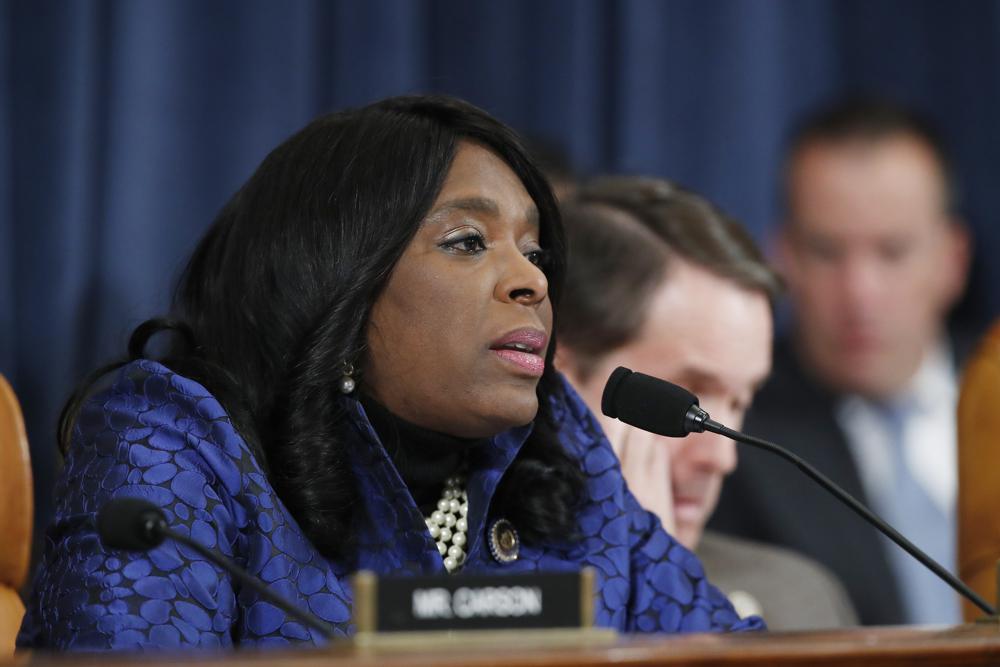
House Democrats on Tuesday put forward a new proposal to update the landmark Voting Rights Act, seeking against long odds to revive the civil rights-era legislation that once served as a barrier against discriminatory voting laws. The bill, introduced by Rep. Terri Sewell of Alabama, seeks to restore a key provision of the federal law that compelled states with a history of discrimination to undergo a federal review of changes to voting and elections. The Supreme Court set aside the formula that decided which jurisdictions were subject to the requirement in a 2013 decision and weakened the law further in a ruling this summer. House Speaker Nancy Pelosi, D-Calif., pledged to move quickly and said Democrats plan to pass the bill when the House returns next week. “With the attack on the franchise escalating and states beginning the process of redistricting, we must act,” Pelosi said in a statement. The push comes at a time when a number of Republican-led states have passed laws tightening rules around voting, particularly mail ballots. Democrats have sounded the alarm about the new hurdles to voting, comparing the impact on minorities to the disenfranchisement of Jim Crow laws, but they have struggled to unite behind a strategy to overcome near-unanimous Republican opposition in the Senate. The new House bill, known as H.R. 4, is named after Georgia congressman and civil rights leader John Lewis, who died last year. Sewell announced the introduction of the bill in front of the Edmund Pettus Bridge in Selma, Alabama, where Lewis was beaten during a civil rights march in 1965. The Voting Rights Act was signed into law a few months later. “We’re not looking to punish or penalize anyone. This is about restoring equal access to the ballot box. It’s about ensuring that Americans know their vote counts and their vote will count at the ballot box,” Sewell said. The Lewis bill outlines a new, expanded formula that the Department of Justice can use to identify discriminatory voting patterns in states and local jurisdictions. Those entities would then need to get DOJ approval before making further changes to elections. The bill also includes a provision designed to counter the summer’s Supreme Court ruling that made it harder to challenge potentially discriminatory voting changes. A companion bill pushed by Democrats, known as the For the People Act, has stalled in the Senate amid Republican opposition and disagreement among Democrats about whether to change procedural rules in the evenly divided Senate to get it passed. Democrats have argued both bills are needed to safeguard access to the ballot. They emphasize that the update to the Voting Rights Act would not apply to many voting changes already made by the states. The For the People Act, on the other hand, would create minimum voting standards in the U.S., such as same-day and automatic voter registration, early voting, and no-excuse absentee voting. The bill would also change various campaign finance and ethics laws. Senate Democrats have pledged to take up that more expansive bill when they return next month as the first order of business, though it is unclear how they can maneuver around GOP opposition. Republicans signaled they’ll try to stop the John Lewis Act much as they have the For the People Act. “This bill is a federal power grab and a gift to partisan, frivolous litigators who will use it to manipulate state laws and throw all federal elections into chaos, further undermining voter confidence in fair and accurate elections,” said Jason Snead, executive director of Honest Elections Project Action, a conservative advocacy group. Voting rights groups have been putting pressure on Democrats to eliminate or change the filibuster rules in the Senate, which requires 60 votes to proceed with most legislation, to get around the broad GOP opposition to the bills. That partisan opposition leaves Democrats well short of the needed support to advance them in the 50-50 Senate. At least two Democratic senators, Kyrsten Sinema of Arizona and Joe Manchin of West Virginia, have said they oppose eliminating the filibuster though discussions are ongoing about potential changes to the rules. Groups that back the voting measures are planning marches in several cities on Aug. 28 to call on the Senate to remove the filibuster rule. Republished with the permission of the Associated Press.
