
Lawsuit challenges Alabama’s ‘de facto ban’ on freestanding birth centers
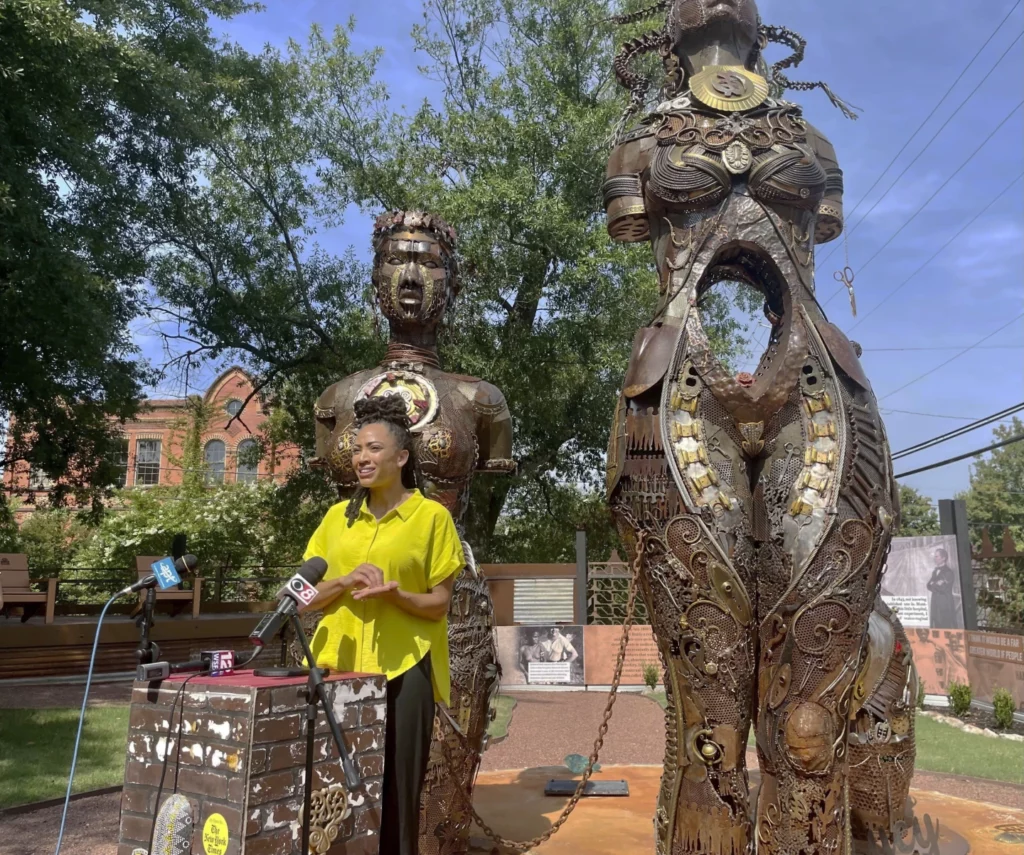
A group of midwives and doctors on Tuesday filed a lawsuit challenging what they described as Alabama’s de facto ban on freestanding birth centers by requiring the facilities be licensed as hospitals. The lawsuit — filed by the operators of one birth center that closed and two others that paused plans to open — asks a judge to block the Alabama Department of Public Health from requiring the facilities be licensed as hospitals. The suit argues the facilities, where low-risk patients can receive prenatal care and give birth, do not constitute hospitals under Alabama law and that the state health department has no authority to regulate them as such. “The department is imposing this illegal ban on birth centers in the middle of a maternal and infant health crisis in Alabama that is disproportionately harming Black mothers and babies,” Whitney White, a staff attorney with the American Civil Liberties Union Reproductive Freedom Project, said during a Tuesday press conference. The freestanding birth centers, which provide an option between home and hospital births, would fill a crucial need, the providers argued. Many women in rural areas live far away from a hospital, or they may prefer to give birth outside of the hospital for financial or personal reasons, they said. The Health Department did not have an immediate comment on the lawsuit. “The Alabama Department of Public Health has just recently learned of the filing of this lawsuit and has not had opportunity to review it fully. ADPH does not otherwise comment on active litigation,” a department spokeswoman wrote in an emailed response. While lay midwives attended births for centuries, Alabama has only made midwifery legal in recent years. Alabama lawmakers voted in 2017 to legalize midwifery, and the state began issuing licenses in 2019. Stephanie Mitchell, a certified professional midwife who is building a freestanding birth center in Sumter County, said she serves a region where people may drive a roundtrip of 75 or more miles (120 kilometers) to receive prenatal care. “Having to drive that far can be a serious obstacle and may prevent some people from getting care during their pregnancy at all. People shouldn’t be forced to go without pregnancy care,” said Mitchell, a plaintiff in the case. “Expanding access to midwifery and birth centers in places like Sumter County is a life and death situation for many families.” Dr. Heather Skanes, who founded the Oasis Family Birthing Center in Birmingham, and Dr. Yashica Robinson, founder of the Alabama Birth Center in Huntsville, are also plaintiffs in the case. The Birmingham facility closed, and the two others paused plans to start deliveries because of regulatory issues. Alabama consistently has one of the highest infant mortality rates in the nation, with 7.6 deaths per 1,000 live births in 2022. The mortality rate for Black babies in the state — 12.1 deaths per 1,000 live births — is twice that of white babies, according to statistics from the Alabama Department of Public Health. Tuesday’s press conference was held beneath a towering art installation known as the “Mothers of Gynecology,” which pays tribute to three enslaved Black women who were subjected to experimental surgery by a 19th century physician celebrated for advancing women’s health. JaTaune Bosby, executive director of the ACLU of Alabama, said that “history still follows us today in policymaking where we see marginalized communities consistently not given adequate health care.” “This monument reminds us of why we are here advocating for people who have been disregarded, who are solely asking for quality health care and dignity, and for individuals who are committed to giving that to them,” Bosby said. Republished with the permission of The Associated Press.
Groups seek probe of Alabama use of virus funds for prisons
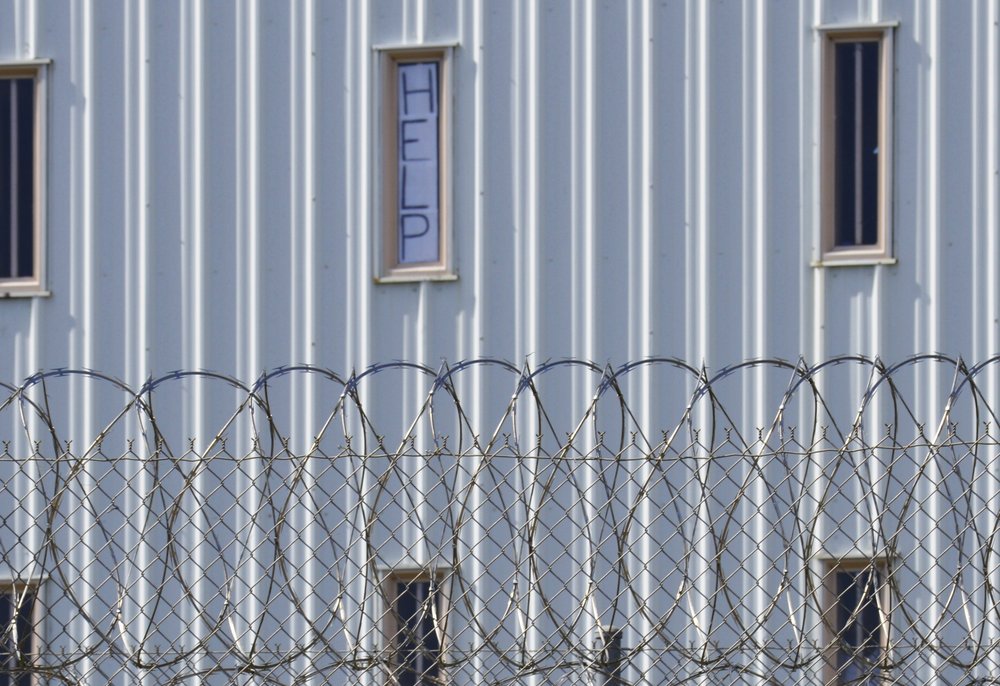
Nearly two dozen organizations have sent a letter asking the U.S. House Financial Services Committee to investigate Alabama’s plan to use $400 million in coronavirus pandemic relief funds to build two super-size prisons. The American Civil Liberties Union of Alabama, The Sentencing Project, and others signed on to a letter arguing that prison construction is an improper use of COVID-19 relief dollars from the American Rescue Plan. It asks Chairwoman Rep. Maxine Waters to hold hearings on the matter. “Directing COVID relief funds to a massive prison construction plan that long predates the pandemic is an absurd and inappropriate use of (American Rescue Plan) funds,” the organizations wrote. Alabama Gov. Kay Ivey signed legislation in October to tap $400 million of the state’s money from the federal plan to help build two super-size prisons. The Republican governor at the time called the construction plan “a major step forward” for the prison system, which faces various federal court orders and a lawsuit from the U.S. Department of Justice. The Alabama prison construction proposal calls for three new prisons — one north of Montgomery in Elmore County with at least 4,000 beds and enhanced space for medical and mental health care needs; another prison with at least 4,000 beds in south Alabama’s Escambia County and to replace the current women’s prison in Elmore — as well as renovations to existing facilities. Many existing facilities would close. Republican legislative leaders and Ivey have said they are confident that they can use the pandemic money for prison construction because the American Rescue Plan, in addition to authorizing the dollars for economic and health care programs, says states can use the money to replace revenue lost during the pandemic to strengthen support for vital public services and help retain jobs. But the opposed organizations argued that was not the intent of the money. “Building more prisons is a gross misuse of funds that were sent to help the people of Alabama, not punish them,” said JaTaune Bosby, executive director of ACLU of Alabama, in a statement. Bosby added that, “There seems to be no urgency from elected officials to provide relief to the people incarcerated in their facilities.” The U.S. Department of Justice has sued Alabama over a prison system “riddled with prisoner-on-prisoner and guard-on-prisoner violence.” The Justice Department noted in an earlier report that dilapidated facilities were a contributing factor to the unconstitutional conditions but wrote “new facilities alone will not resolve” the matter because of culture, management deficiencies, corruption and violence. The department updated its complaint this year, saying conditions in Alabama prisons have not improved since the federal government warned of unconstitutional conditions earlier and that male inmates continue to live in deadly and dangerous conditions. Ivey’s office did not immediately respond to an email seeking comment.
Schools not teaching race theory, some want to ban it anyway

Alabama might ban the so-called “critical race theory” from being taught in public K-12 schools even though education officials said no schools are actually doing so. Members of the Alabama Board of Education on Tuesday discussed the wording of a possible resolution that could be voted on later this summer. A Republican lawmaker has introduced legislation for the 2022 session to ban the teaching of critical race theory. Some GOP-controlled states have already passed such bans this year as a national debate intensifies about how race should be used as a lens in classrooms to examine the country’s tumultuous history. Critical race theory is a way of thinking about America’s history through the lens of racism, but it is not typically taught in public schools. State Superintendent Eric Mackey said state school board members want to deal with the issue but said critical race theory is “certainly not” taught in schools now. “Critical race theory as it exists is a graduate-level concept. But it is not taught anywhere in any of our courses of study,” Mackey told board members Tuesday. One draft of the state school board resolution would say that the board believes the U.S. is not inherently racist country, and the state of Alabama is not “inherently racist.” “I can’t with a clear conscience say that that’s actually true,” board member Tonya Chestnut said Tuesday. “Theoretically I would like to say that Alabama is not a racist state but I’ve experienced it,” said Chestnut, who is Black. Board member Stephanie Bell expressed concern that the resolution did not go far enough. “We need to deal with it in a way that actually does something instead of taking a stand so that it looks like we’ve done something,” Bell said. Mackey said they will continue to work on the wording and may vote as soon as next month. The superintendent said they don’t want to infringe on teachers’ ability to talk to students about important, and even controversial, issues provided they don’t “push children to one side or the other.” The American Civil Liberties Union of Alabama last week sent school board members a letter in opposition to the resolution. “Instead of preserving intellectual freedom, this resolution is a blatant attempt to suppress and censor speech,” wrote JaTaune Bosby, executive director of the ACLU of Alabama. “While states generally have latitude to determine school curricula, this effort to ban conversations about race would effectively gag educators and students, preventing both from teaching and learning effectively.” Gov. Kay Ivey, who serves as president of the board, said, “Our goal is to have all of our students treated based on their individual ability, not on being part of a certain group, sex race, or anything else,” Ivey said. Republished with the permission of the Associated Press.
