
Less driving but more deaths: Spike in traffic fatalities puzzles lawmakers
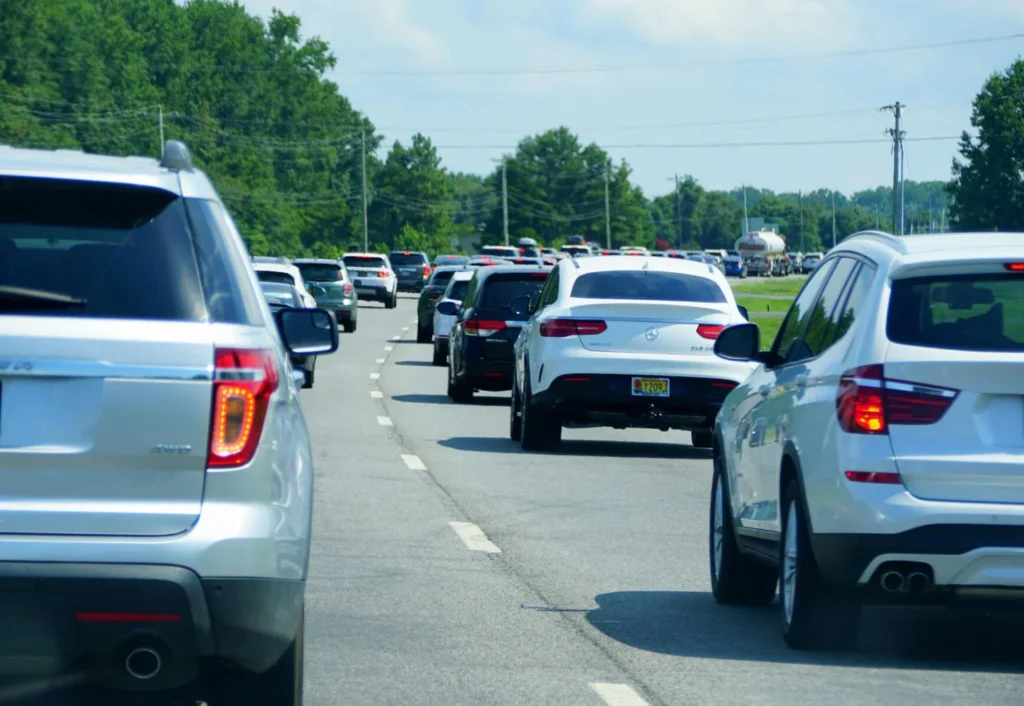
by Tim Henderson, Alabama Reflector November 11, 2023 This story was originally published on Stateline. Traffic deaths are lingering near historic highs in most states despite less driving overall, prompting policymakers to consider deploying more police or installing automated monitoring such as speed cameras to curb speeding and reckless driving. People are driving fewer miles than they were in 2019, but more are dying on roadways. Traffic deaths spiked 18% from 2019 to 2022 — though miles traveled fell 3%, according to a Stateline analysis of federal records from the National Highway Traffic Safety Administration and the U.S. Bureau of Transportation Statistics. Experts blame bad driving habits that took hold when roadways suddenly cleared out as the COVID-19 pandemic started in 2020. At the same time, law enforcement agencies shifted their priorities away from traffic violations, and many struggled to hire officers amid heightened scrutiny and criticism, especially after a police officer killed George Floyd in May 2020 in Minneapolis. States and cities are trying to reduce the number of deaths caused by risky driving with a mix of more police officers and controversial technologies such as speed and red-light cameras. But many critics see those approaches as potentially troublesome since traffic tickets are a heavier financial burden on low-income drivers. And others say cameras violate people’s privacy and right to due process. “Law enforcement has really stepped back from enforcing traffic laws,” said Jonathan Adkins, CEO of the Governors Highway Safety Association. “We have to get police back out there and get support for police back. But this has to be done the right way, and it has to be done fairly. And we do want to look at technology — cameras don’t see race, they don’t see gender.” The nation’s two most populous states, California and Texas, have taken different paths. In October, California approved a speed camera pilot program, to begin next year. Texas hasn’t reconsidered its 2019 ban on local speed and red-light cameras, but state transportation officials have asked local police to step up ticketing. Police in Fort Worth ramped up enforcement in response to residents’ complaints about reckless drivers, according to press reports, writing 12,000 tickets for speeding and careless driving between November 2022 and April 2023. Traffic deaths were up 18% in California and 24% in Texas between 2019 and 2022, the latest full year available from the National Highway Traffic Safety Administration. In Washington state, traffic fatalities were up 38% last year compared with 2019, reaching a 30-year high. In response, the state is considering expanding its limited-speed camera use. State officials plan a visit to Finland next month to see how that country used automated enforcement to reduce traffic deaths. “When people see a sign, ‘Speed Camera Ahead,’ they slow down,” Gov. Jay Inslee, a Democrat, said in a June interview with the Washington State Standard. Nationally, most of the change in fatal accidents has been caused by speeding, careless driving and drug or alcohol use, according to federal Fatality Analysis Reporting System data from 2019 to 2021, the latest year available from that source. Driver deaths increased the most in that time, 21%. Deaths of pedestrians and motorcyclists rose by 18%, and bicyclist deaths by 12%. Most of the increase from 2019 to 2022 has been in cities, suburbs, and small towns, with rural areas less affected, according to separate federal statistics on deaths caused by traffic accidents kept by the federal Centers for Disease Control and Prevention. Our driving behavior didn’t go back to normal. We have to learn to share the roads, and absent that we have to have better engineering and more enforcement out there, unfortunately. – Jonathan Adkins, CEO, Governors Highway Safety Association Vermont, which has been struggling to fill police jobs, saw the largest percentage increase of any state from 2019 to 2022, a 64% jump from 47 to 77 deaths. Other states with large percentage increases included Connecticut (54%), New Hampshire (47%), the District of Columbia (39%), and Washington state (38%). In Alabama, traffic deaths rose from 930 in 2019 to 989 in 2022, a 6% increase. Traffic accidents are the most common cause of death for people under 40 in Arkansas, Nebraska and Texas, according to a September Stateline analysis. The only states to see a decrease in traffic deaths from 2019 to 2022 were Wyoming (down 9%), Rhode Island (down 5%), North Dakota (down 3%) and Idaho (down 2%). Those four states did see increases in the first six months of 2023, however, compared with 2022. About half of Wyoming’s fatal crashes in 2022 involved speeding or failure to wear seat belts, according to a state report. Legislative efforts In California, speed camera legislation has been stymied in the past by disagreements over fines and impacts on residents with low incomes. The compromise bill, as enacted in October, will allow community service in lieu of fines for low-income drivers who are ticketed in the pilot program, and limit the placement of cameras to streets with speeding issues in a handful of cities. Adkins, the CEO of the governors’ safety group, said other states should be similarly cautious. “You have to be really careful with these camera programs. We don’t want cameras to be a ‘gotcha,’” Adkins said. “They should only be in areas that have a problem.” Another state considering more speed cameras is Pennsylvania, where a pilot program put speed cameras on one street in Philadelphia and in work zones statewide. A bill to make the program permanent and expand it within Philadelphia passed the state House and is now pending in a state Senate committee. Pennsylvania’s traffic fatalities increased 12% from 2019 to 2022, according to the Stateline analysis. In Philadelphia, speed cameras cut fatal accidents in half, saving an estimated 36 lives, and reduced speeding by 95% after they were introduced in 2020 on the 14-mile stretch of Roosevelt Boulevard, a main artery, according to city records obtained by Stateline. Cameras detected 8,305 speeders in February 2023
Kay Ivey gets a ‘D’ in report card stacking up U.S. governors’ fiscal policies
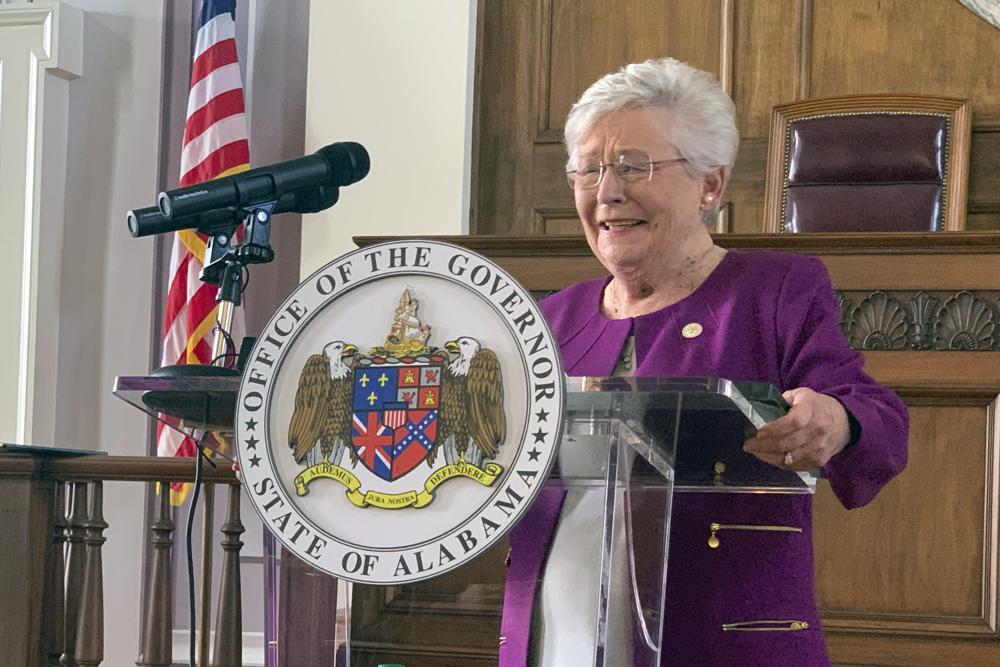
Gov. Kay Ivey’s years-long support of an increased gas tax in Alabama landed her in the bottom tier of a new report grading states’ top-level leaders on their fiscal policies. The Cato Institute, a public policy organization focused on limited government, recently released its 2022 Fiscal Policy Report Card on America’s Governors. Co-authors Chris Edwards and Ilana Blumsack gave Ivey, who is seeking a second full term in office this fall, a score of “D.” In their analysis of Ivey’s fiscal performance throughout her first full term in office, Edwards and Blumsack elaborated on why they gave the governor a low score. “Running for a full term in office in 2018, Ivey said she opposed tax increases,” Edwards and Blumsack wrote. “Nonetheless, she has raised some taxes, including the gas tax by 10 cents per gallon in 2019 and an assessment on nursing home facilities in 2020.” In their report, the authors did note some of Ivey’s more recent tax-cutting overtures in her run-up to reelection and against the backdrop of inflation. “Ivey switched direction recently and approved modest tax cuts, including raising the standard deduction, exempting $6,000 of retirement income from taxes, increasing an adoption credit, and exempting small businesses from the business privilege tax,” Edwards and Blumsack wrote. Early this year, during the most recent legislative session, Ivey also touted her support of House Bill 231, which she signed into law in February. “I am proud to sign this needed tax relief into law so that money will return directly into the hands of hardworking Alabamians,” Ivey said in the news release. Ivey’s support of a gas tax, and her denial of cutting it back this spring, has been a source of criticism since she first signed the legislation into law in 2019. Proceeds from portions of the increased gas tax have been poured into Ivey’s 2019 Rebuild Alabama Act, which required the state’s Department of Transportation to annually allocate $10 million from excised gas taxes. “Since becoming governor, with the support of Rebuild Alabama, we have embarked on more than 1,500 new road and bridge projects worth more than $5 billion,” Ivey said in March. “We certainly have more work in front of us, and I am proud to continue those efforts today.” While the Cato Institute’s newest report did not have a clear-cut partisan divide in the granular state-by-state rankings, there was a prevailing theme. The top-performing governors in this year’s report were Republican, while the lowest-scoring leaders were Democrats. “The results are data-driven. They account for tax and spending actions that affect short-term budgets in the states,” Edwards and Blumsack said of their methodology. “But they do not account for longer-term or structural changes that governors may make, such as reforms to state pension plans.” Five governors, all Republican, received an “A” in this year’s Cato Institute report: Doug Ducey of Arizona; Brad Little of Idaho; Kim Reynolds of Iowa; Pete Ricketts of Nebraska; and Chris Sununu of New Hampshire. On the bottom end, eight Democrat governors received an “F” in the Cato Institute’s analysis of their fiscal policies: Kate Brown of Oregon; Jay Inslee of Washington; Phil Murphy of New Jersey; Gavin Newsom of California; J.B. Pritzker of Illinois; Tim Walz of Minnesota; Gretchen Whitmer of Michigan; and Tom Wolf of Pennsylvania. Republished with the permission of The Center Square.
States divided on gun controls, even as mass shootings rise
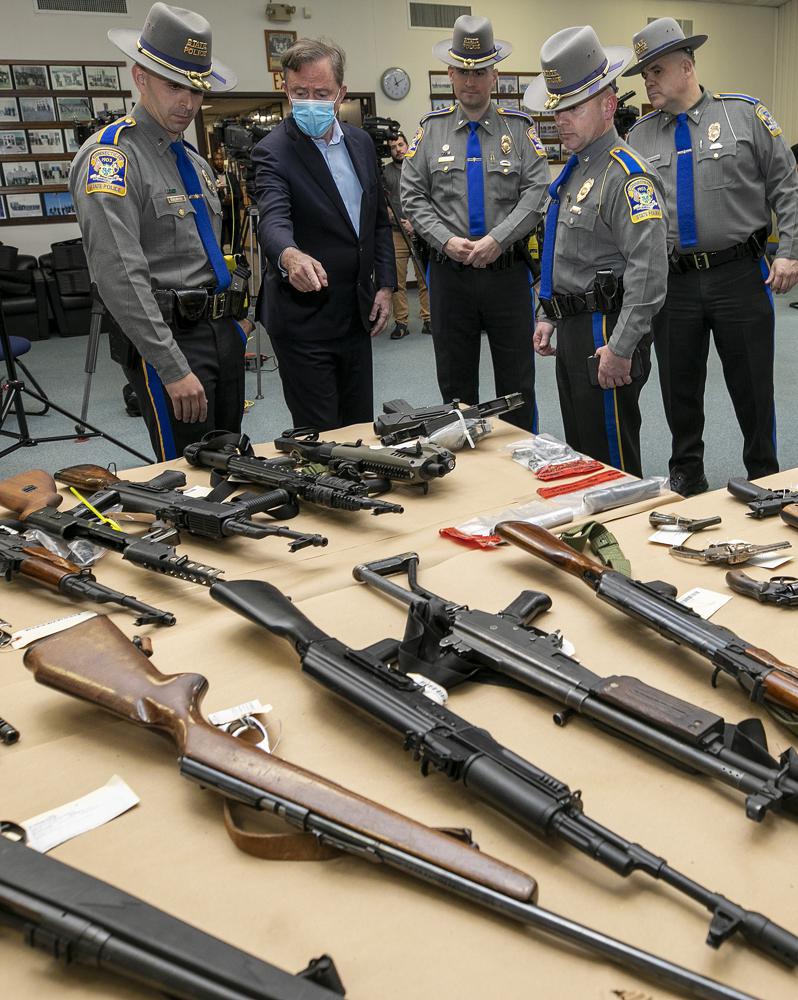
Washington Gov. Jay Inslee was quick to react to this week’s carnage at a Texas elementary school, sending a tweet listing the gun control measures the Democratic-controlled state has taken. He finished with: “Your turn Congress.” But gun control measures are likely going nowhere in Congress, and they also have become increasingly scarce in most states. Aside from several Democratic-controlled states, the majority have taken no action on gun control in recent years or have moved aggressively to expand gun rights. That’s because they are either controlled politically by Republicans who oppose gun restrictions or are politically divided, leading to a stalemate. “Here I am in a position where I can do something, I can introduce legislation, and yet to know that it almost certainly is not going to go anywhere is a feeling of helplessness,” said state Sen. Greg Leding, a Democrat in the GOP-controlled Arkansas Legislature. He has pushed unsuccessfully for red flag laws that would allow authorities to remove firearms from those determined to be a danger to themselves or others. After Tuesday’s massacre at Robb Elementary School in Uvalde, Texas, that left 19 students and two teachers dead, Democratic governors and lawmakers across the country issued impassioned pleas for Congress and their own legislatures to pass gun restrictions. Republicans have mostly called for more efforts to address mental health and to shore up protections at schools, such as adding security guards. Among them is Texas Gov. Greg Abbott, who has repeatedly talked about mental health struggles among young people and said tougher gun laws in places like New York and California are ineffective. In Tennessee, GOP Rep. Jeremy Faison tweeted that the state needs to have security officers “in all of our schools,” but stopped short of promising to introduce legislation during next year’s legislative session: “Evil exists, and we must protect the innocent from it,” Faison said. Wisconsin Gov. Tony Evers has repeatedly clashed with the GOP-controlled Legislature over gun laws. He has called for passage of universal background checks and “red flag” laws, only to be ignored by Republicans. Earlier this year, Democrats vetoed a Republican bill that would have allowed holders of concealed carry permits to have firearms in vehicles on school grounds and in churches located on the grounds of a private school. “We cannot accept that gun violence just happens,” Evers said in a tweet. “We cannot accept that kids might go to school and never come home. We cannot accept the outright refusal of elected officials to act.” On Wednesday, a day after the Texas shooting, legislative Democrats asked that the Wisconsin gun safety bills be taken up again, apparently to no avail. Republican Senate Majority Leader Devin LeMahieu and Assembly Speaker Robin Vos did not return messages seeking their response. In Pennsylvania, an effort by Democratic lawmakers Wednesday in the GOP-controlled Legislature to ban owning, selling, or making high-capacity, semi-automatic firearms failed, as House Republicans displayed their firm opposition to gun restrictions. The GOP-majority Legislature has rejected appeals by Democratic governors over the past two decades to tighten gun control laws, including taking steps such as expanding background checks or limiting the number of handgun purchases one person can make in a month. The situation is similar in Michigan, which has a Democratic governor and Republican-controlled Legislature. On Wednesday, Democrats in the state Senate were thwarted in their efforts to advance a group of bills that would require gun owners to lock up their firearms and keep them away from minors. “Every day we don’t take action, we are choosing guns over children,” said Democratic Sen. Rosemary Bayer, whose district includes a high school where a teen was charged in a shooting that killed four in November and whose parents are charged with involuntary manslaughter, accused of failing to lock up their gun. “Enough is enough. No more prayers, no more thoughts, no more inaction.” Republican state Sen. Ken Horn responded by urging discussion about the other potential causes of gun violence. “I would just point out that there are political solutions, but there are just as many spiritual solutions,” he said. “We don’t know what’s really happening in this world, what’s happening in this country, what’s happening to young men.” Florida stands out as a Republican-controlled state that took action. The 2018 shooting at a high school in Parkland that left 14 students and three staff members dead prompted lawmakers there to pass a law with a red flag provision that lets law enforcement officers petition a court to have guns confiscated from a person considered a threat. Democrats now want that expanded to allow family members or roommates to make the same request of the courts, but there has been little appetite among Republicans to amend the law. Instead, Republican Gov. Ron DeSantis said he wants lawmakers to allow people to carry handguns without a permit. The state currently requires a concealed weapons license. While Republicans have supported red flag laws in some other states, most legislative action around gun control in recent years has been in states led by Democrats. In Washington state, the governor earlier this year signed a package of bills related to firearm magazine limits, ghost guns, and adding more locations where guns are prohibited, including ballot counting sites. In California on Wednesday, Gov. Gavin Newsom and top Democratic legislative leaders vowed to fast-track gun legislation, identifying about a dozen bills they plan to pass this year. Newsom highlighted a bill that would let private citizens enforce a ban on assault weapons by filing lawsuits – similar to a law in Texas that bans most abortions through civil enforcement. Oregon’s Democratically controlled Legislature has passed bills that require background checks, prohibit guns on public school grounds, allow firearms to be taken from those who pose a risk, and ensure safe storage of firearms. On Wednesday, a group of six Democrats said more must be done after the mass shooting in Texas and the racially motivated massacre in Buffalo, New York. They pledged additional action next year. “We ran for
States adding to financial pressure on Russia over war
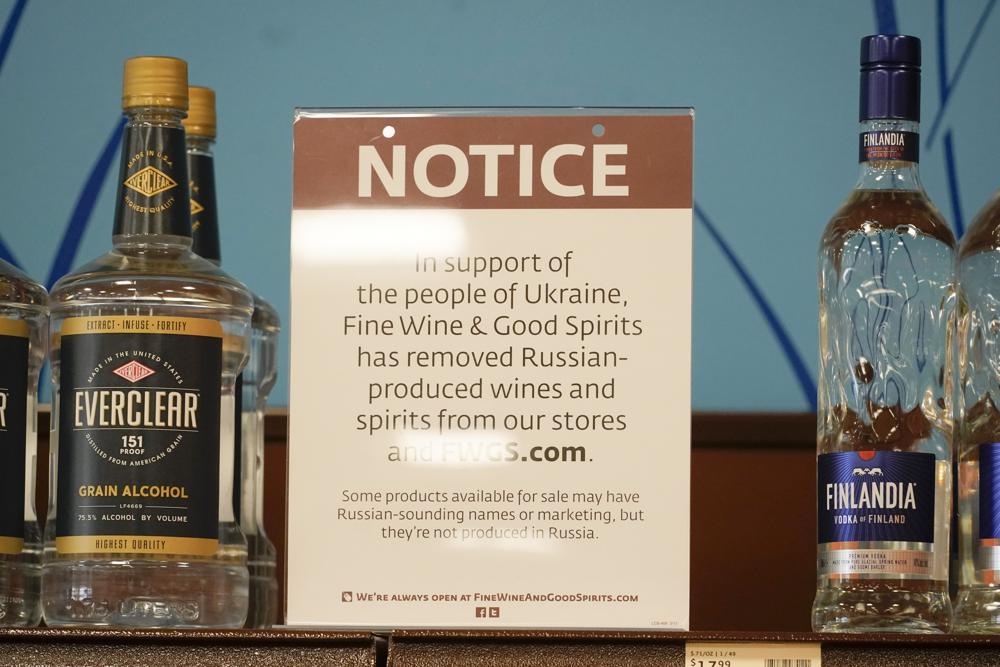
Seeking to tighten the financial squeeze on Russia over its war against Ukraine, governors, and lawmakers in numerous U.S. states were taking actions Monday to pull state investments from Russian companies while encouraging private entities to do the same. The effect of sanctions by U.S. states often pales in comparison to national ones, but state officials said they wanted to show solidarity with Ukraine and do what they could to build upon the penalties imposed on Russia by the U.S. government and other Western nations. Georgia House Speaker David Ralston, a Republican, got a bipartisan standing ovation Monday when he told representatives he would seek to have the state’s retirement funds quickly divested from any Russian assets. “I don’t know about y’all, but I don’t want one penny of Georgians’ money going to subsidize Vladimir Putin,” Ralston said. “While our role in international affairs is limited, we make clear we stand with those who want to live in peace.” Some actions have been largely symbolic. The governors of Arizona, Pennsylvania, and Tennessee ordered their capitols lit with the blue and yellow colors of Ukraine’s flag. Minnesota Gov. Tim Walz, a Democrat, and Ohio Gov. Mike DeWine, a Republican, issued a joint statement condemning Russia’s invasion of Ukraine as co-chairs of the presidentially appointed Council of Governors. Other state actions have potential teeth. On Monday, the Indiana House passed legislation that would block Russian-controlled businesses and nonprofits from acquiring property in Indiana for one year. It now goes to the Senate. “Indiana will not be a safe haven for ill-gotten Russian funds, nor for its oligarchs trying to find financial shelter in the wake of Putin’s unconscionable invasion of Ukraine,” Democratic state Rep. Ryan Dvorak said while proposing the amendment last week. New York Gov. Kathy Hochul signed an executive order Sunday forbidding her state from doing business with Russia. She ordered state agencies to divest money and assets from companies or institutions aiding Russia in its war against Ukraine. The Democratic governor also said New York would welcome Ukrainian refugees, noting that New York already is home to the largest Ukrainian population in the U.S. Pennsylvania lawmakers said Monday they will file legislation requiring state pension funds to pull investments connected to the Russian government and its critical supporters. The state Treasury Department also has begun divesting its minimal holdings in Russian-based companies. In a memo to fellow senators, Democratic state Sen. Sharif Street said Pennsylvania “must wield our economic power to ensure that Russia faces grave consequences for their flagrant violations of international law and human cooperation.” Pennsylvania House Majority Leader Kerry Benninghoff, a Republican seeking co-sponsors for the legislation, said state lawmakers “have a moral obligation to ensure that our public fund investments are not inadvertently supporting those who are engaging in an unprovoked invasion of their democratically elected neighbors.” Arkansas lawmakers have filed proposals authorizing banks in the state to freeze the assets of Russian oligarchs and to require a boycott of Russian-made goods. A bipartisan group of California lawmakers said Monday they also will introduce legislation to divest public money from Russian state entities. Colorado Gov. Jared Polis, a Democrat, has banned state agencies from doing business with Russian state-owned firms and their subcontractors. Colorado’s $61 billion state pension fund is pulling $8 million from a Russian state-owned bank identified in federal sanctions. Governors in Connecticut, New Jersey, Virginia, and Washington also have ordered a review of whether any state money is going to Russian companies or investments supporting the Russian government. A North Dakota investment board was due to meet later this week to discuss its investments in Russia. “If our state can put one brick in the wall around Putin, it will be a good thing, and we intend to do all that we can in this regard,” said Washington Gov. Jay Inslee, a Democrat. Two prominent Republican governors, Florida’s Ron DeSantis and South Dakota’s Kristi Noem, who are widely seen as angling for a White House bid, mostly took aim at President Joe Biden rather than issue executive orders targeting Russia. They criticized his energy policies and said that had made it difficult to slap sanctions on Russia’s exports of oil and gas. Other governors are seeking to sever good-will relationships between their home states and those in Russia. Republican Gov. Larry Hogan announced Monday that he’s dissolving Maryland’s decades-old sister-state relationship with Russia’s Leningrad region after the invasion of Ukraine. Virginia Gov. Glenn Youngkin, a Republican, asked the cities of Norfolk and Roanoke to end their sister city partnerships with Russian cities. Iowa Gov. Kim Reynolds, a Republican, called for an end to its sister-state relationship with Stavrapol Krai, Russia, and a strengthening of its sister-state relationship with Cherkasy Oblast, Ukraine. Several states have expressed a willingness to provide housing to Ukrainian refugees. The Washington state House and Senate each have added amendments to their budget proposals setting aside $19 million to provide services and temporary housing to refugees who come from Ukraine. Texas Gov. Greg Abbott, a Republican, posted on Twitter over the weekend that he has asked restaurants and retailers “ to voluntarily remove all Russian products from their shelves.” Officials in Alabama, Iowa, New Hampshire, Ohio, Pennsylvania, Utah, Vermont, Virginia, and West Virginia — all states that control the sale of alcohol — have directed Russian-sourced alcohol to be removed from store shelves. “Utah stands in solidarity with Ukraine and will not support Russian enterprises, no matter how small the exchange,” Republican Utah Gov. Spencer Cox said. Republished with the permission of the Associated Press.
Joe Biden’s challenge: Breaking through with virus response
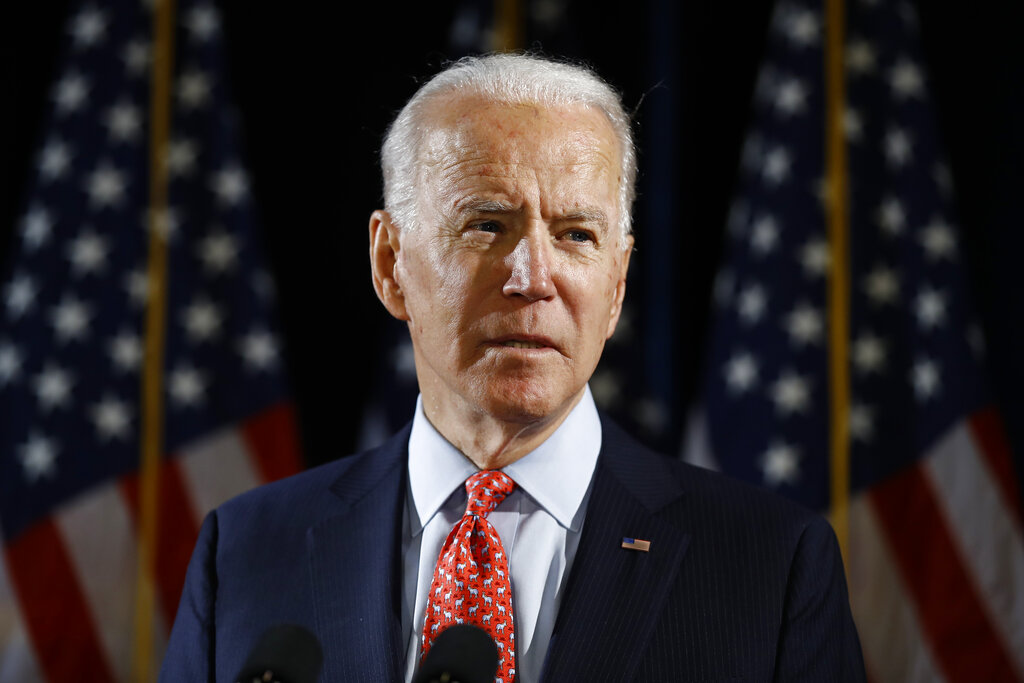
Like most Americans, Biden has stayed close to home recently to prevent the spread of the coronavirus.
Washington Gov. Jay Inslee joins Democratic presidential field
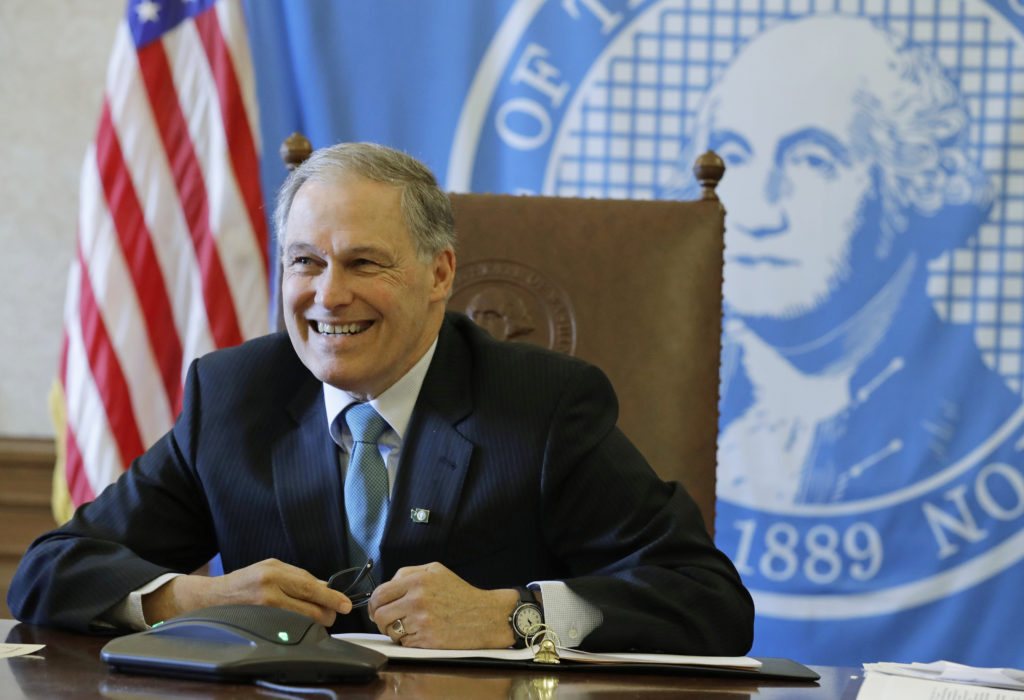
Washington Gov. Jay Inslee will seek the 2020 Democratic presidential nomination, mixing calls for combating climate change and highlights of his liberal record with an aggressive critique of President Donald Trump. The 68-year-old governor is launching his bid Friday in Seattle, following recent visits to the first primary state of New Hampshire and the early caucus state of Nevada. “We went to the moon and created technologies that have changed the world — our country’s next mission must be to rise up to the most urgent challenge of our time: defeating climate change,” Inslee says in a video announcement ahead of a public announcement later Friday in Seattle. Inslee is the first governor to join a Democratic primary that has been dominated by senators. Montana Gov. Steve Bullock and former Colorado Gov. John Hickenlooper are eyeing presidential campaigns. It will not be easy for Inslee to garner attention with six prominent senators — Cory Booker of New Jersey, Kirsten Gillibrand of New York, Kamala Harris of California, Amy Klobuchar of Minnesota, Bernie Sanders of Vermont and Elizabeth Warren of Massachusetts — already running. Former Vice President Joe Biden and former Texas Rep. Beto O’Rourke also are expected to make highly anticipated 2020 announcements in the coming weeks. Inslee acknowledges his underdog status but says his emphasis on combating climate change will set him apart. “Climate change is a unifying issue,” Inslee told The Associated Press in a recent interview, calling it a moral necessity and an economic opportunity. He promises substantial investment in clean energy sources that reduce American dependence on fossil fuels. “This issue is connected to virtually every other value system and thing we want to do in our communities,” he said, mentioning environmental justice, infrastructure, clean energy, health care and national security. Inslee argues that no presidential candidate has hinged a campaign as heavily on climate and environmental policy as he will. He plans his first trip as a candidate to Iowa next week, with events geared to climate issues. Trips to Nevada and California will follow. He may have a larger opening on climate since billionaire environmental activist Tom Steyer has passed on a national campaign, opting instead to continue his advocacy for impeaching and removing Trump from office. Former New York City Mayor Michael Bloomberg, a billionaire who has spent millions of dollars on climate issues, may run. Steyer hasn’t indicated whether he’ll use his fortune to back a presidential candidate, but he welcomed Inslee’s announcement, tweeting Friday, “It’s good to know that a climate champion like @GovInslee will be in the race, pushing the country to recognize what is at stake.” Inslee has not specifically endorsed the Green New Deal introduced by New York Rep. Alexandria Ocasio-Cortez and Massachusetts Sen. Ed Markey, though he said last month that he was “thrilled that this … resolution has been brought forward” as a way to push for action. He has argued separately for an issue-by-issue approach that adds up to sweeping change. He generally avoids promising specific reductions of carbon emissions under an absolute timeframe. The Green New Deal targets 2030 for the U.S. to become net carbon neutral. Despite his emphasis on climate policy, Inslee says he’s not a one-issue candidate. A former congressman, he pitches his breadth of personal and political experiences as ideal to bridge political and cultural divides among the Democratic base and the broader electorate. Inslee is a white male baby boomer who was a clean-cut star athlete and honors student in the turbulent 1960s, when he met his high school sweetheart, Trudi. She is now his wife of 46 years. That puts Inslee closer to the septuagenarian Biden than to the young rock-star-style candidates like O’Rourke or Booker, both in their 40s. Inslee has nonetheless governed Washington as an unabashed liberal, promoting clean energy, gay rights, abortion rights, environmental preservation, tighter gun restrictions and more spending for education and job training. Most recently, he’s called for a state-based public option health insurance plan in Washington that he calls a “step toward universal health care.” Republicans have not embraced him, with the state GOP recently deriding his “extreme environmental agenda” and pointing to its price tag. Senate Republican leader Mark Schoesler has quipped that Inslee’s policies “may be geared toward Iowa more than Washington.” Inslee grew up in the Seattle area, with his mother working as a sales clerk and his father as a biology teacher and basketball coach in public schools. He started his legal and political career in small-town central Washington, where he won a state legislative post and, for one term, a congressional seat before being knocked out in the GOP sweep of 1994. He later returned to Congress representing a metro-Seattle district for 12 years before resigning to run for and win the governor’s office in 2012. Inslee raised his profile serving as Democratic Governors Association chairman in 2018; Democrats picked up seven governor’s offices, and Inslee became a familiar guest to cable news audiences, using the opportunity to lambaste Trump on such issues as immigration and ethics. “During the past two years, we’ve been challenged by federal actions that appeal more to our darker natures than our better angels,” Inslee said in his January address of the Washington Legislature. “But we know that’s not who we are.” Recent polling suggests at least some wisdom for trying to become the climate change candidate. An Associated Press-NORC Center for Public Affairs Research poll from December found that self-identified liberal Democrats see the environment as a critical issue: 49 percent named it among their top priorities, compared with 29 percent of conservative and moderate Democrats. Sixteen percent of liberal and moderate Republicans and just 3 percent of conservative Republicans mentioned the environment as a major problem. In an open-ended question, 24 percent of all adults queried named environmental issues and climate change among the top five priorities for the government to work on in 2019. That compares with 18 percent who mentioned the issue as a priority for
