Bill advances to allow concealed handguns without permit
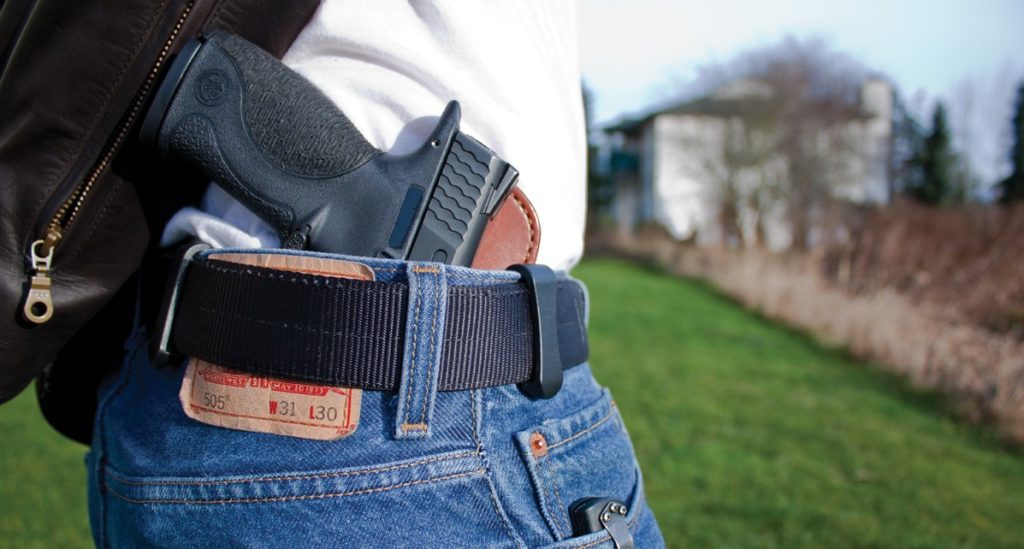
Alabama lawmakers advanced legislation Wednesday that would end the requirement for a person to get a permit to carry a concealed handgun in public. The Senate Judiciary Committee approved the House-passed bill, which now moves to the Alabama Senate. Gun rights advocates have championed the proposal they call “constitutional carry.” They argue that people should not have to get a permit, which requires a background check and paying a fee, to carry a handgun they legally own. Many state sheriffs and other law enforcement officials have opposed the legislation, arguing the permits provide a crucial tool to combat crime and enhance public safety. Republican Rep. Shane Stringer, the sponsor of the bill, said people “shouldn’t have to get permission to carry” a legally owned handgun. “House Bill 272 simply allows law-abiding citizens that are legally able to own a firearm to carry that gun concealed or on or about their persons or in their vehicle without a permit,” Stringer, a former captain with the Mobile County sheriff’s office, told the committee. Law enforcement officials spoke against the bill in a public hearing “I assure you, it would take away some of our ability to protect our communities with a tool that effectively removes weapons from the hands of criminals,” Lee County Sheriff Jay Jones, the current president of the Alabama Sheriffs’ Association, told the committee. Alabama currently requires people to get a concealed carry permit, which requires a background check, to carry a handgun under their clothes or in a purse or bag when they go in public. The bill would do away with the requirement, but people could still choose to get a permit if they wanted. It would also do away with the current requirement for people without concealed carry permits to keep handguns unloaded and secured when driving. There are 21 states that allow concealed weapons in public without a permit, according to Stateline, an initiative of the Pew Charitable Trusts. “In the 21 states that have passed this legislation, there’s been absolutely no increase in crime or decrease in officer safety as associated with the law. That will remain the same here in Alabama,” Art Thomm, state director for the National Rifle Association, told the committee. A Democratic member of the committee, who recently had her home shot into 23 times, questioned the assertion that there would be no impact on crime. “It’s already like a wild, wild west. And I can just only imagine that this is going to help it escalate somewhat because people are going feel more brazen,” said Sen. Vivian Davis Figures, a Democrat from Mobile. Proponents of the bill said the Alabama Law Enforcement Agency is developing a database, authorized by a state law creating a lifetime concealed carry permit option, that officers will be able to use to flag people not legally entitled to carry a handgun. Stringer maintained that will be a better tool for law enforcement officers to remove guns from people who can not legally possess them. The database is not operational yet. Jones said that while the idea of the database is good, he believes it will have inevitable gaps in data. Amanda Wasden, a spokeswoman for the Alabama Law Enforcement Agency, said the database is currently in the developmental phase. She said the testing phase will begin in August, and the agency has a goal of having it fully operational by Oct. 1 as the law requires. Republished with the permission of the Associated Press.
House votes to allow concealed handguns without permit

The Alabama House of Representatives on Tuesday approved legislation ending the requirement for a person to get a permit in order to carry a concealed handgun in public. Lawmakers voted 65-37 for the bill after Republicans in the chamber limited debate to two hours. The bill now moves to the Alabama Senate. Gun rights advocates have championed the proposal they call “constitutional carry,” arguing that people should not have to get a permit, which requires a background check and paying a fee, to carry a handgun they legally own. Many state sheriffs and other law enforcement officials have opposed the legislation, arguing the permits provide a crucial tool to combat crime and enhance public safety. “This bill does not change who can and cannot carry a gun. The people that are prohibited now will still be prohibited,” Republican Rep. Shane Stringer of Citronelle said of his bill. Stringer, a former law enforcement officer, disputed arguments that the permits enhance public safety. “The fact of the matter is, criminals don’t obey laws. This $20 piece of plastic, a permit, is not going to stop an evil person from committing a crime or doing wrong and it will not protect our law enforcement from getting hurt or killed.” Alabama currently requires people to get a concealed carry permit, which requires a background check, to carry a handgun under their clothes or in a purse or bag when they go in public. The bill would do away with the requirement, but people could still choose to get a permit if they wanted. It would also do away with the current requirement for people without concealed carry permits to keep handguns unloaded and secured when driving. Rep. Pebblin Warren, a Democrat who represents Tuskegee, said the change will encourage young people to “just go wild in the street with guns.” “We’re opening the door to really encourage violence,” Warren said. Warren, the wife of a former state sheriff, read a letter from Montgomery County Sheriff Derrick Cunningham, who now heads the Alabama Sheriffs Association, opposing passage of the bill. Republican Rep. Allen Farley, a retired assistant sheriff and the only Republican to vote against the bill in committee, said the permits are a tool “for us to catch those people who should not have a firearm.” Farley said the permit fees help fund small sheriffs’ offices and that the arrests for permit violations have led to seizures of drugs and the solving of crimes. “Why are we making the thin blue line in Alabama thinner?” Farley said. There are 21 states that allow concealed weapons in public without a permit, according to Stateline, an initiative of the Pew Charitable Trusts. Proponents of the bill said the Alabama Law Enforcement Agency is developing a database, authorized by a state law creating a lifetime concealed carry permit option, that officers will be able to use to flag people not legally entitled to carry a handgun. Stringer maintained that will be a better tool for law enforcement officers to remove guns from people who can not legally possess them. Lee County Sheriff Jay Jones last week said the intent of the database is good but said he did not think it could take the place of permits because there will be inevitable gaps in collecting data. Republished with the permission of the Associated Press.
Bill advances to allow concealed handguns without permit
Alabama lawmakers on Wednesday advanced legislation that would do away with the requirement for a person to get a permit to carry a concealed handgun in public. A divided House Public Safety Committee on Wednesday approved a bill that would do away with the current permit requirement for a person who carries a handgun under their clothes or in a purse or bag when they go in public. It would also do away with the current requirement for people without concealed carry permits to keep handguns unloaded and secured when driving. The proposal now moves to the full Alabama House. Similar legislation is pending in the Senate. State sheriffs and other law enforcement officials have opposed the legislation, arguing that the permits provide a crucial tool to combat crime and enhance public safety. The bill has been championed by gun-rights groups who argue that people shouldn’t have to get a permit, which requires paying a fee, to carry a handgun they legally own. “This bill gives law-abiding citizens, that are able to own a firearm, the ability to carry that firearm concealed, or in their car, for their protection. It’s not very complicated. It doesn’t change who can or cannot carry, and it does not change where you can or cannot carry. It only addresses the permit itself,” Republican Rep. Shane Stringer of Citronelle said of his legislation. There are 21 states that allow concealed weapons in public without a permit, according to Stateline, an initiative of the Pew Charitable Trusts. Several sheriffs and other law enforcement officials attended the committee meeting at the Alabama Statehouse to oppose the bill. “We are opposed to the bill because we know how unsafe it makes the community,” Jefferson County Sheriff Mark Pettway told reporters after the vote. “It’s going to allow more guns to be on the street. We do not need more guns on the street,” Pettway said. Lee County Sheriff Jay Jones, the incoming president of the Alabama Sheriffs Association, said the permits are a tool that officers use daily to remove “weapons from the hands of individuals who should not have them in the first place.” “We’re able in using the permit requirement — using that as a tool — to remove that weapon from that individual’s hands and take that individual into custody. And a lot of times that we’ll uncover evidence of other crimes as well, burglaries, thefts, and even homicides and assaults,” Jones said. Republican Rep. Allen Farley, a retired assistant sheriff from McCalla, said the fees from the permits help sheriffs buy bulletproof vests, put resource officers in schools and carry out other law enforcement functions. “Let’s be serious. What we are doing here is defunding the police,” Farley said. Similar bills have been introduced unsuccessfully in Montgomery for at least the last five years. However, the House Republican Caucus this year has backed the legislation as an agenda item. Proponents said the Alabama Law Enforcement Agency is developing a database, authorized by a state law creating a lifetime concealed carry permit option, that officers can use to flag people not legally entitled to carry a handgun. Jones said the intent is good but said he didn’t think that would be effective because of the inherent gaps in collecting data. Stringer, a former captain with the Mobile County sheriff’s office, has disputed the value of the permits in stopping crime. “A $20 piece of plastic is not going to stop an evil-hearted person,” Stringer said. Jones said after the meeting that he agrees that criminals won’t obey the law but said the current permit requirement “helps us” bring those criminals to justice. Republished with the permission of the Associated Press.
Lawmakers advance bill on permitless carry
Alabama lawmakers on Wednesday advanced legislation to end the requirement to get a permit to carry a concealed handgun in public. The Senate Judiciary Committee voted 6-4 for the legislation. The bill now moves to the full Alabama Senate. House Republicans have named the bill a priority for the year, but the committee approval came over the objections of law enforcement officials who spoke against it. The legislation, sponsored by Republican Sen. Gerald Allen of Tuscaloosa, would end the requirement to obtain a permit to carry a concealed handgun although people could still get one if they choose. Rep. Shane Stringer, a Republican from Citronelle, has filed similar legislation in the House of Representatives. The proposal, as it has in past years, drew opposition from law enforcement officers during a public hearing Wednesday. Lee County Sheriff Jay Jones told the committee that the bill would take away a valuable tool for law enforcement officers to remove stolen weapons from the streets and to solve and prevent crimes. Edward Delmore, the chief of police for the Gulf Shores Police Department, said officers can now ask a person if they have a permit when they encounter a gun. Delmore said Oklahoma City bomber Timothy McVeigh was initially arrested for carrying a concealed weapon without a permit after a trooper noticed the gun during a traffic stop. “If you pass this, that arrest would not have happened in the same situation here,” he said. Representatives from gun rights groups, including the National Rifle Association, urged lawmakers to advance the bill, arguing that 21 states allow concealed carry without a permit. They argued Alabama already allows open carry— meaning that a person can legally carry a non-concealed handgun — and that it doesn’t make sense to require a permit if the person puts on a jacket or gets in a car. “As an elected official who swore to uphold the constitutions of this state and country, I will always do everything in my power to preserve the rights of Alabamians, especially those granted by the Second Amendment,” Allen said in a statement, commenting on committee passage. Democrats on the committee voted against the legislation. “A life is a way more important than the inconvenience of somebody having to get a permit to carry a gun,” Democratic Sen. Rodger Smitherman of Birmingham said. The bill has been introduced for several years without success, but House Republicans have named the bill a priority for the year. Republished with the permission of the Associated Press.
Man arrested near U.S. Capitol had truckload of weapons
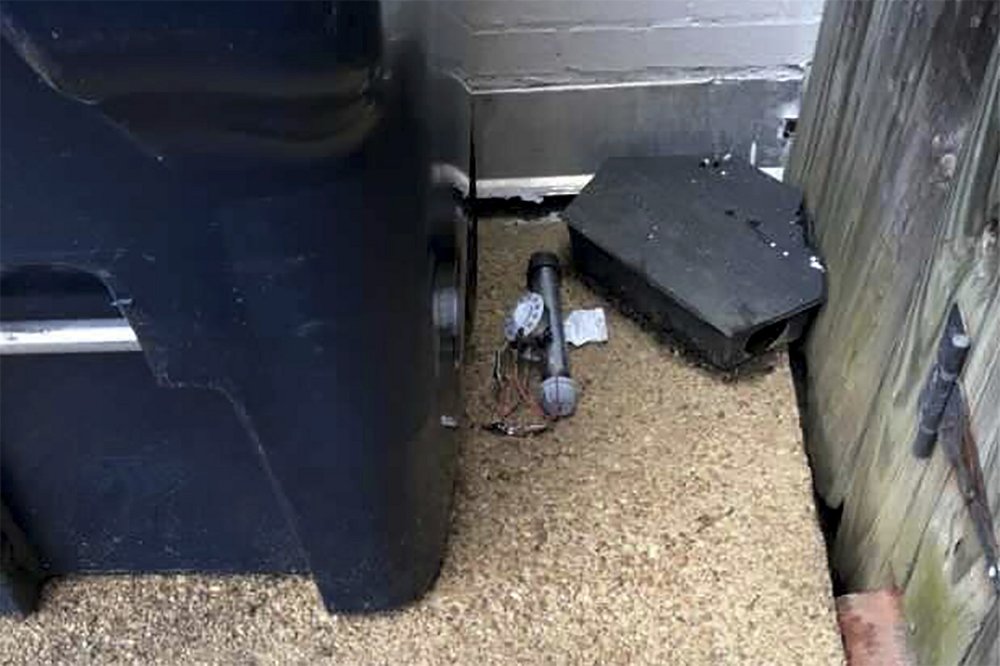
An Alabama man arrested near the U.S. Capitol after the rioting had a truckload of weapons, including components for 11 explosive devices, guns, smoke devices, and machetes, along with a note containing information about a member of Congress, prosecutors wrote in court documents Tuesday. Federal prosecutors wrote that the note and volume of weapons Lonnie Leroy Coffman, 70, had in his truck suggest he had “an intent to provide them to others” and to attack members of Congress. Coffman was charged with multiple firearms crimes. “This is a defendant with access to firearms and numerous other lethal weapons, dangerous incendiary mixtures creating napalm, who appears to have been motivated to conduct violence against our elected representatives, prosecutors wrote in a motion asking for Coffman to remained jailed until trial. The note in the truck referred to a judge appointed by then-president Barack Obama as a “bad guy” and gave the name of a member of Congress, noting the representative is of Muslim faith. “The defendant brought these weapons to the immediate vicinity of the U.S. Capitol Building and traveled the area with two firearms on his person. The amount of weapons suggests an intent to provide them to others, as no one person could reasonably use so many at once,” prosecutors wrote. Coffman, who is from Falkville, was arrested the evening of Jan. 6, after a riot in the U.S. Capitol by a mob backing President Donald Trump. The breach of the Capitol followed a rally earlier in the day in which the president spoke. Prosecutors said Coffman left his truck in the morning that day of chaos and rioting and was arrested when he returned to the truck in the evening. Law enforcement officers said they swept the area after pipe bombs were found near two buildings. “The defendant told law enforcement that he had been trying to get back to the pickup truck throughout the day, but that he was turned away in light of the explosives investigations,” prosecutors wrote. Another Alabama man, who was out on bond on drug charges, was taken into custody Monday after being accused of participating in last week’s riot. Court records show that a judge on Monday revoked the bond for 23-year-old William Watson after prosecutors said he was identified in photographs and video of the riot. “Video surveillance from inside the Capital Building recorded images of protestors inside the building, including images of the Defendant dressed in a yellow sweatshirt standing next to a man with a horned hat. The Defendant was identified by local authorities,” prosecutors wrote in a motion. The FBI released the image of the bearded man in the yellow sweatshirt among photos of rioters they were hoping to identify. WRBL reported that Watson was arrested Monday afternoon in Auburn. Lee County Sheriff Jay Jones said Watson is in the county jail after having his bond revoked. He does not have any federal charges at this time, according to a search of court records. Authorities noted that they were also able to identify Watson by the distinctive tattoos on his hand and that Watson himself appeared to describe his participation in a social media post. “They wanna call me antifa because I have a video game tattoo on my hand and I was pleading for peaceful discourse. Let em say what they will. The fake news won’t win against thousands of patriots who recorded today,” read a social media post that prosecutors attributed to Watson. Republished with the permission of the Associated Press.