
2020 Democratic race is wide open in Iowa as caucuses near
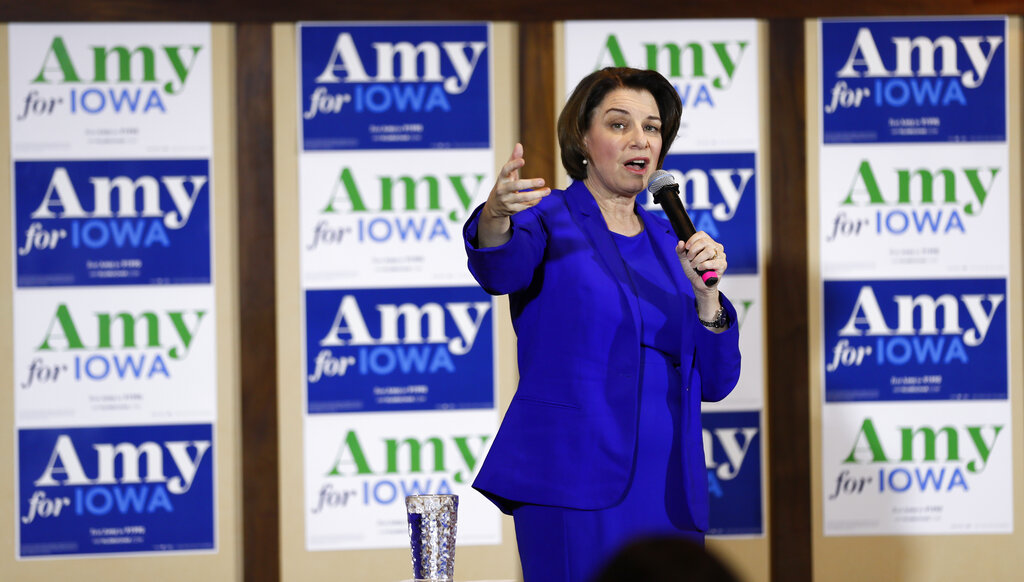
Iowa has a solid record of backing the ultimate Democratic nominee.
Iowa swung fiercely to Donald Trump. Will it swing back in 2020?
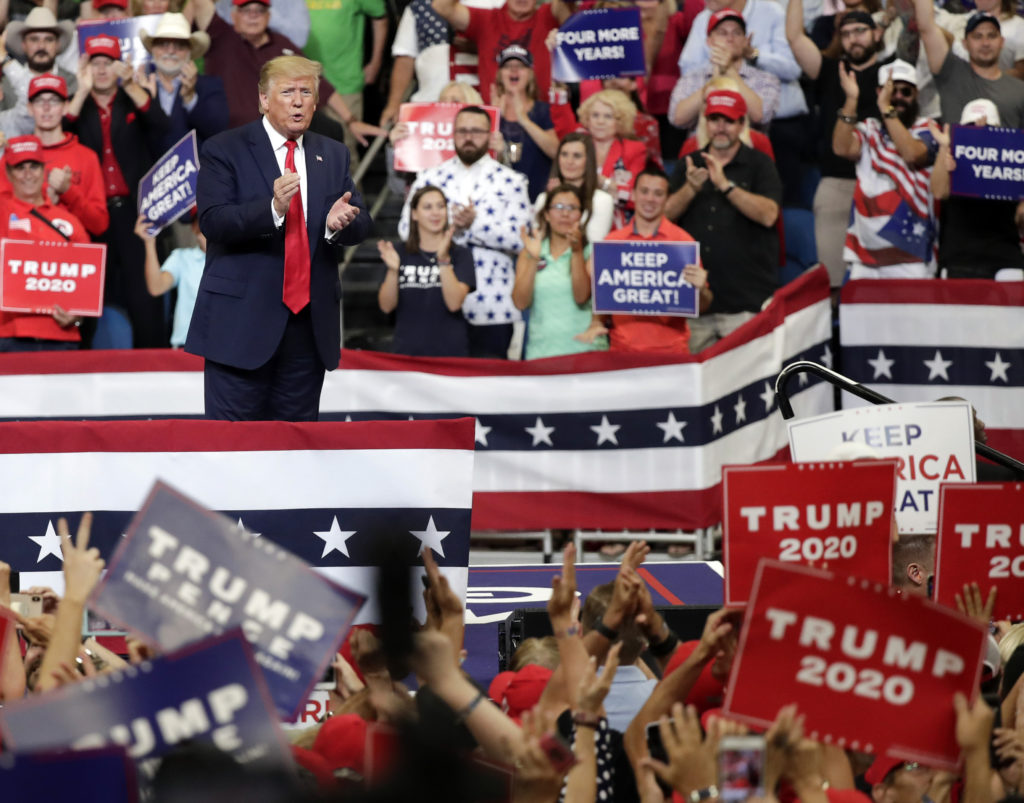
Few states have changed politically with the head-snapping speed of Iowa. Heading into 2020, the question is whether it’s going to change again. In 2008, its voters propelled Barack Obama to the White House, as an overwhelmingly white state validated the candidacy of the first black president. A year later, Iowa’s Supreme Court sanctioned same-sex marriage, adding a voice of Midwestern sensibility to a national shift in public sentiment. In 2012, Iowa backed Obama again. All that change proved too much, too fast, and it came as the Great Recession punished agricultural areas, shook the foundations of rural life and stoked a roiling sense of grievance. By 2016, Donald Trump easily defeated Hillary Clinton in Iowa. Republicans were in control of the governor’s mansion and state legislature and held all but one U.S. House seat. For the first time since 1980, both U.S. Senate seats were in GOP hands. What happened? Voters were slow to embrace Obama’s signature health care law. The recession depleted college-educated voters as a share of the rural population, and Republicans successfully painted Democrats’ as the party of coastal elites. Those forces combined for a swift Republican resurgence and helped create a wide lane for Trump. The self-proclaimed billionaire populist ended up carrying Iowa by a larger percentage of the vote than in Texas, winning 93 of Iowa’s 99 counties, including places like working-class Dubuque and Wapello counties, where no Republican since Dwight D. Eisenhower had won. But now, as Democrats turn their focus to Iowa’s kickoff caucuses that begin the process of selecting Trump’s challenger, could the state be showing furtive signs of swinging back? Caucus turnout will provide some early measures of Democratic enthusiasm, and of what kind of candidate Iowa’s Democratic voters — who have a good record of picking the Democratic nominee — believe has the best chance against Trump. If Iowa’s rightward swing has stalled, it could be a foreboding sign for Trump in other upper Midwestern states he carried by much smaller margins and would need to win again. “They’ve gone too far to the right and there is the slow movement back,” Tom Vilsack, the only two-term Democratic governor in the past 50 years, said of Republicans. “This is an actual correction.” Iowans unseated two Republican U.S. House members — and nearly a third — in 2018 during midterm elections where more Iowa voters in the aggregate chose a Democrat for federal office for the first time in a decade. In doing so, Iowans sent the state’s first Democratic women to Congress: Cindy Axne, who dominated Des Moines and its suburbs, and Abby Finkenauer, who won in several working-class counties Trump carried. Democrats won 14 of the 31 Iowa counties that Trump won in 2016 but Obama won in 2008, though Trump’s return to the ballot in 2020 could change all that. “We won a number of legislative challenge races against incumbent Republicans,” veteran Iowa Democratic campaign consultant Jeff Link said. “I think that leaves little question Iowa is up for grabs next year.” There’s more going on in Iowa that simply a merely cyclical swing. Iowa’s metropolitan areas, some of the fastest growing in the country over the past two decades, have given birth to a new political front where Democrats saw gains in 2018. The once-GOP-leaning suburbs and exurbs, especially to the north and west of Des Moines and the corridor linking Cedar Rapids and the University of Iowa in Iowa City, swelled with college-educated adults in the past decade, giving rise to a new class of rising Democratic leaders. “I don’t believe it was temporary,” Iowa State University economist David Swenson said of Democrats’ 2018 gains in suburban Des Moines and Cedar Rapids. “I think it is the inexorable outcome of demographic and educational shifts that have been going on.” The Democratic caucuses will provide a test of how broad the change may be. “I think it would be folly to say Iowa is not a competitive state,” said John Stineman, a veteran Iowa GOP campaign operative and political data analyst who is unaffiliated with the Trump campaign but has advised presidential and congressional campaigns over the past 25 years. “I believe Iowa is a swing state in 2020.” For now, that is not a widely held view, as Iowa has shown signs of losing its swing state status. In the 1980s, it gave rise to a populist movement in rural areas from the left, the ascent of the religious right as a political force and the start of an enduring rural-urban balance embodied by Republican Sen. Chuck Grassley and Democratic Sen. Tom Harkin. Now, after a decade-long Republican trend, there are signs of shifting alliances in people like Jenny O’Toole. The 48-year-old insurance industry employee from suburban Cedar Rapids stood on the edge of the scrum surrounding former Vice President Joe Biden last spring, trying to get a glimpse as he shook hands and posed for pictures. “I was a Republican. Not any more,” O’Toole said. “I’m socially liberal, but economically conservative. That’s what I’m looking for.” O’Toole is among those current and new former Republicans who dot Democratic presidential events, from Iowa farm hubs to working-class river towns to booming suburbs. Janet Cosgrove, a 75-year-old Episcopal minister from Atlantic, in western Iowa, and Judy Hoakison, a 65-year-old farmer from rural southwest Iowa, are Republicans who caught Mayor Pete Buttigieg’s recent trip. If such voters are a quiet warning to Trump in Iowa, similar symptoms in Wisconsin and Michigan, where Democrats also made 2018 gains, could be even more problematic. Vilsack has seen the stage change dramatically. After 30 years of Republican dominance in Iowa’s governor’s mansion, he was elected in 1998 as a former small-city mayor and pragmatic state senator. An era of partisan balance in Iowa took hold, punctuated by Democratic presidential nominee Al Gore’s 4,144-vote victory in Iowa in 2000, and George W. Bush’s 10,059-vote re-election in 2004. After the 2006 national wave swept Democrats into total Statehouse control for the
Iowa Democrats propose ‘virtual’ caucuses in 2020
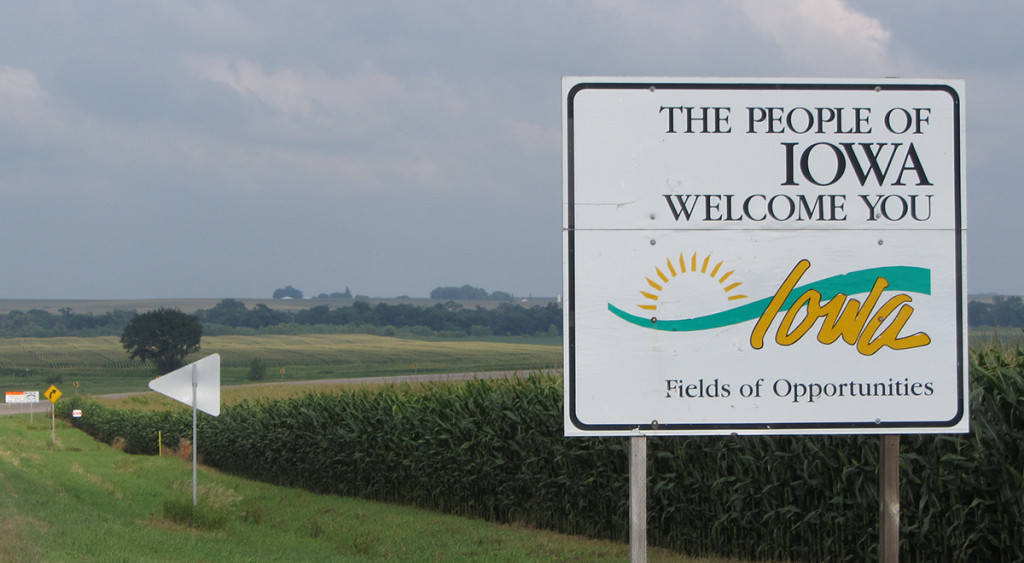
The Iowa Democratic Party on Monday proposed the biggest changes to the state’s famed caucuses in nearly 50 years by recommending Iowans be able to participate virtually. If approved, the measure would allow people to caucus using telephones or smart devices during the days leading up to the Feb. 3 caucus night. It’s a dramatic shift from the current system in which caucusgoers have to physically show up at a site — often a school, church or community center— and show their support for presidential candidates by standing in groups. If the group doesn’t meet an established threshold, the participants have to select another candidate. It’s an often chaotic process that plays out before banks of television cameras on an evening that formally ushers in the presidential primary season. But proponents say it will help address criticism that the caucuses are difficult to attend for single parents, people who work at night and the elderly. “Through this additional process we’re going to be able to give more Iowans a chance to participate in this process,” Iowa Democratic Party Chairman Troy Price said. “Whether someone is a shift worker, a single parent, in the military, living overseas or experiencing mobility issues, this process will now give these individuals a voice in selecting the next president of the United States.” And while Price says the proposed changes are the state party’s effort to open the process often described by critics as antiquated, it was also required by the Democratic National Committee. The results are Iowa Democrats’ attempt at threading the needle of complying while maintaining the essence of the caucuses, which are real-time meetings of fellow partisans. Presidential candidates are already beginning to swarm the state — three were here this weekend. They’ll likely try to determine whether a virtual caucus would help them turn out more of their supporters. “I suspect presidential campaigns who we’ve shared this information with are going to be trying to figure out how to get their members to participate in this,” Price added. Party officials said they didn’t know how many people would take advantage of the new format or how campaigns might seek to capitalize on it. A key element of the proposal, which now goes before Iowa Democrats to comment on for 30 days, is that, no matter how many Iowans participate virtually, their contribution will be factored as a flat 10 percent of the total turnout, apportioned by congressional district. Price said officials reached 10 percent as a starting point, uncertain of how many people might join virtually. “This is a new system so we don’t have any data to tell if this number is too high or too low,” Price said. “And so we are starting the conversation at the 10 percent threshold, and if it goes gangbusters this year, then we will have conversations in subsequent years about if we need to make adjustments.” Hillary Clinton, the 2016 Democratic presidential nominee who narrowly beat Vermont Sen. Bernie Sanders in Iowa that year, criticized the caucus process for deterring late-shift workers and others less able to steal away for an evening of political wrangling. “Campaigns must decide how to organize for that 10 percent,” said veteran Iowa Democratic caucus operative Jeff Link, who did not work for Clinton in 2016 and is not affiliated with a candidate heading into 2020. In another noteworthy development, the state party said it would release the raw data of preferences by caucusgoers, information that is typically kept confidential. The caucuses are a series of preference tests in which candidates without a certain level of support are rendered unviable. This data would give a first glimpse of the candidates’ support before caucusgoers abandon their first choices to side with more viable contenders. The Iowa caucuses are scheduled for February 3, 2020. The proposal won’t be finalized until the spring. Republished with permission from the Associated Press
