
Donald Trump’s VA choice bows out in latest Cabinet flame-out
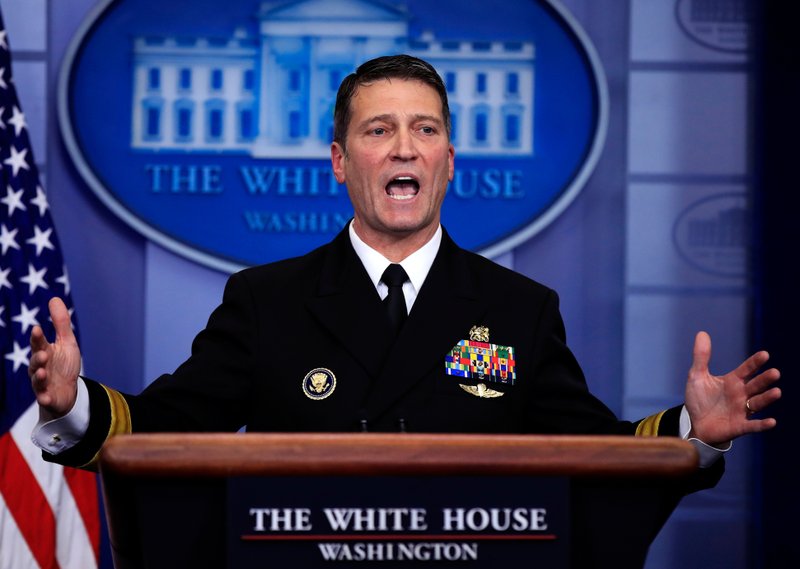
President Donald Trump’s White House doctor reluctantly withdrew his nomination to be Veterans Affairs secretary Thursday in the face of accusations of misconduct, the latest embarrassing episode highlighting Trump’s struggles to fill key jobs and the perils of his occasional spur-of-the-moment-decision-making. The weeks-long saga surrounding the nomination of Navy Dr. Ronny Jackson leaves the government’s second-largest agency without a permanent leader while it faces an immediate crisis with its private health care program. And it abruptly tarnished the reputation of a doctor beloved by two presidents and their staffs. White House officials say they are taking a new look at the way nominees’ backgrounds are checked — and they believe they will persuade Trump to take additional time to ensure that a replacement is sufficiently vetted. The leading person now under consideration for the VA post is former Rep. Jeff Miller, who chaired the House Veterans Affairs Committee before retiring last year, according to White House officials. Miller is a strong proponent of expanding private care for veterans, a Trump priority. Trump quickly selected Jackson, a rear admiral in the Navy, to head the VA last month after firing Obama appointee David Shulkin following accusations of ethical problems and a mounting rebellion within the agency. Jackson, a surprise choice who has worked as a White House physician since 2006, faced immediate questions from Republican and Democratic lawmakers as well as veterans groups about whether he had the experience to manage the massive department of 360,000 employees serving 9 million veterans. Then this week’s unconfirmed allegations by current and former colleagues about drunkenness and improper prescribing of controlled substances, compiled and released by Democrats, made the nomination all but unsalvageable. “The allegations against me are completely false and fabricated,” Jackson said in a statement announcing his withdrawal. Press secretary Sarah Huckabee Sanders said Jackson was back at work at the White House on Thursday. But his future there remains uncertain. He had stepped aside from directing Trump’s medical care and leading the medical unit while his nomination was being considered. “I would hope the White House would closely consider whether he is the best person to provide medical care for the president,” said Democratic Sen. Chris Coons of Delaware. Trump himself praised Jackson, saying, “He’s a great man, and he got treated very, very unfairly.” Then the president went after Democratic Sen. Jon Tester of Montana, who released a list of allegations against Jackson that was compiled by the Democratic staff of the Senate Veterans Affairs Committee. Trump aides said the president was furious with Tester, who faces a tough re-election fight this fall, and plans to aggressively campaign against him. “I think Jon Tester has to have a big price to pay in Montana,” Trump warned on “Fox & Friends” on TV. Tester, meanwhile, called on Congress to continue its investigation of Jackson. “I want to thank the service members who bravely spoke out over the past week. It is my constitutional responsibility to make sure the veterans of this nation get a strong, thoroughly vetted leader who will fight for them,” he said. Elsewhere in the capital, Congress was questioning another Trump official whose job appears in jeopardy. Scott Pruitt, head of the Environmental Protection Agency, was questioned closely by House Democrats about revelations of unusual security spending, first-class flights, an advantageous condo lease and more. Even Republicans who support Pruitt’s deregulation efforts, said his conduct needed scrutiny. Tom Price, Trump’s first secretary of the Department of Health and Human Services, resigned last year after criticism of his use of private charter flights and military jets. The turmoil at the VA comes as it faces a budget shortfall for its private-sector Veterans Choice program, a campaign priority of Trump’s, with lawmakers deadlocked over a long-term fix due to disagreements over cost and how much access veterans should have to private doctors Veterans are “exhausted by the unnecessary and seemingly never-ending drama,” said Paul Rieckhoff, executive director of Iraq and Afghanistan Veterans of America. “VA’s reputation is damaged, staff is demoralized, momentum is stalled and the future is shockingly unclear.” The VA issued a statement late Wednesday that it would push to have Congress move on an expansion of Choice next month. Sen. Johnny Isakson of Georgia, chairman of the Veterans Affairs Committee, said Thursday he would “work with the administration to see to it we get a VA secretary for our veterans and their families.” White House officials were visibly dismayed Wednesday and Thursday as they watched Jackson suffer the blows of the allegations. The doctor, who is well-liked by and has personal relationships with many White House staffers, cited the withering pressure for withdrawing from consideration for the post, but maintained he had done nothing wrong. Trump said on Fox that he has an idea for a replacement nominee, adding it will be “someone with political capability.” Miller, the former congressman who was described as the leading candidate, is a strong proponent of expanding private care for veterans, Miller led the push to create Choice in 2014. However, major veterans groups and Democrats stand opposed to an aggressive expansion of Choice, seeing the effort as a potential threat to VA medical centers. Dan Caldwell, executive director of the conservative Concerned Veterans for America, urged the White House to take more time “to carefully select and vet a new nominee” who could head VA. “The VA currently has a competent Acting Secretary in Robert Wilkie who can manage the VA along with the rest of his leadership team,” he said. “Considering the tremendous challenges that the last three VA secretaries have faced, it is important that a capable individual with a high level of integrity is selected.” During the presidential campaign, Trump repeatedly pledged to fix the VA by bringing accountability and expanding access to private doctors, criticizing the department as “the most corrupt.” At an Ohio event last July, Trump promised to triple the number of veterans “seeing the doctor of their choice.” Currently, more than 30
Republicans beginning to make peace with Donald Trump as nominee
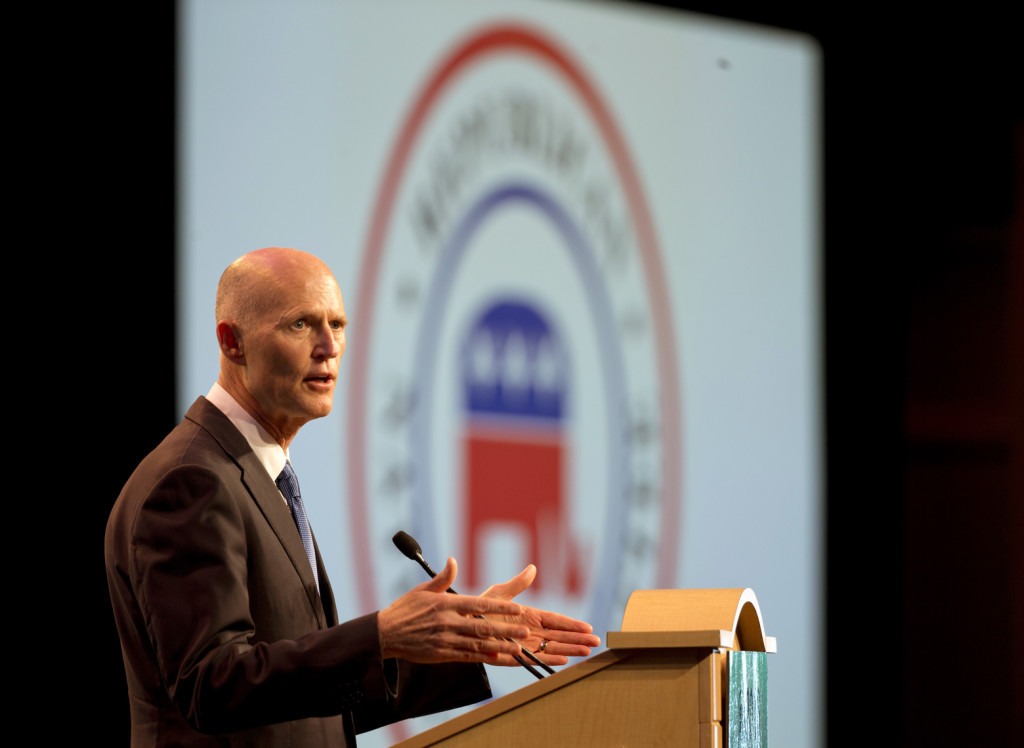
They thought it was impossible. Some still fear it. Others can barely believe it. But leading Republicans are beginning to accept the idea that Donald Trump will be their party’s presidential nominee. In the wake of the businessman’s commanding wins in five Eastern states this week, a growing number of national Republicans and GOP lawmakers on Capitol Hill say Trump has taken on an indisputable air of inevitability. Some argue they should get behind him now and abandon the “Never Trump” efforts still nursed by some establishment Republicans. Embracing Trump, these Republicans say, may be the GOP’s only hope of blocking Democrat Hillary Clinton in November. “Donald Trump is going to be our nominee,” Florida Gov. Rick Scott wrote on Facebook this week. “The Republican leaders in Washington did not choose him, but the Republican voters across America did choose him. The voters have spoken.” “Republicans now need to come together,” Scott wrote, warning that continued opposition to Trump “will be nothing more than a contribution to the Clinton campaign.” On Capitol Hill, support for Trump has also gotten markedly easier to find. “I don’t understand. I mean, it’s not ‘Never Trump.’ It’s ‘Never Hillary.’ Never, never, never Hillary. Come on. Wake up and smell the coffee,” said Rep. Mike Kelly of Pennsylvania, who earlier this week cast his ballot for Trump, along with all members of his large family and 57 percent of Republican primary voters in his state. “I’ve never seen a party attack one of its own candidates with this aggressiveness,” Kelly said of GOP establishment figures who oppose Trump, blaming it on an elitist Washington attitude out of touch with voters. Sen. Orrin Hatch of Utah, a respected senior member of the Senate, previously endorsed Jeb Bush and then Sen. Marco Rubio and said he doesn’t intend to endorse Trump. But Hatch said of Trump, “It looks to me like he’s going to win, and if he does, I’m going to do everything in my power to help him.” Some leading Republicans have forecast that a Trump candidacy could spell electoral disaster, help Democrats win back control of the Senate and even cost safe Republican seats in the House. They point to Trump’s disparaging comments about women and minorities that have contributed to high unfavorability ratings. Hatch, along with others, disagreed. “I think he could be great if he’ll get serious about being president, and I think he will,” Hatch said. “When he gets hit with reality that this is the toughest job in the world, he’s a clever, smart guy who I think will want to be remembered for doing good things, so I have a feeling he can make that transition.” On Thursday, Trump picked up endorsements from two House committee chairmen: Reps. Bill Shuster of Pennsylvania, who chairs the Transportation Committee, and Jeff Miller of Florida, who chairs Veterans Affairs. He talked foreign policy in a phone call with Sen. Bob Corker, R-Tenn., who heads the Foreign Relations Committee. Corker later was full of compliments about Trump, though he said he had no plans to endorse him. To be sure, not all are on board. Some in the GOP continue to cringe at the thought of vulnerable Senate Republicans and candidates getting linked to Trump’s provocative stances or attempting to distance themselves from them. “My feeling about Donald Trump is, I don’t think that that’s our best foot forward at all,” said Sen. Jeff Flake of Arizona, an outspoken Trump critic. “And I can’t imagine being forced to take some of those positions that he’s taken. A ban on Muslims, build a wall and make the Mexicans pay for it, you name it.” It remains uncertain whether Trump will amass the 1,237 delegates needed to clinch the nomination ahead of the Republican convention in Cleveland in July. If he does not, Texas Sen. Ted Cruz hopes to make a play to win the nomination as balloting progresses. Ohio Gov. John Kasich also remains in the race. Next week’s primary in Indiana, where polling suggests a close race, could be crucial in determining whether either Cruz or Kasich can continue to argue they have a path forward. Roger Villere, longtime Louisiana state GOP chief and one of the national party’s vice-chairmen, said a “clear supermajority” at the Republican National Committee spring meeting earlier this month in South Florida were warming to the idea of Trump as standard-bearer. “There were a lot of them who Trump wasn’t their first choice, but when we got in closed rooms and everybody started talking, the general consensus was that he’s going to be our nominee, and we will rally around him,” Villere said Friday. “I wouldn’t say it was even reluctance. It’s just the reality.” Offering a common party refrain, Villere added, “All of our possibilities are clearly superior to what the Democrats have.” Republished with permission of the Associated Press.
Supersonic jet manufacturer eyeing Mobile as possible plant site

Aerion Corporation says they are considering the rising manufacturing hub of Mobile for a new American plant to produce parts for the state-of-the-art AS2 supersonic jet. Nevada-based Aerion is a contractor with Airbus, the French aerospace firm which designed the AS2, which can travel faster than the speed of sound, rendering a normally 12-hour trans-Atlantic flight just three hours long. An Aerion spokesperson, Jeff Miller, told CBS 5 in Mobile the firm is carefully considering its next plant location but that Alabama is very much in contention. “We are really going to do our homework and identify the best candidate cities with the right kind of airport and infrastructure. I will say Mobile cannot be excluded,” said Miller. “Mobile certainly has a number of attractive features, but it’s just too soon to start rating candidate cities,” Miller continued. Local aviation and municipal officials in Mobile have been mum on the project. “Any ongoing economic development project, we don’t comment one way or the other about it until a contract is signed,” Mobile Mayor Sandy Stimpson said Thursday. “We pursue everything that has to do with avionics right now…that’s really all I can say about that.” A spokesperson for the city’s Brookley Aeroplex – which meets many of the company’s specifications, including aerospace infrastructure and proximity to water – offered a similar response to inquiries this week. The aeroplex almost certainly would, however, benefit from an existing relationship with Airbus and related contractors within city limits. Aerion says the will to announce their location in early 2016 and begin construction in 2018. Miller said if all goes well, Aerion will start test flights in 2021 and hopefully start producing jets in Alabama by 2023. The plant would be a huge “get” for the local economy, recently buoyed by good regulatory and economic developments in the manufacturing sector.
