
JeffMet Park expansion to add thousands of jobs, officials predict
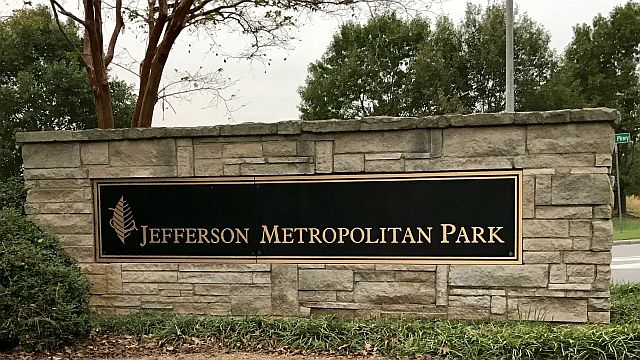
The Jefferson County Commission voted last week to rezone land in the existing Jefferson Metropolitan Park in McCalla that could bring thousands of additional jobs to the Birmingham metro area and have a substantial impact on economic development in the region. The commission unanimously approved rezoning of about 410 acres to industrial from agriculture on property purchased by the Jefferson County Economic and Industrial Development Authority (JCEIDA). The rezoning includes another 230 acres that will be acquired by the JCEIDA by the end of the month. The authority began buying the land in July. “Based on projects in the queue, I would project another 5,000 citizens will be employed at the park in the future,” said Commissioner David Carrington, chair of the county’s Finance, Information Technology and Business Development committee. “Whenever I look at a parcel of developable property, I don’t see land; I see jobs.” Ted vonCannon, executive director of JCEIDA, echoed what the park has meant to the workforce in Jefferson County. “Those are jobs that are not going to Georgia or some of our sister communities,” he said. “At one end (of the park) we have Publix and at the other end we have Home Depot. We have Gestamp, which is the largest employer in the park (that) will have probably have over 900 jobs when they finish up – and that’s just one company.” The commission voted to rezone three parcels of property in the park which is home to 13 companies: seven domestic and six international. Those companies range from Publix and Home Depot to Plastipak, which makes bottles for water and Gestamp, which makes parts for automobile manufacturers. “Expansion is key to attracting more companies with good paying jobs for our citizens,” said Commissioner Joe Knight. “Jefferson County has limited suitable land for companies needing large tract areas for expansion and construction … rezoning of the land allows us to proceed with the expansion of our park as it is important to invest now for future growth.” Currently, more than 3,000 people work at the JeffMet Park “and the annual payroll is more than $100 million,” said Carrington. The location of the existing park, which opened in 2000 with about 720 acres that could be developed, is a vital part of growth in the county, he said. “Next to available land, transportation network availability is very important to many manufacturing projects,” he said. “The park is adjacent to the Norfolk Southern’s Intermodal Facility with three miles of rail access available and it’s within a half mile of I-20/59. “Based on the successes of the last few years and the active prospects in the queue, it became obvious that the county needed to acquire more land in order to recruit more jobs,” he continued. “Only 140 acres remain for development: three industrial sites totaling 110 acres and one 30-acre commercial site.” Carrington reiterated the economic development impact for the county and the entire state. “While we celebrate new projects in all areas of the state, economic development in our region clearly has the largest impact on the health of the state’s overall economy,” he said. “The Birmingham metro area, anchored by Jefferson County, is Alabama’s primary economic engine, representing more GDP (Gross Domestic Product) than Mobile, Montgomery and Huntsville combined.” Knight added that the park is state of the art, well maintained and “offers $9.7 million in property taxes alone, which helps to fund our government without raising taxes.” “All in all, we are excited about the future of this park and excited about the future of Jefferson County,” he said. Republished with permission from the Alabama NewsCenter.
Jefferson County schools to add resource officers

An Alabama county plans to put a school resource officer in every county school as part of a new safety plan, local officials announced in a Thursday press conference. Jefferson County Sheriff Mike Hale said there are currently 25 officers for the 56 schools in the county school system. He said they plan to hire enough contract deputies to cover all 56 county schools. “We are committed to ensuring that our most precious resource, our children, have a safe environment to learn and grow up in,” Hale said. The plan to try to boost the number of trained police officers in schools was announced along with the creation of a new threat assessment team. Hale said his department is interested in hiring retired law enforcement officers because of their experience, but he said additional training will be done for learning to work in a school environment. The cost of the additional hires is an estimated $1.2 million which will be split between the Jefferson County Board of Education. Hale told reporters that cost could go up to $1.5 million with overtime. “Can we afford this? The answer is we can’t afford not to do it,” Hale said. The sheriff said a threat assessment team, comprised of an investigator, education official and mental health professional, will identify troubling behavior patterns and assist students. Superintendent Craig Pouncey thanked the sheriff and the Jefferson County Commission for their support of the plan. The announcement comes two days after a federal school safety commission met in Alabama. The Federal Commission on School Safety met Tuesday at the Alabama Capitol for their final listening session on how to improve school safety. The group was created by President Donald Trump after 17 people were killed at a shooting at a Florida high school in February. Republished with the permission of the Associated Press.
DC BLOX building ‘flagship’ data center in Birmingham
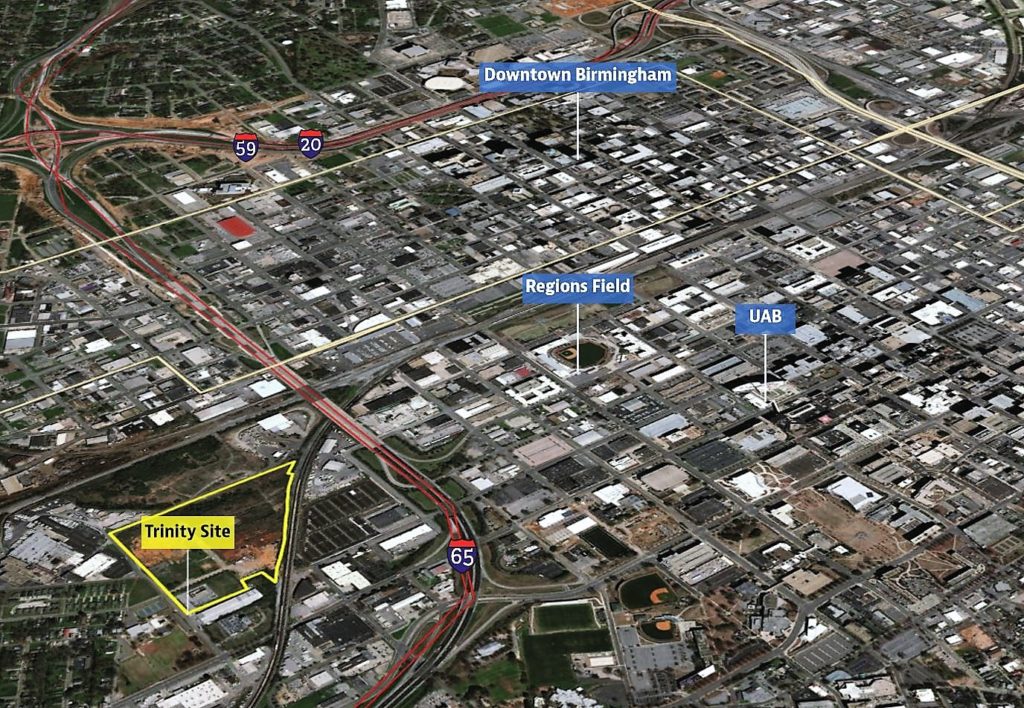
Atlanta-based DC BLOX said today it is building a data center on the former Trinity Steel site in downtown Birmingham, creating 20 jobs initially with the potential to grow up to $785 million in capital investment and add jobs over the next decade. “The significant investment being made by DC BLOX to open this data center in Birmingham will not only create high-paying jobs, but also bring an exciting new chapter to a neighborhood in the city with a long industrial history,” Alabama Gov. Kay Ivey said. “We’re committed to positioning Alabama for a technology-focused future and look forward to working with the company to accelerate that process.” The 31,000-square-foot first phase of the multi-tenant Birmingham data center joins others DC BLOX has built or announced in Huntsville, Atlanta and Chattanooga. DC BLOX plans to break ground in August and have a facility configurable up to 5 megawatts (MW) of customer capacity by early 2019. As customers are added, the facility can grow up to 200,000 square feet and 80 MW. Plans are for the facility to have 13,000 square feet of office space with conference rooms, staging areas and work stations. “The Birmingham data center campus will unquestionably be our flagship property, capable of scaling to over 200,000 square feet of secure, government-grade data center space,” said DC BLOX CEO Jeff Uphues. “We believe this site will be a highly compelling alternative in the Southeast to Atlanta for enterprise, hyperscale cloud, software-as-a-service, government, network and content providers. It’s our focus to create a multi-purpose innovation campus with collaborative workspaces worthy of housing global technology companies and academia dedicated to research and collaboration.” DC BLOX has been scouting sites in Birmingham for nearly a year. “DC BLOX wanted to be in Birmingham because of its strong local economy, geographic location, fiber optic network connectivity and the University of Alabama at Birmingham,” said Mark Masi, COO of DC BLOX. “We are thankful to the city of Birmingham, Jefferson County and the state of Alabama for collaborating with DC BLOX on this project.” During the construction and operational phase, the project is expected to have an economic impact of $94 million on the Birmingham metropolitan area, more than $80 million of which will be in Jefferson County, according to an analysis prepared by the Center for Business and Economic Research at the Culverhouse College of Business at the University of Alabama. The Birmingham Business Alliance commissioned the analysis. Economic impact on the state is estimated to be $99 million. “Because data centers represent the backbone of the technology infrastructure, we see strategic benefits for Alabama to host state-of-the-art centers that keep the world connected,” said Alabama Commerce Secretary Greg Canfield. “DC BLOX is joining an impressive roster of technology companies selecting Alabama for their data centers, and we want to see that list grow.” Jefferson County Commissioner David Carrington predicted DC BLOX’s data center will attract future business. “DC BLOX will be a tremendous asset to the existing companies throughout Jefferson County and a tool to attract new companies here,” Carrington said. “This takes Birmingham’s thriving innovation ecosystem beyond its usual physical boundaries of the city center and extends it into an area that will only strengthen our core.” The new DC BLOX data center brings new life to the former Trinity Steel property, which county and city officials have long sought to bring back to productive use. “The city of Birmingham was proud to work with DC BLOX to bring this significant data center project to Birmingham,” said Mayor Randall Woodfin. “In addition to utilizing a long-vacant property in our city and transforming the surrounding neighborhood, this will serve as the company’s flagship data center and a tool to attract further business to the area.” The team luring DC BLOX to the site included the Alabama Department of Commerce, Jefferson County Commission, Jefferson County Economic and Industrial Development Authority, the city of Birmingham and its Department of Innovation and Economic Opportunity, Titusville Neighborhood Association, Birmingham Industrial Development Board, Alabama Power, Spire, Economic Development Partnership of Alabama and the Birmingham Business Alliance. “The $785 million investment over the next 10 years to build this data center technology campus represents the single largest project investment in Jefferson County in many years,” said Lee Smith, East Region CEO for BBVA Compass and 2018 chairman of the Birmingham Business Alliance. “DC BLOX recognizes the importance of Birmingham’s innovation and technology economy, and they share our vision that having a location near downtown will optimize the company’s growth opportunities. As with any successful economic development project, a great team worked together with the company to ensure its needs are met and that the project is mutually beneficial to the company, community and state.” Republished with the permission of the Alabama Newscenter.
Bessemer City Council and Jefferson County Commission to vote on incentives to land Amazon

Amazon is in talks to build a warehouse near Birmingham that could create up to 3,000 jobs. Public notices show Amazon plans an 855,000 square-foot (7,900 sq. meter) fulfillment center in Bessemer. The Jefferson County Commission will vote next week on spending up to $3.3 million to fund road work and pay incentives to Amazon. The Bessemer City Council will consider giving part of the city’s occupational tax collected from Amazon employees to the company. Bessemer would cap permit fees at $200,000 and cap its annual business license tax at $5,000. Jefferson County Commissioner Jimmie Stephens tells news outlets the state will also offer undisclosed incentives. Commissioner David Carrington says the facility could open in fall 2019. The warehouse is targeted for 133 acres (54 hectares) owned by U.S. Steel. Republished with permission from the Associated Press
Jefferson Co. Commissioner, breast cancer survivor Sandra Little Brown highlights local breast cancer partnerships
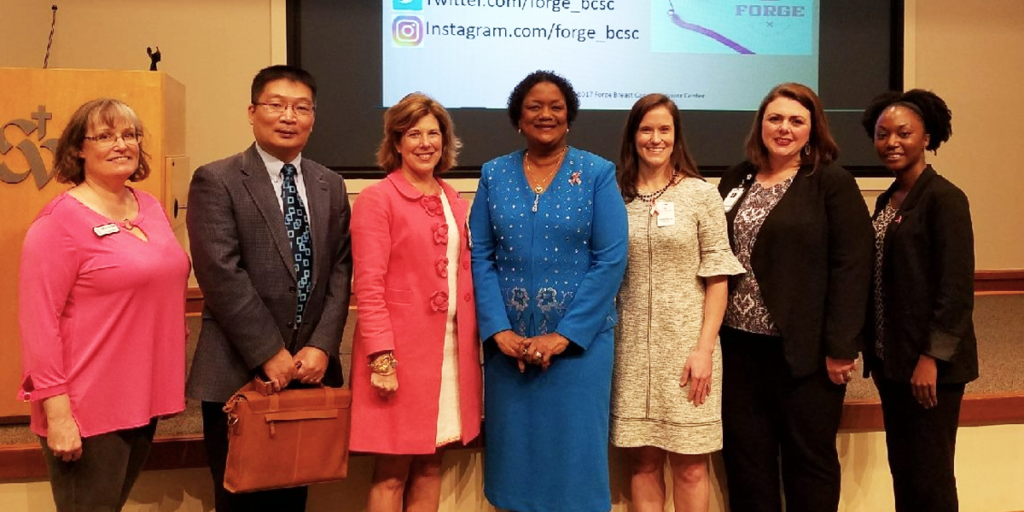
Three years after Jefferson County Commissioner Sandra Little Brown fought her own battle with breast cancer and won, she’s still working to help increase awareness about the life-threatening disease. On Friday, she joined forces with St. Vincent’s Health System to host a community breakfast to highlight local partnerships that are doing their part in helping improve breast cancer awareness, research and care in the Birmingham metro area. Speakers at the event included: Veronica Wehby-Upchurch | Executive Diector of Susan G. Komen North Central Alabama Dr. Bo Xu | Chair of the Oncology Department at Southern Research Beth Bradner Davis | Executive Director of the Breast Cancer Research Foundation of Alabama Susan Sellers | President of St. Vincent’s Foundation Caroline McClain | Manager of Forge Breast Cancer Survivor Center Brenna Powell | Chief Strategy officer at St. Vincent’s Health System. Local partnerships The program highlighted the work of Forge Breast Cancer Survivor Center, which is a collaboration between all Birmingham area hospitals, the Community Foundation of Greater Birmingham, and other community partners. Forge’s creation was first announced in 2014. “This program brings together Birmingham’s wonderful healthcare resources with the goal of improving support and care for all people who have been diagnosed with breast cancer,” said Caroline McClain, manager of Forge Breast Cancer Survivor Center ahead of the event. “Forge works locally and in rural communities to remove barriers to care and gaps in service; navigate survivors and their families through diagnosis, treatment, and beyond; and support and educate healthcare professionals. Forge is constantly evolving to meet the ever-changing needs of survivors, their families, and the health systems. We are proud to provide exactly what they need, when they need it, and how they need it.” The event also highlighted two Birmingham-based entities: Southern Research and the Breast Cancer Research Foundation of Alabama, that are working to advance knowledge and develop new therapies for breast cancer. Susan G. Komen’s North Central Alabama chapter discussed its work with local organizations and individuals to raise awareness about breast cancer, which is one of the most common cancers among U.S. women. Breast cancer facts The American Cancer Society estimates that 266,120 women across the country this year will be diagnosed with invasive breast cancer and almost 41,000 will die from the disease. The Cancer Society estimates that 3,760 of those cases and 670 of those deaths will be in Alabama. Early detection and proper treatment can reduce the risk of dying from breast cancer. Over the past 20 years, progress in treatment and early detection has led to improved survival for people of all ages, races and stages of breast cancer. But experts say work remains to be done to ensure women are aware of the importance of regular screening and have access to tests that can find breast cancer early, when the chances of survival are highest. Increasingly, attention also has been focused on the importance of continued follow-up care even after breast cancer treatment has been completed. Survivors may need ongoing emotional support, and their treatment may leave them at higher risk of other conditions, such as heart disease, that require ongoing attention. “It’s exciting to see the work being done right here in our own community to meet all the needs – from raising basic awareness, to finding new treatments, to providing the best possible care over the long term,” said Brown. “There is more work to do, but we are making progress every day.”
Jefferson County Commission plans to clean up county, demolish dilapidated houses
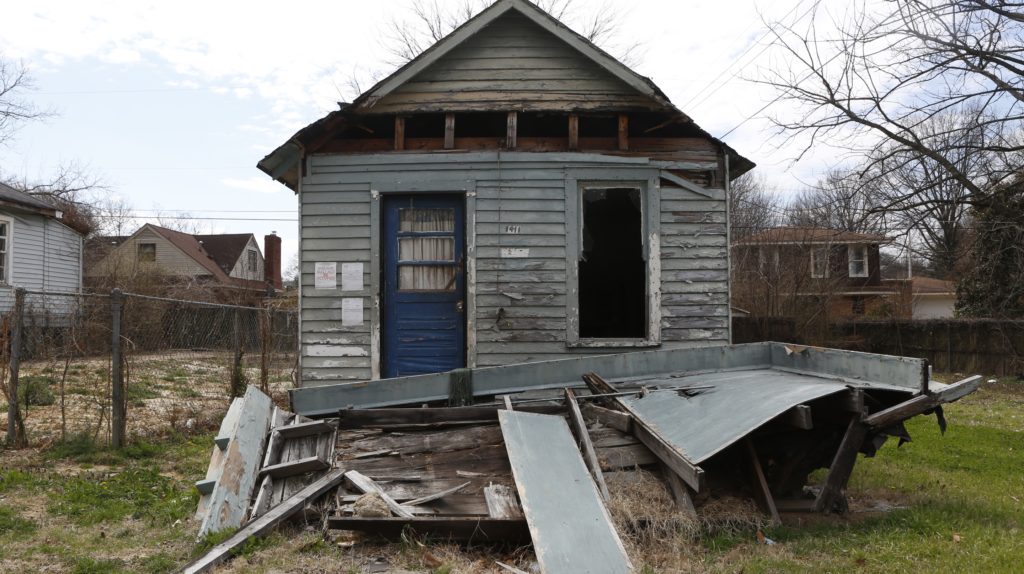
The Jefferson County Commission is making plans to clean up the county and demolish dilapidated houses. According to Birmingham Watch, at the commission meeting last Thursday, commissioners moved the matter of demolishing a structure at to the consent agenda. “It’s something we haven’t had in our toolshed, our repertoire to work with,” Commission President Jimmie Stephens said at the meeting. “When we have a dilapidated home that becomes a public nuisance, whether it’s been abandoned by a storm, tornado or whether it’s been abandoned for lack of use, we need to have the tools – and now we do – to go in and demolish that home and clean it up for the neighborhood.” Stephens further explained that he hopes more money is added to the budget to demolish more dilapidated homes next year. “It’s long overdue,” Stephens added. “We want to put funds in the budget next year so we can do that in a meaningful way… If you have 10 (dilapidated) homes in a community that need to be demolished, it won’t do any good to do two of them,” he said. “We need to have a plan in place where we can … work on X community this year and next year work on Y community.”
David Carrington eyes 2018 gubernatorial run
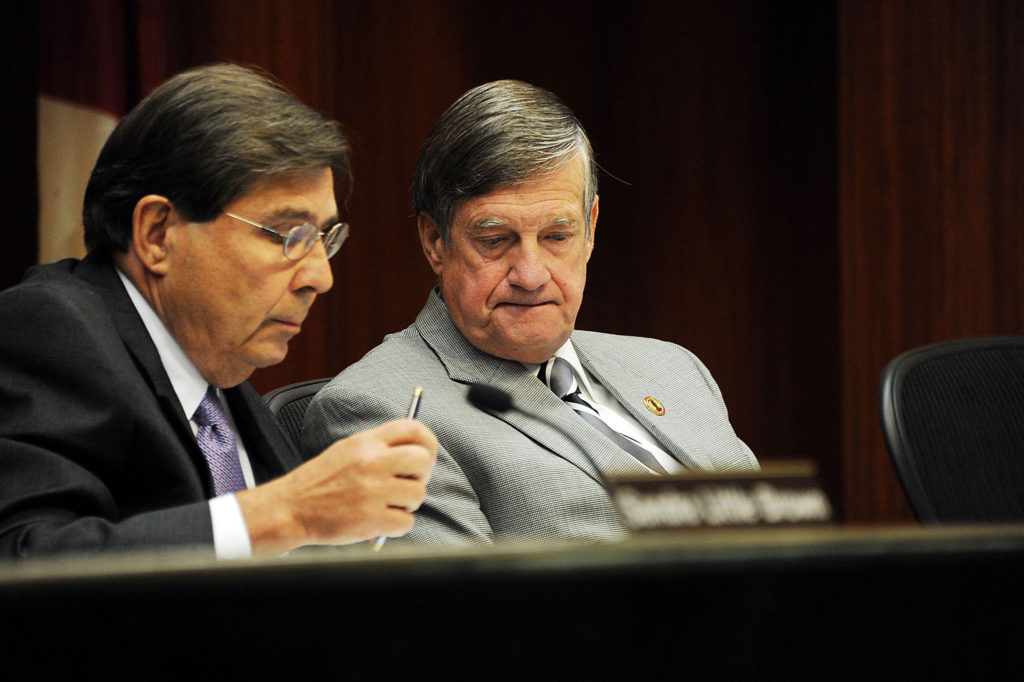
Republican David Carrington announced Tuesday that he has his sights set on becoming Alabama’s next governor rather than running for another term on the Jefferson County Commission. Carrington said GOP insiders told him he was “cutting into the front of the line,” but the commissioner said his background as a city council and commission president makes him more qualified to be Alabama’s top elected official in 2018 than others. “I honestly don’t believe that a Washington or Montgomery insider, who either created the mess in Montgomery or stood idly by while the mess was being created, can do what needs to be done in Montgomery to right the ship,” he said. Carrington was president of Jefferson County when it filed for bankruptcy in 2011, and has presided over budget cuts and staff reductions that have caused multiple debt rating services to upgrade the county’s rating. The commissioner also serves as president of RacingUSA.com, a website that bills itself as the “world’s most frequently shopped, independently owned store for officially licensed NASCAR merchandise.” The path from Jefferson County Commissioner to the governor’s mansion is a long one, and Carrington will have to face off against many better-known and well-funded candidates vying for the job. Still, Carrington believes he is the most qualified candidate for the job. “Here is the way I see it,” he said Tuesday on the Matt Murphy Radio Show. “Montgomery is a mess, as was Jefferson County the day I was sworn into office six years ago. Now, hardly a day goes by that someone doesn’t tell me that things are much better in Jefferson County than they were on my first day in office. “Let’s be honest, not many citizens gave me and my fellow commissioners a prayer of ever turning around Jefferson County and it was accomplished in less than four years,” he continued. “I truly believe the same can happen in Montgomery with the right leadership team.”
Workers at Birmingham’s U.S. Steel face uncertainty after layoffs
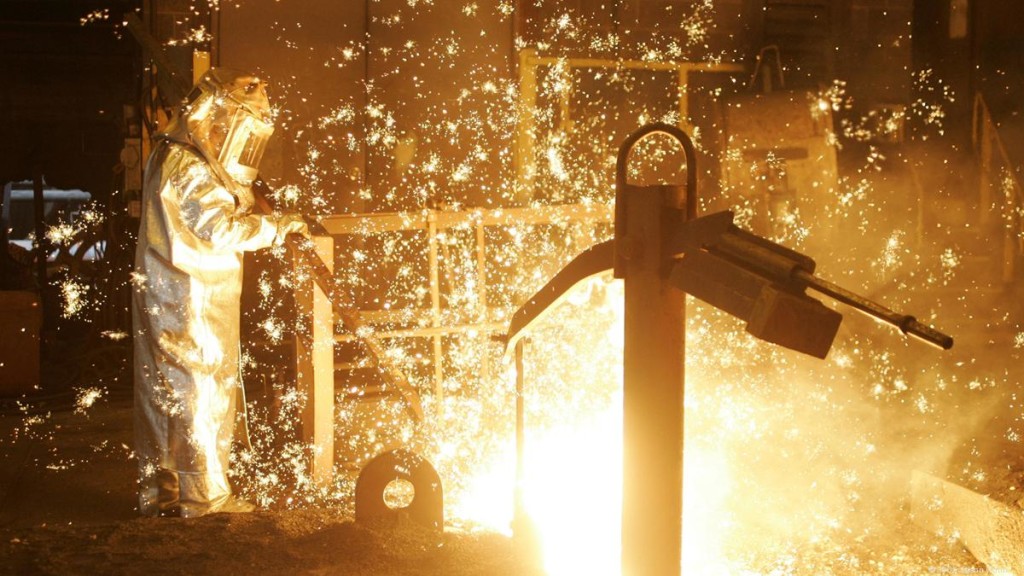
Cancer forced Isaiah Henderson to stop working in December. An employee of U.S. Steel for eight years, Henderson found out in August there would be no job to come back to because of layoffs after to the shutdown of the Fairfield blast furnace. About 1,100 of U.S. Steel’s Fairfield employees are joining the 42-year-old McCalla man in unemployment as the company, once Birmingham’s largest employer, cuts jobs nationwide. Henderson isn’t bitter. But like hundreds of others affected by the cuts, he faces uncertainty. “When times were good, it was an excellent place to work. Great pay, great benefits,” Henderson said. “The last couple of years, it’s just gone down. With the economy being the way it’s been, there was nothing that could be done.” “The current trade situation has made the situation much worse,” David Clark, president of United Steel Workers Local 1013, said in a recent interview. “We have global over-capacity. We cut our output across the U.S., but China is running above capacity or at capacity. “And the recent trade agreements offer very little to no protection to workers. It’s all just made the situation worse.” Volunteers met Friday at the union hall to unload pallets of donated food to stock a pantry set up to help the workers. More than an hour before it was set to open, a line formed on the sidewalk and people took numbers to get a turn. Derek Smith, a 34-year-old McCalla resident, was there to help out even though he himself was laid off from his position as a business planner for the company about a month ago. Smith, a husband and father to a 2-year-old and 5-year-old, said he was there to pitch in because he knows many who have been laid off longer than him are struggling. “It’s tough on people. It’s tougher on others,” Smith said. “Lord knows, I’d appreciate it when it comes my turn. “This affects so many people. There are a whole lot of people hurting.” For Jefferson County Commission President Jimmie Stephens, the situation is sadly familiar. Stephens can still remember the early 1980s layoffs at Pullman-Standard, one of the nation’s largest rail-car makers, and Birmingham-area steel mills. By 1983, Bessemer’s unemployment rate was more than 30 percent and the damage was felt for decades. “(Bessemer) just now has a diverse enough economy to come back, and you still see lingering effects,” Stephens said. Stephens worries now about those laid off from U.S. Steel, and the hundreds of miners laid off from Walter Energy, and what those job losses will do to west Jefferson County. “We are being hit twice and it’s going to be devastating,” Stephens said. “We’re trying to place some of these workers. It’s imperative we bring other businesses to the western part of the county to help these workers.” Stephens said he is working with Lawson State Community College and mayors of west Jefferson cities to try and develop a plan to recruit businesses and create a list of available industrial locations to recruit new companies. “We’ve never done that before. It’s more imperative now than ever before that we do that.” John Purifoy said he knows his time is coming. U.S. Steel has told him he’s being laid off but has not said when. “It’s hard when you have worked somewhere as long as I have and it feels like it’s been stable,” said Purifoy, an 18-year veteran of the company. “Then people who have never seen you or know your situation decide you’re no longer needed.” The 43-year-old Calera man said the uncertainty takes a toll. “It used to be the ‘what if this happens’ that was overwhelming. Now, it’s the ‘when’ that’s overwhelming,” Purifoy said. “Where do you go next?” Smith said he has résumés out and applications filed after losing his job of more than 13 years. “It’s a punch in the gut,” Smith said. “Something that has been steady for years isn’t there anymore.” Smith said he just hopes to find a job that pays as well as U.S. Steel did. “More than likely, that’s not going to happen. You just have to adjust. That’s life,” Smith said. Republished with permission of The Associated Press.
