
Queen Elizabeth II, a monarch bound by duty, dies at 96
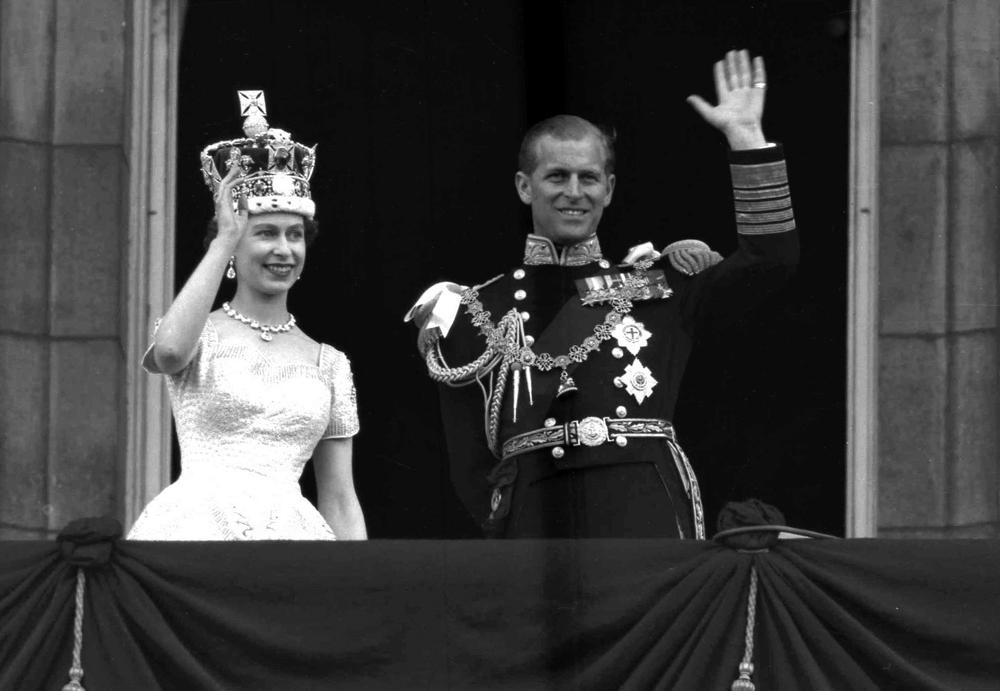
On her 21st birthday in 1947, Princess Elizabeth went on the radio and made a promise to Britain and its Commonwealth nations: She pledged that “my whole life, whether it be short or long, will be devoted to your service.” Over her very long life, Queen Elizabeth II fulfilled that vow. Through 15 prime ministers, from Winston Churchill to Liz Truss. Through Britain’s postwar deprivations, crippling labor unrest, and Brexit. Through the messy divorces, embarrassments, and scandals of her family. She endured through it all — a reassuring anchor in a fast-changing world. The longest-reigning monarch that Britain has ever known, Elizabeth died Thursday at 96 at Balmoral Castle, her beloved summer home in Scotland, after having steadied and modernized the royal institution through seven decades of huge social change. Her passing ends an era, the modern Elizabethan age. Her 73-year-old son, Charles, automatically became king upon her death. He will be known as King Charles III, although his coronation might not take place for months. Through countless public events in her 70 years as monarch, Elizabeth likely met more people than anyone in history. Her image — on stamps, coins, and banknotes — was among the most reproduced in the world. But her inner life and opinions remained mostly an enigma. The public saw only glimpses of her personality: her joy watching horse racing at Royal Ascot or being with her beloved Welsh corgi dogs. Yet Elizabeth had an intuitive bond with many of her subjects that seemed to strengthen over time, keeping a sense of perspective that served her well in most instances, said royal historian Robert Lacey. “A lot of it comes from her modesty, the fact that she’s very conscious that she’s not important, that she’s there to do a job, that it’s the institution that matters,” he said. She strongly felt the burden of her role as queen, though she was not destined for the crown from birth. Elizabeth Alexandra Mary Windsor was born in London on April 21, 1926, the first child of the Duke and Duchess of York. Her father’s elder brother, Prince Edward, was first in line for the throne, to be followed by any children he had. But in 1936, when she was 10, King Edward VIII abdicated to marry twice-divorced American Wallis Simpson, and Elizabeth’s father became King George VI. Her younger sister, Princess Margaret, recalled asking Elizabeth whether this meant that she would one day be queen. ”‘Yes, I suppose it does,’” Margaret quoted Elizabeth as saying. “She didn’t mention it again.” Like many of her generation, Elizabeth was shaped by World War II. She was barely in her teens when Britain went to war with Germany in 1939. While the king and queen stayed at Buckingham Palace during the Blitz and toured the bombed-out neighborhoods of London, Elizabeth and Margaret stayed for most of the war at Windsor Castle, west of the capital. Even there, 300 bombs fell in an adjacent park, and the princesses spent many nights in an underground shelter. Her first public broadcast, made in 1940 when she was 14, was a wartime message to children evacuated to the countryside or overseas. “We children at home are full of cheerfulness and courage,” she said with a blend of stoicism and hope that would echo throughout her reign. “We are trying to do all we can to help out gallant soldiers, sailors, and airmen. And we are trying, too, to bear our own share of the danger and sadness of war. We know, every one of us, that in the end, all will be well.” In 1945, after months of urging her parents to let her do something for the war effort, the heir to the throne became Second Subaltern Elizabeth Alexandra Mary Windsor in the Auxiliary Territorial Service. She enthusiastically learned how to drive and service heavy vehicles. On the night the war ended in Europe, May 8, 1945, she and Margaret managed to mingle, unrecognized, with celebrating crowds in London — “swept along on a tide of happiness and relief,” as she told the BBC decades later. She described it as “one of the most memorable nights of my life.” Two years later, at Westminster Abbey in November 1947, she married Royal Navy officer Philip Mountbatten, a prince of Greece and Denmark whom she had first met in 1939 when she was 13 and he 18. Postwar Britain was experiencing austerity and rationing, and so street decorations were limited, and no public holiday was declared. But the bride was allowed 100 extra ration coupons for her trousseau. The marriage lasted more than 73 years, until Philip’s death in 2021 at age 99. The first of their four children, Prince Charles, was born on November 14, 1948. He was followed by Princess Anne on August 15, 1950, Prince Andrew on February 19, 1960, and Prince Edward on March 10, 1964. Besides them, the queen is survived by eight grandchildren and 12 great-grandchildren. Elizabeth and Philip lived for a time in Malta, where he was stationed, and Elizabeth enjoyed an almost-normal life as a navy wife. Then in February 1952, George VI died in his sleep at age 56 after years of ill health. Elizabeth, on a visit to Kenya, was told she was now queen. “In a way, I didn’t have an apprenticeship,” Elizabeth told a BBC documentary in 1992 that gave a rare view into her emotions. “My father died much too young, and so it was all a very sudden kind of taking on and making the best job you can.” Her coronation took place more than a year later at Westminster Abbey, a grand spectacle viewed by millions through the new medium of television. Prime Minister Winston Churchill’s first reaction to the king’s death was to complain that the new queen was “only a child,” but he was won over within days and became an ardent admirer. “All the film people in the world, if they had scoured the globe, could
Florida judge who approved FBI warrant for raid on Mar-a-Lago was assigned to Donald Trump lawsuit against Clintons
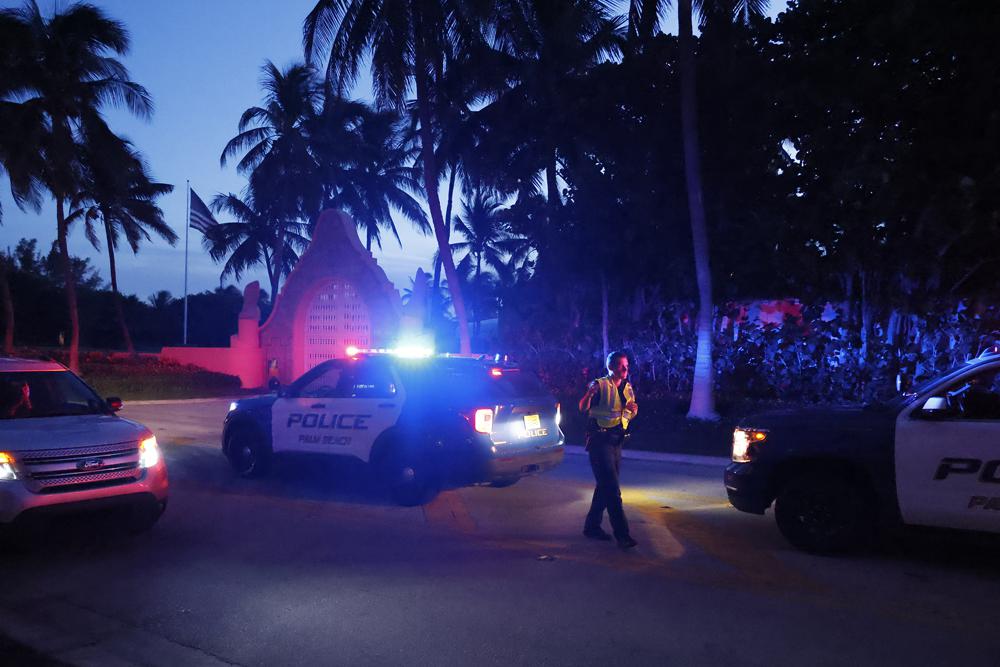
Magistrate Judge Bruce Reinhart, the Florida judge who approved the warrant for the FBI raid of former president Donald Trump’s Mar-a-Lago estate, was formerly assigned to oversee a lawsuit in which Trump sued Hillary Clinton. He also previously represented former convicted sex offender Jeffrey Epstein’s employees in a sex trafficking case. In the case of Trump v. Clinton, Trump sued Hillary Clinton on March 24, 2022. He also sued the Democratic National Committee, Perkins Coie, LLC, Michael Sussmann, Marc Elias, Debbie Wasserman Schultz, Charles Halliday Dolan Jr., Jakes Sullivan, John Podesta, Fusion GPS, Nellie Ohr, Bruce Ohr, Christopher Steele, Igor Danchenko, James Comey, Peter Strzok, Lisa Page, Andrew McCabe, and many others. The lawsuit alleges that Clinton “and her cohorts … maliciously conspired to weave a false narrative that their Republican opponent [Trump] was colluding with a hostile foreign sovereignty.” The scheme included “falsifying evidence, deceiving law enforcement, and exploiting access to highly sensitive data sources,” and was “conceived, coordinated and carried out by top-level officials at the Clinton Campaign and the DNC.” Reinhart was assigned to the case on April 6, 2022, after the previous magistrate judge, Ryon McCabe, was recused. On April 15, Reinhart conducted a scheduling conference in the case, according to court documents obtained by The Center Square. He oversaw scheduling of a June 2 status conference on May 4 and 31 and oversaw the actual conference. Reinhart also signed another order on June 14, setting another status conference for July 6, but by June 22 Reinhart canceled the conference and recused himself. Less than two months later, on Monday, August 9, he signed a warrant for the FBI to raid Trump’s Mar-a-Lago estate over an alleged dispute over White House documents. The search warrant remains under seal, and Trump’s attorney has told news outlets that they don’t know what the probable cause was to justify issuing the warrant, also maintaining Trump’s innocence and that he didn’t commit a crime. Many officials have called for the warrant to be unsealed, including U.S. Sen. Ted Cruz, R-Texas. U.S. Sen. Marco Rubio, R-Florida, has called for a congressional investigation into the raid, also saying the FBI’s tactics were like those of a third-world dictatorship. Rubio said, “the Justice Department under Joe Biden decided to raid … the home of the former president who might … be running against him … This is what happens in places like Nicaragua where last year every single person who ran against Daniel Ortega for president, every single person that put their name on the ballot, was arrested and is still in jail. That’s what you see in places like Nicaragua. We’ve never seen that before in America. You can try and diminish it, but that’s exactly what happened.” Gov. Ron DeSantis said the raid was a “weaponization of federal agencies against the Regime’s political opponents.” The White House has declined to comment on the raid, saying it was not made aware of it before it took place. The document dispute stems from a disagreement over which documents in Trump’s possession are presidential records or not. Under the Presidential Records Act, some records in question should have been transferred to the National Archives in January 2021 when Trump left office, the institution said in a statement at the time. Instead, Reinhart authorized the FBI to execute the search warrant at Mar-a-Lago, which Trump said was “prosecutorial misconduct.” According to a report by the New York Post, Reinhart previously represented several of convicted pedophile Jeffrey Epstein’s employees in a sex trafficking investigation. His ties to Epstein’s employees was first reported on by the Miami Herald, with whom he confirmed that clients were Epstein’s pilots, his scheduler, Sarah Kellen, and a woman Nadia Marcinkova. Reinhart also donated to Barack Obama’s 2008 presidential campaign, according to the Post. Prior to becoming a magistrate judge in 2018, he spent ten years in private practice, according to Bloomberg News. He previously worked as an assistant U.S. attorney for the Southern District of Florida. According to Law.com, the Palm Beach Federal Court removed Reinhart’s contact information from the court’s website Tuesday. Republished with the permission of The Center Square.
Donald Trump names 2 lawyers to impeachment defense team, one from Alabama

Former president Donald Trump announced a new impeachment legal defense team Sunday, one day after it was revealed that he had parted ways with an earlier set of attorneys with just over a week to go before his Senate trial. The two lawyers representing him will be David Schoen, a criminal defense lawyer with offices in Alabama and New York, and Bruce Castor, a former county prosecutor in Pennsylvania. Both issued statements through a Trump adviser saying that they were honored to take the job. “The strength of our Constitution is about to be tested like never before in our history. It is strong and resilient. A document written for the ages, and it will triumph over partisanship yet again, and always,” said Castor, who served as district attorney for Montgomery County, outside of Philadelphia, from 2000 to 2008. The announcement Sunday was intended to promote a sense of stability surrounding the Trump defense team as his impeachment trial nears. The former president has struggled to hire and retain attorneys willing to represent him against charges that he incited the deadly riot at the U.S. Capitol, which happened when a mob of loyalists stormed Congress as lawmakers met Jan. 6 to certify Joe Biden’s electoral victory. That’s a contrast from his first impeachment trial, when Trump’s high-profile team of attorneys included Alan Dershowitz, one of the best-known criminal defense lawyers in the country, as well as White House counsel Pat Cipollone, and Jay Sekulow, who has argued cases before the Supreme Court. Trump’s team had initially announced that Butch Bowers, a South Carolina lawyer, would lead his legal team after an introduction from Republican Sen. Lindsey Graham. But that team unraveled over the weekend due to differences over legal strategy. One person familiar with their thinking said Bowers and another South Carolina lawyer, Deborah Barbier, left the team because Trump wanted them to use a defense that relied on allegations of election fraud, and the lawyers were not willing to do so. The person was not authorized to speak publicly about the situation and requested anonymity. Republicans and aides to Trump, the first president to be impeached twice in American history, have made clear that they intend to make a simple argument in the trial: Trump’s trial, scheduled for the week of Feb. 8, is unconstitutional because he is no longer in office. “The Democrats’ efforts to impeach a president who has already left office is totally unconstitutional and so bad for our country,” Trump adviser Jason Miller has said. Many legal scholars, however, say there is no bar to an impeachment trial despite Trump having left the White House. One argument is that state constitutions that predate the U.S. Constitution allowed impeachment after officials left office. The Constitution’s drafters also did not specifically bar the practice. Castor, a Republican who was the elected district attorney of Pennsylvania’s third-most populated county, decided against charging Cosby in a 2004 sexual encounter. He ran for the job again in 2015, and his judgment in the Cosby case was a key issue used against him by the Democrat who defeated him. Castor has said that he personally thought Cosby should have been arrested, but that the evidence wasn’t strong enough to prove the case beyond a reasonable doubt. In 2004, Castor ran for state attorney general unsuccessfully. In 2016, he became the top lieutenant to the state’s embattled attorney general — Kathleen Kane, a Democrat — as she faced charges of leaking protected investigative information to smear a rival and lying to a grand jury about it. She was convicted, leaving Castor as the state’s acting attorney general for a few days. Schoen met with financier Jeffrey Epstein about joining his defense team on sex trafficking charges just days before Epstein killed himself in a New York jail. In an interview with the Atlanta Jewish Times last year, Schoen said he had also been approached by Trump associate Roger Stone before Stone’s trial about being part of the team and that he was was later retained to handle his appeal. Trump commuted Stone’s sentence and then pardoned him. Schoen maintained in the interview that the case against Stone was “very unfair and politicized.” Neither Schoen nor Castor returned phone messages seeking comment Sunday evening. Republished with the permission of the Associated Press.
Rachel Bryars: Alabama Epstein? It happens here all the time

As the nation learns more about the salacious life and mysterious death of billionaire and serial sexual predator Jeffrey Epstein, it’s important to remember his crimes are far from uncommon. In fact, they happen all the time. Even in Alabama. It’s a problem that experts agree is growing, though exact numbers are difficult to quantify, according to researchers at the University of Alabama who conducted a study estimating there were more than 900 potential survivors of human trafficking across the state in 2017 alone, and that more than half the victims were minors. Awareness is also growing as alliances of lawmakers, advocates, law enforcement agencies, and prosecutors grapple with stopping the problem and educating community members. It’s going to take a concerted effort, from everyone, to combat human trafficking. Here are just a few tips: No. 1: Learn the paths into human trafficking “Every single victim we’ve encountered has some type of [economic, social, or emotional] vulnerability that has been exploited by the trafficker,” said Doug Gilmer, resident agent in charge for the Department of Homeland Security Investigations team in Birmingham during a recent deep-dive discussion of human trafficking on 1819 podcast. Traffickers are very good at grooming their victims and “luring girls into this world,” often by developing an online relationship and developing a strong “father figure” bond before slowly coercing them into sex trafficking, according to Gilmer. “These are young ladies who have had their childhoods stolen from them,” said Carolyn Potter, executive director of The Wellhouse, a residential treatment facility near Birmingham for sexually exploited trafficking victims. Potter said in an 1819 interview that every case is different; however, there are commonalities among victims’ stories. Victims tend to be runaways, neglected or abused children, and at-risk youth aging out of foster care who become easy prey for traffickers. “A typical scenario would be a young lady who was first [sexually] victimized as a child,” has experienced “complex trauma,” which means traumatic events have repeatedly happened, often daily, throughout much of her life, and that substance use is either forced upon her or is used as a coping mechanism, Potter said. “I ended up doing so much drugs because he was requiring me to do so much,” said Dixie Shannon in a new Alabama Public Radio series about human trafficking in Alabama. Shannon was a runaway whose coercion into a life of commercial sex began at 17-years-old and included dependence upon her trafficker and punishment for not performing. “I couldn’t take a shower without making a certain amount of money,” Shannon told APR’s Pat Duggins. “I couldn’t eat … I couldn’t rest. …And, I ended up getting to a point where I was either going to kill myself because I’m going to overdose on these drugs, or he’s going to kill me.” No. 2: Learn where the real risk is Parents misplace their fear by not allowing kids to play alone or outside for fear of kidnapping, according to Gilmer, who said statistics show kidnapping is exceedingly rare. “The biggest mistakes we make in society today is the boogey-man syndrome,” Gilmer said. “That there’s a creep out there on every block, around every corner, on every aisle in Walmart or Target that’s getting ready to snatch our kids.” The real threat, he said, is on cell phones and the Internet – where predators know how to get in touch with our kids within 20-30 keystrokes. The risks aren’t just of becoming preyed upon. There are risks of becoming the predator. Gilmer said there is no typical profile and that the “Johns” come from every walk of life and socioeconomic level, although DHS is collecting data in partnership with advocacy group Trafficking Hope to understand any trends. “We do know that all of the Johns, I think statistically probably 100 percent, all had or have a problem with pornography,” said Gilmer. “That’s how it starts for them and then it progresses over time. They need something more and then they get to the point they start purchasing sex.” Attorney General Steve Marshall said in an 1819 podcast interview that the 2014 arrest of a well-respected former Guntersville High School soccer coach for child sexual abuse and human trafficking was “the moment” that he first realized the scope and significance of the problem in Alabama and the importance of the human trafficking statutes being developed at the time. “That was [the case] for me that… not only broadened my awareness of the traditional view of the pimp and the prostitute and the Johns, but also showed that children themselves are victims of human trafficking,” Marshall said. No. 3: Recognize the signs of human trafficking and help at-risk youth “It’s very hard to encounter a person who is being trafficked and not realize that something is going on, even if you can’t identify what it is right away,” Potter said. Here are some of the warning signs that someone may be a human trafficking victim that are listed on The Alabama Human Trafficking Task Force website: – Inability or fear to make eye contact.– Presence of an older male or “boyfriend” who seems controlling.– Shows signs of physical, mental, or sexual abuse.– Inappropriately dressed for the age of the child (sexy, low cut, too short).– Is not in school or has significant gaps in schooling.– Demeanor is fearful, anxious, depressed, submissive, tense, nervous. Also, Potter said she has never seen a victim who did not have some kind of branding or tattoo, such as a young woman who came to The Wellhouse with the street address of her trafficker tattooed on her forehead. “If you see something, say something,” Potter said. “It’s not going to hurt to make a report. If you’re wrong, that’s okay, but if you’re not, you may have saved a life.” And if you are in a position to help at-risk youth by becoming a foster parent, there are thousands of Alabama children in need of safe and stable care. “If we could make this group
Donald Trump’s labor nominee likely to be asked about Florida case
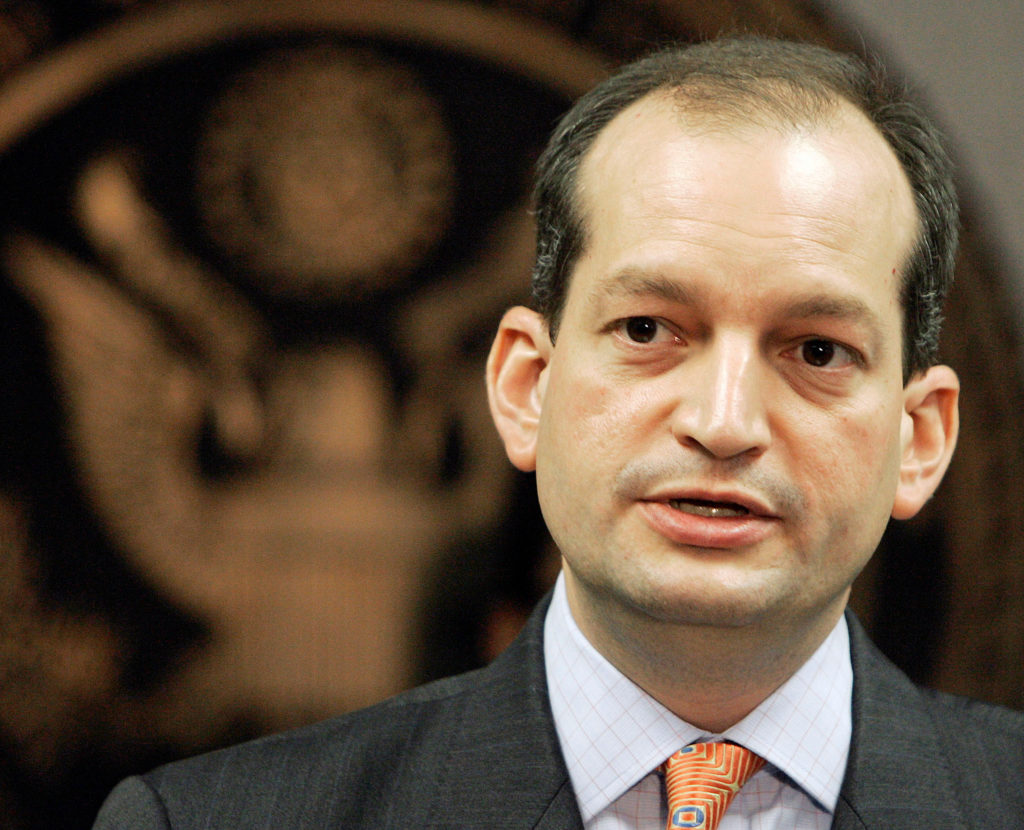
Labor secretary nominee Alexander Acosta is expected to face questions at his Senate confirmation hearing about an unusual plea deal he oversaw for a billionaire sex offender while U.S. attorney in Miami. Acosta has won confirmation for federal posts three times previously, but he has never faced scrutiny on Capitol Hill for his time as U.S. attorney. Critics, including attorneys for some underage victims of financier Jeffrey Epstein, say the plea agreement was a “sweetheart deal” made possible only by Epstein’s wealth, connections and high-powered lawyers. Acosta has defended his decisions as the best outcome given evidence available at the time. “Some may feel that the prosecution should have been tougher. Evidence that has come to light since 2007 may encourage that view,” Acosta wrote in a March 2011 letter to media outlets after leaving the U.S. attorney’s office. “Had these additional statements and evidence been known, the outcome may have been different. But they were not known to us at the time.” Senate aides from both parties expect Democrats to raise the case during Acosta’s confirmation hearing Wednesday as an example of him not speaking up for less-powerful people. The aides spoke on condition of anonymity because they weren’t authorized to speak publicly. Sen. Patty Murray, the leading Democrat on the committee, said in a statement she met with Acosta on Thursday and is concerned about whether he would “stand up to political pressure” and advocate for workers as labor secretary. Unlike Trump’s original choice for labor secretary, Andrew Puzder, Acosta is expected to win confirmation. The Florida International University law school dean was nominated after Puzder, a fast-food executive, withdrew over his hiring of an undocumented immigrant housekeeper and other issues. Acosta, 48, has previously won Senate confirmation as Miami U.S. attorney, head of the Justice Department’s civil rights division and the National Labor Relations Board. He declined comment when asked about the Epstein case this week. Epstein, now 64, pleaded guilty in 2008 to Florida charges of soliciting prostitution and was sentenced to 18 months in prison, of which he served 13 months. Epstein was also required to register as a sex offender and pay millions of dollars in restitution to as many as 40 victims who were between the ages of 13 and 17 when the crimes occurred. According to court documents, Epstein paid underage girls for sex, sexual massages and similar acts at a Palm Beach mansion he then owned as well as properties in New York, the U.S. Virgin Islands and New Mexico. Prosecutors say he had a team of employees to identify girls as potential targets. After an investigation by local police, Palm Beach prosecutors decided to charge Epstein with aggravated assault, which would have meant no jail time, no requirement that he register as a sex offender and no guaranteed restitution for victims. Unhappy local investigators went to Acosta’s office, which opened a federal probe and eventually drafted a proposed 53-page indictment that could have resulted in a sentence of 10 years to life in prison for Epstein, if convicted. With that as leverage, a deal was worked out for Epstein to plead guilty to state prostitution solicitation charges and the federal indictment was shelved. It didn’t stop there. Epstein’s lawyers worked out an unusual and secret “non-prosecution agreement” to guarantee neither Epstein nor his employees would ever face federal charges. Well-known Miami defense lawyer Joel DeFabio, who has represented numerous defendants in sex cases, said he had never heard of such an agreement before Epstein’s came to light. DeFabio said he has had clients with far less egregious sex charges — and far less wealth — who were sentenced to 10 or 15 years behind bars. DeFabio tried to use the Epstein case to argue for more lenient sentences. “There still has been no clear explanation as to why Epstein received such preferential treatment,” DeFabio said. “This thing just stinks. The elite take care of their own.” The non-prosecution agreement became public in a related civil case, leading two Epstein victims — identified only as Jane Does No. 1 and 2, to file a victims’ rights lawsuit claiming they were improperly left in the dark about the deal. The lawsuit, which is still pending, seeks to reopen the case to expose the details and possibly nullify the agreement. Other victims have come forward, including one woman who claimed as a teenager that Epstein flew her around the world for sexual escapades, including encounters with Britain’s Prince Andrew. Buckingham Palace has vehemently denied those claims. The Justice Department’s position in the victims’ rights lawsuit is that since no federal indictment was ever filed, the victims were not entitled to notification about the non-prosecution agreement. Settlement talks last fall went nowhere. “There will not be a settlement. That case will eventually get to trial,” said Bradley Edwards, attorney for the two Jane Doe victims. In his 2011 letter, Acosta defended his decisions as the best possible outcome. “Our judgment in this case, based on the evidence that was known at the time, was that it was better to have a billionaire serve time in jail, register as a sex offender and pay his victims restitution than risk a trial with a reduced likelihood of success,” Acosta wrote. “I supported that judgment then, and based on the state of the law as it then stood and the evidence known at the time, I would support that judgment again.” Republished with permission of The Associated Press.
