
The end of an era? Tea party class of House Republicans fades
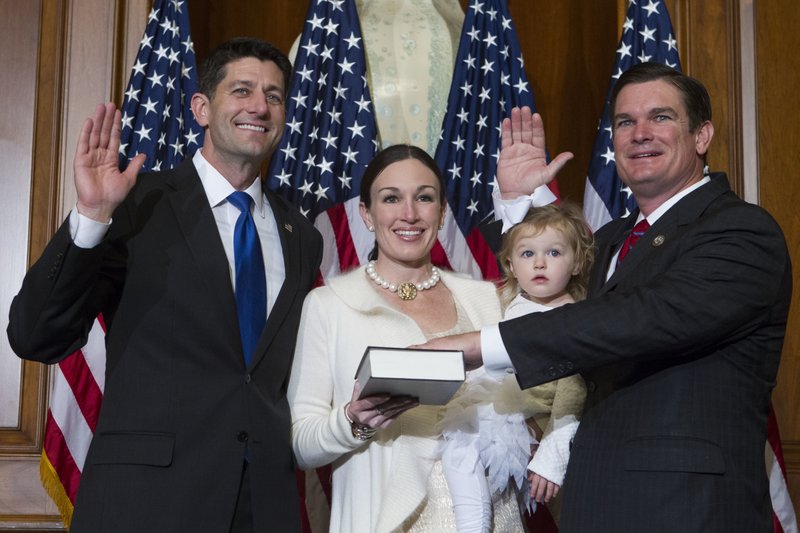
The Republican newcomers stunned Washington back in 2010 when they seized the House majority with bold promises to cut taxes and spending and to roll back what many viewed as Barack Obama’s presidential overreach. But don’t call them tea party Republicans any more. Eight years later, the House Tea Party Caucus is long gone. So, too, are almost half the 87 new House Republicans elected in the biggest GOP wave since the 1920s. Some, including current Secretary of State Mike Pompeo and White House budget director Mick Mulvaney, joined the executive branch. Others slipped back to private life. Several are senators. Now, with control of the House again at stake this fall and just three dozen of them seeking re-election, the tea party revolt shows the limits of riding a campaign wave into the reality of governing. Rep. Austin Scott, R-Ga., who was president of that freshman class, objects to the tea party brand that he says was slapped on the group by the media and the Obama administration. It’s a label some lawmakers now would rather forget. “We weren’t who you all said we were,” Scott said. He prefers to call it the class of “small-business owners” or those who wanted to “stop the growth of the federal government.” Despite all those yellow “Don’t Tread on Me” flags and anti-Obama health law rallies, Scott said the new Republican lawmakers wanted to work with the president, if only Obama would have engaged them. “We didn’t come to take over the country,” he said. Yet change Washington they did, with a hard-charging, often unruly governing style that bucked convention, toppled GOP leaders and in many ways set the stage for the rise of Donald Trump. By some measures, the tea party Republicans have been successful. The “Pledge to America,” a 21-page manifesto drafted by House Republican leadership, outlined the promises. Among them: “stop out of control spending,” ″reform Congress” and “end economic uncertainty.” They forced Congress into making drastic spending cuts, in part by threatening to default on the nation’s debt, turning a once-routine vote to raise the U.S. borrowing limit into a cudgel during the annual budget fights. Republicans halted environmental, consumer and workplace protection rules, and that rollback continues today. Perhaps most notably, the GOP majority passed $1.5 trillion in tax cuts that Trump signed into law, delivering on the tea party slogan penned on so many protest signs: “Taxed Enough Already.” But former Rep. Tim Huelskamp, R-Kan., said the “most egregious failure” was the GOP’s inability to undo the Affordable Care Act, Obama’s signature domestic achievement. Huelskamp said the class never really stuck together. When he arrived that first week in Washington in January 2011, he was stunned to find the leadership slate already set with then-Rep. John Boehner, R-Ohio, as speaker-in-waiting, facing little resistance. “That was a sign: The establishment in Washington was happy to have our votes, but not to follow our agenda,” said Huelskamp, who lost a primary election in 2016 to a political newcomer and now runs the conservative Heartland Institute. It was “just a clear misunderstanding of what the people wanted.” Over time, budget deals were struck with Democrats, boosting spending back to almost what it was before the revolt. Combined with the tax package, the GOP-led Congress is on track to push annual deficits near $1 trillion next year, as high as during the early years of the Obama administration when the government struggled with a deep recession. Maya MacGuineas, president at the Committee for a Responsible Federal Budget, said Republicans talked a good game promising to balance the budget, but with control of Congress — and now the White House — they failed to tackle the tough tax-and-spending challenges needed to get there. “That’s a whole lot of talk and zero follow through,” she said. Other proposals to improve transparency in government — a pledge to “read the bill” and post legislation three days before votes — remain works in progress. House bills are typically made public, but sometimes just before midnight to conform with the three-day rule. Frustrations within the ranks grew, and the new class splintered. Not all of them had been favorites of their local tea party groups. Some joined other conservatives to form the House Freedom Caucus, which nudged Boehner to early retirement in 2015. Former Florida Rep. Allen West, among the more prominent class members who lost re-election and is now a Fox News contributor living in Texas, said the challenge for House Republicans heading into the fall election is, “Who are they? What do they stand for?” House Republicans are wrestling with a midterm message at a pivotal moment for a party that Boehner says no longer exists. “There is no Republican Party. There’s Trump’s party,” Boehner said at a recent policy conference in Michigan. Boehner’s successor as speaker, Rep. Paul Ryan, R-Wis., also is stepping aside. He was a conservative up-and-comer long before the tea party, but has run into many of the same challenges Boehner faced in managing a fractured majority. He will retire after this term. In fact, there are an unusually high number of House Republicans retiring this year, including nearly a dozen from the tea party class. Several are running to be governors or senators, though some have already lost in primaries. Others, including Rep. Trey Gowdy, R-S.C., another rising star, are simply moving on. Some resigned this year amid ethics scandals. Jenny Beth Martin, a co-founder of Tea Party Patriots, says every movement “goes through phases.” As the group looks to elect the next “Tea Party 100″ members of the House, it’s seeking “tested and proven” candidates beyond the “citizen legislators” who powered the early days. Another 2010 leader, South Carolina’s Tim Scott, now a senator, says he has no problem with the tea party label that’s now etched in history. But he reminds his colleagues as they campaign that to keep the majority they must also eventually govern and that “promises made should be promises kept.” Republished
Seeds of GOP splinter in opposition to all things Barack Obama
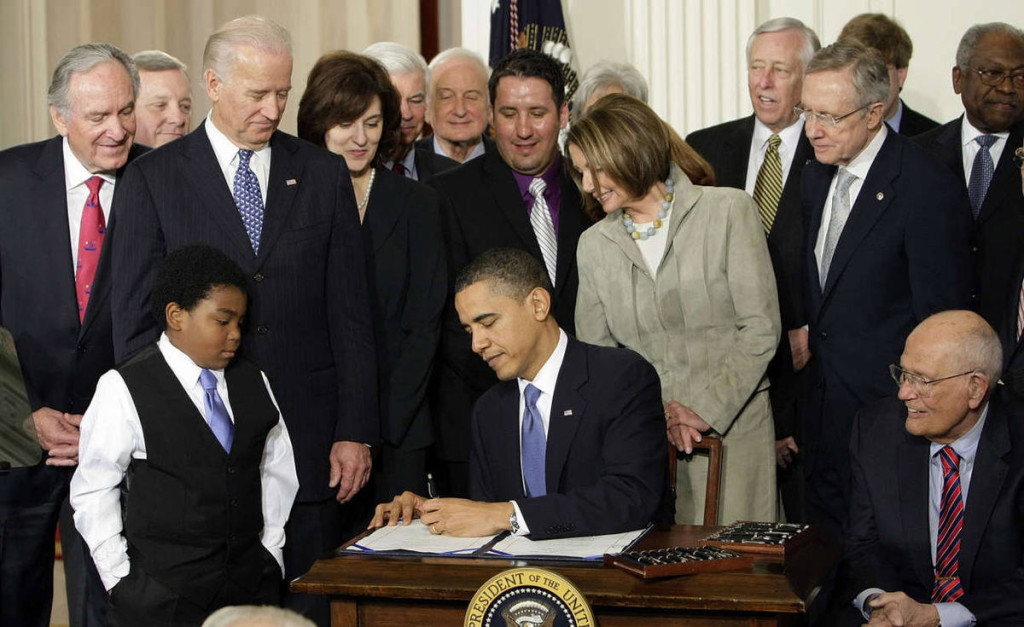
Republicans can blame their united stand against President Barack Obama for their party’s splintering. Conservatives’ gut-level resistance to all things Obama — the man, his authority, his policies — gave birth to the tea party movement that powered the GOP to political success in multiple states and historic congressional majorities. Yet contained in the movement and its triumphs were the seeds of destruction, evident now in the party’s fracture over presidential front-runner Donald Trump. Obama’s policies, from the ambitious 2010 law overhauling the health care system to moving unilaterally on immigration, roiled conservatives who decried his activist agenda and argued about constitutional overreach. “Quasi-socialist,” says Tea Party Express. Republicans rode that anger to majority control of the House in 2010 and an eye-popping net gain of 63 seats as voters elected tea partyers and political outsiders. Four years later, the GOP claimed the Senate, too. For all the numbers, though, Republicans were unable to roll back Obama administration policies or defeat the Democratic president in 2012, further infuriating the GOP base. Now the party of Abraham Lincoln is engaged in a civil war, pitting establishment Republicans frightened about a election rout in November against the unpredictable Trump, who has capitalized on voter animosity toward Washington and politicians. “There would be no Donald Trump without Barack Obama,” said Sen. Lindsey Graham, R-S.C. No fan of Trump, Graham argued that resentment of Obama plus his own party’s attitude toward immigrants are responsible for the deep divide and the billionaire businessman’s surge. Mainstream Republicans are hard-pressed to figure out a way forward with Trump, who has pledged to build a wall on the Mexican border, bar Muslims from entering the United States and equivocated over former Ku Klux Klan leader David Duke‘s support. The candidate has assembled a growing coalition of blue-collar workers, high-school educated and those craving a no-nonsense candidate. “I think they are at a loss to try to reconcile this nihilist wing of the Republican Party with conservative principles,” said Sen. Dick Durbin of Illinois, the No. 2 Democrat in the Senate. The health care fight proves illustrative. The disaffected Americans embracing Trump echo the angry voices that filled town halls in the summer of 2009 as fearful voters taunted lawmakers over efforts to overhaul health care. Obama and Democrats were undaunted, pushing ahead on a remake of the system despite unified Republican opposition. In January 2010, thanks to tea party backing and conservative outrage, Republican Scott Brown won a special election in Massachusetts, claiming the seat that liberal Sen. Ted Kennedy had held for 47 years. That sent people a message that “if you could win in blue Massachusetts, we could win in my state,” said Sal Russo, co-founder and chief strategist of Tea Party Express. “That changed the movement from a protest movement to a political movement.” Three months later, in March 2010, Democrats rammed Obama’s health reform through Congress as mobs of protesters chanted outside the Capitol. Not a single Republican backed it. “Completely partisan,” said Sen. John Barrasso, R-Wyo. That November, the tea party propelled Republicans shouting repeal health care to victory, among them Sens. Marco Rubio of Florida and Rand Paul of Kentucky. They defeated establishment GOP candidates more likely to compromise in Washington. Dozens of other tea party candidates captured House seats; many were making their first foray in politics. Losers in 2010 were some of the moderate and conservative Democrats who had backed the health care law. Along with Obama’s re-election in 2012 came another group of congressional tea partyers, including Sen. Ted Cruz of Texas. The movement’s strength ran headlong into Washington reality: Obama was president and Democrats still controlled the Senate. Efforts by Cruz and House conservatives to torpedo the health care law led to a partial, 16-day government shutdown in 2013. Republicans triumphed a year later, capturing control of the Senate and knocking out some of the more moderate Democrats such as Louisiana’s Mary Landrieu and Arkansas’ Mark Pryor. In the House last year, they toppled House Speaker John Boehner, R-Ohio, a victim of his pragmatism. Expectations among uncompromising conservatives were sky-high. So was the disappointment. Obama’s health care plan remained the law of the land. “It definitely led to a wave in 2010 that gave us the majority, and then, what have we done since then,” said Rep. Dennis Ross, R-Fla. “That’s our responsibility to show what we have done since then, in spite of this president.” Trump has tapped into voter frustration even though he’s not considered tea party. At the Conservative Political Action Conference on Friday, Jenny Beth Martin, co-founder of Tea Party Patriots, made clear that their man was Cruz. Still, Republicans recognize the power of his candidacy and the ramifications. “The American people are fed up,” said Rep. Tom Marino, R-Pa., one of a handful of Trump backers in Congress, “and if elected officials don’t realize it, we’ll be out of jobs.” Republished with permission of the Associated Press.
