
Katie Britt says inflation has “devastated” hardworking Americans
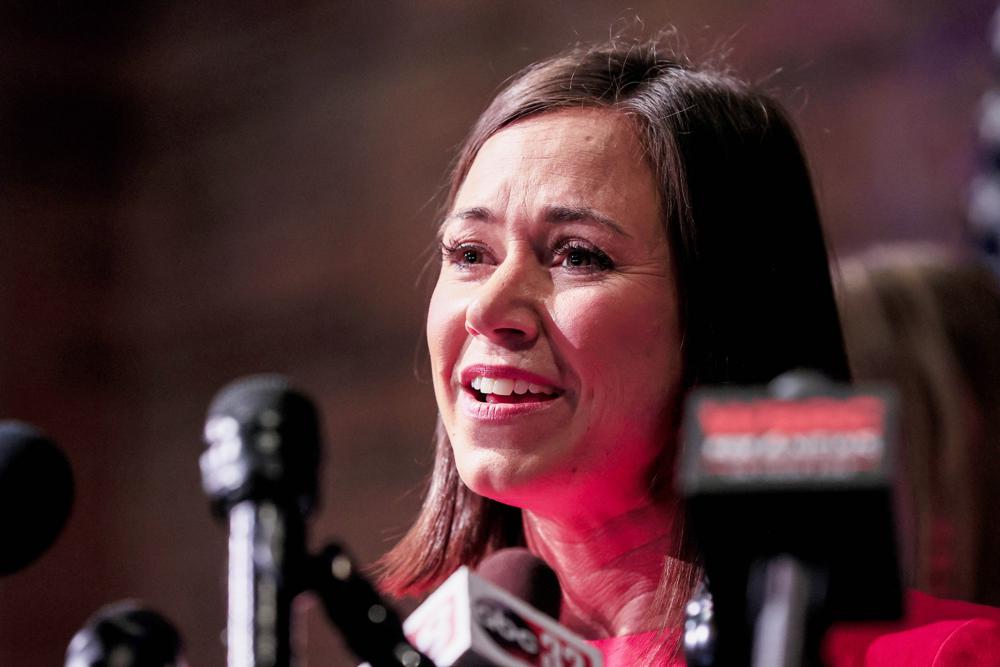
On Monday, U.S. Senator Katie Britt spoke with Federal Reserve Chairman Jerome Powell during a Senate Committee on Banking, Housing, and Urban Affairs hearing. The conversation addressed the generationally high inflation as well as other topics. “Over the past two years, we have seen the highest inflation of my lifetime – driving up costs for American families across the board,” Britt said. “According to the U.S. Department of Labor, the annual inflation rate in 2021 was 7%, and in 2022, it was 6.5%. According to the U.S. Department of Agriculture, the cost of food went up 10% in 2022.” Britt continued, “And the real effect of that is moms and dads across this nation that are working to put food on the table for their kids, for their babies, had a harder time doing that. This has devastated hardworking Americans, causing a kitchen table crisis in every corner of our country, as the price of food, energy, and housing have all skyrocketed.” “In response, the Federal Reserve has raised the Federal Reserve Funds Rate more than four percentage points,” Britt said. “Being far from being transient, inflation has remained persistent — high and well above the Fed’s long-run goal of remaining under 2 percent. In the coming year, what factors and indicators are you paying attention to as you and the Federal Open Market Committee decide on whether to continue to increase rates?” Powell acknowledged the inflation but said, “We need the inflation that’s already underway in the goods sector to continue.” “So, I’d say a couple things to that. First, we are going to be looking at inflation in the three sectors that I mentioned,” Powell said. “The goods sector, housing sector, and the broader service sector. We need the inflation that’s already underway in the goods sector to continue. That’s really important. In the housing sector, we just need the time to pass, so that reported inflation comes down, and it’s effectively in the pipeline as long as new leases are being signed at relatively small increases.” “So, we will be watching very, very carefully though at the larger service sector, which is 56% of consumer spending and more than that of what’s currently inflation,” Powell continued. “So, that’s one thing we will be watching very carefully. Also, we raised rates very quickly last year, and we know that monetary policy, tightening policy, has delayed effects. It takes a while for the full effects to be seen in economic activity, inflation. So, we are watching carefully to see those effects come into play. We are aware that we haven’t seen the full effects yet, and we are taking that into account as we think about rate hikes.” “So, when you are looking at this, obviously not to get into a policy discussion, but if there were an increase of energy production in this country, do you feel like that would help drive down inflation?” Britt asked. Powell acknowledged that unleashing American energy dominance would drive down prices; but that their focus is on core inflation. “I think over time more energy would mean lower energy prices, but we are very focused on what we call core inflation, because that really is, that is what is driven by, really by demand, and our tools are really aimed at demand,” Powell said. “I’d like to ask you about labor participation,” Britt said. “So when you look at the unemployment rate, and we’ve heard my colleagues discuss people having to be displaced in order for us to maybe get to the inflation rate that we would like as a nation.” “I’d like to focus on the labor participation rate, so right now it’s 62.4%,” Britt said. “If there were an increase in people coming back into the workforce, would that be a positive factor with regards to driving us down to the 2% rate [of inflation] that you want to achieve?” Powell acknowledged that growing the labor participation rate “would be great for the country and great for them.” “I think that it would. I mean, remember that those people coming into jobs, that would be great because the economy clearly wants more people than are currently working,” Powell said. “Of course, those people would then spend more, so it wouldn’t be a zero-sum game, but it would be great for the country and great for them if they were able to come into the labor force.” Alabama’s labor participation rate is substantially lower than the national average at around 57% versus 62% nationally. “We are working to increase our labor force participation rate by eliminating any and all barriers to enter the workforce,” Gov. Kay Ivey said during her state of the State address on Tuesday night. “I believe that increasing capital requirements on financial institutions would have a chilling effect on the economy and the availability of financial services,” Britt said. “Last week, I joined many of my colleagues in sending you a letter that expressed concerns that if the Federal Reserve decides to conduct a “holistic review of capital standards,” as we heard Senator Scott talk about earlier. So is the Federal Reserve concerned that the impact to the economy of increasing capital requirements on financial institutions at a time when inflation remains persistently high would cause an issue?” Powell said that increasing the capital requirements would make banks safer, but that will also mean less credit available. “So, I think it’s always a balance,” Powell said. “We know that higher capital makes banks safer and sounder. We also know that you will, at the margin, provide less credit the more capital you have to have, but it’s never exactly clear that you’re at the perfect equilibrium, and it’s a fair question, I think to look at that.” A recent report insists that the Federal Reserve is acutely aware of the effects that inflation is having on the economic health of average Americans. Katie Britt serves as a member of the Financial Institutions and Consumer Protection Subcommittee of the Senate Committee on Banking, Housing, and Urban Affairs. To connect with the
Federal Reserve hikes rates again
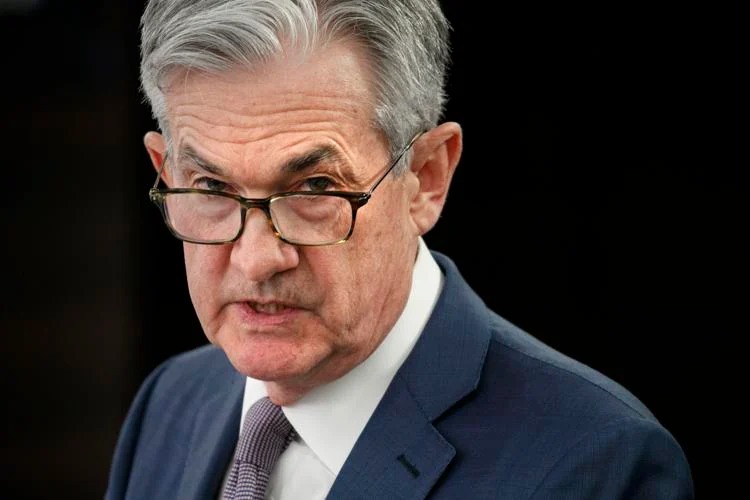
The U.S. Federal Reserve announced a new rate increase of half a percentage point Wednesday in its ongoing effort to curb inflation. The Fed raised the rate by 50 basis points, as expected, the seventh rate hike this year. This increase is smaller than the four previous 75 basis point increases but is still a notable increase, putting the range at 4.25%-4.5%. “Recent indicators point to modest growth in spending and production. Job gains have been robust in recent months, and the unemployment rate has remained low,” the Fed said. “Inflation remains elevated, reflecting supply and demand imbalances related to the pandemic, higher food and energy prices, and broader price pressures.” The Fed blamed the Russian war in Ukraine for the price hikes. That war delayed the supply chain and increased costs, but the price increases began long before that war, due in part to trillions of dollars in federal debt spending since the pandemic began. “The war and related events are contributing to upward pressure on inflation and are weighing on global economic activity,” the group said. “The Committee is highly attentive to inflation risks. The Committee seeks to achieve maximum employment and inflation at the rate of 2 percent over the longer run.” The increase comes in response to inflation, which has soared during President Joe Biden’s term. The latest federal inflation data shows that those price increases have slowed but not stopped entirely. Economists say these rate hikes help curb inflation but have negative economic consequences. Raising rates too much too fast can send the economy into a recession. “We expect that as the Fed moves closer to its terminal rate, the market will shift more directly towards growth, especially if valuations become compelling if the market sells off as the economy slows,” said Quincy Krosby, chief global strategist for LPL Financial. Analysts say the U.S. economy and the possibility of a recession are still in flux. “Though yesterday’s CPI report was encouraging, we believe the market has overreacted to an easing of inflationary pressures,” said John Lynch, Chief Investment Officer for Comerica Wealth Management. “A drop from 9.0% to 7.0% is likely the easiest of the 200 basis point moves lower that investors hope for … we suspect the next 200 basis point reduction will be much more difficult to achieve as wages, housing, and energy prove stickier than consensus believes. Moreover, while the move lower in market interest rates has been received warmly by investors, balance sheet reduction remains a wildcard and may provide further upward pressure on market interest rates in 2023.” Republished with the permission of The Center Square.
U.S. added 263,000 jobs in November
Friday’s jobs report by the U.S. Bureau of Labor Statistics showed that the U.S. economy created 263,000 jobs in November. The continuing growth in the job sector, however, indicates that inflation is likely to continue and perhaps even worsen. The unemployment rate held steady at 3.7 percent. This is good news for job seekers or people looking to find a better position than the one they currently have, but employers can expect no relief on the immediate horizon as they attempt to hire staff. Notable job gains occurred in the leisure and hospitality (+88,000 jobs), health care (+45,000 jobs), and government sectors (+42,000 jobs) – mostly in local government. Employment declined in retail trade and transportation (-32,000 jobs), with general merchandise, appliance, and furniture stores, and warehousing (-15,000 jobs) losing the most workers. The unemployment of 3.7 percent in November maintains the narrow range of 3.5 percent to 3.7 percent seen since March. The number of unemployed persons was essentially unchanged at 6.0 million in November. The unemployment rate for adult men was just 3.4 percent, adult women at 3.3 percent, and teenagers at 11.3 percent. White unemployment was just 3.2 percent, Blacks 5.7 percent, Asians 2.7 percent, and Hispanics 3.9 percent. This showed little or no change from last month. Among the unemployed, permanent job losers rose by 127,000 to 1.4 million in November. The number of persons on temporary layoff changed little to 803,000. The number of long-term unemployed (those jobless for 27 weeks or more) showed little change at 1.2 million in November. The long-term unemployed accounted for 20.6 percent of all unemployed persons. The U.S. labor force participation rate was 62.1 percent, while the employment-population ratio was at 59.9 percent, little changed in November and has shown little net change since early this year. These measures are each 1.3 percentage points below their values in February 2020, before the COVID-19 pandemic. The number of people not in the labor force who say they currently want a job was little changed at 5.6 million in November and remained above its February 2020 level of 5.0 million. These individuals were not counted as unemployed because they were not actively looking for work during the four weeks preceding the survey or were unavailable to take a job. Monthly job growth has averaged 392,000 thus far in 2022, compared with 562,000 per month in 2021. In November, average hourly earnings for all employees on private nonfarm payrolls rose by 18 cents, or 0.6 percent, to $32.82. Over the past 12 months, average hourly earnings have increased by 5.1 percent. In November, the average workweek for all employees on private nonfarm payrolls declined by 0.1 to 34.4 hours. In manufacturing, the average workweek for all employees decreased by .2 hour to 40.2 hours, and overtime declined by 0.1 hour to 3.1 hours. The average workweek for production and nonsupervisory employees on private nonfarm payrolls decreased by 0.1 hour to 33.9 hours. The total labor force is still 3.5 million smaller than pre-pandemic and does not appear to be making progress toward returning to that level. The jobs report comes days after Federal Reserve Chief Jerome Powell signaled the central bank would like to reduce its interest rate hikes even though inflation remained below the Fed’s target of 2 percent. Powell said that the Fed would like to reduce the number of open jobs and employers’ need for new workers—two key forces behind fast wage growth. “To be clear, strong wage growth is a good thing,” Powell said in remarks at The Brookings Institution. “But for wage growth to be sustainable, it needs to be consistent with 2 percent inflation.” In its eighth and final meeting of 2022, the Federal Reserve is expected to raise interest rates by another 50 basis points, or 0.5 percentage point, Powell implied Wednesday. The previous four Fed rate hikes were for 75 basis points or 0.75 percentage points. “It makes sense to moderate the pace of our rate increases as we approach the level of restraint that will be sufficient to bring inflation down,” Powell said. “Time for moderating the pace of rate increases may come as soon as the December meeting.” A 50-basis point hike would lift short-term rates to a target range of 4.25 to 4.50%. “The ultimate level of rates will need to be somewhat higher than thought at the time of the September meeting in the summary of economic projections,” Powell added. It is usually another week before the Labor Department releases state unemployment data. The state of Alabama’s unemployment rate was 2.7 percent in October. To connect with the author of this story, or to comment, email brandonmreporter@gmail.com.
How higher interest rates will affect Americans’ finances

Americans who have long enjoyed the benefits of historically low interest rates will have to adapt to a very different environment as the Federal Reserve embarks on what’s likely to be a prolonged period of rate hikes to fight inflation. Record-low mortgage rates below 3%, reached last year, are already gone. Credit card interest rates and the costs of an auto loan will also likely move up. Savers may receive somewhat better returns, depending on their bank, while returns on long-term bond funds will likely suffer. The Fed’s initial quarter-point rate hike Wednesday in its benchmark short-term rate won’t have much immediate impact on most Americans’ finances. But with inflation raging at four-decade highs, economists and investors expect the central bank to enact the fastest pace of rate hikes since 2005. That would mean higher borrowing rates well into the future. On Wednesday, the Fed’s policymakers collectively signaled that they expect to boost their key rate up to seven times this year, raising its benchmark rate to between 1.75% and 2% by year’s end. The officials expect four additional hikes in 2023, which would leave their benchmark rate near 3%. Chair Jerome Powell hopes that by making borrowing gradually more expensive, the Fed will succeed in cooling demand for homes, cars, and other goods and services, thereby slowing inflation. Yet the risks are high. With inflation likely to stay elevated, in part because of Russia’s invasion of Ukraine, the Fed may have to drive borrowing costs even higher than it now expects. Doing so potentially could tip the U.S. economy into recession. “The impact of a single quarter-point interest rate hike is inconsequential on the household budget,” said Greg McBride, chief financial analyst for Bankrate.com. “But there is a cumulative effect that can be quite significant, both on the household budget as well as the broader economy.” Here are some questions and answers about what the rate hikes could mean for consumers and businesses: ___ I’M CONSIDERING BUYING A HOUSE. WILL MORTGAGE RATES GO STEADILY HIGHER? They already have in the past few months, partly in anticipation of the Fed’s moves, and will probably keep doing so. Still, mortgage rates don’t necessarily rise in tandem with the Fed’s rate increases. Sometimes, they even move in the opposite direction. Long-term mortgages tend to track the rate on the 10-year Treasury note, which, in turn, is influenced by a variety of factors. These include investors’ expectations for future inflation and global demand for U.S. Treasurys. Global turmoil, like Russia’s invasion, often spurs a “flight to safety” response among investors around the world: Many rush to buy Treasurys, which are regarded as the world’s safest asset. Higher demand for the 10-year Treasury would lower its yield, which would then reduce mortgage rates. For now, though, faster inflation and strong U.S. economic growth are sending the 10-year Treasury rate up. The average rate on a 30-year mortgage, in turn, has jumped almost a full percentage point since late December to 3.85%, according to mortgage buyer Freddie Mac. HOW WILL THAT AFFECT THE HOUSING MARKET? If you’re looking to buy a home and are frustrated by the lack of available houses, which has led to bidding wars and eye-watering prices, that’s unlikely to change anytime soon. Economists say that higher mortgage rates will discourage some would-be purchasers. And average home prices, which have been soaring at about a 20% annual rate, could at least rise at a slower pace. But Odeta Kushi, deputy chief economist at First American Financial Corporation, notes that there is such strong demand for homes, as the large millennial generation enters its prime home-buying years, that the housing market won’t cool by much. Supply hasn’t kept up. Many builders are struggling with shortages of parts and labor. “We’ll still have a pretty robust housing market his year,” Kushi said. WHAT ABOUT OTHER KINDS OF LOANS? For users of credit cards, home equity lines of credit, and other variable-interest debt, rates would rise by roughly the same amount as the Fed hike, usually within one or two billing cycles. That’s because those rates are based in part on banks’ prime rate, which moves in tandem with the Fed. Those who don’t qualify for low-rate credit cards might be stuck paying higher interest on their balances, and the rates on their cards would rise as the prime rate does. Should the Fed decide to raise rates ten times or more over the next two years — a realistic possibility — that would significantly boost interest payments. The Fed’s rate hikes won’t necessarily raise auto loan rates as much. Car loans tend to be more sensitive to competition, which can slow the rate of increases. WILL I BE ABLE TO EARN MORE ON MY SAVINGS? Probably, though not likely by very much. And it depends on where your savings, if you have any, are parked. Savings, certificates of deposit, and money market accounts don’t typically track the Fed’s changes. Instead, banks tend to capitalize on a higher-rate environment to try to thicken their profits. They do so by imposing higher rates on borrowers without necessarily offering any juicer rates to savers. This is particularly true for large banks now. They’ve been flooded with savings as a result of government financial aid and reduced spending by many wealthier Americans during the pandemic. They won’t need to raise savings rates to attract more deposits or CD buyers. But online banks and others with high-yield savings accounts will likely be an exception. These accounts are known for aggressively competing for depositors. The only catch is that they typically require significant deposits. If you’re invested in mutual funds or exchange-traded funds that hold long-term bonds, they will become a riskier investment. Typically, existing long-term bonds lose value as newer bonds are issued at higher yields. Republished with the permission of the Associated Press.
William Haupt III: A resolution Congress must make and keep in 2022
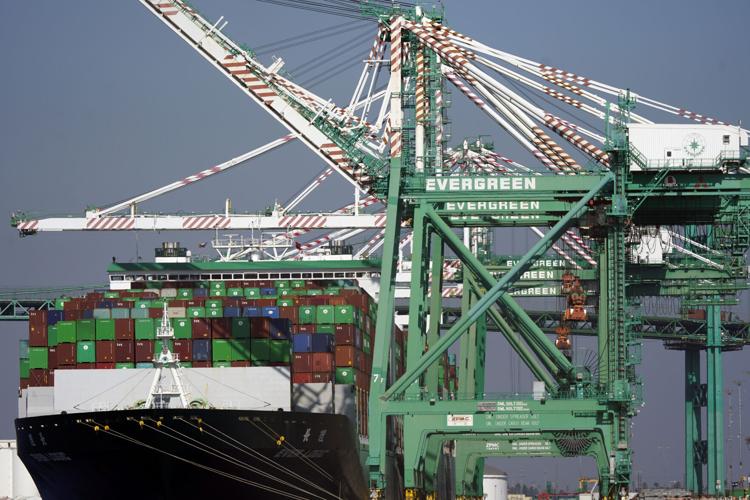
“Some friends ask about your new year’s resolutions. Good friends don’t say too much about them. Your best friends don’t mention them at all, since they know you will never keep them.” – Jay Leno Between December 26 and January 2, people make an existential U-turn. The season of goodwill, visiting, and gift-giving morphs into a neurotic self-improvement aeon as we confront our disquieting anxieties. Which of my habits to stop? Who do I want to be? What do I wish to look like and more? It’s a fact; many New Year’s resolutions are outlandish, unattainable, and even ridiculous. Most are frivolously made after over-imbibing on the “bubbly” during celebrations. It’s uncanny that few really expect to keep them. And some people don’t even remember resolutions they made the next day? While “great expectations” have plagued mankind for centuries, since most people are forgiving by nature, we do not normally burn anyone at the stake for not keeping the resolutions that they made on New Year’s. We even tend to forgive those that politicians always make and never plan to keep. “By God, I will govern for everyone in America; even for those who did not vote for me.” – Joe Biden It is daunting when our list of New Year’s resolutions is longer than our holiday shopping lists. And it’s even more frustrating not being able to keep even one resolution by late January. According to Lynn Bufka, Ph.D., “People have a habit of setting overwhelming goals instead of attainable goals.” Each year, every member of Congress and the White House promises to cut our trade deficit with China, yet it continues to grow each year faster than Pinocchio’s nose grows every time he fibs. Is our federal government telling us what they think we want to hear? Or are these half-truths just grandiose New Year’s resolutions? “A lie told often enough becomes the truth.” – Vladimir Lenin If we learned anything from the pandemic, it is how vulnerable our supply chain is to the impulses of Red China. Although recently America has not been acting like a superpower, it is considered a dominant player in global affairs. Isn’t it also the world’s strongest nation with the most influence? If America is “too big to fail” and dictates policy to the world, then why did we allow Red China to maneuver our economy for four decades? Since the 1979 Accord signed by Jimmy Carter and Deng Xiaoping that legitimized Red China, we’ve become dependent on China for economic survival. The 1979 Accord opened the door for manufactures to recover lost profits due to union demands for egregious wages and benefits. Many had closed their doors. Others were merging to survive. Chinese cheap “labor” has fueled innovative product creation at the expense of U.S. engineering and development, utilizing U.S. resources. Since China has no respect for international intellectual property rights, they clone everything they make for us and compete against us in our own nation. “Communists must always put the interests of Communists first in order to survive.” – Mao Zedong A Federal Reserve report shows the U. S. is running a record trade deficit with China. Companies that used to make products in the U.S., from Levi’s to Master Locks, shut down their factories and moved to China. The report noted we buy more clothing and shoes from China than the U.S. A former Perry Ellis plant is now home to a Walmart plant that puts parts into TVs made in China. It’s time Joe Biden quits blaming our supply chain problems and high inflation on the pandemic! We are not only “overly dependent” on imports from countries that don’t share our political beliefs and policies; countries like Red China are competing with us using technology that they stole from us. “When it comes time to hang the capitalists, we will use the rope they sold us.” – Vladimir Lenin It’s scary the U.S. has placed its economic fate in Red China at the expense of democratic nations likes Mexico and India? Although Ford has a plant in Mexico, India’s Sun Pharmaceuticals is the largest generic drug supplier in the world. And India has the ability to do anything that China does. Economist Matt Slaughteg reminds us: for years, we had production contracts with Mexico, India, and Eastern Europe. But when China opened their free markets, American companies flocked to China because they had no unions, no labor laws, low taxes, and fewer government regulations. We are all aware of our dependence on rogue nations for energy and what they’ve done to us for years. Not only are we forced to turn to inferior, costly technology for energy, this threatens our national security. And it is a socioeconomic nightmare for every U.S. citizen and business as well. “Our supply chain is strained because we depend on so many critical imports.” – Jerome Powell Psychologists agree, when people set overwhelming goals on New Year’s, they seldom keep them. This is what Congress and the president vow to do every year with our trade deficit. This year we have an opportunity to hold their feet to the fire and make them do it with midterms coming soon. U.S. Sens. Marco Rubio (R-FL) and Chris Coons (D-DE) introduced a bill for government to invest $1 billion to mitigate future supply chain issues. It will identify manufacturing and distribution issues and will strengthen our supply chains, and reduce our reliance on imports, especially from China. The National Manufacturing Guard Act (NMGA) will help the Department of Commerce prepare us for future import crises. Most importantly, this bill will help the DOC identify supply chain problems and manufacturing issues. It also allows the DOC to partner with private industry and promotes the establishment of apprenticeship programs that will help increase US manufacturing and production. “The pandemic showed us how vulnerable our supply chains are; its time to fix them.” – Marco Rubio Ronald Reagan once said, “Capitalism is the most powerful weapon against
Former Fed official warns of imminent risk to stability of global financial system
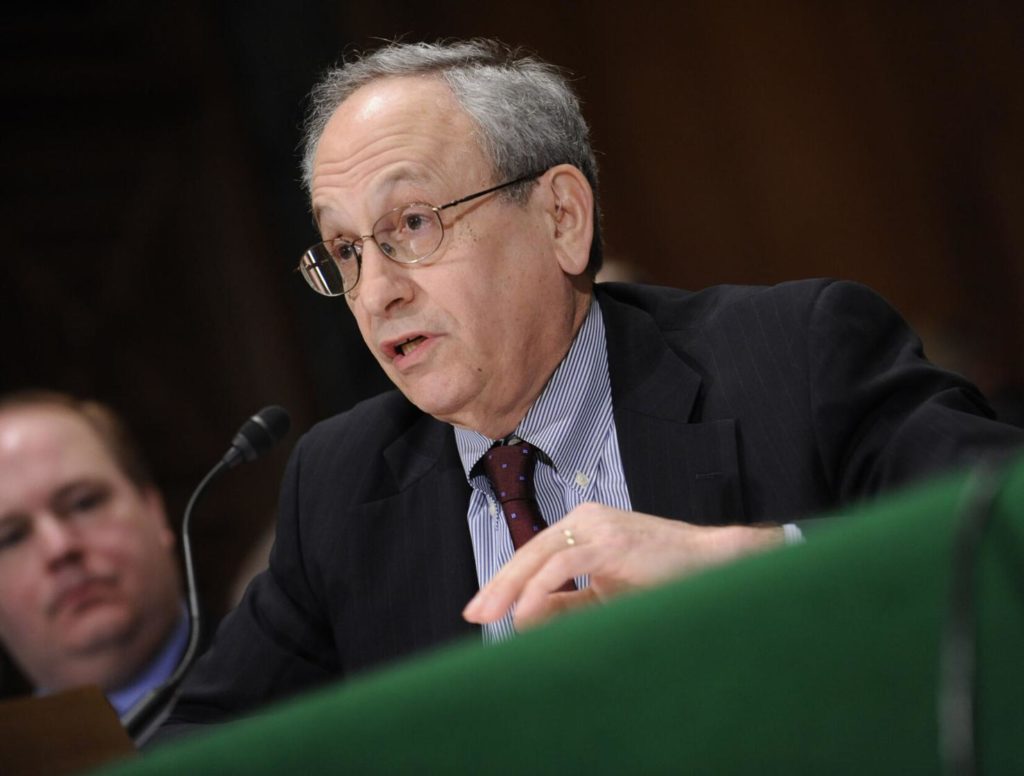
Former Federal Reserve official Donald Kohn sounded the alarm about what he characterized as an imminent global financial crisis during a recent symposium on economic policy. “Dealing with risks to the financial stability is urgent,” he said during the annual Jackson Hole Economic Policy Symposium last week, according to MarketWatch. “The current situation is replete with … unusually large risks of the unexpected, which, if they come to pass, could result in the financial system amplifying shocks, putting the economy at risk.” Kohn, the former Federal Reserve vice-chair of financial supervision, also pointed to a recent Federal Reserve committee meeting in which members expressed concerns about “notable” vulnerabilities in the U.S. financial system. Federal Reserve Chairman Jerome Powell and other leaders have downplayed concerns, instead insisting that inflation will drop down to 2% once the economy returns to levels pre-state shutdown levels, despite thousands of businesses having permanently closed and many employers reporting widespread labor shortages. Other economists don’t agree with Powell, warning about the risks of high inflation and stagflation resulting from federal policies. Earlier this year, Peter Morici, economist and emeritus business professor at the University of Maryland, warned that Powell is enabling policies that are igniting “the kind of inflation that followed the Vietnam War.” On top of Congress’ spending, the Federal Reserve is “keeping interest rates at depression levels and printing money to purchase about $1.4 trillion in government and mortgage-backed securities this year,” he argued. The Federal Reserve maintains that it does not “print money.” Instead, it states that the “global demand for Treasury securities has remained strong, and the Treasury has been able to finance large deficits without difficulty.” It added that the Fed’s purchases of Treasury securities does not involve printing money, but its “increase in the Federal Reserve’s holdings of Treasury securities is matched by a corresponding increase in reserve balances held by the banking system. The banking system must hold the quantity of reserve balances that the Federal Reserve creates.” Despite the Fed’s claims, economist Nouriel Roubini has also been warning for months that federal economic policies would enable stagflation and sluggish economic growth. “Years of ultra-loose fiscal and monetary policies have put the global economy on track for a slow-motion train wreck in the coming years. When the crash comes, the stagflation of the 1970s will be combined with the spiraling debt crisis of the post-2008 era, leaving major central banks in an impossible position,” he recently argued. Stagflation occurs when high inflation happens over a period of stagnant economic growth and high unemployment. Inflation measures how much prices change from one year to the next. The Federal Reserve’s target rate of inflation is 2%. The current annual inflation for 12 months ending July 2021 is 5.4%. The inflation rate over a period of five years was 10.13%, Stat Bureau noted. Over 10 years, it was 18.84%. With increased inflation comes increased prices. According to the Consumer Price Index, food prices increased 3.4% over the last 12 months, food at home prices increased by 2.6%, including a 5.9% increase in prices for meat, poultry, fish, and eggs, the Bureau of Labor Statistics reported. Food away from home increased by 4.6%. The national unemployment rate in July was 5.4%, the lowest level since March 2020. Real gross domestic product increased at an annual rate of 6.6% in the second quarter of 2021, “reflecting the continued economic recovery,” the Bureau of Economic Analysis reported. It increased by 6.3% in the first quarter of 2021. By Bethany Blankley | The Center Square contributor
Donald Trump halts COVID-19 relief talks until after election
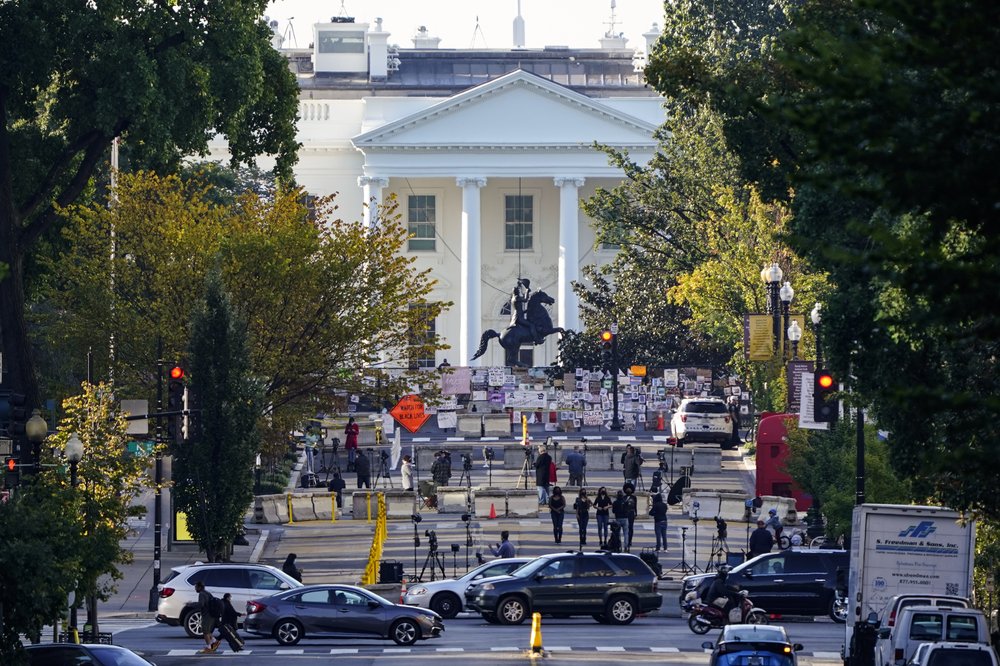
Trump tweeted that House Speaker Nancy Pelosi was “not negotiating in good faith.”
Nancy Pelosi: Americans ‘worth it’ on $3T virus aid
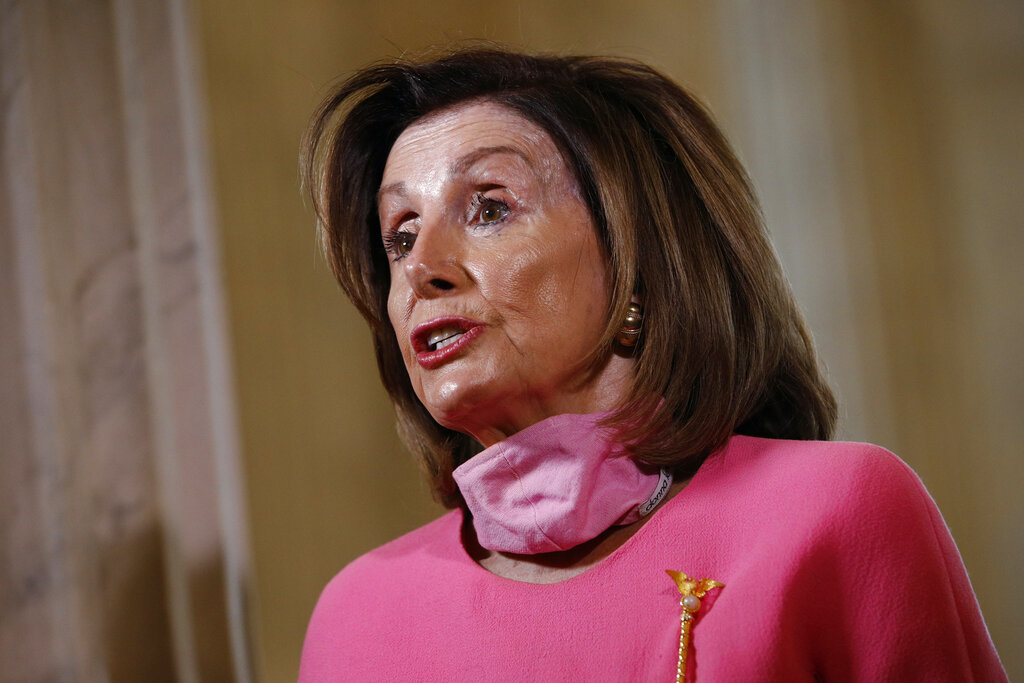
Pelosi acknowledged that the proposal is a starting point in negotiations with President Donald Trump and Republicans.
House passes $2.2T rescue package, rushes it to Donald Trump
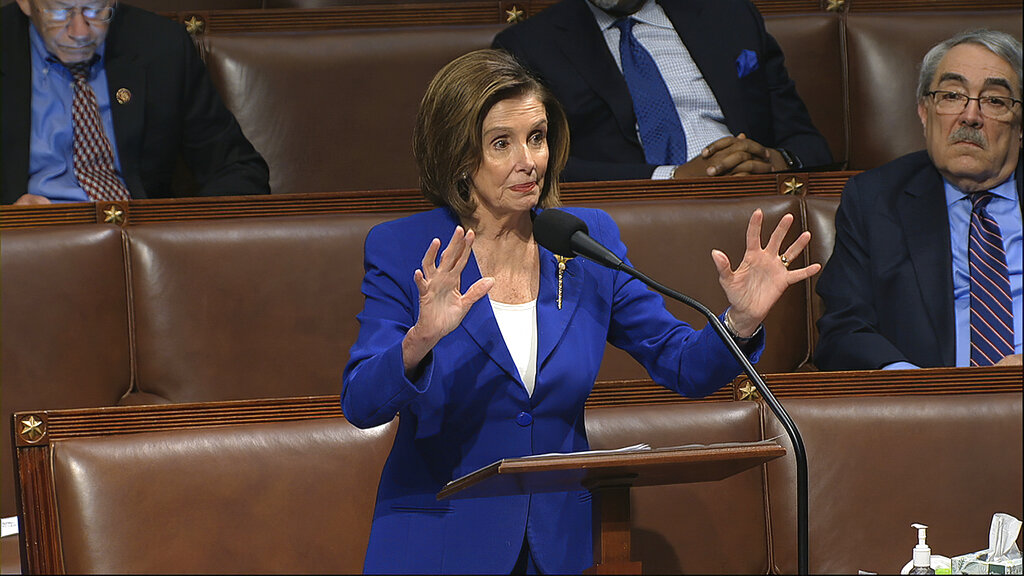
Donald Trump said he would sign the measure immediately.
Washington set to deliver $2.2 trillion virus rescue bill
The relief can hardly come soon enough.
Fed set to leave rates alone amid signs of rising inflation
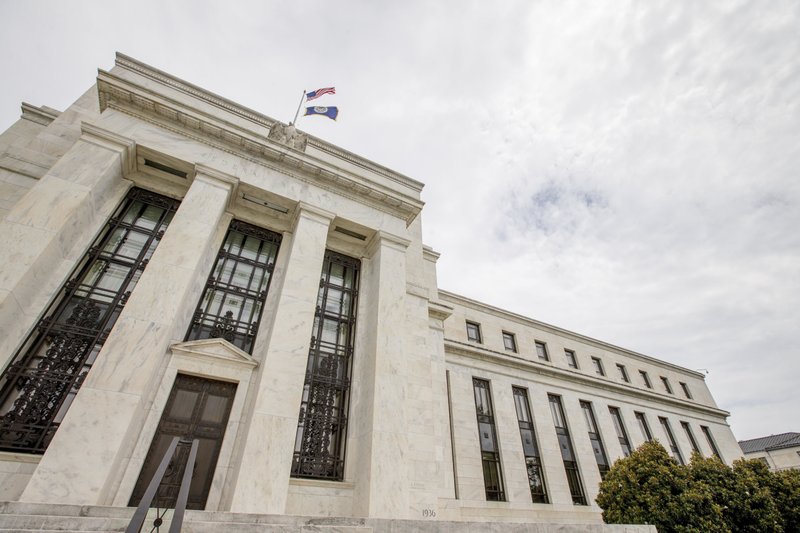
The Federal Reserve achieved an inflation milestone this week, but that isn’t likely to alter expectations for what the Fed will announce when its latest policy meeting ends Wednesday. After six years of mostly missing its annual 2 percent target for inflation, the Fed learned Monday that its preferred gauge of consumer inflation had reached a year-over-year pace of 2 percent. And in the coming months, inflation is widely expected to stay around that level. The debate the Fed is now likely to have is whether it should accept a period in which inflation rises above 2 percent without accelerating its pace of rate increases. But for now, a rate increase is considered unlikely. In a statement it will issue Wednesday afternoon, the Fed is expected to leave its benchmark rate unchanged at a still-low level of 1.5 percent to 1.75 percent. Solid economic growth, low unemployment and evidence of inflation pressures, though, are expected to keep the central bank on a path of gradual rate hikes the rest of the year. Most Fed watchers foresee either two or three additional increases in the Fed’s key rate by year’s end, coming after an earlier hike in January. The central bank is meeting as its board is undergoing a makeover, with a raft of new appointees by President Donald Trump who appear generally supportive of the Fed’s cautious approach to rates since the Great Recession ended. Despite Trump’s complaints during the presidential race that the Fed was aiding Democrats in keeping rates ultra-low under President Barack Obama, his choices for a chairman and for other slots on the Fed’s board have been moderates rather than hard-core conservatives who would favor a faster tightening of credit. “The Trump Fed could have been a much more hawkish Fed but so far, these choices are pretty middle-of-the road,” said Diane Swonk, chief economist at Grant Thornton in Chicago. As Jerome Powell, Trump’s hand-picked new Fed chairman, said at a news conference after the central bank’s most recent meeting in March, “We’re trying to take the middle ground, and the committee continues to believe that the middle ground consists of further gradual increases in the federal-funds rate.” Bond investors are signaling that they expect a pickup in U.S. inflation, having bid up the yield on the 10-year Treasury note last week above 3 percent before the yield settled just below that by week’s end. A year ago, the 10-year yield was just 2.3 percent. Under Powell’s predecessors, Janet Yellen and Ben Bernanke, the Fed’s board endured criticism from House Republicans over its decision to pursue a bond purchase program designed to lower long-term borrowing rates and to leave its key rate at a record low near zero for seven years. The critics charged that those policies would eventually produce destructive bubbles in the prices of stocks and other assets and, eventually, undesirably high inflation. But so far, Trump’s reshaping of the Fed’s board reflects a generally status quo approach. “Trump’s criticisms during the campaign have not been borne out by his decisions on who to put on the Fed,” said Mark Zandi, chief economist at Moody’s Analytics. Since the Fed began raising rates in December 2015, the pace has been modest and gradual: One quarter-point rate increase in 2015, one in 2016, three in 2017 and one so far this year. When the Fed announced its most recent rate hike in March, it forecast that it would raise rates twice more this year. But some economists think that the Fed will respond to the increased government stimulus in the form of tax cuts and higher spending to accelerate the rate hikes slightly from three to four this year. Congress in December passed a $1.5 trillion tax cut that took effect in January. And then in February, it approved $300 billion more in government spending for this year and next year. That stimulus, coming at a time when unemployment is at a 17-year low of 4.1 percent, could raise the threat of higher inflation. Yet even against this backdrop, the prevailing view is that the Trump-shaped Fed will remain cautious about rate increases. “The central bank does not want to make the mistakes made in the past when the Fed raised rates too high, too fast and became the No. 1 cause of a recession,” said Sung Won Sohn, an economics professor at California State University, Channel Islands. Republished with the permission of the Associated Press.
