
Joe Biden signs massive climate and health care legislation
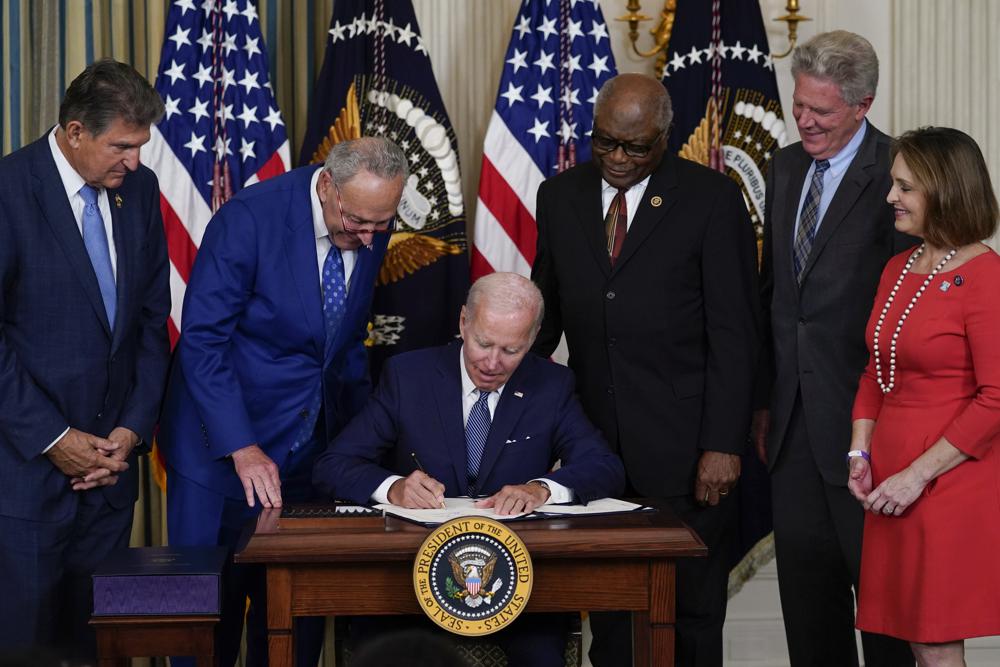
President Joe Biden signed Democrats’ landmark climate change and health care bill into law on Tuesday, delivering what he has called the “final piece” of his pared-down domestic agenda, as he aims to boost his party’s standing with voters less than three months before the midterm elections. The legislation includes the most substantial federal investment in history to fight climate change — some $375 billion over the decade — and would cap prescription drug costs at $2,000 out-of-pocket annually for Medicare recipients. It also would help an estimated 13 million Americans pay for health care insurance by extending subsidies provided during the coronavirus pandemic. The measure is paid for by new taxes on large companies and stepped-up IRS enforcement of wealthy individuals and entities, with additional funds going to reduce the federal deficit. In a triumphant signing event at the White House, Biden pointed to the law as proof that democracy — no matter how long or messy the process — can still deliver for voters in America as he road-tested a line he will likely repeat later this fall ahead of the midterms: “The American people won, and the special interests lost.” “In this historic moment, Democrats sided with the American people, and every single Republican in the Congress sided with the special interests in this vote,” Biden said, repeatedly seizing on the contrast between his party and the GOP. “Every single one.” The House on Friday approved the measure on a party-line 220-207 vote. It passed the Senate days earlier, with Vice President Kamala Harris breaking a 50-50 tie in that chamber. “In normal times, getting these bills done would be a huge achievement,” Senate Majority Leader Chuck Schumer, D-N.Y., said during the White House ceremony. “But to do it now, with only 50 Democratic votes in the Senate, over an intransigent Republican minority, is nothing short of amazing.” Biden signed the bill into law during a small ceremony in the State Dining Room of the White House, sandwiched between his return from a six-day beachside vacation in South Carolina and his departure for his home in Wilmington, Delaware. He plans to hold a larger “celebration” for the legislation on September 6 once lawmakers return to Washington. The signing caps a spurt of legislative productivity for Biden and Congress, who in three months have approved legislation on veterans’ benefits, the semiconductor industry, and gun checks for young buyers. The president and lawmakers have also responded to Russia’s invasion of Ukraine and overwhelmingly supported NATO membership for Sweden and Finland. With Biden’s approval rating lagging, Democrats are hoping that the string of successes will jump-start their chances of maintaining control in Washington in the November midterms. The 79-year-old president aims to restore his own standing with voters as he contemplates a reelection bid. The White House announced Monday that it was going to deploy Biden and members of his Cabinet on a “Building a Better America Tour” to promote the recent victories. One of Biden’s trips will be to Ohio, where he’ll view the groundbreaking of a semiconductor plant that will benefit from the recent law to bolster production of such computer chips. He will also stop in Pennsylvania to promote his administration’s plan for safer communities, a visit that had been planned the same day he tested positive for COVID-19 last month. Biden also plans to hold a Cabinet meeting to discuss how to implement the new climate and health care law. Republicans say the legislation’s new business taxes will increase prices, worsening the nation’s bout with its highest inflation since 1981. Though Democrats have labeled the measure the Inflation Reduction Act, nonpartisan analysts say it will have a barely perceptible impact on prices. Senate Minority Whip John Thune, R-S.D., on Tuesday continued those same criticisms, although he acknowledged there would be “benefit” through extensions on tax credits for renewable energy projects like solar and wind. “I think it’s too much spending, too much taxing, and in my view wrong priorities, and a super-charged, super-sized IRS that is going to be going after a lot of not just high-income taxpayers but a lot of mid-income taxpayers,” said Thune, speaking at a Chamber of Commerce event in Sioux Falls. The administration has disputed that anyone but high earners will face increased tax scrutiny, with Treasury Secretary Janet Yellen directing the tax agency to focus solely on businesses and people earning more than $400,000 per year for the new audits. The measure is a slimmed-down version of the more ambitious plan to supercharge environment and social programs that Biden and his party unveiled early last year. Biden’s initial 10-year, $3.5 trillion proposal also envisioned free prekindergarten, paid family and medical leave, expanded Medicare benefits, and eased immigration restrictions. That crashed after centrist Sen. Joe Manchin, D-W.Va., said it was too costly, using the leverage every Democrat has in the evenly divided Senate. During the signing event, Biden addressed Manchin, who struck the critical deal with Schumer on the package last month, saying, “Joe, I never had a doubt,” as the crowd chuckled. Later, outside the White House, Manchin said he has always maintained a “friendly relationship” with Biden, and it has “never been personal” between the two, despite Manchin breaking off his negotiations with the White House last year. “He’s a little bit more vintage than I am, but not much,” Manchin said of Biden. Though the law is considerably smaller than their initial ambitions, Biden and Democrats are hailing the legislation as a once-in-a-generation investment in addressing the long-term effects of climate change, as well as drought in the nation’s West. The bill will direct spending, tax credits, and loans to bolster technology like solar panels, consumer efforts to improve home energy efficiency, emission-reducing equipment for coal- and gas-powered power plants, and air pollution controls for farms, ports, and low-income communities. Another $64 billion would help 13 million people pay premiums over the next three years for privately bought health insurance under the Affordable Care Act. Medicare would gain the power to negotiate its costs for pharmaceuticals, initially in 2026, for only ten drugs. Medicare beneficiaries’ out-of-pocket prescription costs
Some U.S. clinics stop doing abortions as ruling takes hold
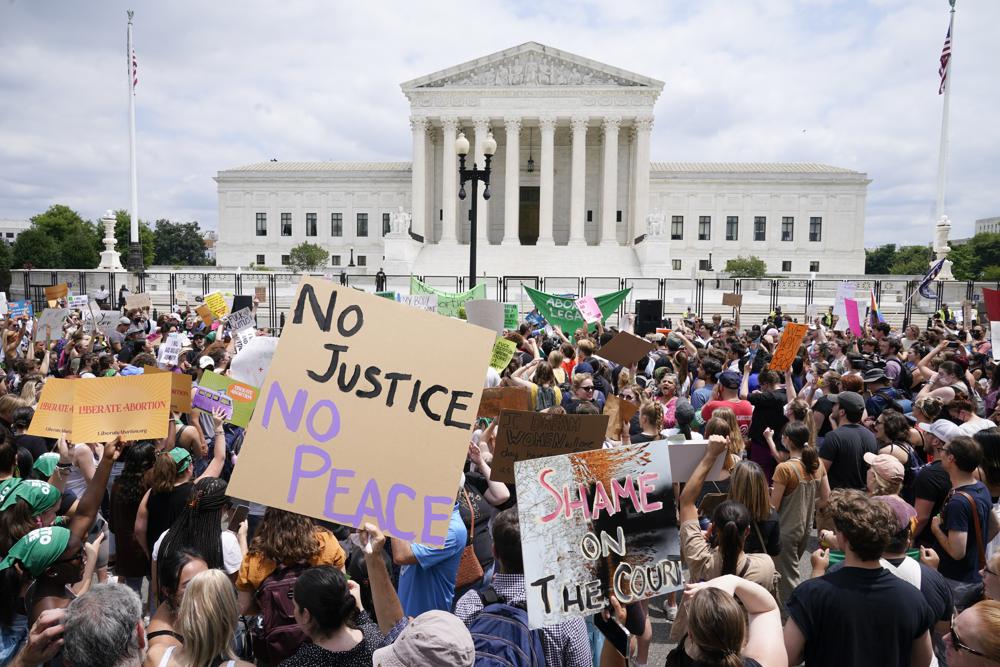
Abortion bans that were put on the books in some states in the event Roe v. Wade was overturned started automatically taking effect Friday, while clinics elsewhere — including Alabama, Texas, and West Virginia — stopped performing abortions for fear of prosecution, sending women away in tears. “Some patients broke down and could not speak through their sobbing,” said Katie Quinonez, executive director of West Virginia’s lone abortion clinic, whose staff spent the day calling dozens of patients to cancel their appointments. “Some patients were stunned and didn’t know what to say. Some patients did not understand what was happening.” America was convulsed with anger, joy, fear, and confusion after the Supreme Court overturned Roe. The canyon-like divide across the U.S. over the right to terminate a pregnancy was on full display, with abortion-rights supporters calling it a dark day in history while abortion foes welcomed the ruling as the answer to their prayers. Women who traveled across state lines to end a pregnancy found themselves immediately thwarted in some places as abortions were halted as a result of state laws that were triggered by the court decision or confusion over when those laws would take effect. In eliminating the constitutional right to abortion that has stood for a half-century, the high court left the politically charged issue up to the states, about half of which are now likely to ban the procedure. Abortions were immediately halted in nine states. Providers in two other states, Oklahoma and South Dakota, had already stopped performing the procedure in the past month. About 73 million people live in the 11 states where the procedure was not available — more than a fifth of the U.S. population. The reaction across the country largely fell along predictable political lines. New Mexico Gov. Michelle Lujan Grisham, a Democrat in a state where abortions are available with few restrictions, called the ruling a “war on women” and vowed to stand as a “brick wall” to help preserve the right. Republican Virginia Gov. Glenn Youngkin vowed to seek a ban on abortions after 15 weeks. Florida Gov. Ron DeSantis, a conservative Republican widely considered a potential candidate for president in 2024, tweeted: “The Supreme Court has answered the prayers of millions upon millions of Americans.” The issue is certain to intensify the fall election season. Both sides intend to use the issue to energize supporters and get them to vote. “This country is lurching to the right, taking away rights. The voters are going to have to intervene,” said Democratic Rep. Jim Clyburn of South Carolina, the U.S. House majority whip. Some states, including Louisiana, Arkansas, and Missouri, had “trigger law” bans on the books that went into effect as soon as Roe fell. In Alabama, the state’s three abortion clinics stopped performing the procedure for fear providers would now be prosecuted under a law dating to 1951. At the Alabama Women’s Center for Reproductive Alternatives in Huntsville, the staff had to tell women in the waiting room Friday morning that they could not perform any more abortions that day. Some had come from as far away as Texas for an appointment. “A lot of them just started breaking down crying. Can you imagine if you had driven 12 hours to receive this care in this state and you are not able to?” clinic owner Dalton Johnson said. Patients were given a list of out-of-state places still doing abortions. Abortion providers across Arizona likewise stopped doing procedures while they try to determine if a law dating to pre-statehood days — before 1912 — means doctors and nurses will face prison time now. In Texas, providers wondered which law they had to follow: a 1925 ban, a 2021 law that limits abortions to the first six weeks of pregnancy, or a trigger law that bans the procedure outright, but wouldn’t take effect for a month or more. The confusion led them to suspend abortions while they seek legal advice. Texas Republican Attorney General Ken Paxton warned they could face immediate prosecution for performing abortions under the Prohibition-era ban, which carries two to five years in prison. It was the risk of prosecution under a 19th-century abortion ban punishable by prison that led the Women’s Health Center of West Virginia to stop performing the procedure. West Virginia Gov. Jim Justice, a Republican, said he will not hesitate to call the Legislature into special session if the ban needs to be clarified. In Ohio, a federal judge dissolved an injunction, allowing a 2019 state law to take effect banning most abortions at the first detectable fetal heartbeat. The high court ruling drew strong reactions around the country. Carol E. Tracy, the executive director of the Women’s Law Project in Philadelphia, was “absolutely furious.” “They want women to be barefoot and pregnant once again,” she said. “But I have no doubt that women and like-minded men, and people in the LGBTQ community, who are also at great risk, … we’re going to fight back. I think it’s going to be a long, hard fight.” Garrett Bess, who works with a lobbying arm of the conservative Heritage Foundation, said his group will continue to press states to restrict abortion. “We’ll be working with grassroots Americans to ensure the protection of pregnant mothers and babies,” Bess said outside the Supreme Court. “This has been a long time coming, and it’s a welcome decision.” Opinion polls show that a majority of Americans favor preserving Roe. They include Alison Dreith, 41, an abortion activist in southern Illinois, where the governor has vowed to keep the procedure accessible. She said she fears for the safety of abortion workers, especially those who help people from states where the procedure is banned. Dreith works with the Midwest Action Coalition, which offers gas money, child care, and other practical support to women seeking abortions. “I absolutely believe that they will try to come after me. I’m not built for prison, but I’m ready,” she said, “and I say, ‘Let’s do this.’ You
For Joe Biden, long path to a potentially crucial presidency
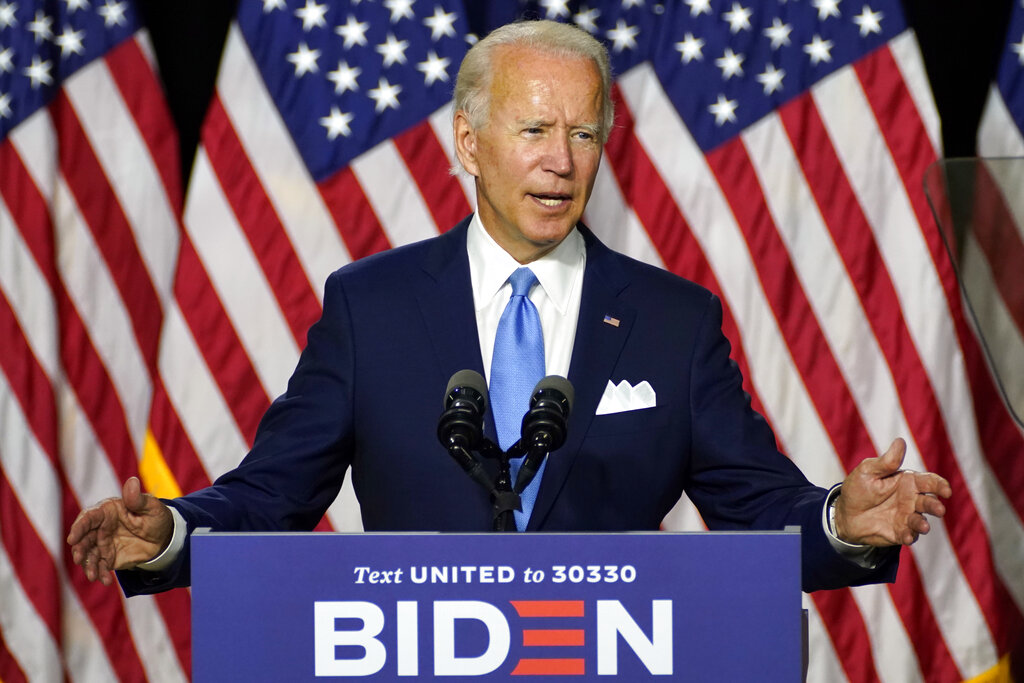
Biden has a record that mixes partisan street-fighting with bipartisan deal-making and bonhomie, and a personal journey of middle-class mores, individual struggle and family heartbreak.
Democrats claim ‘big tent’ for first convention in pandemic
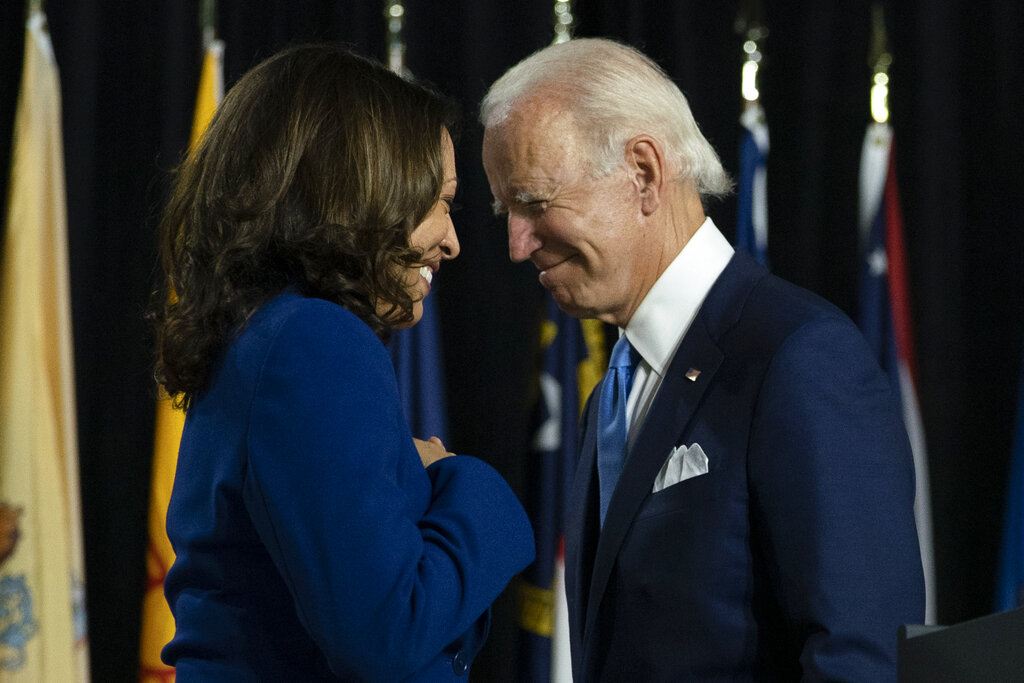
The extraordinary ideological range of Biden’s many messengers on the opening night of the 2020 Democratic National Convention was perhaps best demonstrated by former presidential contenders from opposing parties.
Bernie Sanders drops 2020 bid, leaving Joe Biden as likely nominee
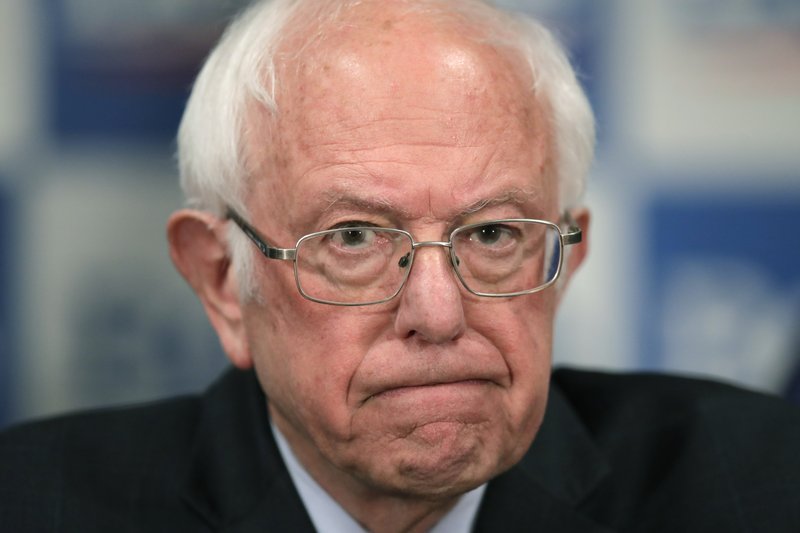
The Vermont senator’s announcement makes Biden the presumptive Democratic nominee to challenge Donald Trump in November.
Joe Biden hopes South Carolina win means a Super Tuesday boost
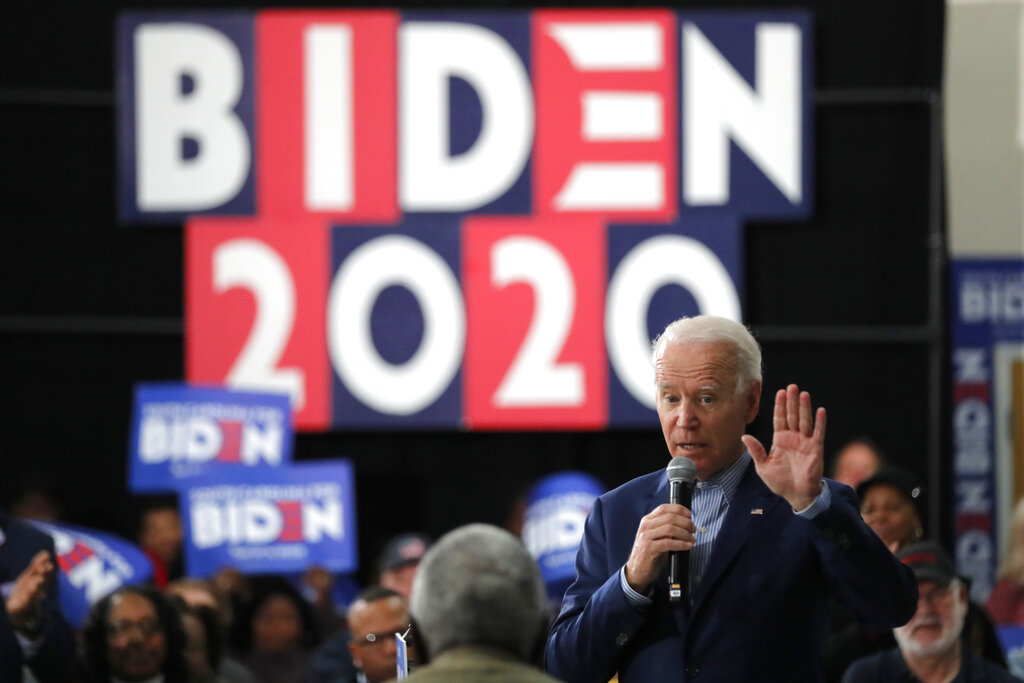
Biden so far has failed to live up to expectations in the three states that have held their primary or caucus to date.
After Nevada, moderates try to slow Bernie Sanders’ momentum

Bernie Sanders sounded like a candidate who had already secured the nomination at a rally in Texas.
‘Serious discussions’ about DNC changes, top Democrat says
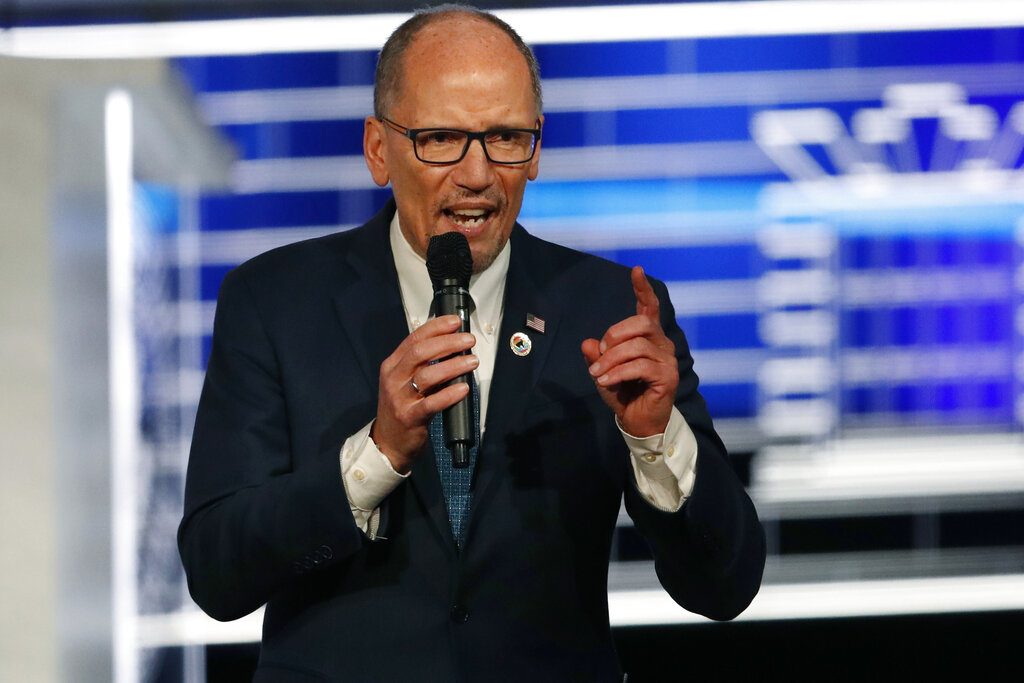
Jim Clyburn of South Carolina, the third ranking house democrat stopped short of saying the DNC chairman should be removed from his post.
