
Republican governors ask Biden administration to rescind Title IX guidance
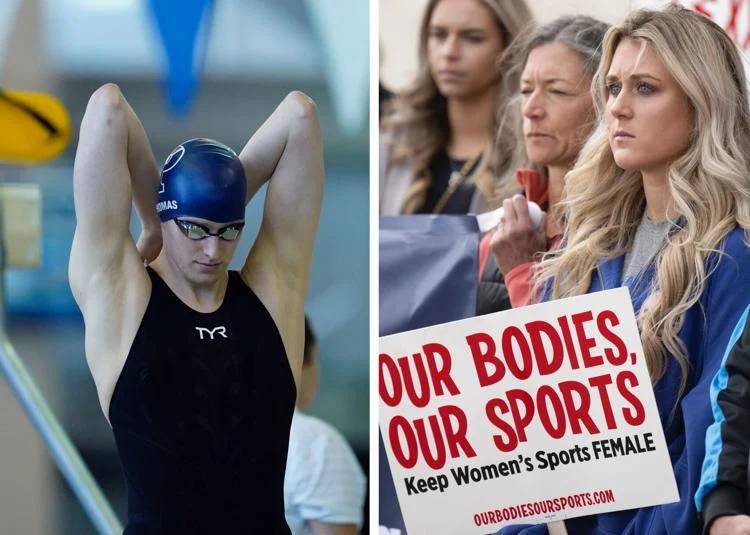
Twenty-five of the nation’s 26 Republican governors have asked the Biden administration to shelve its intent to expand Title IX protections to transgender athletes. The letter, led by the signature of Mississippi Gov. Tate Reeves, says the U.S. Department of Education’s proposed regulation should be withdrawn pending litigation that could be addressed by the U.S. Supreme Court. “The Department’s proposed regulation would attempt to coerce compliance with an uncertain, fluid, and completely subjective standard that is based on a highly politicized gender ideology,” the letter reads. The letter comes as the public comment period ends Monday on a proposed revision to Title IX that would ban state and local governments from prohibiting transgender students from participating on sports teams aligned with their gender identity. Title IX was created to increase opportunities for female athletes. Federal funds can be withheld from those found to be in violation. The law, which was passed in 1972, prohibits discrimination based on sex for school districts, universities, museums, and other educational institutions that receive federal funds. “Compelling a subjective, athlete-by-athlete analysis controlled by a student’s self-identified ‘gender identity’ enforced under threat of Department retribution affords no clarity,” the letter reads. “It does the opposite. This ‘fluid’ subjective standard ensures chaos and confusion in schools and will no doubt result in protracted and disruptive litigation.” Twenty-one states prohibit transgender students from participating on sports teams that do not align with their biological sex at birth, according to the Movement Advancement Project that tracks state policies. The letter was signed by Alabama Gov. Kay Ivey, Alaska Gov. Mike Dunleavy, Arkansas Gov. Sarah Sanders, Florida Gov. Ron DeSantis, Georgia Gov. Brian Kemp, Idaho Gov. Brad Little, Indiana Gov. Eric Holcomb, Iowa Gov. Kim Reynolds, Missouri Gov. Mike Parson, Montana Gov. Greg Gianforte, Nebraska Gov. Jim Pillen, Nevada Gov. Joe Lombardo, New Hampshire Gov. Chris Sununu, North Dakota Gov. Doug Burgum, Ohio Gov. Mike DeWine, Oklahoma Gov. Kevin Stitt, South Carolina Gov. Henry McMaster, South Dakota Gov. Kristi Noem, Tennessee Gov. Bill Lee, Texas Gov. Greg Abbott, Utah Gov. Spencer Cox, Virginia Gov. Glenn Youngkin, West Virginia Gov. Jim Justice, and Wyoming Gov. Mark Gordon. The signature of Vermont Republican Gov. Phil Scott is not on the letter. Republished with the permission of The Center Square.
25 GOP governors ask Biden administration to hit pause on broader clean water rule

Twenty-five Republican governors oppose a revised federal rule regulating U.S. waterways, citing uncertainty from an undecided U.S. Supreme Court case related to the rule. The governors sent a letter to the Biden administration on Monday asking it to delay the implementation of the revised Waters of the United States rule since the U.S. Supreme Court is currently considering Sackett v. EPA. The revised WOTUS rule, released on Dec. 30, reinstates pre-2015 water protections under the federal Clean Water Act. The rule was scaled back under the Trump administration, which triggered lawsuits from environmental groups. “The substance of the rule hinders State governments as we seek to give clarity and consistency to businesses, farms, and individuals regarding the regulatory framework for water,” the 25 GOP governors wrote. “The broad definitions used in the 514- page document only add to the confusing and complicated history of WOTUS. In fact, it appears that the EPA is seeking to regulate private ponds, ditches, and other small water features.” The U.S. Environmental Protection Agency said in December the revised rule applies to “traditional navigable waters, the territorial seas, interstate waters, as well as upstream water resources that significantly affect those waters.” “When Congress passed the Clean Water Act 50 years ago, it recognized that protecting our waters is essential to ensuring healthy communities and a thriving economy,” EPA Administrator Michael Regan said in a statement. “Following extensive stakeholder engagement, and building on what we’ve learned from previous rules, EPA is working to deliver a durable definition of WOTUS that safeguards our nation’s waters, strengthens economic opportunity, and protects people’s health while providing greater certainty for farmers, ranchers, and landowners.” The governors also questioned the timing of the new rule, given ongoing inflation. “Another burdensome and overbroad regulation from the federal government could not come at a worse time for America,” they wrote. “Having already squandered much of America’s energy independence, you should not increase costs for consumers by tying up energy production with even more red tape.” Environmental groups praised the Biden administration’s revised WOTUS rule. “This comes at a time when we’re seeing unprecedented attacks on federal clean water protections by polluters and their allies,” Jon Devine, director of federal water policy for the Natural Resources Defense Council, said in a statement last month. “While the nation still has significant work to do to fully protect important waters, it’s encouraging to see the country taking a step in the right direction to protect the waters we need for everyone’s health and the environment.” The letter was signed by Idaho Gov. Brad Little, Alabama Gov. Kay Ivey, Alaska Gov. Mike Dunleavy, Arkansas Gov. Sarah Sanders, Florida Gov. Ron DeSantis, Georgia Gov. Brian Kemp, Indiana Gov. Eric Holcomb, Iowa Gov. Kim Reynolds, Mississippi Gov. Tate Reeves, Missouri Gov. Mike Parson, Montana Gov. Greg Gianforte, Nebraska Gov. Jim Pillen, Nevada Gov. Joe Lombardo, New Hampshire Gov. Chris Sununu, North Dakota Gov. Doug Burgum, Ohio Gov. Mike DeWine, Oklahoma Gov. Kevin Stitt, South Carolina Gov. Henry McMaster, South Dakota Gov. Kristi Noem, Tennessee Gov. Bill Lee, Texas Gov. Greg Abbott, Utah Gov. Spencer Cox, Virginia Gov. Glenn Youngkin, West Virginia Gov. Jim Justice, and Wyoming Gov. Mark Gordon. Republished with the permission of The Center Square.
Some U.S. clinics stop doing abortions as ruling takes hold
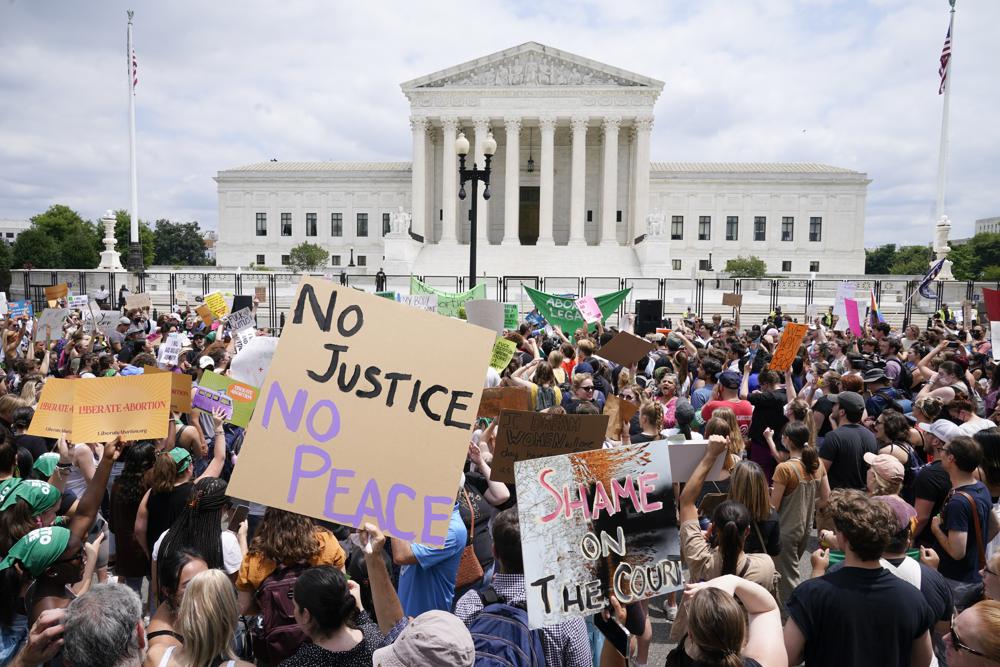
Abortion bans that were put on the books in some states in the event Roe v. Wade was overturned started automatically taking effect Friday, while clinics elsewhere — including Alabama, Texas, and West Virginia — stopped performing abortions for fear of prosecution, sending women away in tears. “Some patients broke down and could not speak through their sobbing,” said Katie Quinonez, executive director of West Virginia’s lone abortion clinic, whose staff spent the day calling dozens of patients to cancel their appointments. “Some patients were stunned and didn’t know what to say. Some patients did not understand what was happening.” America was convulsed with anger, joy, fear, and confusion after the Supreme Court overturned Roe. The canyon-like divide across the U.S. over the right to terminate a pregnancy was on full display, with abortion-rights supporters calling it a dark day in history while abortion foes welcomed the ruling as the answer to their prayers. Women who traveled across state lines to end a pregnancy found themselves immediately thwarted in some places as abortions were halted as a result of state laws that were triggered by the court decision or confusion over when those laws would take effect. In eliminating the constitutional right to abortion that has stood for a half-century, the high court left the politically charged issue up to the states, about half of which are now likely to ban the procedure. Abortions were immediately halted in nine states. Providers in two other states, Oklahoma and South Dakota, had already stopped performing the procedure in the past month. About 73 million people live in the 11 states where the procedure was not available — more than a fifth of the U.S. population. The reaction across the country largely fell along predictable political lines. New Mexico Gov. Michelle Lujan Grisham, a Democrat in a state where abortions are available with few restrictions, called the ruling a “war on women” and vowed to stand as a “brick wall” to help preserve the right. Republican Virginia Gov. Glenn Youngkin vowed to seek a ban on abortions after 15 weeks. Florida Gov. Ron DeSantis, a conservative Republican widely considered a potential candidate for president in 2024, tweeted: “The Supreme Court has answered the prayers of millions upon millions of Americans.” The issue is certain to intensify the fall election season. Both sides intend to use the issue to energize supporters and get them to vote. “This country is lurching to the right, taking away rights. The voters are going to have to intervene,” said Democratic Rep. Jim Clyburn of South Carolina, the U.S. House majority whip. Some states, including Louisiana, Arkansas, and Missouri, had “trigger law” bans on the books that went into effect as soon as Roe fell. In Alabama, the state’s three abortion clinics stopped performing the procedure for fear providers would now be prosecuted under a law dating to 1951. At the Alabama Women’s Center for Reproductive Alternatives in Huntsville, the staff had to tell women in the waiting room Friday morning that they could not perform any more abortions that day. Some had come from as far away as Texas for an appointment. “A lot of them just started breaking down crying. Can you imagine if you had driven 12 hours to receive this care in this state and you are not able to?” clinic owner Dalton Johnson said. Patients were given a list of out-of-state places still doing abortions. Abortion providers across Arizona likewise stopped doing procedures while they try to determine if a law dating to pre-statehood days — before 1912 — means doctors and nurses will face prison time now. In Texas, providers wondered which law they had to follow: a 1925 ban, a 2021 law that limits abortions to the first six weeks of pregnancy, or a trigger law that bans the procedure outright, but wouldn’t take effect for a month or more. The confusion led them to suspend abortions while they seek legal advice. Texas Republican Attorney General Ken Paxton warned they could face immediate prosecution for performing abortions under the Prohibition-era ban, which carries two to five years in prison. It was the risk of prosecution under a 19th-century abortion ban punishable by prison that led the Women’s Health Center of West Virginia to stop performing the procedure. West Virginia Gov. Jim Justice, a Republican, said he will not hesitate to call the Legislature into special session if the ban needs to be clarified. In Ohio, a federal judge dissolved an injunction, allowing a 2019 state law to take effect banning most abortions at the first detectable fetal heartbeat. The high court ruling drew strong reactions around the country. Carol E. Tracy, the executive director of the Women’s Law Project in Philadelphia, was “absolutely furious.” “They want women to be barefoot and pregnant once again,” she said. “But I have no doubt that women and like-minded men, and people in the LGBTQ community, who are also at great risk, … we’re going to fight back. I think it’s going to be a long, hard fight.” Garrett Bess, who works with a lobbying arm of the conservative Heritage Foundation, said his group will continue to press states to restrict abortion. “We’ll be working with grassroots Americans to ensure the protection of pregnant mothers and babies,” Bess said outside the Supreme Court. “This has been a long time coming, and it’s a welcome decision.” Opinion polls show that a majority of Americans favor preserving Roe. They include Alison Dreith, 41, an abortion activist in southern Illinois, where the governor has vowed to keep the procedure accessible. She said she fears for the safety of abortion workers, especially those who help people from states where the procedure is banned. Dreith works with the Midwest Action Coalition, which offers gas money, child care, and other practical support to women seeking abortions. “I absolutely believe that they will try to come after me. I’m not built for prison, but I’m ready,” she said, “and I say, ‘Let’s do this.’ You
Donald Trump’s clout factors into U.S. House races in West Virginia, Nebraska
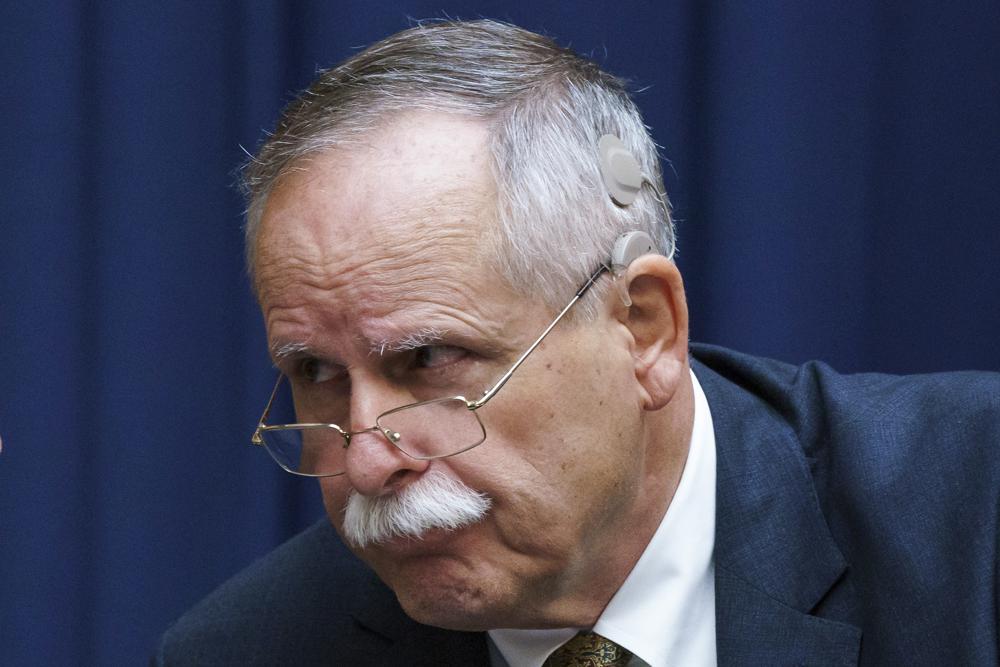
Roads, bridges, and former President Donald Trump are on West Virginia and Nebraska voters’ minds as they choose congressional candidates in Tuesday’s Republican primary elections. Two incumbent GOP congressmen who have taken dramatically different approaches to their time in office are facing off in West Virginia’s 2nd Congressional District, one of the most-watched U.S. House primaries on the day’s ballot. Reps. David McKinley and Trump-backed Alex Mooney were pitted against each other after West Virginia lost a congressional seat based on the results of the 2020 U.S. census. Throughout West Virginia on Tuesday, voters were heading to polling places at schools, churches, and public libraries. Susan Smith, a small business owner in Valley Grove, West Virginia, voted for Mooney at a local elementary school Tuesday morning. She lives in McKinley’s former district and said she always voted for him in the past. But not in this election. “When Mr. McKinley started voting with the Democrats and the current administration, that’s when things changed,” said Smith, who cited McKinley’s vote for President Joe Biden’s infrastructure bill and the January 6 commission. “I’m sorry to be losing a congressman, but we cannot have a Republican congressman voting with the Democrats. West Virginia did not need the money from this un-infrastructure bill.” Lowell Moore, a retired highways worker and county commissioner in rural Tucker County, said the choice was clear to support McKinley. He said he’s already seeing the benefit of federal infrastructure money in work being done to complete Corridor H, the last remaining section of the Appalachian Development Highway System in West Virginia. Moore said completing Corridor H will cut the response time for emergency services in half in Tucker County, which does not have a hospital and where first responders now have to travel on winding mountain roads. “The people he represents needed this so bad,” Moore said. “I’m a Republican, and I commend him for reaching across the aisle. It shouldn’t be about making the political decision — it should be about making the right decision.” West Virginia’s election is the first of five primaries in which two incumbent U.S. House members will face off. It will be followed by similar contests in Georgia and Michigan and in two Illinois districts. The primary comes on the heels of a victory by Trump-endorsed conservative JD Vance, author of the bestselling memoir “Hillbilly Elegy,” who defeated six other candidates to win the Ohio Republican primary for U.S. Senate last week. The West Virginia contest will once again test the former president’s clout when his own name isn’t on the ballot. Nebraska voters will nominate candidates on Tuesday to fill the seat abandoned by U.S. Rep. Jeff Fortenberry, a Republican who resigned from office and ended his reelection bid after he was convicted of lying to federal authorities about an illegal campaign contribution. Fortenberry’s name will still appear on the ballot for the 1st Congressional District because he withdrew after a deadline to certify the ballot, but Sen. Mike Flood, a former speaker of the Nebraska Legislature, appears to have the advantage over five other Republican candidates. Voters will also pick nominees for Nebraska’s 2nd Congressional District in the Omaha area. Three-term Republican Rep. Don Bacon faces a long-shot challenge from Steve Kuehl, an Omaha consultant who got a shoutout from Trump when the former president visited earlier this month. Trump blasted Bacon as a “bad guy” during a recent rally in the state and had criticized him previously for his support of a federal infrastructure bill that most GOP lawmakers opposed. Bacon also has been mildly critical of Trump in the past, saying the former president bore some responsibility for the January 6 riot at the U.S. Capitol. Trump stopped far short of officially endorsing Kuehl, however, saying: “I think Steve will do well. Good luck, Steve, whoever the hell you are.” Democrats in Nebraska will nominate either state Sen. Tony Vargas of Omaha or Alisha Shelton, an Omaha mental health therapist, to challenge Bacon in the 2nd, the state’s only competitive district. In the rural, geographically vast 3rd Congressional District, Republican U.S. Rep. Adrian Smith faces a challenger but is expected to win his party’s nomination. Two Democrats are vying for their party’s nomination within the district, which is overwhelmingly Republican. In West Virginia, incumbent Rep. Carol Miller is expected to hold her seat in the 1st Congressional District against four Republican challengers. In the state’s 2nd Congressional District, where McKinley and Mooney are battling each other for the GOP nomination, openly gay former Morgantown city councilor Barry Wendell is competing against security operations manager Angela Dwyer in the Democratic primary. Mooney has attacked McKinley for voting with 12 other House Republicans in favor of Biden’s $1.2 trillion infrastructure bill. Trump, who won every single county in West Virginia in two presidential elections and said Republicans who voted for the infrastructure bill should be “ashamed of themselves,” endorsed Mooney on the same day Biden signed the infrastructure law. Rep. David McKinley, a civil engineer by trade, received endorsements and praise from Democratic U.S. Sen. Joe Manchin and GOP Gov. Jim Justice over his infrastructure vote. He said it was time to put party politics aside to meet the needs of his constituents. “This wasn’t for Joe Biden — this was to help West Virginia,” he told The Associated Press. Republished with the permission of The Associated Press.
GOP seeks to convince vaccine skeptics within its own ranks

When a group of Republican doctors in Congress released a video selling the safety of the coronavirus vaccine, their message wasn’t explicitly aimed at their conservative constituents but nonetheless had a clear political bent. Getting the shot is the best way to “end the government’s restrictions on our freedoms,” Rep. Larry Bucshon, an Indiana Republican and heart surgeon who donned a white lab coat and stethoscope when he spoke into the camera. The public service announcement was the latest effort from GOP leaders to shrink the vaccination gap between their party and Democrats. With vaccination rates lagging in red states, Republican leaders have stepped up efforts to persuade their supporters to get the shot, at times combating misinformation spread by some of their own. “Medicine and science and illness, that should not be political,” said Dr. Brad Wenstrup, a Republican congressman from Ohio and a podiatrist who has personally administered coronavirus vaccine shots both as an Army Reserve officer and as an ordinary doctor. “But it was an election year and it really was.” Wenstrup said both parties helped foment some skepticism, though increasingly vocal moves by other Republicans amount to acknowledgment that GOP vaccine hesitancy is a growing public health problem — and potentially a political one. “Things could easily spiral quickly if we don’t solve this red-state-blue-state issue,” said Kavita Patel, a physician, and health policy expert who worked in the Obama administration. Patel said life could return to normal in certain parts of the country while the pandemic continues to rage elsewhere — potentially even disrupting in-person voting in primaries ahead of next year’s midterm elections. “We could be sitting here in the winter-fall with an entirely different, scary version of the pandemic,” she said. “One driven by a combination of variants and people who didn’t want to get vaccinated.” It’s easy to spot potential trouble spots now — and the political pattern. Mississippi has the nation’s lowest vaccination rate, with less than 31% of its population receiving at least one anti-coronavirus shot. And the four states that proceed it in national rankings, Alabama, Louisiana, Idaho, and Wyoming, according to an Associated Press analysis of Centers for Disease Control and Prevention data. They all vote reliably Republican in presidential races. By contrast, the five states with the highest vaccination rates backed Democrat Joe Biden in November. New Hampshire leads the nation with 60% of its population receiving at least one dose, followed by Massachusetts, Vermont, and Connecticut. The fifth highest vaccination rate state, Maine, awarded three of its electoral votes to Joe Biden and one to former President Donald Trump. Republicans are more likely than Democrats to say they definitely or probably won’t get vaccinated, 44% versus 17%, according to a poll released in February from The Associated Press-NORC Center for Public Affairs. Hence this week’s video, where Texas Republican Rep. Michael Burgess, an obstetrician who reassured viewers that rather than rush the vaccine out in an unsafe fashion, federal officials “cut bureaucratic red tape, not corners. And they got the job done in record time.” The video also credited the Trump administration’s Operation Warp Speed with bringing the vaccine so quickly. Amid polling showing that Republican men were among the most likely vaccine holdouts, Senate Minority Leader Mitch McConnell said earlier this month, “I can say as a Republican man, as soon as it was my turn, I took the vaccine.” Even Trump, who was vaccinated privately while in office, suggested on Fox News Channel that he’d be willing to record a video urging vaccination. Doing so would be an about-face for Trump, who as president long said he’d be willing to take a vaccine but also relished politicizing the pandemic. He suggested that lockdowns recommended by his administration’s experts were governmental overreach, mocked then-candidate Biden for wearing a mask in public too frequently, and used racist terms like “China virus.” Not all Republican lawmakers feel the same sense of urgency to raise the vaccination rate, meanwhile. “The science tells us that vaccines are 95% effective. So if you have a vaccine, quite honestly, what do you care if your neighbor has one or not?” Wisconsin Republican Sen. Ron Johnson said during a recent interview with a conservative radio host. “I mean, what is it to you?” Between 70% and 85% of the population would need to be immune before the coronavirus is effectively contained, experts believe. The GOP’s top leaders may also have political incentives to appeal to those resistant to getting the shot. Joe Brettell, a GOP strategist in deep red Texas, said he expects Republican governors looking to raise their profiles will seize on vaccine-related debates, such as opposing “vaccine passports” that may eventually be required for travel, even as they implore their state’s people to get immunized. “I think that’s where smart governors are going to start asserting themselves,” he said, noting that some already have. Ideology also isn’t the only factor in vaccine hesitancy. Experts are also tracking a generational gap, with younger Americans believing that, even if they get the virus, it is unlikely to seriously sicken or kill them. Republican West Virginia Gov. Jim Justice even is offering $100 saving bonds to residents ages 16 to 35 who get or have gotten the shot — trying to reverse a trend that saw his conservative state become an early leader in vaccination rates only to have it slow since. Republican pollster Frank Luntz, who has been researching how best to convince vaccine skeptics, says he believes the effort is most effective when it avoids politics, with people hearing about the benefits of immunization from doctors, not politicians. He said many skeptics are persuaded to get the shot because it benefits their friends and family, not just themselves. “If it’s politicized, they will not reach herd immunity,” said Luntz, who said that means giving credit to both sides, praising the Trump administration for Operation Warp Speed and the Biden White House’s efficient and effective distribution of vaccines. Luntz argued that public health officials should be targeting
Red states on U.S. electoral map lagging on vaccinations
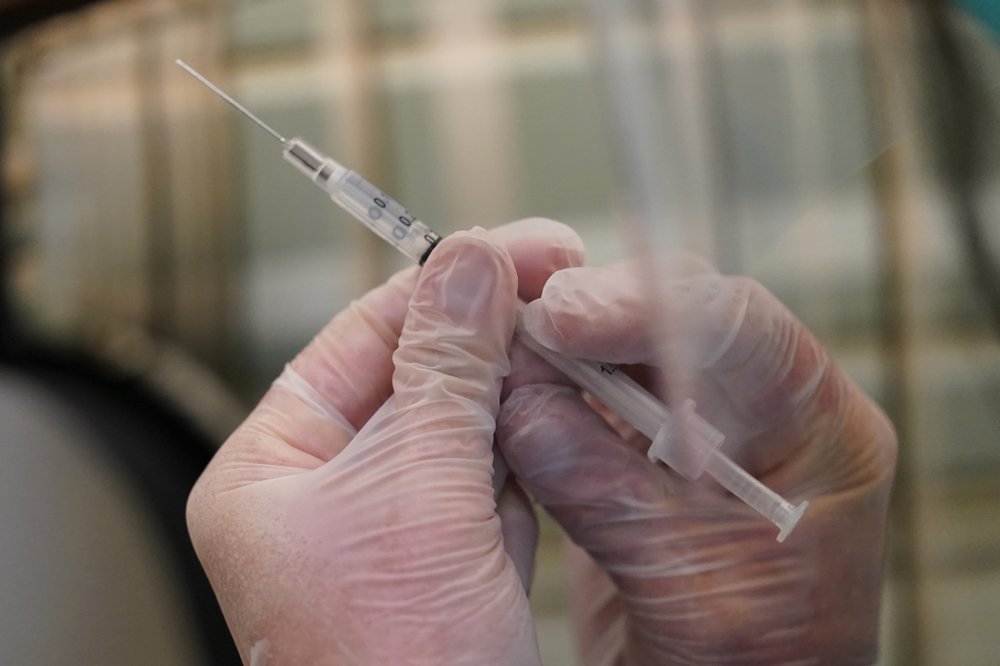
With coronavirus shots now in the arms of nearly half of American adults, the parts of the U.S. that are excelling and those that are struggling with vaccinations are starting to look like the nation’s political map: deeply divided between red and blue states. Out in front is New Hampshire, where 65% of the population age 18 and older has received at least one dose of the vaccine, according to the Centers for Disease Control and Prevention. Following close behind are New Mexico, Connecticut, Maine and Massachusetts at 55% or greater. All have a history of voting Democratic and supported President Joe Biden in the 2020 election. Meanwhile, at the bottom are five states where fewer than 40% have rolled up their sleeves for a shot. Four of them — Mississippi, Alabama, Louisiana and Tennessee — lean Republican and voted for Donald Trump last fall. The fifth is Georgia, which has a Republican governor and supported GOP presidential candidates for nearly three decades before narrowly backing Biden. The emerging pattern: Americans in blue states that lean Democratic appear to be getting vaccinated at more robust rates, while those in red Republican states seem to be more hesitant. “We can draw a conclusion that red states and voters that voted for Trump are going to be more difficult to vaccinate because we have real good survey data to support that,” said Dr. Howard Forman, a professor of public health and management at the Yale School of Medicine. A poll by The Associated Press-NORC Center for Public Affairs Research in late March found that 36% of Republicans said they will probably or definitely not get vaccinated, compared with 12% of Democrats. Similarly, a third of rural Americans said they were leaning against getting shots, while fewer than a fourth of people living in cities and suburbs shared that hesitancy. Forman cautioned that in most U.S. states, which receive vaccine shipments based on population, demand for the shot still exceeds supply. So it’s hard to know how many people are resisting until everyone wanting the shots gets them. But if states soon start seeing significant numbers of unfilled appointments with many people still unvaccinated, he said consequences could be serious. “We could see substantial outbreaks for a long time,” Forman said. “It will determine whether we go back to normal in some cases.” Past AP-NORC polls have shown more Republicans than Democrats say the government has exaggerated the threat posed by the virus. Republicans have also been more opposed to restrictions and mask-wearing. The CDC reports that nearly 121 million American adults — or 47% of the U.S. adult population — have received at least one coronavirus shot. California, the nation’s largest blue state, is slightly ahead of that pace, at 50%. The biggest red state, Texas, lags at less than 44%. How swiftly states are vaccinating doesn’t always correlate with how they vote. Deeply red South Dakota ranks among the most successful states, with 54% of its population getting injections. Among blue states, Nevada lags furthest behind the U.S. at less than 44%, followed by Oregon and Michigan at 45% each. New Hampshire, which leads the nation in adult vaccinations, has a Republican governor and a GOP-controlled Legislature. However, Democrats hold all of its seats in Congress and the state has consistently Democratic in every presidential election since 2008. West Virginia, where Trump carried 66% of the vote last year, became an early success story in the vaccine rollout as the first U.S. state to cover all nursing homes. But while Republican Gov. Jim Justice has remained a vaccine cheerleader, West Virginia now lags the U.S. overall with less than 42% of its population receiving at least one dose. Among those who say they won’t get vaccinated is 58-year-old Martha Brown. Sitting outside her apartment complex in Charleston, West Virginia, Brown said she’s afraid of having a bad reaction after a flu shot last year left her with cold symptoms. “I’m OK without it,” Brown said. “I wear my mask all the time.” Experts said it’s too soon to tell whether pausing shots of the single-dose Johnson & Johnson vaccine will increase reluctance to get vaccinated. Government scientists are investigating reports of unusual blood clots in six women who received the vaccine. If the issue gets resolved quickly and it’s deemed safe to resume Johnson & Johnson shots, there should be little impact on public confidence, said Claire Hannan, executive director of the Association of Immunization Managers. She hopes the response itself assures people “the system is working.” “It’s really important to understand that’s how closely we monitor everyone getting the vaccine” for potential problems, Hannan said. “We have systems in place to connect the dots.” In a suburb outside Chicago, Jennifer Rockwood was getting ready to get her Johnson & Johnson shot Tuesday morning when she heard about the recommended pause. She canceled her appointment after waiting months to get the vaccine. “Did it give me hesitancy? Yes it did,” said Rockwood, 49. “But I was immediately back at my kitchen counter flipping the laptop open again and seeing what I could do to schedule another one.” She booked an appointment to get the Pfizer vaccine Wednesday. Trump has publicly urged Americans to get vaccinated but also received his own injections secretly, disclosing them only after he left office. As president, he spent much of the pandemic minimizing the dangers of the virus, even after being hospitalized with COVID-19. Some Republican governors have likewise kept their own vaccinations quiet. In Florida, where about 44% of the population has gotten at least one shot, it wasn’t disclosed that GOP Gov. Ron DeSantis got the single-dose Johnson& Johnson vaccine until a reporter asked the governor’s spokeswoman days later. Many other U.S. governors have gotten their shots on camera or held news conferences around them in an effort to assure people the vaccines are safe. The Democratic governor of Kentucky, a Trump-voting state, is trying to persuade more people to get jabbed by promising to lift pandemic restrictions when
Kay Ivey among 7 governors backing Donald Trump’s nomination for Nobel Peace Prize
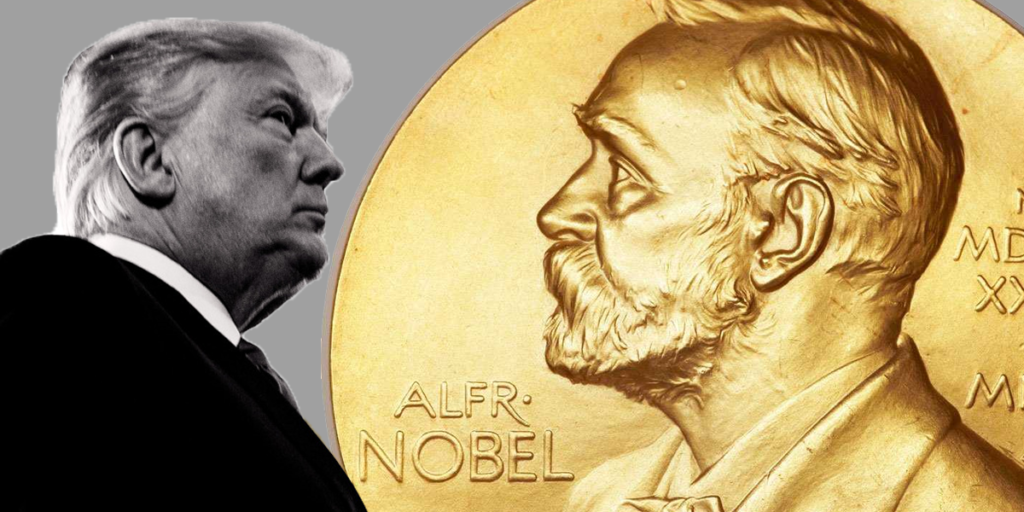
Alabama Governor Kay Ivey announced her part in nominating Donald Trump for the Nobel Peace Prize on Tuesday. “Yesterday, I was proud to join six other governors in highlighting the historical progress President Trump has made toward denuclearization and peace for the peoples of North and South Korea,” said Ivey. “Ending North Korea’s pursuit of nuclear weapons has eluded American presidents for decades. President Trump is due to be honored for his ability to bring everyone to the table to discuss a way forward which offers the Korean Peninsula, and the world, a path toward stability and peace.” Ivey joined Governor’s Eddie Baza Calvo of Guam, Jeff Colyer of Kansas, Phil Bryant of Mississippi, Governor of Maine Paul LePage, Henry McMaster of South Carolina, and Governor of West Virgnia, Jim Justice in nominating the President by sending a letter to Berit Reiss-Andersen, chair of the Norwegian Nobel Committee. “Though he has only been in office one year, President Trump has achieved an unprecedented victory for global peace and security. The President’s firm stance against nuclearization, coupled with his willingness to engage one-on-one with Pyongyang, has succeeded in opening new avenues of cooperation, friendship and unity between the two Koreas – and the rest of the world,” said the letter. “It isn’t often that presidents follow through on their promises; yet, President Trump is proving time and again that he isn’t like most presidents,” said Ivey. “I am thankful to the president for the conservative, smaller-government direction he is taking our nation and for his efforts in ensuring that our world is a safer place. The Nobel Committee should act quickly in affirming President Trump’s nomination and should give him the Nobel Peace Prize, which he certainly deserves.”
