
Chamber of Commerce of West Alabama announces staff changes

The Chamber of Commerce of West Alabama has announced two changes to its professional staff. Alicia Gregory, who currently serves the Chamber as Executive Assistant and Special Events Coordinator, will move to Director of Membership Engagement, a position previously held by Jill McDonald. McDonald is relocating due to her husband’s professional promotion. Gregory will be responsible for all membership events, coordinate numerous chamber committees and affiliate groups, and manage leadership development programs. Tanya Winstead will become the Chamber’s Director of Membership and Resource Development, where she will lead all membership recruitment efforts and resource development campaigns. She currently serves as Community Outreach and Events Officer for Alabama ONE. Winstead, a graduate of Leadership Tuscaloosa, has a long history with the Chamber. She has served as chair of the Ambassador program, and she was a top volunteer producer in the 4th Quarter Drive sponsorship campaign. Winstead succeeds Kimberly Adams, who relocated to Oxford, Alabama, with her husband, Sam, who was recently named Head Football Coach at Oxford High School. “We are proud to see Alicia step into this new role and are excited to welcome Tanya to the Chamber team,” said Jim Page, President and CEO of the Chamber. “They are both extremely knowledgeable about Chamber operations and programming, so this will be a seamless transition. I have no doubt they will build upon the great work done by Jill and Kimberly in helping take the Chamber to the next level.”
Chamber CEO Jim Page appointed to international association board

Jim Page, President and CEO of the Chamber of Commerce of West Alabama, has been appointed to serve on the board of directors for The Association of Chamber of Commerce Executives (ACCE). Established in 1914, ACCE is based out of Alexandria, Virginia, and has over 9,000 members. The mission of the organization is to support and develop chamber professionals to lead businesses and their communities. ACCE’s board of directors represent more than 50 organizations around the country. ACCE identifies and analyzes trends affecting communities and develops benchmarking studies, in addition to providing tools to help chamber leaders manage operations at their organization. Sheree Anne Kelly, President and CEO of ACCE, said in a statement, “We are pleased to welcome Jim to the ACCE Board of Directors. He joins the organization’s volunteer leadership at a time when the role of chambers of commerce has never been more critical. In these unprecedented times, Jim’s expertise will help our volunteer leadership address today’s most pressing challenges, reimagine chambers and shape the future of our work.” Incoming ACCE chairman Jay Byers, President and CEO of the Greater Des Moines Partnership, appointed Page. President and CEO of the Chamber of Commerce of West Alabama since 2012 and a former chairman of the Chamber of Commerce Association of Alabama, Page has worked in the chamber industry since 2002. According to the Chamber of Commerce, he is “responsible for management of the professional staff and has oversight of all Chamber programs. He serves as lead spokesman for the Chamber on all public policy issues, economic development projects, and strategic community initiatives.” He is Chairman of the University Communities Council for the Association of Chamber of Commerce Executives, an appointed member of the Tuscaloosa County Road Improvement Commission, and is the Chairman of the Alliance for Alabama’s Infrastructure. He has a degree in Political Science and Marketing from the University of North Alabama.
Alabama’s lagging infrastructure could hurt economic development efforts
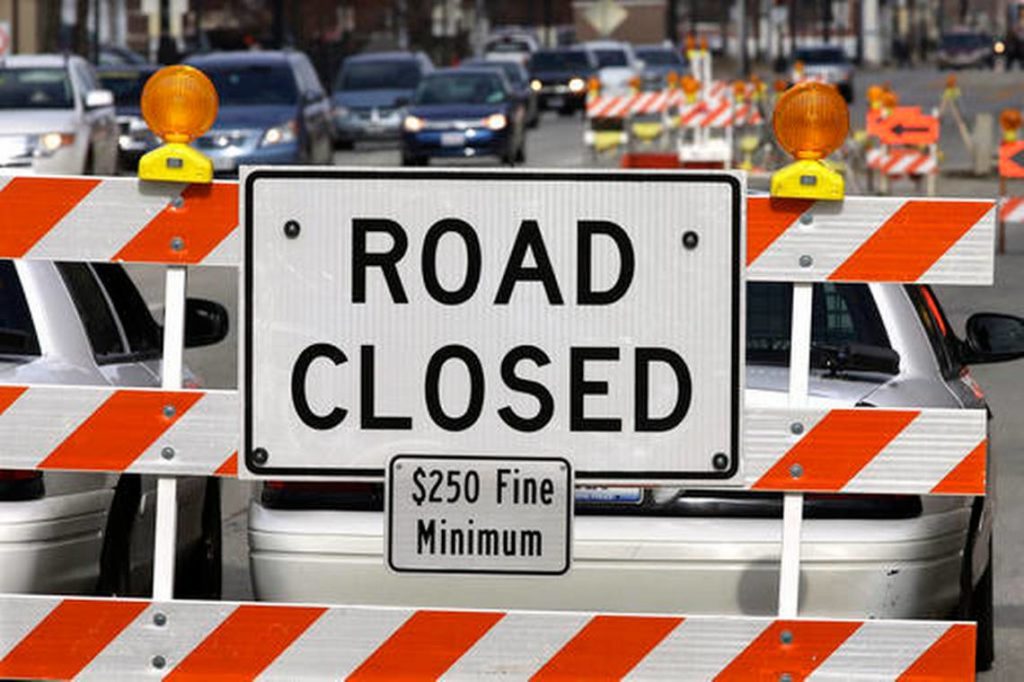
In economic development, companies consider three key elements as they look to locate or expand in an area. When it comes to business climate and workforce development, Alabama is tops. When it comes to reliability and access to infrastructure, not so much. Shashi Nambisan, executive director of the Alabama Transportation Institute at the University of Alabama, said statistics show the state’s infrastructure needs action now. “Over the last 25 years, there has been a tremendous increase in population, about 20 percent, (an) increase in the number of registered vehicles across the state and, most importantly, the vehicle miles driven across the state,” Nambisan said. “At the same time, we have had just a nominal 14 percent increase in the capacity, the number of new lanes or new lane miles that have been added.” Alabama’s lagging infrastructure could hurt economic development efforts from Alabama NewsCenter on Vimeo. The reason is funding. Alabama hasn’t raised its gasoline tax, the primary source of roadway funding, in more than 25 years. In the years since, fuel efficiency has risen in cars and there has been a rise in hybrid and electric vehicles. Jim Page is chairman of the Alliance for Alabama’s Infrastructure and president of the West Alabama Chamber of Commerce. “We have not adjusted what we pay at the pump since 1992 and, certainly over a generation, inflation and construction costs, the dollar doesn’t go as far as it did back then. So, we’ve really been declining,” Page said. “We do think a comprehensive package needs to be introduced where we need to take in technology considerations, the changing way vehicles are being made, all need to be on the table. But, for right now, and we think for the foreseeable future, paying at the pump is still the primary way for us to get revenue for road projects in this state. So a nominal tax increase, at the very least, has got to be introduced for us to be able to catch up.” Experts say there has been an increase in traffic crashes in more recent years. (file/Alabama Newscenter) Page and Nambisan were on a panel that talked about the infrastructure needs in the state at the Economic Development Association of Alabama’s 2018 Summer Conference. They said Alabama suffers in safety, quality of life and economic development due to capacity and maintenance issues on roads and bridges, and the problem is only going to get worse. A high number of motorists from other states use Alabama roads and bridges for access to the beaches. (file/Alabama Newscenter) “We have had a tremendous increase in the number of crashes, fatalities related to roadway crashes and, over the last couple of years, we’ve had about 1,100 people who have died from crashes on the roadways in Alabama,” Nambisan said. “The other part is in terms of economic development,” Nambisan said. “If you do not address the capacity constraints, you will have congestion and, based on congestion, what we project is over the next 20 years, you’re going to see about a 300 percent increase in the delays on roadways. It is not only for us as individuals, but if you look at the freight and commerce activities, that’s a tremendous amount of delays that they encounter.” Page said his organization and others will push for legislation this year that begins to address the needs in the state. “Nobody likes the thought of paying more,” he said. “Nobody likes the term ‘tax increase’ or ‘revenue generation’ or ‘revenue enhancement,’ however you want to frame it. But this is a consumption fee that we pay based on our usage. So, while nobody likes that, we have seen numbers that bear out that Alabamians understand that we have to pay our fair share to get the high-quality roads and transportation system that we all want. So, while there is not a great appetite for having to do this, we do know there is an appetite for finally addressing this issue and not kicking the can down the road anymore.” Maintaining roadways and making repairs to potholes and other issues is a critical component to Alabama remaining competitive with other states. (file/Alabama Newscenter) Page said Alabama is already behind other states that have addressed the infrastructure funding issue. Those states compete with Alabama in economic development and now have an advantage, he said. “This is such a major topic for Alabama for us to maintain our economic competitiveness, but in the future, we’ve got to be competitive with our sister Southeastern states, many of whom have already addressed this issue,” he said. “We think it’s imperative in the 2019 legislative session that we finally address this issue for the first time since 1992. “This is a critical component for being competitive for economic development projects and maintaining what we have now, but also being able to recruit new jobs, new industry to this state for the future,” Page said. The gas tax also is beneficial because others contribute to help maintain and expand our roadways. “We have such a high percentage of motorists from around the country that use our roads and our bridges to go to the beach or to get from one place to the other,” Page said. “So, really, the only way for us to capture their fair share, so to speak, is paying at the pump when they stop at our gas stations.” Republished with the permission of the Alabama Newscenter.
Alabama Legislature passes new transportation funds allocation formula
The Alabama legislature nearly unanimously passed a new funding formula for the state’s roads and bridges Wednesday evening, in what legislators and outside groups are celebrating as a return to greater local control of transportation funds. The bill, SB180, establishes the Alabama Transportation Safety Fund, which will receive revenues designated for “maintenance, improvement, replacement, and construction of state, county, and municipal roads and bridges within the state.” Under the new bill the first $32,000,000 in transportation revenues levied under any new tax or revenue measures will be divided equally among Alabama’s 67 counties, with $500,000 going directly to each county commission for use solely on roads and bridges. Though he is against increasing the proposed gas tax, Representative Will Ainsworth (R-Guntersville) says the bill is a step in the right direction for local control and equitable distribution of funds should they lose that battle. “We wanted to make sure the revenue was distributed fairly, and that it would go to all areas of the state, not just large projects,” Ainsworth told Alabama Today. “The bill guarantees money is going to go to counties with rural areas as well. From my standpoint it protects my constituents in Marshall County, if they were to pass the tax, to make sure Marshall County residents get their fair share.” The bill also provides for the public notice of, and periodic reporting on new projects taken on by the Alabama Department of Transportation. The Business Council of Alabama also praised the bill’s passage, saying it “paves the way for the first new investment in Alabama’s road and bridge infrastructure in the last quarter-century.” The BCA, which heavily supports increasing the state’s gas tax, called SB180 “heavily responsible and accountable” in a press release Wednesday afternoon. “The Senate for its previous passage of SB 180 and now House members deserve praise for supporting this responsible and accountable legislation,” said BCA President and CEO William J. Canary. “A well-supported surface transportation system is as important to manufacturing, wholesale, and retail businesses and industries for profitability and job creation as any other component of a successful business model.” “Today, Alabama legislators exercised true leadership by voting in favor of SB 180,” added Jim Page, CEO of the West Alabama Chamber of Commerce and spokesperson for the Alliance for Alabama’s Infrastructure. “We applaud the members of the legislature who recognize that we can no longer ignore Alabama’s crumbling infrastructure. If our state wants to remain economically competitive and keep our citizens safe, then we must invest in and protect funding for our roads and bridges.” The proposed gas tax increase, which would raise Alabama’s tax on fuel to the average of its neighboring states, is currently on the House calendar, but with only 8 days left in the 2016 Regular Session, would need to overcome several obstacles and move quickly to become law.
