
Mike Hubbard seeks new trial post-conviction
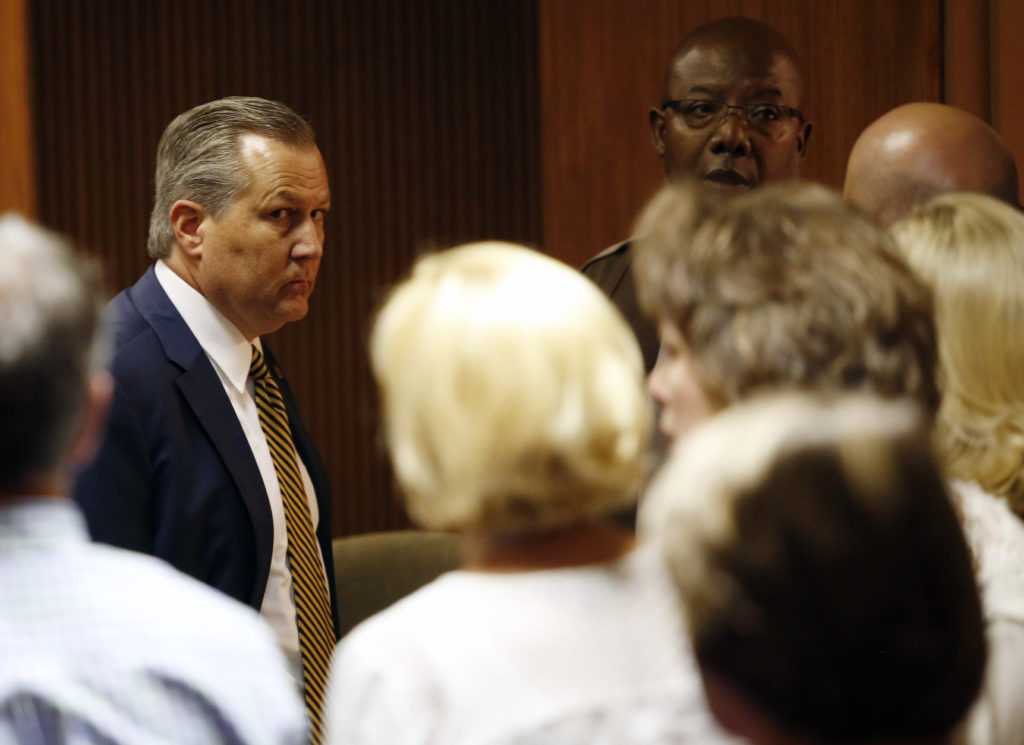
Former Alabama House Speaker Mike Hubbard has asked for a new trial, saying, among other claims, the state allowed improper expert testimony regarding Alabama ethics law, in their efforts to secure convictions against him. Hubbard’s attorney Bill Baxley claims former Alabama Ethics Commission Executive Director Jim Sumner was improperly allowed to testify about the intent of the state’s ethics law. Hubbard’s attorneys filed the request Friday asking a judge to reverse Hubbard’s conviction, or allow a new trial, contending Hubbard did not receive a fair and impartial trial. On June 10, Hubbard was convicted on 12 of 23 counts of corruption, which automatically removed the powerful Republican from both the Legislature and the speaker’s office, ending the upward trajectory of the one-time GOP star whose career previously appeared to have no limits. On July 8, he was sentenced to a total of four years in prison, eight years on probation and ordered to pay a $210,000 fine. Hubbard is currently out on bond.
Testimony: Mike Hubbard hired to open doors for others
The president of an education curriculum company testified Tuesday that he hired Alabama House Speaker Mike Hubbard in a $7,500 a month consulting contract, to open doors with legislative leaders in other states as the company tried to sell digital courses to school systems. Edgenuity President Michael Humphrey said he believed Hubbard – with his legislative and sports background – could get him meetings with legislative leaders that Humphrey said it would take him a year to get on his own. “My idea was to use Mike to say, ‘Get me a meeting with this guy, let me go meet him,’” Humphrey said. Humphrey said Hubbard’s contract specified that he only worked on matters outside Alabama for the company. Humphrey said Hubbard’s work for the company included calling the then-speaker of the South Carolina House of Representatives and emailing Auburn University Athletics Director Jay Jacobs asking for contacts for the company as it tried to get cleared by the NCAA to sell its products for college athletes. Hubbard faces 23 felony ethics charges accusing him of using his political positions to make money and solicit work, investments and clients from people with business before the Alabama Legislature. Prosecutors say Hubbard improperly used the “mantle of his office” to benefit his businesses and clients. Hubbard has maintained that the transactions were legal and permitted under the exceptions that the state ethics law provides for normal business dealings and longstanding friendships. During the questioning of the retired director of the Alabama Ethics Commission, prosecutors and defense lawyers took turns alternately depicting Hubbard as someone who cautiously sought advice about what was allowed under state ethics laws or someone who willfully ignored the advice he was given. Jim Sumner said Hubbard often sought informal ethics advice from him or general counsel Hugh Evans and they repeatedly cautioned him about the restrictions of the law. They gave him an informal letter about his work for a municipal-owned gas utility saying the work would be legal as long as he didn’t use the “mantle of his office” to benefit his clients and businesses. “We always got to the point: I would say, or Hugh would say, ‘You remember the drill. You can’t use your position to benefit yourself, your business or your family,’” Sumner said. Sumner served as an expert witness, providing testimony on both the informal advice given to Hubbard and providing general interpretations about what the law allows and doesn’t allow. Sumner said he once called Hubbard with concerns after hearing rumors that a change to the 2013 budget bill could be a major boon for one of Hubbard’s clients. Hubbard first asked if those rumors were coming from “enemies” and then added that the matter would be taken care of in conference committee. What exactly constitutes using the “mantle” of a public office could be a pivotal point in some of the charges in the public corruption trial. Sumner, under questioning from prosecutors, said it was an intangible that included using the aura of a public office to benefit private business clients. Prosecutors introduced an email from Hubbard in which he described that as boilerplate ethics language and that he was free to introduce himself as speaker of the Alabama House of Representatives. Under cross-examination by defense lawyer Bill Baxley, Sumner acknowledged Hubbard sought more advice about his business dealings than any other legislator. “He said, ‘I want to know where the line is?’” Baxley asked. “Correct,” Sumner replied. “To your knowledge, Alabama has a part-time citizen legislature and almost every member has to make a living,” Baxley added. Hubbard’s defense has made a point of saying that he sought ethical guidance and followed the law. But informal opinions don’t provide the legal protection Hubbard might have received had he sought formal opinions from the five-member Ethics Commission. The charges against Hubbard were brought by a grand jury convened by the Alabama attorney general’s office. Baxley tried to point out that the Alabama Ethics Commission, a panel that reviews allegations of ethics violations, never brought any findings against Hubbard. However, Sumner said that he did not know about several of the speaker’s contracts until after Hubbard was indicted by the grand jury. “More than half of the things that are before this case were never known to the Ethics Commission,” Sumner said. The trial continues Wednesday with a number of high-profile witnesses. Alabama Gov. Robert Bentley could be called to testify as soon as Wednesday. Republished with the permission of The Associated Press.
Mike Hubbard trial day 5: Hubbard didn’t seek approval before making deals, former ethics chief testifies
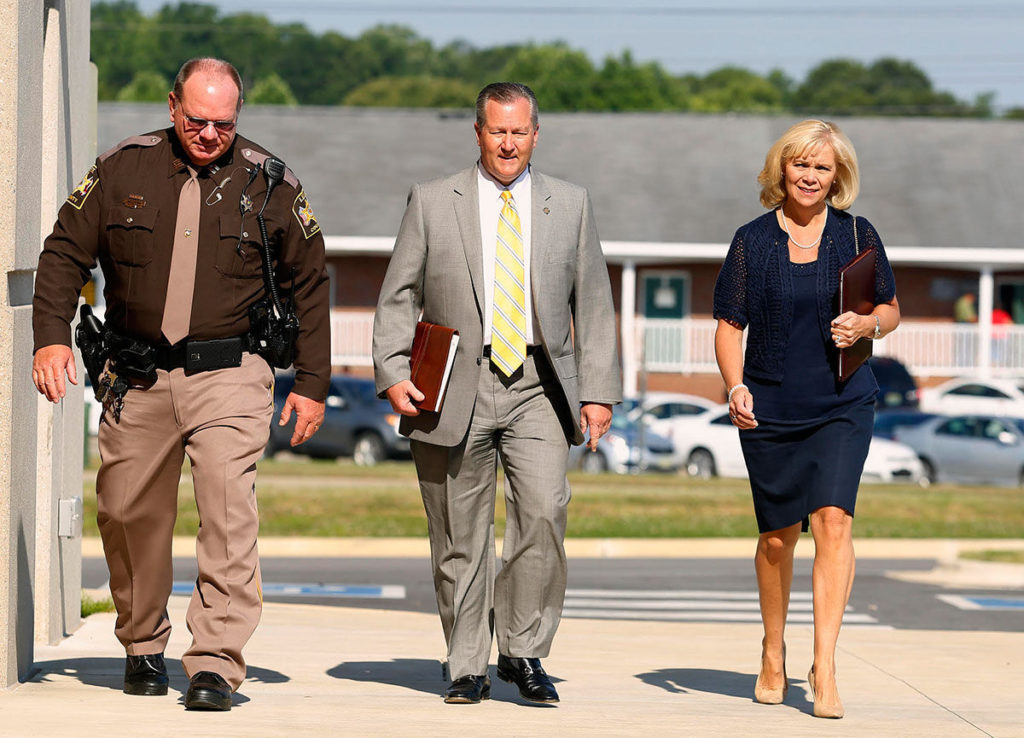
In the long-awaited trial of indicted Alabama House Speaker Mike Hubbard, more than 20 witnesses were called during the first four days of trial last week. Fellow legislators, business partners, politicians and state executives testified about their knowledge of Hubbard’s actions, providing testimony for many of the 23 charges Hubbard faces. The state endeavors to prove Hubbard used his office for personal gain and used his position as Speaker of the House, and formerly as chair of the Alabama Republican Party, to solicit jobs and investments in businesses with which he was involved. A conviction on any one of the charges would remove the speaker from office. The charges carry potential sentences of two to 20 years and fines of up to $30,000 for each count. The trial resumed Tuesday after the long Memorial Day weekend as prosecutors called Jon Sanderson, a financial officer for investment firm Sterne Agee from 2012 until March 2016. Sanderson testified to writing a check in November 2012 to Hubbard’s company Craftmaster on behalf of the Sterne Agee Group for $150,000, explaining he was instructed by CEO Jim Holbrook to write the check during a meeting. “During the meeting, Mr. Holbrook slid a piece of paper over to me that had Craftmaster Inc. written on it and he whispered to me that he needed a check written for $150,000 right then,” Sanderson explained. Sanderson said the incident was “not totally out of the ordinary.” Later in the morning, former Ethics Commission Director Jim Sumner was an expert witness on the ethics law. Sumner testified that Hubbard did not notify or seek advice from the Alabama Ethics Commission regarding consulting contracts he held with the American Pharmacy Cooperative Inc., Edgenuity and Capitol Cups. “I did not know about those companies until I saw the indictment,” Sumner said of Hubbard’s contracts with Edgenuity and Capitol Cups. Next, executive vice president of the online learning company, Edgenuity, Michael Humphrey, testified part of the reason his company hired Hubbard as a consultant was due to his position as a lawmaker. “I would say part of the reason was that he’s a legislator,” said Humphrey. “He was a legislator with the ability to work outside Alabama. I wanted to take advantage of his relationships.” Humphrey clarified the company never intended to use Hubbard’s consulting services within the state of Alabama. The trial continues Wednesday. Witnesses expected on Wednesday: Billy Canary: Business Council of Alabama president and CEO Dax Swatek: lobbyist Bob Riley: former governor of Alabama Minda Riley Campbell: daughter of former Gov. Bob Riley Robert Bentley: Governor of Alabama Greg Canfield: Department of Commerce secretary
Retired Alabama ethics chief: Mike Hubbard often got ‘the drill’
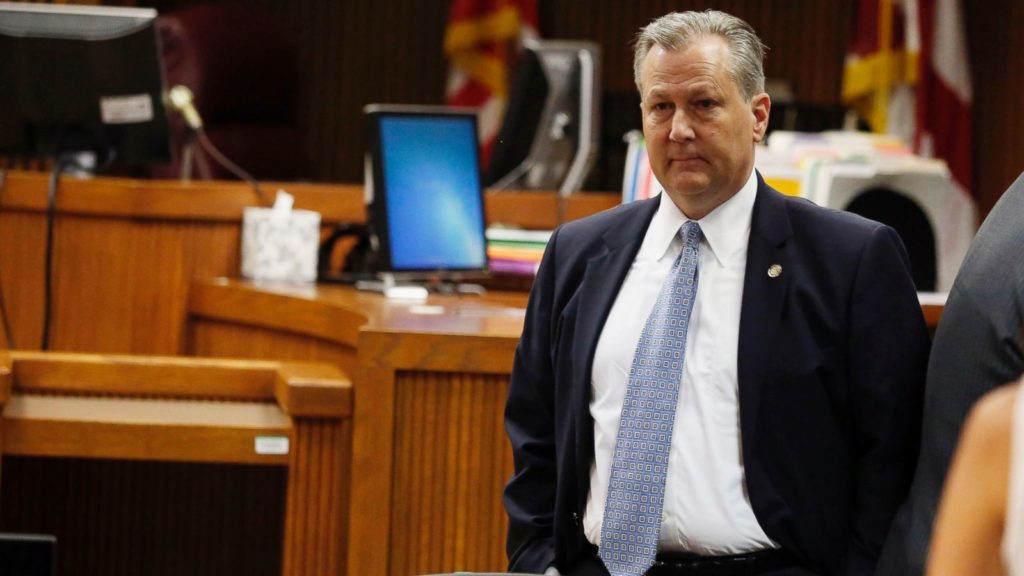
The retired director of the Alabama Ethics Commission testified Tuesday that he often gave “the drill” to House Speaker Mike Hubbard, cautioning him about actions that would violate the state’s ethics law. Prosecutors called Jim Sumner to give jurors a tutorial on the law and to try to show that Hubbard willfully ignored his advice. Sumner said Hubbard often sought informal ethics advice from him or general counsel Hugh Evans. He testified that they generally told Hubbard his consulting contracts would be legal as long as he didn’t use the “mantle of his office” to benefit his clients and businesses. “We always got to the point: I would say, or Hugh would say, ‘You remember the drill. You can’t use your position to benefit yourself, your business or your family,’” Sumner said. Hubbard’s defense has made a point of saying that he sought ethical guidance and followed the law. But informal opinions don’t provide the legal protection Hubbard might have received had he sought formal opinions from the five-member Ethics Commission. And unlike his private conversations with Sumner and Evans, commission opinions are a matter of public record. Hubbard is charged with 23 felony counts of violating the ethics law by using his positions as speaker and state GOP chairman to solicit a total of $2.3 million in work, investments and financial favors. Hubbard has maintained his innocence and said the transactions were within the law’s exemptions for normal business dealings and longstanding friendships. Sumner said the law forbids public officials from: – using their offices to benefit businesses with which they are associated; – soliciting things with monetary value from lobbyists or their employers; – and being paid to lobby. Hubbard is accused of doing all three. Sumner said there is an exemption for longstanding friendships, so that people who had “known each other all their lives” could do things like go on vacation together without violating the law. Hubbard is expected to argue that the friendship exemption applies to his deals with former Gov. Bob Riley, now a lobbyist. Hubbard named his younger son Riley, and has described the former governor as his political mentor. A number of powerful corporation owners and executives were called to testify Tuesday about $150,000 investments they each made in Hubbard’s printing company, Craftmaster. Jon Sanderson, the former chief financial officer at Sterne Agee Group, Inc., testified that his CEO whispered during a meeting that he needed a $150,000 check made out to Craftmaster “right now.” Hubbard isn’t the only Alabama Republican in trouble. Alabama Gov. Robert Bentley faces impeachment after a scandal over his relationship with an aide, and Alabama Supreme Court Chief Justice Roy Moore is suspended and could be removed from office for allegedly violating judicial ethics in the fight over same-sex marriage. Republished with permission of The Associated Press
Former deputy AG testifies for Mike Hubbard defense
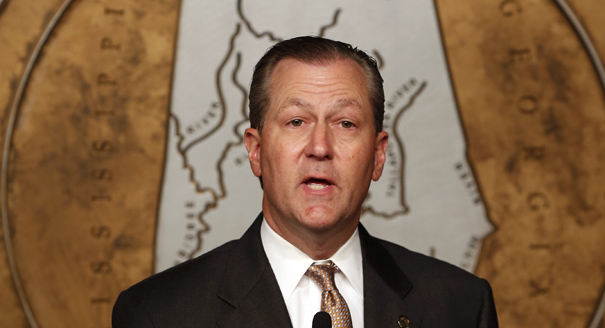
A former deputy attorney general testified Monday that a prosecutor bragged he would ruin indicted House Speaker Mike Hubbard politically. Former Deputy Attorney General Sonny Reagan‘s testimony in Lee County Circuit Court was the start of a multi-day pretrial hearing as Hubbard looks to have the corruption case against him dropped. Hubbard faces 23 felony ethics charges accusing him of using his public positions to benefit his businesses. Hubbard has denied any wrongdoing. The Auburn Republican has alleged prejudicial prosecution and has said a 2010 ethics law that he supported is unconstitutional and being incorrectly applied in this case. Reagan spent nearly four hours testifying about the ways in which he found both prosecutor Matt Hart‘s remarks and his handling of grand jury proceedings prejudicial. During the defense’s questioning, Reagan told a judge that Hart was out to ruin Hubbard and made several threats against him during private discussions. “He said he would put a gun in his mouth with his hand on the trigger, show him the indictment and maybe he would plead guilty and resign,” Reagan said. Solicitor General Andrew Brasher suggested that Hart using gruff or suggestive language about the case with Reagan in private wasn’t necessarily an indication of bias since the two both have military backgrounds. Reagan resigned in December after he was accused of trying to undermine the investigation. Attorney General Luther Strange said Reagan communicated with people interested in stopping the probe and used as his personal attorneys two lawyers who were representing defendants. Reagan has denied those allegations. Prosecutors on Monday also presented court documents saying Reagan’s attorney sought to have the grand jury reviewing Hubbard’s case disbanded and advised him to use his Fifth Amendment right during portions of his own grand jury testimony. One of Hubbard’s defense attorneys, Mark White, said he was pleased with the first day of the hearing but declined to elaborate, citing pending testimony from additional witnesses. State prosecutors also are expected to continue questioning Reagan when the hearing resumes Tuesday. White said he also expects to call former Ethics Commission Executive Director Jim Sumner, and former Attorney General’s investigator Gene Sisson. Strange said Sisson helped Reagan secretly tape a conversation with the acting attorney general who was overseeing Hubbard’s case and later lied about losing the recorder. A state board recently upheld Sisson’s firing. The prosecutor, Hart, is also among 40 witnesses on Hubbard’s list. Judge Jacob Walker has said he will determine later whether the defense can take testimony from current Attorney General’s office employees. If so, he said that will be done via deposition. Hubbard’s case is scheduled to go to trial March 28. Prosecutors are objecting to defense efforts to delay the trial, which has already been postponed once. Republished with permission of the Associated Press.
