
Mike Durant: Delusional Joe Biden disappoints

I‘ve been clear on the record: Joe Biden disappoints me every day when he wakes up in the morning. Last week during his first State of the Union address, President Biden reaffirmed to the American people that he is delusional. Like the career politician that he is – Biden took credit in spite of the results of his actions. Biden’s sanctions did not deter Russian dictator Vladimir Putin from invading Ukraine, nor did he properly arm Ukraine with enough weapons despite knowing for months that Russia was planning to attack. Instead, the Biden Administration famously offered Ukraine President Volodymyr Zelenskyy a ride out of the country, to which this brave leader said, “The fight is here; I need ammunition, not a ride.” The heroes are not President Joe Biden or Vice President Kamala Harris, but rather Volodymer Zelenskyy, heavyweight boxing champion Oleksandr Usyk, tennis star Sergiy Stakhovsky and all the people in Ukraine who have stayed to defeat Russia and Vladimir Putin. Russia started a war with Ukraine because they saw from Afghanistan how weak President Biden is. They saw how Biden abandoned our European allies, left behind over 900 Americans, and gave control of Afghanistan to the Taliban. Back home, Biden’s policies aren’t faring much better, as inflation is increasing at a pace that we haven’t since 1982. The cost of food, electricity, and gas have all risen because the reckless spending policies from the Biden Administration and the Democrats who run Washington have made inflation worse. Biden has served in office since 1972 – so he remembers the Jimmy Carter era. But apparently, he learned nothing from it. Additionally, crime is out of control across our country. From New York City to right here in Birmingham, our cities are becoming less safe, and violent crime is on the rise. Despite the change of tone in his address last week, Joe Biden has spent the last two years standing with the radical left who wants to “defund the police.” That’s nonsense. We need to elect leaders who will always stand with law enforcement and back the blue, not politicians who pander to the liberal extremes. It’s no secret that due to the decisions by Joe Biden and Kamala Harris, we have a humanitarian crisis on our southern border. Every month, we set new records for illegal crossings at the border all because of Joe Biden’s policies of open borders, tax dollars for illegals, and allowing violent gangs into our country. President Donald Trump made it clear on day one: they’re bringing drugs, and they’re bringing crime. We stop it all by building the wall. Despite all of Biden’s gibberish during the State of the Union, here’s some plain English that we can all understand. President Joe Biden has proven himself to be an incompetent leader in the White House and the State of our Union was undoubtedly much stronger under President Donald J. Trump. Now more than ever, we need to get rid of the career politicians in Washington and return to the America First agenda to restore our great country. Mike Durant is a Republican candidate for U.S. Senate in Alabama.
Dan Sutter: Greed and inflation

Inflation topped 7 percent in December, the highest level in forty years. The Biden administration has tried blaming rising prices on corporate greed with antitrust enforcement as a remedy. Does this make economic sense? We must first consider what inflation is. Measured by the rate of change in the Consumer Price Index (CPI), economists define inflation as increasing the general price level. Increases in the prices of some goods with others remaining unchanged raises the CPI but are changes in relative prices. Relative price changes result from changed economic conditions like with lumber in 2020. A “pure” inflation is an equal percentage increase in all prices, including wages and salaries. Inflation also involves an expectation of continued price increases. Pandemic-related production disruptions might cause price increases but not continued increases; prices should stabilize once production resumes and backorders are filled. Is the last year’s CPI increase due to relative price changes or true inflation? We clearly have had some relative price increases for things like lumber and new and used cars (37 percent price increase over the past 12 months). But many CPI components have increased by five or six percent. Most prices are rising. Interest rates provide the best gauge of future inflation. They are based on the decisions of thousands of persons, each investing their own money and superior to any expert’s forecast. Florida Atlantic University economist Will Luther calculates that the bond market currently forecasts 2.6 (2.2) percent annual inflation over the next five (ten) years. Markets expect inflation to moderate but not disappear. Now we can turn to greed and antitrust. I will not distinguish between greed and self-interest here. Economists assume everyone acts in their self-interest. For businesses, this means selling for the highest prices possible, but consumers must voluntarily purchase what businesses want to sell, and competition between sellers limits prices. Greed only explains rising prices if competition has been reduced. State business closure orders during COVID helped bankrupt thousands of small businesses. Yet the impact of these failures on the overall level of competition is likely modest. Furthermore, reduced competition would likely generate a one-time price increase; with less competitive pressure, a business might raise prices by five percent. Since greed is not causing inflation, more aggressive antitrust enforcement will not stop inflation. Economists across the political spectrum recognize this. Larry Summers, former Secretary of the Treasury under President Bill Clinton, said on Twitter: “The emerging claim that antitrust can combat inflation represents ‘science denial.’” Precedent exists for using inflation fears to justify unrelated policies. Until the 1970s, Washington regulated railroads, trucking, and airlines. This was not just safety regulation but control of the number of firms, routes of operation, and prices. Economic research documented the harms of this regulation: higher prices, reduced productivity, and poorer transportation options. The principle of concentrated benefits and dispersed costs from public choice economics explained the persistence of such regulations. The companies and their unions, including the powerful Teamsters, benefited from regulation. Consumers faced an enormous total cost but small individual costs. Regulation was crucial to the industry but a minor issue for consumers. Then something amazing happened. America faced high inflation, and Senator Edward Kennedy sought an issue to boost his presidential hopes. Future Supreme Court Justice Stephen Breyer was on the Senator’s staff and knew about the economic research. Senator Kennedy held widely publicized hearings touting deregulation to offset the pain of inflation. President Jimmy Carter got on board, and by 1980, all these industries were deregulated. Attributing causality is virtually impossible in public policy. But most histories of deregulation cite Senator Kennedy’s hearings as highly important in the process. Deregulation as a cure for inflation is economic silliness. Yet confusion over-inflation may have enabled beneficial policy change. Policymakers, I suspect, remember this lesson. Expect politicians to try selling their pet projects as fighting inflation. But as economist Milton Friedman famously said, “Inflation is everywhere and always a monetary phenomenon.” Alleged inflation remedies should be evaluated on their own merits. Daniel Sutter is the Charles G. Koch Professor of Economics with the Manuel H. Johnson Center for Political Economy at Troy University and host of Econversations on TrojanVision. The opinions expressed in this column are the author’s and do not necessarily reflect the views of Troy University.
William Haupt III: Know your rights and how to protect them
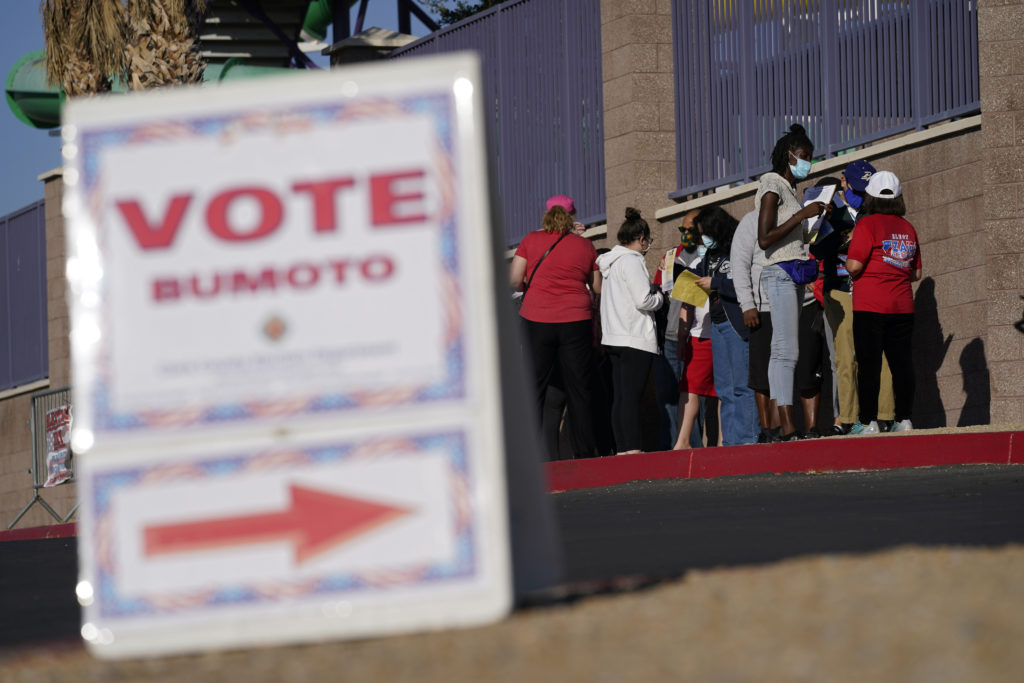
“At one time, getting passing grades in civics and U.S. history were prerequisites for high school graduation. Our biggest mistake was to adopt common core and abandon this.” – Michael Polelle Over five decades ago, Congress passed the Voting Rights Act of 1965. It established standards to protect the voting rights of all qualified U.S. voters. Contrary to liberal psychosis, the Voting Rights Act applies to every voter equally. It set parameters for each state to engrain within its voting laws. To ensure equality, the Civil Rights Act of 1964 was passed to protect the rights of ethnic minorities. But its core provisions, like the Voting Rights Act, protects the civil rights of all Americans equally. Contrary to leftist logic, neither of these gave more rights to one group and less rights to another. Five decades later, many Americans don’t know the Civil Rights Act protects all citizens from age, gender, ethnic and religious discrimination, in addition to minority groups. Government cannot give any form of preference to one group without abridging the same rights that others are entitled to. As Boomers began to feel the pinch of age prejudice, many forgot that age discrimination is a key provision in the Civil Rights Act. And very few seniors ever filed complaints with the Department of Justice about this. “We are marching for the civil rights of the Negros and those of all Americans.” – Martin Luther King Jr Even fewer Americans know why our states were obliged to update their voting laws after the last election. All states laws must comply with provisions in the Voting Rights Act to protect “all voters.” In response to the mayhem during the 2020 election, when blue states made up new laws as they went along, 43 states updated voting laws to prevent a repeat of the insane bedlam that took place in 2020. Citizens asked state lawmakers to ensure that nobody could ever question how anybody who couldn’t get elected dogcatcher in his own state get the most votes in U.S. presidential history. Since the Constitution obligates states to enforce the Voting Rights Act, after the last election, they reviewed all mail-in voting, counting ballots received after Election Day and ballot drop-boxes. All these issues truncated the intent of the Constitution and Voting Rights Acts. Yet in the woke world, if you don’t win the brass ring or can’t hijack it, you bellyache that your voting rights were violated! By law, states are responsible for updating existing election laws when they do not comply with the Voting Rights Act that protects all individual voting rights. Yet progressives and identity groups are squealing like pigs in a bacon factory? Why are they upset with states trying to protect their rights? The woke society is built on double standards. It can’t exist any other way. Wokes make up laws to justify breaking laws they don’t like. Either play the game their way, or they will take their ball away. “I learned that being ‘woke’ is being brainwashed by extremist liberal propaganda.” – Lillian Fang Until the presidential election of 2000, the merits of the Voting Rights Act were seldom questioned. But the fiasco in Florida proved, if progressives want to win badly enough, no law will ever stand in their way. After five weeks of trying to turn Al Gore into a winner, the choice of our nation’s new leader came not from the citizens, but from a 5-4 majority of U.S. Supreme Court justices. Liberal contempt for our voting rights began long before the 2000 election when blue states started moving to all mail-in voting. They had the national media’s pump primed; there was no way Al Gore could possibly lose. When the media abruptly called the election for Gore, they ended up with egg on their faces, and progressives and their liberal attorneys around the U.S. cried out election fraud! “Hi. I’m Al Gore, and I used to be the next president of the United States of America.” – Al Gore Although liberal media pollsters and pundits had been predicting a landslide victory for Al Gore, in the real world Pew Research, Gallop, and other independent groups pictured a much tighter race. They forecasted that fallout from the Clinton-Lewinsky sex scandal would mobilize conservatives against the left’s loose morality. Al Gore lost the entire south and even his home state, Tennessee. In reaction to allegations about voter fraud, hanging chads, and especially mail-in ballots that were supposedly miscounted, Democrats petitioned Washington to review U.S. voting rights again. The 2005 Commission on Election Reform, chaired by liberals Jimmy Carter and former Secretary of State James Baker, concluded that the biggest threat to voting integrity was with mail-in ballots. “We conclude that mail-in voting remains the largest source of potential voter fraud.” – Jimmy Carter Concerns about vote tampering have a long history in the U.S. They helped drive the move to the secret ballot, which all U.S. states adopted between 1888 and 1950. Secret ballots made it harder to intimidate voters and to monitor which candidate a voter had voted for. One University of Florida study found complaints about fraud fell by an average of 14% after states adopted secret ballots. In woke America, facts are an “inconvenient truth.” There have never been more complaints about denial of individual rights, violations of voting rights, and claims of “systematic racism” coming from people who don’t know the rights “they have” and “do not have” than any time in American history. “I have faith in the United States and our ability to make good decisions based on facts.” – Al Gore In 1865, following the Civil War, the 13th, 14th, and 15th Amendments and the 19th Amendment in 1920 guaranteed equal rights and universal suffrage for all Americans. The Civil Rights Act of 1964 and the Voting Rights Act of 1965 protected those rights. That is why we must have voter ID laws. Every illegal vote cast nullifies the votes of the legitimate voters. Still,
William Haupt III: A resolution Congress must make and keep in 2022

“Some friends ask about your new year’s resolutions. Good friends don’t say too much about them. Your best friends don’t mention them at all, since they know you will never keep them.” – Jay Leno Between December 26 and January 2, people make an existential U-turn. The season of goodwill, visiting, and gift-giving morphs into a neurotic self-improvement aeon as we confront our disquieting anxieties. Which of my habits to stop? Who do I want to be? What do I wish to look like and more? It’s a fact; many New Year’s resolutions are outlandish, unattainable, and even ridiculous. Most are frivolously made after over-imbibing on the “bubbly” during celebrations. It’s uncanny that few really expect to keep them. And some people don’t even remember resolutions they made the next day? While “great expectations” have plagued mankind for centuries, since most people are forgiving by nature, we do not normally burn anyone at the stake for not keeping the resolutions that they made on New Year’s. We even tend to forgive those that politicians always make and never plan to keep. “By God, I will govern for everyone in America; even for those who did not vote for me.” – Joe Biden It is daunting when our list of New Year’s resolutions is longer than our holiday shopping lists. And it’s even more frustrating not being able to keep even one resolution by late January. According to Lynn Bufka, Ph.D., “People have a habit of setting overwhelming goals instead of attainable goals.” Each year, every member of Congress and the White House promises to cut our trade deficit with China, yet it continues to grow each year faster than Pinocchio’s nose grows every time he fibs. Is our federal government telling us what they think we want to hear? Or are these half-truths just grandiose New Year’s resolutions? “A lie told often enough becomes the truth.” – Vladimir Lenin If we learned anything from the pandemic, it is how vulnerable our supply chain is to the impulses of Red China. Although recently America has not been acting like a superpower, it is considered a dominant player in global affairs. Isn’t it also the world’s strongest nation with the most influence? If America is “too big to fail” and dictates policy to the world, then why did we allow Red China to maneuver our economy for four decades? Since the 1979 Accord signed by Jimmy Carter and Deng Xiaoping that legitimized Red China, we’ve become dependent on China for economic survival. The 1979 Accord opened the door for manufactures to recover lost profits due to union demands for egregious wages and benefits. Many had closed their doors. Others were merging to survive. Chinese cheap “labor” has fueled innovative product creation at the expense of U.S. engineering and development, utilizing U.S. resources. Since China has no respect for international intellectual property rights, they clone everything they make for us and compete against us in our own nation. “Communists must always put the interests of Communists first in order to survive.” – Mao Zedong A Federal Reserve report shows the U. S. is running a record trade deficit with China. Companies that used to make products in the U.S., from Levi’s to Master Locks, shut down their factories and moved to China. The report noted we buy more clothing and shoes from China than the U.S. A former Perry Ellis plant is now home to a Walmart plant that puts parts into TVs made in China. It’s time Joe Biden quits blaming our supply chain problems and high inflation on the pandemic! We are not only “overly dependent” on imports from countries that don’t share our political beliefs and policies; countries like Red China are competing with us using technology that they stole from us. “When it comes time to hang the capitalists, we will use the rope they sold us.” – Vladimir Lenin It’s scary the U.S. has placed its economic fate in Red China at the expense of democratic nations likes Mexico and India? Although Ford has a plant in Mexico, India’s Sun Pharmaceuticals is the largest generic drug supplier in the world. And India has the ability to do anything that China does. Economist Matt Slaughteg reminds us: for years, we had production contracts with Mexico, India, and Eastern Europe. But when China opened their free markets, American companies flocked to China because they had no unions, no labor laws, low taxes, and fewer government regulations. We are all aware of our dependence on rogue nations for energy and what they’ve done to us for years. Not only are we forced to turn to inferior, costly technology for energy, this threatens our national security. And it is a socioeconomic nightmare for every U.S. citizen and business as well. “Our supply chain is strained because we depend on so many critical imports.” – Jerome Powell Psychologists agree, when people set overwhelming goals on New Year’s, they seldom keep them. This is what Congress and the president vow to do every year with our trade deficit. This year we have an opportunity to hold their feet to the fire and make them do it with midterms coming soon. U.S. Sens. Marco Rubio (R-FL) and Chris Coons (D-DE) introduced a bill for government to invest $1 billion to mitigate future supply chain issues. It will identify manufacturing and distribution issues and will strengthen our supply chains, and reduce our reliance on imports, especially from China. The National Manufacturing Guard Act (NMGA) will help the Department of Commerce prepare us for future import crises. Most importantly, this bill will help the DOC identify supply chain problems and manufacturing issues. It also allows the DOC to partner with private industry and promotes the establishment of apprenticeship programs that will help increase US manufacturing and production. “The pandemic showed us how vulnerable our supply chains are; its time to fix them.” – Marco Rubio Ronald Reagan once said, “Capitalism is the most powerful weapon against
Steve Flowers: Judge Bobby Aderholt
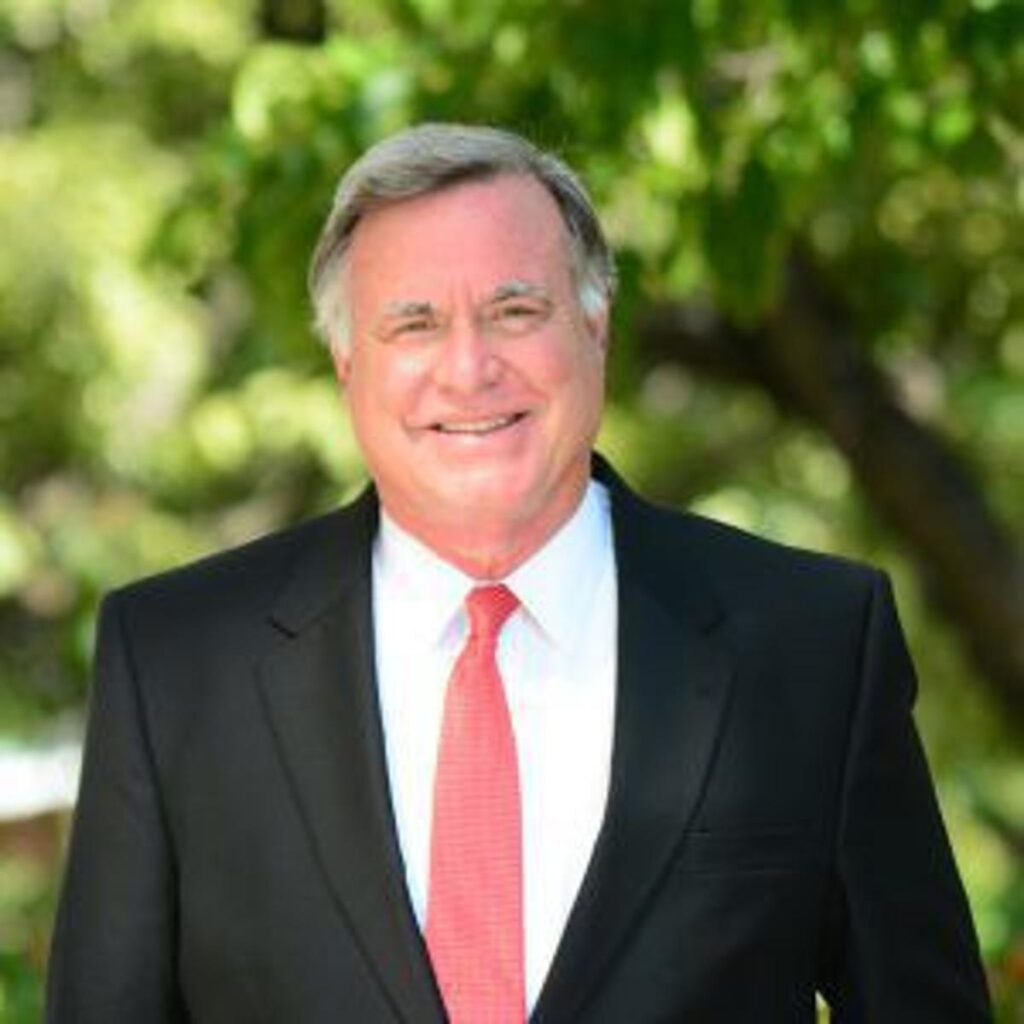
Alabama has a legacy of great men who have served as judges in our state. Recently, revered, retired Circuit Judge Bobby Ray Aderholt of Haleyville passed away at 85. He served the public for more than 50 years. As a judge, he presided over each case with integrity and impartiality. He was the Circuit Judge for the 25th Judicial Circuit for 30-years, 1977-2007. He was first elected Circuit Judge in 1976. He would have continued serving the people of Winston and Marion counties if it were not for an antiquated law in Alabama that judges cannot run for office after age 70. When Judge Aderholt first ran in 1976, he bucked a Democratic tidal wave in the state and was the only Republican elected in North Alabama that year. Our state had been overwhelmingly Democratic from the 1870s through 1964 because of the aftermath of the Civil War and Reconstruction. However, there was one area of the state that never bought into the Southern Secession from the Union. The folks in Northwest Alabama did not own slaves and figured they did not need to fight a war over slavery for the rich planters of the Black Belt. Therefore, when Alabama seceded from the Union, Winston County seceded from Alabama. Thus, Winston County became the Free State of Winston. During the 1884 to 1964, 80-year period, every statewide elected official in Alabama was a Democrat, and also every local and legislative officeholder ran as a Democrat with the exception of one county – Winston had Republican officeholders. In fact, legendary U.S. Federal Judge Frank Johnson Jr. was a Republican from Winston County. When a federal judgeship came open in the Middle District of Alabama in the early 1950s, President Dwight Eisenhower had a hard time finding a Republican to appoint. He chose young Frank Johnson Jr. The Republican party broke the ice in 1964. Alabama voted straight Republican for Barry Goldwater, and the wave carried five Republican congressmen with him. Alabama had become a red Republican state. However, we still elected Democrats to local offices like legislator and circuit judge. 1976 was a blip with Jimmy Carter carrying Alabama and the Deep South due to the post-Watergate fallout. Judge Bobby Aderholt was always a Republican, so he ran as a Republican that year and won. He was on an island with no other Republican winning in North Alabama. He became a pioneer in the Alabama Republican Party and one of the most respected judges in the state. He was known as fair, fiercely independent, and not beholden to anyone. He had a brilliant legal mind, but most importantly, he always had compassion for all individuals and treated everyone in his courtroom with dignity and respect. In conjunction with his judicial duties, he performed countless weddings and funerals in his beloved neck of the woods. Judge Aderholt was born in December of 1935 and grew up in Winston County. He went to undergraduate school at Birmingham Southern and went to Law School at the University of Alabama. He matriculated back home to Haleyville, where he had graduated high school in 1954. He spent his life in Haleyville. He was a dedicated member of the First Baptist Church of Haleyville. However, he pastored Fairview Congregational Church in Hackleburg for 47 years. Judge Bobby Aderholt was a dedicated family man. He is survived by his wife of 63 years, Mary Frances Brown Aderholt, who was his childhood sweetheart. Judge Aderholt is the father of our senior Congressman, Robert Aderholt. Robert is the only child of Judge and Mrs. Mary Frances Aderholt. They raised a good one. Robert was elected to Congress in 1996 at the ripe old age of 31. He is in his 25th year of representing the 4th Congressional District of Alabama and is the Dean of our congressional delegation. Robert and his wife, Caroline McDonald Aderholt, have two children, Mary Elliott and Robert Hayes. Judge Bobby Aderholt was a good man. We will all miss him. I will miss him as a reader of my column. He read it every week, religiously in the Marion County Journal Record and the Northwest Alabamian. Steve Flowers is Alabama’s leading political columnist. His weekly column appears in over 60 Alabama newspapers. He served 16 years in the state legislature. Steve may be reached at:https://www.steveflowers.us.
Justin Branum: The 2020 Tokyo Olympics showed our resiliency, allowing the 2022 Beijing Olympics to go as scheduled would be a denial of human rights

The 2020 Tokyo Olympic Games, although held a year later than originally scheduled, showcased a level of perseverance that had never before existed on the world stage. Despite Tokyo being in a state of emergency and under a quasi-lockdown for the duration of the games due to the COVID-19 pandemic and the rapidly spreading Delta variant, the games went on as smoothly as one could imagine, given the circumstances. Only 29 out of the over 11,000 athletes were forced out of the games due to a positive COVID-19 test, a number far lower than what organizers projected. The games provided us with many memorable moments, such as Simone Biles bringing her mental health issues to the forefront and showing the world that “it’s OK to not be OK,” Katie Ledecky and Caeleb Dressel leading Team USA’s continued dominance in the pool, and Alyson Felix overcoming a traumatic pregnancy to become the most decorated American Track & Field Olympian of all-time. Under most circumstances, we would have a roughly 18-month wait for the Winter Olympics, but due to the postponement of the Tokyo Games, the 2022 Beijing Olympics are set to begin in under 200 days. It is in this period where we must decide just how far we are willing to go in the protection of human rights. The proverbial elephant in the room surrounding the 2022 event is the treatment of Uyghur Muslims in China’s Xinjiang province at the hands of the increasingly powerful Chinese Communist Party. The treatment, categorized as a genocide by both former Secretary of State Mike Pompeo and current Secretary of State Antony Blinken, has included rape, forced labor, indoctrination, forced abortion, and sterilization. As a result, a bipartisan coalition including Speaker Nancy Pelosi (D-CA), Senator Mitt Romney (R-UT), Chair of the House Rules Committee Representative Jim McGovern (D-MA), and former US Ambassador to the United Nations Nikki Haley (R) have called for a boycott of the games over China’s treatment of the Uyghurs. Calls in favor of boycotting the games have not only stemmed from China’s treatment of the Uyghurs but also from China’s shady actions in the early days of the COVID-19 pandemic and a rise in questions regarding the origin of the virus. Former Director of National Intelligence Dan Ratcliffe (R) called for a boycott of the games due to his belief that China covered up the origins of the virus after it leaked from the Wuhan Institute of Virology. A report recently released by the House Foreign Affairs Committee GOP lends credence to Ratcliffe’s claim, coming to the conclusion that COVID-19 likely leaked from the laboratory. The report also notes that a number of athletes from Western countries returned home from the 2019 Military World Games in Wuhan in October of 2019 with symptoms one would now associate with COVID-19. These athletes’ infections fell nearly two months before the first COVID-19 infection was reported to the World Health Organization by the Chinese Communist Party. Fittingly, this event was the last time China hosted a major international athletics competition. With the introduction of numerous bipartisan bills calling for a boycott of the 2022 Beijing Winter Olympics in both chambers of Congress, it is clear that there is a significant appetite for taking action related to the games. While a boycott is the most popular call surrounding the games, history has shown that a boycott of the games does not always have the intended consequences. First, politicians and the federal government have no formal decision in whether the United States boycotts the Olympics—that decision lies solely in the hands of the United States Olympic & Paralympic Committee (USOPC). In 1979, President Jimmy Carter launched an intense pressure campaign on the USOPC to boycott the 1980 Moscow Summer Olympics over the Soviet invasion of Afghanistan. The issue quickly became domestic political fodder in the United States, becoming a contentious issue in the ongoing 1980 Republican Presidential Primary with Ronald Reagan and George H.W. Bush both taking mixed stances on the issue while arguing that a USOPC refusal to boycott the games would be a sign of Carter’s weak leadership. The USOPC eventually endorsed a boycott of the 1980 Olympic Games and was joined by sixty-four other countries, including China, in not attending the games. The boycott ended with no change regarding the Soviet’s invasion of Afghanistan—they would remain in the nation until 1989. The Soviets suffered minimal national embarrassment, and the games still went on with eighty nations participating. While the Soviets suffered little, the would-be Olympians of the boycotting nations suffered significantly. Statistically, nearly 75% of Olympians only participate in one Olympic Games, leading many to see their one opportunity to live out their dreams crushed in an instant by the boycott. A 2020 documentary from the Washington Post detailed the heartbreaking stories of the “invisible Olympians” who likely would have made up Team USA at the 1980 Olympic Games. With the failure of the United States’ only previous boycott of an Olympic Games, it is clear that a similar boycott of the 2022 Beijing Olympic Games would likely meet a similar fate. A significant number of nations would likely still attend the games, allowing for the Chinese Communist Party to still conduct a full slate of Olympic events and festivities. With rising COVID-19 cases across the globe, uncertainty over future variants, questions surrounding China’s handling of the early days of the pandemic, and China’s horrendous treatment of the Uyghur Muslims, it is clear that the 2022 Olympics must be relocated and reorganized into a multi-site and multi-national event. Planning and carrying out an Olympic Games is a tremendous task that takes over a decade, as evidenced by the ongoing planning of the 2032 Olympic Games in Brisbane, Australia. With less than 200 days until the scheduled start of the games, finding a location with the suitable facilities to plan and host an Olympic Games on the fly, in the middle of a pandemic, is impossible. Asking a handful of nations across
Donald Trump’s tactics to overturn election could have staying power
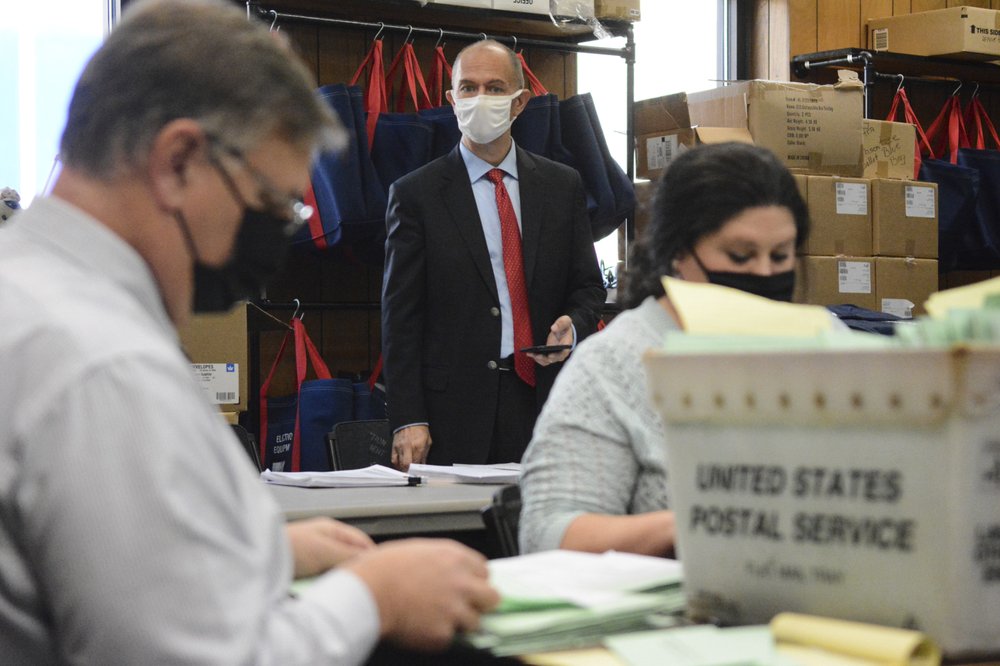
Even after he exits the White House, President Donald Trump’s efforts to challenge the legitimacy of the election and seeking to overturn the will of voters could have staying power. Trump’s tactics are already inspiring other candidates and have been embraced by a wide array of Republicans. Supporters include congressional candidates, state lawmakers, party chairs, conservative legal groups, and appointees to previously little-known state vote-certification boards. The breadth of support for Trump’s effort could be a troubling sign for future elections. “What this president is doing is poisoning democracy,” former Michigan Gov. Jennifer Granholm said. “And, yes, he is setting a precedent, suggesting that it is OK to violate these norms that have made our country great.” Granholm, a Democrat, joined with former New Jersey Gov. Christine Todd Whitman, a Republican, to raise concerns about Trump’s refusal to concede and efforts to undermine the integrity of elections. “This is not who we are as Americans, and we don’t want the public coming away from this thinking this is the norm,” said Whitman, who served in President George W. Bush’s administration. Trump and his allies have pushed conspiracies involving voting machines manipulated by dead foreign leaders and tens of thousands of fraudulent mail ballots that somehow escaped layers of security and scrutiny by election workers across the country. They have filed lawsuits without evidence, tried to pressure state lawmakers into seating their own presidential electors, and sought to influence low-level party members who sit on the state and local boards that certify election results. This is despite the fact that the federal government’s own cybersecurity arm declared the presidential election “the most secure in American history,” and Attorney General William Barr said the Department of Justice uncovered no evidence that would change the outcome. Even so, Trump has found friendly lawmakers and party officials willing to bolster his claims and adopt his tactics. On Friday, a group of 64 GOP lawmakers in Pennsylvania signed a statement urging Congress not to accept the state’s slate of electors for Democrat Joe Biden. They cited a litany of complaints over how the election was conducted. “A number of people have shown themselves willing to go along or at least being perceived of going along instead of just condemning the entire operation,” said Wendy Weiser with the Brennan Center for Justice at New York University Law School. “It was not written off as it should have been.” In recent days, lawmakers in battleground states have provided friendly forums for Trump allies to air their suspicions. A group of GOP state lawmakers in Arizona held an unofficial meeting where Trump’s lawyers repeated claims of irregularities with the state’s vote count but provided no evidence of widespread fraud. The chairwoman of the Arizona GOP asked a court to overturn Biden’s win in the state. The effort then shifted to Michigan, where Trump lawyer Rudy Giuliani appeared at a four-hour legislative hearing to argue that fraud had occurred. “Throughout this hearing, my colleagues continued to speak in circles about ‘getting to the bottom of this.’ But we’re already at the bottom, and there’s nothing down here,” said Michigan state Rep. Darrin Camilleri, a Democrat. “Down here at the bottom of all this, it’s just a dark, empty place.” On Thursday, a legislative committee in Georgia received testimony from a Trump campaign attorney about purported irregularities despite a hand count and machine audit that revealed no major problems with the vote. Election law experts say time will tell whether Trump’s approach and the support it has generated in the GOP represent a shift in how candidates handle defeat. “Next time could be worse,” constitutional law expert Edward B. Foley warned in an op-ed last week while offering praise for the few Republicans willing to stand up to Trump. Those included Georgia Secretary of State Brad Raffensperger, who certified his state’s election amid calls for his resignation from fellow Republicans and threats, and Aaron Van Langevelde, one of two Republicans on the Michigan board that certified that state’s results. While the other Republican on the Michigan board abstained, Van Langevelde said he was required under state law to certify Biden’s win. The result, Foley noted, could have easily been different if other Republicans more open to Trump’s arguments had occupied those same positions. “What makes this year’s narrow escape so unnerving is how far the plot to overthrow the election got with so little factual ammunition,” Foley said. Others believe Trump’s behavior is more of a fluke and unlikely to result in any lasting damage to the electoral process. “Everybody knows that it’s just because they lost,” said Pennsylvania Lt. Gov. John Fetterman, a Democrat. “There isn’t anyone from the president on down that genuinely believed that there was any real fraud. That’s what makes it so disingenuous.” A few candidates have followed Trump’s lead, refusing to concede and seeking extraordinary measures to address their concerns. A Pennsylvania congressional candidate who lost his race has yet to concede and signed on to a lawsuit challenging the validity of all mail ballots cast this year. A Republican candidate for U.S. Senate in Michigan called on the state to take the unprecedented step of delaying certification so an audit could be done — despite an extensive county canvassing process that did not find significant irregularities. He ultimately conceded. Using the 2020 election as a springboard to create more trust in the process would help, said David Carroll, head of the democracy program at the Carter Center, founded by former President Jimmy Carter and his wife, Rosalynn. That could involve requiring state and local election officials to be nonpartisan and appointed rather than elected by party, clarifying vague election laws, implementing federal standards for parts of the process, and ensuring more training for election workers and volunteers. “There was a lot of discussion before the election that the process might not be credible. Those are the things we see around the world where democracy is weak,” Carroll said. “It will be important for us to sit down as a nation and as a society and say we don’t want this
Donald Trump fires Mark Esper as Pentagon chief after election defeat

President Donald Trump fired Defense Secretary Mark Esper on Monday, an unprecedented move by a president struggling to accept election defeat and angry at a Pentagon leader he believes wasn’t loyal enough. The decision was widely expected as Trump had grown increasingly unhappy with Esper over the summer, including sharp differences between them over the use of the military during the civil unrest in June. But the move could unsettle international allies and Pentagon leadership and injects another element of uncertainty to a rocky transition period as Joe Biden prepares to assume the presidency. Presidents who win reelection often replace Cabinet members, but losing presidents have kept their Pentagon chiefs in place until Inauguration Day to preserve stability in the name of national security. Trump announced the news in a tweet, saying that “effective immediately” Christopher Miller, the director of the National Counterterrorism Center, will serve as acting secretary, sidestepping the department’s No.2-ranking official, Deputy Defense Secretary David Norquist. “Chris will do a GREAT job!” Trump tweeted. “Mark Esper has been terminated. I would like to thank him for his service.” In a letter to Trump, Esper referred to his efforts to keep the Pentagon apolitical — a resistance that often angered Trump. Esper said he served as defense secretary and Army secretary “in full faith to my sworn oath to support and defend the Constitution, and to safeguard the country and its interests while keeping the Department out of politics and abiding by the values Americans hold dear.” The Associated Press obtained a copy of the letter. Esper didn’t thank Trump, but he also didn’t openly criticize the president or his policies. He said he accepts Trump’s decision to replace him, adding, “I step aside knowing there is much we achieved at the Defense Department over the last eighteen months to protect the nation and improve the readiness, capabilities, and professionalism of the joint force, while fundamentally transforming and preparing the military for the future.” U.S. defense officials said Miller arrived at the Pentagon in the early afternoon to take over the job, and that White House chief of staff Mark Meadows informed Esper of the firing before Trump announced the move on Twitter. Esper and Miller were in the building at the same time for a while, but Esper left by the end of the day, said defense officials who spoke on condition of anonymity to discuss internal matters. Trump’s abrupt move to dump Esper triggers questions about what the president may try to do before he leaves office, including adjustments in troop presence overseas or other national security changes. More broadly, the U.S. military continued to operate as usual. U.S. officials said Gen. Mark Milley, chairman of the Joint Chiefs of Staff, met with Miller on Monday and also gathered the top military commanders and chiefs for a secure meeting. Officials said Miller’s message so far is that he won’t make immediate changes, and the department will stay the course. Military leaders, meanwhile, were calling top officials in their various geographic regions to assure them that the U.S. military is maintaining a stable presence around the world. In a separate message to the force, Esper expressed a twinge of disappointment, saying “I step aside knowing that there is much more we could accomplish together to advance America’s national security.” He said much was achieved, and “through thick and thin, however, we have always put People and Country first,” he said. Trump’s decision brings to five the number of men who have held the job of defense chief under Trump — either in an acting capacity or confirmed by the Senate. The move was quickly condemned by Democratic members of Congress. “Dismissing politically appointed national security leaders during a transition is a destabilizing move that will only embolden our adversaries and put our country at greater risk,” said Rep. Adam Smith, D-Wash., chairman of the House Armed Services Committee. “President Trump’s decision to fire Secretary Esper out of spite is not just childish, it’s also reckless.” Former military leaders weighed in. Jim Stavridis, a retired four-star Navy admiral, wrote on Twitter that, “Things are already unstable internationally, and this does not help.” Republicans praised Esper but largely avoided criticizing Trump. GOP Sen. Jim Inhofe, the Senate Armed Services Committee chairman, told reporters it was Trump’s decision and said, “I learned a long time ago I don’t tell the president not to do anything.” Biden has not said who he would appoint as defense chief, but is widely rumored to be considering naming the first woman to the post — Michele Flournoy. Flournoy has served multiple times in the Pentagon, starting in the 1990s and most recently as the undersecretary of defense for policy from 2009 to 2012. She is well known on Capitol Hill as a moderate Democrat and is regarded among U.S. allies and partners as a steady hand who favors strong U.S. military cooperation abroad. Miller most recently served as director of the National Counterterrorism Center and before that was a deputy assistant defense secretary and top adviser to Trump on counterterrorism issues. He spent more than 30 years in the military, including as an Army Green Beret, and was deployed multiple times to both Iraq and Afghanistan. After his retirement from the military, Miller worked as a defense contractor. Esper’s strained relationship with Trump came close to collapse last summer during civil unrest that triggered a debate within the administration over the proper role of the military in combating domestic unrest. Esper’s opposition to using active duty troops to help quell protests in Washington, D.C., infuriated Trump, and led to wide speculation that the defense chief was prepared to quit if faced with such an issue again. The tensions fueled rumors that Esper would be ousted if Trump won reelection. Presidents historically have put a high priority on stability at the Pentagon during political transitions. Since the creation of the Defense Department and the position of defense secretary in 1947, the only three presidents
Senate race between Jones, Tuberville tops Alabama ballot
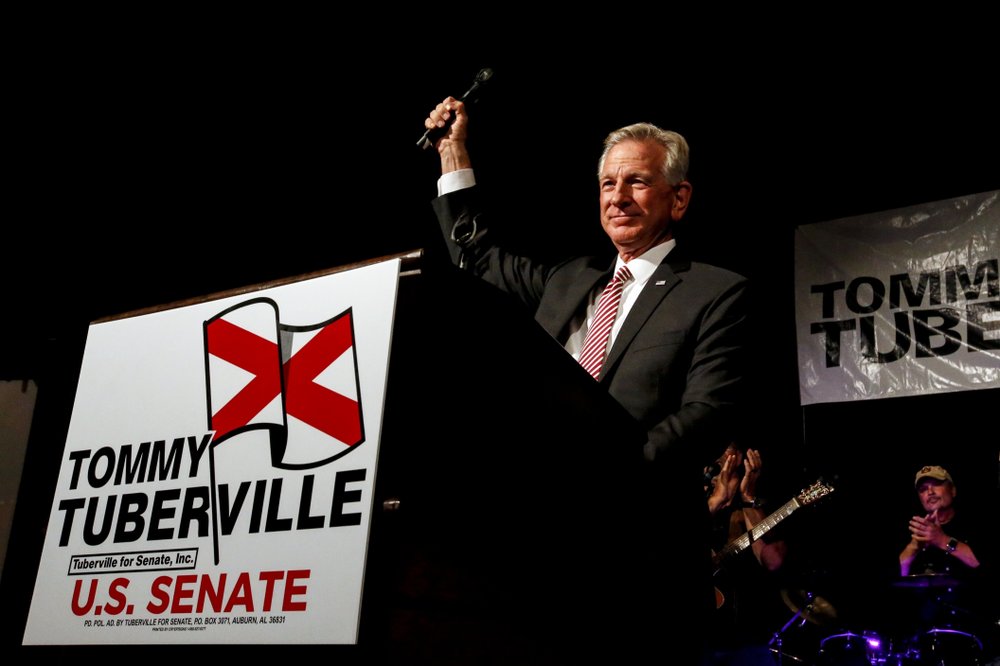
In addition to voting for president, Alabama voters will also decide a U.S. Senate race and multiple other offices and issues on Tuesday. Here is a look at Election Day in Alabama: PRESIDENT Very popular among the conservatives who dominate Alabama politics, Republicans are hopeful President Donald Trump will carry the state against Democrat Joe Biden. Trump carried 62% of the roughly 2.1 million votes cast in Alabama in his race against Hillary Clinton in 2016, and there’s little indication Trump’s popularity has waned in the deep-red state despite problems including impeachment and the coronavirus pandemic. But while some GOP candidates in Alabama have staked their campaigns on aggressively supporting Trump for a second term, increased Democratic turnout could narrow the president’s margin against Biden. While Alabama Democrats are more energized and organized than they were four years ago, the number of yard signs and roadside shops selling Trump paraphernalia across Alabama are visible proof of Biden’s uphill battle in reclaiming a state that a Democratic last carried in a presidential election in 1976, when Jimmy Carter from neighboring Georgia was on the ballot. U.S. SENATE Republicans trying to maintain control of the U.S. Senate are staking their hopes on former college football coach Tommy Tuberville defeating first-term Democratic Sen. Doug Jones, who won the seat in a special election in 2017. Tuberville, who has never held public office and last coached four years ago, is among the candidates who’ve aligned themselves most closely with Trump, even declaring in the primary campaign: “God sent us Donald Trump.” Viewed as an underdog in a Republican-controlled state, Jones mocked Tuberville as “Coach Clueless” and chided him for his refusal to debate. Jones won the seat previously held by Trump’s first attorney general, Jeff Sessions, after GOP Senate candidate Roy Moore was publicly accused of sexual misconduct involving young women decades ago. With GOP incumbents in danger elsewhere, Republicans hope Tuberville can knock off Jones. U.S. HOUSE The state will have at least two new members of Congress after voters pick winners in races for two open U.S. House seats in south Alabama. The Republican chairman of the Mobile County Commission, Jerry Carl, is trying to keep GOP control in the southwest Alabama seat now held by Rep. Bradley Byrne. Carl is facing Democrat James Averhart, a retired Marine who runs a nonprofit group and directs the Mobile-area office of the NAACP. In southeast Alabama’s 2nd District, Republican Barry Moore of Enterprise and Democrat Phyllis Harvey-Hall are vying for the job of GOP Rep. Martha Roby, who didn’t seek reelection. Moore is a former state representative and business owner, while Harvey-Hall is an educator from Montgomery. Two Republican House members are also hoping to win reelection. Rep. Mike Rogers of Saks is seeking a 10th term in east Alabama’s 3rd District against Democrat Adia Winfrey, while Rep. Robert Aderholt of Haleyville is seeking a 13th term in office against Democrat Rick Neighbors in the 4th District, which includes much of north Alabama. Reps. Mo Brooks of Huntsville; Gary Palmer of Hoover; and Terri Sewell of Selma were unopposed in the general election. CONSTITUTIONAL AMENDMENTS Six statewide constitutional amendments are on the ballot, including one that would remove racist language from the state’s 1901 constitution, which was passed to ensure white supremacy in Alabama. Sponsored by Rep. Merika Coleman of Birmingham, Amendment 4 would allow a recompilation of the state constitution to remove wording that prohibited mixed-race marriage and mandated racially segregated schools. While no longer in effect, supporters of the amendment say the prohibitions are an embarrassment and should be removed. Recommended changes to the constitution would be submitted to lawmakers in 2022 for approval, and voters would again be asked to approve the stripped-down document. Voters defeated similar measures twice before, most recently in 2012. Amendment 1 is a mostly symbolic measure pushed by Republicans that says only U.S. citizens have the right to vote, which already is the law nationally. The Alabama Constitution currently states that every male citizen can vote, although the 19th Amendment provided women’s suffrage in 1920. Amendment 2 would allow the full Alabama Supreme Court to appoint the director of the state’s court system, a task now performed solely by the chief justice, and make other changes to the judicial system. Amendment 3 would extend the amount of time that appointed district and circuit judges can serve. Amendments 5 and 6 would protect anyone who kills someone in self-defense in a church in Franklin and Lauderdale counties. Alabama’s “stand your ground” law already applies inside churches, the attorney general’s office has said, but backers support more specific provisions. PSC PRESIDENT Republican Twinkle Andress Cavanaugh is seeking reelection as president of the utility-regulating Alabama Public Service Commission against Democrat Laura Casey. Cavanaugh, seeking her third term, was the first woman to serve as chair of the Alabama Republican Party and has closely aligned herself with President Trump while espousing conservative orthodoxy. She says keeping power rates low helps families and business development. Casey contends the three-member PSC, all Republicans, is more interested in protecting the state’s largest electrical utility, Alabama Power Co., than consumers. She recently lost an appeal to the Alabama Supreme Court, which rejected her right to videotape a hearing held before the PSC about solar energy fees. STATE SCHOOL BOARD The ballot on Tuesday includes three contested seats on the Alabama State Board of Education. In the District 1 race in southwest Alabama, Republican board vice president Jackie Zeigler, a retired principal, is opposed by Democratic nominee Tom Holmes, a retired state employee who also led a disabilities advocacy program. Republican Stephanie Bell is touting her experience supporting programs, including the Alabama Reading Initiative, as she seeks an eighth term representing the 3rd District of central Alabama. She is opposed by Jarralynne Agee, provost and vice president of academic affairs at Miles College in Birmingham. In the 5th District, which includes much of Alabama’s Black Belt region, Democrat Tonya Smith Chestnut and Republican Lesa
Donald Trump, Joe Biden hit battleground Pennsylvania amid pandemic
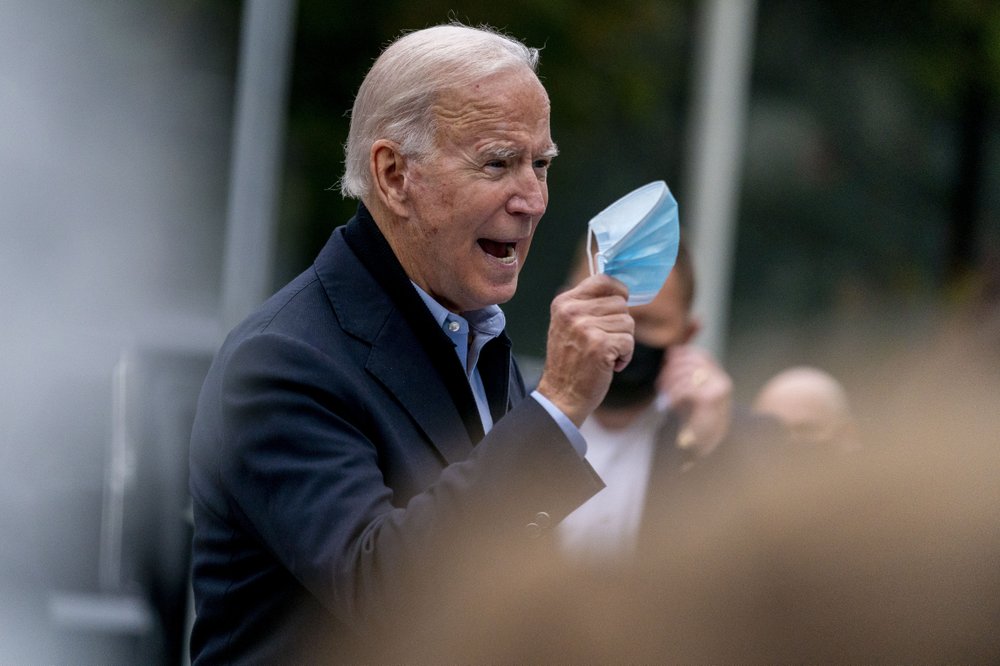
President Donald Trump and Democratic rival Joe Biden zeroed in on the critical battleground of Pennsylvania on Monday, demonstrating starkly different approaches to rallying voters just eight days before polls close during the worst public health crisis in a century. Trump drew thousands of largely mask-less supporters as he began a final-week charge through nearly a dozen states ahead of the election. Biden, taking a more cautious approach in an effort to show that he’s taking the pandemic seriously, greeted a few dozen supporters outside a Chester, Pennsylvania, campaign field office. “Bottom line is Donald Trump is the worst possible person to lead us through this pandemic,” Biden said as he sharpened his closing message into an indictment of Trump’s handling of the virus. Trump, meanwhile, stoked fears about Biden’s plans to address the outbreak. “It’s a choice between a Trump boom or a Biden lockdown,” Trump claimed at a rally in Allentown, focusing on the economy and the possibility of lost jobs. Trump returned to the White House to celebrate the confirmation of Supreme Court Justice Amy Coney Barrett Monday evening. Trump has sought to use the vacancy created by the death of Justice Ruth Bader Ginsburg last month to animate conservative evangelical and Catholic voters to his candidacy, but the high court fight has been overshadowed by virus concerns. In Pennsylvania, Trump also touted the appointment of another conservative justice as potentially giving him an edge in election-related litigation surrounding a surge in absentee and mail ballots due to the pandemic. For each candidate, the differing campaign approaches carry risks. For Trump, the full-speed-ahead strategy could spread the virus in places that are already setting new records and leave him appearing aloof to the consequences. And if Biden comes up short in the election, his lower-key travel schedule will surely come under scrutiny as a missed opportunity. Trump’s campaign schedule suggested he’s on the defensive in Pennsylvania, viewed by his aides as critical to his path to 270 electoral votes. Biden, meanwhile, is demonstrating more confidence with signals that he’s hoping to expand his campaign map. In the closing days Biden plans to visit Georgia, a state that hasn’t voted for a Democratic presidential candidate since 1992, and Iowa, which Trump carried by more than 9 percentage points in 2016. He’s dispatching his running mate, Kamala Harris, later this week to Texas, which hasn’t backed a Democrat for the White House since Jimmy Carter in 1976. With more than a third of the expected ballots in the election already cast, it could become increasingly challenging for Trump and Biden to reshape the contours of the race. But both men are fighting for any endgame advantage. Biden is leading Trump in most national polls and has an advantage, though narrower, in many key battlegrounds. While the final week of the campaign is colliding with deepening concerns about the COVID crisis in far-flung parts of the U.S., Trump is anxious for voters to focus on almost anything else. He’s worried that he will lose if the election becomes a referendum on his handling of the pandemic. Biden, meanwhile, is working to ensure the race is just that, hitting Trump on the virus and presenting himself as a safer, more stable alternative. The stakes were clear this past weekend as the White House became the locus for a second outbreak of the virus in a month. Several close aides to Vice President Mike Pence tested positive, including his chief of staff, Marc Short. Pence, though, was insistent on maintaining his aggressive political calendar, even though he was deemed a “close contact,” claiming the status of an “essential employee.” Pence arrived at a rally in Hibbing, Minnesota, wearing a mask Monday but removed it as he reached the podium to speak to a crowd of supporters who were largely not wearing face coverings or social distancing. Hibbing police confirmed more than 650 people in attendance, exceeding Minnesota health guidelines to restrict crowds to 250 people. With Election Day just over a week away, average deaths per day across the country are up 10% over the past two weeks, from 721 to nearly 794 as of Sunday, according to data from Johns Hopkins University. Confirmed infections per day are rising in 47 states, and deaths are up in 34. The latest national outbreak has provided a potent sign of the divergent approaches the Trump and Biden campaigns have taken to the virus. On Sunday, White House chief of staff Mark Meadows said that “we’re not going to control the pandemic” and the focus should be on containment and treatment. Biden, in a statement, said Meadows’ comments continued with the Trump administration waving “the white flag of defeat” in the face of the virus. Trump fired back Monday as he arrived in Pennsylvania, saying Biden, with his concerns about the virus spread, has “waved a white flag on life.” He rejected Biden’s comments that the nation is facing a “dark winter,” saying, “No it’s not going to be a dark winter. It’s going to be a great winter. It’s going to be a great spring.” Biden’s team argues the coronavirus is likely to blot out any other issues that might come up in the final days of the campaign — including his recent debate-stage comment in which he affirmed he’d transition away from oil, later walking that back as a transition away from federal subsidies. That strategy appeared to pay off as the outbreak in Pence’s staff refocused the national conversation once again on the pandemic. Trump and his team, meanwhile, have struggled to settle on a closing message, with the undisciplined candidate increasingly trusting his instincts over his advisers. He’s grasped for dirt on his Democratic rival and used apocalyptic terms to describe a Biden presidency, but Biden has thus far proven more resistant to such attacks than Trump’s 2016 rival, Hillary Clinton. Anticipating a razor-thin Electoral College margin, Trump has an aggressive schedule including a visit Omaha, Nebraska,
Bradley Byrne: A new Supreme Court Justice
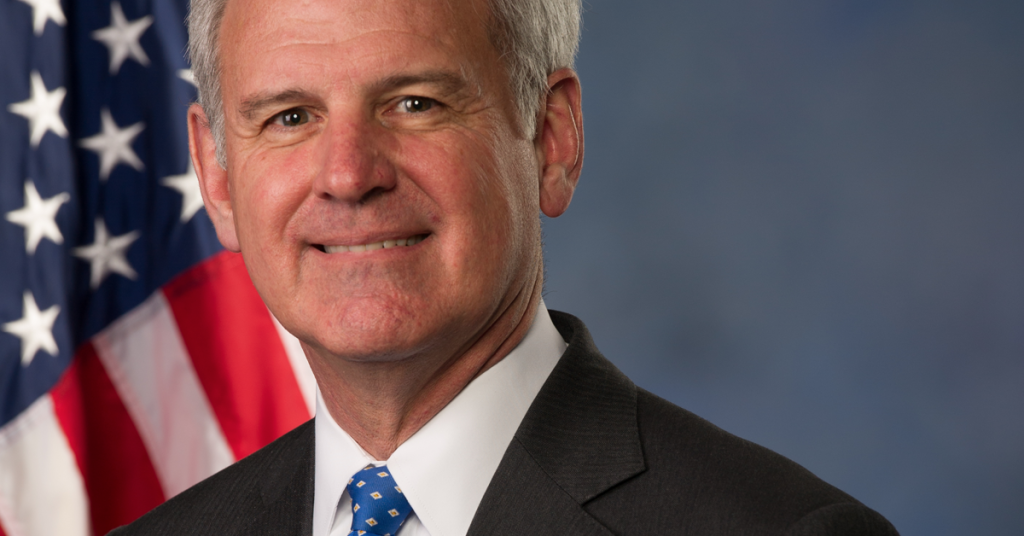
Bradley Byrne outlines his reasons for supporting President Trump’s nomination of Amy Coney Barrett.
Donald Trump, Joe Biden prepare to debate at a time of mounting crises

The Tuesday night debate will offer a massive platform for Trump and Biden to outline their starkly different visions for a country facing multiple crises.
