
Robert Aderholt introduces bill to keep federal government from using lease agreements to punish pro-life states
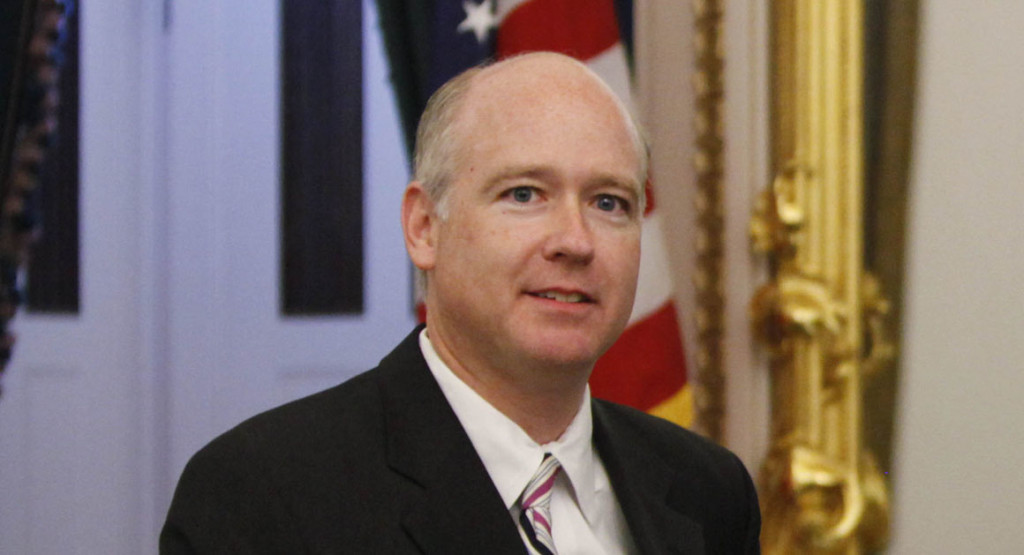
Congressman Robert Aderholt introduced a bill last week to prohibit the Administrator of General Services from constructing or acquiring buildings or entering into leases based on the legality or availability of abortions in the respective state. “The Biden Administration continues to inject abortion politics into otherwise non-partisan areas of the federal government, such as locations of federal offices,” Aderholt said in a statement. “This blatantly partisan practice threatens, and insults, states’ rights in protecting the unborn. That is not a precedent I want to see set in this country.” “President Biden cannot be permitted to punish states for enacting laws the Supreme Court has clearly ruled are within the rights of the states,” said Aderholt. The bill has so far garnered the support of 14 original co-sponsors, including Congressmen Dale Strong (R-AL05), Jerry Carl (R-AL01), and Barry Moore (R-AL02). “I am proud to join Congressman Aderholt’s bill preventing the Biden Administration from punishing states that do not adhere to its radical abortion agenda,” said Rep. Carl. “Abortion politics should play no role in the placement of federal buildings across the country.” “Decisions like this have historically been non-partisan and should have nothing to do with laws that states legally decide to enact,” said Rep. Moore. “The Biden Administration’s dangerous partisanship has been clear as they work to deny Space Command to the state that came in first place during a rigorous, merit-based process. I thank Rep. Aderholt for his work on legislation to ensure attacks on states’ rights such as this one cannot happen again.” “Threats from the Biden Administration to punish states who protect life create an incredibly dangerous precedent,” said Rep. Strong. “I am proud to co-sponsor this bill, which sends a clear message to the Biden administration: the protection of unborn life is not up for negotiation in states like Alabama.” “The Biden Administration is undermining the rule of law by doing an end-run of the SCOTUS ruling that empowers states to make their own laws surrounding abortion policy,” said House Budget Committee Chair Jodey Arrington (R-Texas). “This political gamesmanship has no place in strategic military decisions, including attempts to hold up SPACECOM’s relocation to Alabama.” “The Supreme Court ruled that abortion is a state issue,” said Rep. Doug LaMalfa (R-California). “President Biden is wrong to try and arbitrarily punish states that don’t surrender to his policy wishes. These kinds of polarizing issues should not be decided by executive fiat at the national level. Let the individual states in the Union chart their own courses and decide their own abortion laws with the input of their voters. That’s how federalism works.” “The Biden Administration has continuously proven that it will put its radical agenda above states’ rights, the rule of law, and our Constitution,” said Rep. Debbie Lesko (R-Arizona). “I’m proud to join Congressman Aderholt on his bill that would prevent the federal government from using a state’s pro-life laws against them when executing leases.” The General Services Administration (GSA) is the executive agency responsible for real estate and facility procurement, leasing, and development for the federal government. Since the Dobbs v. Jackson Women’s Health Organization decision last year, the Biden Administration has prioritized the federalization of abortion access, as well as penalized states that have enacted laws to protect the unborn. There are reports that the Biden Administration intends to halt plans to move the U.S. Space Command headquarters to Alabama due to “the state’s restrictive abortion laws.” The bill’s intent is consistent with a Senate companion bill introduced by Sen. Roger Marshall (R-Kansas). President Joe Biden, meanwhile, has not loosened his staunchly pro-abortion stance. “The stakes could not be higher for women across America,” Biden said. “I will continue to fight politically-driven attacks on women’s health. But let’s be clear – the American people must continue to use their vote as their voice, and elect a Congress who will pass a law restoring the protections of Roe v Wade.” Robert Aderholt has represented Alabama’s Fourth Congressional District since he was first elected in 1996. To connect with the author of this story or to comment, email brandonmreporter@gmail.com.
Terri Sewell joins letter urging House Republicans to raise debt ceiling with no strings attached
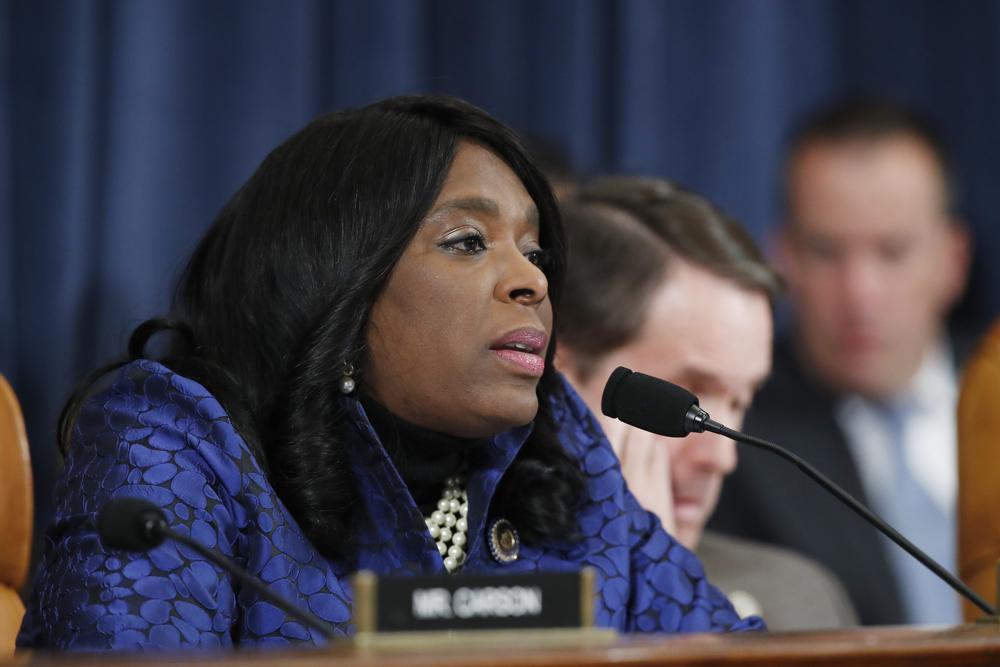
On Wednesday, Congresswoman Terri Sewell joined nearly 200 of her colleagues from across the House Democratic Caucus in a letter to Republican Speaker of the House Kevin McCarthy calling on Republicans to protect the full faith and credit of the United States by lifting the debt ceiling “without any extraneous policies attached.” “It is a sad day when House Republicans shamefully hold our economy hostage and threaten to default on our debt unless Congress makes deep cuts to programs that Alabamians rely on,” said Rep. Sewell. “We in Congress should never play politics with the full faith and credit of the United States of America. Republicans must join us to raise the debt ceiling—just as they did three times under the previous administration—and avoid economic collapse.” “I am a strong believer in balancing our budget,” continued Sewell. “Despite Republicans’ 2017 tax giveaway to the wealthy—which added $2 trillion to our deficit—I am proud of the historic deficit reduction that we have achieved under President [Joe] Biden. If Republicans want to address our national debt, they should start by making the wealthy pay their fair share instead of targeting veteran benefits, food assistance, and other programs that hard-working Alabama families rely on.” On Twitter, Sewell wrote, “I was serving in this very body in 2017 when Republicans added $2 trillion to our deficit to fund tax breaks for the wealthy. I will not support their plan to cut veterans benefits, food assistance, and programs families rely on. Working families should not pay the price!” Democrats on the House Budget Committee claim that the House Republicans’ debt ceiling proposal would: · Threaten access to food assistance for 17,000 people aged 50-55 in Alabama. · Eliminate preschool and childcare for at least 5,600 children in Alabama. · Increase housing costs for at least 8,800 people in Alabama. · Make college more expensive for at least 98,900 students in Alabama. · Eliminate at least three air traffic control towers in Alabama. · Cut at least 150 rail safety inspection days in Alabama. · Repeal investments in cleaner, cheaper energy. They warn that if the U.S. were to default on the debt, it would unleash global economic catastrophe and put vital government services at risk. The Democrats’ report claims that a default would cost about 6,000 jobs in Alabama’s Seventh Congressional District alone. Nationally a default could kill more than 7 million jobs. While Sewell opposed the Republicans’ spending plan, Congressman Barry Moore voted for the Limit, Save, Grow Act, the House Republican plan. According to sponsors, this legislation returns total discretionary spending to fiscal year 2022 levels and eliminates $4.8 trillion in “woke, weaponized, and wasteful” spending over a decade. This legislation also rescinds unspent COVID-19 funding and defunds Biden’s 87,000-strong army of IRS agents. The Limit, Save, Grow Act is sponsored by Budget Committee Chairman Jodey Arrington (Texas). “Biden and the Democrats are spending us into bankruptcy to fund their bloated bureaucracy and acting like cutting spending will bring on the apocalypse,” said Moore in a press release. “The truth is, the Limit, Save, Grow Act saves us $4.8 trillion over ten years, and if we don’t do something to begin tackling our $31 trillion national debt, which mostly belongs to China, the livelihoods of our children and grandchildren are at risk.” The U.S. national debt is $31.7 trillion. The federal government is spending $1.42 trillion a year more than it takes in even though the U.S. is not fighting a war and unemployment is at record lows. To connect with the author of this story or to comment, email brandonmreporter@gmail.com.
Terri Sewell and colleagues introduce legislation to provide for coverage for cancer early-detection screenings once approved
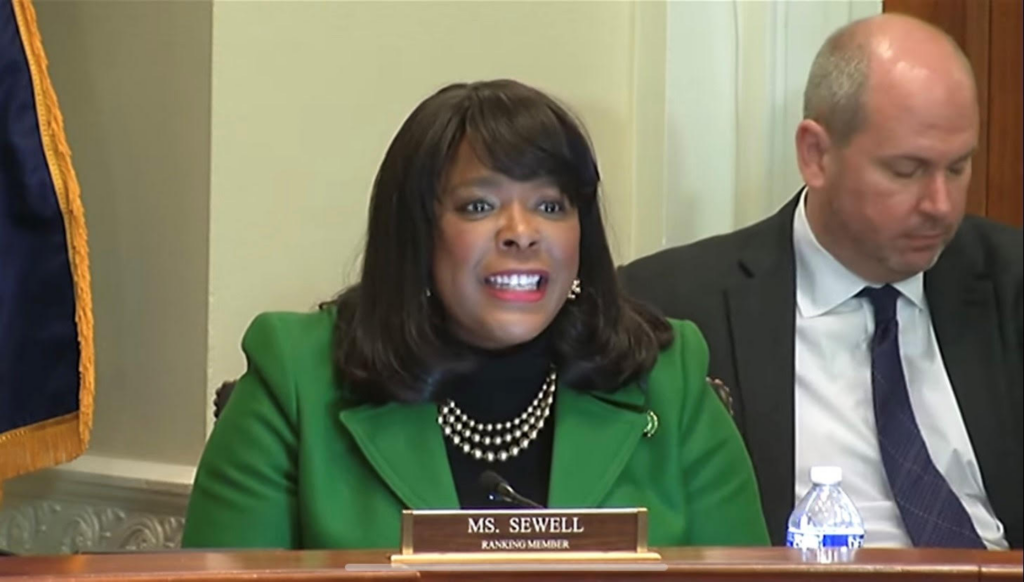
On Thursday, Congresswoman Terri Sewell joined Reps. Jodey Arrington, Richard Hudson, and Raul Ruiz to introduce the Nancy Gardner Sewell Medicare Multi-Cancer Early Detection (MCED) Screening Coverage Act. The legislation is named for Rep. Sewell’s late mother, who passed away in 2021 from pancreatic cancer. This bipartisan legislation would create a pathway for Medicare to cover emerging blood-based cancer screenings, potentially allowing doctors to catch cancer earlier than ever. During the last Congress, the bill garnered the support of a bipartisan majority of the House and Senate—with 258 House cosponsors and 54 Senate cosponsors—and over 400 organizations nationwide. “No family in America has been spared the scourge of cancer,” said Rep. Sewell, lead Democratic sponsor. “Fortunately, innovative multi-cancer early detection screenings are emerging which hold the potential to detect cancer earlier than ever before. I’m proud to once again introduce the Medicare Multi-Cancer Early Detection Screening Coverage Act, named for my late mother, Nancy Gardner Sewell, to ensure that our seniors can access these tools once they are FDA approved. Not only will this bill save lives, but it will also help reduce the glaring racial disparities in cancer diagnosis and death. I look forward to harnessing our momentum from the 117th Congress to get this bill across the finish line!” “Multi-cancer early detection is one of the many incredible examples of the United States leading in medical innovation,” said Rep. Arrington, the lead Republican sponsor. “This type of screening has the potential to improve quality of life for millions of American cancer patients and their families while saving taxpayer dollars by treating cancer before it spreads. I am proud of the bipartisan support this bill gained last Congress and remain firm in my belief that this legislation will drastically improve our ability to treat and prevent cancer.” “Too many families are devastated by a cancer diagnosis every day in the United States,” said Rep. Hudson. “By increasing access to multi-cancer early detection screening tests through Medicare, we can detect cancers sooner and save lives in North Carolina and around the country. As a member of the Health Subcommittee, I once again look forward to advancing this bipartisan legislation.” “Detecting cancer early improves health outcomes and saves lives,” said Dr. Ruiz. “With innovative medical technologies, we can catch more cancers earlier than ever, but patients must be able to access these screenings. That’s why it’s very important for Medicare policy to keep pace with the development of multi-cancer screenings. I am glad to join my colleagues in introducing the Multi-Cancer Early Detection Screening Coverage Act to modernize Medicare coverage so older Americans can access these screenings and improve their health outcomes.” The Nancy Gardner Sewell Medicare Multi-Cancer Early Detection Screening Coverage Act would increase seniors’ timely access to multi-cancer early detection technology by creating a pathway to Medicare coverage. This bill will allow for Medicare coverage of MCED screenings once they are approved by the Food and Drug Administration. The impact of late-stage cancer diagnosis is magnified in communities of color and throughout rural America, where overall cancer outcomes are worse. These tools introduce a significant shift in the cancer screening landscape. The sponsors believe ensuring seniors have timely access is essential since age is the primary risk factor for cancer, and more than 70% of cancer diagnoses are in the Medicare population. This legislation would: · Create the authority for CMS to cover blood-based MCED tests and future test methods once approved by the FDA and shown to have clinical benefit. · Maintain CMS’ authority to use an evidence-based process to determine coverage parameters for these new tests. · Clarify that (1) these new tools will complement, not replace, existing screenings and coverage and (2) cost-sharing will not be impacted. Thomas “Ted” Greer Jr., CEO of Birmingham-based Alabama Regional Medical Services, stated. “People of color are at the greatest risk for cancer deaths, at least partly because of disparities in early detection. We believe new screening technologies offer a chance to reduce those disparities, and we applaud Rep. Sewell’s steadfast leadership to clear a path for these tests to be accessible to those at highest risk for cancer.” The American Cancer Society, Cancer Action Network released a statement supporting this legislation. “The Multi Cancer Early Detection Screening Coverage Act would potentially expand access to cancer screenings in Medicare. The bill would allow the Centers for Medicare and Medicaid Services (CMS) to initiate an evidence-based coverage process for a multi-cancer screening test following FDA approval and once shown to have clinical benefit. ACS CAN supports the Multi-Cancer Early Detection Screening Coverage Act to provide Medicare coverage of screening tests that are FDA approved. Cancer screening and early detection are key priorities for ACS CAN.” The Prevent Cancer Foundation wrote, “The importance of detecting cancer early cannot be overstated. With the Medicare Multi-Cancer Early Detection Screening Coverage Act, Congress can unlock a new era in how cancer is detected and treated. We thank the sponsors and cosponsors for recognizing that older adults are at the most risk for cancer, and we must create a pathway to access the latest cancer detection tools. We’ve been proud to bring an astounding 400+ organizations together in calling for the passage of the bill. Let’s make early detection a reality for Medicare beneficiaries.” The Association of Community Cancer Centers wrote, “MCED technology holds the potential to alter the current cancer screening paradigm by providing the oncology community with the tools they need to find many more cancers in earlier, more treatable stages. ACCC is committed to advancing best practices and policies that will facilitate the integration of MCED tests into our healthcare system, and that includes supporting the Medicare Multi-Cancer Early Detection Screening Coverage Act. The war on cancer requires an all-hands-on-deck approach, and we need new tools, like MCED, to make a major impact. We’re grateful to leaders in Congress who are working to ensure older Americans can access this important new cancer screening tool.” This legislation has received statements of support from more than 400 organizations across all 50 states. Similar legislation has been introduced in the Senate
Terri Sewell urges House vote on cancer-screening bill

One Alabama federal legislator is working to bring a House bill to vote by the end of the year. Rep. Terri Sewell, D-AL, along with representatives Jodey Arrington, R-TX, Raul Ruiz, D-CA, and Richard Hudson, R-NC, penned a letter, along with 116 House colleagues, urging House leadership to have House Bill 1946 be brought to the floor for a vote at some point in the remaining days of the session. Sewell introduced the resolution in March 2021, entitled the Medicare Multi-Cancer Early Detection Screening Coverage Act, which would create a way for Medicare to cover emerging blood-based cancer screenings to detect cancer earlier. The bill, according to a release, has 257 House co-sponsors and 54 Senate co-sponsors. As part of the letter, the legislators wrote, “No family in America has been spared the scourge of cancer.” They also wrote that seniors bear the highest incidence of cancer, and “we must bring urgency and action” to the cancer fight as the consequences of waiting “are too great.” “We respectfully urge you to bring this bill to the floor this year and pave the way for a future where we win our war on cancer,” the delegation wrote in the letter. The legislators wrote, according to the release, that in the United States, cancer is the leading cause of death, and by detecting cancer early it could result in “less invasive treatments.” Scientists, according to the release, have developed and are testing “innovative blood-based multi-cancer early detection tests. The tests would be able to screen for multiple cancers at the same time, including rare cancers. However, the legislators wrote, companies that are engaged in developing the medical tools are pursuing U.S. Food and Drug Administration approval, which could take several years before Medicare recipients could receive medical coverage for those tests. The act, according to the release, addressed a misalignment in advances in science and Medicare coverage by allowing coverage for the tests. The legislators said the testing would “significantly reduce delays” for beneficiaries while giving the Centers for Medicare and Medicaid Services to use the tests proficiency to determine coverage. Republished with the permission of The Center Square.
House Democrats argue wealthy aren’t paying their fair share, Republicans disagree

House Republicans and Democrats went after one another in a hearing Wednesday, arguing over whether America’s most wealthy are paying their fair share of income taxes. The U.S. House Select Committee on Economic Disparity and Fairness in Growth hosted a hearing on tax policy focused on inclusive growth, which led to the debate. “We have the most progressive tax code among any OECD nation, that means we’re taxing the rich a whole lot more than we’re taxing the folks on the lower income,” Rep. Jodey Arrington, R-Texas, said. Most Republicans argued a similar point, whereas Democrats argued that the uber-wealthy didn’t pay enough in income taxes due to tax breaks and needed to pay more. “It is unsustainable for working-class people to continue picking up the tab for tax breaks that the wealthy enjoy, in part due to the Republican Tax Cuts and Jobs Act,” U.S. Rep. Pramila Jayapal, D-Wash., said. To clarify, U.S. Rep. Bryan Steil, R-Wis., asked four witnesses what “fair share” would mean when applied to a federal income tax, asking how much of a billionaire’s income should be taxed. Georgetown Law Professor Dorothy Brown responded, “40-50%, I mean historically we’ve had as high as 70%.” William Gale from the Brookings Institute also said 40-50%. Seth Hanlon at the Center for American Progress and Amy Matsui from the National Women’s Law Center said they didn’t have a particular number in mind. Later, Steil asked the witnesses if the current U.S. tax code skews toward the wealthy, and all five witnesses present said yes. “Well, in some ways, yes, but I think we miss the point too that 40% of the bottom of the income distribution don’t pay income taxes at all,” Angela Rachidi of the American Enterprise Institute said. Near the closing of the hearing, U.S. Rep. Warren Davidson, R-Ohio, asked the witnesses if “deficits matter” when considering tax code. Except for Dr. Rachidi, every witness said that deficits do not matter. Republished with the permission of The Center Square.
Reps. Barry Moore and Mo Brooks demand DOD halt involuntary discharges for vaccine refusal immediately
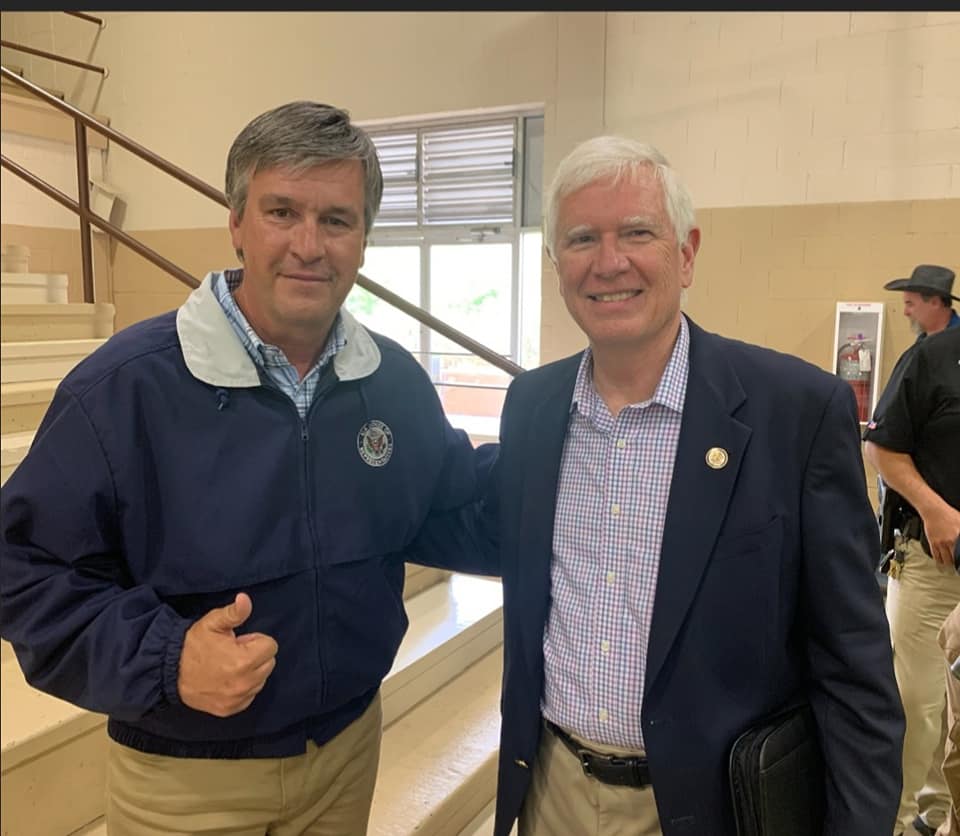
Reps. Barry Moore and Mo Brooks joined 40 of their colleagues in sending a letter to the Department of Defense (DOD) to demand that they halt efforts to involuntarily discharge members of the military who have refused COVID-19 vaccination. The letter requests that they stop until an in-depth review of natural immunity is complete, and the Department has issued uniform procedures for vaccine exemptions. According to Moore’s press release, Section 720 of the National Defense Authorization Act for Fiscal Year 2022 requires the DOD to establish uniform procedures for issuing exemptions and fully consider natural immunity. This includes eligibility timelines for consideration of exemptions for service members nearing separation and retirement in the development of uniform procedures relating to administrative exemptions. According to an NPR report, as of January 26, 96% of active troops had been completely vaccinated, while 3,350 soldiers had refused to get the vaccine. Nearly 5,900 have received temporary exemptions. “The DOD must immediately halt efforts to discharge our active-duty military members who refuse to get the vaccine just because overreaching politicians want to continue intervening in the private lives of the American people,” said Moore. “We must ensure that the DOD completes an in-depth review of natural immunity. I will continue to fight against the tyrannical vaccine mandate on our service members.” The letter states, “We are gravely concerned that the military services are proceeding with involuntary discharges when it is unclear to us whether uniform procedures have been issued by the Department of Defense. If the Department of Defense has not issued uniform procedures or reviewed the inclusion of natural immunity and the military services are moving forward with involuntary discharges, then we believe the Department is ignoring and violating Section 720. Congress included this language to protect our service members, and we expect the Department of Defense to abide by the law.” Additional members of Congress to sign the letter include Vicky Hartzler, Doug Lamborn, Elise Stefanik, Brian Mast, David McKinley, Darrell Issa, Kevin Hern, Rodney Davis, Bill Huizenga, Yvette Herrell, Michael Waltz, Bill Posey, Michael Guest, David Valadao, Thomas Tiffany, Pete Stauber, Mike Kelly, Andy Biggs, Neal Dunn, Gus Bilirakis, Dan Crenshaw, Randy Weber, Sr., Louie Gohmert, Lauren Boebert, Glenn Grothman, Alex Mooney, Joe Wilson, Scott DesJarlais, Jack Bergman, David Schweikert, Jeff Duncan, Ralph Norman, Bruce Westerman, Jim Banks, Rick Crawford, Jodey Arrington, Christopher H. Smith, Victoria Spartz, Ted Budd, and Gregory Steube.
