
Fear, lack of funding hurt census in Sunbelt, advocates say; Alabama keeps seats
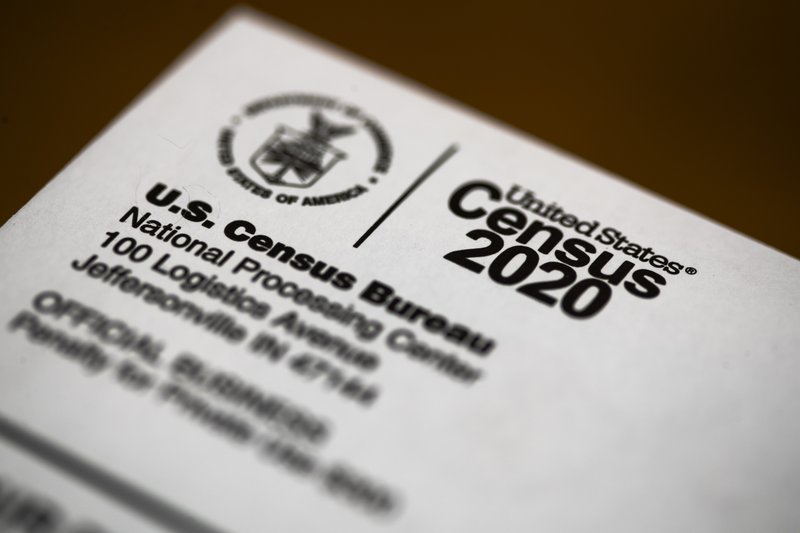
According to the new census, the booming Sunbelt isn’t booming quite like the experts thought. Population counts released Monday came as a shock to many demographers and politicians who expected to see growth that could add numerous congressional seats to a region that’s apparently been gaining people rapidly all decade. Instead, the census found more modest growth that added only three seats total in Florida and Texas. Arizona, the second-fastest growing state in 2010, didn’t add a seat at all. The questions that advocacy groups and officials are now asking are whether all the new subdivisions and shopping centers are a mirage; whether those states erred in not investing more in encouraging residents to fill out census forms — and whether Latinos in particular were reluctant to trust the Trump administration with their information. Many demographers caution it’s too early to conclude that the nation’s once-a-decade count missed any specific population groups. That won’t be known until more local data is released later this year and the Census Bureau has completed an independent survey measuring the accuracy of the 2020 head count. But one thing is indisputable — when compared to the most recent population estimates, the three Sunbelt states underperformed during the count used for determining how many congressional seats and Electoral College votes each state gets. Texas got two extra seats instead of three; Florida added only a single new seat instead of two, and Arizona failed to gain the seat it was expecting to add. All three states are led by Republican governors who devoted less resources than other states to encouraging participation in the 2020 census. And in all three states, Hispanics have accounted for about half of the population growth over the decade, according to American Community Survey data. In Arizona, activists blamed Gov. Doug Ducey for supporting the Trump administration’s failed effort to add a citizenship question to the 2020 census questionnaire. Those efforts intimidated Latinos and kept them from fully participating in the census, they said. “What we saw from the government, Ducey and the Trump administration, was intimidation from Day 1 on the census,” said Eduardo Sainz, national field director for Mi Familia Vota, a political advocacy group. “Because of this narrative of fear and this narrative of not funding, we lost that seat.” The Ducey administration released a statement from the state demographer saying that more data is needed to determine why the count fell short of estimates of Arizona’s growth. During outreach efforts to get people to fill out their census forms, Hispanic residents would ask Adonias Arevalo about Donald Trump’s push on citizenship. Arevalo, state director for Poder Latinx in Phoenix, said, ”Despite the fact that we said a citizenship question will not be present, folks didn’t trust the Trump administration.” He said Arizona’s undercount is partly the legacy of Republican leaders, including former Sheriff Joe Arpaio, and anti-immigration laws. “For years, people have distrusted the system,” Arevalo said. “People fear to participate in these processes due to years of criminalization.” Arizona, Florida, and Texas were laggards compared to other states in efforts to form statewide committees aimed at driving census participation. Arizona only named members to its committee in August 2019, and Florida set one up in January 2020, just weeks before the national headcount began in a rural Alaska village. Texas never even set up a statewide committee, which some census activists attributed to Texas lawmakers not wanting to take a stand on the citizenship question by promoting the census. Democrats slammed the GOP for those moves. “From the very beginning, we knew our state was particularly at risk of undercounting our neighbors,” State Rep. Chris Turner, the Texas House’s Democratic Caucus Chair, said in a statement. “A concerted, organized outreach effort is essential to ensuring maximum participation in the census and getting the most accurate count,” he added in an interview. But state demographer Lloyd Potter in an interview contended there’s little evidence that massive state spending increases census accuracy. Instead, he said, Texas has a lot of the types of people who routinely get undercounted — rural citizens and African-Americans and Latinos. “Those are factors for all states and may have been more of a factor for Texas,” Potter said. “We have a lot of rural areas in Texas, we have a very significant and growing Latino population.” Texas Republicans released a statement after the census count that said: “Representation in Texas must be based upon citizenship, and strategically we can ascertain why the left wants to flood Texas with thousands of illegals.” In Florida, a spokeswoman for Gov. Ron DeSantis didn’t respond to an email inquiry. Paul Mitchell, a redistricting expert in California, a state that spent $187 million on census outreach, said there was a clear pattern in the numbers. States that funded major census-participation campaigns did well, while Republican-led ones, who viewed efforts like that as criticisms of then-President Donald Trump, did not, he said. “Texas, Florida, Arizona, they didn’t do big outreach efforts to improve the count,” Mitchell said. “In Texas, particularly, it was anathema to say anything in the Legislature that could be seen as critical of Trump.” Mitchell said the dynamic with Latinos seems clear given the populations of the underperforming states. He noted that some states that did comparatively better, like his own California, promised to protect their immigrants while low-spending GOP ones did not. “It does just kind of stare you in the face,” Mitchell said of the pattern. The actual population count from the 2020 census for Arizona was 3.3% short of what previous population estimates had shown. Florida and Texas were short by 0.7% and 0.5%, respectively. On the flipside, the population counts in two states that had been expected to lose seats, Alabama and Rhode Island, exceeded their estimates by 2% or more. During this census cycle, Rhode Island for the first time devoted $1.5 million in public and private money on census outreach efforts. That, along with the fact that Rhode Island hosted the only test run
Jeff Sessions defends Trump pardons of Joe Arpaio, Scooter Libby
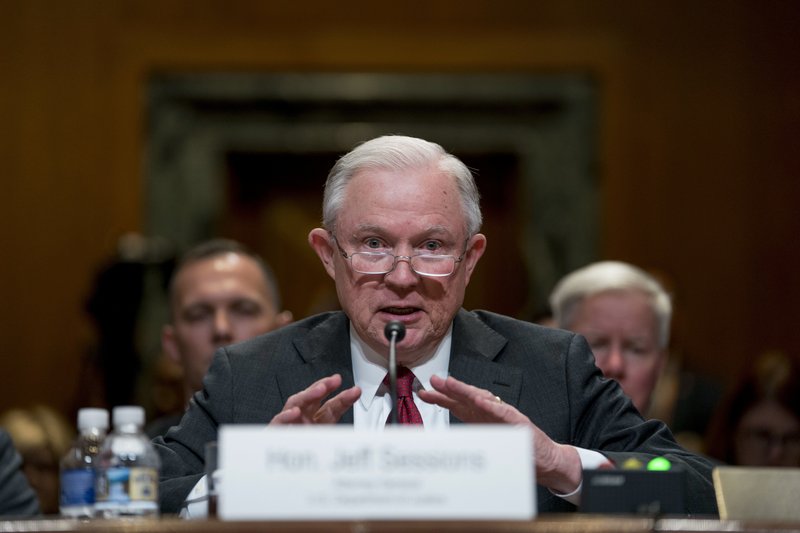
Attorney General Jeff Sessions on Wednesday defended President Donald Trump’s right to pardon former Sheriff Joe Arpaio and former Bush administration official I. Lewis “Scooter” Libby. Both of those pardons were issued by Trump and bypassed the involvement of the Justice Department and its pardon attorney, which historically reviews petitions for clemency and makes recommendations. Sessions made the comments at a Senate subcommittee hearing where Sen. Chris Van Hollen, a Maryland Democrat, reminded him that as a Republican senator from Alabama, Sessions had once defended the role of the Justice Department’s pardon attorney. Sessions said he stood by that assessment. But he also said that there was no question that the president had the constitutional authority to issue pardons without the Justice Department’s involvement and that there was no requirement that a president seek the opinion of the pardon attorney. “It’s clearly within the power of the president to execute pardons without the pardon attorney,” Sessions said. He acknowledged under questioning that he could not recall any pardon during President Barack Obama’s administration that did not go through the Justice Department, but he complained about pardons from President Bill Clinton that he considered objectionable. “I would just say that pardons that President Clinton were made were stunning, shocking and unacceptable on the merits,” he said in a raised voice. That was likely a reference to the 2001 pardon of fugitive businessman Marc Rich, an act that later came under federal investigation. He defended Arpaio as a legitimate pardon candidate because of the former Arizona sheriff’s advanced age of 85 and misdemeanor contempt-of-court conviction. He also said Libby had “contributed greatly to America.” Libby, a former top aide to Vice President Dick Cheney, was convicted in 2007 of lying to investigators and obstruction of justice following the 2003 leak of the covert identity of CIA officer Valerie Plame, though no one was ever charged for the leak. At another point in the hearing, Sessions declined to answer whether he had recused himself from an ongoing Justice Department investigation into Michael Cohen, Trump’s personal lawyer. Sessions said he continued to honor his decision from last year to step aside from the investigation into potential coordination between Russia and the Trump campaign, but he said it would be inappropriate beyond that to discuss particular matters he was recused from. “It is the policy of the Department of Justice that those who recuse themselves not state the details of it, or confirm the existence of an investigation or the scope or nature of that investigation,” Sessions said. He also said he supported his deputy, Rod Rosenstein, who appointed Robert Mueller as special counsel in the Russia investigation and who, like Sessions, has been under steady public attack from the president. Republished with permission from the Associated Press.
Jeff Sessions to address black law enforcement group in Alabama
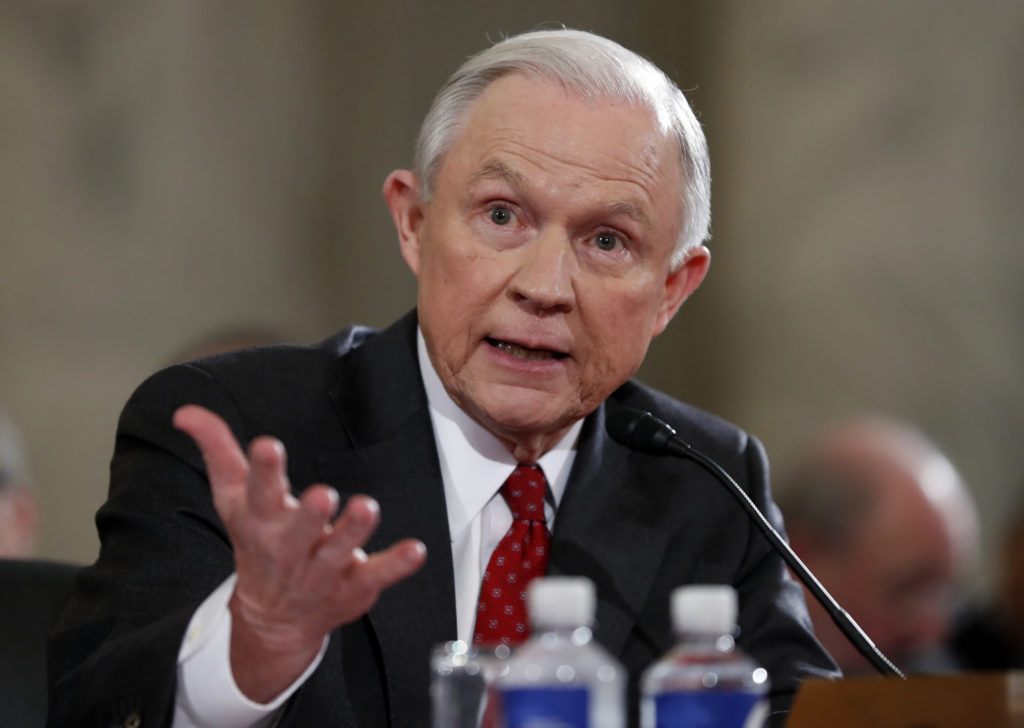
U.S. Attorney General Jeff Sessions will be in his home state of Alabama this week to address a black law enforcement group that is sometimes at odds with the Trump administration. The U.S. attorney’s office in Birmingham says Sessions will speak to the National Organization of Black Law Enforcement Executives on Friday. The group has been critical of President Donald Trump for his disparaging comments about immigrants from Africa and Haiti. It has also criticized Trump’s move to let police agencies obtain surplus military equipment. The organization opposed Trump’s pardon of Arizona sheriff Joe Arpaio and noted Sessions’ past opposition to clemency. Sessions will speak at a meeting that includes numerous large-city police chiefs and Justice Department officials. Sessions was a U.S. senator from Alabama before joining the administration. Republished with the permission of the Associated Press.
Donald Trump returns to Arizona – and a chaotic political landscape
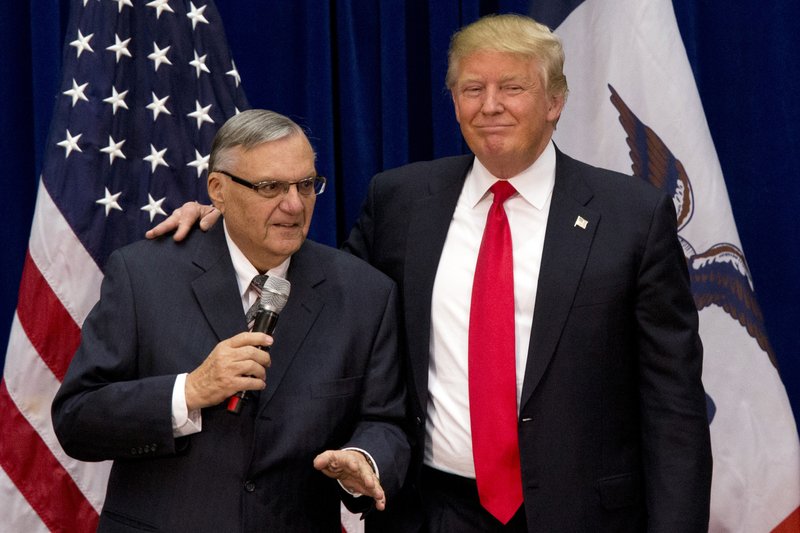
Donald Trump was just a few weeks into his candidacy in 2015 when he came to Phoenix for a speech that ended up being a bigger moment in his campaign than most people realized at the time. Trump savaged his critics and the media, vowed to fine Mexico $100,000 for each immigrant entering the country illegally, talked tough on trade, promised to return America to its winning ways and borrowed a line from Richard Nixon in declaring, “The silent majority is back.” The packed crowd ate it up — the raucous enthusiasm an early sign of the overwhelming support among Trump’s base that would help carry him to the presidency. As Trump returns to Arizona Tuesday in need of another big moment, he will find a place where his agenda and unconventional leadership style have consumed the political landscape and elevated the state’s status in the national fight for control of power in Washington in 2018. It was Arizona senator John McCain who cast the vote that derailed Trump’s effort to repeal the health care law. The other Arizona senator, Jeff Flake, has become the poster child for Republicans who buck the president’s agenda and feel his wrath on Twitter. The president is almost certain to back a GOP challenger to Flake in 2018, complicating Republican efforts to maintain control of the Senate. Trump has also revived the immigration debate and infuriated Latinos here with his talk of pardoning former Sheriff Joe Arpaio over his recent conviction for breaking the law with his signature immigration patrols. The controversy over Civil War monuments has even spilled into Arizona, where the governor has faced repeated calls to take down a handful of Confederate memorials in the state. And an overlooked item in Trump’s agenda, school choice, has made education a hot campaign issue in Arizona. With the strong support of Education Secretary Besty DeVos, Arizona passed the nation’s most ambitious expansion of vouchers this year, and public-school advocates recently submitted more than 100,000 signatures in a petition drive to get the law wiped out on the 2018 ballot. If that isn’t enough fuel for a political bonfire, Trump’s visit to Arizona will be his first political event since the race-driven violence in Virginia and his divisive comments in the aftermath of the protests. That created a dilemma for Republicans like Gov. Doug Ducey on whether to take the stage at the Trump rally while running for re-election. Doing so would subject him to attacks from moderates and the left by appearing with the president so soon after Charlottesville and possibly at the same time as the president pardons Arpaio and throws his endorsement behind Flake’s challenger. But avoiding the stage could hurt him with the base. Ducey’s plan is to greet the president on the airport tarmac and skip the rally, saying he wants to oversee the law enforcement response to protests. The governor supported Trump and appeared on stage at one of his rallies last year in Arizona. Trump would be hard-pressed to find a state where his Republican base is as faithful and vocal as in Arizona, which is a big reason why he came to the state seven times during his campaign and refers to the “special place” it holds for him. The fierce, non-conformist political spirit evident at Trump rallies here traces its roots to the frontier days and allows hard-fisted politicians like him and Arpaio to thrive. “The Republican primary base in Arizona is highly partisan, semi-libertarian in the sense that it’s against the swamp,” said longtime Republican political strategist Chuck Coughlin. “We’re the 48th state to join. We’re still acting like a juvenile. We still act like we’re the last one invited to the party which is sort of what Donald Trump is.” The biggest consequence of Trump’s unorthodox governing style may be seen in Flake’s re-election effort. Flake has been outspoken in his criticism of Trump, taking him to task in pointed jabs in a recent book. Trump has been sending out Tweets signaling his support for far-right former state Sen. Kelli Ward, who is running against Flake in the primary. Other Republicans with less baggage than Ward could also enter the race and complicate things further, making it harder for Republicans to keep the seat in the general election. Rep. Kyrsten Sinema is considered the top threat on the Democratic side. “If the president himself is supporting a challenger to Jeff, it’s a serious problem,” said Coughlin, who has been polling voters about the intraparty turmoil that has unsettled the race. Voters like Julie Brown are indicative of the GOP struggle in the Trump administration between the base and establishment. She attended a Trump rally last year and remains steadfast in her support of the president, even after Charlottesville. “He’s not totally polished and everyone tears apart his words, but you’ll never have to guess what he’s thinking and I like that much better than a politician who just gets up there and buoyantly lies and is bought by lobbyists,” Brown said. “He’s just straightforward, and like I said, it rocks the boat but we need it.” Republished with permission of The Associated Press.
Oops? Donald Trump retweets critic saying ‘he’s a fascist’

President Donald Trump appears to have mistakenly retweeted a message from one of his critics saying “he’s a fascist.” Trump deleted his retweet Tuesday after about five minutes, but not before the message sent to his 35 million followers racked up a big response. Trump seems to have been trying to draw attention to a Fox & Friends article on a possible presidential pardon for former Phoenix-area Sheriff, Joe Arpaio, who was convicted of a crime for ignoring a U.S. court order to stop traffic patrols that targeted immigrants. A Twitter handle identified as “@MikeHolden42” tweeted to Trump “He’s a fascist, so not unusual.” The user suggested in subsequent tweets that he was calling Trump a fascist, not Arpaio. Trump retweeted the message to his massive following, triggering an avalanche of replies. @MikeHolden42 responded: “I’m announcing my retirement from Twitter. I’ll never top this RT.” He later updated his description on Twitter as “Officially Endorsed by the President of the United States.” I’m announcing my retirement from Twitter. I’ll never top this RT. pic.twitter.com/HuGHkiPoyR — Mike Holden (@MikeHolden42) August 15, 2017 On Tuesday, Trump also retweeted and deleted a cartoon showing a train labeled “Trump” running over a man with “CNN” covering his face Monday morning. The retweets come after a national uproar over race-fueled clashes in Charlottesville, Virginia. It took two days of public equivocation and internal White House debate before the president condemned white supremacist groups by name on Monday, declaring “racism is evil.” Late Monday, Trump had retweeted Jack Posobiec, a conservative Trump supporter who used social media to draw attention to “pizzagate,” an unfounded conspiracy theory that claims Democrats harbor child sex slaves at a pizza restaurant. Posobiec’s tweet read: “Meanwhile: 39 shootings in Chicago this weekend, 9 deaths. No national media outrage. Why is that?” Republished with permission of The Associated Press.
