
Katie Britt and colleagues want to redesignate Iran-Backed Houthis as a foreign terrorist organization
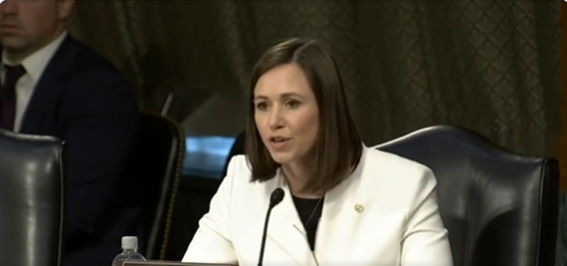
On Monday, U.S. Senator Katie Britt (R-Alabama) joined in a letter urging the Biden Administration and Secretary of State Anthony Blinken to redesignate Ansarallah, more commonly known as the Houthis, as a foreign terrorist organization (FTO). Sen. Britt cited their longstanding acts of terrorism, actions to destabilize the Middle East, the security threat they pose to the United States, and most recently, their involvement in the ongoing conflict in Israel, including missile and rocket attacks on Israel last week. The Houthis control a large swath of war-torn Yemen. In 2021, the Trump Administration designated the Houthis as an FTO. However, the Biden Administration inexplicably reversed that following Biden’s inauguration. The Houthis are longtime Iranian clients who, thanks to that relationship, have amassed one of the most sophisticated arsenals of ballistic missiles and drones in the region. This has become apparent in their frequent attacks on Israel as well as U.S. partners and interests. “An ongoing posture of appeasement by the Biden Administration only emboldens the Iranian regime to continue its barbaric proxy attacks on innocent children, women, and men, and this is evidenced in the Houthi’s recent terrorist attacks that have been intercepted by defensive actions by the United States and Saudi Arabia,” said Senator Britt. “It is imperative that America sends a message of complete condemnation of Iran and its proxies’ violence, as well as unwavering support toward our allies in the region. The Houthis are a terrorist organization, and this Administration should treat them as such while reimposing a comprehensive, maximum pressure sanctions campaign on all Iranian terror proxies. In order to achieve peace, now is the time for strength.” Last week Sen. Britt joined Senator Steve Daines (R-Montana) and 12 of their Senate colleagues in introducing the Standing Against Houthi Aggression Act. This legislation would redesignate the Houthis as a foreign terrorist organization and impose certain sanctions on the group. The legislation has also been cosponsored by Senators Roger Marshall (R-Kansas), Bill Hagerty (R-Tennessee), Susan Collins (R-Maine), Joni Ernst (R-Iowa), Marco Rubio (R-Florida), Roger Wicker (R-Mississippi), John Barrasso (R-Wyoming), Cynthia Lummis (R-Wyoming), Bill Cassidy (R-Louisiana), Shelley Moore Capito (R-West Virginia), Pete Ricketts (R-Nebraska), and John Kennedy (R-Louisiana). Katie Britt was elected to the U.S. Senate in 2022. To connect with the author of this story or to comment, email brandonmreporter@gmail.com
Katie Britt and Pete Ricketts want Senate to remain in session until all appropriations bills are passed
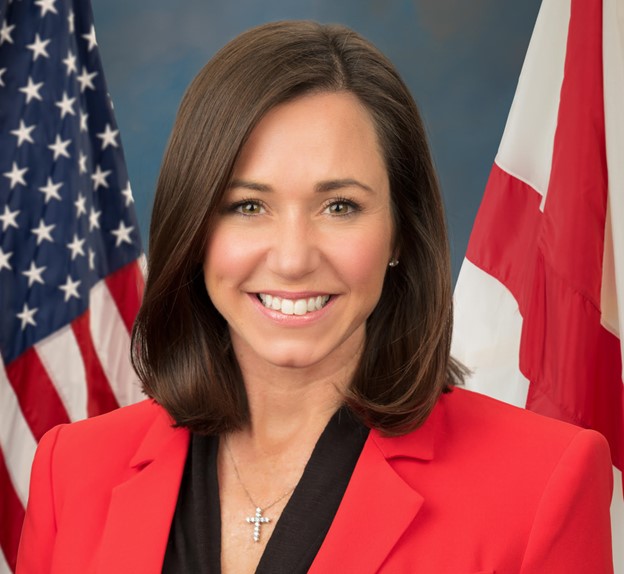
On Thursday, U.S. Senator Katie Britt (R-Alabama) announced that she has joined Senator Pete Ricketts (R-Nebraska) and 15 of their Senate colleagues in sending a letter urging Senate Majority Leader Chuck Schumer (D-New York) to keep the U.S. Senate in session until all 12 of the appropriations bills have been debated on the floor and passed. To this point, Schumer has resisted bringing the appropriations bills to the floor even though they have all passed out of the Appropriations Committee. The federal government narrowly averted a shutdown at the end of the fiscal year last weekend with a 45-day continuing resolution (CR) that will run through November 17. “We urge you to modify the Senate calendar so that we remain in session Monday through Friday every week until all 12 fiscal year 2024 appropriations bills are passed in the Senate and House and signed into law by President Biden,” the Senators wrote. “The House of Representatives has already taken the step to forgo their October recess, and the Senate must follow suit. While valuable work is done while Senators are back in their home states, it is imperative that we remain in D.C. until our appropriations work can be completed. That is what the American people expect and deserve of us.” “The continuing resolution extended government funding until November 17,” the Senators continued. “That allows seven weeks for the Senate to consider the fiscal year 2024 appropriations bills. The past nine weeks make it clear that we cannot afford to take a weekday off, much less a weeklong recess, with so much work to be completed in such a condensed time.” “My colleagues and I have worked hard this year to advance all 12 individual appropriations bills out of committee through regular order,” the Senators continued. “However, in order to enact judicious, strategic, transparent, and accountable spending measures that benefit the American people, it’s incumbent on Senator Schumer to utilize a novel concept – actually making the Senate work,” said Senator Britt. “Alabamians know this is simply common sense, but that is unfortunately uncommon in Washington, D.C.” Joining Senators Britt and Ricketts in sending the letter were Senators Deb Fischer (R-Nebraska), John Barrasso (R-Wyoming), Marsha Blackburn (R-Tennessee), Ted Budd (R-North Carolina), Shelley Moore Capito (R-West Virginia), John Cornyn (R-Texas), Bill Hagerty (R-Tennessee), Ron Johnson (R-Wisconsin), Roger Marshall (R-Kansas), Markwayne Mullin (R-Oklahoma), Rick Scott (R-Florida), Eric Schmitt (R-Missouri), John Thune (R-South Dakota), Thom Tillis (R-North Carolina), and Roger Wicker (R-Mississippi). The 2023 fiscal year ended on September 30, and Congress still has not passed the 2024 budget. If the current 45-day CR runs out without Congress having passed a budget or another CR, then the federal government will have to shut down non-essential services. Majority Leader Schumer has scheduled the Senate to be in recess until October 16. The Senate was also not in session the entire month of August, even though budgets had not been passed. To connect with the author of this story or to comment, email brandonmreporter@gmail.com
Katie Britt chastises Joe Biden over creating a border that is a “national security threat of epic proportion”
U.S. Senator Katie Britt (R-Alabama) joined a group of colleagues this week at a press conference to highlight their concerns about the Biden Administration’s border policies. The Senators claim that Joe Biden’s continued denial of this national security crisis has incentivized illegal immigration and created a safe haven for terrorists. The press conference was led by Senator Bill Hagerty (R-Tennessee) and included Senators John Cornyn (R-Texas), John Barrasso (R-Wyoming), Shelley Moore Capito (R-West Virginia), Ted Budd (R-North Carolina), Joni Ernst (R-Iowa), John Hoeven (R-North Dakota), and Ron Johnson (R-Wisconsin). “If you look back over his administration, there have been 2.3 million people that have come here (last fiscal year alone),” said Sen. Britt in the press conference. “Guys, you need to put that in perspective. Alabama is the 24th largest state in the nation, and that is about half of our population of 5 million. That was the last fiscal year alone. If you look at the total compilation to this point in his administration, we’re at about 7 million.” “To what you heard earlier from my colleagues, we’re hitting about 9,000 migrants at our border a day,” Sen. Britt continued. “At the current rate, we will hit 3 million in this next fiscal year alone. That’s over 10 million migrants who have come here illegally, across our border, during President Biden’s tenure.” “Over 844 people died at the border last year, and you all read the story about an 8-year-old drowning,” Britt continued. “As a mom, that is completely and totally gut-wrenching and unacceptable. I have talked to women who have not just told me that they were raped, but they’ve told me how many times a day they were raped at the hands of the drug cartels.” “You look at the drug cartels and what they’ve done with fentanyl in every community around this great nation,” Britt said. “Last year alone in Alabama, we had to use Narcan 15 times the first two months of our school year because of overdoses on campus. There is a mom, a dad, a brother, a sister, a cousin who is sitting around a dining room table tonight who is missing somebody because President Biden will not do his job.” “And then you look at terrorists,” said Britt. “The numbers here don’t lie guys. Look at the last administration. The last administration, in that total time span of those four years, do you know how many people we found on the wanted terrorist watch list at the border? Eight. Do you know how many people on the terrorist watch list that we have caught at the border in the [current] fiscal year alone? And we’re not finished yet. 244.” “We have a national security threat of epic proportion [on] our border; yet, at the same time, this White House is so unserious about it, that they’re actually proposing to defund ICE as a condition to continue to keep the government open beyond September 30,” Sen. Hagerty said. “If you don’t believe me, take a look at page 51 of the language that is appended to their ‘clean CR.’ On page 51, it gives them the authority to reprogram all of ICE’s funding, over $8 billion, to reprogram that and turn ICE into a resettlement agency. All of these funds can be reprogrammed to more rapidly push people into America. Instead of buying plane tickets to send people that have come here illegally—often many of them with violent criminal records—instead of buying plane tickets to send them back to their home country, ICE will now be buying plane tickets to send them to a town near you or me. This is egregious. It’s got to stop, and I’m glad that my colleagues have joined me today to bring attention to what’s happening at our southern border.” Britt has made border security a top focus during her first several months in office. Recently, she joined Senator Ted Cruz (R-Texas) and 25 colleagues in introducing the Secure the Border Act. Katie Britt is the Ranking Member of the Homeland Security Subcommittee for the Senate Committee on Appropriations. She was elected to the Senate in 2022. To connect with the author of this story or to comment, email brandonmreporter@gmail.com.
Katie Britt cosponsors bipartisan bill to permanently end budget brinkmanship
On Wednesday, U.S. Senator Katie Britt (R-Alabama) joined a bipartisan group of 11 colleagues as a co-sponsor of Senator James Lankford’s (R-Oklahoma) Prevent Government Shutdowns Act of 2023. This legislation would permanently end the practice of shutting down the federal government and disrupting critical services if Congress fails to enact spending bills by the start of the next fiscal year. Under the bill’s provisions, if Congress does not enact all 12 appropriations on time, an automatic 14-day Continuing Resolution (CR) would be triggered and keep funding at the previous fiscal year’s levels. If there is no resolution at the end of two weeks, automatic 14-day CRs would go into effect on a rolling basis until either all appropriations bills are enacted or a long-term CR is enacted. “The American people are tired of seeing critical government services being held hostage while Congress irresponsibly pushes to pass massive spending bills at the last minute,” said Sen. Britt. “Taxpayers shouldn’t be forced to keep paying the price for this budgetary political brinksmanship. This commonsense bill would ensure we have a fail-safe mechanism in place that will take these drastic options off the table, so members of the Senate and the House have time to draft the best bills possible in a transparent, accountable, and judicious manner.” While the federal government is operating under the automatic CRs, the legislation would require Congress to meet every day, including weekends, and members of Congress could not use any official funds for travel. They also could not consider any other measures other than appropriations bills. The travel restrictions would also apply to congressional staff and officials from the White House Office of Management and Budget (OMB). Lankford said that restraint is needed to balance the budget. Lankford said, “To put this in context, with the record revenue that’s coming in this year at about $4.8 trillion, if we were spending the same this year as we did in 2018, a short five years ago. If we were spending the same this year as we were in 2018 prior to COVID, we would have a $700 billion surplus this year rather than an almost $2 trillion deficit—this year—because the record amount of revenue coming in this year compared to what our spending was five years ago, we would have been in surplus this year. But we’re not, and it’s at $1.5 trillion over that. We have a very serious issue. We should have very hard conversations about our revenue, about our spending, about the direction that we’re actually heading, and about how do we get out of a $33 trillion debt.” In addition to Senator Britt, co-sponsors of Senator Lankford’s bill include Senators Maggie Hassan (D-New Hampshire), Ron Johnson (R-Wisconsin), Angus King (I-Maine), Rick Scott (R-Florida), Mark Kelly (D-Arizona), Steve Daines (R-Montana), Kyrsten Sinema (I-Arizona), Bill Cassidy (R-Louisiana), Mike Braun (R-Indiana), John Barrasso (R-Wyoming), Chuck Grassley (R-Iowa), and Cynthia Lummis (R-Wyoming). Senator Britt is also a co-sponsor of Senator Braun’s No Budget, No Pay Act. That legislation would bar members of Congress from getting paid until they passed a budget. President Joe Biden has not submitted a balanced budget since entering the White House. Katie Britt was elected to the U.S. Senate in 2022. She serves on the Appropriations Committee tasked with passing each of the 12 appropriations bills. CRs go around the committee by a handful of powerful Senators who craft the CR with the White House to keep the government funded. Often, those CR writers are able to insert earmarks and other language into a CR or omnibus spending bill that is never vetted by committee. To connect with the author of this story or to comment, email brandonmreporter@gmail.com.
U.S. Senator Katie Britt joins colleagues to support ban on mask mandates

On Thursday, U.S. Senator Katie Britt (R-Alabama) joined her Republican colleagues on the Senate floor in support of legislation authored by Senator J.D. Vance (R-Ohio) that would ban future federal mask mandates. Sen. Britt is a cosponsor of Senator J.D. Vance’s Freedom to Breathe Act. It would prohibit any federal official, including the President, from issuing mask mandates applying to domestic air travel, public transit systems, or primary, secondary, and post-secondary schools. The legislation would also prohibit air carriers, transit authorities, and educational institutions from refusing service to individuals who choose not to wear a mask. “During the COVID-19 pandemic, draconian shutdowns and mask mandates inflicted immense damage across our nation,” said Britt. “Just look at the consequences our children faced, from devastating learning loss that put students years behind to deteriorating mental health in kids and teenagers. Enough is enough. More than three years later, it’s clear we need to embrace individual liberty and facts rather than a society gripped by fear. Democrats have claimed that mask mandates and lockdowns are not coming back – however, their objection to this legislation reveals their true intentions.” “We cannot repeat the anxiety, the stress, and the nonstop panic of the last couple of years,” said Sen. Vance. “That’s what this legislation is about. End the mandates, end the panic, and let’s get back to some common sense.” The Senate considered the legislation on Thursday under unanimous consent, which allows for a measure to be considered passed and sent to the House of Representatives unless another senator raises an objection. During consideration of the Freedom to Breathe Act, Senator Ed Markey (D-Massachusetts) objected to the passage, meaning that the bill would have to go through the regular order to get out of the Senate. COVID-19 is making a small resurgence in some parts of the country. Earlier this week, an elementary school in Montgomery County, Maryland, reimposed a mask mandate for students. In addition to Senators Britt and Vance, this legislation is cosponsored by Senate Republican Conference Chairman John Barrasso (R-Wyoming) and Senators Josh Hawley (R-Missouri), Eric Schmitt (R-Missouri), Mike Braun (R-Indiana), Cynthia Lummis (R-Wyoming), Roger Marshall (R-Kansas), Ted Budd (R-North Carolina), and Marsha Blackburn (R-Tennessee). Mask mandates were widely adopted during the COVID-19 global pandemic at the urging of public health officials. The effectiveness of a piece of cloth stopping an airborne virus has been widely debated. Some see the masks as sensible precautions, while others object to them being required by the government. Over 6.9 million people have died from COVID-19, including 1,174,588 Americans – though that is fewer than some of the projections were showing early in the global pandemic. There have been 52,803 American deaths credited to COVID-19 in 2023. Katie Britt was elected to the U.S. Senate in 2022. She previously worked as an attorney, the President and CEO of the Business Council of Alabama, and as former Senator Richard Shelby’s chief of staff. To connect with the author of this story or to comment, email brandonmreporter@gmail.com.
Mitch McConnell tries to reassure colleagues about his health, vows to serve out term as Senate GOP leader
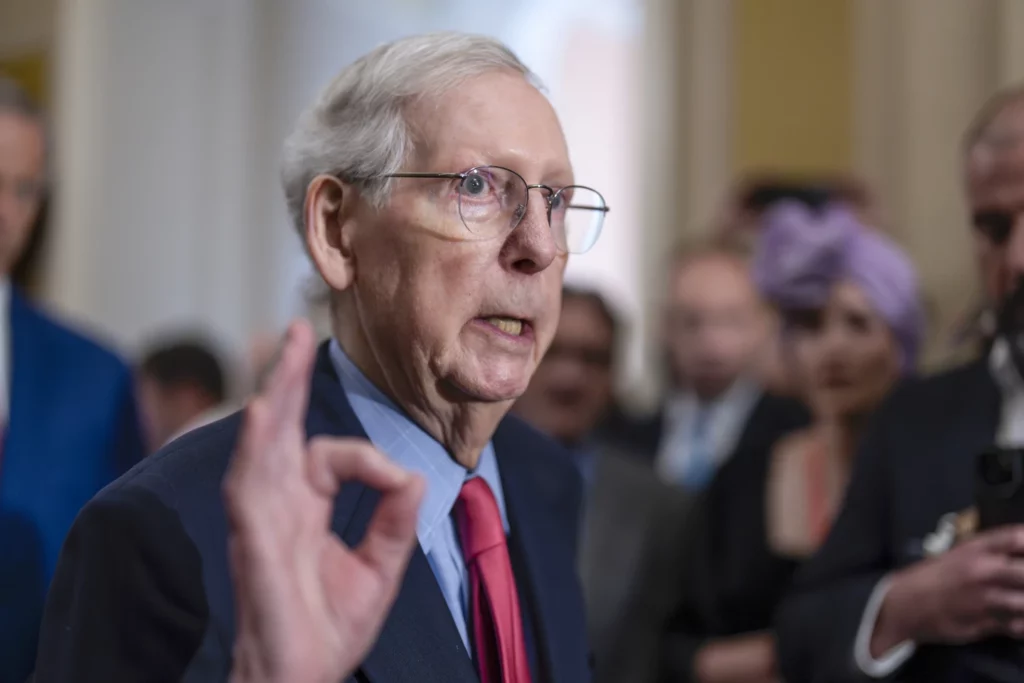
Senate Republican Leader Mitch McConnell declared again Wednesday that he plans to finish his term as leader despite freezing up at two news conferences over the summer, brushing off questions about his health as he sought to reassure colleagues he’s still up to the job. At a weekly, closed-door lunch with fellow GOP senators on Wednesday, McConnell pointed to the statement released a day earlier by attending physician Brian P. Monahan about his health. He said he was ready to move forward with the Senate’s busy fall agenda. Monahan’s statement, released by McConnell’s office, said there was no evidence that the 81-year-old McConnell had a stroke or was suffering from a seizure disorder after he froze up and appeared unable to speak for 20-30 seconds at two different news conferences. The episodes came after the GOP leader fell and suffered from a concussion earlier this year. “I’m going to finish my term as leader, and I’m going to finish my Senate term,” McConnell told reporters, dismissing questions and requests for more detail about his medical condition. “I have nothing to add” to Monahan’s statement, he said. McConnell’s words to the press and his colleagues were his latest efforts to assuage growing concerns about his health and silence questions about whether he can continue to lead his party in the Senate. The famously private Kentucky senator has faced some criticism from colleagues for remaining quiet about the incidents and his health, which has visibly declined since the concussion. Behind closed doors, McConnell told other Republicans that his health issues are linked to his concussion. He believes that is a “plausible answer” to the questions, Texas Sen. John Cornyn said. Cornyn said McConnell “hasn’t missed a step” in terms of his cognitive abilities or ability to lead. But “physically, it’s been tougher.” “He was more transparent, which I’m glad he did,” Cornyn said of McConnell’s comments at the private lunch. “This is not his style. But I don’t think keeping things close to the vest serves his interests, and it created a lot of speculation. So I think this is a positive development.” Other Republican senators also said they were satisfied with McConnell’s explanation for the two incidents, the first in Washington in July just before the August recess and the second in Kentucky last week. “I feel really good; I’m behind Mitch, and let’s move forward,” said Sen. Lindsey Graham, R-S.C. North Carolina Sen. Thom Tillis said McConnell has ”broad support, and I think that’s known by the majority of the conference.” North Dakota Sen. Kevin Cramer, who had called for more transparency from McConnell, said the leader’s remarks were “a strong message. It was confident on his part. It was very direct.” Alabama Sen. Tommy Tuberville said that as part of his remarks to the GOP conference, McConnell touted that he’d raised $49 million for Republican Senate candidates in August. “He convinced me” of his ability to lead, Tuberville said. Still, Tuberville said the circumstances could change. “I don’t think there will be anything else said about it unless there’s another incident,” Tuberville said. “And that’s what we’re hoping.” The letter from Monahan that McConnell released Tuesday said there is “no evidence that you have a seizure disorder or that you experienced a stroke, TIA or movement disorder such as Parkinson’s disease.” TIA is an acronym for a transient ischemic attack, a brief stroke. But there was no elaboration as to what did cause McConnell’s episodes. The doctor said the assessments entailed several medical evaluations including a brain MRI scan and “consultations with several neurologists for a comprehensive neurology assessment.” “There are no changes recommended in treatment protocols as you continue recovery from your March 2023 fall,” Monahan said. Even though the majority of GOP senators have supported McConnell, some have raised questions. Republican Sen. Rand Paul, a doctor, and McConnell’s Kentucky colleague, has questioned whether the episodes were really caused by dehydration, as McConnell’s aides and the Capitol doctor have implied. After attending the lunch, Paul said he had no comment. Missouri Sen. Josh Hawley said he’s concerned about the leader’s health, adding that his health issues could undermine Republican arguments that President Joe Biden, 80, is too old for another term in office. “I mean, if you’re concerned about the president’s ability to do his job, and I am, and a lot of Republicans say they are, then you’ve got to be concerned when it’s somebody from your own party,” Hawley said. The top potential successors to McConnell as leader — Cornyn, South Dakota Sen. John Thune and Wyoming Sen. John Barrasso — have stood by him. “He was very strong, sharp in the lunch today,” said Thune, the No. 2 Republican leader. “He talked a lot about not just (his health) but the other issues we’re dealing with here in the Senate. I think everybody left feeling very good about where he’s at.” First elected to the Senate in 1984 and as leader in 2007, McConnell became the longest-serving Senate party leader in January. He would have to run again for leader after next year’s elections, and his next reelection to the Senate would be in 2026. McConnell will be a central figure as Congress returns from an extended summer break to a flurry of activity, most notably the need to approve funding to prevent any interruption in federal operations by Sept. 30, which is the end of the fiscal year. Some House Republicans are willing to shut down the government at the end of the month if they are unable to enact steep spending restrictions that go beyond the agreement Biden reached with Republican House Speaker Kevin McCarthy earlier this summer. Republished with the permission of The Associated Press.
Katie Britt and colleagues demand answers after Biden Administration hands over $6 billion to Iran
On Monday, U.S. Senator Katie Britt (R-Alabama) joined a letter by Sen. Tim Scott (R-South Carolina), the ranking member of the Senate Committee on Banking, Housing, and Urban Affairs, and 24 of her Republican colleagues in demanding answers from the Biden Administration about the approximately $6 billion reportedly paid to Iran in exchange for Americans wrongfully being held as political hostages by the Iranian regime. “Handing $6 billion to the world’s largest state sponsor of terrorism is a reckless and disastrous decision that threatens the lives of Americans and our allies across the globe,” said Senator Britt. “Once again, the Biden Administration has chosen to appease our adversaries and set a dangerous precedent. President [Joe] Biden’s weakness will only embolden hostile actors to engage in further aggression around the world. We must achieve peace through strength, and I will always fight to hold this Administration accountable for putting American families at risk.” In a letter to Secretaries Antony Blinken and Janet Yellen, the senators wrote, “When the Obama administration released $400 million in liquidated assets to Iran in 2016, we warned that this dangerous precedent would put a price on American lives. Seven years later, the current administration is providing a ransom payment worth at least fifteen times that amount to the world’s largest state sponsor of terror, in yet another violation of the United States’ long-standing ‘no concessions’ policy. In the release of Executive Order 14078 on July 19, 2022, the White House admitted that ‘terrorist organizations, criminal groups, and other malicious actors who take hostages for financial, political, or other gain—as well as foreign states that engage in the practice of wrongful detention, including for political leverage or to seek concessions from the United States—threaten the integrity of the international political system and the safety of United States nationals and other persons abroad.’ The release of such a significant sum to the Iranian regime runs entirely counter to that claim and will only serve to encourage additional hostage-taking for financial or political gain.” Joining Senators Britt and Scott on the letter were Senators Jim Risch (R-Wisconsin), Roger Wicker (R-Mississippi), Tom Cotton (R-Arkansas), Bill Hagerty (R-Tennessee), Bill Cassidy (R-Louisiana), Chuck Grassley (R-Iowa), Lindsey Graham (R-South Carolina), Steve Daines (R-Montana), Marsha Blackburn (R-Tennessee), Kevin Cramer (R-North Dakota), Ted Budd (R-North Carolina), J.D. Vance (R-Ohio), John Cornyn (R-Texas), Joni Ernst (R-Iowa), Pete Ricketts (R-Nebraska), John Hoeven (R-North Dakota), Todd Young (R-Indiana), Mike Crapo (R-Idaho), Roger Marshall (R-Kansas), James Lankford (R-Oklahoma), Thom Tillis (R-North Carolina), John Kennedy (R-Louisiana), John Barrasso (R-Wyoming), and Shelley Moore Capito (R-West Virginia) After more than two years of quiet negotiations, Iran has released five Iranian American dual citizens into house arrest, according to original reporting by the New York Times – quoting officials at the State Department and the National Security Council. “This is just the beginning of a process that I hope and expect will lead to their return home to the United States,” Secretary of State Antony Blinken said on Thursday. “There’s more work to be done to actually bring them home. My belief is that this is the beginning of the end of their nightmare.” The prisoners are Siamak Namazi, Emad Sharghi, and Morad Tahbaz, who had all been jailed on unsubstantiated charges of spying, as well as two others whose families have withheld their names. One of the unnamed Americans is a scientist, and the other is a businessman, according to sources. In addition to releasing the $6 billion in seized oil funds, the U.S. has agreed to hand over imprisoned Iranians as part of the prisoner swap. Britt and her colleagues had objected to paying the ransom before the deal had been finalized. Britt was elected to the Senate in 2022. To connect with the author of this story or to comment, email brandonmreporter@gmail.com.
Sen. Mitch McConnell freezes during press conference, raises concerns
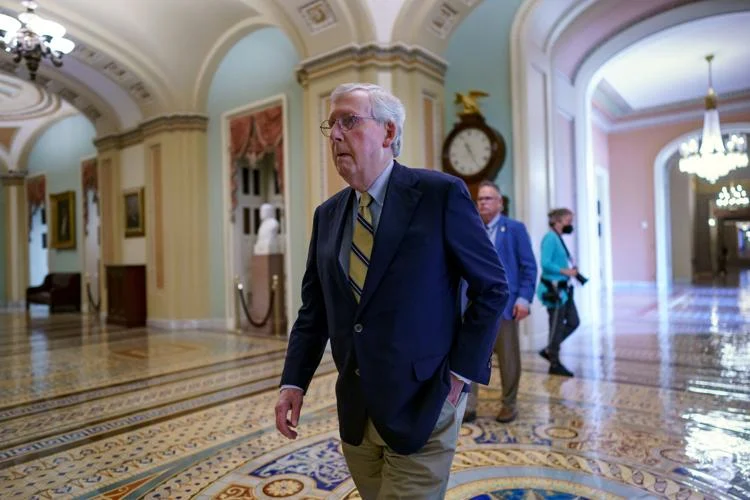
Senate Minority Leader Mitch McConnell, R-Ky., raised concerns Wednesday when he froze during a news conference. In the middle of his remarks to the media, McConnell stared ahead and stopped talking. After an awkward pause, fellow lawmakers ushered him to his office. “Hey Mitch, anything else you want to say, or should we just go back to your office?” Sen. John Barrasso, R-Wyo., said to McConnell. “Do you want to say anything else to the press?” McConnell returned to answer press questions, telling reporters he was “fine.” McConnell, 81, suffered a fall and ensuing concussion and broken rib earlier this year. Q: “Could you address what happened here at the start of the press conference and was it related to your injury from earlier this year where you suffered a concussion?” Sen. McConnell: “I’m fine.” Q: “You’re fine? You’re fully able to do your job?” McConnell: “Yeah.” pic.twitter.com/Can1RtzqmM— CSPAN (@cspan) July 26, 2023 Republished with the permission of The Center Square.
Katie Britt, Rick Scott and colleagues urge Biden Administration to address passport delays

On Monday, U.S. Senator Katie Britt (R-Alabama) announced that she has joined Senator Rick Scott (R-Florida) and 12 of their colleagues in a letter to Secretary of State Antony Blinken urging him to take immediate action to resolve the backlog of passport applications. “Given the sheer number of Alabamians who have recently requested help with a passport issue, I’m concerned that action has not been taken sooner to address this concern, which clearly affects a great number of Alabamians,” said Sen. Britt. “As record levels of Americans continue to book flights across the globe, we request this matter be dealt with immediately and transparently to prevent further backlog.” More Americans are seeking passports, and there are growing delays in obtaining or renewing a passport. According to a recent report, it can take 17 weeks to get a passport renewed. This turnaround time has grown several weeks just since February. In the letter, the Senators note countless reports from Americans in their respective states regarding issues and concerns with delayed wait times, lack of available in-person appointments, and an inability to communicate with passport agencies. The Senators charge that this is an unacceptable failure from a federal government that should be focused on serving American taxpayers and their needs. Joining Senators Britt and Scott were U.S. Senators Bill Cassidy (R-Louisiana), Ted Cruz (R-Texas), Mike Crapo (R-Idaho), John Barrasso (R-Wyoming), Cynthia Lummis (R-Wyoming), Ted Budd (R-North Carolina), Marco Rubio (R-Florida), JD Vance (R-Ohio), Mitt Romney (R-Utah), Joni Ernst (R-Iowa), and Deb Fischer (R-Nebraska). “As summer begins and families across the nation are finalizing their travel plans, we have heard countless reports from constituents in our states about the massive backlogs in processing passport applications,” the Senators wrote to Sec. Blinken. “While we appreciate the hard work of Passport Agency employees across the nation, this backlog and the unresponsiveness to many passport inquiries is unacceptable.” “Since January 2023, our offices have observed a massive increase in passport-related inquiries from our constituents,” the Senators continued. “We understand that the Department of State is experiencing an unprecedented number of passport applications and renewals, but the strategies put in place to address this unprecedented demand appear to need additional attention.” “These backlogs have resulted in many American families being forced to cancel their travel plans because of increased wait times, a lack of available in-person appointments, and an inability to communicate with passport agencies,” wrote the Sens. “Furthermore, the delay many Americans are experiencing in receiving their passport could potentially be detrimental to their livelihood. The Department of State must address these issues promptly to remedy the situation. As our offices continue to work each and every day to assist constituents with their passport needs.” Many countries require a passport to be valid six months after your trip ends. These include India, Kenya, Morocco, Peru, Singapore, Thailand, Turks and Caicos, and Zimbabwe. All 27 European Union member countries require passports to be valid for at least three months beyond the date of departure. Some countries are more visitor-friendly and only require your passport to be valid. These include Argentina, Australia, Dominican Republic, Japan, and the United Kingdom. For travel to Hong Kong, the requirement is one month beyond the trip. Since renewing a passport can take four months, plan accordingly if you have plans to travel or work in a field where foreign travel may be required at some point. Katie Britt was elected to the Senate in 2022 after a career as a lobbyist, attorney, and Sen. Richard Shelby’s chief of staff. To connect with the author of this story or to comment, email brandonmreporter@gmail.com.
Katie Britt votes against debt ceiling bill
U.S. Senator Katie Britt voted against the bipartisan debt ceiling plan, H.R. 3746 – the Fiscal Responsibility Act, on Thursday after efforts to amend the package were blocked. The debt ceiling sets the amount of money the U.S. Department of the Treasury can legally borrow to pay the country’s financial obligations. H.R. 3746 will suspend the debt ceiling with no set monetary limit, among other provisions. The national debt is currently more than $31.8 trillion. The deficit is estimated to grow by as much as $4 trillion over the next 19 months. “The United States currently has a national debt of nearly $32 trillion, and it is rapidly rising with each passing minute,” said Senator Britt. “It’s clear that if we don’t change our dire financial trajectory, it will make the American Dream unattainable for our children and our children’s children. This issue is not only a question of our country’s economic security, but our moral obligations to future generations. Decisive action and tough decisions are needed to finally get control of wasteful government spending and put America’s fiscal house in order. While I appreciate the diligence of Speaker McCarthy in attempting to make the best out of the crisis scenario caused by months of President [Joe] Biden refusing to even have a conversation about this issue, we must do more.” Both Britt and Senator Tommy Tuberville voted no on the debt ceiling deal. Senator Britt joined Senator Rick Scott (R-Florida) and eight Republican colleagues to introduce the Full Faith and Credit Act, legislation that would have ensured that the federal government avoids default and prioritizes meeting America’s obligations to our military, veterans, and seniors after reaching the debt ceiling. During debate of H.R. 3746 on the Senate floor, Senator Britt supported several efforts to improve the legislation in a fiscally responsible manner. However, all of these amendments were defeated by Senate Democrats. On Thursday night, the Senate voted to send a compromise bill to President Biden’s desk that extends the government’s borrowing authority until January 2025 and staves off a potentially disastrous default next week. A large bipartisan majority of the Senate voted 63 to 36 to approve the bill, which passed the House on Wednesday night. 31 of the 49 Senate Republicans voted against the deal, including Senate Republican Conference Committee Chairman John Barrasso (Wyoming). Senate Democrats were not happy about caps on non-defense discretionary spending, tougher work requirements for federal food assistance, and approval of a controversial natural gas pipeline. Forty-five of the Senate Democrats voted for the bill to avoid default. Four Democrats and independent Bernie Sanders voted against the deal. The bill was negotiated between President Biden and Speaker of the House Kevin McCarthy (R-California). “No one gets everything they want in a negotiation, but make no mistake: this bipartisan agreement is a big win for our economy and the American people,” President Biden said in a statement. The federal government collects $4.7 trillion in taxes, including $2.6 trillion in income tax revenues. The federal government spends $6.1 trillion annually, producing a current budget deficit of $1.48 trillion annually. To connect with the author of this story or to comment, email brandonmreporter@gmail.com.
Katie Britt and colleagues introduce the Back the Blue Act

On Monday. U.S. Senator Katie Britt joined U.S. Senator John Cornyn, U.S. Senator Tommy Tuberville, and 37 Republican colleagues to introduce the Back the Blue Act. The announcement coincided with the annual observance of Peace Officers Memorial Day and National Police Week. This legislation will strengthen existing laws that protect police officers, increase the criminal penalties for individuals who target law enforcement, and expand the tools that police can use to protect themselves. “Today, we honor the courageous law enforcement officers who have valiantly made the ultimate sacrifice,” Sen. Britt said. “Every single day, the brave men and women of law enforcement go above and beyond to serve and protect our communities. It is essential that we not only support our police, but we respect the rule of law in our country. I’m proud to join Senator Cornyn and my colleagues in introducing the Back the Blue Act, and I will always stand with our police officers in Alabama and across the country.” “The Back the Blue Act adds stiff, mandatory penalties and makes it a federal crime to kill – or attempt to kill – a law enforcement officer, a federal judge, or a federally funded public safety officer,” Sen. Cornyn said. “We must make it absolutely clear that violence against them will not be tolerated. In honor of National Police Week, we honor the brave men and women who protect us, we pay tribute to those who made the ultimate sacrifice, and we commit to doing everything in our power to ensure that they have all the resources they need to keep our people safe.” “Today marks the start of National Police Week,” Sen. Tuberville said on Twitter. “America’s brave men and women in blue wake up every day prepared to sacrifice their own safety in service to their fellow Americans. It is more important than ever that we show our support. To all who protect and serve, thank you.” In addition to Senators Britt, Tuberville, and Cornyn, this legislation is cosponsored by Senate Minority Leader Mitch McConnell (R-Kentucky), Senate Judiciary Committee Ranking Member Lindsey Graham (R-South Carolina), and Senators Ted Cruz, Thom Tillis, Rick Scott, Jerry Moran, Mike Braun, Kevin Cramer, Marsha Blackburn, John Boozman, Deb Fischer, Shelley Moore Capito, Mike Crapo, Marco Rubio, Jim Risch, Pete Ricketts, Steve Daines, John Barrasso, James Lankford, Cindy Hyde-Smith, John Kennedy, Tom Cotton, John Thune, John Hoeven, Ted Budd, Josh Hawley, Tim Scott, Bill Hagerty, Roger Marshall, Bill Cassidy, Joni Ernst, Chuck Grassley, Todd Young, Eric Schmitt, Cynthia Lummis, and Roger Wicker. The Back the Blue Act has been introduced in Congress multiple times since 2017. Senator Britt is also a cosponsor of Senator Braun’s Thin Blue Line Act, which expands the list of statutory aggravating factors in capital punishment determinations to also include killing or targeting a law enforcement officer, firefighter, or other first responders. To connect with the author of this story or to comment, email brandonmreporter@gmail.com
Tommy Tuberville and GOP Colleagues urge Joe Biden to negotiate on debt limit
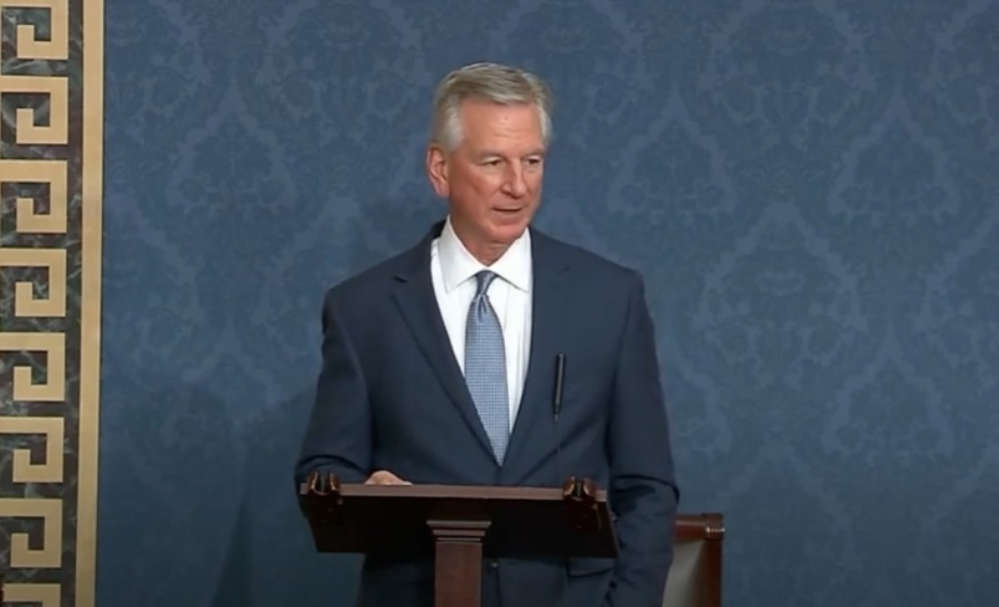
U.S. Senators Tommy Tuberville and Katie Britt joined U.S. Senator Mike Lee and dozens of Republican colleagues in calling for fiscal responsibility and spending control measures in debt ceiling negotiations. Tuberville joined a GOP letter to Majority Leader Chuck Schumer declaring broad Republican opposition to any debt ceiling legislation that lacks significant spending control measures. “It is now clear that Senate Republicans aren’t going to bail out Biden and Schumer. They have to negotiate,” said Sen. Lee. “I thank my colleagues for joining my effort to emphasize this point in the clearest possible terms.” “The Senate Republican conference is united behind the House Republican conference in support of spending cuts and structural budget reform as a starting point for negotiations on the debt ceiling,” wrote the senators. “This trajectory must be addressed with fiscal reforms.” The letter emphasizes the GOP senators’ united front with the House Republican conference, advocating for spending cuts and structural budget reforms as prerequisites for any negotiation on raising the debt ceiling. “Dear Leader Schumer, The Senate Republican Conference is united behind the House Republican Conference in support of spending cuts and structural budget reform as a starting point for negotiations on the debt ceiling. Our economy is in free fall due to unsustainable fiscal policies. This trajectory must be addressed with fiscal reforms. Moreover, recent Treasury projections have reinforced the urgency of addressing the debt ceiling. The House has taken a responsible first step in coming to the table with their proposals. It is imperative that the president now do the same. As such, we will not be voting for cloture on any bill that raises the debt ceiling without substantive spending and budget reforms,” the Senators wrote. Senators Tuberville, Britt, and Lee, current signatories include U.S. Senators Marsha Blackburn, Ted Cruz, Mike Crapo, Ted Budd, Mike Braun, James Lankford, Cynthia Lummis, Roger Marshall, M.D., Ron Johnson, James Risch, Eric Schmitt, Rick Scott, John Cornyn, Kevin Cramer, Markwayne Mullin, Roger Wicker, Steve Daines, Lindsey Graham, John Barrasso, Deb Fischer, Tim Scott, John Hoeven, Thom Tillis, and J.D. Vance. The debt limit — commonly called the ‘debt ceiling’ — is the highest amount the government can borrow under federal law. The federal government hit the debt limit in January 2023. Since then, the U.S. Treasury has employed ‘extraordinary measures’ to continue making payments on debt and new expenses. According to the U.S. Treasury, the United States is on track to exhaust those measures and run out of financial liquidity in a matter of weeks, meaning the federal government would no longer be able to make all of its payments. The debt is continuing to rise. The debt ceiling will have to be increased in the coming weeks. Democrats have advocated for an increase in the amount of money the federal government is allowed to borrow without any reduction in federal spending. Republicans say they will not support any debt ceiling increase without significant reductions in spending. President Biden has repeatedly refused to negotiate a debt ceiling deal with Republicans even though the GOP controls the U.S. House of Representatives. The House Republicans passed the Limit, Save, Grow Act of 2023 — a debt ceiling increase paired with spending cuts — on April 26, 2023. In Fiscal Year 2022, federal tax revenue hit a record high of $4.9 trillion. However, in the same year, the federal government had a deficit of more than $1.38 trillion even though the country is not at war and the economy is at full employment. To connect with the author of this story or to comment, email brandonmreporter@gmail.com.
