
Donald Trump fumes over NYT op-ed; top officials swiftly deny role
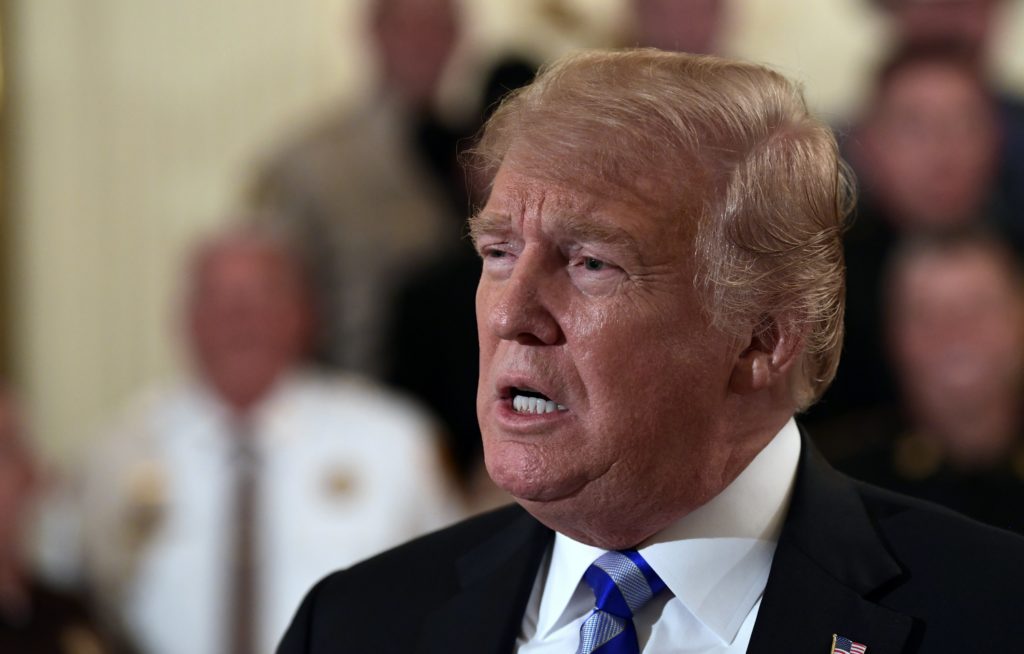
Pushing back against explosive reports his own administration is conspiring against him, President Donald Trump lashed out against the anonymous senior official who wrote a New York Times opinion piece claiming to be part of a “resistance” working “from within” to thwart his most dangerous impulses. Perhaps as striking as the essay was the recognition of the long list of administration officials who plausibly could have been its author. Many have privately shared some of the same concerns expressed about the president with colleagues, friends and reporters. Washington was consumed by a wild guessing game as to the identity of the writer, and swift denials of involvement in the op-ed came Thursday from top administration officials, including from Vice President Mike Pence’s office, Secretary of State Mike Pompeo and Dan Coats, director of national intelligence, and other Cabinet members. Trump was furious, tweeting Thursday morning that “The Deep State and the Left, and their vehicle, the Fake News Media, are going Crazy – & they don’t know what to do.” The Deep State and the Left, and their vehicle, the Fake News Media, are going Crazy – & they don’t know what to do. The Economy is booming like never before, Jobs are at Historic Highs, soon TWO Supreme Court Justices & maybe Declassification to find Additional Corruption. Wow! — Donald J. Trump (@realDonaldTrump) September 6, 2018 On Wednesday night, Trump tweeted a demand that if “the GUTLESS anonymous person does indeed exist, the Times must, for National Security purposes, turn him/her over to government at once!” White House press secretary Sarah Huckabee Sanders called on the “coward” who wrote the piece to “do the right thing and resign.” White House officials did not immediately respond to a request to elaborate on Trump’s call for the writer to be turned over to the government or the unsupported national security ground of his demand. To some observers, the ultimatum appeared to play into the very concerns about the president’s impulses raised by the essay’s author. Trump has demanded that aides identify the leaker, according to two people familiar with the matter, though it was unclear how they might go about doing so. The two were not authorized to speak publicly and spoke on the condition of anonymity. In a “House of Cards”-style plot twist in an already over-the-top administration, Trump allies and political insiders scrambled to unmask the writer. But the op-ed also brought to light questions that have been whispered in Washington for more than a year: Is Trump truly in charge? And could a divided executive branch pose a danger to the country? Former CIA Director John Brennan, a fierce Trump critic, called the op-ed “active insubordination … born out of loyalty to the country.” “This is not sustainable to have an executive branch where individuals are not following the orders of the chief executive,” Brennan told NBC’s “Today” show. “I do think things will get worse before they get better. I don’t know how Donald Trump is going to react to this. A wounded lion is a very dangerous animal, and I think Donald Trump is wounded.” The anonymous author, claiming to be part of the “resistance” to Trump “working diligently from within” his administration, said, “Many Trump appointees have vowed to do what we can to preserve our democratic institutions while thwarting Mr. Trump’s more misguided impulses until he is out of office.” “It may be cold comfort in this chaotic era, but Americans should know that there are adults in the room,” the author continued. “We fully recognize what is happening. And we are trying to do what’s right even when Donald Trump won’t.” Trump raged about the piece in the White House, calling around to confidants to vent about the disloyalty of the author and fuming that the so-called Deep State within the federal government had conspired against him, according to a person familiar with the president’s views but not authorized to discuss them publicly. The text of the op-ed was pulled apart for clues: The writer is identified as an “administration official”; does that mean a person who works outside the White House? The references to Russia and the late Sen. John McCain — do they suggest someone working in national security? Does the writing style sound like someone who worked at a think tank? In a tweet, the Times used the pronoun “he” to refer to the writer; does that rule out all women? The newspaper later said the tweet referring to “he” had been “drafted by someone who is not aware of the author’s identity, including the gender, so the use of ‘he’ was an error.” The Beltway guessing game seeped into the White House, as current and former staffers alike traded calls and texts trying to figure out who could have written the piece, some turning to reporters and asking them for clues. For many in Trump’s orbit, it was stunning to realize just how many people could have been the op-ed’s author. And some of the most senior members of the Trump administration were forced to deny they were the author of the attack on their boss. Hotly debated on Twitter was the author’s use of the word “lodestar,” which pops up frequently in speeches by Pence. Could the anonymous figure be someone in Pence’s orbit? Others argued that the word “lodestar” could have been included to throw people off. In a rare step, Pence’s communications director Jarrod Agen tweeted early Thursday that “The Vice President puts his name on his Op-Eds. The @nytimes should be ashamed and so should the person who wrote the false, illogical, and gutless op-ed. Our office is above such amateur acts.” Pompeo, who was in India, denied writing the anonymous opinion piece, saying, “It’s not mine.” He accused the media of trying to undermine the Trump administration and said he found that “incredibly disturbing.” Coats later issued his own denial, followed by Housing Secretary Ben Carson, Treasury Secretary Steve Mnuchin, budget director Mick
Donald Trump says illegal crossings down; they’re up
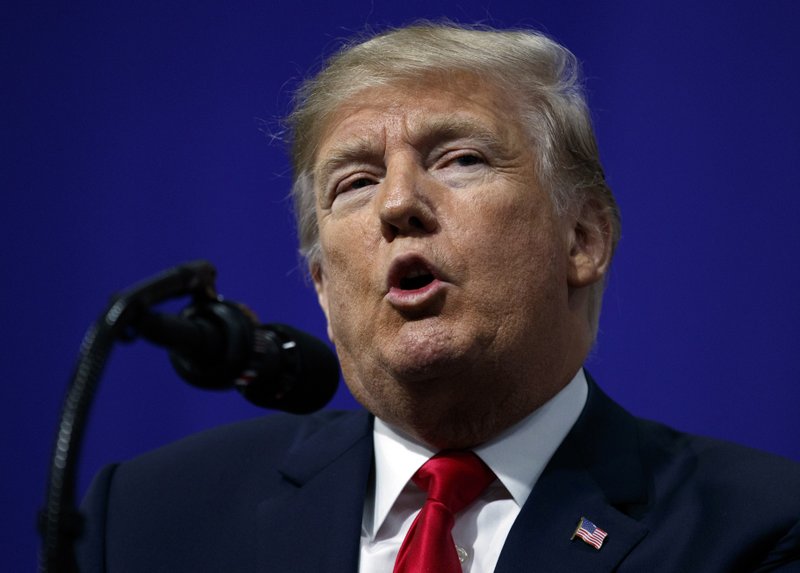
Illegal border crossings, as President Donald Trump measures them, have gone up since he took office, even as he speaks to audiences about a drop of more than 40 percent. That disconnect was among several that stood out over the past week as he opened up on the Russia investigation via Twitter, forsaking accuracy in the process, and made the false claim that he’s delivering the first big military pay increase in a decade. A look at some of his statements: TRUMP: “We’ve done a lot of work on the wall. We’re doing a lot of work on security, generally speaking, security and border — border security. The border’s down over 40 percent, and don’t forget, we have a great economy, probably the best economy the country’s ever had. So people come across, but we’re going to get the rest.” — interview broadcast Thursday with “Fox & Friends.” TRUMP: “We’re down on immigration crossing the border — more than 40 percent.” — forum Wednesday in Bethpage, New York. THE FACTS: Illegal crossings actually are up 20 percent since he became president, according to the yardstick he uses to measure them — the number of Border Patrol arrests. There is no precise measure of illegal crossings because some people don’t get caught. The Trump administration uses arrests as the best gauge of whether crossings are going up or down. The Obama administration did likewise. Border Patrol arrests did fall last year to the lowest level since 1971. But since April of last year, arrests have climbed steadily. One factor in that increase may be that people are now taking their chances to cross into the U.S. illegally after an initial wait-and-see attitude about Trump’s tough-talking approach to people sneaking into the country. Last month, there were more than 50,000 overall border arrests, which are made up of people who are stopped at land crossings and other official points of entry, according to federal data. That was more than triple the number from April 2017, which was the lowest tally on record since the Homeland Security Department was created in 2003. Overall, border arrests have increased 20 percent since January 2017, from 42,463 in January 2017 to 50,924 in April. ___ TRUMP, to U.S. Naval Academy graduates: “Going to have new equipment and well-deserved pay raises. We just got you a big pay raise. First time in 10 years. We got you a big pay increase. First time in over 10 years. I fought for you. That was the hardest one to get, but you never had a chance of losing.” — speech Friday. THE FACTS: That’s not right. U.S. military members have gotten a pay raise every year for the past 10 years and several have been larger than this year’s 2.6 percent increase. Pay increases in 2008, 2009 and 2010, for example, were all 3.4 percent or more. ___ TRUMP: “We have now the lowest number of ships that we’ve had since World War I, and very soon you’re going to get to 355 beautiful ships. 355. That’s almost a couple of hundred more ships.” — speech to academy graduates Friday. THE FACTS: No it isn’t. The Navy now has 283 ships. ___ TRUMP on former CIA Director John Brennan: “Brennan started this entire debacle about President Trump. We now know that Brennan had detailed knowledge of the (phony) Dossier…he knows about the Dossier, he denies knowledge of the Dossier, he briefs the Gang of 8 on the Hill about the Dossier, which…….they then used to start an investigation about Trump…” — tweets Monday. THE FACTS: Trump quotes conservative commentator Dan Bongino to falsely claim the Russia probe is based on a “phony dossier.” In fact, the FBI’s investigation began months before it received a dossier of anti-Trump research financed by the Democratic Party and Hillary Clinton’s campaign. The FBI probe’s origins were based on other evidence — not the existence of the dossier. The Republican-controlled House intelligence committee found the Russia probe was initiated after the FBI received information related to Trump campaign foreign policy adviser George Papadopoulos, not the dossier. The committee’s final report released in March was praised by Trump, who pointed to it as evidence that the investigation was nothing but a “witch hunt.” ___ TRUMP, on President Barack Obama’s national intelligence director, James Clapper: “Clapper has now admitted that there was Spying in my campaign. Large dollars were paid to the Spy, far beyond normal. Starting to look like one of the biggest political scandals in U.S. history. SPYGATE – a terrible thing!” — tweet Thursday THE FACTS: That’s a distortion of Clapper’s statements on ABC’s “The View” on Tuesday when he was asked about recent reports that an FBI informant spoke with several members of the Trump campaign. “They were spying on — a term I don’t particularly like but — what the Russians were doing,” Clapper said. “Trying to understand, were the Russians infiltrating? Trying to gain access, trying to gain leverage and influence? Which is what they do.” He did not say a spy was implanted “in” the campaign and he denied the FBI was spying “on” the campaign. The effort was focused on Russians, he said, was meant to “protect the campaign” and the U.S. political system. Special counsel Robert Mueller’s investigation is looking into Russian interference in the election, any collusion between Russia and the Trump campaign, possible obstruction of justice and whatever associated criminal activity might be uncovered. The probe has produced several criminal convictions of Trump campaign officials. Those charges do not implicate the president directly. Republished with the permission of the Associated Press.
James Comey compares Donald Trump to mob boss
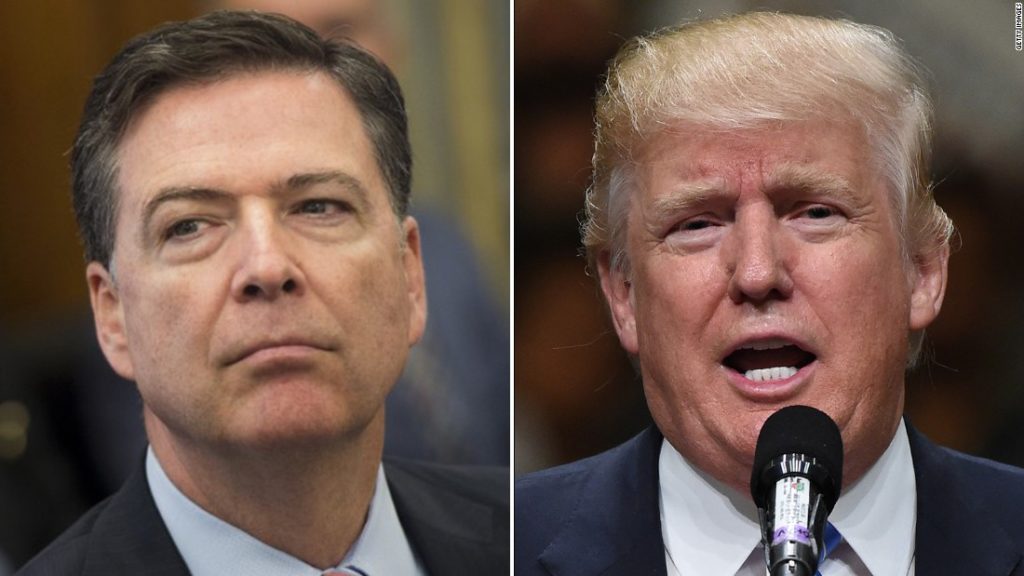
Firing back at a sharply critical book by former FBI director James Comey, President Donald Trump blasted him Friday as an “untruthful slime ball,” saying, “It was my great honor to fire James Comey!” Trump reacted on Twitter early Friday, the day after the emergence of details from Comey’s memoir, which says Trump is “untethered to truth,” and describes him as fixated in the early days of his presidency on having the FBI debunk salacious rumors he said were untrue but that could distress his wife. The book, “A Higher Loyalty,” is to be released next week. The Associated Press purchased a copy this week. In the book, Comey compares Trump to a mafia don and calls his leadership of the country “ego driven and about personal loyalty.” Comey also reveals new details about his interactions with Trump and his own decision-making in handling the Hillary Clinton email investigation before the 2016 election. He casts Trump as a mobster-like figure who sought to blur the line between law enforcement and politics and tried to pressure him personally regarding his investigation into Russian election interference. The book adheres closely to Comey’s public testimony and written statements about his contacts with Trump and his growing concern about Trump’s integrity. It also includes strikingly personal jabs at Trump that appear sure to irritate the president. The 6-foot-8 Comey describes Trump as shorter than he expected with a “too long” tie and “bright white half-moons” under his eyes that he suggests came from tanning goggles. He also says he made a conscious effort to check the president’s hand size, saying it was “smaller than mine but did not seem unusually so.” “Donald Trump’s presidency threatens much of what is good in this nation,” Comey writes, calling the administration a “forest fire” that can’t be contained by ethical leaders within the government. On a more-personal level, Comey describes Trump repeatedly asking him to consider investigating an allegation involving Trump and Russian prostitutes urinating on a bed in a Moscow hotel, in order to prove it was a lie. Trump has strongly denied the allegation, and Comey says that it appeared the president wanted it investigated to reassure his wife, Melania Trump. Trump fired Comey in May 2017, setting off a scramble at the Justice Department that led to the appointment of Robert Mueller as special counsel overseeing the Russia investigation. Mueller’s probe has expanded to include whether Trump obstructed justice by firing Comey, which the president denies. Trump has assailed Comey as a “showboat” and a “liar.” Top White House aides also criticized the fired FBI director on Friday. White House spokeswoman Sarah Huckabee Sanders questioned Comey’s credibility in a tweet and White House counselor Kellyanne Conway said Comey took “unnecessary, immature pot shots.” Comey’s account lands at a particularly sensitive moment for Trump and the White House. Officials there describe the president as enraged over a recent FBI raid of his personal lawyer’s home and office, raising the prospect that he could fire Deputy Attorney General Rod Rosenstein, who appointed Mueller, or try to shut down the probe on his own. The Republican National Committee is poised to lead the pushback effort against Comey by launching a website and supplying surrogates with talking points that question his credibility. Trump has said he fired Comey because of his handling of the FBI’s investigation into Clinton’s email practices. Trump used the investigation as a cudgel in the campaign and repeatedly said Clinton should be jailed for using a personal email system while serving as secretary of state. Democrats, on the other hand, have accused Comey of politicizing the investigation, and Clinton herself has said it hurt her election prospects. Comey writes that he regrets his approach and some of the wording he used in his July 2016 press conference in which he announced the decision not to prosecute Clinton. But he says he believes he did the right thing by going before the cameras and making his statement, noting that the Justice Department had done so in other high profile cases. Every person on the investigative team, Comey writes, found that there was no prosecutable case against Clinton and that the FBI didn’t find that she lied under its questioning. He also reveals new details about how the government had unverified classified information that he believes could have been used to cast doubt on Attorney General Loretta Lynch’s independence in the Clinton probe. While Comey does not outline the details of the information — and says he didn’t see indications of Lynch inappropriately influencing the investigation — he says it worried him that the material could be used to attack the integrity of the probe and the FBI’s independence. Comey’s book will be heavily scrutinized by the president’s legal team looking for any inconsistencies between it and his public testimony, under oath, before Congress. They will be looking to impeach Comey’s credibility as a key witness in Mueller’s obstruction investigation, which the president has cast as a political motivated witch hunt. The former FBI director provides new details of his firing. He writes that then-Homeland Security Secretary John Kelly — now Trump’s chief of staff — offered to quit out of disgust at how Comey was dismissed. Kelly has been increasingly marginalized in the White House and the president has mused to confidants about firing him. Comey also writes extensively about his first meeting with Trump after the election, a briefing in January 2017 at Trump Tower in New York City. Others in the meeting included Vice President Mike Pence, Trump’s first chief of staff, Reince Priebus, Michael Flynn, who would become national security adviser, and incoming press secretary, Sean Spicer. Comey was also joined by NSA Director Mike Rogers, CIA Director John Brennan and Director of National Intelligence James Clapper. After Clapper briefed the team on the intelligence community’s findings of Russian election interference, Comey writes, he was taken aback by what the Trump team didn’t ask. “They were about to lead a country
Inauguration in sight, Donald Trump continues Twitter assault
His inauguration days away, President-elect Donald Trump is continuing to lash out at critics in the intelligence community and Democrats in Congress who are vowing to skip his swearing-in ceremony. The tough-talking Republican questioned whether the CIA director himself was “the leaker of fake news” in a Sunday night tweet. The extraordinary criticism from the incoming president came hours after CIA chief John Brennan charged that Trump lacks a full understanding of the threat Moscow poses to the United States, delivering a public lecture to the president-elect that further highlighted the bitter state of Trump’s relations with American intelligence agencies. “Now that he’s going to have an opportunity to do something for our national security as opposed to talking and tweeting, he’s going to have tremendous responsibility to make sure that U.S. and national security interests are protected,” Brennan said on “Fox News Sunday,” warning that the president-elect’s impulsivity could be dangerous. Trump shot back in a Twitter post Sunday, saying: “Oh really, couldn’t do much worse – just look at Syria (red line), Crimea, Ukraine and the build-up of Russian nukes. Not good! Was this the leaker of Fake News?” The president-elect remained behind closed doors in his Manhattan high rise for the weekend as his team worked to answer questions about his plans at home and abroad once he’s sworn into office on Friday. Among Trump’s immediate challenges: the United States’ complicated relationship with Russia, crafting an affordable health care alternative that doesn’t strip coverage from millions of Americans and dealing with an assertion by Rep. John Lewis, a civil rights icon, that his election was not legitimate. Without providing details, Trump promised his plan to replace the nation’s health care law would provide universal coverage, according to a Washington Post interview published late Sunday. “We’re going to have insurance for everybody,” he said. “There was a philosophy in some circles that if you can’t pay for it, you don’t get it. That’s not going to happen with us.” In a separate interview with the Times of London, Trump indicated that he could lift sanctions imposed on Russia for its military intervention in Ukraine in exchange for a nuclear arms deal. The suggestion met a frosty reception in Moscow. Meanwhile, a growing number of Democrats in Congress have vowed to skip Trump’s inauguration. “We cannot normalize Donald Trump, and we certainly cannot turn our heads and ignore such a threat to the institutions and values of our democracy,” Rep. Jerrold Nadler of New York said Monday in a statement. Trump’s lieutenants pushed back hard, particularly against Rep. John Lewis, D-Ga., a civil rights legend who said Russian interference in Trump’s election delegitimizes his presidency. “I think it’s incredibly disappointing and I think it’s irresponsible for people like himself to question the legitimacy of the next United States president,” incoming White House chief of staff Reince Priebus said of Lewis on ABC’s “This Week,” insisting that Republicans did not question the legitimacy of President Barack Obama‘s victory eight years ago. Vice President-elect Mike Pence said on “Fox News Sunday” that he hopes Lewis will change his mind and attend. Priebus later acknowledged that conservatives – led by Trump himself – spent years questioning Obama’s eligibility to serve as president, suggesting he was not born in the United States. Trump has done little to encourage unity in recent days, instead inflaming tensions with his critics through a series of tweets. The incoming president tweeted Saturday that Lewis should pay more attention to his “crime ridden” Atlanta-area district, adding that the civil rights leader was “all talk.” Questions about Trump’s relationship with Russia have dominated the days leading up to his inauguration. Michael Flynn, who is set to become Trump’s national security adviser, has been in frequent contact with Russia’s ambassador to the U.S. in recent weeks, including on the day the Obama administration hit Moscow with sanctions in retaliation for the alleged election hacking, a senior U.S. official said. After initially denying the contact took place, Trump’s team publicly acknowledged the conversations on Sunday. “The conversations that took place at that time were not in any way related to the new U.S. sanctions against Russia or the expulsion of diplomats,” said Pence. Repeated contacts just as Obama imposed sanctions would raise questions about whether Trump’s team discussed – or even helped shape – Russia’s response. Russian President Vladimir Putin unexpectedly did not retaliate against the U.S. for the sanctions or the expulsion of 35 Russian diplomats, a decision Trump quickly praised. Trump has repeatedly called for a better relationship between the U.S. and Putin’s government. He suggested in an interview with The Wall Street Journal on Friday that he’d consider easing the latest sanctions on Russia. “I think he has to be mindful that he does not have a full appreciation and understanding of what the implications are of going down that road,” Brennan said. Republished with permission of The Associated Press.
