
Steve Flowers: 60th Anniversary of President John F. Kennedy’s assassination
The assassination of John F. Kennedy happened 60 years ago this week. It occurred to me that a good many of you may be too young to remember that horribly sad day of November 22, 1963. Anyone living on that day can tell you exactly where they were when President John F. Kennedy was shot and killed by an assassin in Dallas, Texas. It was a perfect fall day in the Lone Star State. Lyndon Johnson was Vice President, and he and Kennedy disliked each other immensely. The Kennedys had put Johnson on the ticket as Vice President in 1960 to ensure that the Democrats carried Texas in the General Election, not because they liked him. It was totally a political marriage. They not only did not like Johnson, they did not trust him. It was a Friday afternoon. The last high school games of the year were to be played that night. High school football was big in Alabama. By the way, it was also big in Texas, thus the movie “Friday Night Lights.” I was in the seventh grade. It was just after lunch. My homeroom teacher at Troy Junior High School was Mrs. Elaine Dodson. All of a sudden, the music teacher for our schools, Jerry Spann, came into our room and announced that the President had been shot. Everyone was traumatized. The President died about an hour later at a Dallas hospital. The next three days, all of America watched on television the funeral preparations and the Monday funeral. It was an unbelievably sad event. The scene of the riderless white horse brought tears to your eyes. If that did not, the scene where little John John Kennedy, a precious, precocious two-year-old boy, gave a salute to his father was one of the most heart-wrenching, tear-jerking moments I have ever witnessed in my life. It still brings tears to my eyes 60 years later as I write this column. John John grew to be a very handsome young man like his father. He, like his father, died an early untimely death in an airplane crash. Even though he did not have political aspirations, I believe that “John John,” John Kennedy Jr., would have been president. I am not a conspiracy theorist, but allow me to illuminate some facts. Lyndon Johnson was the most ruthless, morally bankrupt, and crudest man to ever sit in the White House. Johnson was the ultimate political animal. He lived by the rule that whatever it took to win and grab control of power is what you did. If you doubt that, read Robert Caro’s books on LBJ, or better yet, ask any historian about his years as U.S. Senate Majority Leader. In recent years, the Secret Service has released files that reveal the following facts. First, Johnson insisted that Kennedy go to Dallas, Texas, and campaign. The Secret Service asked Kennedy not to go because the Civil Rights issue was boiling in Texas. At Johnson’s urging, Kennedy agreed to go. Second, the Secret Service came to Kennedy and said, “Mr. President, if you go, you cannot use the main artery boulevard in your entourage. We cannot protect you.” Kennedy agreed. When Johnson heard of this, he told Kennedy he had to go down that boulevard because, “It is a Texas tradition,” said Johnson. Kennedy agreed at Johnson’s insistence. Finally, the Secret Service, in exasperation, told President Kennedy, “Mr. President, we asked you not to go to Dallas. We also asked you not to go down that boulevard because we cannot protect you from all the high building windows. To a sharpshooter, you will be a sitting duck. If you go to Dallas and go down that thoroughfare, we must insist, you let us put up a protective bubble to protect you.” Kennedy agreed. Johnson heard of the bubble and insisted to President Kennedy that he could not do that because he would appear distant, detached, aloof, and arrogant to Texans. President Kennedy, once again, acquiesced to Johnson’s pleas. The rest is history. The horrific, tragic scenes of Jackie Kennedy’s blood-stained pink dress, a little two-year-old boy’s goodbye salute to his father, and the riderless white horse are indelibly planted in my memory 60 years later. The 1960s was a very tumultuous and memorable time to come of age in America, and November 22, 1963, is etched in a lot of our generation’s minds. See you next week. Steve Flowers is Alabama’s leading political columnist. His weekly column appears in over 60 Alabama newspapers. Steve served 16 years in the state legislature. He can be reached at steveflowers.us.
Daniel Sutter: Economics and conspiracies
Elon Musk’s release of internal Twitter communications, the “Twitter Files,” confirmed the shadow banning of conservative politicians and pundits, previously dismissed as a conspiracy theory. Studying economics generates wariness of conspiracy theories in two ways, by highlighting the organizational difficulties and demonstrating the potential for unplanned order in society. Let’s first consider what constitutes a conspiracy. For one, multiple people, as a lone wolf, merely has a plan. And generally, secrecy, which implies illegal or unapproved actions. Dozens of police officers investigating a murder is not a conspiracy. Collective action problems make the organization and execution of conspiracies difficult. Economics employs methodological individualism to study markets, a fancy term meaning building up from the choices and actions of individuals. For example, demand represents the buyers’ half of a market, and we build demand from the choices of each consumer. Groups are comprised of individuals with their own goals and incentives. Methodological individualists are unlikely to commit the unitary actor fallacy or focusing exclusively on a leader’s choices. Generally, a tension exists between individuals and the group. Frequently groups pursue what economists call public goods or ameliorate public bads. Emphasis here is on publicness, meaning that all members share the outcome, like, say, a fun block party or noise pollution from a factory. But action is costly. Group members are better off letting someone else do the work and still benefitting, or what economists call free riding. Collective action problems do not necessarily doom groups. People can recognize their common interest, and mechanisms exist to control free riding. Still, conspiracy theorists must detail how conspirators are motivated to actively participate rather than let others do the heavy lifting. Organizing a conspiracy involving a criminal or despicable act is even harder. Now each potential conspirator can, in addition to free riding, reveal the plot to the authorities or the public, possibly earning fame and fortune as a whistleblower. We might observe leaders exhorting contributions to the common cause. Such pleas, especially when part of a written historical record, appear to prove conspiracy. But these statements are often aspirational; we should still look for evidence of action, not just for words. In addition to collective action problems, economics also teaches about spontaneous order, which refers to institutions which are the product of human action but not human design. To take an example, consider the emergence of money. People engaging in barter recognize difficulties, like searching for a “double coincidence of wants” or making ten trades to get what they want. Someone realizes that a widely liked good is easier to trade and accepts it even though they want something else; others follow along. Eventually, a medium of exchange emerges because it makes people’s lives better. Enormous societal change can occur without anyone issuing orders. Urbanization and the Industrial Revolution occurred as rising agricultural productivity freed up labor. At the same time, harnessing steam power allowed the mass production of things like textiles provided workers could be found. Factories offered high enough wages to get people to move to cities. Freedom and the desire for better lives can change society. If you do not recognize spontaneous order, patterns in society will appear planned by someone, and presumably for their benefit. And if we cannot identify the designers, a secret cabal must be at work. One of the world’s most successful conspiracy theorists, Karl Marx, attributed the Industrial Revolution to factory owners (the capitalists), who made everything happen to exploit the proletariat. Unplanned order renders theories of control, including conspiratorial control, unnecessary. Collective action problems and spontaneous order are general considerations, not evidence against any conspiracy. Maybe the CIA did kill John F. Kennedy. Conspiracies are difficult to disprove, in part because secrecy is usually an element of the conspiracy. But massive conspiracies, like the Loch Ness monster, are highly unlikely to both exist and remain hidden. Daniel Sutter is the Charles G. Koch Professor of Economics with the Manuel H. Johnson Center for Political Economy at Troy University and host of Econversations on TrojanVision. The opinions expressed in this column are the author’s and do not necessarily reflect the views of Troy University.
Steve Flowers: TV still drives the vote
After the 1960 John F. Kennedy vs. Richard Nixon classic presidential contest, television became the medium for political campaigns. TV became the new campaign strategy in Alabama in 1962. George Wallace, Big Jim Folsom, and Ryan DeGraffenried used TV that year for the first time. Unfortunately for Big Jim Folsom, his use of TV was the demise of his storied political career. His appearance on a live 30-minute paid television show was one of the most colorful stories in Alabama politics. He came on TV drunk as Cooter Brown. That’s a story for another day. Wallace and Folsom were used to campaigning one-on-one and asking folks for their vote. They stumped and had rallies in every county and hamlet in the state. However, in the end, they succumbed to the politics of TV. It has not changed but has become more pronounced over the last 60 years. This 2022 campaign for our open senate seat is nothing more than a TV show. TV has become such an integral part of getting elected to a U.S. Senate Seat that it appears that what you do now is just raise money or, if you have a lot of your own money, spend your own money and buy and design effective TV ads. The day of actually campaigning appears to be over. The only candidate who made an effort to campaign in every county, shake hands and meet folks was Katie Britt. By the way, she is the only real Alabamian in the race. Katie Britt’s grassroots campaign organization is what propelled her to an incredible commanding lead heading into the June 21 runoff. It looked for a while in our U.S. Senate race that a real outsider, Mike Durant, would be in the June 21 runoff with Katie Britt. However, the original frontrunner, Mo Brooks, clawed back to claim second place. As a lifelong follower of Alabama politics, I long for and yearn for the day when state candidates actually get out and met and talked with Alabamians one on one. Not to sound too provincial or old-fashioned, I believe that a person who wants to be Alabama’s U. S. Senator ought to really know Alabama and the people of the state. They ought to at least know what’s important to folks in our state, from Mobile to Scottsboro and Dothan to Tuscaloosa. They ought to know the intricacies and nuances of places and what industries and federal dollars mean to their locales. They need to know how important military dollars are to Huntsville, Montgomery, and the Wiregrass and also how much agriculture means to rural Alabama. In short, they should know some folks in Alabama if they are going to be their U.S. Senator. With Katie Britt in the runoff, she has truly campaigned and not just been a phantom TV candidate who flew in from New Hampshire or Colorado and tried to buy our Senate Seat and run as a celebrity POW hero. If we want to elect someone to our U.S. Senate Seat who is a celebrity and knows nothing about how to be a U.S. Senator for Alabama, then we have some folks that are qualified and are real celebrities and real Alabamians. We have two who come to mind who are a lot more famous and would be better. They are real Alabamians. Allow me to suggest Lionel Richie and Randy Owen. Lionel Ritchie was born and raised in Tuskegee and spent the first 25 to 30 years of his life in Macon County before he became world-famous. Randy Owen, the legendary lead singer, and founder of the band Alabama has never left his home in Alabama. He is Alabama-born and bred. He still lives in DeKalb County, where he was born. He walks his land and takes care of his prized black angus cattle every day. These two guys are real, sure enough Alabama celebrities and would make a lot better Senator for Alabama than some semi-Alabamian. See you next week. Steve Flowers is Alabama’s leading political columnist. His weekly column appears in over 60 Alabama newspapers. He served 16 years in the state legislature. Steve may be reached at www.steveflowers.us.
Joe Biden picks Caroline Kennedy, Michelle Kwan for ambassadors
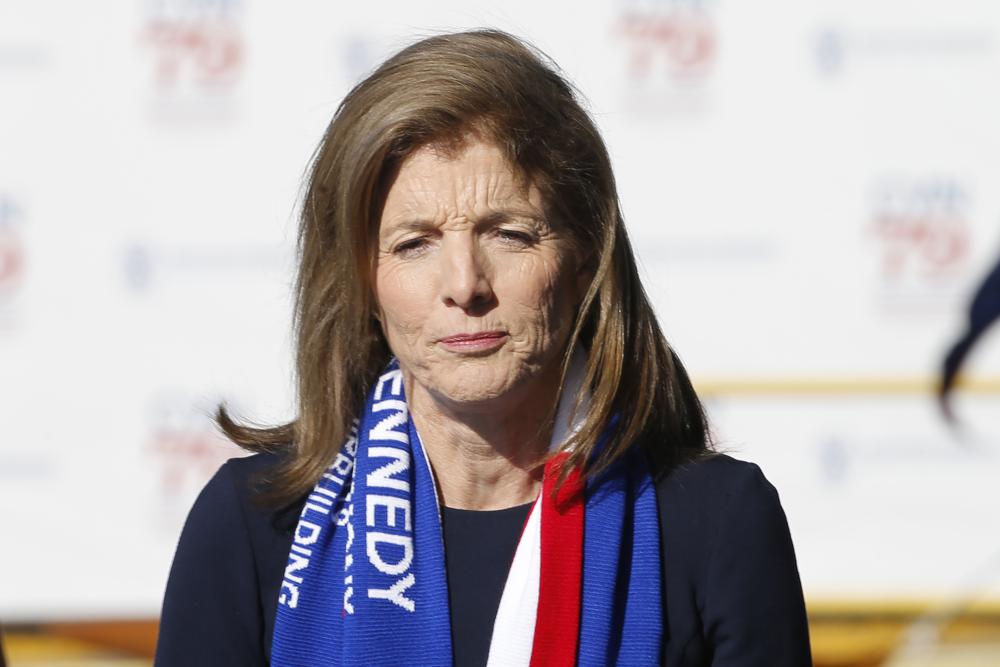
President Joe Biden announced Wednesday he’s nominating Caroline Kennedy, the daughter of President John F. Kennedy, who served as ambassador to Japan during the Obama administration, to serve as ambassador to Australia and Michelle Kwan, the renowned U.S. Olympic figure skater, to serve as his chief envoy to Belize. Kennedy threw her support behind Biden relatively early in the crowded 2020 Democratic primary process. In a Boston Globe editorial to announce her endorsement, she praised Biden for his long career as a public servant and fondly recalled Biden visiting Tokyo as vice president while she was ambassador. Kennedy, in a statement, offered gratitude to Solomon Islanders and Australian coastwatchers in the Pacific who rescued her father during World War II after his crew’s motor torpedo boat was sunk by the Japanese in August 1943. “If confirmed, I will work hard to repay this debt,” she said. “I look forward to collaborating with the Government of Australia to strengthen our alliance, improve global health and increase vaccine access during this terrible pandemic, and to address the urgent climate crisis. I am excited to get to know the Australian people, learn about their fascinating country and share with them what I love most about America.” Biden appointed another member of the Kennedy clan, Victoria Kennedy, an attorney and the widow of Sen. Ted Kennedy, to serve as his ambassador to Austria. The Senate confirmed her nomination in October. Kwan, a two-time Olympic medalist, was also an early supporter of Biden’s successful White House run, joining his campaign in 2019 as surrogate director. Kwan was named the State Department’s first public diplomacy envoy in 2006. Kwan currently serves as the treasurer and a board member of Special Olympics International. Republished with the permission of the Associated Press.
TV station donates thousands of items to Alabama Archives
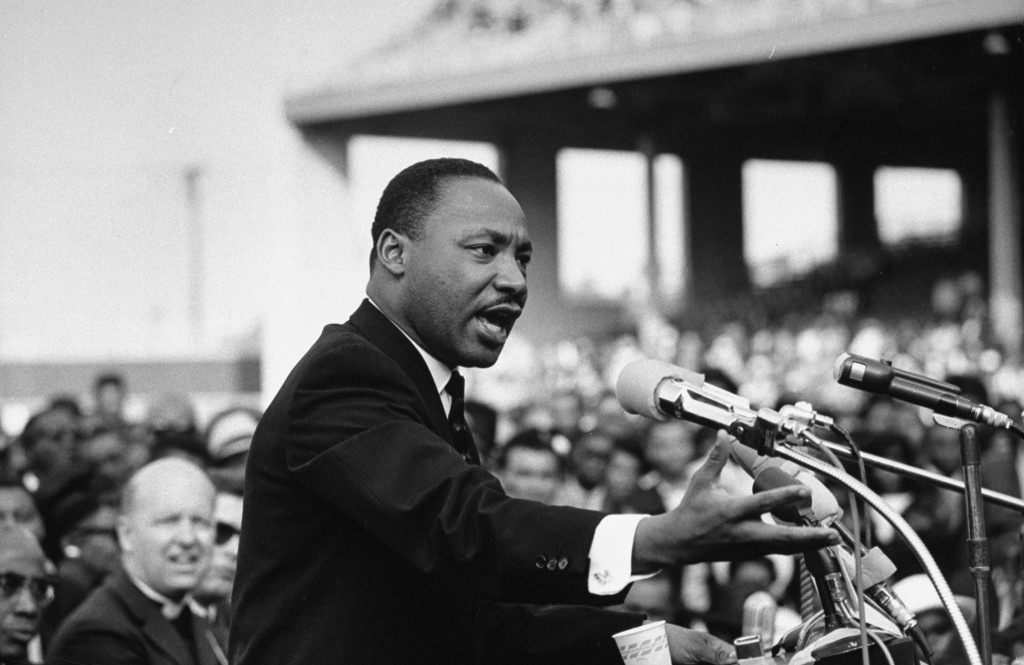
A television station has donated thousands of items including historic footage from the civil rights era to the Alabama Department of Archives and History, which will make the material available to the public. WSFA-TV in Montgomery announced it had given the agency materials dating to the 1950s, including footage from news conferences by the Rev. Martin Luther King Jr., coverage of the Freedom Riders in 1961, and original film from the “Stand in the School House Door” by then-Gov. George C. Wallace in 1963. The video also includes scenes from a visit to the NASA center in Huntsville by President John F. Kennedy and Vice President Lyndon Johnson in 1962 and special reports on the death of former University of Alabama football coach Paul “Bear” Bryant in 1983. While the TV station was planning to switch locations, managers determined it wasn’t practical to move the large numbers of delicate film reels and boxes full of video and other items. Steve Murray, the Archives director, said archivists had long suspected the WSFA studios held valuable content for historical preservation, and his department jumped at the opportunity to add to its collection when a phone call came in late 2019. “It was one of those kind of chilling moments … where the hair stands up on the back of your neck when you see these closets after closets of tapes and films,” Murray explained. “Just the opportunity to take something off the shelf and see a label … related to the civil rights movement or to other major public events and Alabama’s life and history really made you, made me appreciate the value of what was there.” The donation includes more than 7,000 audiovisual items in a variety of formats, plus WSFA-TV scrapbooks, photographs, negatives, correspondence with viewers and officials, and newsletters. “We are intimidated by this collection, to be honest with you, because it is huge,” said Meredith McDonough, digital assets director for Archives and History, “and because it is unlike anything we have.” Under the terms of the donation agreement, the department will use the material to benefit state citizens through museum exhibitions, K-12 classrooms, and other educational products. WSFA-TV will be able to broadcast and publish the content of the collection after it is digitized. The agency is processing “test batches” of film and it will take years to fully process the boxes. So far, about 15 hours of film has been digitized, which represents only 30 items in the collection. No payment was made for the collection, WSFA-TV reported. Republished with the permission of the Associated Press.
Colin Powell, exemplary general stained by Iraq claims, dies

Colin Powell, who served Democratic and Republican presidents in war and peace but whose sterling reputation was forever stained when he went before the U.N. and made faulty claims to justify the U.S. war in Iraq, has died of COVID-19 complications. He was 84. A veteran of the Vietnam War, Powell rose to the rank of four-star general and in 1989 became the first Black chairman of the Joint Chiefs of Staff. In that role, he oversaw the U.S. invasion of Panama and later the U.S. invasion of Kuwait to oust the Iraqi army in 1991. But his legacy was marred when, in 2003, he went before the U.N. Security Council as secretary of state and made the case for the U.S. war against Iraq at a moment of great international skepticism. He cited faulty information claiming Saddam Hussein had secretly stashed away weapons of mass destruction. Iraq’s claims that it had no such weapons represented “a web of lies,” he told the world body. In announcing his death on social media, Powell’s family said he had been fully vaccinated. “We have lost a remarkable and loving husband, father and grandfather, and a great American,” the family said. Powell had been treated at Walter Reed National Medical Center in Bethesda, Maryland. Powell was the first American official to publicly lay the blame for the 9/11 terrorist attacks on Osama bin Laden’s al-Qaida network and made a lightning trip to Pakistan in October 2001 to demand that then-Pakistani President Pervez Musharraf cooperate with the United States in going after the Afghanistan-based group, which also had a presence in Pakistan, where bin Laden was later killed. As President George W. Bush’s first secretary of state, Powell led a State Department that was dubious of the military and intelligence communities’ conviction that Saddam Hussein possessed or was developing weapons of mass destruction. And yet, despite his reservations, he presented the administration’s case that Saddam indeed posed a major regional and global threat in a speech to the U.N. Security Council in the run-up to the war. That speech, replete with his display of a vial of what he said could have been a biological weapon, was later derided as a low-point in Powell’s career, although he had removed some elements that he deemed to have been based on poor intelligence assessments. Bush said Monday that he and former first lady Laura Bush were “deeply saddened” by Powell’s death. “He was a great public servant” and “widely respected at home and abroad,” Bush said. “And most important, Colin was a family man and a friend. Laura and I send Alma and their children our sincere condolences as they remember the life of a great man.” Powell rose to national prominence under Republican presidents and considered a presidential bid of his own but ultimately moved away from the party. He endorsed Democrats in the last four presidential elections, starting with former President Barack Obama. He emerged as a vocal Donald Trump critic in recent years, describing Trump as “a national disgrace” who should have been removed from office through impeachment. Following the Jan. 6 storming of the U.S. Capitol, Powell said he no longer considered himself a Republican. Powell rose from a childhood in a fraying New York neighborhood to become the nation’s chief diplomat. “Mine is the story of a black kid of no early promise from an immigrant family of limited means who was raised in the South Bronx,” he wrote in his 1995 autobiography “My American Journey.” At City College, Powell discovered the ROTC. When he put on his first uniform, “I liked what I saw,” he wrote. He joined the Army, and in 1962 he was one of more than 16,000 military advisers sent to South Vietnam by President John F. Kennedy. A series of promotions led to the Pentagon and assignment as a military assistant to Secretary of Defense Caspar Weinberger, who became his unofficial sponsor. He later became commander of the Army’s 5th Corps in Germany and later was national security assistant to President Ronald Reagan. During his term as Joint Chiefs chairman, his approach to war became known as the Powell Doctrine, which held that the United States should only commit forces in a conflict if it has clear and achievable objectives with public support, sufficient firepower, and a strategy for ending the war. Defense Secretary Lloyd Austin, a retired Army general, said the news of Powell’s death left “a hole in my heart.” “The world lost one of the greatest leaders that we have ever witnessed,” Austin said while traveling in Europe. “Alma lost a great husband, and the family lost a tremendous father, and I lost a tremendous personal friend and mentor. He has been my mentor for a number of years. He always made time for me, and I can always go to him with tough issues; he always had great counsel.” Powell’s appearances at the United Nations as secretary of state, including his Iraq speech, were often accompanied by fond reminiscing of his childhood in the city, where he grew up the child of Jamaican immigrants who got one of his first jobs at the Pepsi-Cola bottling plant directly across the East River from the U.N. headquarters. A fan of calypso music, Powell was the subject of criticism from, among others, singing legend Harry Belafonte, who likened Powell to a “house slave” for going along with the decision to invade Iraq. Powell declined to get into a public spat with Belafonte but made it known that he was not a fan and much preferred the Trinidadian calypso star, the “Mighty Sparrow.” Powell maintained, in a 2012 interview with The Associated Press, that on balance, U.S. succeeded in Iraq. “I think we had a lot of successes,” Powell said. “Iraq’s terrible dictator is gone.” Saddam was captured by U.S. forces while hiding out in northern Iraq in December 2003 and later executed by the Iraqi government. But the insurgency grew, and the war dragged on far
Segregationist former Alabama Gov. John Patterson dies at 99
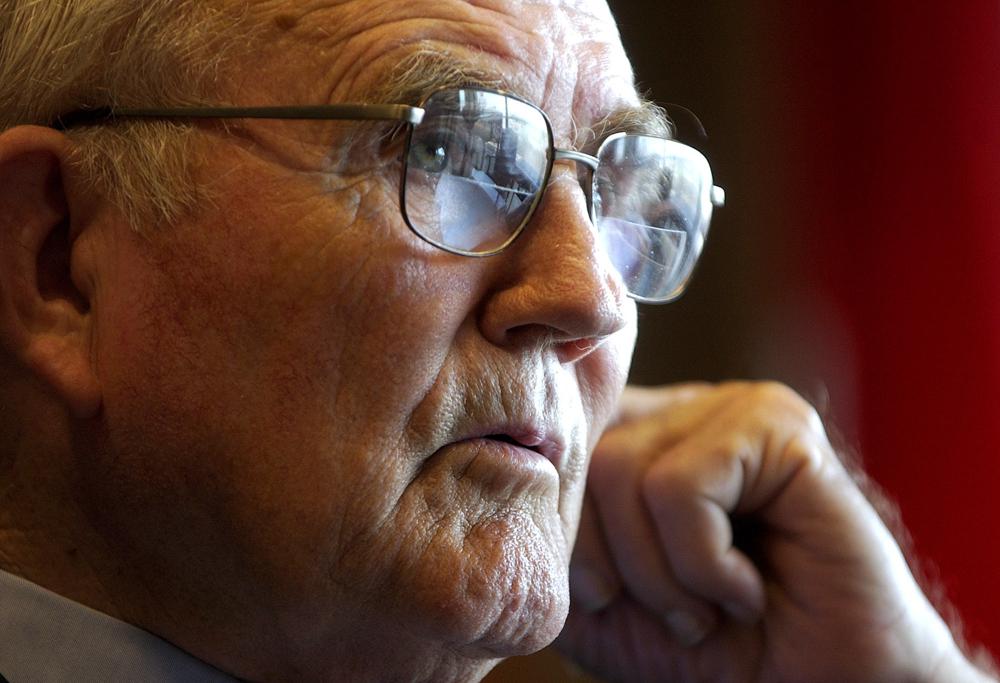
Former Alabama Gov. John Patterson, who entered politics as a reformer after his father’s assassination but was criticized for failing to protect the Freedom Riders from angry white mobs, has died. He was 99. He died Friday, his daughter, Barbara Patterson Scholl, confirmed. She said funeral arrangements are pending. “He died very peacefully at home. His family and friends were with him,” she said. Patterson’s involvement with state government spanned a half-century, beginning with his election as attorney general at 33 after violence in Phenix City, and later as a judge. A segregationist as governor, he drew criticism when Freedom Riders were attacked while in Alabama and Patterson did nothing to protect them. He later voiced regret for what happened. He ended his political career more serenely on the Court of Criminal Appeals, where he continued to write opinions into his 80s. Patterson also was involved in the disastrous Bay of Pigs invasion, helping the CIA get Alabama Air National Guard members to train Cuban exiles. Some Alabama pilots died when the 1961 invasion of Cuba failed. Patterson was born on his grandparents’ farm in the tiny Tallapoosa County community of Goldville but finished high school in Phenix City, where his father, Albert Patterson, was a lawyer. After serving on Gen. Dwight Eisenhower’s staff during World War II, Patterson returned home, got his law degree from the University of Alabama, and went into practice with his father, Albert Patterson. Albert Patterson ran for attorney general in 1954 on a platform of cleaning up the vice and illegal gambling that had turned his town into “Sin City, U.S.A.” He won the Democratic nomination to be the state’s top prosecutor but was gunned down in Phenix City on June 18. Democratic Party officials pressured his son to run for attorney general in his place. He did and won. In a 2003 interview, Patterson told The Associated Press he had no interest in politics until his father’s death. “If he hadn’t been killed, I never would have run for public office. Nobody would have ever heard of me outside legal circles,” Patterson said. As attorney general, Patterson kept his father’s campaign promise to clean up Phenix City. He also fought civil rights groups in court. In one case, he got a restraining order to keep the NAACP from operating in Alabama. The restraining order remained until 1964 when it was lifted by the U.S. Supreme Court. Patterson ran for governor in 1958, beating George Wallace in a Democratic primary that focused largely on Patterson’s pro-segregation stand. Patterson was the only person to beat Wallace in an Alabama election. Four years later, Wallace successfully claimed the segregationist banner to begin his dynasty. During Patterson’s term, Alabama launched a $100 million school building program, increased old-age pensions, returned the State Docks to profitability, and enacted a small loan law to curb loan sharks. But his term also saw attacks on the Freedom Riders who were seeking to integrate bus waiting rooms and lunch counters. Patterson said later he mistakenly trusted police in Birmingham and Montgomery to protect the Freedom Riders, but they didn’t. “I regret it, and it was bad for my administration,” Patterson said in 2003. Patterson said he knew segregation couldn’t be maintained under the Constitution, but he wanted to delay its end. He said he felt Alabamians would accept integration without violence if change occurred slowly. Exactly 50 years after the Freedom Riders were beaten by a white mob in Montgomery, Patterson welcomed 10 of them back to Montgomery on May 20, 2011, for the dedication of a museum honoring them. “It took a lot of nerve and guts to do what they did,” Patterson said. In a 2009 interview, Sam Webb, co-editor of the book “Alabama Governors,” said Patterson was “a brave and courageous” governor on many fronts, but those accomplishments were overshadowed by race issues. “Unfortunately what will stand out in John Patterson’s case is his vociferous opposition to civil rights and racial integration,” said Webb, a historian at the University of Alabama at Birmingham. During Patterson’s term as governor, the CIA began planning for Cuban exiles to invade Cuba and try to overthrow Fidel Castro. A CIA agent approached Patterson about getting members of the Alabama Air National Guard to help train the exiles. Patterson agreed after the agent assured him that President Eisenhower had approved the plan. About 300 Alabamians helped train Cuban exiles for the Bay of Pigs invasion, which was not carried out until President John Kennedy replaced Eisenhower in the White House in 1961. On the third day of the invasion, as it was failing, Alabama pilots flew the last bombing mission, and four died. Kennedy initially denied any U.S. involvement in the invasion, which was a shock to Patterson, who knew differently. Years later, Patterson disclosed that he had tipped off Kennedy about the invasion plans shortly before the November 1960 presidential election. Patterson, a Kennedy supporter, flew to New York to tell Kennedy out of concern that the Eisenhower administration would carry out the invasion just before the presidential election to boost Vice President Richard Nixon’s chances of beating Kennedy. Patterson couldn’t seek a second term in 1962 because Alabama law then prohibited consecutive terms. He tried a comeback in 1966, but lost to Wallace’s wife, Lurleen Wallace. He also ran unsuccessfully for chief justice of the Alabama Supreme Court in 1972. Patterson, who had been friends with Wallace before their bitter 1958 race, eventually renewed the friendship and helped Wallace in his later campaigns for president and governor. In 1984, Wallace appointed Patterson to a vacancy on the Alabama Court of Criminal Appeals. He won election to a full six-year term later that year and was reelected in 1990. In January 1997, he had to retire because the state constitution prohibits judges from running for another term after reaching 70. Still, Patterson continued to work for the court by helping write opinions because he said he enjoyed being a judge more
Bruce Boynton, who inspired 1961 Freedom Rides, dies at 83
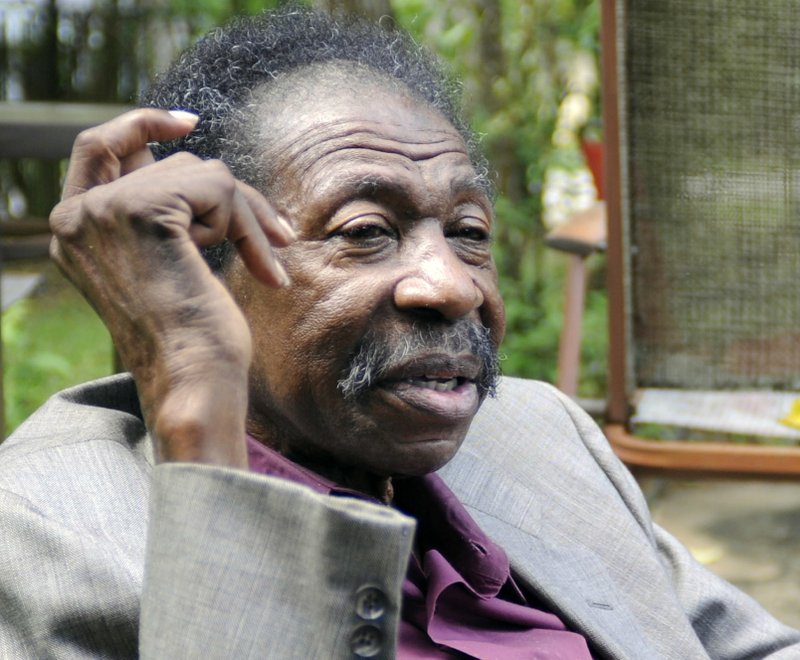
Bruce Carver Boynton, a civil rights pioneer from Alabama who inspired the landmark “Freedom Rides” of 1961, has died. He was 83. Former Alabama state Sen. Hank Sanders, a friend of Boynton’s, confirmed his passing Friday. Boynton was arrested 60 years ago for entering the white part of a racially segregated bus station in Virginia and launching a chain reaction that ultimately helped to bring about the abolition of Jim Crow laws in the South. Boynton contested his conviction, and his appeal resulted in a U.S. Supreme Court decision that prohibited bus station segregation and helped inspire the “Freedom Rides.” Despite his pivotal role, Boynton was not as well known as other civil rights figures. Yet both his mother and father were early civil rights activists. His mother, Amelia Boynton Robinson, was savagely beaten while demonstrating for voting rights in 1965 and was honored by then-President Barack Obama 50 years later. “He did something that very few people would have the courage to do. He said no,” U.S. District Judge Myron Thompson said of Boynton in 2018. “To me, he’s on a par with Rosa Parks,” the Black woman who refused to give up her bus seat to a white man. Boynton described his arrest in a 2018 interview with The Associated Press. Boynton was attending law school at Howard University in Washington, D.C. when he boarded a bus bound for Alabama in 1958. Public facilities including bus stations were separated by race across the South at the time, despite federal laws banning segregation in interstate travel. The bus pulled into a station in Richmond, Virginia, for a break, and Boynton went inside to eat. Seeing that the part of the restaurant meant for blacks had water on the floor and looked “very unsanitary,” Boynton said he sat down in the “clinically clean” white area. He told the waitress he would have a cheeseburger and tea. “She left and came back with the manager. The manager poked his finger in my face and said … move,’” using a racial slur, Boynton recalled in the interview. “And I knew that I would not move, and I refused to, and that was the case.” Convicted of trespassing, Boynton appealed and his case wound up before the Supreme Court. Thurgood Marshall, then the nation’s leading civil rights attorney and later on to become the first Black Supreme Court justice, was his counsel. Boynton contested his conviction and the Supreme Court ruled in 1960 that federal discrimination prohibitions barring segregation on interstate buses also applied to bus stations and other facilities linked to interstate travel. The next year, dozens of black and white students set out on buses to travel the South and test whether the ruling in the case, Bruce Boynton v. Virginia, was being followed. The “Freedom Riders” were arrested or attacked in Alabama, Mississippi, and South Carolina, and a bus was burned. Then-President John F. Kennedy ordered stricter enforcement of federal anti-discrimination laws. “He was a pioneer,” said Sanders. “All of the Freedom Rides sprung from this particular action.” Sanders said Boynton paid a price for what he did, and initially wasn’t able to get a law license in Alabama. He spent most of his career as a civil rights attorney before retirement. Thompson said in 2018 that Boynton’s life “is a teaching lesson for all of us about how we can make a difference.” “All he wanted was a cheeseburger, and he changed the course of history.” Republished with the permission of the Associated Press.
Fraud claims aimed in part at keeping Donald Trump base loyal
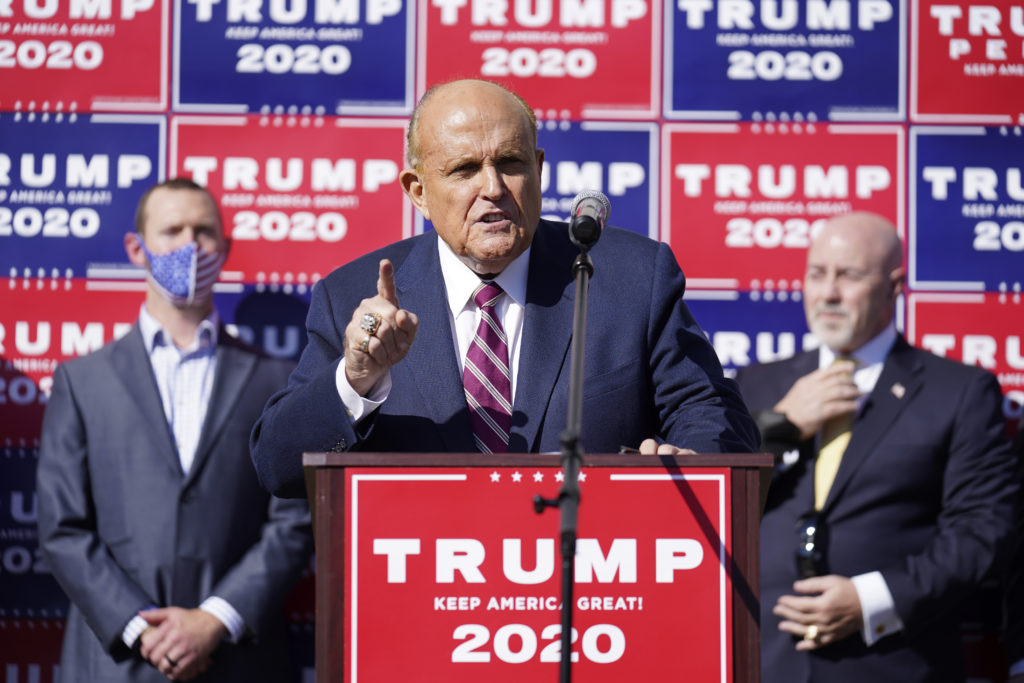
President Donald Trump has promised legal action in the coming days as he refused to concede his loss to Democrat Joe Biden, making an aggressive pitch for donors to help finance any court fight. Trump and his campaign have leveled accusations of large-scale voter fraud in Pennsylvania and other states that broke for Biden, so far without proof. But senior officials, campaign aides, and allies told The Associated Press that overwhelming evidence of fraud isn’t really the point. The strategy to wage a legal fight against the votes tallied for Biden in Pennsylvania and other places is more to provide Trump with an off-ramp for a loss he can’t quite grasp and less about changing the election’s outcome, the officials said. They spoke to AP on the condition of anonymity to discuss internal strategy. Trump aides and allies also acknowledged privately the legal fights would — at best — forestall the inevitable, and some had deep reservations about the president’s attempts to undermine faith in the vote. But they said Trump and a core group of loyalists were aiming to keep his base of supporters on his side even in defeat. There has been no election in decades in which such widespread fraud was alleged. The closest was the 1960 election in which Democrat John F. Kennedy beat Republican Richard Nixon, and there were allegations that fraud helped Kennedy win. Moments after the AP called the race for Biden, Trump attorney Rudy Giuliani stood in front of campaign banner taped over the garage door of a landscaping company in Philadelphia, wedged between a cremation center and an adult book store, with a handful of poll watchers and declared they’d been kept too far away to check for any inaccuracies. “We have no way of knowing, because we’ve been deprived of the right to inspect ballots,” he said. Partisan poll watchers are designated by a political party or campaign to report any concerns they may have. They are not poll workers who actually tally ballots. Monitoring polling places and election offices is allowed in most states, but rules vary and there are certain limits to avoid any harassment or intimidation. They are not allowed to interfere with the conduct of the election and are typically required to register in advance with the local election office. This year, because of the coronavirus that has killed more than 230,000 people across the country, there was litigation in a few states, including Pennsylvania, over where poll watchers could stand to ensure social distancing. Lawyers could potentially argue the vote tally should be cast aside over fraud observed by poll watchers, but in order to win that argument, they’d need evidence, not just allegations the monitors weren’t allowed to see clearly enough. Judges are loathe to disenfranchise any voters and there would need to be substantial proof that fraud had damaged the count so much that it must be set aside. Democratic poll watchers, who were also given the same access, have not raised concerns. Giuliani called evidence of fraud circumstantial at the news conference. He said he’d be filing suit in federal court, but the issue has already been before judges. A federal judge in Philadelphia Thursday night ordered the two sides to work out an agreement on the number of poll watchers and how close they could be to the counting. The judge also voiced concerns about the safety of poll workers during the pandemic if poll watchers were allowed to peer over their shoulders. On Fox News Channel’s “Sunday Morning Futures” Sunday, Giuliani said two additional lawsuits were in the process of being drafted, in addition to existing litigation in Pennsylvania. By the end of this week, Giuliani predicted the campaign would have filed “four or five” lawsuits, with a total of 10 possible. Voter fraud is extremely rare, and when it does happen, people are generally caught and prosecuted and it does not change the outcome of the election. Typically, it involves someone wanting to honor the wishes of a loved one who recently died and either knowingly or not commits a crime by filling out that ballot. Trump campaign officials have also alleged that more than 21,000 had been cast in the name of the dead in Pennsylvania. The claims stem from a conservative legal group’s lawsuit against the Secretary of State, accusing her of wrongly including some 21,000 supposedly dead residents on voter rolls. The federal judge who has the case, John Jones, has said he was doubtful of the claims. He said the Public Interest Legal Foundation that brought the claims was asking the court to accept that there were dead people on voter rolls, and he asked for proof and questioned why they had waited until the “eleventh hour” to file suit. “We cannot and will not take plaintiff’s word for it —in an election where every vote matters, we will not disenfranchise potentially eligible voters based solely upon the allegations of a private foundation,” he wrote in an Oct. 20 ruling. Even Trump’s own administration has pushed back at the claims of widespread voter fraud and illegal voting though it didn’t mention Trump was the one making the allegations. The Cybersecurity and Infrastructure Security Agency, the federal agency that oversees U.S. election security, also noted local election offices have detection measures that “make it highly difficult to commit fraud through counterfeit ballots.” Top election officials in the battleground states of Arizona, Georgia, Michigan, Pennsylvania, and Nevada – both Republican and Democrat – have all said they see no widespread voting irregularities, no major instances of fraud or illegal activity. Meanwhile, on a call with supporters Saturday, Trump campaign manager Bill Stepien encouraged them to be ready to continue the fight for Trump, including standing by for rallies and demonstrations. Other aides outlined what they argued were irregularities in the count. And Republicans were sticking to the idea that all “legal” votes must be counted — the language freighted with a clear implication that Democrats want
Donald Trump, Joe Biden go on offense in states they’re trying to flip
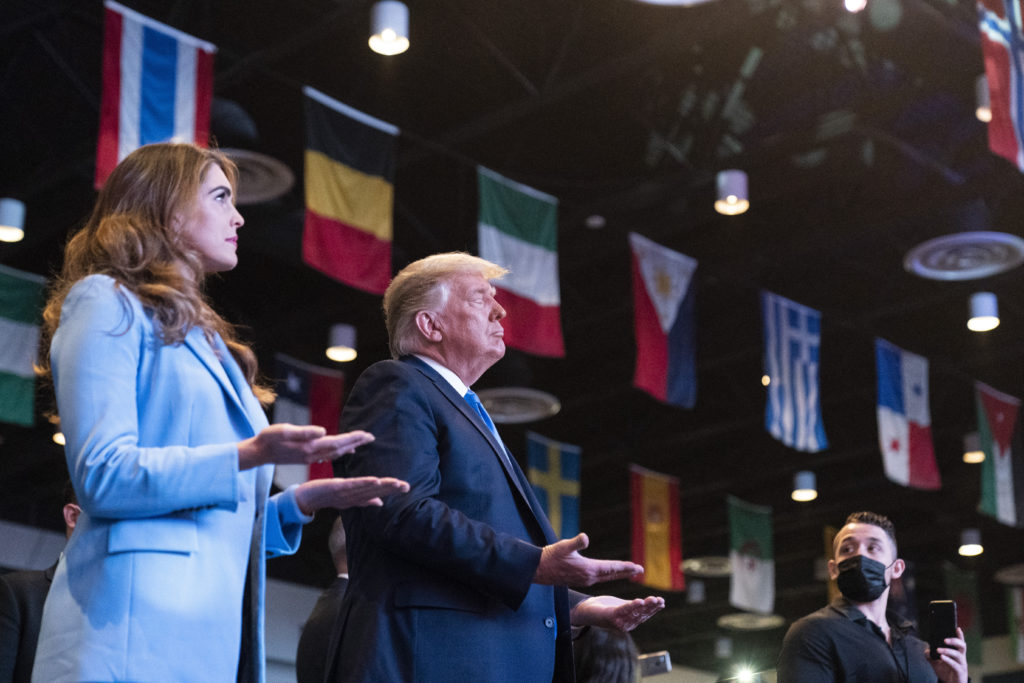
President Donald Trump and Democratic rival Joe Biden went on offense Sunday, with each campaigning in states they are trying to flip during the Nov. 3 election that is just over two weeks away. Trump began his day in Nevada, making a rare visit to church before a fundraiser and an evening rally in Carson City. Once considered a battleground, Nevada has not swung for a Republican presidential contender since 2004. The rally drew thousands of supporters who sat elbow to elbow, cheering Trump and booing Biden and the press. The vast majority wore no masks to guard against the coronavirus. The president, as he often does, warned that a Biden election would lead to further lockdowns and at one point appeared to mock Biden for saying he would listen to scientists. “If I listened totally to the scientists, we would right now have a country that would be in a massive depression,” Trump said. Biden, a practicing Catholic, attended Mass in Delaware before campaigning in North Carolina, where a Democrat has not won in a presidential race since Barack Obama in 2008. Both candidates are trying to make inroads in states that could help secure a path to victory, but the dynamics of the race are remarkably stable. Biden enjoys a significant advantage in national polls, while carrying a smaller edge in battleground surveys. With Trump seated in the front row at the nondenominational International Church of Las Vegas, the senior associate pastor, Denise Goulet, said God told her the president is the apple of his eye and would secure a second term. “At 4:30, the Lord said to me, ‘I am going to give your president a second win,’” she said, telling Trump, “you will be the president again.” Trump offered brief remarks, saying “I love going to churches” and that it was “a great honor” to attend the service. The president also said that “we have a group on the other side that doesn’t agree with us,” and he urged people to “get out there on Nov. 3 or sooner” to vote. He dropped a wad of $20 bills in the collection plate before leaving. Trump also attended a fundraiser at the Newport Beach home of top GOP donor and tech mogul Palmer Luckey, which raised $12 million for his election. The Beach Boys performed. The message was far different later in the day when Biden attended a virtual discussion with African American faith leaders from around the country. Biden held up a rosary, which he said he carries in his pocket every day, and described it as “what the Irish call a prisoner’s rosary” since it was small enough to be smuggled into prisons. “I happen to be a Roman Catholic,” Biden said. “I don’t pray for God to protect me. I pray to God to give me strength to see what other people are dealing with.” Earlier, at a drive-in rally in Durham, North Carolina, Biden focused heavily on promoting criminal justice changes to combat institutional racism and promised to help build wealth in the Black community. He noted that Trump had said at one of his rallies that the country had turned the corner on the pandemic. “As my grandfather would say, this guy’s gone around the bend if he thinks we’ve turned the corner. Turning the corner? Things are getting worse,” Biden said. In addition to public polling that indicates Biden has an edge, the former vice president enjoys another considerable advantage over Trump: money. Over the past four months, his campaign has raised over $1 billion, and that has enabled him to eclipse Trump’s once-massive cash advantage. That’s become apparent in advertising, where Biden and his Democratic allies are on pace to spend twice as much as Trump and the Republicans in the closing days of the race, according to data from the ad tracking firm Kantar/CMAG. Though Trump has pulled back from advertising in Midwestern states that secured his 2016 win, he’s invested heavily elsewhere, including North Carolina, where he is on pace to slightly outspend Biden in the days ahead. In Nevada, which Trump came close to winning in 2016, Democrats are set to outspend Trump in the closing days by a more than 3-to-1 ratio. Trump’s visit to the state is part of an aggressive schedule of campaign events, where he has leaned heavily into fear tactics. As he tries to keep more voters from turning against him, Trump has sought to paint Democrats as “anti-American radicals” on a “crusade against American history.” He told moderate voters they had a “a moral duty” to join the Republican Party. If elected, Biden would be only the second Roman Catholic president in U.S. history and first since John F. Kennedy. Biden speaks frequently about his faith and its importance in his life. Biden started his day with Mass in Delaware at St. Joseph’s on the Brandywine, as he does nearly every week. He and his wife, Jill, entered wearing dark-colored face masks. She carried a bunch of flowers that including pink roses. The church is a few minutes’ drive from Biden’s home. Biden’s son Beau, who died of brain cancer in 2015, is buried in the cemetery on its grounds. Joe and Jill Biden visited the grave after the service. Trump attends church far less often but has drawn strong support from white Evangelical leaders and frequently hosts groups of pastors at the White House. Trump often goes to the Church of Bethesda-By-The Sea near Mar-a-Lago in Florida for major holidays, including Easter, and he attended a Christmas Eve service last year at Family Church in West Palm Beach before the onset of the pandemic. As the virus forced most churches to pause in-person services this spring, Trump announced plans to tune into live-streamed worship led by some leading evangelical supporters, including Texas-based megachurch pastor Robert Jeffress’ Easter service and a March service by Georgia-based pastor Jentezen Franklin. Republished with the permission of the Associated Press.
Bradley Byrne: A new Supreme Court Justice
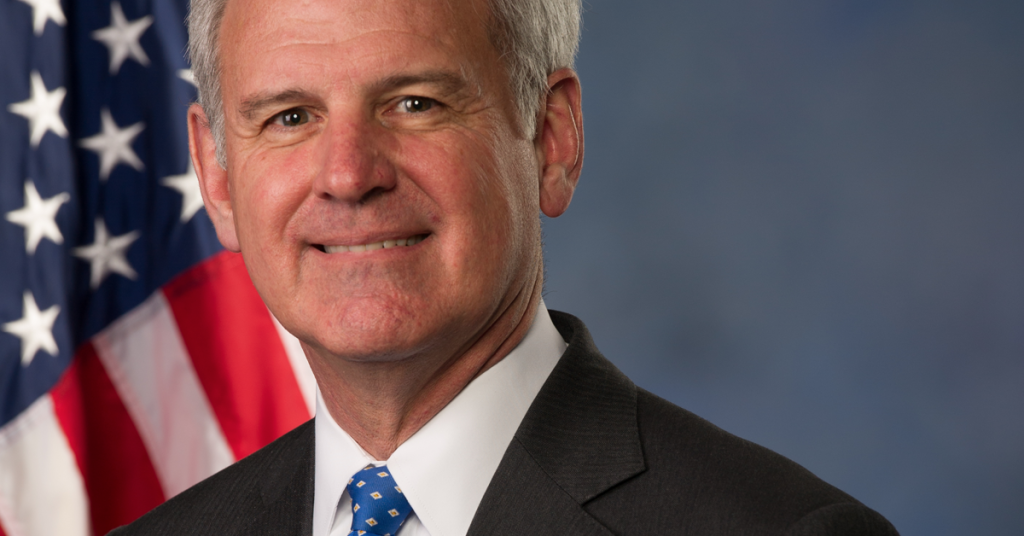
Bradley Byrne outlines his reasons for supporting President Trump’s nomination of Amy Coney Barrett.
Donald Trump, Joe Biden prepare to debate at a time of mounting crises

The Tuesday night debate will offer a massive platform for Trump and Biden to outline their starkly different visions for a country facing multiple crises.
