
Kay Ivey visits ALEA headquarters to show her appreciation for law enforcement
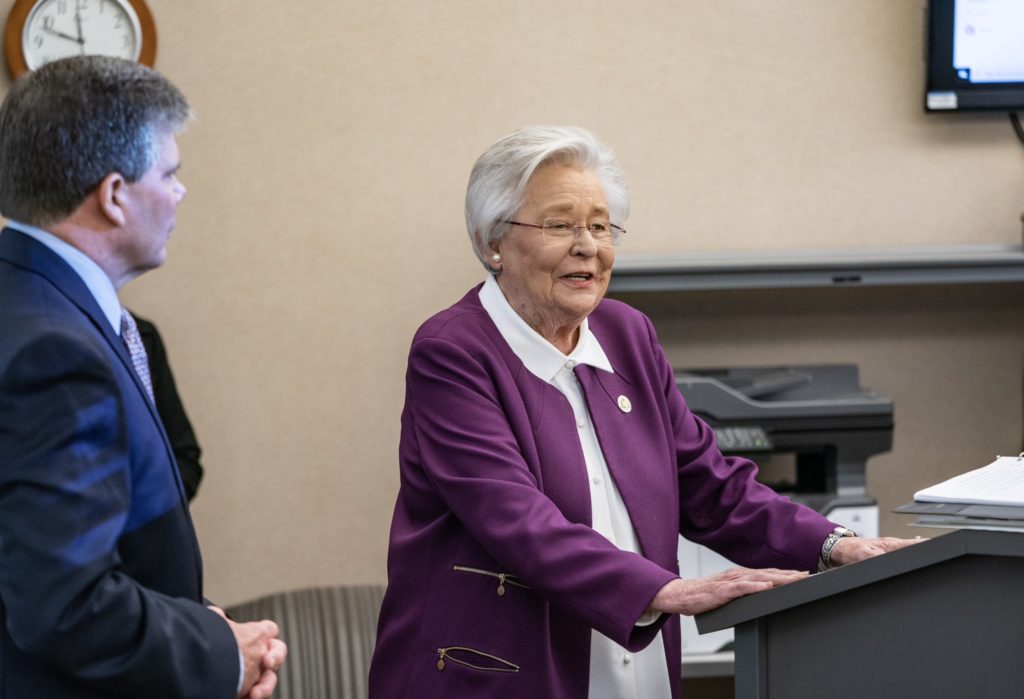
Governor Kay Ivey on Monday made a surprise visit to the Alabama Law Enforcement Agency (ALEA) Headquarters to show her appreciation to members of law enforcement – commemorating National Law Enforcement Appreciation Day. Ivey thanked members of the law enforcement community for their commitment to keeping Alabama safe. The governor’s visit came during an operations meeting for the inauguration events on Monday. The governor expressed her appreciation for Secretary Hal Taylor, all those at ALEA, and other entities working to ensure the inauguration is safe for all in attendance. “Every single person in every division of law enforcement puts their lives on the line each time they go to work,” said Gov. Kay Ivey. “I am proud to celebrate them and their service always but especially today on National Law Enforcement Appreciation Day. Public safety always has and always will be a priority of the Ivey Administration, and under my watch, we will continue to ensure Alabama is the safest place to live, work and raise a family.” Secretary Taylor said that Ivey has made public safety a top priority of her administration. “Law enforcement truly has no greater friend than Governor Kay Ivey,” said Secretary Hal Taylor. “During her administration, public safety has remained a top priority. Her unwavering commitment to support not only the Alabama Law Enforcement Agency but all law enforcement partners across the state has boosted morale for the courageous men and women who serve. I am personally grateful for Governor Ivey’s steadfast support, which has allowed this Agency to fulfill its core mission in every corner of the state and make measurable progress in the law enforcement support and public safety services we employ.” “I want Alabama to show our commitment to the people that wear the badge, not just in word but in action,” Ivey told reporters at an earlier event at the State Capitol with Alabama Department of Corrections (ADOC) Secretary John Hamm and Montgomery Police Chief Darryl Albert. “A week from today, we will be marking the start of our next four years in office, and we will not stop pursuing our goal of being the safest state in the nation and a sanctuary for law enforcement,” Ivey said. “Here in Alabama, we will protect our citizens. We will encourage rehabilitation among our inmates. We will enforce the law. We will ensure justice for victims, and we will always have the backs of our law enforcement.” Ivey’s inauguration for her second term will be on Monday. To connect with the author of this story, or to comment, email brandonmreporter@gmail.com.
Alabama prisons pick new inmate health care provider
The Alabama Department of Corrections, for the second time this year, has picked a Tennessee-based company to provide health care services at its 27 facilities. YesCare Corp., based in Brentwood, Tennessee, was chosen over three other companies that submitted proposals. The department said it would negotiate with YesCare and release information about the contract once it is final. The four-and-a-half-year contract is scheduled to take effect April 1, al.com reported. The department had issued a request for proposals on September 26. The other companies that submitted proposals were Centurion, Vital Core, and Wexford. Wexford is the current provider, and its employees who work in department facilities will be offered jobs with YesCare, corrections officials said. Department commissioner John Hamm said YesCare was chosen based on a combination of quality, cost, and experience. YesCare has more than 40 years of correctional healthcare experience at more than 475 facilities across the country, the department said. The department said in July that it had picked YesCare Corp. over four other companies but rescinded the decision and issued a new request for proposals. The agency did not give a specific reason for repeating the process, saying only that it was done “out of an abundance of caution.” The quality of health care and mental health care for inmates is the subject of a federal lawsuit filed on behalf of inmates in 2014. U.S. District Judge Myron Thompson ruled in 2017 that the department’s mental health care was “horrendously inadequate.” The court is overseeing efforts by the state to increase staffing and make other changes to improve mental health care. The case is separate but has overlapping issues with the Department of Justice lawsuit filed in 2020 alleging unconstitutional conditions in Alabama’s prisons for men. Republished with the permission of The Associated Press.
Gov. Kay Ivey seeks more time to carry out executions

Alabama Gov. Kay Ivey on Monday said she wants to give the state additional time to carry out an execution after a series of failed lethal injections. The Republican governor sent a letter to the Alabama Supreme Court asking justices to alter a longstanding rule that limits execution warrants to a single date. It is the first change requested by Ivey after announcing a “top-to-bottom” review of execution procedures. The review is ongoing, Ivey spokeswoman Gina Maiola said Monday. Alabama prison officials called off two recent scheduled lethal injections — for Kenneth Eugene Smith in November and Alan Miller in September — as midnight approached after last-minute legal appeals and difficulties by the execution team in connecting an IV line to each inmate. Under Ivey’s proposal, the state corrections commissioner could immediately designate a new execution date if a last-minute stay or some other delay prevents the state from carrying out an execution on the original date listed on the death warrant. Currently, if the state can’t get the procedure underway by midnight, officials must ask the Alabama Supreme Court to set a new execution date. The governor said other states do not have the strict one-day time frame. “In several recent executions, last-minute gamesmanship by death row inmates and their lawyers has consumed a lot of valuable time, preventing the department from carrying out its execution protocol between the conclusion of all legal challenges in the federal courts and the expiration at the death warrant issued by your court,” Ivey wrote. While Ivey placed the blame on the single-day time frame and last-minute appeals, lawyers for inmates and advocacy groups have said the repeated difficulties with establishing an IV line shows something is wrong with Alabama’s procedures. In a court filing opposing the setting of a new execution date for Smith, his lawyers wrote that his treatment “does not fall within society’s standards for a constitutional execution. The botched execution was terrifying and extremely painful for Mr. Smith.” Ivey last month requested a pause in executions after the state called off Smith’s lethal injection. It was the second time this year and the third time since 2018 that the state was unable to put an inmate to death. The state completed an execution in July, but only after a three-hour delay caused at least partly by trouble starting an IV line on Joe Nathan James Jr. Ivey said the state is also looking at moving up the current 6 p.m. start time for executions to give the Department of Corrections more time. Corrections Commissioner John Hamm will make a recommendation to her for a new time, she told justices. Republished with the permission of The Associated Press.
Prison captain Deaundra Johnson arrested on ethics charges

An Alabama prison captain and a former officer were arrested Monday on bribery and ethics charges, the state prison system confirmed. The Alabama Department of Corrections said Capt. Deaundra Johnson and Centauria Olds, a former prison lieutenant, were arrested Monday on charges of bribery of a public servant and using their official positions for personal gain. Investigators also executed a search warrant as part of an ongoing investigation, the prison system said in a statement. The prison system did not provide details of the accusations, and court records were not immediately available. Olds was arrested last year on an accusation of accepting money from an inmate in exchange for bringing contraband into the prison, according to court records. The case was sent to a grand jury, but it’s unclear if that led to Monday’s arrest. “The ADOC is committed to enforcing its zero-tolerance policy on contraband, particularly when it comes to policing our own,” Alabama Corrections Commissioner John Hamm said in a statement. The prison system’s law enforcement division led the investigation. An email to an attorney who had represented Olds was not immediately returned. It was not immediately known if Johnson has an attorney to speak on her behalf. Johnson works at the Childersburg Community Work Center. She was placed on mandatory leave pending the outcome of the investigation. Republished with the permission of The Associated Press.
Kay Ivey asks Steve Marshall to withdraw state’s two pending motions to set execution dates
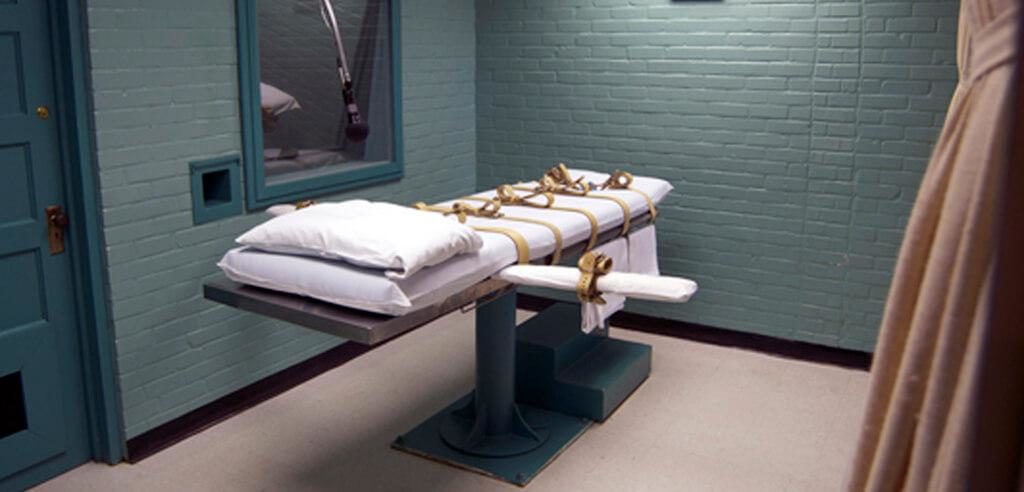
Governor Kay Ivey on Monday asked Attorney General Steve Marshall to withdraw the State’s two pending motions to set execution dates in the cases of Alan Eugene Miller and James Edward Barber, the only two death row inmates with such motions currently pending before the Alabama Supreme Court. This follows Thursday’s botched attempt to execute Kenneth Eugene Smith and previous troubling executions. Ivey has ordered Alabama Department of Corrections Commissioner John Hamm to undertake a top-to-bottom review of the State’s execution process and how to ensure the State can successfully deliver justice going forward. “For the sake of the victims and their families, we’ve got to get this right,” Ivey said. “I don’t buy for a second the narrative being pushed by activists that these issues are the fault of the folks at Corrections or anyone in law enforcement, for that matter. I believe that legal tactics and criminals hijacking the system are at play here.” “I will commit all necessary support and resources to the Department to ensure those guilty of perpetrating the most heinous crimes in our society receive their just punishment,” Ivey continued. “I simply cannot, in good conscience, bring another victim’s family to Holman looking for justice and closure until I am confident that we can carry out the legal sentence.” The governor also requests that the attorney general not seek additional execution dates for any other death row inmates until the top-to-bottom review is complete. Ivey said that she appreciates the hard work of AG Marshall and his team to pursue justice in these cases and looks forward to receiving the input of his office, as appropriate, as the review moves forward. Commissioner Hamm agreed with Ivey. “I agree with Governor Ivey that we have to get this right for the victims’ sake,” Hamm said. “Everything is on the table – from our legal strategy in dealing with last-minute appeals, to how we train and prepare, to the order and timing of events on execution day, to the personnel and equipment involved. The Alabama Department of Corrections is fully committed to this effort and confident that we can get this done right.” Miller gunned down Lee Holdbrooks, age 32, Scott Yancy, age 28, and Terry Jarvis, age 39, in a workplace-related shooting in Shelby County on July 31, 2000. Barber, a handyman, robbed and killed elderly neighbor Dorothy Epps, age 75, in Harvest in Madison County in 2001. Lethal injection is the preferred method of execution because it is supposedly more humane than the electric chair, firing squad, gas chamber, hanging, or beheading, but Smith was allegedly strapped to a gurney for four hours Thursday night while Alabama Department of Corrections (ADOC) employees tried in vain to find a blood vein so that the State could kill him before ADOC finally gave up. U.S District Judge R. Austin Huffaker Jr. on Friday granted a request from Smith’s lawyers to visit with Smith and take photographs of his body. Huffaker also ordered the State to preserve notes and other materials related to what happened in the botched execution. This was the third failed execution attempt by the State of Alabama since 2018. To connect with the author of this story, or to comment, email brandonmreporter@gmail.com.
Alabama calls off execution of Kenneth Smith after difficulties inserting IV

Alabama’s execution of a man convicted in the 1988 murder-for-hire slaying of a preacher’s wife was called off Thursday just before the midnight deadline because state officials couldn’t find a suitable vein to inject the lethal drugs. Alabama Department of Corrections Commissioner John Hamm said prison staff tried for about an hour to get the two required intravenous lines connected to Kenneth Eugene Smith, 57. Hamm said they established one line but were unsuccessful with a second line after trying several locations on Smith’s body. Officials then tried a central line, which involves a catheter placed into a large vein. “We were not able to have time to complete that, so we called off the execution,” Hamm said. It is the second execution since September the state has canceled because of difficulties with establishing an IV line with a deadline looming. The U.S. Supreme Court cleared the way for Smith’s execution when at about 10:20 p.m., it lifted a stay issued earlier in the evening by the 11th U.S Circuit Court of Appeals. But the state decided about an hour later that the lethal injection would not happen that evening. The postponement came after Smith’s final appeals focused on problems with intravenous lines at Alabama’s last two scheduled lethal injections. Because the death warrant expired at midnight, the state must go back to court to seek a new execution date. Smith was returned to his regular cell on death row, a prison spokesperson said. Prosecutors said Smith was one of two men who were each paid $1,000 to kill Elizabeth Sennett on behalf of her husband, who was deeply in debt and wanted to collect on insurance. The slaying, and the revelations over who was behind it, rocked the small north Alabama community Alabama Gov. Kay Ivey blamed Smith’s last-minute appeals for the execution not going forward as scheduled. “Kenneth Eugene Smith chose $1,000 over the life of Elizabeth Dorlene Sennett, and he was guilty, no question about it. Some three decades ago, a promise was made to Elizabeth’s family that justice would be served through a lawfully imposed death sentence,” Ivey said. “Although that justice could not be carried out tonight because of last minute legal attempts to delay or cancel the execution, attempting it was the right thing to do.” Alabama has faced scrutiny over its problems at recent lethal injections. In ongoing litigation, lawyers for inmates are seeking information about the qualifications of the execution team members responsible for connecting the lines. In a Thursday hearing in Smith’s case, a federal judge asked the state how long was too long to try to establish a line, noting at least one state gives an hour limit. The execution of Joe Nathan James Jr. took several hours to get underway because of problems establishing an IV line, leading an anti-death penalty group to claim the execution was botched. In September, the state called off the scheduled execution of Alan Miller because of difficulty accessing his veins. Miller said in a court filing that prison staff poked him with needles for more than an hour, and at one point, they left him hanging vertically on a gurney before announcing they were stopping. Prison officials have maintained the delays were the result of the state carefully following procedures. Sennett was found dead on March 18, 1988, in the home she shared with her husband on Coon Dog Cemetery Road in Alabama’s Colbert County. The coroner testified that the 45-year-old woman had been stabbed eight times in the chest and once on each side of the neck. Her husband, Charles Sennett Sr., who was the pastor of the Westside Church of Christ, killed himself when the murder investigation focused on him as a suspect, according to court documents. John Forrest Parker, the other man convicted in the slaying, was executed in 2010. “I’m sorry. I don’t ever expect you to forgive me. I really am sorry,” Parker said to the victim’s sons before he was put to death. According to appellate court documents, Smith told police in a statement that it was “agreed for John and I to do the murder” and that he took items from the house to make it look like a burglary. Smith’s defense at trial said he participated in the attack, but he did not intend to kill her, according to court documents. In the hours before the execution was scheduled to be carried out, the prison system said Smith visited with his attorney and family members, including his wife. He ate cheese curls and drank water but declined the prison breakfast offered to him. Smith was initially convicted in 1989, and a jury voted 10-2 to recommend a death sentence, which a judge imposed. His conviction was overturned on appeal in 1992. He was retried and convicted again in 1996. The jury recommended a life sentence by a vote of 11-1, but a judge overrode the recommendation and sentenced Smith to death. In 2017, Alabama became the last state to abolish the practice of letting judges override a jury’s sentencing recommendation in death penalty cases, but the change was not retroactive and therefore did not affect death row prisoners like Smith. The Equal Justice Initiative, an Alabama-based nonprofit that advocates for inmates, said Smith stands to become the first state prisoner sentenced by judicial override to be executed since the practice was abolished. The U.S. Supreme Court on Wednesday denied Smith’s request to review the constitutionality of his death sentence on those grounds. Republished with the permission of The Associated Press.
Attorneys seek information about halted execution of Alan Miller
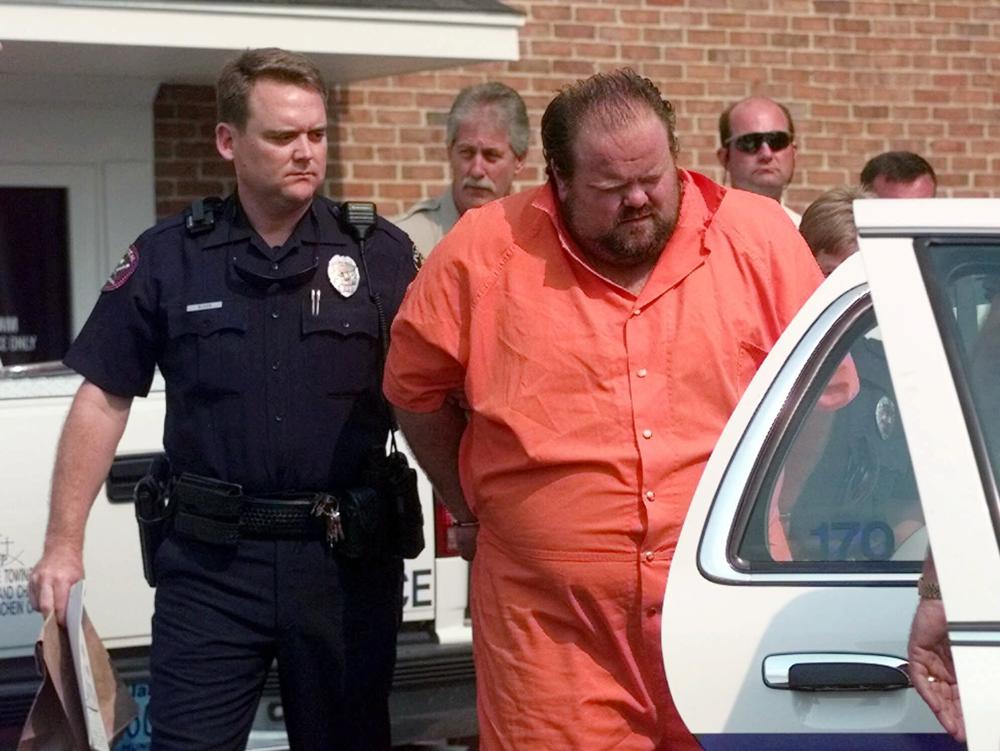
Attorneys for an Alabama inmate, who had his lethal injection called off because of intravenous line difficulties, said they want to see information, such as the names and qualifications of execution team members, to understand what went awry. Judge R. Austin Huffaker, Jr. held a hearing Wednesday on the request for information regarding the attempted execution of Alan Miller in September. “We’re trying to understand what went wrong and why,” Mara Klebaner, an attorney representing Miller, told the judge. The Alabama attorney general’s office has asked to keep some of the information secret, or under a protective seal, citing security concerns. Miller had his lethal injection aborted in September after officials tried for more than an hour to connect an intravenous line. Alabama Corrections Commissioner John Hamm told reporters the execution was halted because “accessing the veins was taking a little bit longer than we anticipated,” and the state did not have sufficient time to get the execution underway by a midnight deadline. The state is now seeking a second execution date for Miller. Miller’s attorneys are trying to block the state from attempting a second lethal injection. Huffaker did not issue an immediate ruling but said he was inclined to require the state to turn over the names to Miller’s lawyers. A state attorney argued it was a security risk because of the possibility the names might be leaked. She suggested the people only be identified only by pseudonyms as they are questioned by Miller’s attorneys. “There is a genuine safety concern for these individuals,” Assistant Attorney General Audrey Jordan said. Huffaker said pseudonyms would make it difficult for Miller’s attorneys to research their backgrounds or determine whether the people were being truthful during depositions. He agreed with the state that the names didn’t need to be shared with Miller, noting he had little ability to punish the death row inmate if he violated a confidentiality order. Huffaker also appeared skeptical of a statement in a court filing by the attorney general’s office claiming the execution hadn’t gotten underway. Deputy Attorney General James Houts said it was the state’s contention that the execution doesn’t get underway until the death warrant is read in the execution chamber and the drugs begin flowing. Klebaner said that claim “defies reality.” Klebaner said they have gotten little substantive information from the state, while Houts said they are working as quickly as they can. Huffaker cautioned the state to act in good faith with the information requests. “If I see stonewalling… we are going to be back here having a talk,” Huffaker told attorneys for the state. Republished with the permission of The Associated Press.
Judge dismisses lawsuit over upcoming lethal injection
A federal judge dismissed an inmate’s claim seeking to block his upcoming execution in Alabama because of reported problems at a recent lethal injection. The judge on Sunday granted Alabama’s request to dismiss the lawsuit brought by Kenneth Eugene Smith, agreeing that Smith waited too long to file the challenge. But U.S. District Judge R. Austin Huffaker Jr. also warned Alabama’s prison commissioner to strictly follow established protocol when officials attempt to put Smith to death next month. “Sanctions will be swift and serious if counsel and the Commissioner do not honor or abide by their representations and stipulations,” Huffaker wrote. Smith is set to be executed by lethal injection November 17 after being convicted in the murder-for-hire killing of Elizabeth Dorlene Sennett, 45. Smith’s attorneys pointed to a July execution, which an anti-death penalty group claims was botched, to argue that Alabama’s lethal injection process creates a risk of cruel and unusual punishment. The July 28 execution of Joe Nathan James Jr. was carried out more than three hours after the U.S. Supreme Court denied a request for a stay. State officials later acknowledged the execution was delayed because of difficulties in establishing an intravenous line but did not specify how long it took. A doctor who witnessed a private autopsy paid for by an anti-death penalty group said it appeared officials might have attempted to perform a “cutdown,” a procedure in which the skin is opened to allow a visual search for a vein. Huffaker noted that Corrections Commissioner John Hamm “represents in his brief and during oral argument that the ADOC did not employ a cutdown procedure or intramuscular sedation during the James execution and denies any present intent to employ any such procedure in the future.” Huffaker ruled that Smith missed the time frame to challenge Alabama’s lethal injection process. Smith missed the 2018 deadline to request execution by nitrogen hypoxia, an execution method that Alabama has authorized but not developed a process to use. Smith’s attorneys argued that the state violated his due process rights by not providing him the information necessary to make a knowing and voluntary waiver of his nitrogen hypoxia election right in 2018. ADVERTISEMENT His attorneys argue that Smith did not know nitrogen hypoxia “would not be implemented for years, if ever.” Huffaker said that complaint also could not overcome a “clear statute-of-limitations hurdle.” Prosecutors said Smith was one of two men paid $1,000 to kill Sennett on behalf of her husband, the Rev. Charles Sennett, who was deeply in debt and wanted to collect on insurance. Smith maintained it was the other man who killed Sennett, according to court documents. Smith was initially convicted in 1989, and a jury voted 10-2 to recommend a death sentence, which a judge imposed. His conviction was overturned on appeal in 1992. He was retried and convicted again in 1996. This time, the jury recommended a life sentence by a vote of 11-1, but a judge overrode the jury’s recommendation and sentenced Smith to death. Alabama no longer allows a judge to override a jury’s recommendation. Republished with the permission of The Associated Press.
Judge grills Alabama officials over lethal injection process
A federal judge on Thursday questioned Alabama officials about the state’s lethal injection procedures — including how many needle “pokes” are too many — after problems with vein access at the state’s last two scheduled executions. U.S. District Judge R. Austin Huffaker, Jr. put forth the questions during a court hearing in a lawsuit filed by Kenneth Eugene Smith, who is seeking to block his upcoming Nov. 17 execution. His attorneys have pointed to problems at recent lethal injections. Alabama called off a lethal injection last month after having trouble accessing the veins of the 351-pound (159-kilogram) inmate, and advocacy groups have alleged a July execution, carried out after a lengthy delay, was botched. Huffaker asked an attorney for the state at what point is the search for a vein impacted by the constitutional ban on cruel and unusual punishment. “It is 10 pokes? Is it 11? Is it 100? Is it one hour? … What is it?” Huffaker asked. He also asked when does the state make a decision to abort a lethal injection when there are problems obtaining a vein connection. Robert Anderson, of the Alabama attorney general’s office, said the state prison commissioner and warden are in charge of the decision on when to call off an execution. Huffaker also asked the state prison commissioner to clarify when the state will be ready to use nitrogen hypoxia, an execution method the state has authorized but never used. Huffaker said the state had told him different things at different times, including once suggesting that it could be ready for last month’s execution — a suggestion that turned out to be untrue. “It’s being developed, but we don’t have a protocol at this point,” Alabama Corrections Commissioner John Hamm told the judge. Anderson added that Alabama is attempting to develop the country’s first procedures for execution by nitrogen hypoxia, so it is a complicated endeavor and difficult to estimate a precise time. Smith, 57, is set to be executed by lethal injection at Holman Correctional Facility on Nov. 17 after being convicted in the 1988 murder-for-hire killing of Elizabeth Dorlene Sennett, a 45-year-old grandmother and pastor’s wife. Smith’s attorney, Robert Grass, said Alabama’s lethal injection procedure creates the intolerable “risk of cruel and unusual punishment.” He also said the state has kept much of the process shrouded in secrecy, including the identities and qualifications of the people who connect the IV line to the inmate. Grass is seeking to obtain records from recent executions and to interview execution team members. Alabama is asking the judge to dismiss Smith’s lawsuit, arguing that courts have long upheld the constitutionality of lethal injection. Alabama last month called off the lethal injection of Alan Miller after being unable to access his veins. The state faced a midnight deadline to get the execution underway. Miller said in a court filing that prison staff poked him with needles for over an hour as they tried to find a vein. Miller’s attorneys are fighting the state’s effort to seek a new execution date for him. The July execution of Joe Nathan James Jr. was carried out three hours after the U.S. Supreme Court said the state could proceed. The state acknowledged that establishing the intravenous line took longer than expected. However, Reprieve US Forensic Justice Initiative, a human rights group that opposes the death penalty, has maintained the execution was botched. Witnesses to a private autopsy said that James’ body showed evidence that officials had attempted to perform a “cutdown,” a procedure in which the skin is opened to allow a visual search for a vein. They also speculated that he may have been given a sedative shot. The state said that a “cut down” is not part of their protocol and that James was not sedated. Hamm, speaking under oath during the Thursday hearing, told the judge that during Smith’s execution that the state will not use a “cut down” procedure and will not give any sort of sedative shot. Republished with the permission of The Associated Press.
Families protest prison conditions at Alabama Capitol rally
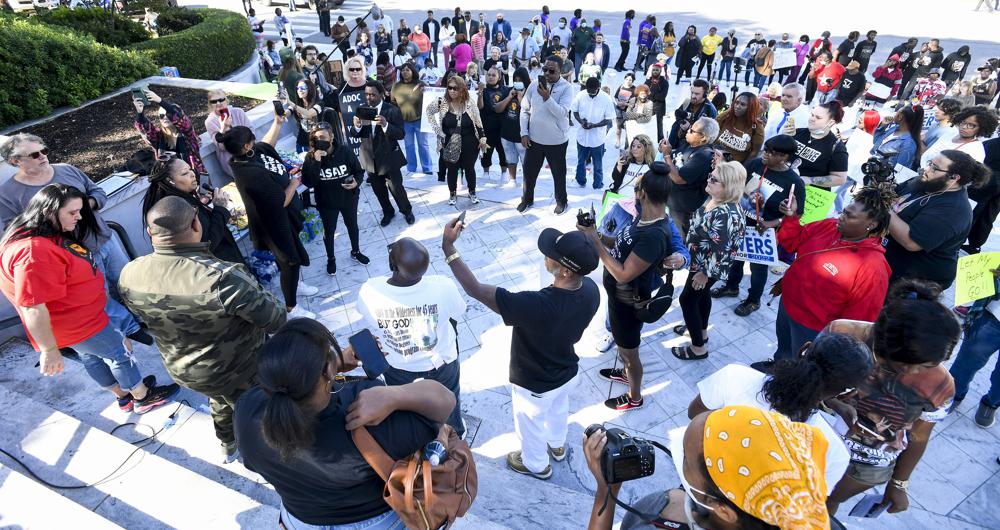
People with relatives and loved ones in Alabama prisons rallied outside the state Capitol Friday to decry what they described as inhumane conditions behind bars and a parole process that sees few inmates released. “Men are being murdered. Men are overdosing. Men are taking their own lives,” said Eric Buchanon, a former inmate who does prison ministry. “Somebody said, ‘Well, how can we stop people from taking their own lives?’ Well, if you had enough officers operating the prisons, who could monitor these men like they are supposed to, that would help.’” More than 200 people joined the rally outside the Capitol. Tombstones were placed on the white marble steps of the Alabama Capitol to represent the men who died in Alabama prisons from suicides, murders, and overdoses. The rally followed a three-week work strike at many prisons aimed at seeking changes to state sentencing laws and the parole system. Inmates refused to show up for jobs in prison kitchens, janitorial services, and laundries, jobs that keep the prisons functioning but for which the inmates receive no pay. The Alabama Department of Corrections said Friday that two facilities for men continue to have complete work stoppages, and three facilities have partial work stoppages. Inmates and activists have accused the Department of Corrections of using pressure tactics in an attempt to end the demonstration. Officials said the reduced rations and the lack of visits were the result of a prisoner labor shortage. At the Capitol rally, Sandy Ray carried a photo of the battered face of her son, Steven Davis, who died in 2019 after an altercation with corrections officers at William E. Donaldson Correctional Facility where he was incarcerated. “It’s about the things they are doing to human beings,” Ray said about her continued fight for changes in the prison system. She said it’s time for state officials to do the “right thing that they should have been doing all these years.” “If you are going to stay in office, how can you sleep at night knowing (inmates) are sleeping on floors with rats running across them? Roaches are being served with food,” Ray said. The U.S. Department of Justice is suing Alabama over the conditions in its prisons, saying the state is failing to protect male inmates from inmate-on-inmate violence and excessive force at the hands of prison staff. The case is slated for trial in 2024. Alabama officials have acknowledged problems but deny that the living conditions violate constitutional standards. Inmates and family members say that conditions have worsened in recent years despite the attention on the system. The rate of paroles has plummeted in recent years, according to state statistics. The state parole board this week granted parole to just six inmates of the 58 who had hearings, according to a news release Alabama faces a separate court order to add as many as 2,000 officers to man understaffed prisons but has been unable to fill the positions. Alabama Corrections Commissioner John Hamm told a legislative committee this summer that the department has 1,879 officers and 541 vacancies out of 2,420 budgeted positions. Republished with the permission of The Associated Press.
Alabama sets execution date for Kenneth Eugene Smith
Alabama has set a November execution date for a man convicted in the 1988 murder-for-hire killing of a pastor’s wife. The scheduled execution follows criticism over the state’s last two lethal injection attempts, including one that was called off after the execution team had trouble finding a vein. Kenneth Eugene Smith, 57, is set to die at Holman Correctional Facility on November 17, according to a Friday order from the Alabama Supreme Court. Smith was sentenced to death for the killing of Elizabeth Dorlene Sennett, a 45-year-old grandmother and pastor’s wife. Prosecutors said Smith was one of two men who were each paid $1,000 to kill Sennett on behalf of her husband, the Rev. Charles Sennett, who was deeply in debt and wanted to collect on insurance. Elizabeth Sennett was found dead on March 18, 1988, in the couple’s home in Colbert County. The coroner testified that she had been stabbed eight times in the chest and once on each side of the neck. The pastor killed himself a week later. Smith maintained it was the other man who stabbed Elizabeth Sennett, according to court documents. Smith was initially convicted in 1989, and a jury voted 10-2 to recommend a death sentence, which a judge imposed. His conviction was overturned on appeal in 1992. He was retried and convicted again in 1996. This time, the jury recommended a life sentence by a vote of 11-1, but a judge overrode the jury’s recommendation and sentenced Smith to death. Alabama no longer allows a judge to override a jury’s recommendation. In 2017, Alabama became the last state to abolish the practice of letting judges override a jury’s sentencing recommendation in death penalty cases, but the change was not retroactive and therefore did not affect death row prisoners like Smith. John Forrest Parker, the other man that prosecutors said was paid to kill Elizabeth Sennett, was executed in 2010. When asked if he had any final words, Parker turned his head to face Mike and Charles Sennett, the victim’s sons, and said, “I’m sorry. I don’t ever expect you to forgive me. I really am sorry.” Alabama last month called off the execution of Alan Miller because of difficulty accessing the inmate’s veins. Alabama Corrections Commissioner John Hamm told reporters that “accessing the veins was taking a little bit longer than we anticipated,” and the state did not have sufficient time to get the execution underway by a midnight deadline. That was at least the third time Alabama has acknowledged problems with venous access during a lethal injection. The state’s July execution of Joe Nathan James took more than three hours to get underway. And, in 2018, Alabama called off the execution of Doyle Hamm after being unable to establish an intravenous line. Republished with the permission of The Associated Press.
Kay Ivey says Alan Miller’s victims did not choose to die by bullets
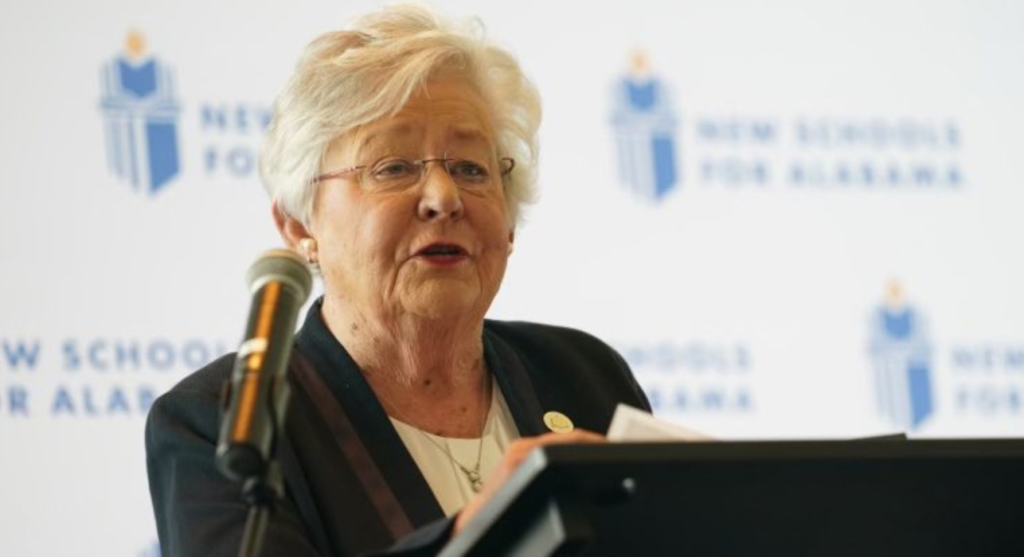
Gov. Kay Ivey commented late Thursday on the cancellation of the execution of Alan Eugene Miller after a federal appeals court refused to lift an injunction on the execution. “In Alabama, we are committed to law and order and upholding justice,” Ivey said in a press release. “Despite the circumstances that led to the cancellation of this execution, nothing will change the fact that a jury heard the evidence of this case and made a decision. It does not change the fact that Mr. Miller never disputed his crimes. And it does not change the fact that three families still grieve. We all know full well that Michael Holdbrooks, Terry Lee Jarvis, and Christopher Scott Yancey did not choose to die by bullets to the chest. Tonight, my prayers are with the victims’ families and loved ones as they are forced to continue reliving the pain of their loss.” Alabama Department of Corrections Commissioner John Hamm visited with the victims’ families prior to updating the press after the cancellation and relayed to them the governor’s prayers and concerns. The cancellation of Miller’s execution followed a 2-to-1 decision by the 11th U.S. Circuit Court of Appeals rejection of Alabama’s attempt to proceed with Miller’s execution. Miller has asked to die from nitrogen hypoxia instead of by lethal injection. The state says that it is not prepared to use the nitrogen hypoxia method yet and is, however, capable of killing by lethal injection. The court refused to lift the injunction by federal district Judge R. Austin Haffaker Jr. on the execution preventing the state from executing Miller. Alabama Attorney General Steve Marshall has stated that the state is appealing the ruling to the U.S. Supreme Court. Miller, age 57, was convicted of murdering Holbrooks, Jarvis, and Yancey in a workplace rage attack. Miller claims that the victims were spreading rumors about him. Gov. Ivey anticipates that the execution will be rescheduled as early as possible. To connect with the author of this story, or to comment, email brandonmreporter@gmail.com.
