
Presidential Primary Brief: 182 days until Election Day
182 days until Election Day Convention Dates: Republican July 18-21 2016, Democratic July 25-28 2016 Weekly Headlines: John Kasich suspends campaign for President Ted Cruz suspends his campaign for President Donald Trump says wealthy may see tax increase Press Clips: The GOP’s 24 hour meltdown (Politico 5/8/16) Donald Trump on Tuesday night assumed the mantle of presumptive nominee and declared: “We want to bring unity to the Republican Party. We have to bring unity.” Three days later, the GOP is tearing itself apart. Friday brought another day of incredible division and revolt with Jeb Bush and Lindsey Graham falling in line not behind Trump, but behind House Speaker Paul Ryan, who said a day earlier that he cannot yet support the brash real estate mogul as his party’s standard-bearer. Trump, instead of trying to make peace, lashed out. He fired off a vicious statement, calling Graham an “embarrassment” with “zero credibility.” Then he laced into both of his former rivals during his rally in Omaha, Nebraska, where he is continuing to campaign ahead of Tuesday’s primary, despite having vanquished the rest of the GOP field. Donald Trump’s latest campaign shifts are not likely to be his last (LA Times 5/8/16) One of the top reasons voters have flocked to Donald Trump’s campaign has been because the tough-talking businessman “tells it like it is,” polls have shown. But what, exactly, Trump stands for has become a shifting picture of policies and proposals that even he acknowledged Sunday may not produce the promised outcomes. It’s not just that the billionaire’s ideas are vague by traditional political standards: bring back jobs, build a “beautiful” wall, “make America great again.” The political newcomer does not appear grounded in an ideology beyond assuring that America is “winning.” Hillary Clinton Says She Is Available for F.B.I. Interviews Over Emails (NY Times 5/8/16) Hillary Clinton said Sunday that the F.B.I. had not asked to interview her as part of its inquiry into her use of a personal email server as secretary of state. But Mrs. Clinton reiterated on CBS’s “Face the Nation” that she would make herself available to law enforcement officials as necessary. The investigation into Mrs. Clinton’s email practices and her handling of classified intelligence has shadowed her presidential campaign, and CNN reported last week that she was likely to be interviewed soon by the F.B.I. Mrs. Clinton said on Sunday that no meeting had been requested or scheduled. Trump: My tax plan is negotiable (Politico 5/8/16) Presumptive GOP presidential nominee Donald Trump said in an interview aired Sunday his tax plan was negotiable, explaining that taxes for the wealthy needed to “go up” — a stance that appears to contradict what’s in his plan. “For the wealthy, I think, frankly, it’s going to go up. And you know what, it really should go up,” Trump said on NBC News’ “Meet the Press.” His said his tax plan, which would lower tax rates for the wealthiest Americans, would be the opening bid of a negotiation with Congress and that his numbers were a “Floor.” Bernie Sanders rides ‘political revolution’ with thousands in N.J. (NJ.com 5/8/16) He’s down but not out, and his supporters are charged up. The math isn’t on U.S. Sen. Bernie Sanders’ side when it comes to securing the Democratic nomination, but thousands of eager supporters welcomed the underdog White House hopeful to New Jersey on Sunday and enthusiastically cheered on to “Light back and make a political revolution.” The cheers that filled the room and echoed off the walls of Rutgers University’s Louis Brown Athletic Center in Piscataway turned into roars of support when Sanders preached Lighting income inequality, the war or drugs and racial discrimination. “We have come a very long way in the past year,” Sanders said. “Real change is coming to America.” Nevada has option to vote ‘none of the above’ in 2016 presidential election (Las Vegas Now 5/4/16) The presidential race has narrowed and the only candidates still vying for the nomination are Hillary Clinton, Bernie Sanders and Donald Trump. Trump’s the only candidate in the race for the GOP, but for a lot of Republicans, he’s not their first choice. “I vehemently oppose our nominee in some of the comments and issues that he brought up during the campaign,” said U.S. Senator Dean Heller, R-NV. “Things he said about Muslims; issues he brought up about women and the Hispanic community — I just cannot agree with some of his positions, but I will tell you that I will not be voting for Hillary Clinton. I stated that early on, I will not be supporting a candidate that is nothing more than a third term of the Obama administration. So I will be looking else where in November.” Trump: I don’t know how people make it on $7.25 an hour (Politico 5/8/16) Donald Trump said in an interview aired Sunday he wants to see the minimum wage increased but would rather it be done by the states than the federal government. The presumptive GOP presidential nominee’s openness to increases in the minimum wage is a reversal from his previous stance that the minimum wage should not be raised, including when he famously pronounced during a debate last year that wages were “too high.”
Stunned Donald Trump foes face diminished options at GOP convention

Still shaken by Donald Trump‘s triumph, Republican and conservative foes of the billionaire can still cause headaches for the party’s presumptive presidential nominee at this summer’s GOP convention. But their options are shrinking by the day. With Trump’s last two rivals — Texas Sen. Ted Cruz and Ohio Gov. John Kasich — abandoning their campaigns, there’s no remaining talk of snatching the nomination away from him with a contested, multi-ballot battle when Republican delegates gather in Cleveland. Instead, anti-Trump forces are trying to figure out how to use this July’s GOP meetings to keep him from reshaping the party and its guiding principles, perhaps with fights over the platform or even his vice presidential pick. Many expect Trump to build momentum as the convention nears, narrowing his opponents’ options. Even so, here’s what may be in store: ___ IT’S OVER? WHAT NOW? Trump’s foes concede he’s likely to arrive in Cleveland exceeding the 1,237 delegates needed to become the nominee. Yet many are still reeling from the contest’s unexpected finale last week and are just starting to think about what they could do at the convention that would be productive. “There’s going to be a lot of thinking, a lot of praying and a lot talking between all of us,” said Kay Godwin, a Cruz delegate from Blackshear, Georgia. “I wish I could give you an answer right now but I think if I did, it would be out of emotion.” “There are probably some who hope Trump will stick his foot in his mouth or some scandal will come out and that they’ll be able to rally everybody at that point, but at this point there’s really nothing they can do” to block his nomination, said Jason Osborne, a GOP consultant. ___ CONTAINING THE DAMAGE Many Trump opponents see the Republican platform, the party’s statement of ideals and policy goals, as a place for a stand in Cleveland. The convention’s 2,472 delegates must approve the platform before formally anointing the presidential nominee. All — including those chosen to support Trump — can vote however they want on the platform. Many conservatives say they will use that vote to keep Trump from reshaping GOP dogma against abortion, for free trade and on other issues. While it seems likely Trump would prevail, a showdown could be an embarrassment he’d seek to avoid by not pushing divisive changes. “If the party walks away from any of its clearly cut social, family values issues, it will be an issue,” said Tony Perkins, president of the conservative Family Research Council and GOP delegate from Louisiana. “We’re not just going to fall in line because he’s the nominee.” Trump has said he would seek to include exceptions for rape and incest to the GOP platform’s opposition to abortion. He’s also flouted the party platform by repeatedly criticizing trade deals and calling NATO obsolete. “We’d want to make sure the platform is protected from Donald Trump,” said Rory Cooper, senior adviser for the Never Trump political committee. Trump aides did not return messages seeking comment on his views about the platform. ___ A RUNNING MATE Trump has said he’d like a vice presidential candidate with government experience. Yet, as with the platform, delegates can vote as they please in choosing Trump’s running mate. Some opponents suggest they may challenge his choice, either as a protest or to try forcing him to make a different selection. Recent GOP conventions have formally approved vice presidential candidates by acclamation and no roll call. But if delegates make enough of a fuss, a roll call with plenty of votes for a rival vice presidential candidate is possible. “He’ll probably pick somebody, and that person is not going to have the automatic ratification status that’s been traditional,” said Roger Stauter, a Cruz delegate from Madison, Wisconsin, who said he would never support Trump. Others said the convention would likely defer to Trump’s thinking about a strategically smart choice. “He could pick somebody we’d all get pretty excited about,” said Shane Goettle, a Cruz delegate from North Dakota. Conservative talk show host Erick Erickson, a Trump opponent, said he expected delegates to accede to Trump’s selection, saying that by July, “the phases of depression and anger” will subside as Republicans accept “their coming defeat.” ___ MUST-WATCH TV? Many expect Trump — star of his own TV reality shows “The Apprentice” and “Celebrity Apprentice” — to run a more watchable convention than usual. Beth Myers, GOP presidential candidate Mitt Romney‘s campaign manager in 2012, was not a Trump supporter during the primaries. But she said Trump knows TV and expects his convention to outshine the Democrats’ in stagecraft and draw millions more viewers than usual. “My guess is that the Republican convention will not be a chaotic, contested convention,” she said. “Rather, it will be a production of Trump, Inc., and it will be pretty good live television.” Some of that glitz may not be by choice. Many Republican bigwigs are expected to shun the convention and avoid giving primetime speeches on Trump’s behalf. Republished with permission of the Associated Press.
Linda Cunningham: Ignore politics for a few months, enjoy the summer

What a blessed relief. Presidential political junkies are down to Donald Trump and Hillary Clinton, down to the Cinderella finalists and we can take the summer off. OK, I know Bernie Sanders is still hoofing the “I want to live in the White House” shuffle, but he’s not going to be at the top of the donkey ticket come November, so I’m not counting him. I know. If you’re not wanting President Trump, you’re gonna half to vote for that woman. You’re mad. Get over it. Now, back to the giddy deliciousness of not having to look at Ted Cruz’s smarmy, Eddie Munster face – made worse for the past week with Carly Fiorina’s baleful eyes counting every sweating pore of the man’s face at news conferences. Back to not having to explain why John Kasich could never be the candidate-of-choice for right-leaning Democrats and moderate Republicans, despite the national media pundits contorting themselves to the contrary. Let Ohio have him back. Oh, blessed relief. We know the red and blue names on the presidential ballot. While there will be angst and hand wringing all summer, the likelihood of substantive political developments is minimal. Crass though it be, unless one or both of these candidates is abducted by aliens (the real kind, not the immigration variety), it’s going to be The Donald and Hil in November. Trump’s already creating the to-do list for his first presidential 100 days. He’ll ramp up the charm, he says, warn corporate execs not to send jobs overseas, design the wall between us and Mexico, appoint an Antonin Scalia-style Supreme Court justice and repeal the Affordable Care Act. I assume he’ll take a breath on day 101. Clinton’s likely got her own first 100 days list, but she’s got to be a bit more coy than Trump since Sanders is still in her rear view mirror. It’s a safe bet that her list resembles Trump’s only in the “ramp up the charm” item. So, if we know the candidates and we’re pretty sure of their platforms, what the heck’s going to keep us junkies fixed for the next six months? Who’s voting for whom? That’ll be the hot weather speculation and we’ll be at it right up to the last poll closing, when the question will shift to “who voted for whom?” Hillary voters made up their minds in 2008. They’ve been awaiting validation for 10 years. Donald voters joined the chorus this year, but as soon as they donned that red ball cap, there was not a chance they’d vote any other way. That leaves millions of registered voters with squirm-worthy choices. Consider the Democrats who’ve hung their stars on Sanders and can’t imagine not feeling the Bern. Are they willing to “just vote blue, no matter who”? Heck, there are still Elizabeth Warren Democrats wishing she were on the ticket. There are all those “anyone but Trump” Republicans, who with the departures of Kasich and Ted Cruz, are left with no one but Trump. Can they hold their noses and vote for Clinton? And, then there are the undecided voters. Political junkies cannot imagine there are undecided voters left, not after the tsunami of multi-platform media. But they’re wrong. While one would have to have been living under the clichéd rock to be unable to identify Hillary Clinton and Donald Trump, “real people” are not the least bit like we junkies. They turned down – or tuned out – the incessant political rhetoric months ago. They know they’ll need to make a decision by November, but these voters won’t tune back in until sometime in late September. They’ll pay little attention to the shifting headlines that will shape the summer’s news coverage. But by September, when Labor Day is past, school’s back in session and the weather up north is turning cool, then they’ll pay attention. The undecided voters will choose the Trump and the Clinton who are in the headlines in late September. Not before then. In the meantime, the undecided voters are going to enjoy summer. Perhaps we should, too. *** Linda Grist Cunningham is editor and proprietor of KeyWestWatch Media, a digital solutions company for small businesses. She made up her mind back in 2008 and expects to enjoy her summer.
Bradley Byrne calls on GOP to unite to defeat Hillary Clinton
GOP Congressman Bradley Byrne has a message for Republicans: It’s time to unite behind Donald Trump. In a statement Wednesday, Byrne urged Republicans to unite behind the presumptive Republican nominee in order to defeat the likely Democratic nominee Hillary Clinton. “The primary process has been long and challenging, but the American people have spoken loud and clear,” said Byrne. “The time has come for the Republican Party to unite to defeat Hillary Clinton, and I will be voting for Donald Trump in November. With everything going on in the world today, these times require a strong leader who understands the need for a powerful military and who will stand up for our veterans. We cannot tolerate four more years of bloated, expensive, liberal policies that make life harder for American families.” Trump all but clinched the Republican presidential nomination Tuesday with a victory in Indiana that knocked his opponents Ted Cruz and John Kasich out of the race. Trump still needs more than 200 delegates to formally secure the nomination, but his rival’s decisions to end their campaigns removed his last major obstacle. Trump said he spoke with Republican National Committee Chairman Reince Priebus Tuesday night. Priebus, who has had a contentious relationship thus far in the process with Trump, made clear the reality TV star and businessman would be at the top of the ticket in November. .@realDonaldTrump will be presumptive @GOP nominee, we all need to unite and focus on defeating @HillaryClinton #NeverClinton — Reince Priebus (@Reince) May 4, 2016 Trump is expected to secure the Party’s formal nomination at the Republican National Convention, set to take place July 18-21 2016 at the Quicken Loans Arena in Cleveland, Ohio.
John Kasich dropping out, AP sources say; Donald Trump on clear GOP path
Ohio Gov. John Kasich is leaving the Republican presidential contest, giving Donald Trump a clear path to his party’s nomination. Kasich will announce the end of his underdog White House bid on Wednesday, according to three campaign officials who spoke on the condition of anonymity because they were not authorized to discuss the candidate’s plans. The decision comes a day after Trump’s only other rival, Ted Cruz, dropped out. With no opponents left in the race, Trump becomes the Republican Party’s presumptive presidential nominee to take on the Democratic nominee in November — presumably Hillary Clinton. Though armed with an extensive resume in politics, the second-term Ohio governor struggled to connect with Republican primary voters in a year dominated by anti-establishment frustration. Kasich was a more moderate candidate who embraced elements of President Barack Obama‘s health care overhaul and called for an optimistic and proactive Republican agenda. Even before news of Kasich’s decision surfaced, Trump signaled a new phase of his outsider campaign that includes a search for a running mate with experience governing and outreach to one-time competitors in an effort to heal the fractured Republican Party. “I am confident I can unite much of” the GOP, Trump said Wednesday on NBC’s “Today Show, as several prominent Republicans said they’d prefer Democrat Clinton over the New York billionaire. In a shot at his critics, Trump added: “Those people can go away and maybe come back in eight years after we served two terms. Honestly, there are some people I really don’t want.” His comments on several networks came a few hours after Trump, once dismissed as a fringe contender, became all-but-certainly the leader of the Republican Party into the fall campaign against Clinton. The former secretary of state suffered a defeat Tuesday in Indiana to her rival, Bernie Sanders, but holds a definitive lead in Democratic delegates who will decide the Democratic nomination. The Republican competition changed dramatically with Trump’s Indiana victory and Ted Cruz’s abrupt decision to quit the race. Trump won the Indiana contest with 53.3 percent of the vote, to Cruz’s 36.6 percent and Ohio Gov. John Kasich’s 7.6 percent, according to unofficial results. Some Republican leaders remain acutely wary of Trump and have insisted they could never support him, even in a faceoff against Clinton. “The answer is simple: No,” Tweeted Nebraska Sen. Ben Sasse, who has consistently said he could not support Trump. What’s their plan moving forward? “Prayer,” responded Republican strategist Tim Miller, a leader of one of the GOP’s anti-Trump groups. “Donald Trump is just going to have an impossible time bringing together the Republican coalition.” Some conservative leaders were planning a Wednesday meeting to assess the viability of launching a third party candidacy to compete with him in the fall. Such Republicans worry about Trump’s views on immigration and foreign policy, as well as his over-the-top persona. Hours before clinching victory in Indiana, Trump was floating an unsubstantiated claim that Cruz’s father appeared in a 1963 photograph with John F. Kennedy‘s assassin, Lee Harvey Oswald — citing a report first published by the National Enquirer. Trump defended his reference to the Enquirer article on Wednesday morning as “Not such a bad thing,” but the line of attack was the final straw for some Republican critics. “(T)he GOP is going to nominate for President a guy who reads the National Enquirer and thinks it’s on the level,” Mark Salter, a top campaign aide to 2008 Republican nominee John McCain, wrote on Twitter on Tuesday. He added Clinton’s slogan: “I’m with her.” On finding a running mate, Trump told MSNBC’s “Morning Joe” that he’ll “probably go the political route,” saying he’s inclined to pick someone who can “help me get legislation passed.” Trump didn’t identify any of the names under consideration. He also said he’s hoping to decide within a week how to fund a general election campaign, but said he didn’t want to accept money from super PACs. He told ABC’s “Good Morning America” that he would begin to accept more political donations. “I’m really looking at small contributions, not the big ones. I don’t want anyone to have big influence over me,” he said. A prominent Cruz donor, Mica Mosbacher, quickly signaled support for Trump and urged others to follow. “I call on fellow conservatives to unite and support our new nominee Trump,” said Mosbacher, widow of a member of George H.W. Bush‘s cabinet. “My heart goes out to Cruz who has a bright future. He did the unselfish thing to drop out.” Vermont Sen. Bernie Sanders eked out a victory over Clinton in Indiana, 52.5 percent to 47.5 percent. But the outcome will not slow the former secretary of state’s march to the Democratic nomination. Heading into Tuesday’s voting, Clinton had 92 percent of the delegates she needs. “I know that the Clinton campaign thinks this campaign is over. They’re wrong,” Sanders said defiantly in an interview Tuesday night. But Clinton already has turned her attention to the general election. She and Trump now plunge into a six-month battle for the presidency, with the future of America’s immigration laws, health care system and military posture around the world at stake. While Clinton heads into the general election with significant advantages with minority voters and women, Democrats have vowed to not underestimate Trump as his Republican rivals did for too long. Republished with permission of the Associated Press.
Ted Cruz drops out after Donald Trump delivers knockout blow in Indiana
Texas Sen. Ted Cruz ended his presidential campaign Tuesday, eliminating the biggest impediment to Donald Trump‘s march to the Republican nomination. The conservative tea party firebrand who tried to cast himself as the only viable alternative to Trump ended his campaign after a stinging defeat in Indiana’s Republican primary. “It appears that path has been foreclosed,” Cruz told supporters in Indianapolis. “Together, we left it all on the field of Indiana. We gave it everything we’ve got, but the voters chose another path, and so with a heavy heart but with boundless optimism for the long-term future of our nation, we are suspending our campaign.” Had he succeeded in his quest, Cruz would have been the first U.S. president of Hispanic descent, although he often downplayed his heritage on the campaign trail, instead, touting the need for tougher immigration laws, for a border wall along the border with Mexico, protecting gun rights, repealing President Barack Obama‘s health care law and instituting a flat tax. Cruz argued he was the only true conservative in the race, building on his reputation in the Senate where he clashed both with Democrats and members of his own party over his ideological stubbornness. Cruz railed against what he called the “Washington cartel,” trying to appeal to an electorate that is craving political outsiders. But he ultimately couldn’t compete with Trump’s appeal among white, working-class voters who were drawn to the billionaire’s outlandish approach to politics. Cruz’s campaign placed its hopes on a data-driven effort to turn out conservative evangelical Christians who had opted out of recent presidential elections. Increasingly, he would modify his travel schedule to go where data showed there might be pockets of untapped supporters. With the scale tipping increasingly in Trump’s favor, he announced an extraordinary pact in April with his other rival, Ohio Gov. John Kasich, in which the two would divide their time and resources based on states where they were each poised to do better. Days later, he prematurely named former Hewlett-Packard chief executive Carly Fiorina as his running mate, hoping it would woo some of the female voters turned off by Trump’s brash rhetoric. Trump’s appeal to evangelicals, though, and the New York billionaire’s popularity with the broader Republican electorate, proved too much. Cruz was joined on stage by his parents, as well as by Fiorina and his wife, Heidi. He made no mention of the Republican front-runner, vowing instead to continue his fight for liberty and for the Constitution. Republished with permission of the Associated Press.
In Indiana, Ted Cruz faces make-or-break moment to stop Donald Trump
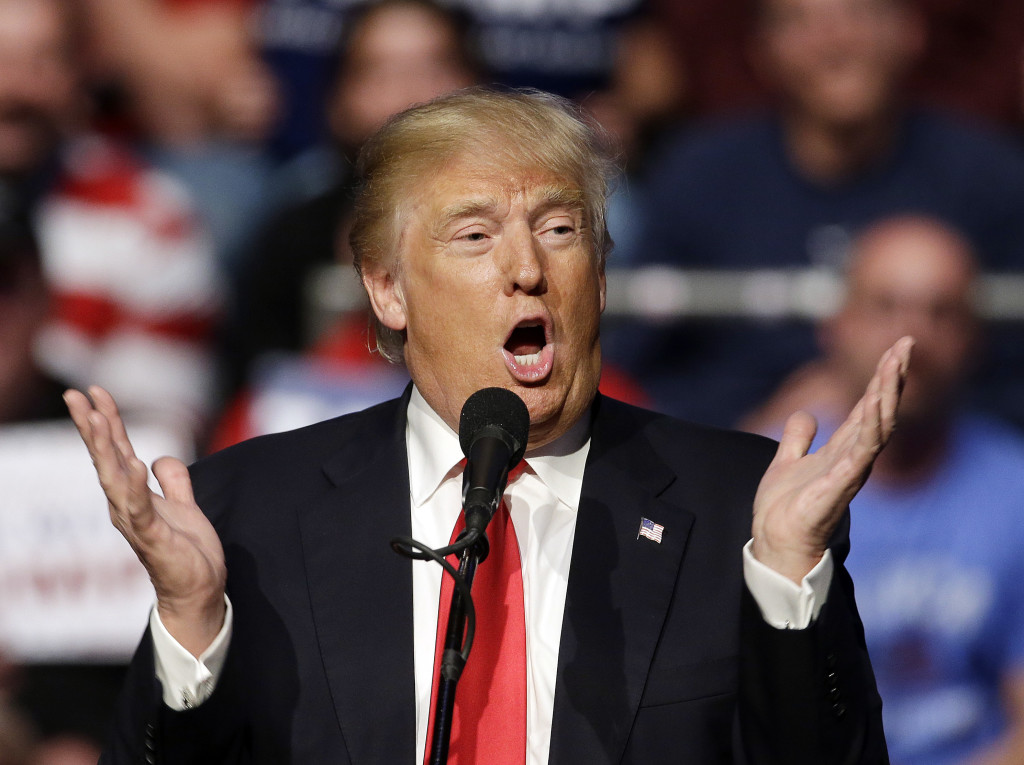
Facing a make-or-break moment for his slumping campaign, Texas Sen. Ted Cruz was blitzing through Indiana on Monday in a desperate bid to overtake Donald Trump in the state’s primary and keep his own White House hopes alive. A victory for Trump in Indiana on Tuesday would be a dispiriting blow for Cruz and other forces trying to stop the front-runner, leaving them with few opportunities to block his path. Trump is the only candidate in the race who can reach the 1,237 delegates needed for the GOP nomination through regular voting, though Cruz is trying to push the race toward a contested convention. “This whole long, wild ride of an election has all culminated with the entire country with its eyes fixed on the state of Indiana,” Cruz said Sunday at a late night rally. “The people of this great state, I believe the country is depending on you to pull us back from the brink.” Several hundred people came to see him Monday at Bravo Cafe in Osceola, where he predicted a close finish in the primary and said: “We need every single vote.” “You’re the perfect man for the job,” a man told him as diners consumed coffee and eggs. “God bless you,” Cruz said, gripping his hand. Cruz was holding five events across Indiana on Monday. Trump was holding a pair of rallies in the state, though he was already confidently looking past Cruz and setting his sights on Democratic front-runner Hillary Clinton. Trump made clear Monday that he would keep up his accusation that Clinton is playing gender politics: “We’re making a list of the many, many times where it’s all about her being a woman.” “I haven’t started on Hillary yet,” he told CNN, although actually he’s been trashing her record for quite some time. For her part, Clinton told thousands at an NAACP dinner in Detroit on Sunday that President Barack Obama‘s legacy can’t be allowed to “fall into Donald Trump’s hands” and be consumed by “these voices of hatred.” She cited Trump’s “insidious” part in the birther movement that questioned Obama’s citizenship. Clinton’s campaign announced Monday that she had raised $26 million in April. Vermont Sen. Bernie Sanders has vowed to stay in the Democratic race, though he acknowledged Sunday that he faces an “uphill climb.” His only path rests on a long-shot strategy of winning over superdelegates, the elected officials, lobbyists and other party insiders who are free to back either candidate. Trump can’t win enough delegates Tuesday to clinch the Republican nomination. But after his wins in five states last week, Trump no longer needs to win a majority of the remaining delegates in coming races to lock up the GOP nomination. The importance of Indiana for Cruz became evident even before he and fellow underdog John Kasich formed an alliance of sorts, with the Ohio governor agreeing to pull his advertising money from Indiana in exchange for Cruz doing the same in Oregon and New Mexico. But that strategy, which appeared to unravel even as it was announced, can’t help either man with the tens of thousands of Indiana voters who had already cast ballots: Early voting began in Indiana three weeks before they hatched their plan. It also risks alienating those who have yet to vote, said veteran Indiana Republican pollster Christine Matthews. She said she believes many have continued to vote for Kasich in Indianapolis and in the wealthy suburbs north of the city. “Indiana voters don’t like the idea of a political pact, or being told how to vote,” Matthews said. Trump went after Cruz on Sunday, suggesting evangelical conservatives have “fallen out of love with him” and mocked his decision to announce former GOP presidential candidate Carly Fiorina as his running mate. “They’re like hanging by their fingertips,” he said, mimicking Cruz and Kasich: “Don’t let me fall! Don’t let me fall!” Trump let on that he’s eager to move on to a likely general election race against Clinton. He said the end game of the primary battle with Cruz is “wasting time” that he could be spending raising money for Republicans running for the Senate. “It would be nice to have the Republican Party come together,” Trump told supporters in Fort Wayne. “With that being said, I think I’ll win anyway.” Republished with permission of the Associated Press.
Obamacare roadshow: Watchdog covers the cost of John Kasich’s Medicaid expansion
Ohio Gov. John Kasich’s poll numbers may not be skyrocketing, but the cost of expanding Medicaid in his state certainly is. For Watchdog readers, neither of these things will come as a surprise. When Kasich announced his bid for the presidency last year, Watchdog’s coverage of his major policy decisions as governor of Ohio had already been nearly a year in the making. Since then, Kasich’s presidential campaign has brought his controversial decision to take advantage of President Obama’s unpopular 2010 healthcare law into the spotlight as Republican primary voters decide whether the Ohio governor’s policies align with their values. Kasich’s Obamacare expansion Watchdog reporter Jason Hart first took up the story in September 2014. Ohio’s Medicaid enrollment under the expansion had just topped 367,000, passing Kasich’s initial projection for enrollment levels at July 2015. In the year and a half since, the governor’s projections for his state have continued to fall far short of the actual tally. Last March was the most expensive month yet for the expanded program, costing taxpayers $411 million as more working-age adults with no kids and no disabilities flocked to the Medicaid rolls. This puts Kasich’s Obamacare expansion on track to cost $28.5 billion by the year 2020 – more than twice as much as his administration projected. This has raised questions from critics who worry that expanding health care for able-bodied adults could be a disincentive to work. How many of the Ohioans who have recently enrolled in Medicaid have jobs? No one knows, not even the Ohio Department of Medicaid. Last Spring, the department told state Senate members that 43 percent of enrollees were employed, but it has no current data on how many of Ohio’s 673,000 Obamacare expansion enrollees are gainfully employed. ODM also doesn’t track how many of these new enrollees had private or employer-sponsored health insurance prior to enrolling in Medicaid – or how many of them are incarcerated. Never mind that Kasich initially estimated 447,000 people would sign up under the expansion by 2020. That means that “if ODM capped Obamacare expansion enrollment at its current level,” wrote Hart, “the two-year-old program would already be 48 percent larger than the Kasich administration said it would be after seven years.” Lest anyone be confused about how Medicaid expansion became part of Ohio law in the first place, Hart has a helpful breakdown of how the policy fight played out in 2013: The Ohio House stripped the Obamacare Medicaid expansion from its version of the 2014-15 budget. The Ohio General Assembly explicitly banned expansion in the final 2014-15 budget sent to Kasich’s desk. Kasich used a line-item veto to strike the legislature’s ban on expansion. The Kasich administration, with approval from the Obama administration, expanded Medicaid to the guidelines set in Obamacare. The Kasich administration asked the Ohio Controlling Board to appropriate funding to pay for the Medicaid expansion. The Ohio Controlling Board approved Kasich’s Obamacare expansion funding request. Six Republican legislators and two Right to Life groups sued over Kasich’s Controlling Board maneuver, but the Ohio Supreme Court ruled in the Kasich administration’s favor. Read the rest of this article here. • • • This article originally appeared at Watchdog.org. Andrew Collins is an author at the Franklin Center for Government and Public Integrity.
Republican donors deny Ted Cruz, John Kasich needed funds, data show

It seems like a logical pairing: Republican donors who despise Donald Trump, and two GOP presidential hopefuls sticking it out to keep him from the nomination. Yet such a financial cavalry never arrived for Ted Cruz and John Kasich, ignoring their impassioned pleas for financial help. Donors who gave as much as allowed by law to establishment darlings Jeb Bush or Marco Rubio have mostly disappeared from the political landscape, according to an Associated Press analysis of campaign finance records. Less than 3 percent of the nearly 14,600 donors who gave the $2,700 limit to Bush or Rubio have also ponied up the maximum amount to Kasich or Cruz. By not writing those checks, they’re depriving Cruz and Kasich of as much as $39 million each in their final push to topple Trump, who has formidably deep pockets and has loaned $36 million to his own campaign. Trump trounced his competitors in Tuesday’s elections, putting him in a stronger position to win the nomination outright in the next six weeks of voting. The quest to stop him has grown so dire that Cruz on Wednesday took the unusual step of announcing a running mate, Carly Fiorina. Earlier, he and Kasich agreed to divide up some remaining primary states to improve their chances of beating Trump. But donors’ continued shunning of Cruz and Kasich is one reason they haven’t had more success. “There are a significant number of major fundraisers in the Republican Party whose networks are exhausted and donors who are worn thin emotionally from the effort they made for a candidate who is no longer in the race,” said Wayne Berman, a longtime Republican fundraiser. “That combination has led to many, many people sitting on the sidelines.” He’s speaking from experience. Berman was the national finance chairman for Rubio and chose not to raise money for any other candidate after the Florida senator dropped out March 15. Both Kasich and Cruz have feverishly pitched themselves to donors as the candidate best able to unify the party. It has been a particularly tough fit for Cruz, a first-term Texas senator who has made his name as an unrelenting conservative fighter — even against those in his own party. He’s had a healthy core of his own donors, including roughly 3,900 who have given the maximum amount. In fact, Cruz is the best Republican campaign fundraiser of the 2016 cycle, and started April with $8.8 million cash on hand. Still, this critical stage of the race has called for extra outreach, particularly with expensive contests such as California coming up and Cruz in need of better primary performances to derail Trump. Cruz has stepped up his requests of donors who might not have otherwise considered him. He and his wife, a Goldman Sachs manager on leave, talked to New York financiers last week at the Harvard Club of New York City. They’re seldom responding, AP’s analysis shows. Through the end of March, just 186 Bush-Rubio maxed-out donors gave the maximum to Cruz. Fred Zeidman, a Houston-based fundraiser for Bush’s failed bid, is one of them. He said he felt he “owed” the donation to Cruz because of his strong support of Israel, Zeidman’s top issue. “I wanted to show him my appreciation for that,” Zeidman said. Still, Zeidman said he can understand why lots of former Bush and Rubio donors are reluctant. “At this point, many of them feel like the main objective should be to beat the Democratic nominee, so they’re keeping their powder dry until the general election, in effect just letting the primary system sort itself out,” he said. Kasich, the governor of Ohio, has attracted 174 maxed-out donors who also gave the maximum to Bush and Rubio. He’s won over some of the party’s top female donors, including Anna Mann, Rupert Murdoch’s ex-wife; Lynne Walton, a Wal-Mart heiress; and Helen DeVos, wife of Amway founder Richard DeVos. But Kasich has been in desperate need of more donors willing to give as much as they can. He started April with just $1.2 million cash on hand. The AP analysis is based on reports of campaign contributions filed with the Federal Election Commission from the beginning of the 2016 presidential election cycle through the end of March. The AP looked at donors who gave the maximum primary amount to Bush or Rubio with those who had given the maximum primary amount to the Democratic and Republican candidates still in the race, comparing each donor’s name, city, state and zip code. Because the analysis excluded donors if any of the information didn’t match, it could result in a slight undercount. The analysis revealed another troubling finding for Cruz and Kasich: Democratic front runner Hillary Clinton attracted about the same number of Bush-Rubio donors as did their campaigns. About a dozen Bush-Rubio donors have also given to Trump. A tiny core of 15 Bush-Rubio donors continued to hedge their bets by maxing out to both Cruz and Kasich — continuing their spread-the-love approach this election cycle. Stanley Hubbard, a billionaire Minnesota broadcast executive, has doled out checks of $2,500 or more to Scott Walker, Jeb Bush, Marco Rubio, Ben Carson, Carly Fiorina, Chris Christie and John Kasich. Of his multi-layered giving, Hubbard told the AP a few months ago that he wanted anyone other than Trump or Cruz at the top of the GOP ticket because he saw either of them as devastating for the party’s down-ballot prospects. Trump’s continued dominance led him to revise that view: He gave Cruz a check of $2,700 on March 31. “He’s not my first choice, no,” Hubbard said last week. He said he has no regrets about his heretofore fruitless campaign gifts. “Not a bit. When you give to politicians, sometimes you lose. That’s the way it works.” Republished with permission of the Associated Press.
Donald Trump pulls off clean sweep of 5 Northeast primaries
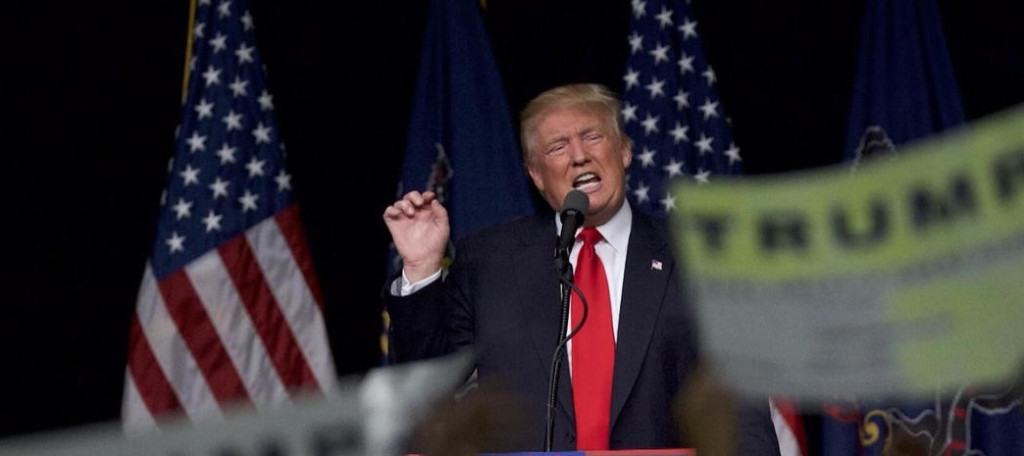
Donald Trump swept all five Republican primaries Tuesday, a commanding showing across the Northeast that keeps the Republican front-runner on his narrow path to the GOP nomination. Hillary Clinton carried Democratic contests in Maryland and Delaware, the start of what her campaign hoped would be a strong night for the former secretary of state. Trump’s victories came in Maryland, as well as Connecticut, Delaware, Pennsylvania and Rhode Island. His strong showing was a blow to rivals who are running out of ways to stop the brash billionaire. Clinton aimed to emerge from Tuesday’s contests on the brink of becoming the first woman nominated by a major party. She’s already increasingly looking past rival Bernie Sanders, even as the Vermont senator vows to stay in the race until primary voting ends in June. Sanders spent Tuesday campaigning in West Virginia, where he drew several thousand people to a lively evening rally. He urged his supporters to recognize that they are “powerful people if you choose to exercise that power.” Still, there were some signs that Sanders’ campaign was coming to grips with his difficult position. Top aide Tad Devine said that after Tuesday’s results were known, “we’ll decide what we’re going to do going forward.” Trump’s victories padded his delegate totals, yet the Republican contest remains chaotic. The businessman is the only candidate left in the three-person race who could possibly clinch the nomination through the regular voting process, yet he could still fall short of the 1,237 delegates he needs. GOP rivals Ted Cruz and John Kasich are desperately trying to keep him from that magic number and push the race to a convention fight, where complicated rules would govern the nominating process. The Texas senator and Ohio governor even took the rare step of announcing plans to coordinate in upcoming contests to try to minimize Trump’s delegate totals. But that effort did little to stop Trump from a big showing in the Northeast. Cruz spent Tuesday in Indiana, which votes next week. Indiana is one of Cruz’s last best chances to slow Trump, and Kasich’s campaign is pulling out of the state to give him a better opportunity to do so. “Tonight this campaign moves back to more favorable terrain,” Cruz said during an evening rally in Knightstown, Indiana. His event was held at the “Hoosier gym,” where some scenes were filmed for the 1986 movie, “Hoosiers,” starring Gene Hackman as the coach of a small-town Indiana basketball team that wins the state championship. Trump has railed against his rivals’ coordination, panning it as “pathetic,” and has also cast efforts to push the nomination fight to the convention as evidence of a rigged process that favors political insiders. Yet there’s no doubt Trump is trying to lead a party deeply divided by his candidacy. In Pennsylvania, exit polls showed nearly 4 in 10 GOP voters said they would be excited by Trump becoming president, but the prospect of the real estate mogul in the White House scares a quarter of those who cast ballots in the state’s Republican primary. In another potential general election warning sign for Republicans, 6 in 10 GOP voters in Pennsylvania said the Republican campaign has divided the party — a sharp contrast to the 7 in 10 Democratic voters in the state who said the race between Clinton and Sanders has energized their party. The exit polls were conducted by Edison Research for The Associated Press and television networks. With his three victories Tuesday, Trump will win at least half of the 118 delegates up for grabs in Tuesday’s contests. And he has a chance to win a lot more. In Pennsylvania, Trump collected 17 delegates for winning the state. An additional 54 delegates are elected directly by voters — three in each congressional district. However, their names are listed on the ballot with no information about which presidential candidate they support. Those delegates will attend the GOP convention as free agents, able to vote for the candidate of their choice. Democrats award delegates proportionally, which allowed Clinton to maintain her lead over Sanders even as he rattled off a string of wins in previous contests. According to the AP count, Clinton has 1,946 delegates while Sanders has 1,192. That count includes delegates won in primaries and caucuses, as well as superdelegates — party insiders who can back the candidate of their choice, regardless of how their state votes. Clinton’s campaign is eager for Sanders to tone down his attacks on the former secretary of state if he’s going to continue in the race. She’s been reminding voters of the 2008 Democratic primary, when she endorsed Barack Obama after a tough campaign and urged her supporters to rally around her former rival. Ahead of Tuesday’s results, Senate Democratic leader Harry Reid said that while Sanders has run a “unique and powerful” campaign, he does not believe the Vermont senator will be the party’s nominee. According to exit polls, less than a fifth of Democratic voters said they would not support Clinton if she gets the nomination. The exit polls were conducted in Connecticut, Pennsylvania and Maryland. Republished with permission of the Associated Press.
Donald Trump, Hillary Clinton aim for sweeps of northeastern primaries
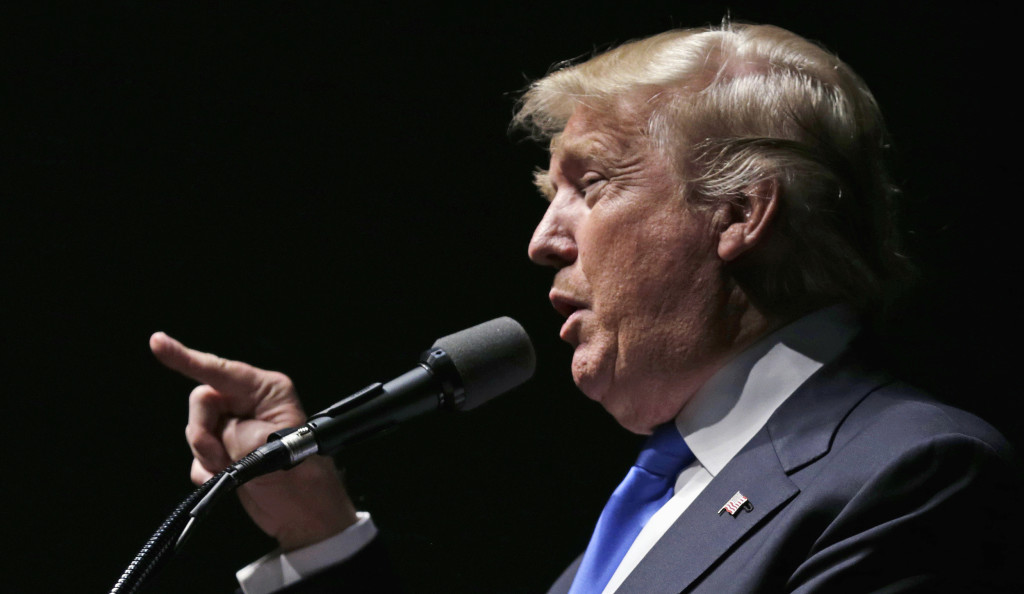
Donald Trump is aiming for a sweep of all five Northeastern states holding primaries Tuesday, including Pennsylvania, with his rivals pinning their hopes of stopping the Republican front-runner on a fragile coordination strategy in the next rounds of voting. For Democratic leader Hillary Clinton, wins in most of Tuesday’s contests would leave little doubt that she’ll be her party’s nominee. Rival Bernie Sanders‘ team has sent mixed signals about his standing in the race, with one top adviser suggesting a tough night would push the Vermont senator to reassess his bid and another vowing to fight “all the way to the convention.” Clinton was already looking past Sanders, barely mentioning him during recent campaign events. Instead, she deepened her attacks on Trump, casting the billionaire businessman as out of touch with Americans. “If you want to be president of the United States, you’ve got to get familiar with the United States,” Clinton said. “Don’t just fly that big jet in and land it and go make a big speech and insult everybody you can think of.” Asked Monday whether she needed to do more to gain Sanders’ support in the general election, she noted her loss in the 2008 Democratic primaries to Barack Obama. “I did not put down conditions,” she said on MSNBC. “I said I am supporting Senator Obama. … I hope that we will see the same this year.” In addition to Pennsylvania, Connecticut, Delaware, Maryland and Rhode Island hold primaries on Tuesday. Candidates and outside groups have spent $13.9 million dollars on advertisements in the states, with Clinton and Sanders dominating the spending. Sanders said candidly on ABC’s “Good Morning America” that his campaign is “handicapped” since the states in play Tuesday don’t allow independents to participate, but added that “we are going to fight through California and then we’ll see what happens.” Democrats are competing for 384 delegates in Tuesday’s contests, while Republicans have 172 up for grabs. The Democratic race is far more settled than the chaotic GOP contest, despite Trump having a lead in the delegate count. The businessman is the only one left in the race who can reach the 1,237 delegates needed to clinch the nomination before the convention, but he could very well fall short, pushing the nominating process to the party’s July gathering in Cleveland. Texas Sen. Ted Cruz and Ohio Gov. John Kasich are now joining forces to try to make that happen. Their loose alliance marks a stunning shift in particular for Cruz, who has called on Kasich to drop out of the race and has confidently touted the strength of his convention strategy. Kasich has won just a single primary — his home state — but hopes to sway convention delegates that he’s the only Republican capable of defeating Clinton in the general election. Under their new arrangement, Kasich won’t compete for votes in Indiana, allowing Cruz to take Trump on head to head in the state’s May 3 primary. Cruz will do the same for Kasich in Oregon and New Mexico. “The fact is, I don’t have unlimited resources,” Kasich said Tuesday on NBC’s “Today,” downplaying the collaboration as the logical step if he is to win the nomination in a contested convention. Cruz called the partnership “big news” as he campaigned in Indiana on Monday. “That is good for the men and women of Indiana. It’s good for the country to have a clear and direct choice.” Trump panned his rivals’ strategy as “pathetic.” “If you collude in business, or if you collude in the stock market, they put you in jail,” Trump said as he campaigned in Rhode Island. “But in politics, because it’s a rigged system, because it’s a corrupt enterprise, in politics you’re allowed to collude.” Cruz and Kasich’s public admission of direct coordination was highly unusual and underscored the limited options they now have for stopping the real estate mogul. The effectiveness of the strategy was quickly called into question after Kasich said publicly that while he won’t spend resources in Indiana, his supporters in the state should still vote for him. Trump’s path to the nomination remains narrow, requiring him to win 58 percent of the remaining delegates to reach the magic number by the end of the primaries. He’s hoping for a solid victory in Pennsylvania, though the state’s unique ballot could make it hard for any candidate to win a big majority. While the statewide Republican winner gets 17 delegates, the other 54 are directly elected by voters and can support any candidate at a convention. Their names are listed on the ballot with no information about which White House hopeful they support. Clinton is on solid footing in the Democratic race and enters Tuesday’s contests having accumulated 82 percent of the delegates needed to win her party’s nomination. While she can’t win enough delegates to officially knock Sanders out of the race this week, she can erase any lingering doubts about her standing. Including superdelegates, Clinton now leads Sanders 1,946 to 1,192, according to a count by the AP. Republished with permission of The Associated Press.
What’s the deal? Voters cheer, jeer, shrug off GOP pact
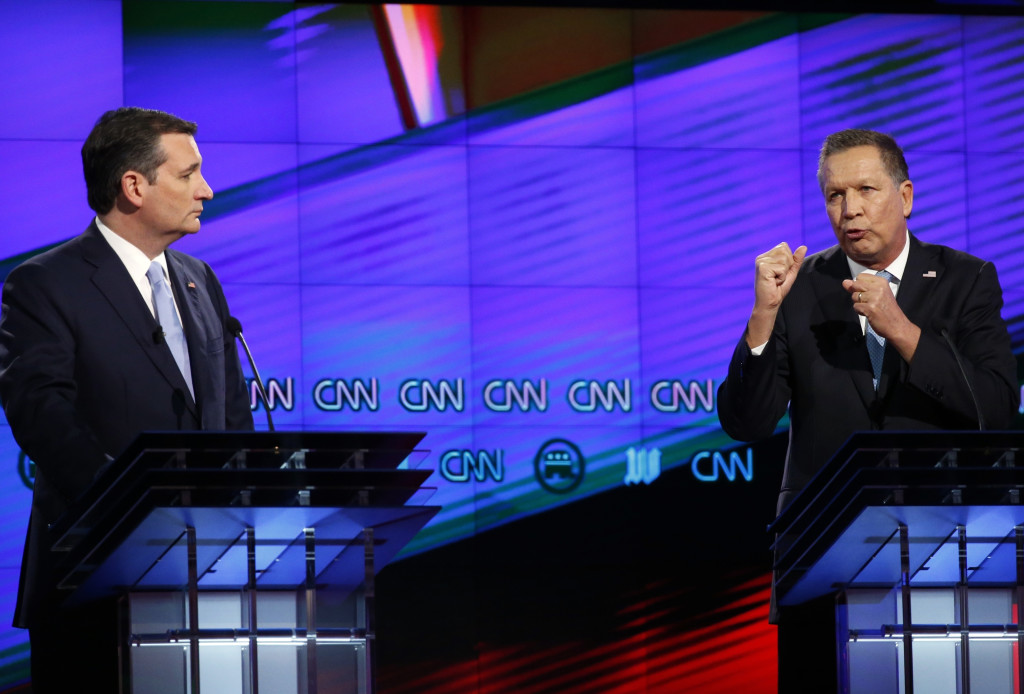
Kathy Hiel said she hadn’t made up her mind to vote for Donald Trump — until the billionaire businessman’s two Republican White House rivals formed an extraordinary political non-aggression pact to stop him. “I’ll have to support him now,” said Hiel, an Elizabeth, Indiana, resident who designs cabinets for a home interior company. While the political world waits to see if Texas Sen. Ted Cruz and Ohio Gov. John Kasich‘s alliance proves brilliant or desperate, some voters in the three states most affected applauded the move while others panned it. But many were still struggling to understand what, if anything, it will mean for them. Kasich says he won’t compete in Indiana, where Cruz is boasting he’s “all-in,” while the Texas senator said he will cede contests in Oregon and New Mexico to Kasich — an agreement both candidates hope will keep Trump from winning the 1,237 delegates needed to secure the GOP presidential nomination at the party’s national convention in Cleveland beginning July 18. Hiel was first in line to see Cruz at an ice cream parlor he visited in Columbus, Indiana, on Monday, and aggressively pressed the Texan as he stepped off his campaign bus on the convention’s delegate-selection process. She said she was a Ron Paul delegate to the 2012 Republican convention, and that she had doubts about Cruz because he’s lately been more focused on winning delegates to Cleveland than wooing voters around the country. Then came word late Sunday of Cruz’s agreement with Kasich — and Hiel said that sealed her decision. “I never did fully trust Ted,” she said. But 28-year-old Iraq war veteran Michael Thielmeier, who attended an earlier Cruz rally in Borden, Indiana, called the agreement “smart, calculated, knowledgeable.” He said he didn’t expect to see such a cooperative deal between two rivals since Cruz has built his career in the Senate and his presidential campaign around being a troublemaker who has infuriated the establishment in both parties. Thielmeier said he still supports Cruz, because he doesn’t see the pact with Kasich as an insider political move. In Oregon, 66-year-old Craig Herman said the agreement “doesn’t bother me at all.” “It’s all theater,” said Herman, from Oregon City. “I think they all do this for drama and put out press releases.” The deal may not hold together long term since Kasich said his supporters in Indiana should still vote for him. At a pizzeria in Greenwood, Indiana, where Cruz also stopped Monday, some voters asked him to autograph a mailer his campaign sent out before the agreement that made Kasich look soft on guns. A few attendees wondered aloud what it meant since the pair were now supposed to be friends. Donald Trump didn’t provide much clarity, blasting the deal as collusion while also gleefully saying it showed how weak Cruz and Kasich are. Denise Lombardo, a registered nurse who attended a Trump rally Monday at a hockey arena in Wilkes-Barre, Pennsylvania, said she plans to vote during Tuesday’s state primary for the first time in her life — for Trump. “I feel that Cruz and everyone else is just jealous because he tells it like it is,” Lombardo, from West Pittston, Pennsylvania, said of Trump. Langston Bowens, a student at the University of New Mexico, said he was planning to vote for Kasich and said of the deal with Cruz: “I think we can stop (Trump) before we get to the nomination process.” Ed Kasados, a 78-year-old resident of Los Ranchos de Albuquerque, New Mexico, said he’ll likely vote for Kasich, but will ultimately support whoever is the Republican nominee. He summed up the Cruz-Kasich pact in a single word: “Silly.” Republished with permission of the Associated Press.
