
John Kerry: ‘More forceful ways’ may be needed with North Korea
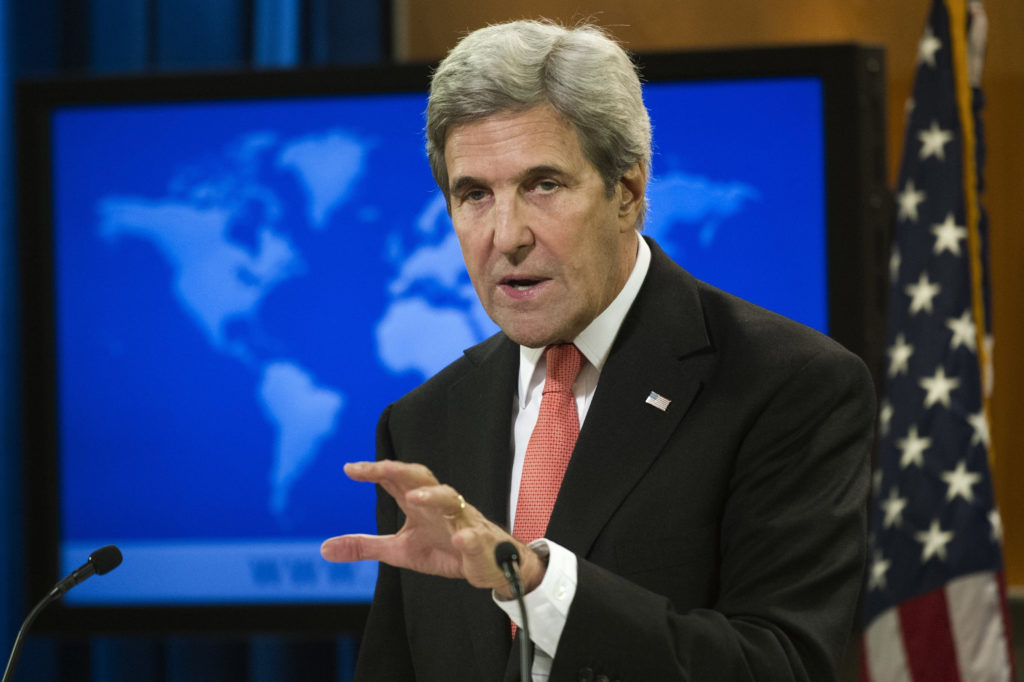
Secretary of State John Kerry said Tuesday the U.S. may need “more forceful ways” of dealing with North Korea if it develops an intercontinental ballistic missile that threatens America. Speaking at the U.S. Naval Academy, Kerry said nuclear weapons in the hands of North Korea’s “reckless dictator” Kim Jong Un pose one of the most serious national security challenges to the United States. Kerry urged Donald Trump‘s incoming administration to work closely with China, Pyongyang’s main trading partner, to exert more economic pressure on North Korea. He said the aim should be resuming talks on denuclearization that could open the way to economic assistance for North Korea, sanctions relief and a formal peace on the divided Korean Peninsula. But Kerry said if the North persists in developing the long-range missile it “drags the United States into an immediate threat situation to which we may then have to find other ways, more forceful ways of having an impact on the choices that he is making.” Kerry didn’t elaborate. Kim announced in his annual New Year’s address that the country had reached the “final stages” of intercontinental ballistic missile development. Trump responded with a tweet, saying “It won’t happen!” but did not indicate how his administration would prevent it. Over the past eight years, the Obama administration has cranked up sanctions on Pyongyang, invested more in missile defense and staged occasional shows of military force. But its policies have failed to stall North Korea’s nuclear weapons and missile programs. The North conducted two underground nuclear explosions and more than two dozen missile test launches last year. Republish with permission of The Associated Press.
Year’s top news filled with division — and no middle ground

Fed up with Europe’s union across borders? Reject it. Disgusted with the U.S. political establishment? Can it. The news in 2016 was filled with battles over culture and territory that exposed divisions far deeper than many realized. But people confronting those divides repeatedly rejected the prospect of middle-ground solutions and the institutions put in place to deliver them. While the headlines told many different stories, the thread connecting much of the news was a decisive torching of moderation, no matter how uncertain the consequences. “You’re not laughing now, are you?” Nigel Farage, a leader of the Brexit campaign, told the European Parliament after voters in Great Britain spurned membership in the continental union. “What the little people did … was they rejected the multinationals, they rejected the merchant banks, they rejected big politics and they said, ‘Actually, we want our country back.’” Farage was speaking only about the United Kingdom. But his observation that many people well beyond Britain shared that disdain for working within the system was borne out repeatedly in the year’s biggest headlines. In a U.S. presidential campaign fueled by anger and insults, in Syria’s brutal war and Venezuela’s massive protests, in fights over gay rights and migration, opposing sides rejected not just compromise but also the politics of trying to forge it. That was clear from the year’s first days, when armed activists took over a national wildlife refuge in Oregon’s high desert, opposing the federal government’s control of public lands. “It needs to be very clear that these buildings will never, ever return to the federal government,” LaVoy Finicum, an Arizona rancher among the activists, told reporters. Weeks later, federal agents stopped vehicles outside the refuge, arresting eight of the activists and fatally shooting Finicum when he reached into a jacket that held a loaded gun. Even in the rare cases when compromise prevailed, it was viewed with suspicion. When a deal took effect in January limiting Iran’s nuclear program in exchange for relief on sanctions, it marked the culmination of prolonged negotiation by President Barack Obama‘s administration. But the pact was repeatedly attacked by critics in both countries, including Donald Trump, saying it gave the other side too much. “The wisest plan of crazy Trump is tearing up the nuclear deal,” a leading Iranian hard-liner, Hossein Shariatmadari, told his country’s news agency. In mid-February, U.S. Supreme Court Justice Antonin Scalia died in his sleep, leaving a vacuum on a court where he had long been the leading conservative voice. Barely an hour after Scalia’s death was confirmed, Senate Majority Leader Mitch McConnell staked out an uncompromising position on what lay ahead. “The American people should have a voice in the selection of their next Supreme Court justice,” McConnell said, disregarding the fact that U.S. voters had twice elected Obama. “Therefore, this vacancy should not be filled until we have a new president.” North Carolina lawmakers prompted protests and counterprotests when they rushed through House Bill 2, voiding local gay-rights ordinances and limiting bathroom access for transgender people. Companies, the NBA and others followed through on threats to move jobs, games and performances out of the state, amplifying the division. Tensions over U.S. policing bled into a third year. In July, a sniper killed five Dallas police officers during a protest over shootings of black men by police in Louisiana and Minnesota. A South Carolina jury failed to reach a verdict in the trial of a white officer caught on video fatally shooting a black man fleeing a traffic stop. Division, though, was hardly limited to the U.S. In Venezuela, triple-digit inflation and shortages of food and medicine fueled 6,000 protests throughout the year that brought millions into the streets. But the government of President Nicolas Maduro, blamed by many voters for the chaos, blocked a recall campaign. “If you’re going to shoot me because I’m hungry, shoot me!” a young man shouted at a soldier during one protest in Caracas. In Colombia, voters narrowly rejected a deal between the government and a guerrilla group to end a 52-year civil war. Even when lawmakers approved a renegotiated deal, the peace remained fragile. In Brazil, senators impeached President Dilma Rousseff for manipulating budget figures, though many of the lawmakers were, themselves, tarred by accusations of corruption. South Korean President Park Geun-hye was stripped of power in December amid allegations she let a close friend use the government for financial gain. Meanwhile, Syria’s war entered its sixth year. But despite pressure by the U.S. and its allies, Russia and the government of President Bashar Assad unleashed an assault on Aleppo to wipe out rebels, driving up the toll in a conflict that has already claimed as many as 500,000 lives. “This is a targeted strategy to terrorize civilians and to kill anybody and everybody who is in the way of their military objectives,” U.S. Secretary of State John Kerry said, accusing Syria and Russia of war crimes. “As long as war crimes are at question,” a Russian government spokeswoman said, “the Americans should start with Iraq.” In Yemen, cease-fires broke down, extending a nearly two-year civil war. But with Syria capturing most international attention, a famine resulting from the turmoil was mostly overlooked. As the fighting continued, terrorist strikes spread fear well beyond the Middle East. A bombing at a Brussels airport in March and another attack in June at Istanbul’s airport by gunmen with explosives killed a total of nearly 80 people. More than 70 died when a bomb went off in a park in Pakistan, with a faction of the Pakistani Taliban claiming responsibility. In July, a terrorist drove a truck into a Bastille Day crowd in Nice, France, killing 86 and injuring more than 400 others. The Islamic State group claimed responsibility. In June, security guard Omar Mateen opened fire inside a gay nightclub in Orlando, Florida, in the deadliest mass shooting ever in the U.S. In a call to police during the attack, which killed 49, Mateen — a U.S. citizen born
Pushing back on Israel, John Kerry defends Obama Admin’s UN vote
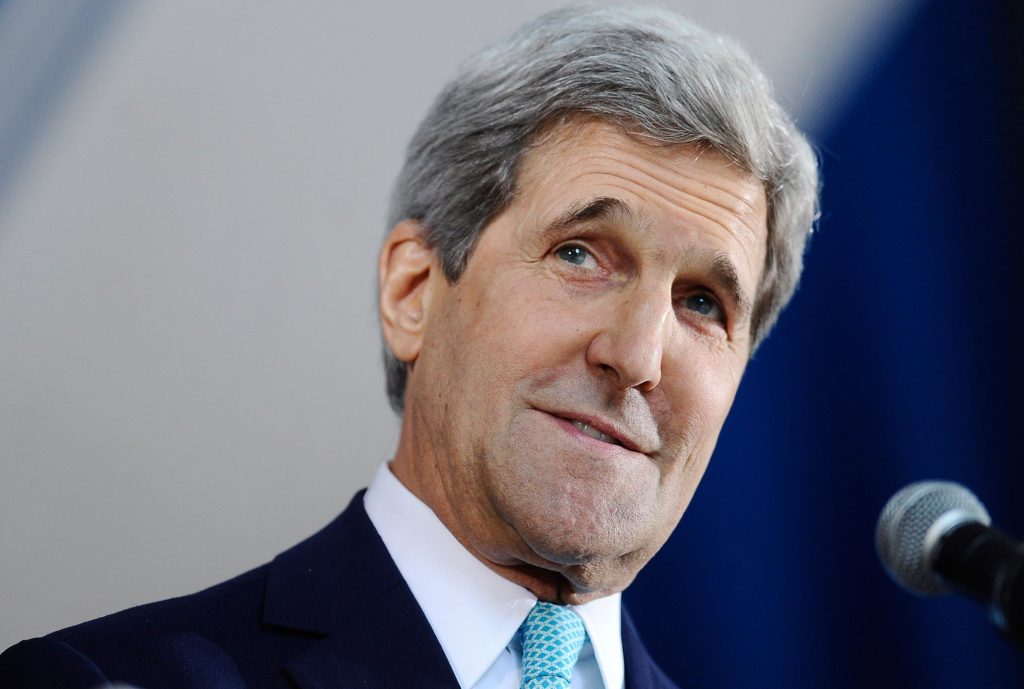
Stepping into a raging diplomatic argument, Secretary of State John Kerry on Wednesday staunchly defended the Obama administration’s decision to allow the U.N. Security Council to declare Israeli settlements illegal and warned that Israel’s very future as a democracy is at stake. Kerry, pushing back on Israel’s fury at the U.S. abstention of the United Nations vote, questioned Prime Minister Benjamin Netanyahu‘s true commitment to Palestinian statehood, which has formed the basis for all serious peace talks for years. Though Netanyahu says he believes in the two-state solution, Kerry said, he’s at the helm of the most right-wing (government) in Israel’s history. “If the choice is one state, Israel can either be Jewish or democratic, it cannot be both, and it won’t ever really be at peace,” Kerry said. Kerry’s speech marked the latest escalation in a vicious, drama-filled row between the U.S. and Israel that has erupted in the last days of Obama’s administration. The extraordinary display of discord between allies – with U.S. and Israeli officials openly disparaging each other – has also pitted President Barack Obama against President-elect Donald Trump, who has firmly taken Netanyahu’s side. Israel’s government was enraged after the U.S. abstained from voting on the U.N. Security Council resolution last week that called Israeli settlements in the West Bank and east Jerusalem a violation of international law. Netanyahu accused the U.S. of colluding with the Palestinians and helping draft the resolution, charges the U.S. has denied. “The United States did in fact vote in accordance with our values, just as previous administrations have done,” Kerry said in a farewell speech at the State Department. “The vote in the United Nations was about preserving the two-state solution. That’s what we were standing up for.” Kerry reiterated that the Obama administration’s commitment to Israel was as strong as that of previous presidents, but he also noted that previous U.S. administrations had also abstained on certain resolutions critical of Israel. He emphasized the record levels of military assistance the U.S. has provided Israel under Obama, codified by a 10-year aid deal recently struck worth $38 billion. “No American administration has done more for Israel’s security than Barack Obama’s,” Kerry said. Obama, who is vacationing with his family in Hawaii, hasn’t commented publicly on the resolution or the resulting spat. Seeking to show he wasn’t focusing exclusively on Israel’s failings, Kerry in the same sentence bemoaned Israel’s “seemingly endless occupation” of Palestinian land and Palestinian leaders’ “incitement” of violence. He invoked the widespread concern that the growing Arab population will eventually make Jews a minority in Israel, creating a democratic crisis for Israel unless there’s a separate Palestinian state. Israeli leaders have made no secret that they are counting on Trump to change U.S. policy, and Trump assured them hours before Kerry’s speech that they just needed to “hang on” til Jan. 20, when he would be sworn in as president. While Trump has not outlined a vision, he has signaled a much more sympathetic approach toward Israel, appointing an ambassador with strong ties to the West Bank settler movement and promising to move the U.S. Embassy from Tel Aviv to Jerusalem over Palestinian and others’ objections. “President-elect Trump, thank you for your warm friendship and your clear-cut support for Israel,” Netanyahu said on Twitter before Kerry’s speech. A senior Israeli Cabinet minister, Gilad Erdan, on Wednesday called Kerry’s speech a “pathetic step,” before Kerry even began speaking. The international community overwhelmingly opposes Israeli settlement construction in the West Bank and east Jerusalem, territories captured by Israel in 1967 and claimed by the Palestinians for an independent state. The Palestinians, and most of the world, see settlements, now home to 600,000 Israelis, as an obstacle to peace. Republished with permission of the Associated Press.
Israeli Cabinet minister calls John Kerry speech a ‘pathetic’
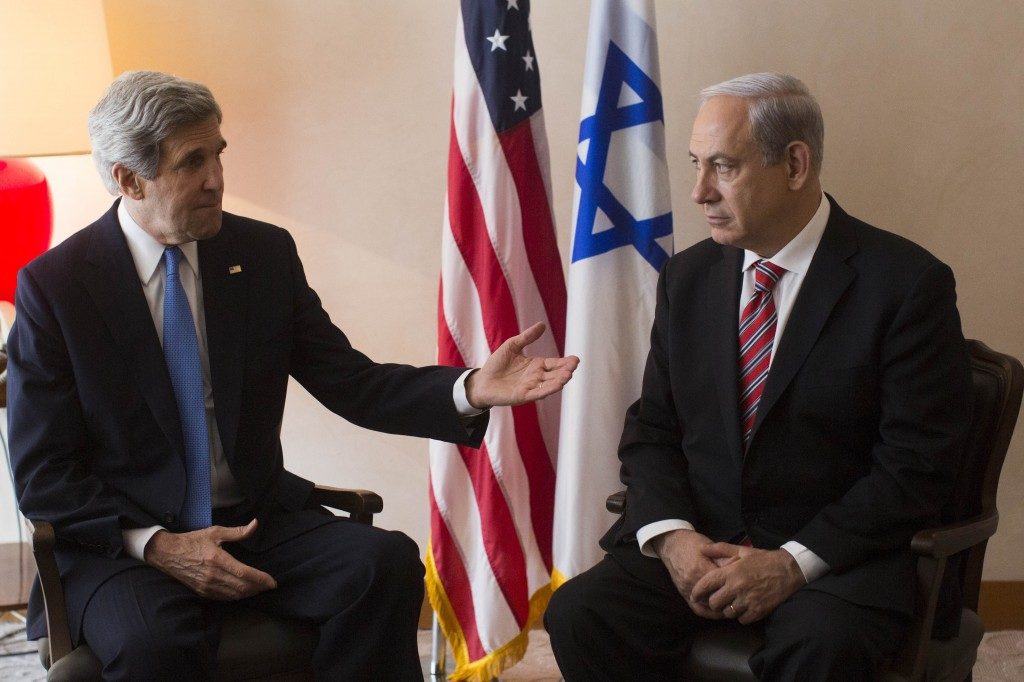
A senior Israeli Cabinet minister on Wednesday called U.S. Secretary of State John Kerry‘s planned Mideast policy speech a “pathetic step,” further heightening tensions between the two close allies as the Obama administration prepares to leave office. The comments by Public Security Minister Gilad Erdan were the latest salvo in a toxic exchange following the U.S.’s refusal to veto a U.N. Security Council resolution last week that called Israeli settlements in the West Bank and east Jerusalem a violation of international law. Israeli Prime Minister Benjamin Netanyahu has slammed the resolution, and accused the U.S. of colluding with the Palestinians in drawing it up. Following up on the U.N. resolution, Kerry was scheduled to deliver a farewell speech in Washington on Wednesday to outline his proposals for a peace settlement between Israel and the Palestinians. Next month, France is set to host an international conference where 70 countries, over Israeli objections, hope to endorse an international framework for Mideast peace. Israeli officials fear that the conference’s recommendations may then be approved in another U.N. Security Council resolution just before Obama leaves office on Jan. 20. In a radio interview, Erdan said Kerry’s speech was part of a broader effort to hinder the incoming administration of Donald Trump, who has signaled he will have much warmer relations with Israel. “This step is a pathetic step. It is an anti-democratic step because it’s clear that the administration and Kerry’s intention is to chain President-elect Trump,” Erdan told Israel Army Radio. Erdan, a member of Netanyahu’s Likud Party and inner Security Cabinet, said Obama administration officials are “pro-Palestinian” and “don’t understand what’s happening in the Middle East.” Kerry mediated a nine-month round of peace talks that broke down in early 2014 with little progress. Israeli leaders have made no secret that they are counting on Trump to change U.S. policy. While Trump has not outlined a vision, he has signaled a much more sympathetic approach toward Israel, appointing an ambassador with strong ties to the West Bank settler movement and promising to move the U.S. Embassy from Tel Aviv to Jerusalem, over Palestinian objections. The international community overwhelmingly opposes Israeli settlement construction in the West Bank and east Jerusalem, territories captured by Israel in 1967 and claimed by the Palestinians for an independent state. The Palestinians, and most of the world, see settlements, now home to 600,000 Israelis, as an obstacle to peace. Netanyahu says the conflict with the Palestinians, including the fate of the settlements, must be resolved through direct negotiations and says that international dictates undermine the negotiating process. Despite the Israeli anger, Netanyahu ordered a Jerusalem planning committee to delay a vote on approving construction of some 500 new homes in Jewish developments of east Jerusalem, a city councilman said. Council member Hanan Rubin told The Associated Press that Netanyahu asked to delay Wednesday’s vote so as not to antagonize relations with the U.S. Meanwhile, a senior leader of the West Bank settlement movement called Kerry a “stain on American foreign policy” and “ignorant of the issues.” Oded Revivi, chief foreign envoy of the Yesha Council, said Kerry is “the worst secretary of state in history,” who “chose to stab his closest ally in the back” and knows little about the realities of Israeli settlements in the West Bank. Republished with permission of the Associated Press.
John Kerry: US, Russia studying new ideas to stop Syria fighting
The United States and Russia are studying new ways to break a months-long diplomatic deadlock over how to stop the fighting in the Syrian city of Aleppo, U.S. Secretary of State John Kerry said Friday. He said the “ideas” will be tested in follow-up discussions between American and Russian diplomats next week. While Kerry didn’t elaborate on the substance of the fresh approaches being worked on with Russia, he stressed that the U.S. and Russia both see the situation as urgent and aren’t waiting for Donald Trump‘s presidency to begin on Jan. 20. But given the repeated failures of the former Cold War foes to halt Syria’s 5 ½-year civil war, it is unclear how much hope the new effort holds. “We have exchanged a set of ideas, which there will be a meeting on early next week in Geneva, and we have to wait and see whether those ideas have any legs to them,” Kerry said after meeting Russian Foreign Minister Sergey Lavrov in Rome. “I will say that both sides understand the importance of trying to continue the diplomacy and trying to see if something can be done. Nobody is waiting for the next administration. We both feel there is urgency.” Kerry said he will gauge progress with Lavrov when they meet again on the sidelines of a European security conference in Hamburg, Germany, on Wednesday. While the talks were going on, Syria showed off its recent gains in Aleppo, once the country’s largest city and commercial center. State media reported Friday from areas captured this week in a Russian-backed ground offensive, airing reports of roads being restored, debris removed and civilians resettled. The U.N. aid agency said an estimated 31,500 people have been displaced as a result of the recent fighting, which takes Syrian President Bashar Assad’s government closer to capturing the whole city and completing what would be perhaps a devastating blow to U.S.-backed rebel forces. The war has killed as many as half a million people since 2011, contributed to Europe’s worst refugee crisis since World War II and allowed the Islamic State group to emerge as a global terror threat. Friday’s diplomatic discussions took place in a hotel several stories above an Italian-hosted conference on the Mediterranean region, and Russia’s Lavrov emphasized that his country won’t allow Syria to follow the example of lawless Libya after NATO’s 2011 intervention that helped topple dictator Moammar Gadhafi. That country now is experiencing perhaps its worst violence in two years as rival militias and extremist groups such as IS continue to vie for power. While Washington has accused Moscow of war crimes and crimes against humanity in Syria, Lavrov blamed both the U.S. and United Nations for the current situation. He lamented that the U.S. has been unable to fulfill its commitment under several past cease-fire plans to separate the so-called “moderate” opposition groups from the al-Qaida-linked fighters that Russia says it is targeting. And he questioned why the U.N. isn’t restarting peace talks or rushing aid to areas of Syria in need, something the global body has been extremely reticent to do since a September convoy was hit by an airstrike. The U.S. has blamed Russia for that attack, a charge Moscow denies. “The time is ripe for compromise,” Lavrov said. Both diplomats met Friday with the U.N.’s envoy for Syria, Staffan de Mistura. As journalists were ushered into his meeting with Kerry, reporters could hear the peace mediator telling the U.S. secretary of state, “Anything but stalemate.” Republished with permission of The Associated Press.
Racism and talk of religious war: Donald Trump staff’s online posts
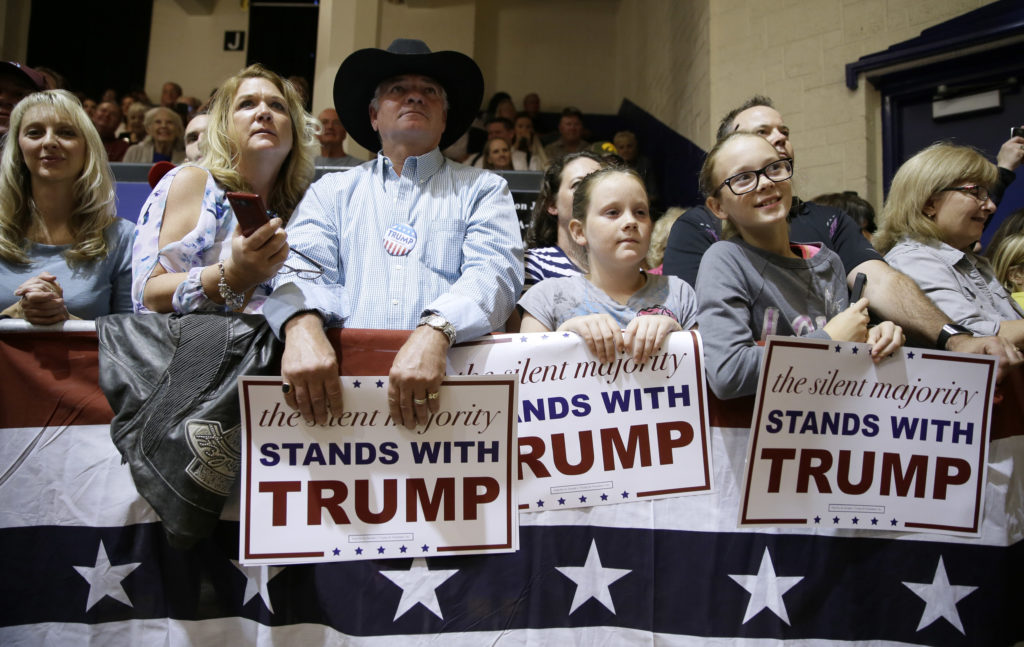
Donald Trump‘s paid campaign staffers have declared on their personal social media accounts that Muslims are unfit to be U.S. citizens, ridiculed Mexican accents, called for Secretary of State John Kerry to be hanged and stated their readiness for a possible civil war, according to a review by The Associated Press of their postings. The AP examined the social media feeds of more than 50 current and former campaign employees who helped propel Trump through the primary elections. The campaign has employed a mix of veteran political operatives and outsiders. Most come across as dedicated, enthusiastic partisans, but at least seven expressed views that were overtly racially charged, supportive of violent actions or broadly hostile to Muslims. A graphic designer for Trump’s advance team approvingly posted video of a black man eating fried chicken and criticizing fellow blacks for ignorance, irresponsibility and having too many children. A Trump field organizer in Virginia declared that Muslims were seeking to impose Sharia law in America and that “those who understand Islam for what it is are gearing up for the fight.” The AP’s findings come at a time when Trump is showing new interest in appealing to minority voters, insisting he will be fair in dealing with the 11 million people in the U.S. illegally and explicitly pitching himself to African-Americans, saying “what do you have to lose?” Since Trump declared his candidacy last summer, he has paid about 120 people on his campaign, according to Federal Election Commission filings. Over the weekend, the campaign reported about 70 people drawing salaries, a number that did not include a few dozen more working as consultants. A slew of hires in early August were not yet reflected in Trump’s filings. The AP was able to review the accounts of only a minority of Trump staffers: Others set their accounts to private, some could not be found or identified with confidence as Trump campaign employees. The AP also reviewed the public social media accounts of more than three dozen employees of Hillary Clinton‘s far larger campaign staff and found nothing as inflammatory. One staffer said Trump’s style of speaking reminded him of a roommate who had taken too many hallucinogenic mushrooms. AP also reviewed images attached to more than 19,000 stolen internal emails from the Democratic National Committee for racially or religiously inflammatory memes, finding nothing of note. The Clinton campaign declined to comment on its procedures for vetting staff. It employs more than 650 people, according to its FEC filings. One month ago, the AP sent written questions to the Trump campaign with examples of the posts. The campaign has not commented, despite several requests since. Veteran Republican campaign operatives said keeping an eye on staffers’ social media postings has long been a standard practice. “In vetting a prospective staffer, I’m not sure where the line would be for not hiring someone or simply asking them to take something down from social media, but there is a line,” said Beth Myers, a former top Mitt Romney campaign aide. During Myers’ work for Mitt Romney in the 2008 and 2012 presidential campaigns, she said, social media was newer, so indiscrete or embarrassing photos were more often concerns than inflammatory views. Even outside social media, she stressed to the campaigns’ staffers that what they said and did would reflect on the candidate who employed them. “Don’t put anything in an email that you wouldn’t want on the front page of The New York Times,” she recalled telling staff. “The same thing I told my kids, I told my staffers.” The AP found little questionable content in the ranks of Trump’s top officials. The campaign’s social media director, Dan Scavino, tweets prolifically but avoids discussing race and religion. Field organizers representing Trump’s campaign around the country, however, have had no such reservations, either before or during their employment with the campaign. Their judgment matters beyond the campaign because the paid staff of winning presidential candidates often receives jobs in the next administration. Before being tapped as statewide director of coalitions, Craig Bachler of Bradenton, Florida, posted jokes in 2015 about Mexican accents superimposed over pictures of an overweight man wearing a sombrero. Bachler was named by the campaign as official staff in November, though there is no record he has been paid for his work. Bachler did not respond to a request for comment via Facebook or a message left at his office voicemail. After AP’s inquiries, Bachler blocked access to an AP reporter, and his Facebook account — which included a photo of Bachler with Trump — was scrubbed to remove the offensive post. Teresa Unrue, a field organizer and graphic designer in Myrtle Beach, South Carolina, for Trump’s advance team, shared a video on her Facebook account July 11 — the week before the Republican National Convention — of a black man eating fried chicken while shaming fellow black people. “Why are you mad about slavery?” the man asks. “Y’all weren’t no damn slaves.” “Had me crack’n up!! Thank you!” Unrue wrote of the video. “Please share this with people.” In a short phone conversation, Unrue said she tried to keep her personal social media comments positive and referred questions to the campaign. Some posts fixated on stories of black-on-white violence with claims that news about such crimes was being suppressed. “How about this little white boy being murdered by a black man,” grassroots organizer Annie Marie Delgado of Palm Beach Gardens, Florida, wrote in December 2014 post, one of a number highlighting crimes against white people before Trump declared his candidacy. Delgado also shared a discredited, hoax photo of the State Department’s Kerry with Jane Fonda, and commented: “I say hang them!” She was paid $11,146 through April, according to campaign records. Fear or dislike of Muslims was a recurring theme. Though Trump at one point proposed temporarily barring foreign Muslims from entering the country and scrutinizing the activities of mosques, he has sometimes distinguished Islamic extremists who pose a risk and those
Hillary Clinton VP search focus is Tim Kaine, Tom Vilsack, Tom Perez
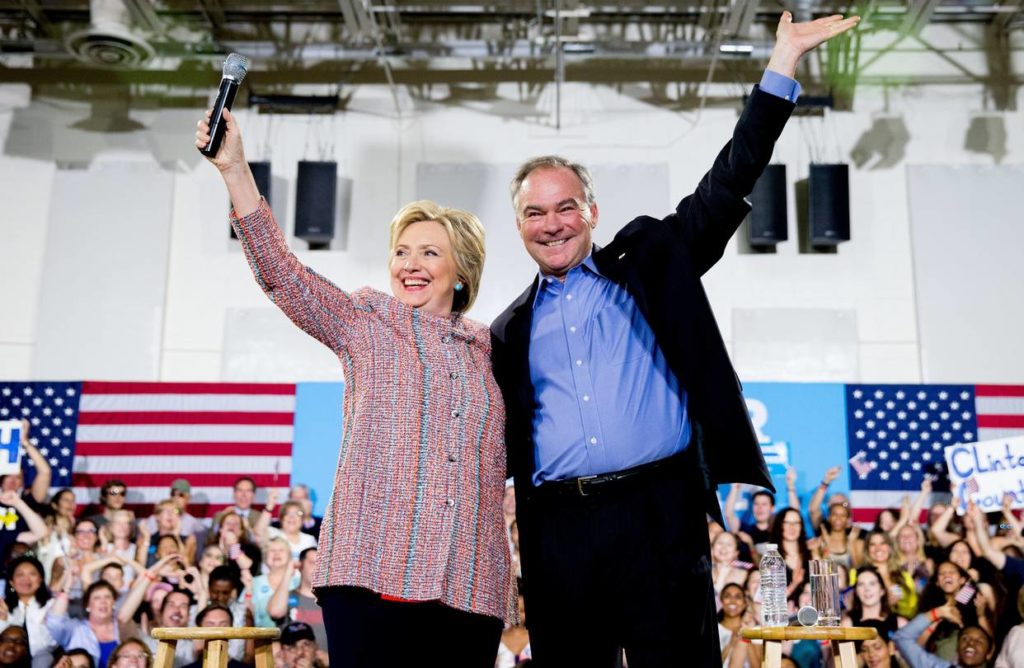
Hillary Clinton‘s vice presidential search is centering on three main contenders, with an announcement expected as soon as Friday as the Democrat prepares for her party’s national convention next week in Philadelphia. Clinton’s campaign has focused in recent days on Virginia Sen. Tim Kaine, a former governor, mayor and one-time Catholic missionary fluent in Spanish; Agriculture Secretary Tom Vilsack, an ex-Iowa governor and longtime Clinton ally; and Labor Secretary Tom Perez, a progressive champion who would be the first Hispanic on a major-party ticket, according to the Associated Press, which cites Democrats familiar with the search. The Democrats cautioned that Clinton had not yet reached a final decision and was weighing a number of factors, including the person’s readiness to be president, personal compatibility and ability to help her administration govern. Massachusetts Sen. Elizabeth Warren, a favorite of liberals, remains in the mix and offers the campaign a fundraising juggernaut and the tantalizing prospect of an all-female ticket. But Warren is not expected to be the final choice, the AP reported, citing Democrats familiar with the process. They spoke to AP on condition of anonymity to describe private discussions about the search process. Clinton’s choice will be the culmination of a closely held search for a running mate, run by a small group of longtime advisers and confidantes. Preparing for a showdown with Republican presidential nominee Donald Trump, Clinton has sought to project an inclusive campaign aimed at “breaking down barriers and building bridges” to mobilize the diverse coalition of voters who twice elected President Barack Obama. Clinton is expected to announce her decision during a two-day campaign swing in Florida later this week. The vice presidential rollout could come at either a Friday rally at the Florida State Fairgrounds in Tampa or at a Saturday rally at Florida International University in Miami, where two-thirds of the student body is Hispanic. Following next week’s Democratic National Convention in Philadelphia, the newly minted ticket is expected to embark on a campaign bus tour, reminiscent of the “First 1,000 Miles” convoy that took Bill Clinton, Al Gore and their spouses across eight states after the party’s 1992 convention. Trump’s choice of Indiana Gov. Mike Pence, a conservative former congressman, for the GOP ticket was not viewed as requiring her to choose a specific running mate in response, according to the AP, citing Democrats familiar with the process. Campaign officials declined to comment. Kaine has been considered a leading contender for weeks based on his broad experience in Virginia, a presidential battleground state, as governor, senator and mayor of Richmond. He also served as chairman of the Democratic National Committee and as a lawyer working on fair housing and civil rights issues. Vilsack, the longest-serving member of Obama’s Cabinet, has known Clinton for many years — his late brother-in-law worked with her in the early 1970s — and she was among his most prominent surrogates in his come-from-behind gubernatorial victory in 1998. Perez, meanwhile, is highly regarded by the White House for his policy chops and could potentially galvanize Latinos who have been turned off by Trump’s harsh rhetoric about Hispanics. The son of immigrants from the Dominican Republic, Perez played a behind-the-scenes role as a federal prosecutor, a top aide to the late Sen. Ted Kennedy and the head of the Justice Department’s civil rights division. Both Vilsack and Kaine have been through the process before. Vilsack was among the final group considered by John Kerry in 2004 and Kaine was vetted by Obama’s team four years later. If either Vilsack or Perez were selected, they would be required to resign from Obama’s Cabinet. Clinton’s decision will be steeped in her personal experience. She was involved in her husband’s selection of Gore in 1992 and has the unique vantage point of having seen up close the various roles played by the vice president. In an interview this week with Charlie Rose of CBS News, Clinton said her main criterion was “would this person be a good president? You know, I am afflicted with the responsibility gene and I know what it’s like being president.” Quizzed on potential running mates, Clinton noted that Kaine had “never lost an election” and was a “world-class mayor, governor and senator.” She said Warren had “put the agenda of inequality front and center.” Clinton also praised retired Adm. James Stavridis, a former NATO supreme allied commander, calling him “exceptional.” Other possible choices include Housing Secretary Julian Castro, Colorado Gov. John Hickenlooper, Ohio Sen. Sherrod Brown and New Jersey Sen. Cory Booker. Clinton met with Castro, Hickenlooper and Warren at her Washington home on Friday. Republished with permission of the Associated Press.
In Cuba, Barack Obama briefed on Brussels terrorist attack
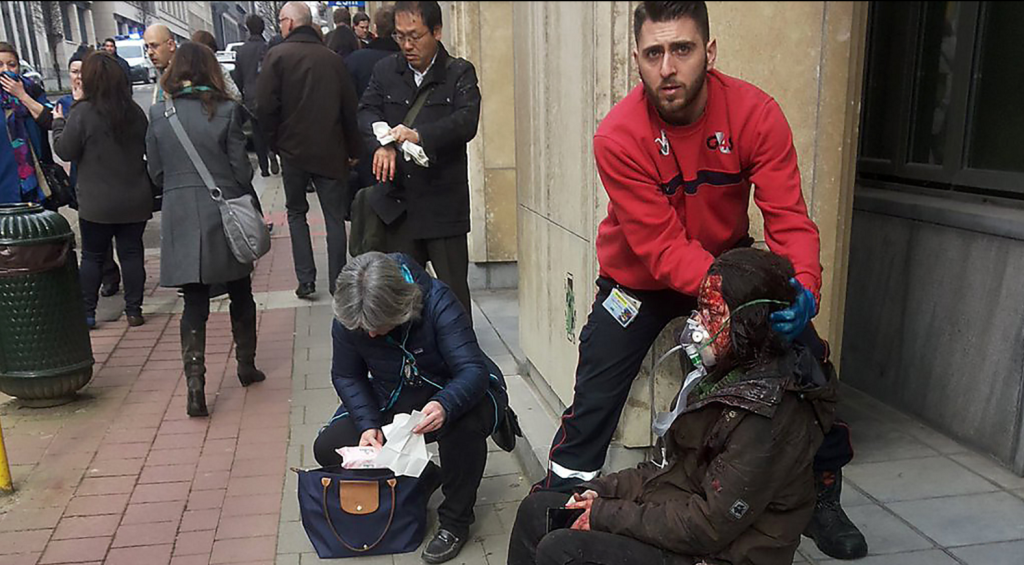
President Barack Obama, traveling in Cuba, was briefed Tuesday morning on the Brussels attacks that killed dozens of people. The White House said the U.S. was in contact with Belgian officials about the explosions at the Brussels airport and subway system. Secretary of State John Kerry said in a statement that the U.S. was working “to determine the status of all American citizens in Brussels.” The embassy there issued a statement telling Americans to stay where they are and “take the appropriate steps to bolster your personal security.” At least one of the attacks was believed to be caused by a suicide bomber, and Belgium raised its terror alert to its highest level. Rep. Adam Schiff, D-Calif., the ranking member of the House intelligence committee, said the attacks “bear all the hallmarks” of an Islamic State group coordinated or inspired attack. His staff said he received a preliminary briefing Tuesday from U.S. officials. Schiff says it’s unclear if encrypted communications played a role in the attacks but noted that the Brussels attacks occurred despite the city being under constant vigilance. The U.S. Department of Homeland Security said it was closely monitoring the unfolding events and “would not hesitate to adjust our security posture, as appropriate, to protect the American people.” DHS reiterated that members of the public should report any suspicious activity in their communities to law enforcement authorities. Attorney General Loretta Lynch was also briefed on the attacks, Justice Department officials in Washington said. They said the Justice Department and the FBI was coordinating with other U.S. government agencies, as well as with Belgian counterparts. Last week U.S. Homeland Security Secretary Jeh Johnson said Homeland Security officials constantly monitor world events and evaluate whether there is a need to either publicly raise the nation’s security posture or issue another bulletin via the government’s National Terror Advisory System. Such a bulletin was issued in December advising the public that federal law enforcement was concerned about the possibility of homegrown violent extremists and terrorist-inspired individuals. Republished with permission of the Associated Press.
Paris climate talks: 5 things you need to know to catch up
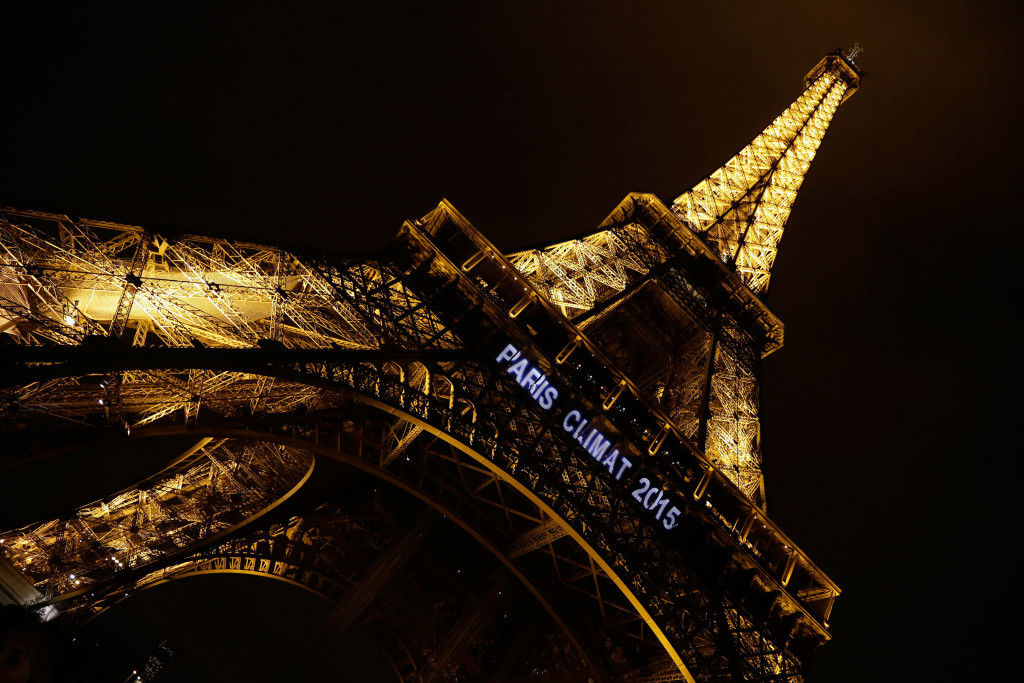
The multi-national, two-week United Nations climate summit in Paris — 21st Conference of Parties (COP21) — is halfway over. There, more than 30,000 diplomats and delegates have been hard at work in efforts to stave off the consequences of global climate change. The summit, scheduled to wrap-up Friday, Dec. 11, marks the largest gathering of world leaders in history. “Never have the stakes of an international meeting been so high, since what is at stake is the future of the planet, the future of life,” President François Hollande of France told a packed United Nations plenary session last week. Haven’t been following the summit? Here are the top five things you need to know to catch-up on what’s been happening the past 10 days: U.S. pledges to double aid to climate-hit countries. Secretary of State John Kerry pledged the United States will double its spending on climate change grants for developing nations and will spend up to $860 million in grant-based funding for developing countries by 2020. Negotiators have released a new, shorter draft of the international climate accord. Down to 29-pages, from the previous 43-page version, the new draft still has roughly 100 spots where decisions must still be made. Protesters hold sit-in against the new draft agreement. According to the Associated Press, “Hundreds of protesters have held a sit-in demonstration against a new draft agreement released Wednesday at the Paris climate talks.” China accused of blocking progress at talks. Chinese negotiators have been accused of trying to weaken the new global climate agreement. The big issue? The proposed accord requires each nation to update the United Nations (UN) on the pledges they have made to limit their carbon dioxide (CO2) emissions. Obama blames the United States. President Barack Obama attended the climate talks last week, where he said the United States was at least partly to blame for the life-threatening damage bought on by global climate change.
Diane Roberts: Stop the French-bashing; we owe them

For reasons that do us no credit, Americans find it easy to insult the French. Perhaps we hate their freedoms – their freedom to live for something other than money, their freedom to enjoy food and sex minus 400 years of Protestant guilt. We call the French “cheese-eating surrender monkeys;” we sneer at John Kerry and Mitt Romney because they speak French. At the Oct. 28th debate, Jeb Bush tried to get clever about Congress’ laziness, accusing them of adhering to a “French work week.” When the French refused to participate in our perfectly stupid invasion of Iraq, we boycotted their wine and some particularly silly congressmen demanded that the House cafeterias serve “Freedom Fries,” and “Freedom Toast.” Now that Paris has suffered terrorist attacks that killed at least 132, some Americans are expressing sympathy and solidarity with France. President Obama called it an “attack on the civilized world.” Buildings from 1 World Trade Center in New York to a bridge in Nashville lit themselves up with the blue, white and red of the French tricoleur. Nous sommes tous Parisiens. Then there’s the Republican Party. Donald Trump castigated the French for their “tough gun control laws.” If only everyone in the concert hall and the restaurant and the stadium had been toting AK-47s like the terrorists, things would have been very different. Newt Gingrich and Anne Coulter piled on, blaming France for not being armed. The politicizing got so bad that Red State’s Erick Erickson, a big gun-hugger himself, tweeted: “I gotta say, it does feel a little icky to turn this attack in Paris into a debate on how France should adopt our 2nd amendment.” Naturally, it’s all Barack Obama’s fault. He didn’t keep U.S. troops in Iraq; he didn’t deal with Syria; he hurt Israel’s feelings; he refuses to utter the words “radical Islam.” We all know that those are magic words, words that would solve the problem. Criticizing Obama’s Syria policy is fair enough: It’s been disastrous. But blaming him for ISIL absolves the neocons of the Bush-Cheney administration whose trigger-happy invasion of Iraq and cavalier treatment of the country, especially the Rummy-Wolfie-Cheney de-Baathification program, poured gasoline on the flame of extremism. Trump would probably describe France as a “loser” country, with its paid maternity leave, fast trains, humane employment laws, and excellent healthcare system. The French, in turn, reject “Anglo-Saxon capitalism” as rapacious and destructive. Nevertheless, the United States could learn from France – as we have always learned from France. French philosophers inspired our Founding Fathers with the idea that government should serve its citizens and that freedom was a human right. Rousseau argued for the state’s “social contract” with the individual; Voltaire championed civil rights and religious freedom; Montesquieu advocated for the separation of powers in government. What, you thought we came up with that all by ourselves? The French tradition of reason, of rational thought, of respect for knowledge, might help Republican presidential candidates get past their hysterical responses. Ted Cruz says ISIL is “coming to America.” Jeb Bush says the U.S. should focus on “Christian refugees”: They’re welcome in the U.S. as long as we make sure they’re the real deal, you know, give them a catechism exam, ask them to eat a bacon sandwich, and see whether they say “Merry Christmas!” instead of “Happy Holidays.” Ben Carson wants to ban any and all refugees from the Middle East. That’ll learn ’em. Because Obama’s going to let in 200,000 Syrians who are almost certainly psychopathic jihadis. Carson would bomb an oil field to make ISIL “look like losers.” Trump wants to bomb, too: all the oil fields. Then Exxon can come in and make everything, as he said, “beautiful.” And, according to him, it’s 250,000 Syrian refugees. The real number proposed by Obama is 10,000. But why let the facts get in the way of a good piece of political insanity? And under no circumstances should we remember that terrorists are often homegrown: Timothy McVeigh, the London suicide bombers in 2005, Anders Behring Breivik, and Dylan Roof were native to the nation they tried to attack. If nothing else, perhaps the Republicans will stop with the French-bashing and remember that if it were not for France, the United States would not exist. The French government sent guns, soldiers and money during the American Revolution, and the Marquis de Lafayette spent millions of his own fortune on American independence. The French deserve better than to be told they should be just like us. Diane Roberts teaches at Florida State University. Her latest book is “TRIBAL: College football and the Secret Heart of America.”
History shows Marco Rubio resignation would be rare event
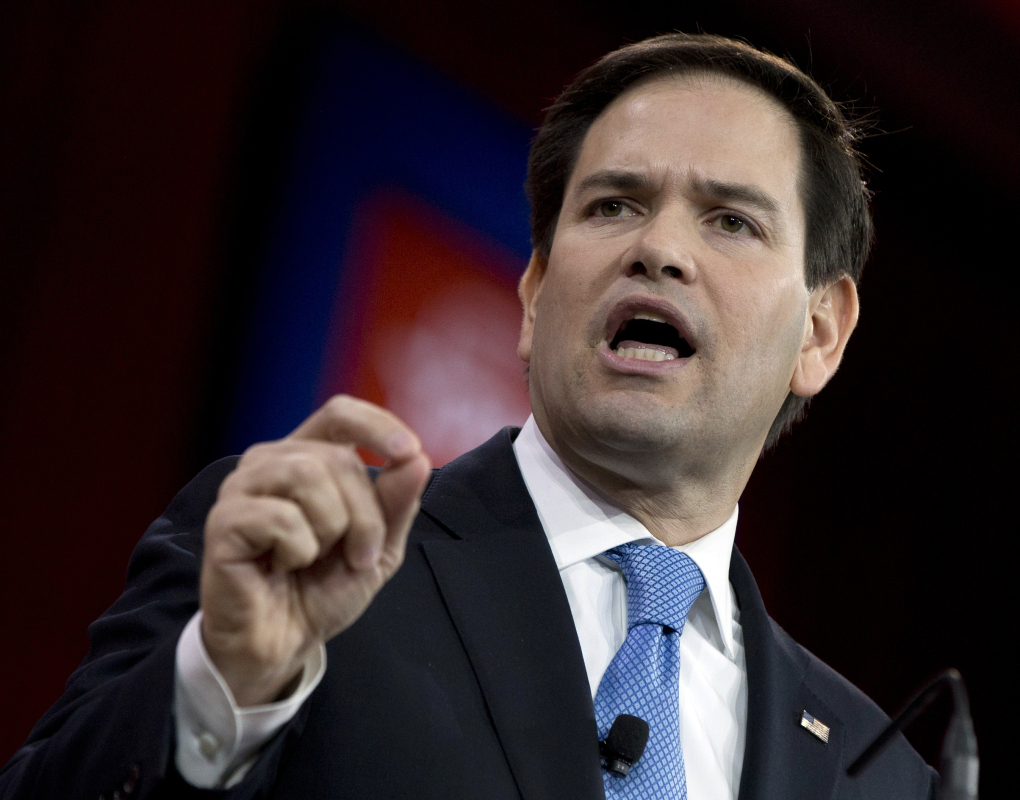
The South Florida Sun-Sentinel’s editorial on Wednesday that called on Marco Rubio to resign “and not rip us off” ignited a number of others to follow suit. It came as Rubio has continued to miss votes in the upper chamber of Congress while on the campaign trail and unapologetic about it. Instead, he’s indicated he doesn’t even really like the job. Historical precedent, though, indicates that if Rubio quit, it would be the exception to usual presidential politics. On his Smart Politics blog, Eric J. Ostermeier of the University of Minnesota writes that since 1972 there have been a total of 50 presidential candidacies by 45 sitting U.S. senators. Only one of these resigned before the presidential election: Bob Dole of Kansas in 1996. Dole only did so, in June 1996, after he had already secured the GOP nomination, and after the last batch of presidential primaries. During the past 40 plus years no other sitting U.S. senator running for the White House cut short their day job before the presidential election. Like Rubio, several of those senators were running for president in cycles in which their term in the nation’s upper legislative chamber was coming to an end – 12 in all: Four opted not to run for re-election: Democrat Fred Harris of Oklahoma (1972), North Carolina Democrat John Edwards (2004), Florida Democrat Bob Graham (2004), and Florida Republican Marco Rubio (2016) Seven failed in their presidential bids but still won re-election to their U.S. Senate seats that cycle: West Virginia Democrat Robert Byrd (1976), Texas Democrat Lloyd Bentsen (1976), Washington Democrat Scoop Jackson (1976), Kansas Republican Bob Dole (1980), Texas Republican Phil Gramm (1996), Utah Republican Orrin Hatch (2000), and Delaware Democrat Joe Biden (2008) One is currently running for both offices: Kentucky Republican Rand Paul (2016) And one stat where Rubio would definitely like to emulate Barack Obama: Of those 50 senators who have run for president since 1972, only one – Obama – actually became president. Much has been made of Rubio’s voting record. He’s missed about 34 percent of his from from the start of the year through last week. However, as reported by PolitiFact, from 2007 to 2008, Obama missed more than 64 percent of votes. From 2003 to 2004, John Kerry missed 72 percent of votes, and former Florida Sen. Graham missed about 37 percent of his votes when he ran in 2003-2004. Ironically, the man that Rubio succeeded in the Senate, Mel Martinez, did leave his seat more than a year before his term was set to expire.
Bradley Byrne: National security should always be our top priority
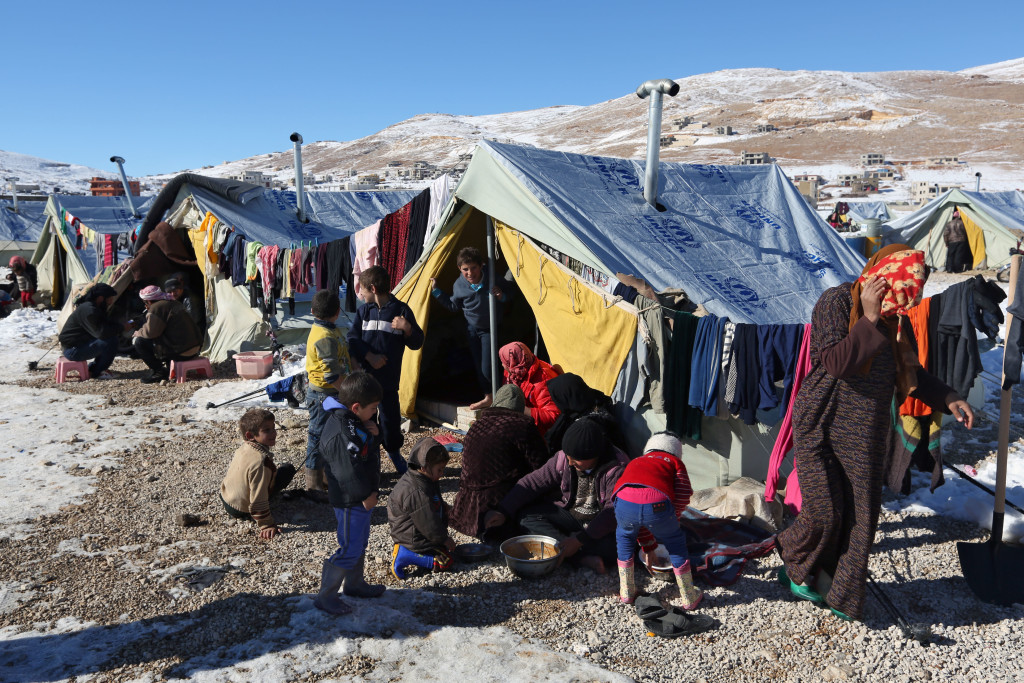
When considering whether to vote in favor of legislation, I often ask myself a simple question: Is this in the best interest of the American people? I believe that should be a guiding principle for all our elected officials when they are faced with a major decision. Recently, President Barack Obama and Secretary of State John Kerry announced a plan to increase the number of refugees allowed into the United States. Under their plan, the Obama Administration plans to accept at least 10,000 refugees from Syria. As soon as I heard this news, I had major concerns about the impact this decision would have on the American people and the national security of our country. Let me explain why. Currently, Syria is home to a major conflict between the regime of President Bashar al-Assad, fighters with the Islamic State, and many different factions of rebels who wish to overrun the government. This brutal fighting has resulted in a mass exodus of Syrian people looking to escape their war torn country. That’s where President Obama’s decision comes into play. As defined by the Immigration and Nationality Act, a refugee is someone who is unable or unwilling to return to his or her home country because of a “well-founded fear of persecution.” The federal government has a process for screening and accepting these individuals before allowing their admission into the US, and the Syrian people can certainly make a strong case to be admitted. However, I have serious concerns about the threat of terrorists infiltrating the refugee system and entering the United States. Groups like the Islamic State have made clear that they would attempt to disguise terrorist operatives as refugees. I am not the only one who has these concerns. In fact, Director of National Intelligence James Clapper recently called the migrant issue a “huge concern” and said that “we don’t put it past the likes of [the Islamic State] to infiltrate operatives among these refugees.” At a recent House Homeland Security Committee hearing, officials from the Federal Bureau of Investigation (FBI) and Department of Homeland Security (DHS) implied that bringing in a large number of Syrian refugees would represent a threat to our national security. DHS officials have even admitted that Syria does not have a computer database to check the criminal and terrorist records of these refugees. The issue is especially of interest to those of us in Southwest Alabama because Mobile is home to one of the 190 State Department refugee affiliates. This means Syrian refugees could be placed in our local community. That is why I sent a letter to the Department of State asking for information about the screening process the refugees would be required to go through. In response to my letter, I was invited to attend a classified briefing to learn more about the screening process. Unfortunately, I left the briefing with many of the same concerns. So after listening to the concerns of my constituents and getting more information from the State Department, I decided to support H.R. 3573, the Refugee Resettlement Oversight and Security Act. This bill would require approval from both the House and the Senate before refugees could be admitted to the United States. The bill would also give Congress the authority to block any inadequate refugee resettlement plan. There is simply no way to know for sure that terrorist groups, like the Islamic State, are not going to infiltrate the refugee process, and the Refugee Resettlement Oversight and Security Act will ensure that Congress, and in turn the American people, have the final say when it comes to increasing the number of refugees. On this issue, like many others, I can’t help but ask myself: Is this in the best interest of the American people? At this point, it seems clear the answer is no. Bradley Byrne is a member of the U.S. Congress representing Alabama’s 1st Congressional District.
