
Darryl Paulson: The Antonin Scalia battle: The stakes have seldom been as high
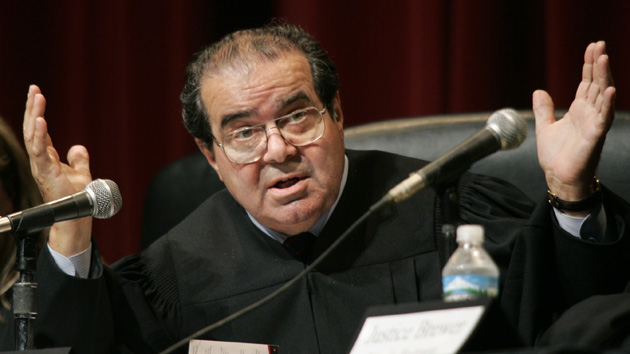
The passing of Supreme Court Justice Antonin Scalia on Feb. 3, has created an opportunity for both the executive and legislative branches to work together. If they can’t, American politics will face a crisis of enormous magnitude. That is how serious the situation has become. Whether liberal or conservative, most agree that Scalia was a judge who profoundly influenced the court during his three decades there. Many rank him among the giants such as John Marshall, Oliver Wendell Holmes, Jr., and William Brennan. Besides his opinions on court decisions, Scalia’s primary contribution was pushing the doctrines of “originalism” and “textualism.” Scalia’s doctrine of originalism argued against the grain of existing legal thought that the Constitution was a living document constantly in change. Scalia believed that the Constitution should be interpreted as the 18th-century framers understood it. In other words, there is no protection for abortion and gay rights, and no sanction for affirmative action. “Textualism” was a more widely accepted doctrine. According to Scalia, textualism meant that when interpreting laws, the courts must not look at the legislative history or Congressional intent, but the courts must only look at the words of the law. Among the current court, only Justice Stephen Breyer rejects textualism. There is little doubt about Scalia’s intellectual ability. He was valedictorian at Xavier High School, finished first in his class at Georgetown and was magna cum laude at Harvard Law School. After spending six years in private practice, he taught four years at the University of Virginia Law School. He then served as legal counsel for a federal agency before having a distinguished career at the University of Chicago Law School. Scalia had disappointments. When Ronald Reagan was elected president in 1980, Scalia wanted to be appointed Solicitor General. Instead, he lost out to Rex Lee and told his biographer that “I never forgot it.” Scalia was appointed to the District of Columbia Circuit Court in 1982. That circuit serves as a feeder to the Supreme Court, and that happened in 1986 when Reagan nominated Scalia to a position on the highest court. Scalia was confirmed 98-0 and would be the last ideological judge to be confirmed without opposition. The next year, the Senate rejected Robert Bork, and “borking” became the process of defeating ideologues. Within hours of the announcement of Scalia’s death, leaders in both parties were trying to define the nomination process. Senate Majority Leader Mitch McConnell announced that the Senate should wait until after the 2016 presidential election to confirm a replacement. “The American people have a voice in the selection of the next Supreme Court Justice,” said McConnell. “Therefore, this vacancy should not be filled until we have a new president.” Within minutes, Senate Democratic leader Harry Reid responded that the American people did have a voice. They elected Barack Obama as president in 2012. Reid argued that the nation cannot afford to go a full year with a split Supreme Court. “Failure to fill this would be a shameful abdication of one of the Senate’s most essential Constitutional responsibilities,” Reid said. To be confirmed, any Obama nominee would need a minimum of 50 senate votes in a body where Republicans now hold 54 of the 100 seats. The threat of a Republican filibuster would mean that the Democrats would need all 46 Democrats to support the nominee along with 14 of the 56 Republicans. That is very unlikely in the era of “borking.” The Supreme Court is facing many controversial issues this term including abortion, contraception, unions, voting rights and affirmative action. All may be affected by Scalia’s death and the possibility of a 4-4 deadlock on the court. For example, in the Fredricks v. California Teachers Association case, it appeared during oral arguments that it looked like a five-member majority would reverse a lower court decision requiring teachers who did not join the union to pay for the benefits of any collective bargaining agreement. Without Scalia, a 4-4 decision would mean the lower court decision would prevail. There are many political calculations at play. Will Obama nominate a moderate candidate to win Republican support? If so, will progressive Democrats balk? Will Obama nominate another liberal like Sonia Sotomayor or Elena Kagan? If so, will Republicans even hold hearings? Will moderate Republicans running for re-election in swing states pressure party leaders to hold hearings so that the party will not appear obstructionist? Will McConnell accept a moderate and risk jeopardizing his leadership position? Will Democrats accept a moderate and risk appearing to cave in to the Republican majority? When both sides shooting political bullets, will one of the parties be willing to holster the gun? Will that party look like the good guys acting responsibly, or will they look like political wimps unwilling to fight the good fight? The stakes are high; the outcome is indeterminate. *** Darryl Paulson is Professor Emeritus of Government at the University of South Florida St. Petersburg and resides in Palm Harbor, Florida.
Martin Dyckman: Refusing to approve Obama nominee could hurt the Party of No in November
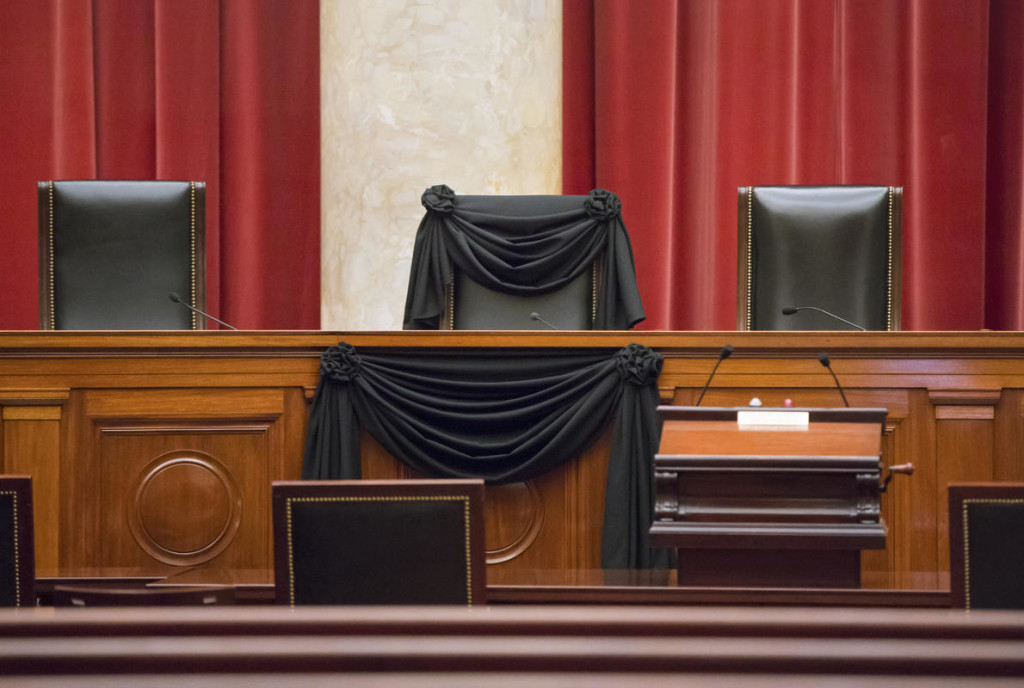
Mitch McConnell couldn’t even wait until Justice Antonin Scalia‘s corpse was cold before exploiting his death for partisan politics. The oleaginous majority leader means to keep the seat empty, no matter the likelihood of that paralyzing the sharply divided Supreme Court for a year, on the chance that voters might elect a Republican president to appoint Scalia’s replacement. The people, he said, “should have a voice in the selection of their next Supreme Court justice.” As Elizabeth Warren promptly reminded him, voters had that choice when they elected President Barack Obama and re-elected him four years ago with a winning margin of nearly 5 million votes. Most Americans understand that short of making or preventing war, the appointment of a Supreme Court justice has the longest-lasting consequences of anything a president does. They have trusted Obama with that responsibility. Twice. But the Party of No has never forgiven him for winning and has treated him with degrees of obstructionism and contempt that were never practiced by Democratic Congresses against Ronald Reagan or George W. Bush. The scheme of keeping Scalia’s seat empty for a year is consistent with the Party of No having shut down the executive branch to try win with extortion what it couldn’t win at the ballot box — the repeal of Obamacare. Belying the current Republican reinvention of history, there has never been a policy of deliberately perpetuating Supreme Court vacancies on the rare occasions when they occur during the last year of a president’s term. Quite the contrary. Some examples: There were only 10 months left in Reagan’s when the Senate unanimously confirmed Justice Anthony Kennedy, as Reagan urged it to do. John Adams had only four months left in his term when he appointed John Marshall to be chief justice in December 1800. That was easily the most consequential appointment ever. Thomas Jefferson, who had defeated Adams, could do nothing but gnash his teeth over the Federalists’ parting shot. Herbert Hoover was in the last year of his term, and facing all-but-certain defeat in the 1932 election, when he successfully nominated Benjamin Cardozo. When President Lyndon Johnson failed to promote Justice Abe Fortas to chief justice, it wasn’t because of timing but because Fortas had woeful ethical problems. There is nothing in the Constitution to require — or authorize — Congress to wait for an intervening election before carrying out any duty other than counting electoral votes. The 27th amendment merely postpones the effective date of any congressional salary increase until after the ensuing election for the House. That was James Madison‘s idea, 202 years before it was finally ratified, on the premise that lawmakers should think twice about giving themselves a pay raise of which the voters might disapprove. Today, there are Republican senators up for re-election who might want to rethink the McConnell scheme to hold the Supreme Court hostage for the next election. Five of the 17 seats the party is defending are in states, including Florida, which Obama carried four years ago. Obama will fulfill his constitutional duty to nominate a justice even if the Republican senators insist on defaulting on their duty to advise and consent. The voters will then have an opportunity to judge the senators. Two of the people said to be on Obama’s shortlist are circuit court of appeals judges whom the Senate confirmed unanimously two and three years ago. One would be the first Indian-American justice. The other is from Iowa and was enthusiastically supported by Iowa Sen. Charles Grassley, chairman of the judiciary committee, who is up for re-election this year. Is Grassley really prepared to stonewall her? Maybe not. He’s now saying he might hold hearings on a nominee although he still thinks the next president should make the appointment. At least the Party of No is making it vividly clear to voters what’s at stake for the Supreme Court — and for the entire concept of equal justice under law — this year. For the first time since Lyndon Johnson’s presidency, a majority of the court might be Democratic appointees. More to the important point, will the new justice be an ideologue like Scalia, or disposed to compromise like Sandra Day O’Connor and David Souter, both of whom were Republicans? They were the last justices who had ever held political office — O’Connor as a legislator and Souter as an attorney general — and the court was richer for that experience. The Supreme Court did its greatest work — Brown v. Board of Education comes to mind — when it valued consensus. It has been at its worst — think Citizens United — when an ideological majority insisted on scoring points that weren’t necessary to resolving the case. The American people want a new justice who will be judicious in every sense of the word. If Obama nominates such a person and the Republicans refuse to confirm him or her, it will be as good a reason as any for voters to reject the Party of No on Nov. 8. *** Martin Dyckman is a retired associate editor of the newspaper formerly known as the St. Petersburg Times. He lives in suburban Asheville, North Carolina.
