
Steve Flowers: The McMillans of Baldwin County
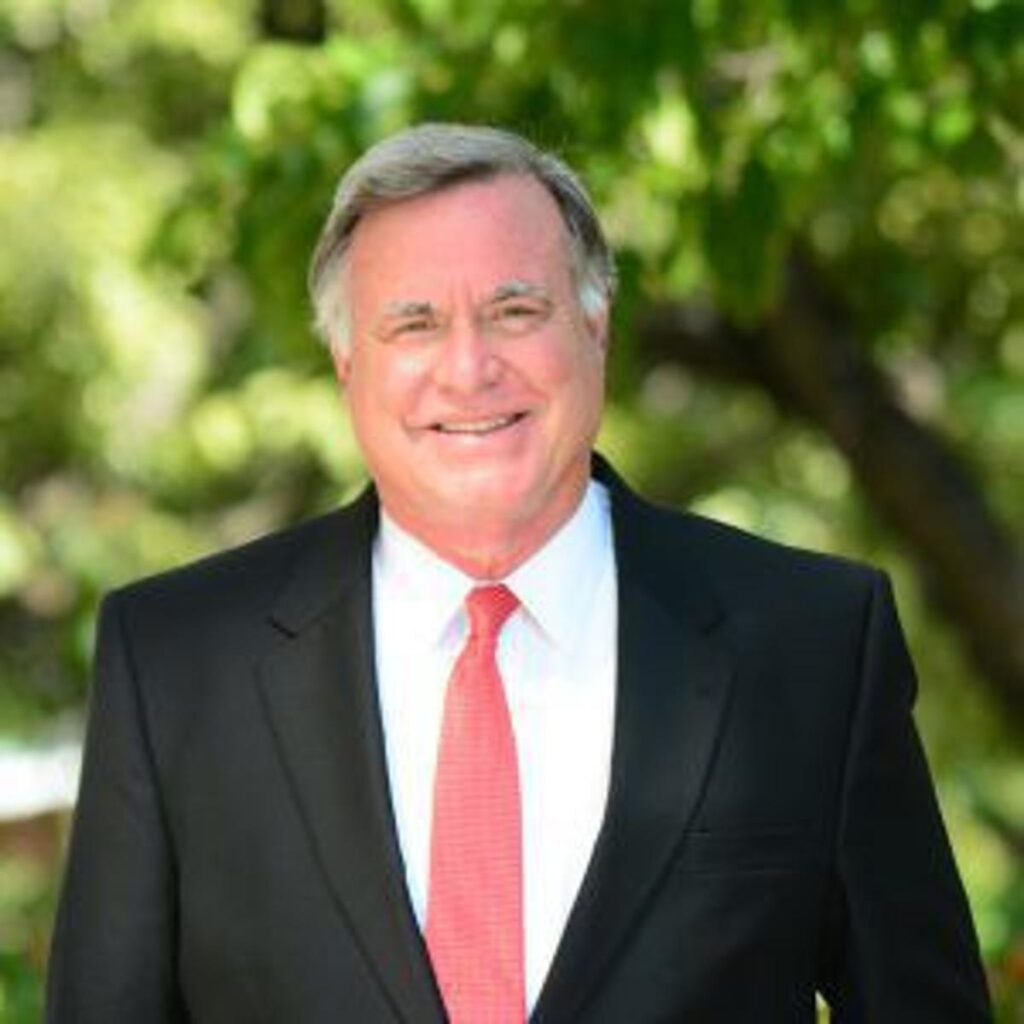
Alabama has a treasured history of famous political families. Many of the legacies are of father and son dynasties. The most prominent being the famous and powerful Bankheads of Jasper, which included a U.S. Senator, John Hollis Bankhead, and sons, Senator John H. Bankhead and Speaker of the U.S. House William Bankhead. There is a long line of fathers and sons who both served in the state senate. We have had one father-son governor legacy. James E. “Big Jim” Folsom was governor in the 1940s and 1950s. His son, Jim Folsom, Jr., was governor in the 1990s. Little Jim was literally born in the Governor’s Mansion during his daddy, Big Jim’s first term as governor, 1946-1950. During this generation, there are two brothers from Baldwin County who have made history. John and Steve McMillan have left a mark on Alabama’s political history. Decades from now, people will look at these twin brothers and say they have contributed a lot to Alabama. Yes, John and Steve are twins, born on July 6, 1941. Steve and John McMillan have deep family roots in Baldwin County. Before Alabama was even a state, their ancestors settled in the Stockton Community near Bay Minette, which is where they call home. Their family is in the timber business. Steve represented his home area in the Alabama House of Representatives for 43 years. The Baldwin County we see today as the fastest growing suburban county in the state was not the same Baldwin County they were born into 81 years ago. It was a large, sparsely populated, agricultural county. As fourth graders, we would read that it was the potato-growing county of the state. John remembers getting out of school for almost a month in the fall to help harvest potatoes when he was in high school. John and Steve’s ancestors were not only the early leaders of Baldwin County but also the state. Their great-grandfather, John Murphy, was Governor of Alabama. John was named for him. John M. McMillan, Sr., John and Steve’s father, was an outstanding civic and church leader and also served 30 years on the Baldwin County school board. Our current John Murphy McMillan graduated from high school in Bay Minette and then went to Rhodes College in Memphis, where he graduated with honors. John was serving as county commissioner when he was elected to the state legislature in 1974. He was reelected in 1978. However, two years later, Governor Fob James chose John to serve in Fob’s cabinet as Alabama’s Commissioner of Conservation and Natural Resources. It was under his watch that the state created the Alabama Trust Fund, a plan that saved all revenues from leases on offshore oil operations. This fund has grown from the original investment of just over $400 million to a sum approaching $4 billion. In 1985, John McMillan became the Chief Executive Officer of the Alabama Forestry Association. He served as head of that powerful statewide association for 20 years. In 2010, John was elected the 29th State Agriculture Commissioner. He was reelected overwhelmingly in 2014. He served eight successful years from 2011-2019 in this very important statewide office. In 2018, he was elected Alabama State Treasurer. He served successfully in this post through late 2021, when he left to become the head of the newly created Cannabis Commission. Steve McMillan, being John’s twin brother, had pretty much the same childhood as John. They grew up together in Stockton and worked on their uncle’s farm and family sawmill. Steve went on to Auburn University, where he graduated with honors. He came back home and started a real estate business, along with overseeing their family timberland. When John became Conservation Director, Steve was elected to the House seat John vacated. Steve served in that seat for 43 years. Steve was a quiet effective voice for his beloved Baldwin County. He passed away in April. Steve was a very diligent and well-prepared legislator. He was extremely conservative and was always on the side of the business community. He was dignified, but if you got to know him, very witty. He was not flamboyant and would seldom go to the well and speak. Yet, when he did, people listened. He exuded class and epitomized the term gentleman. The McMillan brothers of Baldwin County have made their mark on Alabama political history. See you next week. Steve Flowers is Alabama’s leading political columnist. His weekly column appears in over 60 Alabama newspapers. Steve served 16 years in the state legislature. Steve may be reached at: www.steveflowers.us.
Half a million dead in U.S., confirming virus’s tragic reach
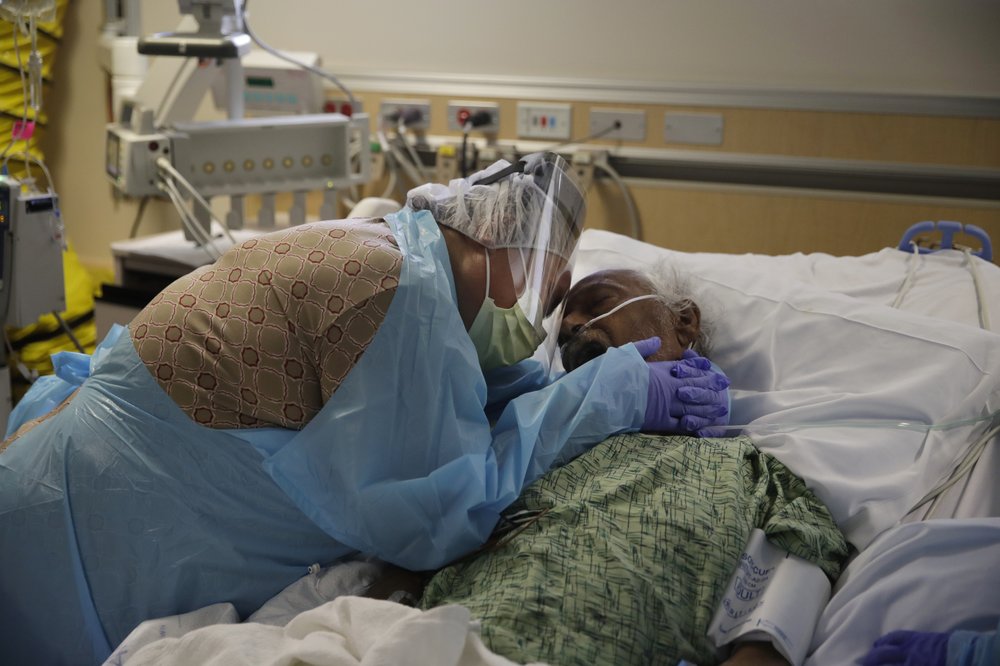
For weeks after Cindy Pollock began planting tiny flags across her yard — one for each of the more than 1,800 Idahoans killed by COVID-19 — the toll was mostly a number. Until two women she had never met rang her doorbell in tears, seeking a place to mourn the husband and father they had just lost. Then Pollock knew her tribute, however heartfelt, would never begin to convey the grief of a pandemic that has now claimed 500,000 lives in the U.S. and counting. “I just wanted to hug them,” she said. “Because that was all I could do.” Cindy Pollock poses for a portrait. (AP Photo/Otto Kitsinger) After a year that has darkened doorways across the U.S., the pandemic surpassed a milestone Monday that once seemed unimaginable, a stark confirmation of the virus’s reach into all corners of the country and communities of every size and makeup. “It’s very hard for me to imagine an American who doesn’t know someone who has died or have a family member who has died,” said Ali Mokdad, a professor of health metrics at the University of Washington in Seattle. “We haven’t really fully understood how bad it is, how devastating it is, for all of us.” Experts warn that about 90,000 more deaths are likely in the next few months, despite a massive campaign to vaccinate people. Meanwhile, the nation’s trauma continues to accrue in a way unparalleled in recent American life, said Donna Schuurman of the Dougy Center for Grieving Children & Families in Portland, Oregon. At other moments of epic loss, like the 9/11 terrorist attacks, Americans have pulled together to confront crisis and console survivors. But this time, the nation is deeply divided. Staggering numbers of families are dealing with death, serious illness, and financial hardship. And many are left to cope in isolation, unable even to hold funerals. “In a way, we’re all grieving,” said Schuurman, who has counseled the families of those killed in terrorist attacks, natural disasters, and school shootings. In recent weeks, virus deaths have fallen from more than 4,000 reported on some days in January to an average of fewer than 1,900 per day. Still, at half a million, the toll recorded by Johns Hopkins University is already greater than the population of Miami or Kansas City, Missouri. It is roughly equal to the number of Americans killed in World War II, the Korean War, and the Vietnam War combined. It is akin to a 9/11 every day for nearly six months. “The people we lost were extraordinary,” President Joe Biden said Monday, urging Americans to remember the individual lives claimed by the virus, rather than be numbed by the enormity of the toll. “Just like that,” he said, “so many of them took their final breath alone in America.” The toll, accounting for 1 in 5 deaths reported worldwide, has far exceeded early projections, which assumed that federal and state governments would marshal a comprehensive and sustained response and individual Americans would heed warnings. Instead, a push to reopen the economy last spring and the refusal by many to maintain social distancing and wear face masks fueled the spread. The figures alone do not come close to capturing the heartbreak. “I never once doubted that he was not going to make it. … I so believed in him and my faith,” said Nancy Espinoza, whose husband, Antonio, was hospitalized with COVID-19 last month. The couple from Riverside County, California, had been together since high school. They pursued parallel nursing careers and started a family. Then, on Jan. 25, Nancy was called to Antonio’s bedside just before his heartbeat its last. He was 36 and left behind a 3-year-old son. “Today it’s us. And tomorrow it could be anybody,” Nancy Espinoza said. By late last fall, 54 percent of Americans reported knowing someone who had died of COVID-19 or had been hospitalized with it, according to a Pew Research Center poll. The grieving was even more widespread among Black Americans, Hispanics and other minorities. Deaths have nearly doubled since then, with the scourge spreading far beyond the Northeast and Northwest metropolitan areas slammed by the virus last spring and the Sun Belt cities hit hard last summer. In some places, the seriousness of the threat was slow to sink in. When a beloved professor at a community college in Petoskey, Michigan, died last spring, residents mourned, but many remained doubtful of the threat’s severity, Mayor John Murphy said. That changed over the summer after a local family hosted a party in a barn. Of the 50 who attended, 33 became infected. Three died, he said. “I think at a distance people felt ‘This isn’t going to get me,‘” Murphy said. “But over time, the attitude has totally changed from ‘Not me. Not our area. I’m not old enough,’ to where it became the real deal.” For Anthony Hernandez, whose Emmerson-Bartlett Memorial Chapel in Redlands, California, has been overwhelmed handling burial of COVID-19 victims, the most difficult conversations have been the ones without answers, as he sought to comfort mothers, fathers and children who lost loved ones. His chapel, which arranges 25 to 30 services in an ordinary month, handled 80 in January. He had to explain to some families that they would need to wait weeks for a burial. Pallbearers, who were among only 10 allowed mourners, walk the casket for internment at the funeral for Larry Hammond, who died from the coronavirus, at Mount Olivet Cemetery in New Orleans. (AP Photo/Gerald Herbert) “At one point, we had every gurney, every dressing table, every embalming table had somebody on it,” he said. In Boise, Idaho, Pollock started the memorial in her yard last fall to counter what she saw as widespread denial of the threat. When deaths spiked in December, she was planting 25 to 30 new flags at a time. But her frustration has been eased somewhat by those who slow or stop to pay respect or to mourn. “I think that is part of what I was wanting,
