
Alabama describes proposed nitrogen gas execution; seeks to become first state to carry it out
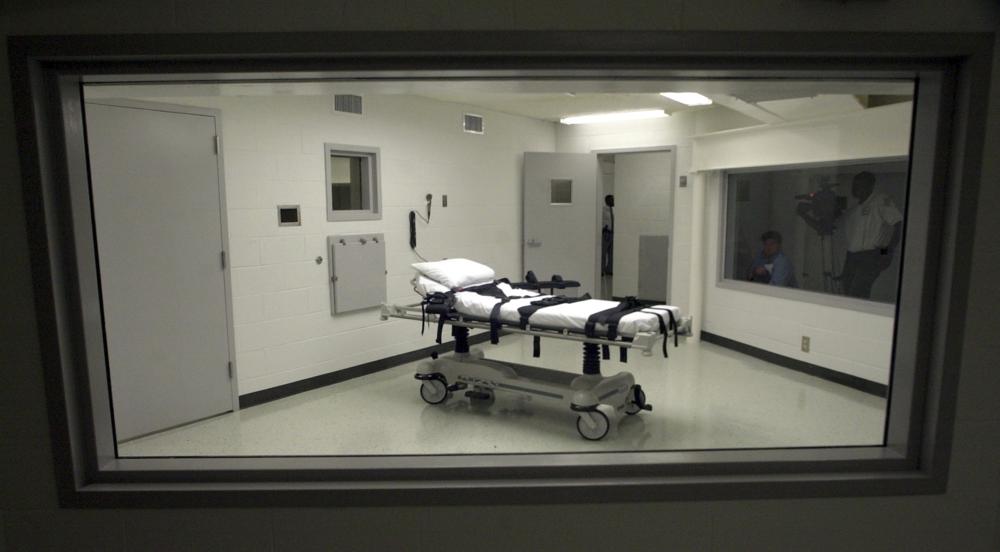
Alabama’s proposed procedures to carry out executions with nitrogen gas include fitting a mask over the inmate’s face and replacing their breathing air with nitrogen until their heart stops. The state described the procedures for the proposed new execution method in a redacted court filing. Alabama is seeking to become the first state to execute a prisoner using nitrogen. Nitrogen hypoxia has been authorized as an execution method in Alabama, Oklahoma, and Mississippi, but no state has used the method to carry out a death sentence. Nitrogen makes up 78% of the air inhaled by humans and is harmless when inhaled with proper levels of oxygen. Under the proposed execution method of nitrogen hypoxia, an inmate would be forced to breathe only nitrogen, depriving them of oxygen needed to maintain bodily functions and causing them to die. Alabama Attorney General Steve Marshall on Friday asked the Alabama Supreme Court to set an execution date for Kenneth Smith, 58, using nitrogen hypoxia as the method of execution. The attorney general’s office included a redacted copy of the protocol in a court filing asking a judge to dismiss a lawsuit filed by Smith. Smith, in seeking to block the state’s second attempt to execute him by lethal injection, had argued that nitrogen should be available. According to the protocol, the inmate would be escorted into the execution chamber, now used for lethal injections, placed on the gurney, and have a mask fitted over their face. The warden would then read the death warrant and give the inmate a chance to give a final statement up to two minutes long. Execution team members would then make a final inspection of the mask. The warden, from another room, would then “activate the nitrogen hypoxia system.” “After the nitrogen gas is introduced, it will be administered for 15 minutes or five minutes following a flatline indication on the EKG, whichever is longer,” the procedures stated. If Alabama carries out an execution by nitrogen, it will be the first new execution method since lethal injection was introduced in the 1970s. Deborah Denno, a death penalty expert at Fordham Law School, said that unlike lethal injection and electrocution, which have been used for decades, “experts could only speculate about how a state might conduct a nitrogen hypoxia execution.” She said the filed Alabama protocol does not provide answers because of its vagueness and heavy redactions. “This is a vague, sloppy, dangerous, and unjustifiably deficient protocol made all the more incomprehensible by heavy redaction in the most important places,” Denno wrote in an email. John Palombi, an attorney representing several death row inmates, said, “It will be difficult to fully analyze this protocol until a far less redacted version is made available.” “This is a complex procedure, and we have every right to be concerned when the Department of Corrections is not transparent about it, particularly when they have had such a bad track record recently,” Palombi wrote in an email. Alabama attempted to execute Smith by lethal injection last year, but called off the execution because of problems inserting an IV into his veins. It was the state’s second such instance within two months of being unable to put an inmate to death and its third since 2018. The day after Smith’s aborted execution, Gov. Kay Ivey announced a pause on executions to conduct an internal review of lethal injection procedures. The state resumed lethal injections last month. Alabama lawmakers approved nitrogen hypoxia as an alternate execution method in 2018 as death penalty states faced difficulty obtaining lethal injection drugs and ongoing litigation challenging the humaneness of lethal injection. “It’s readily available. It’s 78% of the air we breathe, and it will be a lot more humane to carry out a death sentence,” Trip Pittman, the former Alabama state senator who proposed the new execution method, said. Pittman said the inmate will pass out — similar to how aircraft passengers pass out when a plane depressurizes — and then die. Pittman disputed criticism that the method is experimental. He said that while no state has carried out a death sentence with nitrogen, people have died by breathing nitrogen during industrial accidents and suicide attempts, so the effects are known. Smith was one of two men convicted in the 1988 murder-for-hire slaying of Elizabeth Sennett. The other man convicted in the killing was executed in 2010. Charles Sennett, the victim’s husband and a Church of Christ pastor, killed himself when the investigation began to focus on him as a possible suspect, according to court documents. Republished with the permission of The Associated Press.
Alabama fails to complete lethal injection for 3rd time

Alabama’s string of troubled lethal injections, which worsened late Thursday as prison workers aborted another execution because of a problem with intravenous lines, is unprecedented nationally, a group that tracks capital punishment said Friday. The uncompleted execution of Kenneth Eugene Smith was the state’s second such instance of being unable to kill an inmate in the past two months and its third since 2018. The state completed an execution in July, but only after a three-hour delay caused at least partly by the same problem with starting an IV line. A leader at the Death Penalty Information Center, an anti-death penalty group with a large database on executions, said no state other than Alabama has had to halt an execution in progress since 2017, when Ohio halted Alva Campbell’s lethal injection because workers couldn’t find a vein. According to Ngozi Ndulue, deputy director of the Washington-based group, the only other lethal injection stopped before an inmate died also was in Ohio in 2009. “So Alabama has more aborted lethal injections in the past few years than the rest of the country has overall,” she said. Something has obviously gone wrong with the state’s execution procedure, Ndulue said. “I think Alabama clearly has some explaining to do, but also some reflection to do about what is going wrong in its execution process,” she said. “The question is whether Alabama is going to take that seriously.” The Alabama Department of Corrections disputed that the cancellation was a reflection of problems. In a statement, it blamed the late-running court action for the cancellation because prison officials “had a short timeframe to complete its protocol.” Prison officials said they called off Smith’s execution for the night after they were unable to get the lethal injection underway within the 100-minute window between the courts clearing the way for it to begin and a midnight deadline when the death warrant expired for the day. The U.S. Supreme Court cleared the way for Smith’s execution when at about 10:20 p.m., it lifted a stay issued earlier in the evening by the 11th U.S Circuit Court of Appeals. But the state decided about an hour later that the lethal injection would not happen that evening. “We have no concerns about the state’s ability to carry out future lethal injection procedures,” the Alabama Department of Corrections said in an emailed statement. “The department will continue to review its processes, as it routinely does following each execution, to identify areas of improvement.” Alabama Gov. Kay Ivey also blamed Smith’s last-minute appeals as the reason “justice could not be carried out” U.S District Judge R. Austin Huffaker Jr. on Friday granted a request from Smith’s lawyers to visit with Smith and take photographs of his body. He also ordered the state to preserve notes and other materials related to what happened in the failed execution. Smith’s attorneys said they believe he may have been strapped to a gurney for four hours even though his final appeals were still underway. “Mr. Smith no doubt has injuries from the attempted execution — and certainly physical and testimonial evidence that needs to be preserved — that can and should be photographed and/or filmed,” lawyers for Smith wrote. Smith, who was scheduled to be put to death for the murder-for-hire slaying of a preacher’s wife in 1988, was returned to death row at Holman Prison after surviving the attempt, a prison official said. His lawyers declined to comment Friday morning. Corrections Commissioner John Hamm said prison staff tried for about an hour to get the two required intravenous lines connected to Smith, 57. Hamm said they established one line but were unsuccessful with a second line, which is required under the state’s protocol as a backup, after trying several locations on Smith’s body. Officials then tried a central line, which involves a catheter placed into a large vein. “We were not able to have time to complete that, so we called off the execution,” Hamm said. The initial postponement came after Smith’s final appeals focused on problems with IV lines at Alabama’s last two scheduled lethal injections. Because the death warrant expired at midnight, the state must go back to court to seek a new execution date. Advocacy groups and defense lawyers said Alabama’s continued problems show a need for a moratorium to investigate how the death penalty is carried out in the state. “Once again, the state of Alabama has shown that it is not capable of carrying out the present execution protocol without torture,” federal defender John Palombi, who has represented many death row inmates in the state, said via email Prosecutors said Smith was one of two men who were each paid $1,000 to kill Elizabeth Sennett on behalf of her husband, who was deeply in debt and wanted to collect the insurance. The slaying — and the revelations of who was behind it — rocked the small north Alabama community where it happened in Colbert County and inspired a song called “The Fireplace Poker,” by the Southern rock group Drive-By Truckers. John Forrest Parker, the other man convicted in the slaying, was executed in 2010. Alabama has faced scrutiny over its problems at recent lethal injections. In ongoing litigation, lawyers for inmates are seeking information about the qualifications of the execution team members responsible for connecting the lines. In a Thursday hearing in Smith’s case, a federal judge asked the state how long was too long to try to establish a line, noting at least one state gives an hour limit. The execution of Joe Nathan James Jr. in July took several hours to get underway because of problems establishing an IV line, leading Reprieve US Forensic Justice Initiative, an anti-death penalty group, to claim the execution was botched. In September, the state called off the scheduled execution of Alan Miller because of difficulty accessing his veins. Miller said in a court filing that prison staff poked him with needles for more than an hour, and at one point, left him hanging vertically on a gurney before announcing they were
Execution of Joe Nathan James Jr. was botched, advocacy group alleges
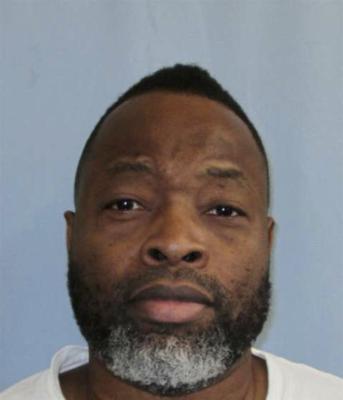
Alabama corrections officials apparently botched an inmate’s execution last month, an anti-death penalty group alleges, citing the length of time that passed before the prisoner received the lethal injection and a private autopsy indicating his arm may have been cut to find a vein. Joe Nathan James Jr. was put to death July 28 at an Alabama prison for the 1994 shooting death of his former girlfriend. The execution was carried out more than three hours after the U.S. Supreme Court denied a request for a stay. “Subjecting a prisoner to three hours of pain and suffering is the definition of cruel and unusual punishment,” Maya Foa, director of Reprieve U.S. Forensic Justice Initiative, a human rights group that opposes the death penalty, said in a statement. “States cannot continue to pretend that the abhorrent practice of lethal injection is in any way humane.” The Alabama Department of Forensic Science declined a request to release the state’s autopsy of James, citing an ongoing review that happens after every execution. Officials have not responded to requests for comment on the private autopsy, which was first reported by The Atlantic. At the time of the execution, Alabama Corrections Commissioner John Hamm told reporters that “nothing out of the ordinary” happened. Hamm said he wasn’t aware of the prisoner fighting or resisting officers. The state later acknowledged that the execution was delayed because of difficulties establishing an intravenous line but did not specify how long it took. Dr. Joel Zivot, a professor of anesthesiology at Emory University and an expert on lethal injection who witnessed the private autopsy, said it looked like there were numerous attempts to connect a line. Zivot said he saw “multiple puncture sites on both arms” and two perpendicular incisions, each about 3 to 4 centimeters (1 to 1.5 inches) in length, in the middle of the arm, which he said indicated that officials had attempted to perform a “cutdown,” a procedure in which the skin is opened to allow a visual search for a vein. He said the cutdown is an old-style medical intervention rarely performed in modern medical settings and that it would be painful without anesthesia. He also said he saw evidence of intramuscular injections not in the vicinity of a vein. The Alabama Department of Corrections prison system issued a written statement in which it noted that “protocol states that if the veins are such that intravenous access cannot be provided, the team will perform a central line procedure,” which involves placing a catheter in a large vein. “Fortunately, this was not necessary, and with adequate time, intravenous access was established,” the statement said. Alabama does not allow witnesses from news outlets to watch the preparations for a lethal injection. They get their first glimpse of the execution chamber when an inmate is already strapped to the gurney with the IV line connected. A reporter for The Associated Press who attended the execution observed that James did not respond when the warden asked if he had final words. His eyes remained closed except for briefly fluttering at one point early in the procedure. Lawyers who spoke with James by telephone said they were disturbed by his reported lack of movements and raised questions about what happened before the lethal injection. Hamm said James was not sedated. “That wasn’t the Joe that I knew. He always had something to say. He always wanted to be in control,” said James Ransom, the attorney who helped James file his appeal with the U.S. Supreme Court. “The fact that he did not give any sort of reaction … and that he didn’t open his eyes tells me something was up,” Ransom said. John Palombi, a federal defender who spoke with James twice on the day of his execution, said James, “was certainly alert” earlier in the day. The Atlantic quoted a friend of James as saying that the inmate had planned to make a final statement. Robert Dunham, executive director of the Death Penalty Information Center, a national nonprofit organization that analyzes issues concerning capital punishment, said the delay between the Supreme Court’s go-ahead and the execution, combined with the autopsy, points to a “botched execution, and it is among the worst botches in the modern history of the U.S. death penalty.” “This execution is Exhibit A as to why execution secrecy laws are intolerable,” Dunham wrote in an email to the A.P. “The public is entitled to know what went on here — and what goes on in all Alabama executions — from the instant the execution team begins the process of physically preparing the prisoner for the lethal injection until the moment the prisoner dies.” Republished with the permission of The Associated Press.
Ruling could block Alabama execution scheduled next week
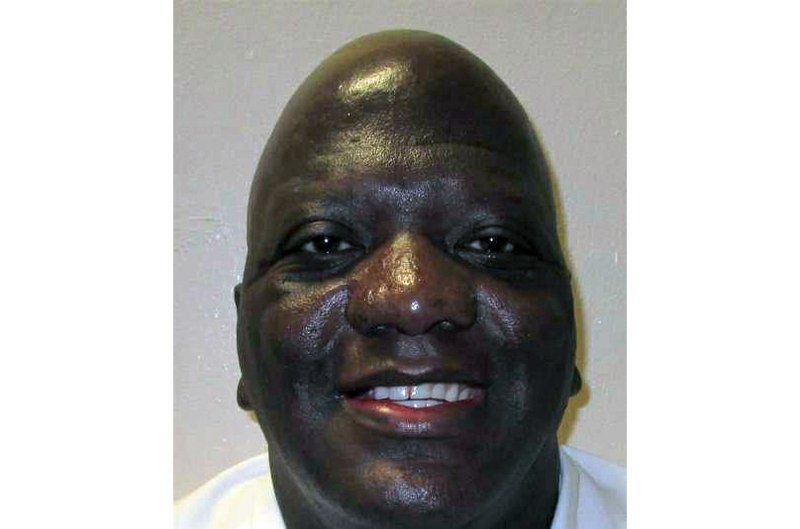
An appellate court on Friday ordered a judge to consider a request to block an Alabama execution next week as attorneys argue the low-IQ inmate should have been given help understanding the prison paperwork that laid the groundwork for the planned lethal injection. The three-judge panel directed the district court to decide a request for a preliminary injunction to prevent the state from executing Willie B. Smith III on Thursday. The 11th U.S. Circuit Court of Appeals ruled that a federal judge prematurely dismissed a lawsuit arguing that Smith was due help under the Americans with Disabilities Act in understanding paperwork related to execution method selection. The panel ruled a judge erred in saying Smith did not have standing to bring the claim. Lawyers for Smith said he has an IQ in the 70s and should have received help under the 1990 act that bars discrimination against those with disabilities. Thursday’s execution date and plan is still in place. However, John Palombi, an attorney for Smith said the decision requires the district court judge to decide whether to issue a preliminary injunction. “If the motion for preliminary injunction is granted, it would stop Mr. Smith’s execution and allow this case, which was filed long before the State asked for an execution date for Mr. Smith, to continue with discovery and depositions and go to trial as scheduled in June 2022,” Palombi wrote in an email. Smith was convicted of the 1991 kidnapping and murder of Sharma Ruth Johnson, 22. Prosecutors said Smith abducted Johnson at gunpoint from an ATM in Birmingham, stole $80 from her and then took her to a cemetery where he shot her in the back of the head. The 11th Circuit ruling centered on what, if any, obligations the state had in helping state inmates understand a brief window in which they could change their requested execution method. Lethal injection is the main execution method used in Alabama. But after lawmakers authorized nitrogen hypoxia as an execution method in 2018, the new law gave death row inmates a 30-day window to select nitrogen hypoxia as their execution method. The Federal Defenders for the Middle District of Alabama, who defend death row inmates but weren’t representing Smith at the time, drafted an election form for their clients to request nitrogen. The prison warden later gave every death row inmate a copy of the form. Smith did not turn in a form selecting nitrogen, paving the way for the state to execute him next week by lethal injection. The state has not developed a procedure for using nitrogen as an execution method, and at least for now is not scheduling executions with nitrogen hypoxia. The state argued Smith could not bring the claim because Smith never gave any indication that he wanted to request nitrogen. Smith also had a conversation with his then-lawyer in 2018 when the form was distributed, an attorney for the state told the judges. “The evidence is he talked to his lawyer in June: Nothing,” Alabama solicitor general Edmund G. LaCour told the panel during arguments Wednesday “He did have access to assistance. It’s plain as day.” This is Alabama’s second attempt this year to carry out Smith’s death sentence. The state called off a prior execution plan last Feb. 12 after the U.S. Supreme Court maintained an injunction saying he could not be put to death without his pastor present. The reprieve came the same night of his scheduled lethal injection as he waited in a holding cell near the death chamber. Republished with the permission of the Associated Press.
Judge dismisses execution lawsuit, reprimands AG’s office
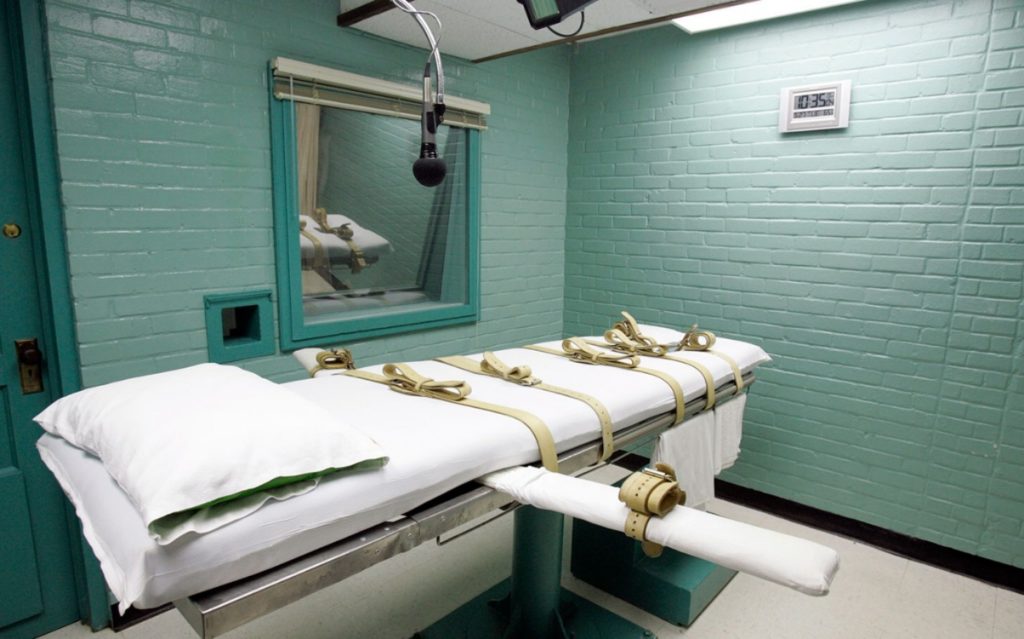
On Friday, a federal judge paved the way for Alabama to proceed with a lethal injection next month and reprimanded the state attorney general’s office for giving false information to the court during the litigation centered on forms given to death row inmates for selecting an execution method. Chief U.S. District Judge Emily C. Marks dismissed a lawsuit that argued the state failed to give Willie Smith, who has an IQ below 75, required help under the Americans with Disabilities Act in filling out forms that affected the timing of his execution. Smith is scheduled to be executed on Oct. 21 by lethal injection for the 1991 kidnapping and murder of 22-year-old Sharma Ruth Johnson in Birmingham. After Alabama authorized nitrogen hypoxia as an execution method, the state gave death row inmates a brief window to select that as their execution method. The state has not yet developed a protocol for using nitrogen hypoxia and is not setting execution dates for inmates who requested it. Smith did not turn in a form selecting nitrogen. His attorneys argued that the state was required by law to help intellectually disabled inmates like Smith with the form. Marks dismissed the claim, saying the form was not required by state law and that Smith could have written on his own to request nitrogen. Marks ruled that the “form was not required, directed, or sanctioned” by state law and “for the entire month of June 2018, both before and after this form was distributed, Smith had the ability to opt into execution by nitrogen hypoxia through any writing he chose.” Smith’s attorney indicated they will appeal. “The court’s dismissal of our complaint on jurisdictional grounds does not reject the merits of our claim, which is that the Department of Corrections, when it distributed an opt-in form for a method of execution, created a program without providing an accommodation to Mr. Smith, who is cognitively disabled. We are anticipating appealing this decision and continuing to fight for Mr. Smith,” federal defender John Palombi wrote in an email. Marks also issued an order formally reprimanding the Office of the Alabama Attorney General Steve Marshall and Assistant Attorney General Lauren Simpson over false information given to the court. Simpson had previously told the court that the warden of Holman Prison made the decision herself to hand out the forms. However, the judge noted that Warden Cynthia Stewart in 2018 testified that she was instructed to do so. “Although she could not recall who gave her the instruction, she acknowledged it would have been someone above her in the chain of command,” Marks wrote. Simpson was fined $1,500. Marks wrote that the misrepresentation was inexcusable, although she did not think Simpson acted maliciously. “The Court finds that the improper conduct here was reckless, particularly given that this is a case involving the death penalty; it was not an isolated event but rather occurred across two written filings and was stated orally at a hearing,” Marks wrote. Republished with the permission of the Associated Press.
Alabama sets new execution date for inmate for 1991 murder
Alabama has rescheduled the execution of a state inmate who had a lethal injection called off in February when the U.S. Supreme Court sided with his request to have his personal pastor with him in the death chamber. The Alabama Supreme Court set an Oct. 21 execution date for 51-year-old Willie B. Smith III, who was convicted of the 1991 kidnapping and murder of 22-year-old Sharma Ruth Johnson in Birmingham. In February, the state called off Smith’s execution on the night he was to have been put to death. The decision came after the U.S. Supreme Court maintained a lower court injunction, saying he could not be executed without his personal spiritual advisor present in the room with him. The state at the time maintained only prison staff would be allowed in the room. Alabama officials wrote in a court filing that the state recognized “its policy restricting access to the execution chamber to institutional chaplains was unlikely to survive further litigation” and “reached an agreement with Smith to allow his spiritual advisor to minister to him in the chamber.” The Alabama Department of Corrections did not immediately respond to an email asking about the change in procedures. Prosecutors said Smith abducted Johnson at gunpoint from an ATM, stole $80 from her, and then took her to a cemetery where he shot her in the back of the head. The victim was the sister of a police detective. “The murder of Ms. Johnson, which was committed during the course of a robbery and kidnapping, was as brutal as they come, and there is no doubt that Smith committed those offenses,” lawyers with the attorney general’s office wrote in the request to set the execution date. The Alabama Supreme Court set an October execution date for Smith even though a judge has scheduled a 2022 trial on claims related to his intellectual capacity. His lawyers have argued the state failed to give Smith, who has an IQ below 75, required assistance under the Americans with Disabilities Act in filling out forms that affected the timing of his execution. “We are disappointed that the attorney general asked for and the Alabama Supreme Court set a date for Mr. Smith’s execution despite the fact that a lawsuit he filed two years ago is progressing through discovery and is set for trial early next year,” federal defender John Palombi wrote in an email. Palombi added, “The state is attempting to moot this lawsuit out before his case can be heard. We will continue to fight against this premature attempt to execute Mr. Smith.” The Alabama attorney general’s office has disputed that Smith’s rights were violated.+ Republished with the permission of the Associated Press.
