
Voting rights ruling increases pressure on Democrats to act
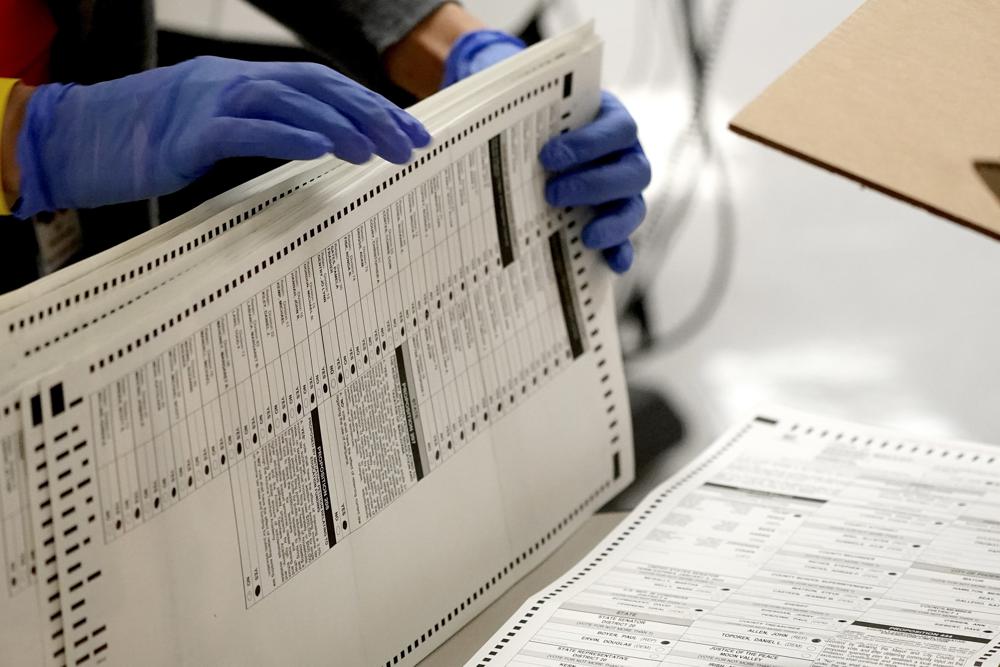
Congressional Democrats are facing renewed pressure to pass legislation that would protect voting rights after a Supreme Court ruling Thursday made it harder to challenge Republican efforts to limit ballot access in many states. The 6-3 ruling on a case out of Arizona was the second time in a decade that conservatives on the Supreme Court have weakened components of the Voting Rights Act of 1965, a landmark Civil Rights-era law. But this opinion was released in a much different political climate, in the aftermath of President Donald Trump’s lie that last year’s election was stolen. Trump’s fabrications spurred Republicans in states such as Georgia and Florida to pass tougher rules on voting under the cloak of election integrity. Democrats on Capitol Hill have already tried to respond with a sweeping voting and elections bill that Senate Republicans united to block last week. A separate bill, the John Lewis Voting Rights Advancement Act, which would restore sections of the Voting Rights Act that the Supreme Court previously weakened, has been similarly dismissed by most Republicans. Those setbacks, combined with the Supreme Court’s decision, have fueled a sense of urgency among Democrats to act while they still have narrow majorities in the House and Senate. But passing voting legislation at this point would almost certainly require changes to the filibuster, allowing Democrats to act without GOP support. “Absolutely this increases the pressure to take a very hard look at whether the Senate is an institution that will allow itself to be rendered powerless and dysfunctional,” said Rep. John Sarbanes, a Maryland Democrat who sponsored a voting bill that passed the House in March. Change won’t be easy. A group of moderate Democratic senators, including Sens. Joe Manchin of West Virginia and Kyrsten Sinema of Arizona, have ruled out revisions to the filibuster. In an evenly divided Senate, their rejection denies the votes needed to move forward with a procedural change. Thursday’s ruling was on a case in Sinema’s home state. In an opinion by Justice Samuel Alito, the court reversed an appellate ruling in deciding that Arizona’s regulations — on who can return early ballots for another person and on refusing to count ballots cast in the wrong precinct — are not racially discriminatory. Sinema assailed the decision in a statement, saying it would “hurt Arizonans’ ability to make their voices heard at the ballot box.” She reiterated her support for the bill yet said nothing about her opposition to the filibuster changes. That opposition stands in the way of the bill passing. Democrats, who say the issue is an existential one for democracy and who need the support of voters of color in next year’s midterms, quickly condemned the decision. “If you believe in open and fair democracy and the principle of one person, one vote, today is one of the darkest days in all of the Supreme Court’s history,” said Senate Majority Leader Chuck Schumer. House Speaker Nancy Pelosi called the ruling an “unprecedented assault” that “greenlights the brutal, accelerating campaign of voter suppression.” Speaking in Florida, President Joe Biden said he would have “much more to say” soon, but largely sidestepped comment. For their part, Republicans show no sign of willingness to engage with Democrats on the issue. “The states created the federal government, and it’s not up to Chuck or Nancy or anyone else in Washington, D.C., to tell Arizona or anyone else how they should conduct an election,” Arizona Attorney General Mark Brnovich, who was a party in the case, said on Fox News. Many Republicans other have dismissed a series of recent hearings on the John Lewis bill as “theater.” “They are using this issue because they see a political opportunity,” said Rep. Mike Johnson, a Louisiana Republican who sits on the House Judiciary Committee. “The more they advance this narrative that it’s us versus them, and oppressors versus the oppressed, and black versus white, it divides the country.” Questions hang over existing lawsuits challenging voting laws. While experts generally agree that Thursday’s decision will make legal challenges under Section 2 of the Voting Rights Act more difficult, many of the lawsuits pending against GOP-backed laws this year make separate, constitutional claims. So those lawsuits will proceed. The U.S. Justice Department’s recent lawsuit against Georgia’s new voting law does make a Section 2 challenge, although it was narrowly written and alleges an intent by Republican state lawmakers to discriminate against minority voters. In the Arizona case, the legal challenge centered on whether there was a discriminatory effect of the laws. Still, advocates of voting rights protections were surprised by the breadth of the ruling. “This ruling is much worse than we had anticipated,” said Wendy Weiser, an attorney for the Brennan Center for Justice. “This is going to put a lot of pressure on Congress and the White House to pass the voting bills.” And it could embolden more Republican-led states to pursue further restrictions. Judicial Watch President Tom Fitton, who supports the ruling, said: “States can be confident that they can go full speed ahead to strengthen elections and protect voting rights with security measures such as voter ID and other sensible measures to make it harder to steal elections.” Republished with the permission of the Associated Press.
In Senate vote, Joe Biden sees ‘step forward’ for elections bill
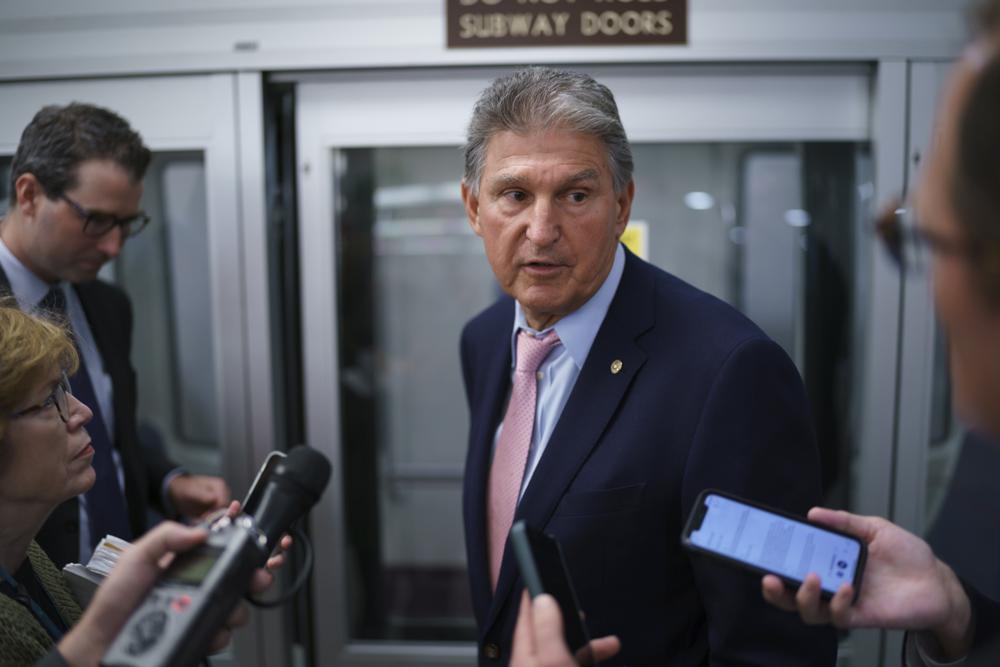
The White House said Monday it views the Senate’s work on an elections bill overhaul and changes being offered by Sen. Joe Manchin as a “step forward,” even though the Democrats’ priority legislation is expected to be blocked by a Republican filibuster. White House press secretary Jen Psaki said the revisions proposed by Manchin are a compromise, another step as Democrats work to shore up voting access and what President Joe Biden sees as “a fight of his presidency.” “The president’s effort to continue that fight doesn’t stop tomorrow at all,” Psaki said. The Senate is preparing for a showdown Tuesday, a test vote of the For the People Act, a sweeping elections bill that would be the largest overhaul of U.S. voting procedures in a generation. A top priority for Democrats seeking to ensure access to the polls and mail-in ballots made popular during the pandemic, and it is opposed by Republicans as a federal overreach into state systems. Manchin had been the sole holdout among Democrats in the Senate, declining to back his party’s bill. But late last week, the West Virginian aired a list of proposed changes that are being well received by his party, and a nod from the White House will give them currency. He has suggested adding a national voter ID requirement, which has been popular among Republicans and dropping other measures from the bill like its proposed public financing of campaigns. Among voting rights advocates, one key voice, Democrat Stacey Abrams, has said she could support Manchin’s proposal. Ahead of Tuesday’s vote, it is clear Democrats in the split 50-50 Senate will be unable to open debate, blocked by a filibuster by Republicans. In the Senate, it takes 60 votes to overcome the filibuster, and without any Republican support, the Democrats cannot move forward. “Will the Republicans let us debate it?” said Senate Majority Leader Chuck Schumer as he opened the chamber Monday. “We’re about to find out.” The Republican leader, Sen. Mitch McConnell of Kentucky, has said no Republican would support the bill, calling the legislation a “partisan power grab” that would erode local control of elections. While some Democrats want to change the filibuster rules to push the elections bill through, Manchin and other senators are opposed to taking that next move. Psaki said the administration’s hope is that the chamber’s 50 Democrats are aligned and that an unsuccessful vote will prompt the search for a new path. The White House didn’t give its full support to the Manchin alternative. But Psaki said the president “is appreciative of the efforts by Senator Manchin and others to continue to make progress on voting rights which he feels is a huge priority.” The sweeping voting reform bill is taking on fresh urgency as former President Donald Trump continues to challenge the outcome of the 2020 election and is urging Republican-led states that are imposing new voting rules in the states. State officials who certified the results of the 2020 election have dismissed Trump’s false claims of voter fraud and judges across the country who have dismissed multiple lawsuits filed by Trump and his allies. Trump’s own attorney general said at the time there was no evidence of widespread fraud that would change the outcome. The changes being put in place in many of the Republican states are being decried by voting rights advocates who argue the restrictions will make it more difficult for people to cast ballots, particularly minority residents in cities who tend to support Democrats. As the Senate action churns, more changes could be coming to the bill. Democrats want to add protections against intimidation at the polls and during the vote-counting process in the aftermath of the 2020 election. They propose enhancing penalties for those who would threaten or intimidate election workers and creating a “buffer zone” between election workers and poll watchers, among other possible changes. Rep. John Sarbanes, D-Md., a lead sponsor of the bill, said the effort underway is to “respond to the growing threat of election subversion in GOP-led states across the country.” Democrats also want to limit the ability of state officials to remove a local election official without cause. Georgia Republicans passed a state law earlier this year that gives the GOP-dominated legislature greater influence over a state board that regulates elections and empowers it to remove local election officials deemed to be underperforming. “The dangers of the voter suppression efforts we’re seeing in Georgia and across the nation are not theoretical, and we can’t allow power-hungry state actors to squeeze the people out of their own democracy by overruling the decisions of local election officials,” said Sen. Raphael Warnock, D-Ga., who is working to advance the proposal in the Senate. Republished with the permission of the Associated Press.
