
Donald Trump endorses challenger against Georgia elections chief
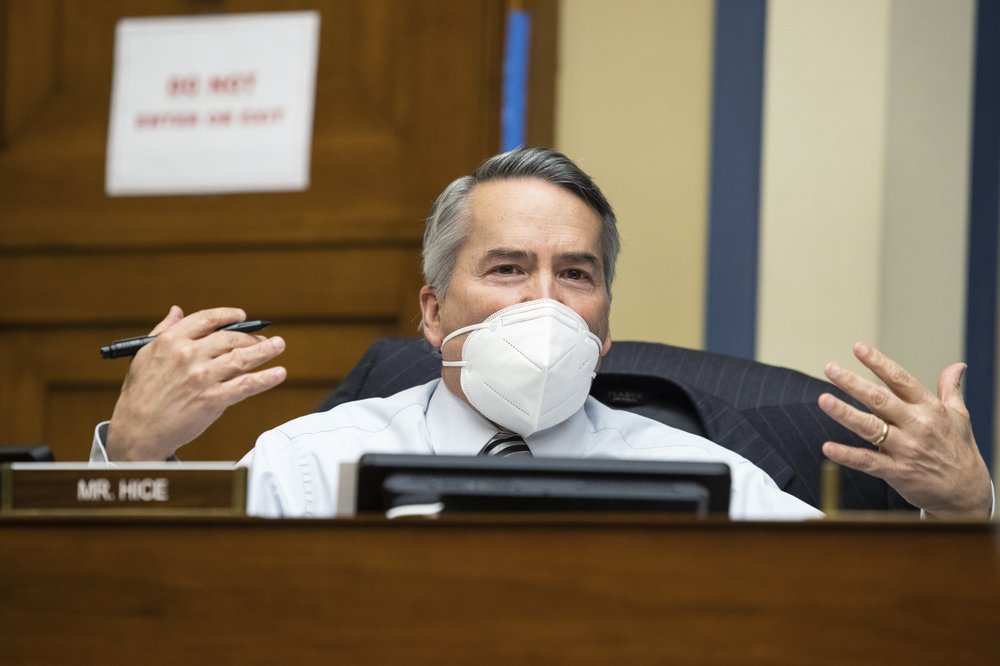
Former President Donald Trump on Monday endorsed a conservative Georgia congressman in his bid to unseat the Republican secretary of state who refused to help overturn the November election results. Rep. Jody Hice, a tea party favorite and Trump acolyte, is the first major challenger to Brad Raffensperger since the secretary of state certified President Joe Biden’s narrow victory in Georgia and disputed Trump’s false allegations of fraud. Trump’s endorsement marks his most direct attempt at retribution against those he blames for his loss and reaffirms his continued influence over the Republican Party. “Jody has been a steadfast fighter for conservative Georgia values and is a staunch ally of the America First agenda,” Trump said in a statement that repeated the unsupported allegations of fraud. “Unlike the current Georgia Secretary of State, Jody leads out front with integrity. I have 100% confidence in Jody to fight for Free, Fair, and Secure Elections in Georgia, in line with our beloved U.S. Constitution.” In a statement, Raffensperger criticized Hice for supporting Trump’s false fraud claims and likened him to former GOP Sens. David Perdue and Kelly Loeffler, who lost twin Senate runoffs in January after supporting Trump’s bid to subvert the election results. “Few have done more to cynically undermine faith in our election system than Jody Hice,” Raffensperger said. “We saw in January what Georgia voters will do to candidates who use that rhetoric.” Hice didn’t mention Trump in his announcement but has said previously that he expected the former president’s support, and he echoed Trump’s rhetoric about Raffensperger. “What Brad Raffensperger did was create cracks in the integrity of our elections, which I wholeheartedly believe individuals took advantage of in 2020,” Hice said in a statement Monday, without supporting evidence that would refute Georgia’s three statewide counts of nearly 5 million ballots. “Every Georgian, in fact, every American, has the right to be outraged by the actions and, simultaneously, the inaction of our Secretary of State,” Hice added. Trump has long made clear his intentions to target Raffensperger and Gov. Brian Kemp, also a Republican, for their parts in ratifying Biden’s victory. “I’ll be here in a year in a half campaigning against your governor and your crazy secretary of state,” Trump said at a Georgia rally on Jan. 4, the eve of the two U.S. Senate runoffs that Democrats swept to win control of the chamber. Both Kemp and Raffensperger have said they were simply following the state’s election law and fulfilling their required duties. The developments Monday drew immediate plaudits from the right. “The establishment still doesn’t get how popular Trump is with the base, but they will,” said Debbie Dooley, an early tea party organizer and Trump ally who is close to Hice. “We’ve known Raffensperger was dead, and Jody can excite the base and raise money. This is a serious challenge.” No heavyweight primary opponent has emerged yet against Kemp. Some Trump allies are looking to former Rep. Doug Collins as an ideal challenger. Others close to Collins, one of Trump’s most high-profile House defenders during impeachment proceedings, say he is more likely to make another bid for the Senate after his unsuccessful campaign last year in a special election ultimately won by Sen. Raphael Warnock, a Democrat. Collins was Trump’s choice in 2019 for a Senate vacancy, opened by Republican Johnny Isakson’s retirement. But Kemp opted for Loeffler. Collins finished third in a jungle primary behind Warnock and Loeffler last November before Warnock prevailed in the January runoff. Hice has not cut as high a profile since his election in 2014 as Collins did in Washington, but the 60-year-old has been a loyal Trump lieutenant. He was among the many Republican officials in Georgia who relentlessly pushed Trump’s false claims of voter fraud last fall. He endorsed a lawsuit filed by Texas against Georgia and other battleground states seeking to overturn Biden’s victory in the U.S. Supreme Court — a suit the high court rejected — and he objected to the certification of Electoral College votes even after a pro-Trump mob violently stormed the U.S. Capitol on Jan. 6. Trump’s ire has proven vexing for Raffensperger and Kemp. Kemp won Trump’s endorsement in a heated Republican primary for governor in 2018 and has never publicly criticized the president. He even reaffirmed recently that he’d back Trump if he sought the White House again in 2024. Raffensperger has pushed back more directly, arguing forcefully in national media interviews last fall that the election was accurate and fair. He wrote an op-ed saying he felt “thrown under the bus” by a president he’d supported. Weeks before the Capitol insurrection, a Raffensperger aide angrily predicted the president’s rhetoric would lead to violence. Since then, both Kemp and Raffensperger have tried, carefully, to appeal to the Republican base by calling for changes to the state’s election law. Most specifically, the two men support requiring voter identification for absentee voting to replace the current signature-match requirement. But some GOP lawmakers want to go considerably further, rolling back Georgia’s no-excuse absentee voting altogether, contracting weekend early voting options in some counties, and ending automatic voter registration. Raffensperger and Kemp have been more circumspect publicly about their positions on the more sweeping proposals, though the incumbent secretary of state has continued to vouch for the integrity of absentee voting and the success of automatic registration. Hice, despite his criticism of Raffensperger, also avoided any specifics about what changes he’d like to see in Georgia’s election, saying only that he is “encouraged to see the General Assembly taking it upon themselves to address some of the glaring issues in our elections.” Republished with the permission of the Associated Press.
Donald Trump headed to Georgia as turnout driver, but also a threat
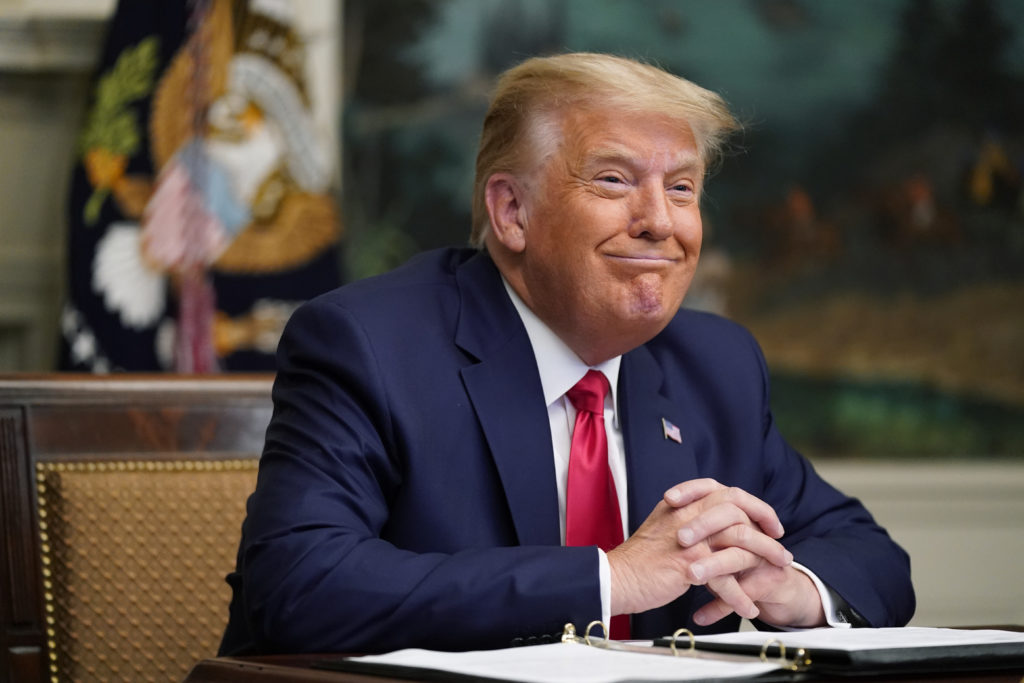
Some establishment Republicans are sounding alarms that President Donald Trump’s conspiratorial denials of his own defeat could threaten the party’s ability to win a Senate majority and counter President-elect Joe Biden’s administration. The concerns come ahead of Trump’s planned Saturday visit to Georgia to campaign alongside Sens. David Perdue and Kelly Loeffler, who face strong Democratic challengers in Jan. 5 runoffs that will determine which party controls the Senate at the outset of Biden’s presidency. Republicans acknowledge Trump as the GOP’s biggest turnout driver, including in Georgia, where Biden won by fewer than 13,000 votes out of about 5 million cast. That means every bit of enthusiasm from one of Trump’s signature rallies could matter. But some Republicans worry Trump will use the platform to amplify his baseless allegations of widespread voter fraud — arguments roundly rejected in state and federal courts across the country. That could make it harder for Perdue and Loeffler to keep a clear focus on the stakes in January and could even discourage Republicans from voting. “The president has basically taken hostage this race,” said Brendan Buck, once a top adviser to former House Speaker Paul Ryan. Especially fraught are Trump’s continued attacks on Georgia’s Republican state officials and the state’s election system, potentially taking away from his public praise of Loeffler and Perdue. “Trump’s comments are damaging the Republican brand,” argued Republican donor Dan Eberhart, who added that the president is “acting in bad sportsmanship and bad faith” instead of emphasizing Republicans’ need to maintain Senate control. The GOP needs one more seat for a majority. Democrats need Jon Ossoff to defeat Perdue and Raphael Warnock to defeat Loeffler to force a 50-50 Senate, positioning Vice President-elect Kamala Harris as the tie-breaking majority vote. Trump on Monday blasted Gov. Brian Kemp as “hapless” for not intervening to “overrule” Secretary of State Brad Raffensperger’s certification of Biden’s win. A day earlier, Trump told Fox News he was “ashamed” he’d endorsed Kemp in his 2018 GOP primary for governor. Kemp’s office noted in response that state law gives Kemp no authority to overturn election results, despite Trump’s contention that Kemp could “easily” invoke “emergency powers.” Meanwhile, Raffensperger, a Trump supporter like Kemp, has accused the president of throwing him “under the bus” for doing his job. Perdue and Loeffler have attempted to stay above the fray. They’ve long aligned themselves with Trump and even echoed some of his general criticisms of the fall elections, jointly demanding Raffensperger’s resignation. But the crux of their runoff argument — that Republicans must prevent Democrats from controlling Capitol Hill and the White House — is itself a tacit admission that Biden, not Trump, will be inaugurated Jan. 20. And at one recent campaign stop, Perdue heard from vocal Trump supporters who demanded that he do more to help Trump somehow claim Georgia’s 16 electoral votes. Republicans see three potential negative outcomes to Trump fanning the flames. Some GOP voters could be dissuaded from voting again if they accept Trump’s claims that the system is hopelessly corrupted. Among Republicans more loyal to Trump than to the party, some could skip the runoff altogether out of anger at a party establishment the president continues to assail. Lastly, at the other end of the GOP spectrum are the moderate Republicans who already crossed over to help Biden win Georgia and could be further alienated if the runoff becomes another referendum on Trump. Josh Holmes, a top adviser to Senate Majority Leader Mitch McConnell, said Republicans “haven’t seen any evidence of lack of enthusiasm in the Senate races.” But none of those potential bad effects would have to be sweeping to tilt the runoffs if they end up as close as the presidential contest in Georgia. “We’ll see how it plays out. It changes day by day and week by week. But so far, so good,” Holmes said. In Georgia, any Republican concerns are more circumspect. Brian Robinson, a former adviser to Kemp’s Republican predecessor as governor, said Trump should “drive a strong, forward-looking message” about what’s at stake for a Republican base that “is fervently devoted to him.” “The best thing he can do for the party,” Robinson said, “is to talk about the importance of having a Republican Senate majority to project his policy legacy and to make sure the Democrats can’t reverse a lot of what he has put in place that Republicans support.” Asked what Trump should avoid, Robinson circled back to what he believes the president should say. Former U.S. Rep. Jack Kingston, a Trump ally, downplayed the potential for GOP splintering, framing an “inner-family squabble” as a sideshow to the “incredible” consequences that define the runoffs. “Followers of Trump will follow Trump, but they’re not blind to the huge stakes. And neither is he,” Kingston said. “He knows to keep his legacy. He’s got to get these people reelected.” Trump, Kingston argued, is “keeping the base interested,” a necessary component of any successful runoff campaign since second rounds of elections often see a drop-off in voter participation. Robinson added that Democrats face their own challenge in replicating record turnout for Biden. “What’s the best motivator? Fear,” he said. Before November, Democrats dreaded a second Trump term more than Republicans feared Trump losing, Robinson reasoned. “Republicans have reason to be scared now,” he said, because of the prospect that Democrats could control both ends of Pennsylvania Avenue. “That could make a difference in turnout” beyond anything Trump says, Robinson concluded. For their part, the senators continue their public embrace of all things Trump ahead of the visit. “I couldn’t be more excited to welcome” the president “back to Georgia,” Loeffler wrote on Twitter after Trump confirmed his plans. Perdue’s campaign quickly retweeted the comment, which Loeffler punctuated with a reminder that the runoffs are “an all-hands-on-deck moment.” It’s not clear, though, if all Republicans will be on hand at all. Kemp, the governor who appointed Loeffler upon Sen. Johnny Isakson’s retirement last year, has on previous Trump visits
Republicans reprise warnings of leftism in Georgia races
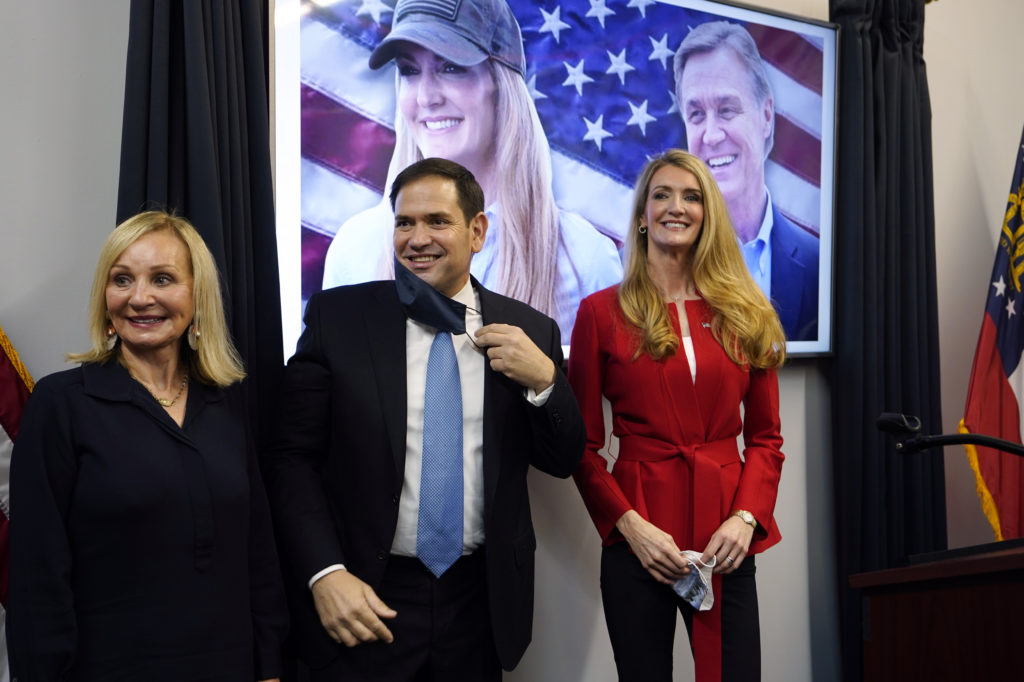
Socialists. Radical extremists. Marxists. Those over-the-top caricatures of Democrats make up Republicans’ opening arguments as they try to protect Georgia’s two U.S. senators who face strong challenges in Jan. 5 runoffs that’ll determine which party controls the chamber at the start of President-elect Joe Biden’s Democratic administration. Florida Sen. Marco Rubio led the charge Wednesday, campaigning in suburban Atlanta alongside Sen. Kelly Loeffler and warning that defeats for her and fellow Georgia Sen. David Perdue would hand over the U.S. government to “radical elements.” Loeffler went so far as to assert, without supporting details, that her Democratic challenger Raphael Warnock has “a Marxist ideology.” Loeffler took no questions after the event that filled the Cobb County Republican Party headquarters with hundreds of enthusiastic voters, many of them not wearing masks as coronavirus cases spike across the country. Warnock’s campaign pushed back, noting the Democrat’s policy preferences fall squarely within the U.S. political mainstream. Terrence Clark, a Warnock aide, said Loeffler is trying to “scare Georgians” while “misrepresenting” Warnock’s candidacy and obscuring her own record. It’s a familiar trope for Republicans to blast Democrats, especially in traditionally GOP-leaning states, as “too liberal” or even “socialist.” But the vehemence to open a two-month runoff blitz underscores the national stakes of Georgia’s unusual twin Senate contests and the sharp focus Republicans are putting on energizing core supporters for a second round of voting. The arguments come as Loeffler, Perdue, and other Georgia Republicans continue suggesting the Nov. 3 election — overseen by a Republican secretary of state — was rife with voting irregularities and tabulation errors, assertions made without evidence but that animate a GOP base still loyal to President Donald Trump even after his national defeat. “Turnout takes care of itself when the presidential race is on the ballot, so it can still boil down to persuasion in the middle,” said Republican consultant Chip Lake, a top adviser on Rep. Doug Collins’ unsuccessful bid against Loeffler. “In a runoff, it’s no longer about persuasion” Lake continued. “It’s about the bases.” Collins, now leading Trump’s recount efforts in Georgia, said the goal is to keep Republicans “fired up because they don’t want to see our country turn to a liberal perspective.” Republicans and Democrats are bracing for an unprecedented national-scale campaign in Georgia, a newfound two-party battleground where record turnout of roughly 5 million split almost evenly. Biden leads Trump by about 14,000 votes, but Secretary of State Brad Raffensperger announced plans Wednesday for an audit with a hand tally of ballots before certifying the results. Perdue, a staunch Trump ally first elected in 2014, led Democrat Jon Ossoff but fell short of the majority Georgia law requires for victory. Loeffler, appointed after Republican Sen. Johnny Isakson announced his retirement last year, trailed Warnock in an all-party primary to finish out the final two years of a six-year term. The Associated Press has called runoffs in both contests but hasn’t called Georgia’s 16 presidential electoral votes. Nationally, Republicans have secured 50 Senate seats to Democrats’ 48. Still, the GOP needs at least one of the Georgia seats to command a majority in January. In a 50-50 Senate, Democrats would have the tie-breaking vote in Vice President-elect Kamala Harris. Rubio and Loeffler warned of dire consequences, even as Rubio implicitly conceded the hyperbole. “To be fair, not all Democrats are socialists,” Rubio said. “But all socialists are Democrats.” Rubio alluded to failed presidential candidate Bernie Sanders, an independent who calls himself a democratic socialist and caucuses with Senate Democrats. Rubio nodded to progressive calls to “defund the police” and Democrats who support policies like “Medicare for All” single-payer health insurance or tuition-free public college nationwide. “All the energy” and “all the money” in the Democratic Party, Rubio insisted, come from such forces. Rubio didn’t mention Biden, who won the nomination and presidency as an establishment figure promising bipartisanship and compromise. Biden often noted as he campaigned that he defeated Sanders and other more liberal candidates for the nomination. “He thinks he’s running against someone else,” Biden quipped at Trump during an Oct. 22 debate when the president sought to label his challenger a socialist. Biden, for example, supports adding a “public option” government health care plan to existing insurance markets, but without ending private insurance. He backs significant public spending on green energy but opposes progressives’ push for quickly phasing out fossil fuels. Warnock and Ossoff have largely aligned behind Biden’s agenda, especially on a public option. Clark, Warnock’s spokesman, noted that Loeffler backs GOP efforts to roll back the 2010 Affordable Care Act that bars insurers from discriminating against customers based on their health history. He also saddled her with the GOP-run Senate’s failure to pass another coronavirus economic aid package as millions of Americans face the loss of jobless benefits, foreclosures, and evictions. Republicans nonetheless are doubling down after GOP Senate incumbents defeated well-financed challengers in more conservative states such as Iowa, Texas, and Montana, while Republican challengers knocked off several House Democrats who’d won moderate districts in 2018. Their bet is that Georgia, long a GOP stronghold before Biden’s performance in the presidential race, follows the same path. Republished with the permission of the Associated Press.
Senate confirms Robert Wilkie for Veterans Affairs secretary
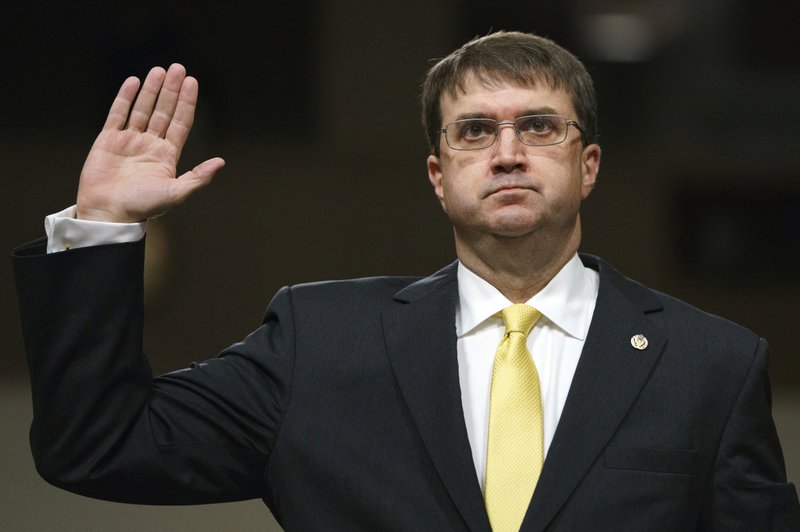
The Senate on Monday confirmed Pentagon official Robert Wilkie to be secretary of Veterans Affairs, charged with delivering on President Donald Trump’s campaign promises to fire bad VA employees and steer more patients to the private sector. Wilkie won approval on a bipartisan vote of 86-9, securing the backing of many Democrats after insisting at his confirmation hearing that he will not privatize the government’s second-largest department. It was a moment of respite from the sharp political divisions engulfing Trump’s other nominees in the final months before congressional midterm elections. Wilkie is Trump’s third pick for the job in 18 months. The longtime public official says he will “shake up complacency” at VA, which has struggled with long waits in providing medical treatment to millions of veterans. In a statement released by the White House, Trump applauded the confirmation vote and said he looked forward to Wilkie’s leadership. “I have no doubt that the Department of Veterans Affairs will continue to make strides in honoring and protecting the heroic men and women who have served our nation with distinction,” he said. Trump selected Wilkie for the post in May after firing his first VA secretary, David Shulkin, amid ethics charges and internal rebellion at the department over the role of private care for veterans. Trump’s initial replacement choice, White House doctor Ronny Jackson, withdrew after allegations of workplace misconduct surfaced. Wilkie, a former assistant secretary of defense under President George W. Bush, has received mostly positive reviews from veterans’ groups for his management experience, but the extent of his willingness to expand private care as an alternative to government-run VA care remains largely unknown. Trump last year pledged he would triple the number of veterans “seeing the doctor of their choice.” Currently more than 30 percent of VA appointments are made in the private sector. Under repeated questioning at his hearing, the Air Force and Navy veteran said he opposed privatizing the agency of 360,000 employees and would make sure VA health care is “fully funded.” When pressed by Sen. Jon Tester, the top Democrat on the panel, if he would be willing to disagree with Trump, Wilkie responded “yes.” “I have been privileged to work for some of the most high-powered people in this town,” said Wilkie, currently a Pentagon undersecretary for Defense Secretary Jim Mattis. “They pay me for their opinions, and I give those to them.” Wilkie’s main task in the coming months will be carrying out a newly signed law to ease access to private health providers. That law gives the VA secretary wide authority to decide when veterans can bypass the VA, based on whether they receive “quality” care, but the program could face escalating costs. Some Democrats have warned the VA won’t be able to handle a growing price tag, putting it at risk of budget shortfalls next year. Major veterans’ groups want full funding for core VA medical centers, which they see as best-suited to veterans’ specialized needs such as treatment for post-traumatic stress. As VA secretary, Wilkie also will have more power under a new accountability law to fire VA employees. Lawmakers from both parties have recently raised questions about the law’s implementation, including how whistleblower complaints are handled and whether the law is being disproportionately used against rank-and-file employees rather than senior managers who set policy. “The tone has been set by President Trump on the direction of VA reforms,” said Dan Caldwell, executive director of the conservative Concerned Veterans for America. “There have been a tremendous number of bills passed in the last year and half, and all will require a lot of work to make sure they are properly implemented.” Republican Sen. Johnny Isakson of Georgia, chairman of the Senate Veterans Affairs Committee, praised Wilkie as “eminently qualified,” saying he will “bring stability and leadership” to VA. Wilkie served as acting VA secretary after Shulkin’s firing in March, before returning to his role as Pentagon undersecretary. He will replace current acting VA secretary Peter O’Rourke, who clashed with the VA inspector general after refusing to release documents relating to VA whistleblower complaints and casting the independent watchdog as an underling who must “act accordingly.” Under pressure from Congress, the VA agreed last week to provide documents to the IG. Republished with the permission of the Associated Press.
Donald Trump’s VA choice bows out in latest Cabinet flame-out
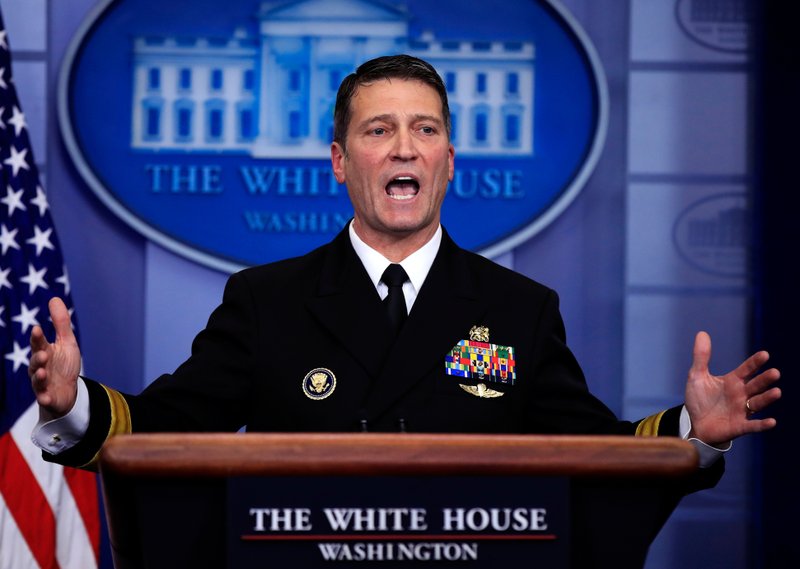
President Donald Trump’s White House doctor reluctantly withdrew his nomination to be Veterans Affairs secretary Thursday in the face of accusations of misconduct, the latest embarrassing episode highlighting Trump’s struggles to fill key jobs and the perils of his occasional spur-of-the-moment-decision-making. The weeks-long saga surrounding the nomination of Navy Dr. Ronny Jackson leaves the government’s second-largest agency without a permanent leader while it faces an immediate crisis with its private health care program. And it abruptly tarnished the reputation of a doctor beloved by two presidents and their staffs. White House officials say they are taking a new look at the way nominees’ backgrounds are checked — and they believe they will persuade Trump to take additional time to ensure that a replacement is sufficiently vetted. The leading person now under consideration for the VA post is former Rep. Jeff Miller, who chaired the House Veterans Affairs Committee before retiring last year, according to White House officials. Miller is a strong proponent of expanding private care for veterans, a Trump priority. Trump quickly selected Jackson, a rear admiral in the Navy, to head the VA last month after firing Obama appointee David Shulkin following accusations of ethical problems and a mounting rebellion within the agency. Jackson, a surprise choice who has worked as a White House physician since 2006, faced immediate questions from Republican and Democratic lawmakers as well as veterans groups about whether he had the experience to manage the massive department of 360,000 employees serving 9 million veterans. Then this week’s unconfirmed allegations by current and former colleagues about drunkenness and improper prescribing of controlled substances, compiled and released by Democrats, made the nomination all but unsalvageable. “The allegations against me are completely false and fabricated,” Jackson said in a statement announcing his withdrawal. Press secretary Sarah Huckabee Sanders said Jackson was back at work at the White House on Thursday. But his future there remains uncertain. He had stepped aside from directing Trump’s medical care and leading the medical unit while his nomination was being considered. “I would hope the White House would closely consider whether he is the best person to provide medical care for the president,” said Democratic Sen. Chris Coons of Delaware. Trump himself praised Jackson, saying, “He’s a great man, and he got treated very, very unfairly.” Then the president went after Democratic Sen. Jon Tester of Montana, who released a list of allegations against Jackson that was compiled by the Democratic staff of the Senate Veterans Affairs Committee. Trump aides said the president was furious with Tester, who faces a tough re-election fight this fall, and plans to aggressively campaign against him. “I think Jon Tester has to have a big price to pay in Montana,” Trump warned on “Fox & Friends” on TV. Tester, meanwhile, called on Congress to continue its investigation of Jackson. “I want to thank the service members who bravely spoke out over the past week. It is my constitutional responsibility to make sure the veterans of this nation get a strong, thoroughly vetted leader who will fight for them,” he said. Elsewhere in the capital, Congress was questioning another Trump official whose job appears in jeopardy. Scott Pruitt, head of the Environmental Protection Agency, was questioned closely by House Democrats about revelations of unusual security spending, first-class flights, an advantageous condo lease and more. Even Republicans who support Pruitt’s deregulation efforts, said his conduct needed scrutiny. Tom Price, Trump’s first secretary of the Department of Health and Human Services, resigned last year after criticism of his use of private charter flights and military jets. The turmoil at the VA comes as it faces a budget shortfall for its private-sector Veterans Choice program, a campaign priority of Trump’s, with lawmakers deadlocked over a long-term fix due to disagreements over cost and how much access veterans should have to private doctors Veterans are “exhausted by the unnecessary and seemingly never-ending drama,” said Paul Rieckhoff, executive director of Iraq and Afghanistan Veterans of America. “VA’s reputation is damaged, staff is demoralized, momentum is stalled and the future is shockingly unclear.” The VA issued a statement late Wednesday that it would push to have Congress move on an expansion of Choice next month. Sen. Johnny Isakson of Georgia, chairman of the Veterans Affairs Committee, said Thursday he would “work with the administration to see to it we get a VA secretary for our veterans and their families.” White House officials were visibly dismayed Wednesday and Thursday as they watched Jackson suffer the blows of the allegations. The doctor, who is well-liked by and has personal relationships with many White House staffers, cited the withering pressure for withdrawing from consideration for the post, but maintained he had done nothing wrong. Trump said on Fox that he has an idea for a replacement nominee, adding it will be “someone with political capability.” Miller, the former congressman who was described as the leading candidate, is a strong proponent of expanding private care for veterans, Miller led the push to create Choice in 2014. However, major veterans groups and Democrats stand opposed to an aggressive expansion of Choice, seeing the effort as a potential threat to VA medical centers. Dan Caldwell, executive director of the conservative Concerned Veterans for America, urged the White House to take more time “to carefully select and vet a new nominee” who could head VA. “The VA currently has a competent Acting Secretary in Robert Wilkie who can manage the VA along with the rest of his leadership team,” he said. “Considering the tremendous challenges that the last three VA secretaries have faced, it is important that a capable individual with a high level of integrity is selected.” During the presidential campaign, Trump repeatedly pledged to fix the VA by bringing accountability and expanding access to private doctors, criticizing the department as “the most corrupt.” At an Ohio event last July, Trump promised to triple the number of veterans “seeing the doctor of their choice.” Currently, more than 30
Senators considering a delay for VA confirmation hearing
Senators were discussing plans to delay the confirmation hearing for President Donald Trump’s pick to be Veteran Affairs secretary over growing questions about the nominee’s ability to manage the government’s second-largest department. The hearing for Ronny Jackson, Trump’s White House doctor and a Navy rear admiral, was scheduled for Wednesday. “Some Republican colleagues have told me that they think the hearing should be postponed, which certainly deserves consideration,” said Sen. Richard Blumenthal, D-Conn., a member of the Senate Veterans Affairs Committee. “I think there may well be a need for more time, in fairness to Admiral Jackson, so he and the administration have an opportunity to answer these questions fully and fairly,” he said. Blumenthal declined to discuss why more time might be needed. White House and VA officials were also discussing a delay with key allies outside the administration A spokeswoman for Sen. Johnny Isakson, R-Ga., the committee’s chairman, did not return requests for comment. Trump selected Jackson to head the VA last month after firing former Obama administration official David Shulkin following an ethics scandal and mounting rebellion within the agency. But Jackson has since faced numerous questions from Republican and Democratic lawmakers as well as veterans groups about whether he has the experience to manage the massive department of 360,000 employees serving 9 million veterans. Sen. Mike Rounds, R-S.D., and a committee member, said Jackson’s small staff at the White House will be an issue as he prepares to lead the VA. “We’ve got 360,000 people there,” he said. “Are they going to manage the secretary or is the secretary going to manage the VA? That’s a good question to ask, and he needs to answer it. He needs to be the leader. A lot of folks want to be led and managed.” Rounds said the committee still needs more paperwork from the White House on Jackson before the nomination can go forward. Republished with the permission of the Associated Press.
