
Five things you need to know about Steve Marshall
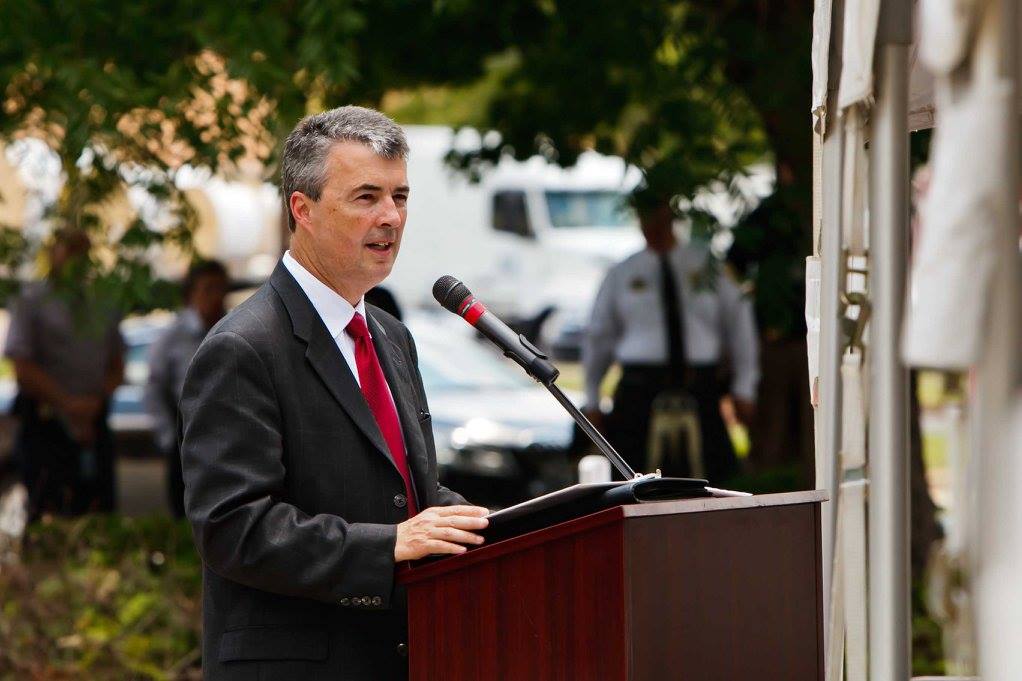
Last week, Steve Marshall beat Troy King in the runoff election for the republican Attorney General’s seat. Winning with just over 62 percent of the votes, Marshall now faces Democratic challenger Joseph Siegelman in the November general election. With that in mind, here are five things you need to know about Steve Marshall: 1. Although he moved around a lot in childhood, Marshall has always considered Alabama his true home. Although Marshall was born in Atmore, Ala. his father, Conrad Marshall, was a representative for a sporting goods manufacturer and moved the family across the southeast for most of Marshall’s childhood. They lived in Florida, Georgia, South Carolina and North Carolina, where he graduated from high school. After graduating from the University of North Carolina at Chapel Hill with his bachelors degree, Marshall moved back to Alabama to attend the University of Alabama’s law school, and stayed. “Despite leaving Alabama in first grade and living in several Southern states, Steve knew the Yellowhammer State was his home. He always knew he’d move back,” said the National Association of Attorney’s General (NAAG). 2. When sworn in as the Marshall County District Attorney (DA), Marshall became the second youngest DA in Alabama. In 2001 Marshall was appointed as the District Attorney of Marshall County. At only 36 years old his swearing in made him the second youngest District Attorney in Alabama. As District Attorney, Marshall founded several criminal prosecution and forensic programs and task forces including the Marshall County Major Crimes Unit, Marshall County Computer Forensics Lab and the Marshall County Crystal Meth Task Force. He was also instrumental in instituting and applying the Brody Act. The act holds anyone who kills or injures a mother’s unborn baby as accountable for two crimes, one against the mother and one against the baby. Marshall was one of the first DA’s to apply this law in his district. 3. As Attorney General, he filed a lawsuit against the city of Birmingham over the controversial confederate monument. In August of 2017, then-Birmingham Mayor William Bell ordered a confederate monument at the city’s Linn Park to be covered while the city explored the legality of removing it completely. “We need to take them down. We will deal with the repercussions after that,” said Birmingham City Council President Jonathan Austin. “The monuments are ‘offensive to our citizens,’” AL.com reported. Marshall quickly jumped into action. The next day the Attorney General filed a lawsuit against the city, and Mayor William Bell, saying that covering the monument violated state law. “In accordance with the law, my office has determined that by affixing tarps and placing plywood around the Linn Park memorial such that it is hidden from view, the defendants have ‘altered’ or ‘otherwise disturbed’ the memorial in violation of the letter and spirit of the Alabama Memorial Preservation Act,” Marshall said, according to AL.com. “The city of Birmingham does not have the right to violate the law and leaves my office with no choice but to file suit.” 4. He is the founder of Mentor Marshall, a mentorship program in Marshall County Marshall served as chairman of the Big Buddy Program while attending the University of North Carolina. The program, a student-led mentorship program affiliated with Big Brothers and Big Sisters of America, allowed Marshall to see the effect mentorship can have on young people’s lives. This led him to found Mentor Marshall, a mentoring program designed to impact young people in Marshall county. The program aims to find positive, successful adults and introduce them to at-risk children. The adults then serve mentors and role models to the children to keep them in school, drug-free, and to give them hope and tools to achieve their own goals. Marshall has also been mentoring two young men himself. 5. He is an elder at his church and traveled to India on a missions trip a few years ago Marshall is an elder at the LifePoint Church in Albertville, Ala. and traveled across the world on a missions trip a few years ago. There, his goal was to spread the gospel news of Jesus Christ to people who lived in remote villages in India. “The Great Commission sort of directs us all in some way to be able to make that outreach to those that don’t know Christ, to be able to share,” Marshall said of the mission, according to NAAG. This post was updated from its original version to reflect the runoff election victory.
Birmingham Council postpones Uber vote as 5 councilors no-show
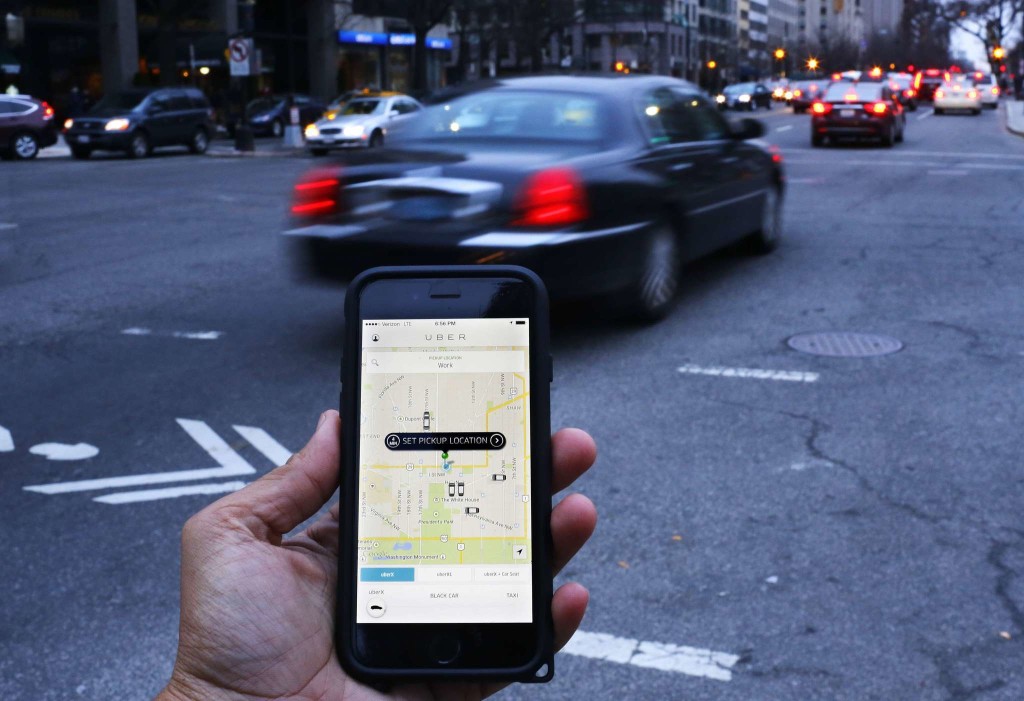
A scheduled vote on whether to approve new rules allowing ride-hailing services like Uber and Lyft to operate in the Magic City was postponed Tuesday afternoon for lack of a quorum required to vote. Council President Johnathan Austin, Councilman Steven Hoyt, Councilwoman Sheila Tyson, Councilwoman Lashunda Scales and Councilman Marcus Lundy did not attend the meeting, requiring members to adjourn before hearing the ride-hailing item on the agenda. The Birmingham City Council was slated to take up an ordinance that would allow so-called ridesharing firms to set up shop in the city by next month, along with other issues. Council members Jay Roberson, Valerie Abbott, Kim Rafferty and William Parker were in attendance. They waited about an hour before telling an increasingly restive audience the meeting would have to be scuttled. The delay may push back the beginning of Uber’s operations in Birmingham until 2016. “It’s disappointing that Birmingham residents have to continue waiting for safe rides and economic opportunity,” said Uber spokesperson Kaitlin Durkosh Tuesday. “We look forward to the draft ridesharing regulations from last week’s Committee of the Whole meeting crossing the finish line next Tuesday, so that we can bring ridesharing to Birmingham in advance of the New Year,” said Durkosh. Some Birmingham residents took to the “Magic City Movement” Facebook page established to support Uber’s efforts to voice their displeasure with the councilors’ actions. “Collusion,” is what user Sam Lewis chalked it up to. “Everyone in the BCC ignoring the people’s voice on this extremely important matter deserve to be reprimanded by not receiving your vote during the next election.” Another group member, Kris Reeves, opined: “These people, who were put in charge to lead our great city, are holding us back. I constantly defend Birmingham, but things like this make it extremely difficult. They are keeping us the laughingstock of major US cities.” Planned votes on several road improvement projects and re-upping the contracts of city consultants also were casualties of the no-show. Council President Austin said the members missed the vote because “most people are out of town visiting family for Thanksgiving.”
Uber in Birmingham does not mean rehashing old regulations, supporters say
Birmingham insists they want Uber, but the road is not yet fully clear for the popular ridesharing service. Despite assurances from the Birmingham City Council that Uber is welcome, demonstrated in the city’s latest video update, requirements the company must first meet all “safety regulations” could become a roadblock to Uber’s expansion in Birmingham. As outlined in a document to the city’s legal department, obtained by ALToday.com, Uber’s primary concerns include outdated insurance requirements, redundant background checks and excessive licensing and permitting in jurisdictions that regulate “Transportation Network Companies.” After last week’s Committee of the Whole meeting, Birmingham’s proposed regulations – required as a condition of operations in the city – are what Uber officials call a simple rehash of existing transportation codes passed in 2014. Those regulations continue to lump Uber in the same category as traditional taxi services. “The regulatory proposals we’ve seen thus far from City Officials neither reflect the ridesharing business model nor appear to be a serious attempt to bring this option to Birmingham,” an Uber representative told Alabama Today. “We’ve shared our position on three issues that we must come to an agreement on before we’re able to offer ridesharing in the Magic City.” At issue are several sections in latest draft, which reference the 2014 codes. For example, as noted on the second page of the draft, “Vehicles operating under the auspices of a Transportation Network Company will be treated as taxicabs for the purpose of determining all licenses and fees required under this Code.” That passage is directly at odds with Uber’s three central priorities, which they say must be addressed before the company (as well as rival Lyft) can provide convenient and affordable transportation to Birmingham residents. Coincidentally, the same three issues – licensing, background checks and insurance – are top concerns laid out by City Council President Jonathan Austin this summer. For other municipalities that passed pro-ridesharing regulations, including Mobile, allows a TNC to apply for a “master license” from the city. This permits drivers to be registered with Uber, not individually and separately with the city. Such rules supports Uber driver/partners, who see flexibility in hours as the most appealing feature of a ridesharing career. According to estimates, 50 percent of all Uber drivers in the United States average less than 10 hours per week on the road. Eighty-seven percent say that “being their own boss” is a significant factor in their decision to work with Uber. Requiring individual licensing would, in effect, have a chilling effect on attracting quality drivers. As for insurance, since most Uber drivers use their vehicles for personal business and not ridesharing, a majority of vehicle use is already covered under the drivers existing personal auto policy. Uber offers a contingent insurance policy – exceeding the state’s personal insurance minimum requirements – which protects drivers while they are active in the system, but not yet picked up a rider. Another obstacle preventing Uber’s full participation in the city of Birmingham is a proposed requirement for background checks, which supporters say is an unnecessary duplication of effort. All driver/partners seeking to be included in the Uber platform are already required to undergo an extensive background checks performed for the company by an accredited third party. Uber screens include Social Security tracing, a seven-year history of addresses associated with the potential driver’s name, and a criminal background check through national, state and local databases. Vendors crosscheck all driver-partners against the National Sex Offender Registry as well as public registries maintained at the state level, to screen for disqualifying offenses. Also, background checks include pulling the applicant’s Motor Vehicle Registration file. Uber and other ride sharing services believe unnecessary layers of city-sponsored bureaucracy only further hinders participation, shrinking the available pool of qualified drivers. Accepting Uber into Birmingham, the spokesperson says, requires more than a rehash of outdated existing regulations. “We hope that Birmingham follows in the footsteps of more than 60 U.S. jurisdictions that have passed pro-innovation ridesharing regulations, and supported the subsequent economic opportunity and safe transportation options that their residents deserve.”
Uber in Birmingham? Here’s looking at Johnathan Austin

Birmingham City Council President Johnathan Austin has said he’s on board with Uber but as well all know with our elected officials actions speak louder than words. So here’s looking at the council to actually take up the issue not just talk about it. Earlier this year a Facebook was created and GoFundMe site started as of today they have 111 followers and have raised $10,785. The name was changed from the original to Magic City Movement where there’s frequent communication about what’s going on. Today, they posted this post from Uber. There’s been a lot of chatter from the local community about bringing ridesharing to Birmingham—one of the biggest cities in U.S. still without this option. As this map below shows, people aren’t just talking about Uber, they are clamoring to use it—whether on campus, North Birmingham, Southside, or anywhere in between. Since last summer, tens of thousands of people have opened up the Uber app in all corners of Birmingham, checking to see if a safe ride was available. This means that millions of dollars could have gone in the pockets of hundreds of local drivers using Uber to make some supplemental income by providing rides in their communities. Here at Uber, we’re just as eager to provide safe, reliable rides and flexible work opportunities to Magic City residents and visitors as they are to have them, however, the existing regulations make it impossible for Uber to operate in Birmingham. With 75% percent of the U.S. population already having access to ridesharing, Birmingham is getting left behind. At the August 26 Committee of the Whole meeting, we learned that a ridesharing ordinance would be drafted within 30 days, and then voted back on in the Committee of the Whole. While it’s disappointing that more than 8 weeks later, no draft ridesharing ordinance has been made available, we’re encouraged to learn that Council President Austin is revisiting this issue next week in the Committee of the Whole and plans to have a draft ridesharing ordinance voted on by the full Council within 30 days. Over 20 states and dozens of jurisdictions have passed sensible regulatory frameworks for ridesharing, welcoming it into their communities, all in one short year. We hope that Birmingham—under Council President Austin’s leadership—can take the same innovative approach, and look forward to bringing safe rides and economic opportunity to Birmingham in the near future.
Movement to bring Uber to Birmingham building momentum fast
A weeks-long organized effort to bring ride-hailing services like Uber and Lyft to Birmingham seems poised to cross the goal line in the near future. An outpouring of public support both from citizens – including via “Draft Uber”-style drive on social media – had been reciprocated by elected officials. City Council President Johnathan Austin declared yesterday that the city “definitely wants” Uber in town. Mayor William Bell has also signified his support, and has agreed to an expedited process that will accelerate the drafting and passage of a pro-ridesharing city ordinance. A spokesperson for Uber confirmed the progress on Thursday. “Based on today’s conversation, we’re optimistic that City Council is on a path towards bringing ridesharing to Birmingham,” a spokeswoman told Alabama Today. “We thank Council President Austin for his leadership, and look forward to working with City Council on an ordinance that aligns with the nearly 50 US jurisdictions with pro-innovation, pro-consumer ridesharing regulations.” Negotiation with the Magic City’s municipal government occurred last summer as well, but the two sides could not come to an agreement so talks fizzled. Talks broke down along lines familiar to those who have watched the ridehailing vs. taxis political/regulatory food fight that has occurred across the country – background checks, insurance requirements and taxes. Uber recently staged a unilateral pullout in South Florida’s Broward County after commissioners there attempted to fold ridesharing services – with some minor tweaks – into regulatory scaffolding that governs taxi cabs there. Representatives from Uber said that was not fair, because their business model is entirely different. Back in July local businessman Bill Smith – CEO of grocery delivery service Shipt – started a GoFundMe page to raise money for pro-Uber advocacy efforts. The drive surpassed its $10,000 goal easily. Council President Austin said Wednesday he hopes to have the new rules allowing for Uber and similar services to operate in Birmingham within one month from yesterday’s meeting of the city Transportation Committee.
