
Annemarie Axon confirmed as U.S. District Judge
U.S. Sen. Richard Shelby released at statement on Wednesday celebrating the confirmation vote for U.S. District Judge for the Northern District of Alabama, Annemarie Carney Axon. Axon, who nominated for the position by President Donald Trump in 2017, appeared before the Senate Judiciary Committee for the consideration of her nomination this week. “It is critically important for a judge to be fair, open-minded, courteous, and respectful to the attorneys and parties in each case,” Axon told the committee; promising to “conduct [herself] and [her] courtroom in a manner that strives to leave people with the conviction that they were treated fairly, respectfully, and that [she] followed the law, regardless of the outcome.” She then ended her hearing with a statement, saying that “our democracy demands an independent judiciary whose decisions are based exclusively on the law, as it is written.” Shelby congratulated Axon in a news release, saying “Annemarie Axon is exceptionally qualified to be a U.S. district judge. Her strong, respectful temperament and commitment to impartiality make her well-suited for this esteemed position. Alabama’s district judges must be confirmed as swiftly as possible to ensure the efficiency of our judicial system. These judges serve as the backbone of the United States Judicial Branch, and I am honored to have played a part in Axon’s confirmation today.” Axon was one of seven Alabama judicial nominees awaiting confirmation from the Judiciary Committee. The other nominees include: Terry F. Moorer Jeffrey Beaverstock Emily Coody Marks Liles Burke Andrew Brasher Corey Maze Axon is currently a member of the Wallace, Jordan, Ratliff, & Brandt, LLC, legal team in Birmingham, where she focuses on fiduciary and probate litigation. Her legal career began in 2000 at the Edwards & Angell, LLP, firm in Rhode Island. She is still a member of both the Alabama and Rhode Island State Bar Associations. “We are extremely proud of Annemarie and congratulate her on her confirmation. Selfishly we hate to lose Annemarie as a valuable and integral member of our firm, but we know her temperament and sound judgment will make her a great federal judge,” said Jay Clark, managing member at Wallace Jordan. She also serves as the President of the YWCA Junior Board, a member of the Girls on the Run Board of Directors, and a member of the Mountain Brook City Schools Foundation Board.
White House pushes ahead with Mideast peace plan
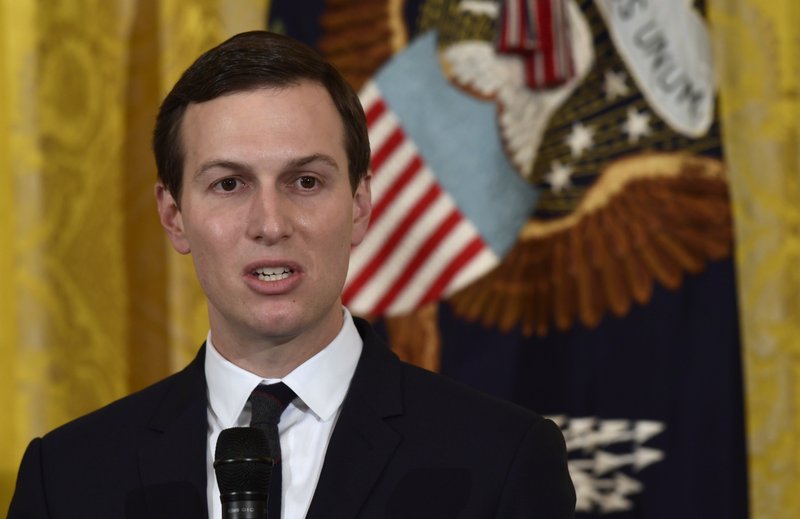
The Trump administration is aiming to roll out its much-hyped but long-delayed Middle East peace plan next month amid signs it may further alienate the Palestinians by slashing millions of dollars in funding for humanitarian and development projects in the West Bank and Gaza. Five U.S. officials and a congressional aide say the administration intends to release the peace plan in mid- to late-June, shortly after the end of the Muslim holy month of Ramadan, although they cautioned that the timing could slip depending on developments in the region. They say the plan’s main authors — President Donald Trump’s son-in-law and senior adviser Jared Kushner and Trump’s special envoy for international negotiations Jason Greenblatt — have already begun quietly briefing select allies and partners on elements of the proposal. Yet any Palestinian willingness to even consider the plan would require conditions to improve and anger to subside considerably in the coming weeks, an unlikely scenario as the Palestinians say evidence of one-sided Trump giveaways to Israel continues to pile up. U.S. allies in Europe and the Persian Gulf also have felt compelled to criticize the administration for its approach. Ostensibly, Trump would need buy-in from those same countries to build enough momentum for any peace plan to succeed. The administration has been resisting congressional demands to fully close the Palestine Liberation Organization office in Washington because Greenblatt and Kushner want to keep that channel open in case the Palestinians are open to re-entering negotiations with Israel based on the plan. The office was ordered closed by former Secretary of State Rex Tillerson last November, but has been allowed to stay open for limited purposes under the administration’s interpretation of the law requiring it to be shut down in the absence of peace talks. The prospect of Palestinian interest in the peace proposal appears dim, however, particularly since Palestinian leader Mahmoud Abbas recalled the mission’s chief earlier this week to protest Monday’s opening of the new U.S. Embassy in Jerusalem. The embassy move is said to have contributed to violent protests in Gaza that were met with deadly force from Israel. Nearly 60 Palestinians were killed Monday by Israeli forces, drawing condemnations and calls for restraint from Europe and elsewhere. The U.S. declined to join those calls and, while regretting the loss of life, opposed efforts at the U.N. to open an international investigation into the violence. Trump’s recognition of Jerusalem as Israel’s capital, the embassy move and the administration’s unreserved defense of Israeli Prime Minister Benjamin Netanyahu’s policies have alienated and angered the Palestinian leadership, which accuses the administration of abandoning its role as a neutral arbiter in the conflict. Saeb Erekat, the chief Palestinian negotiator, said any deal needs to be between the Palestinians and Israel — not the United States. “I don’t need Jason Greenblatt. I don’t need Kushner,” Erekat said. “It’s our lives.” That sense of betrayal may deepen significantly this summer as millions of dollars in U.S. assistance to the Palestinians appears likely to be cut and the funds re-allocated to other regions. That money has been on hold since last year and existing funding for some projects will start to run out in just months if it is not approved in the next two weeks. If that does not happen, the State Department and the U.S. Agency for International Development will have to notify aid recipients that continued U.S. funding is not forthcoming and those programs will begin to be shut down. Local staffers would be laid off and U.S. officials running the projects would be reassigned elsewhere. Of $251 million in U.S. aid planned for the Palestinians in 2018, only $50.5 million has been reported spent, according to the government’s online tracker, www.foreignassistance.gov. The remaining more than $200 million is currently on hold, a figure that does not include an additional $65 million in frozen U.S. assistance to the U.N. Relief and Works Agency, which provides services to Palestinians in the West Bank, Gaza, Jordan and Lebanon. The U.S. aid pays for programs on education, health, good governance and democracy promotion as well as disaster preparedness and security. For several months the White House has been sitting on State Department and USAID recommendations to spend at least some of the money, according to the officials. Three officials said there is no indication those recommendations will be acted upon any time soon despite appeals from lawmakers and even expressions of concern from Israel, which sees value in the assistance especially in the security sector. One official said there was “an overwhelming lack of urgency” about making a decision on the funding. The other two said there was no sign that the end-of-May timeframe would be met. “The administration is currently reviewing U.S. assistance to the Palestinians,” USAID said in a statement to The Associated Press. “USAID is in discussions with all affected implementing partners on the status of the review, and is working closely with the interagency, as the administration concludes its review.” At immediate risk are between five and 10 of the some 20 USAID projects in the West Bank and Gaza, along with proposed new initiatives, the officials said. Without a quick decision those will run out of money by the end of 2018, they said. Nearly all of the others will run out of money in early 2019 unless the U.S. funding is unblocked, they said. Republished with the permission of the Associated Press.
Analysis: For Donald Trump, the weight of world’s problems sink in
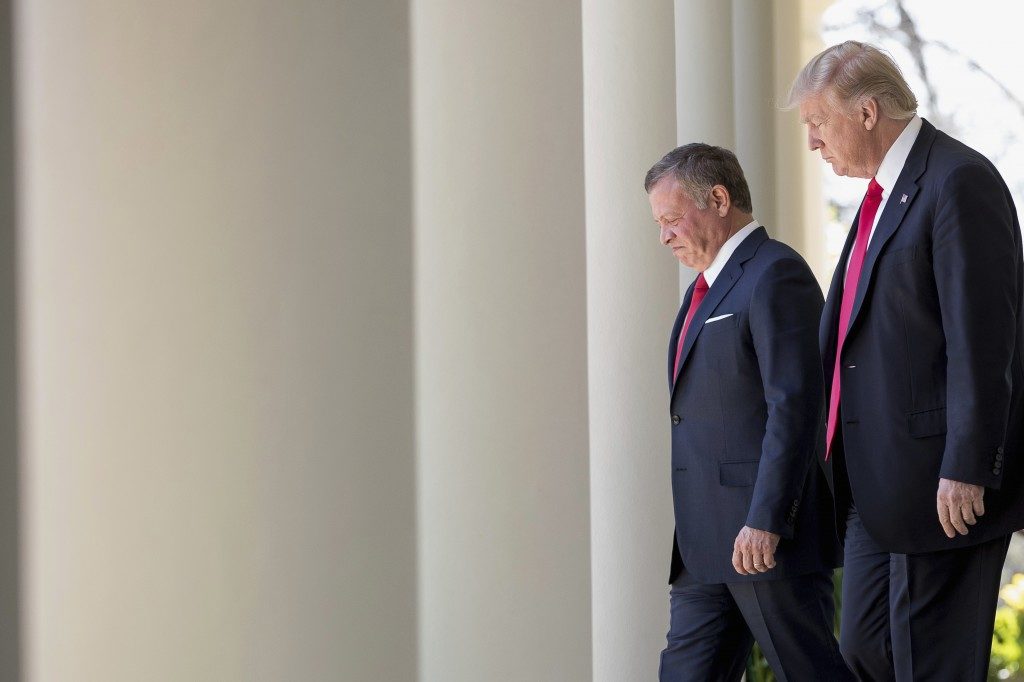
For Donald Trump, the reality of the world’s problems may be starting to sink in. Standing in the sunny White House Rose Garden, the president said Wednesday that the gruesome chemical weapons attack in Syria had changed his views on the quagmire of a conflict that he’d previously indicated he wanted to steer clear of. He mourned the deaths of the youngest victims — “innocent children, innocent babies” — and said brutality had “crossed a lot of lines for me.” “It is now my responsibility,” he declared. The president’s words were far from a declaration that he intends to act, and he notably avoided discussing what retaliatory options he would be willing to consider. Ultimately, his rhetoric may well land among the litany of harsh condemnations of Syrian President Bashar Assad by Barack Obama and other world leaders that did little to quell the six-year civil war. Yet Trump’s willingness to accept that he now bears some responsibility for a far-away conflict marked a significant moment for an “America First” president who has vowed to focus narrowly on U.S. interests. His comments also suggested a growing awareness that an American president — even an unconventional one like him — is looked to as defender of human rights and a barometer of when nations have violated international norms. The bloodshed in Syria is just one of the intractable international problems piling up around Trump. North Korea appears intent on building up its nuclear program, despite vague threats from his administration. The Islamic State group is still wreaking havoc in Iraq and Syria, while a Pentagon review of U.S. strategy sits on his desk. Trump conceded Wednesday that of all the world’s problems, the Middle East is one area he would rather avoid. His decision to at least rhetorically take a measure of responsibility was all the more striking given his frequent shoveling of blame for problems big and small onto anyone but himself. In public, he faults Obama for leaving him “a mess” and says his campaign opponent Hillary Clinton is behind the flood of revelations possibly linking his campaign to Russia. In private, he berates his staff for failing to fix the self-made crises that have battered the White House, including his pair of travel bans blocked by the courts and the failure to pass health care legislation. Trump initially took the same blame-shifting approach in addressing the deadly attack in Syria. In a short written statement Tuesday, he said the carnage was “a consequence of the past administration’s weakness and irresolution.” In 2013, Obama pulled back from planned airstrikes against Syria following a chemical weapons attack, despite having declared that the deployment of deadly gases would cross a “red line” for him. Obama’s decision was widely criticized in the U.S. and by Middle Eastern allies, and undermined later attempts to compel Assad to leave office. “The regrettable failure to take military action in 2013 to prevent Assad’s use of chemical weapons remains a blight on the Western world,” said Sen. Bob Corker, R-Tenn., the chairman of the Senate Foreign Relations Committee. Still, foreign policy officials within the Trump administration were irritated by the president’s eagerness to focus on his predecessor in his first reaction. Some wanted him to focus more on condemning Assad and highlighting U.S. resolve. Their objections did little to sway the president at the time. But just a day later, Trump appeared more willing to embrace the gravity of the situation and his new role in it. His posture may well have been impacted by the fact that his remarks in the Rose Garden came after meeting with Jordan’s King Abdullah, whose country has borne the brunt of the refugee crisis spurred by the Syrian war. Jordan is among Washington’s most important partners in the region and is significantly dependent on the United States. Abdullah, who worked closely with Obama, enthusiastically embraced Trump’s condemnation of the chemical weapons attack. During a joint news conference, he said to Trump, “I believe under your leadership we will be able to unravel this very complicated situation.” Eliot Cohen, a Trump critic who served in the State Department under President George W. Bush, said that whether Trump intended to or not, he now has put himself in the same position as Obama, raising the stakes for action in Syria, perhaps without having thought out whether he plans to follow through. “The deep irony here is you may see a lot of the same failures that the Obama administration had except delivered with a different style,” Cohen said. Republished with permission of The Associated Press.
Trump denies plans to visit majority-Muslim Jordan
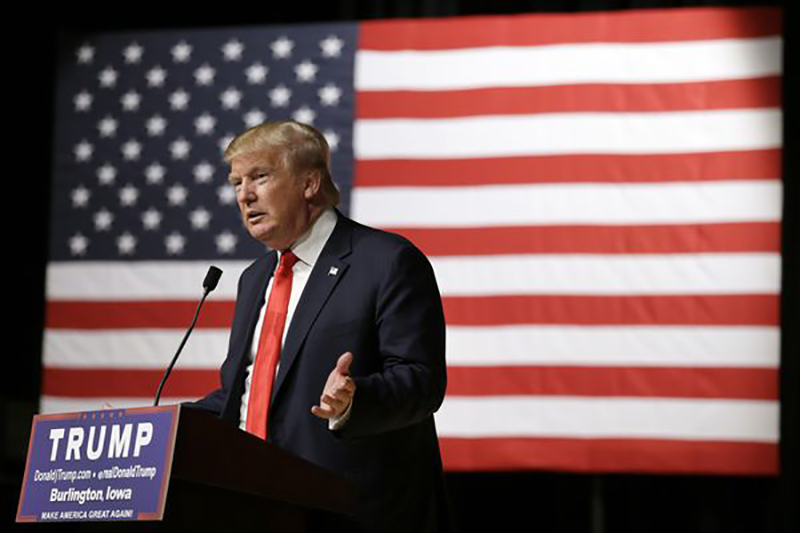
Republican presidential candidate Donald Trump on Tuesday denied an Associated Press report that he planned to visit the majority-Muslim kingdom of Jordan at the end of December. The AP report and Trump’s denial came one day after his controversial proposal to temporarily ban all Muslims from entering the United States to protect the nation from Islamic terrorism. Trump tweeted Tuesday, “Despite my great respect for King Abdullah II, I will not be visiting Jordan at this time. This is in response to the false @AP report.” Trump has said he plans to visit Israel. A U.S. official, speaking on condition of anonymity, had told the AP that the U.S. government was making preparations for Trump to also visit Jordan at the campaign’s request. The official was not authorized to publicly discuss the preparations due to security concerns. Trump has Secret Service protection for his safety. Another U.S. official, also speaking on condition of anonymity, told the AP late Tuesday that Trump’s campaign had contacted the U.S. embassy in Amman about the trip, and the State Department was discussing how to facilitate Trump’s visit as recently as Tuesday afternoon. This official also was not authorized to speak publicly about the trip over security issues. The official said the State Department was working with Trump on security preparations and consulting about arranging meetings there. Because Trump is a private citizen, the State Department does not extend to him the same level of assistance as an administration official or member of Congress, but it was working cooperatively with his campaign, the official said. Trump was widely criticized over his proposal this week to prevent all Muslims from visiting the U.S., although he clarified his idea Tuesday to say that he would allow foreign Muslim leaders to visit. Jordan is among the United States’ staunchest allies in the Persian Gulf region and its military has regularly flown bombing missions against the Islamic State group. Trump’s Republican rival, Ben Carson, visited two camps for Syrian refugees in the Jordanian desert two weeks ago with no media coverage. Carson afterward praised Jordan for its generosity toward the refugees but said none should be brought to the United States. Republished with permission of The Associated Press.
Martha Roby: Time to walk away?
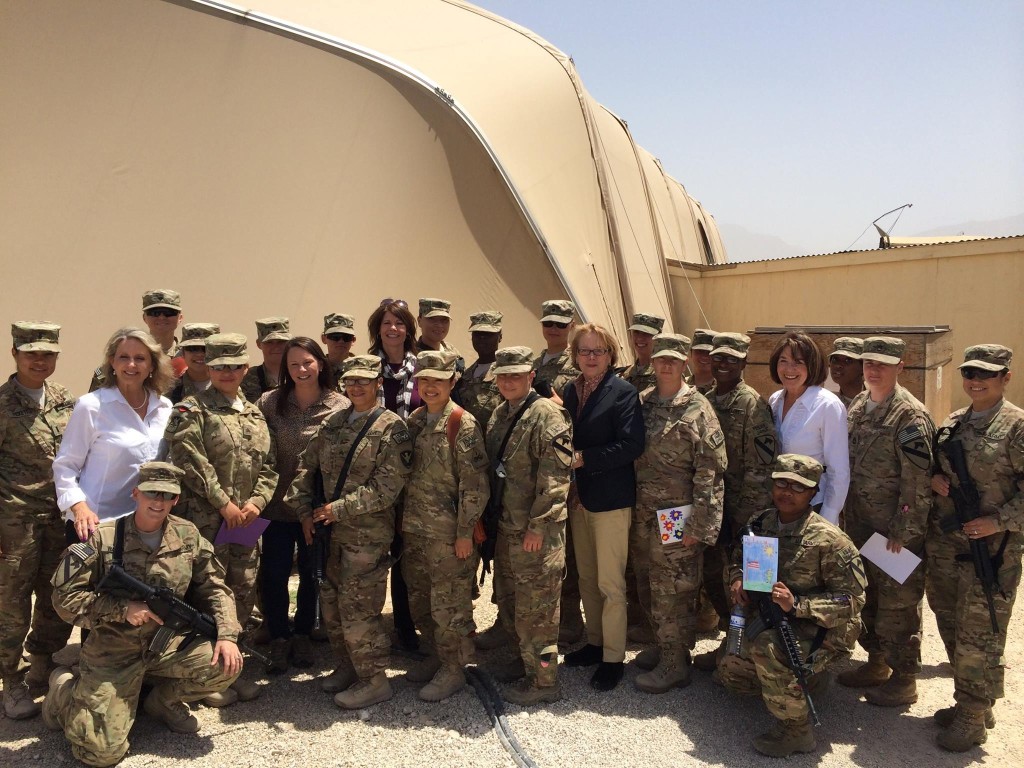
With all that’s been going on lately, attention has turned from what I believe to be one of the most important issues facing our country right now: the Iran nuclear talks. This past week, the Obama Administration quietly announced yet another deadline extension to the multilateral negotiations over Iran’s nuclear capability. Of course, the goal for the United States and our allies is to prevent Iran from obtaining a nuclear weapon. However, recent reports out of Switzerland have raised concerns that our negotiators have already conceded too much on major points such as uranium enrichment, economic sanctions relief and inspection access. The very fact that we keep extending the deadline tells you all you need to know about the priorities at play for the Administration. It seems that President Obama and Secretary Kerry are so concerned with settling on a deal, any deal, that they are not willing to walk away from a bad one as deadlines keep passing. We have had extension after extension and concession after concession – to the point that I’m not sure a good deal is even possible. As you know, a few months ago I traveled to the Middle East and visited the countries that would be directly dealing with a nuclear Iran: Israel, Jordan, Iraq and Saudi Arabia. These are our allies and they are rightly concerned that what is being brokered isn’t good at all. We cannot forget how high the stakes are here. If a bad deal is ratified, we aren’t just talking about a nuclear-armed Iran; we are talking about setting in motion a chain of events that could lead to multiple countries in this very volatile region wanting to become nuclear as well. And, after seeing the international community reward Iran’s hostility and obstinance with a nuclear deal, who would blame them? Republican U.S. Sen. Bob Corker of Tennesee, chairman of the Senate Foreign Relations Committee, has been outspoken in his concerns and recently wrote a letter to President Barack Obama saying in part, “Walking away from a bad deal at this point would take courage, but it would be the best thing for the United States, the region and the world.” I agree with Senator Corker that walking away from a bad deal would be the better option. No matter the outcome, I’m glad that Congress will have the final say over whether or not to lift sanctions on Iran. We cannot allow President Obama and Secretary Kerry to put their desire for a “legacy” achievement above the best interests of our nation and our allies. Martha Roby represents Alabama’s 2nd Congressional District. She is in her third term.
