
Donald Trump announces plans for Pentagon to create ‘Space Force’
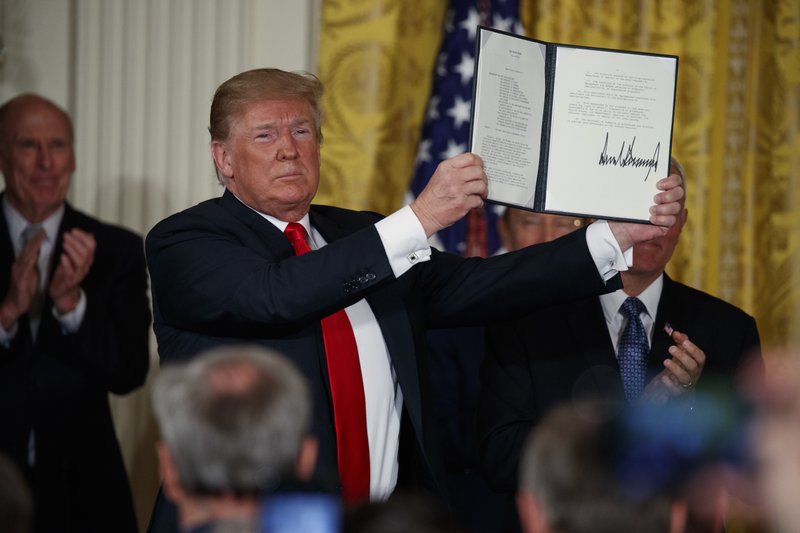
Vowing to reclaim U.S. leadership in space, President Donald Trump announced Monday he is directing the Pentagon to create a new “Space Force” as an independent service branch aimed at ensuring American supremacy in space. Trump envisioned a bright future for the U.S. space program, pledging to revive the country’s flagging efforts, return to the moon and eventually send a manned mission that would reach Mars. The president framed space as a national security issue, saying he does not want “China and Russia and other countries leading us.” “My administration is reclaiming America’s heritage as the world’s greatest spacefaring nation,” Trump said in the East Room, joined by members of his space council. “The essence of the American character is to explore new horizons and to tame new frontiers.” Trump had previously suggested the possibility of creating a space unit that would include portions equivalent to parts of the Air Force, Army and Navy. But his directive will task the Defense Department to begin the process of establishing the ‘Space Force’ as the sixth branch of the U.S. armed forces. He said the new branch’s creation will be overseen by Gen. Joseph Dunford, the chairman of the Joint Chiefs of Staff. “When it comes to defending America, it is not enough to merely have an American presence in space. We must have American dominance in space,” Trump said. He added: “We are going to have the Air Force and we are going to have the Space Force, separate but equal.” The president also used the White House event to establish a new policy for reducing satellite clutter in space. The policy calls for providing a safe and secure environment up in orbit, as satellite traffic increases. It also sets up new guidelines for satellite design and operation, to avoid collisions and spacecraft breakups. Trump was joined by Vice President Mike Pence, who leads the recently revived space council, and several Cabinet members, NASA Administrator Jim Bridenstine, retired astronauts and scientists. The council’s executive secretary, Scott Pace, told reporters before the meeting that space is becoming increasingly congested and current guidelines are inadequate to address the challenge. Republished with the permission of the Associated Press.
Donald Trump reverses stance on torture and targeting civilians
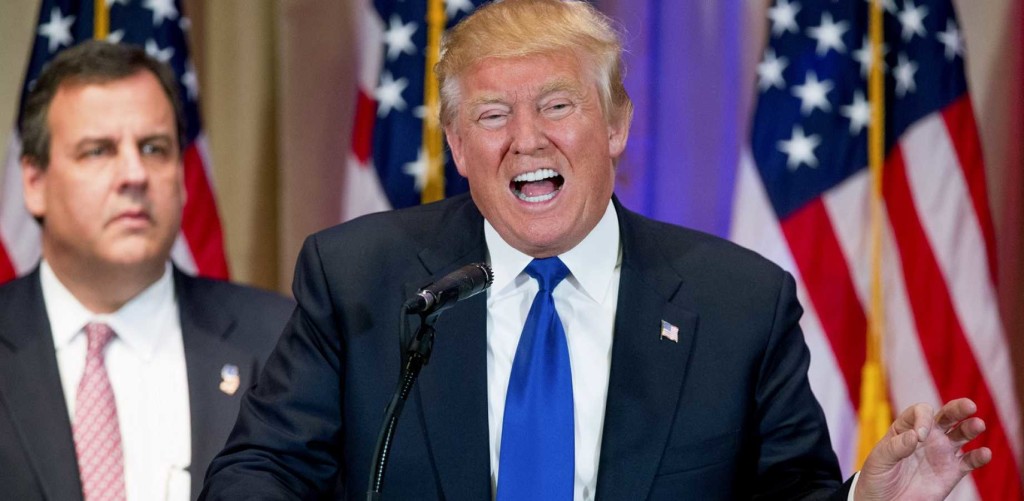
Donald Trump retreated Friday from his promise that if elected president he would order the military to kill family members of militants who threaten the United States. Trump’s campaign issued a statement quoting him as saying he would not order the military to take actions contrary to international or U.S. law. But fewer than 24 hours earlier, in Thursday’s GOP debate, Trump stuck to his position on targeting family members of militants and on an expansive use of torture against captured militants. When a debate moderator asked him what he would do if the military refused to carry out such orders, Trump replied: “They’re not going to refuse me. Believe me.” The use of torture and the killing of civilians are barred by the Geneva Conventions, to which the United States is a signatory. Congress outlawed waterboarding and any so-called enhanced interrogation techniques after the administration of George W. Bush carried out such acts against suspected al-Qaida fighters. Members of the U.S. military are bound by duty and tradition to refuse orders they know to be illegal. This includes intentionally targeting civilian noncombatants. The issue drew additional attention this week when more than 100 Republican defense and national security figures, including former senior Pentagon officials, issued a statement blasting Trump’s foreign policy positions and calling his embrace of the expansive use of torture “inexcusable.” Defining when aggressive interrogation techniques such as waterboarding amount to torture is a matter of debate, but Trump had made clear that as president he would not hesitate to go beyond waterboarding. “We should go for waterboarding and we should go tougher than waterboarding,” he said at Thursday’s debate. He also had defended his position on targeting the family of militants, which he first raised in a “FOX and Friends” interview last December. “The other thing with the terrorists is you have to take out their families. When you get these terrorists, you have to take out their families. They care about their lives, don’t kid yourself. When they say they don’t care about their lives, you have to take out their families.” On Friday, however, Trump reversed course. “I will use every legal power that I have to stop these terrorist enemies,” the statement issued by his campaign said. “I do, however, understand that the United States is bound by laws and treaties and I will not order our military or other officials to violate those laws and will seek their advice on such matters. I will not order a military officer to disobey the law. It is clear that as president I will be bound by laws just like all Americans and I will meet those responsibilities.” The Trump campaign also has announced that Sen. Jeff Sessions, an Alabama Republican and member of the Senate Armed Services Committee, is Trump’s adviser on national security matters during the campaign. Sen. Lindsey Graham, an early contender for the Republican presidential nomination, said Friday he wrote to Gen. Joseph Dunford, chairman of the Joint Chiefs of Staff, asking his views on whether the intentional targeting of noncombatant family members of militants, including children, is legal under the laws of war. Graham, a former military lawyer, also asked Dunford what advice he would give troops if ordered to target such civilians. Republished with permission of the Associated Press.
